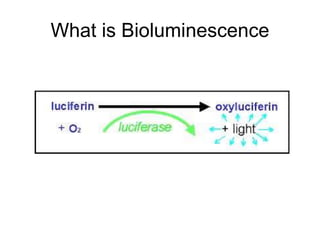
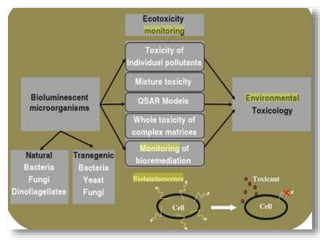
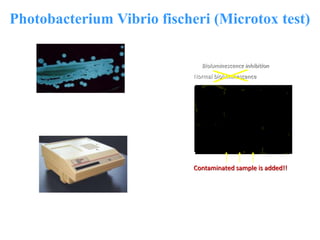
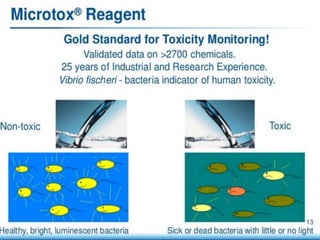
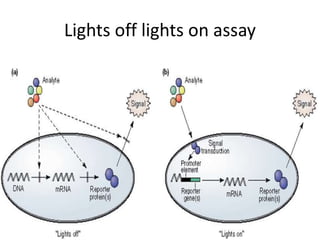
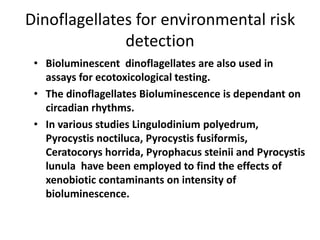
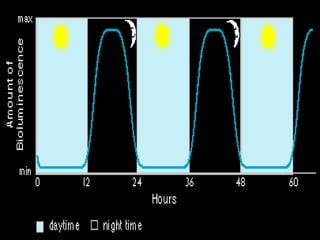
Bioluminescence, the production of light by living organisms, can be used to sensitively monitor pollution through assays that detect changes in bioluminescence caused by toxic substances. One of the earliest assays was developed using the bacterium Vibrio fisheri, measuring inhibition of its bioluminescence by pollutants. Recombinant bacteria like E. coli transformed with bioluminescence genes have also been used for biomonitoring due to their genetic tractability and ability to detect a wide range of pollutants in various environments. Dinoflagellates exhibiting bioluminescence have further been employed for toxicity assessments of metals and other contaminants in aquatic systems.