Successful brain aging:
plasticity, environmental
enrichment, and lifestyle
• MD Francisco Mora
• Dialogues Clinical Neuroscience 2013 March
• University of Iowa Carver College of Medicine.
Abstract
• Aging is a physiological process that can develop without
the appearance of concurrent diseases. However, older
people suffer from memory loss and cognitive decline.
Studies of the neurobiology of aging are beginning to
decipher the mechanisms behind the physiology of aging of
the brain but also the mechanisms that make people more
vulnerable to cognitive neurodegenerative diseases. Today
we know that the aging brain retains a functional
plasticity, which is positively promoted by genes activated
by different lifestyle factors. In this article these lfactors and
their mechanisms of action are reviewed, including
environmental enrichment and the importance of food
intake and some nutrients. Aerobic physical exercise and
reduction of chronic stress are also briefly reviewed. It is
proposed that lifestyle factors promote healthy and
successful aging of the brain.
INTRODUCTION
• Aging of the brain is a very complex biological
process associated with decline in
sensory, motor, and cognitive functions.
However, aging is not a disease
• Aging without the appearance of concurrent
diseases is successful aging.
• Nonetheless, the possibility of individuals
suffering from dementia, as a consequence of
that physiological process of aging, has been
postulated.
• It has been suggested that around 120 years of
age, without diseases, the population of
neocortical synapses could decline to the level
found in Alzheimer's disease, with a loss of
intracerebral connectivity of around 40%. This
causes senile dementia without the presence of
the plaques and tangles that characterize
Alzheimer's disease(debatable)
• Increase in life expectancy is humanity's greatest
achievement.
Genome,Ambiome and longevity
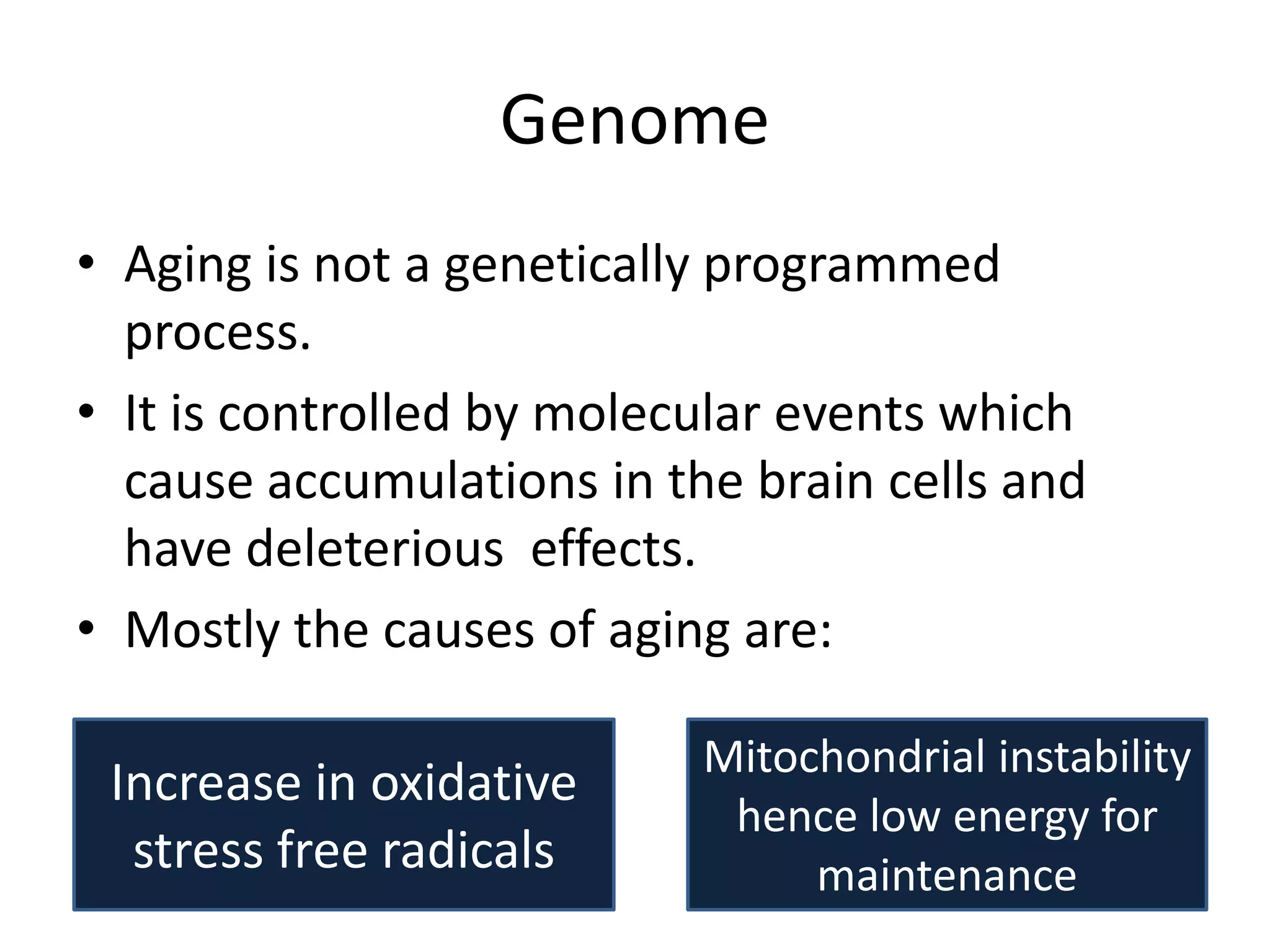
Genome
• Aging is not a genetically programmed
process.
• It is controlled by molecular events which
cause accumulations in the brain cells and
have deleterious effects.
• Mostly the causes of aging are:

Increase in oxidative
stress free radicals

Mitochondrial instability
hence low energy for
maintenance
Longevity
• Longevity means to delay aging.
• It is controlled by genes that maintain and fix
damage caused by free radicals and
antioxidant activity.
• Today we know that longevity depends more
on genes that are activated by different
lifestyles.
• Lifestyle factors govern how long and healthily
we live and grow old gracefully.
Ambiome
• Ambiome is a set of cultural ,physical
, structural factors that affect anatomy and
physiology of the brain.
• The aging brain retains a certain plasticity
dependant on its environment.
Changes in the Aging Brain
Anatomical Changes
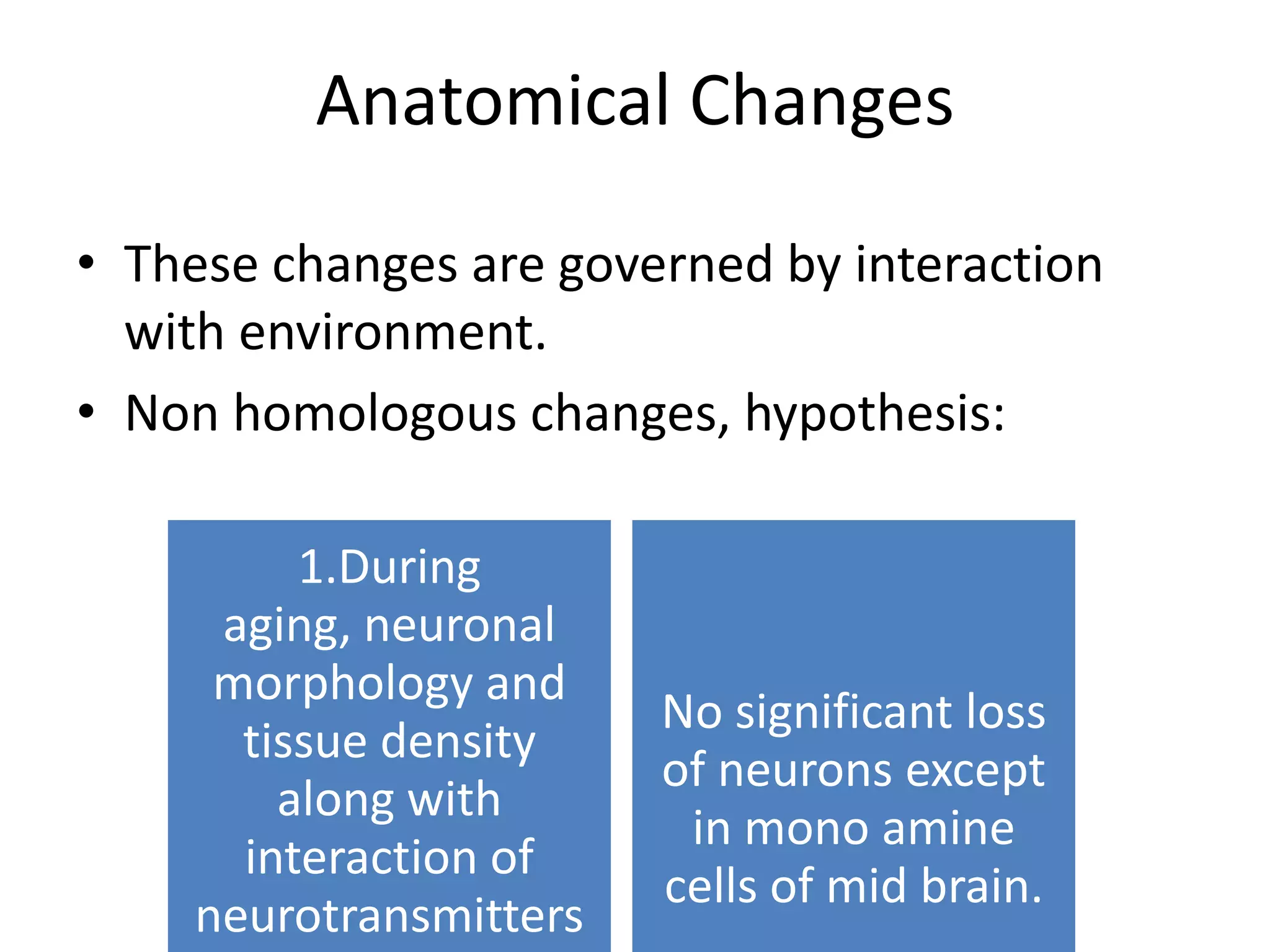
• These changes are governed by interaction
with environment.
• Non homologous changes, hypothesis:
1.During
aging, neuronal
morphology and
tissue density
along with
interaction of
neurotransmitters

No significant loss
of neurons except
in mono amine
cells of mid brain.
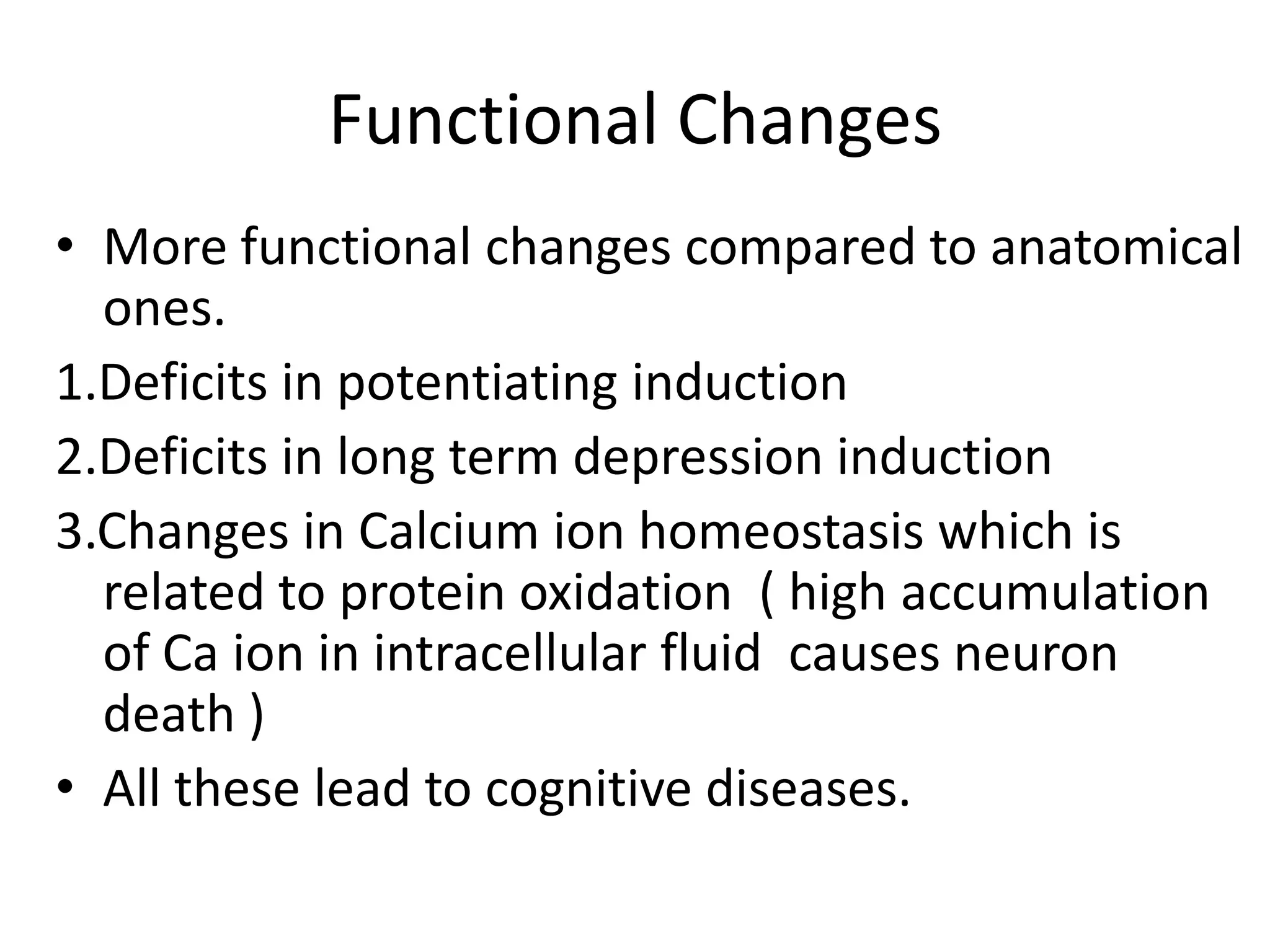
Functional Changes
• More functional changes compared to anatomical
ones.
1.Deficits in potentiating induction
2.Deficits in long term depression induction
3.Changes in Calcium ion homeostasis which is
related to protein oxidation ( high accumulation
of Ca ion in intracellular fluid causes neuron
death )
• All these lead to cognitive diseases.
Neurotrophic Factors
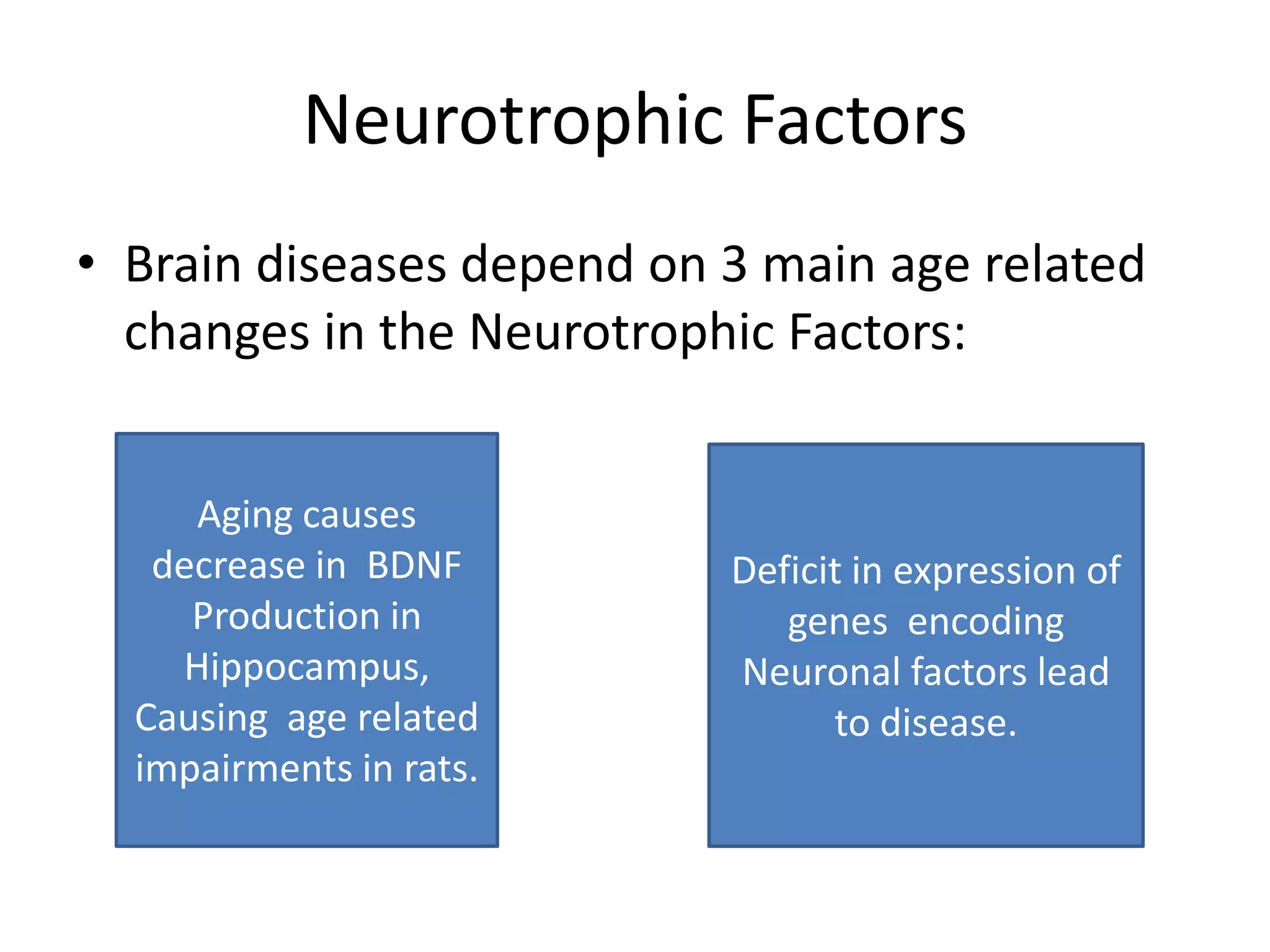
• Brain diseases depend on 3 main age related
changes in the Neurotrophic Factors:
Aging causes
decrease in BDNF
Production in
Hippocampus,
Causing age related
impairments in rats.

Deficit in expression of
genes encoding
Neuronal factors lead
to disease.
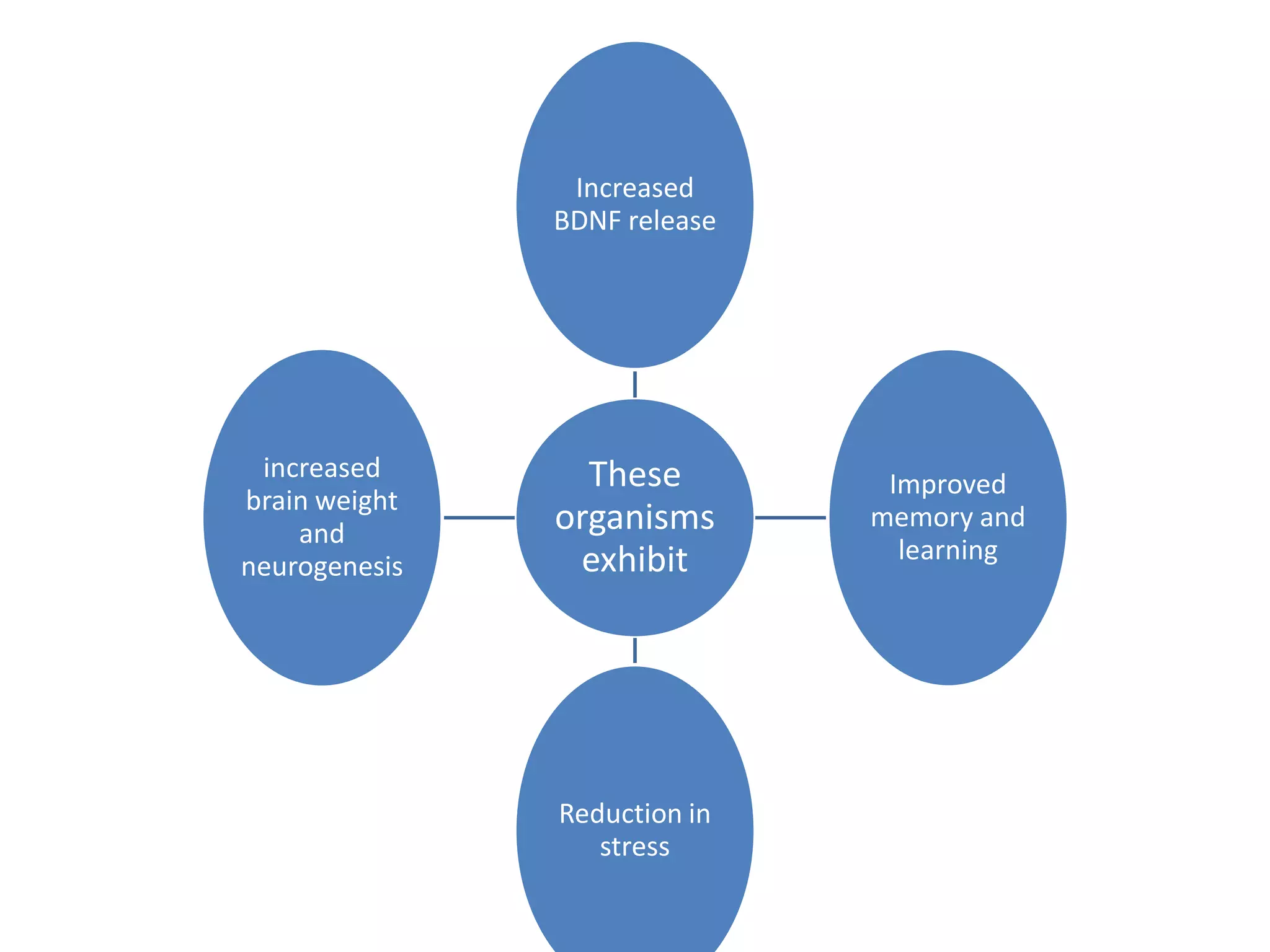
Environmental Enrichment
• Experimental setting in which individuals
receive better social and cognitive interactions
which leads to better learning and successful
brain aging.
Increased
BDNF release

increased
brain weight
and
neurogenesis

These
organisms
exhibit

Reduction in
stress

Improved
memory and
learning
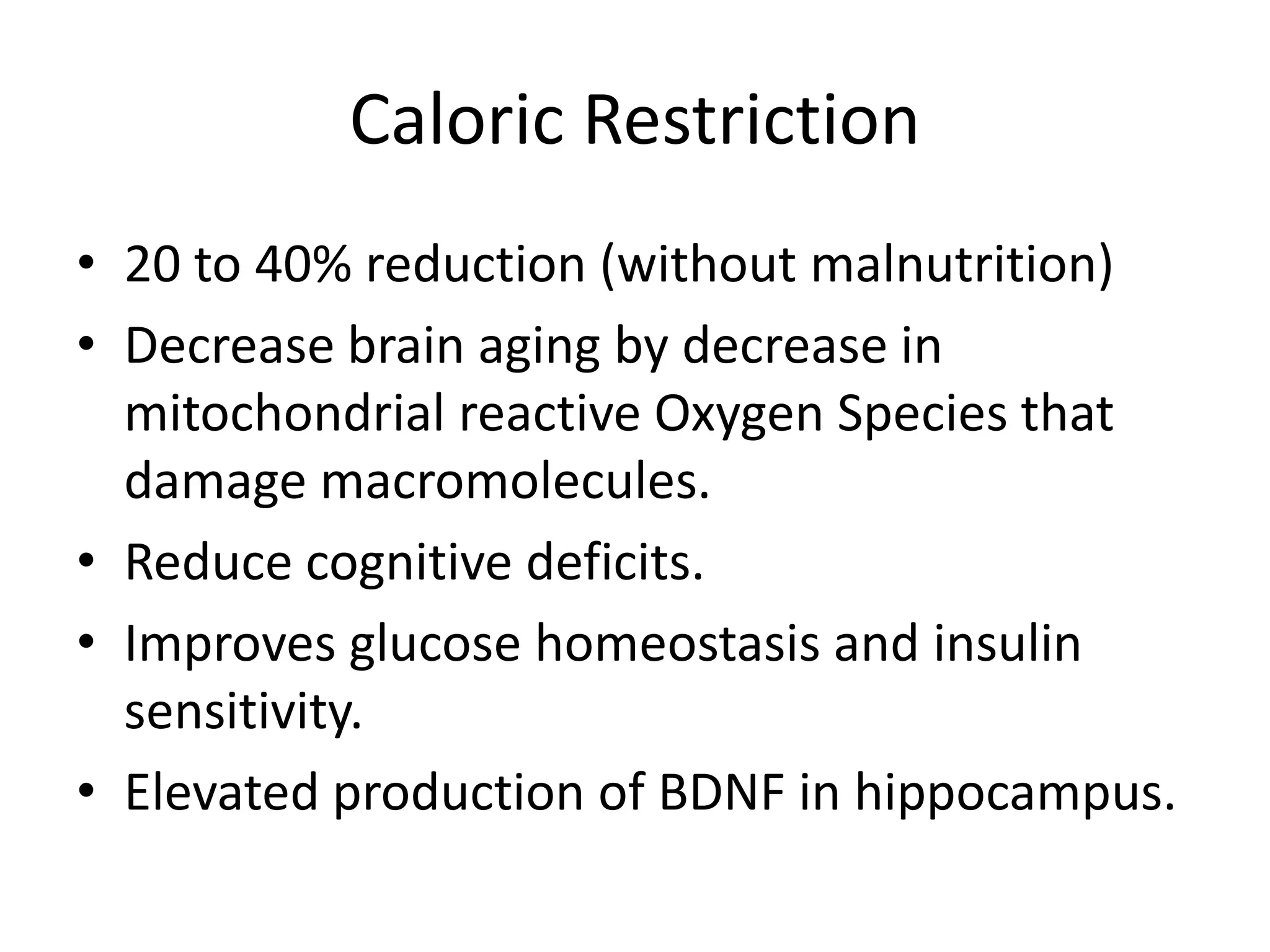
Caloric Restriction
• 20 to 40% reduction (without malnutrition)
• Decrease brain aging by decrease in
mitochondrial reactive Oxygen Species that
damage macromolecules.
• Reduce cognitive deficits.
• Improves glucose homeostasis and insulin
sensitivity.
• Elevated production of BDNF in hippocampus.
Specific nutrients
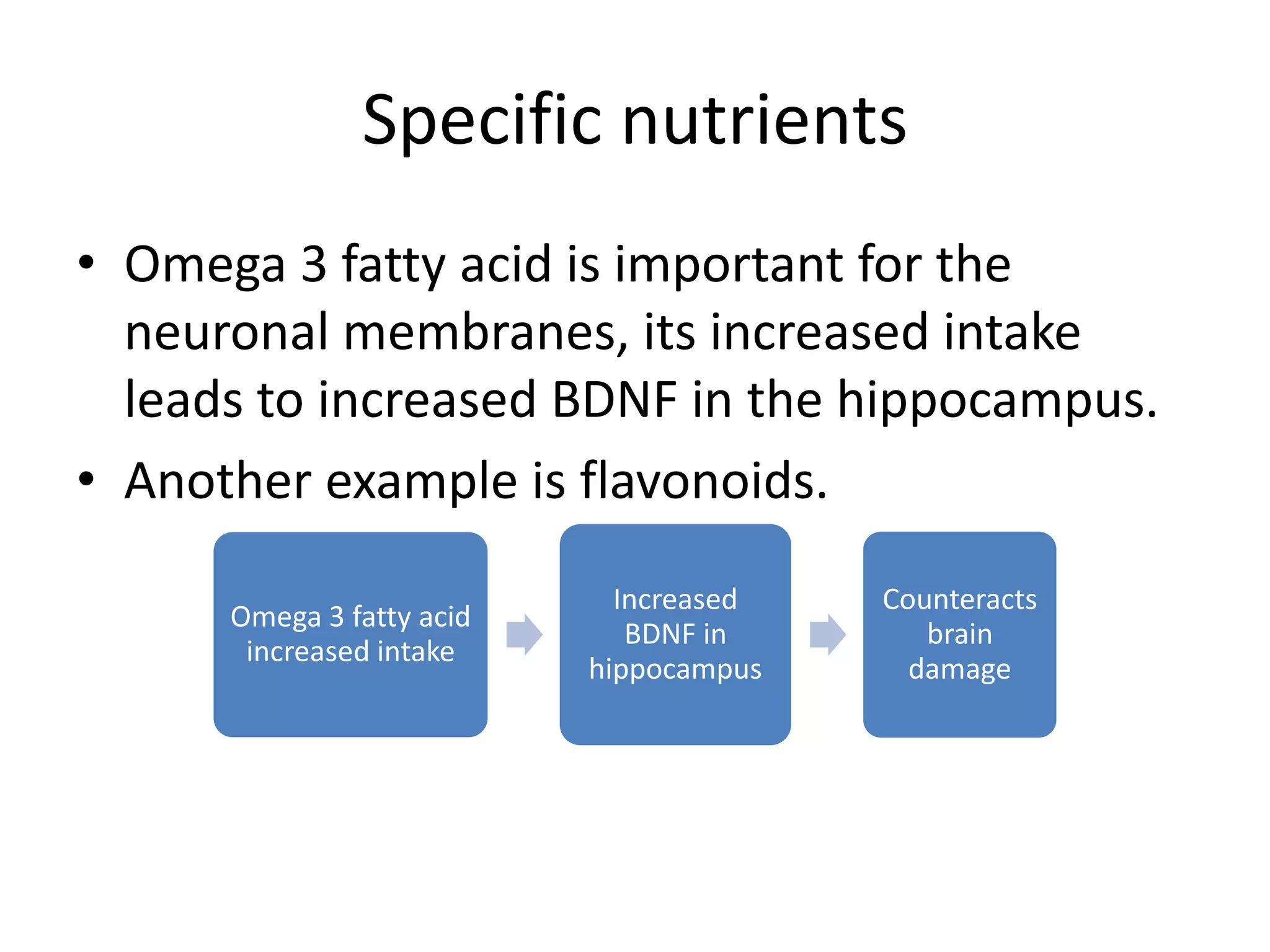
• Omega 3 fatty acid is important for the
neuronal membranes, its increased intake
leads to increased BDNF in the hippocampus.
• Another example is flavonoids.
Omega 3 fatty acid
increased intake

Increased
BDNF in
hippocampus

Counteracts
brain
damage
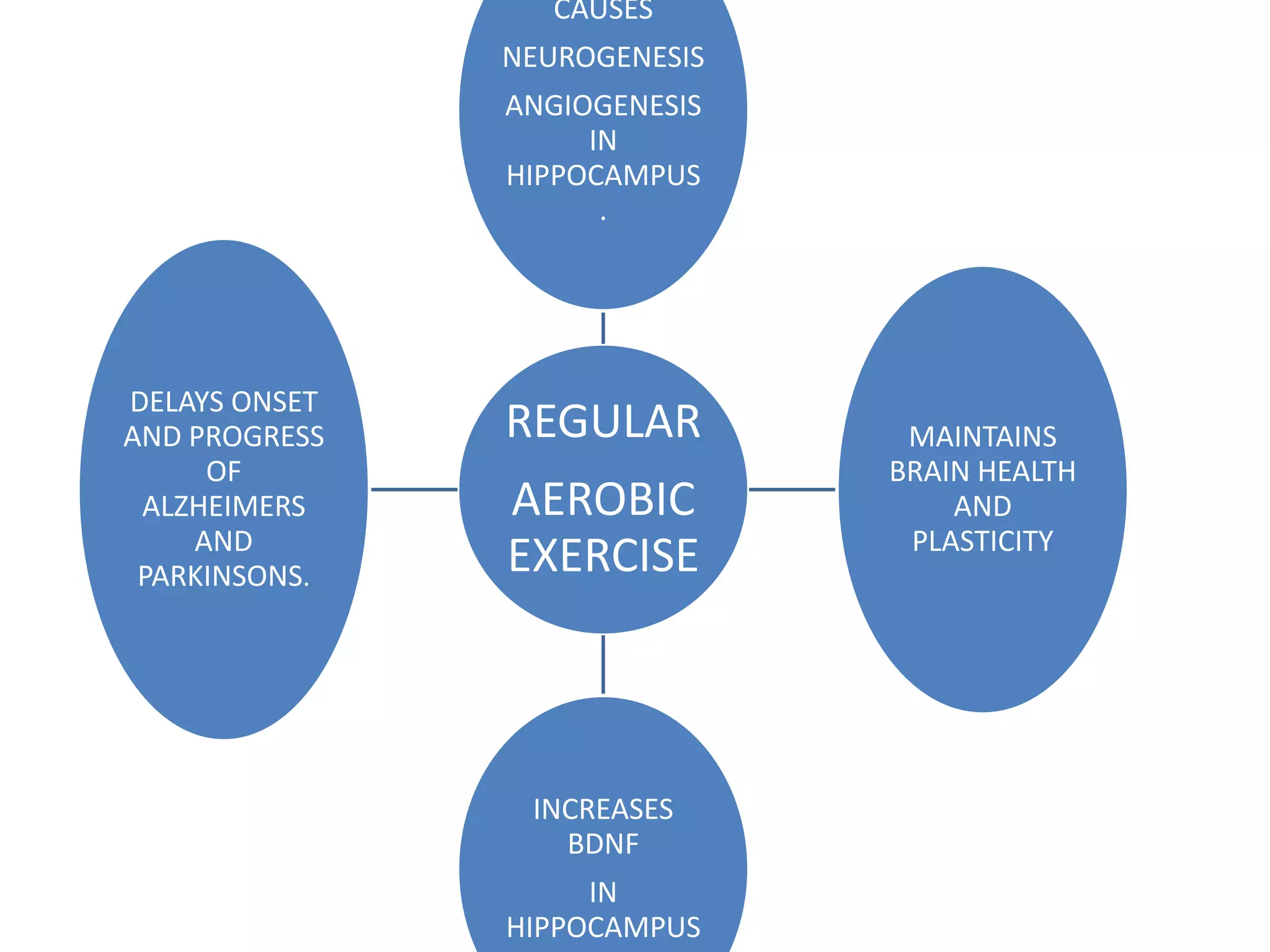
CAUSES
NEUROGENESIS

ANGIOGENESIS
IN
HIPPOCAMPUS
.

DELAYS ONSET
AND PROGRESS
OF
ALZHEIMERS
AND
PARKINSONS.

REGULAR
AEROBIC
EXERCISE

INCREASES
BDNF
IN
HIPPOCAMPUS

MAINTAINS
BRAIN HEALTH
AND
PLASTICITY
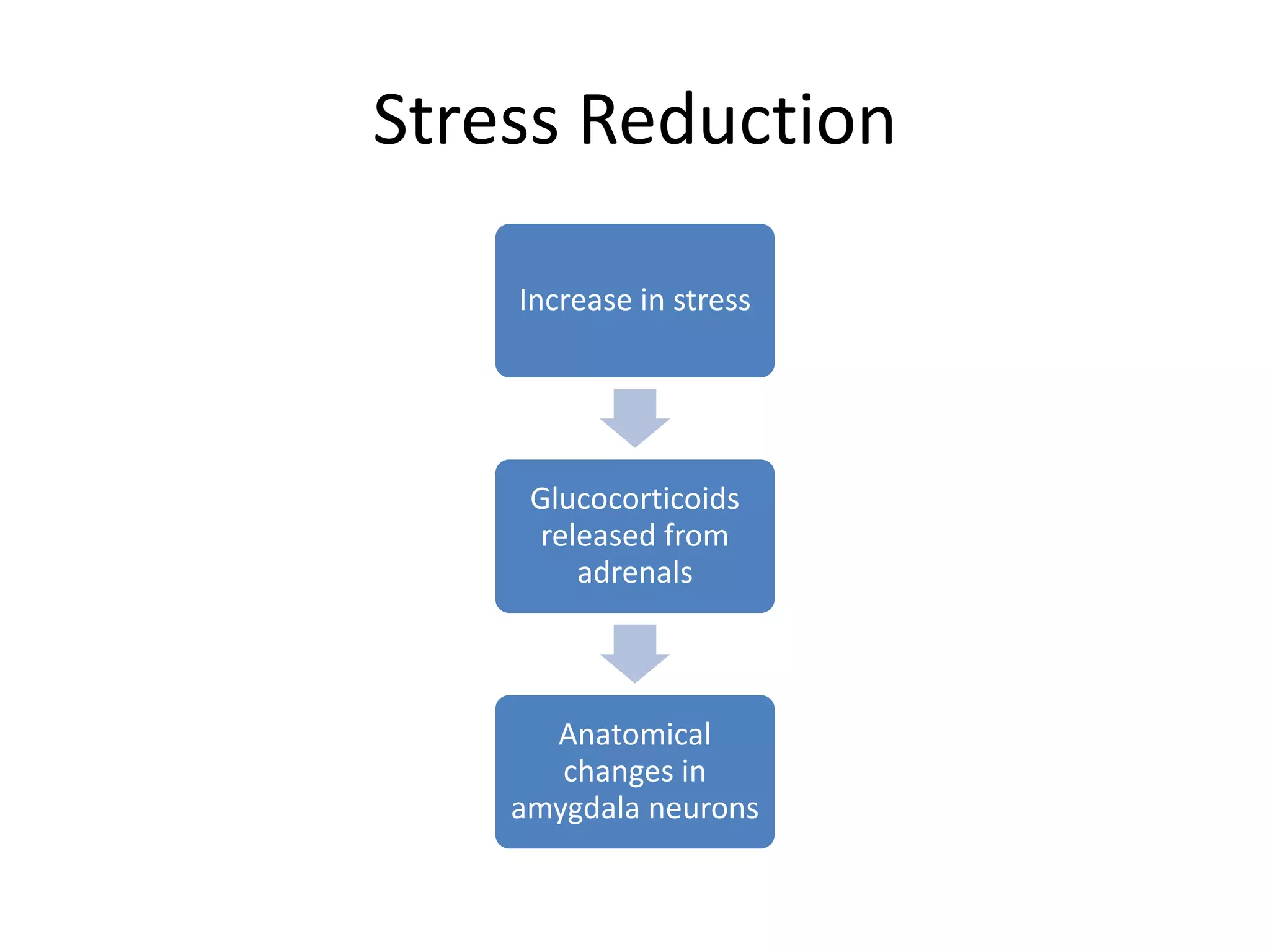
Stress Reduction
Increase in stress

Glucocorticoids
released from
adrenals

Anatomical
changes in
amygdala neurons
Conclusion
• Aging is not a disease. Aging is actually
controlled by genes activated by our lifestyle
factors and their affects on the anatomy and
function of the brain. The primary goal of this
article is for people to grow old gracefully
with full participation In life. Factors like
exercise, low stress, caloric restriction and
environmental enrichment can result in
successful aging.
Critical Analysis
• Helpful and practical review, however the use
of flow charts and a few figures could have
made it much better and more interesting.

Brain aging and plasticity and environmental enrichment!

  • 2.
    Successful brain aging: plasticity,environmental enrichment, and lifestyle • MD Francisco Mora • Dialogues Clinical Neuroscience 2013 March • University of Iowa Carver College of Medicine.
  • 3.
    Abstract • Aging isa physiological process that can develop without the appearance of concurrent diseases. However, older people suffer from memory loss and cognitive decline. Studies of the neurobiology of aging are beginning to decipher the mechanisms behind the physiology of aging of the brain but also the mechanisms that make people more vulnerable to cognitive neurodegenerative diseases. Today we know that the aging brain retains a functional plasticity, which is positively promoted by genes activated by different lifestyle factors. In this article these lfactors and their mechanisms of action are reviewed, including environmental enrichment and the importance of food intake and some nutrients. Aerobic physical exercise and reduction of chronic stress are also briefly reviewed. It is proposed that lifestyle factors promote healthy and successful aging of the brain.
  • 4.
    INTRODUCTION • Aging ofthe brain is a very complex biological process associated with decline in sensory, motor, and cognitive functions. However, aging is not a disease • Aging without the appearance of concurrent diseases is successful aging. • Nonetheless, the possibility of individuals suffering from dementia, as a consequence of that physiological process of aging, has been postulated.
  • 5.
    • It hasbeen suggested that around 120 years of age, without diseases, the population of neocortical synapses could decline to the level found in Alzheimer's disease, with a loss of intracerebral connectivity of around 40%. This causes senile dementia without the presence of the plaques and tangles that characterize Alzheimer's disease(debatable) • Increase in life expectancy is humanity's greatest achievement.
  • 6.
  • 7.
    Genome • Aging isnot a genetically programmed process. • It is controlled by molecular events which cause accumulations in the brain cells and have deleterious effects. • Mostly the causes of aging are: Increase in oxidative stress free radicals Mitochondrial instability hence low energy for maintenance
  • 8.
    Longevity • Longevity meansto delay aging. • It is controlled by genes that maintain and fix damage caused by free radicals and antioxidant activity. • Today we know that longevity depends more on genes that are activated by different lifestyles. • Lifestyle factors govern how long and healthily we live and grow old gracefully.
  • 9.
    Ambiome • Ambiome isa set of cultural ,physical , structural factors that affect anatomy and physiology of the brain. • The aging brain retains a certain plasticity dependant on its environment.
  • 10.
    Changes in theAging Brain
  • 11.
    Anatomical Changes • Thesechanges are governed by interaction with environment. • Non homologous changes, hypothesis: 1.During aging, neuronal morphology and tissue density along with interaction of neurotransmitters No significant loss of neurons except in mono amine cells of mid brain.
  • 12.
    Functional Changes • Morefunctional changes compared to anatomical ones. 1.Deficits in potentiating induction 2.Deficits in long term depression induction 3.Changes in Calcium ion homeostasis which is related to protein oxidation ( high accumulation of Ca ion in intracellular fluid causes neuron death ) • All these lead to cognitive diseases.
  • 13.
    Neurotrophic Factors • Braindiseases depend on 3 main age related changes in the Neurotrophic Factors: Aging causes decrease in BDNF Production in Hippocampus, Causing age related impairments in rats. Deficit in expression of genes encoding Neuronal factors lead to disease.
  • 14.
    Environmental Enrichment • Experimentalsetting in which individuals receive better social and cognitive interactions which leads to better learning and successful brain aging.
  • 15.
  • 16.
    Caloric Restriction • 20to 40% reduction (without malnutrition) • Decrease brain aging by decrease in mitochondrial reactive Oxygen Species that damage macromolecules. • Reduce cognitive deficits. • Improves glucose homeostasis and insulin sensitivity. • Elevated production of BDNF in hippocampus.
  • 17.
    Specific nutrients • Omega3 fatty acid is important for the neuronal membranes, its increased intake leads to increased BDNF in the hippocampus. • Another example is flavonoids. Omega 3 fatty acid increased intake Increased BDNF in hippocampus Counteracts brain damage
  • 18.
  • 19.
    Stress Reduction Increase instress Glucocorticoids released from adrenals Anatomical changes in amygdala neurons
  • 20.
    Conclusion • Aging isnot a disease. Aging is actually controlled by genes activated by our lifestyle factors and their affects on the anatomy and function of the brain. The primary goal of this article is for people to grow old gracefully with full participation In life. Factors like exercise, low stress, caloric restriction and environmental enrichment can result in successful aging.
  • 21.
    Critical Analysis • Helpfuland practical review, however the use of flow charts and a few figures could have made it much better and more interesting.