College of Health Sciences
Dep. of Anesthesia
Biology/1st Stage
Lecture 1
Dr: Shameeran S. Ismael
BVM & S, M.Sc Medical Microbiology(Parasitology),
PhD Molecular Parasitology
Introduction to Biology
What is Biology?
Derived from two Greek words; Bio: it is mean
life and logoy it is mean knowledge.
Therefore, Biology is the study of living
things(organisms). It is divided in different
branches.
Branches of biology:
• There are many branches, but the main
branches are:
1. Zoology: is a study of animals
2. Botany: is a study of plants
3. Microbiology: is a study of microscopic
organisms such as bacteria and viruse
• Other branches:
Biotechnology:- which is deals with development of
techniques for the application if biological processes
to produce materials for use in medicine, industry and
farming.
Anatomy: is a study of internal structure of living
things.
Physiology: is a study of body functions.
Genetics: is a study of inheritance and variation.
Ecology: is a study of relationship/interaction between
living organisms and their environment.
Parasitology: is a study of parasites.
Entomology: is a study of insects.
Cytology: is a study of cell
Why biology is important?
Need to know about cells to learn more about
whole organisms
Why we study Biology?
Study of Biology helps us:
 To understand how our bodies work/function
when we are healthy or diseased.
To understand our environment and use the
natural resources well/sustainably e.g. forests,
water and soil and avoid pollution.
 To make career choices e.g. medicine,
agriculture, veterinary, dentistry etc. that are
based on Biology knowledge.
Cell:
• Cell : is the basic structural and functional unit
of all living organisms.
• It is the smallest unit of life and can replicate
independently
• The study of cell is called Cell Biology
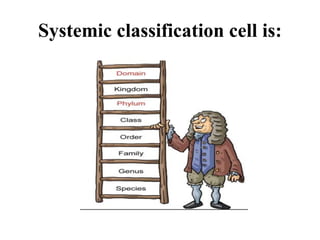
Systemic classification cell is:
Cellular Composition
• Made up of at least one cell
• Unicellular - made of one cell (bacteria,
amoeba, paramecium)
• Multicellular - made up of two or more cells
(plants, fungi, animals)
The functions of life
• Metabolism
• Nutrition
• Growth
• Reproduction
• Homeostasis
• Response to stimuli
History
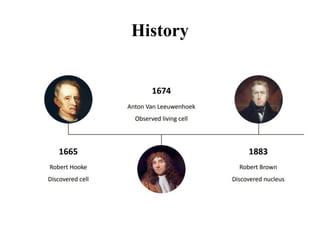
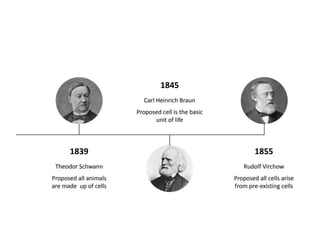
Robert Hooke (1635-1703): He observed that
cork has small regular boxes in it that he called
“cells
1675 Dutchman Antonie van Leeuwenhoek:
discovers unicellular organisms. (A replica of
his microscope at left)
Rudolph Virchow (1821-1902): German scientist
who discovered that all cells come from pre
existing – cells
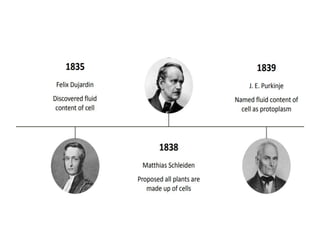
Theodor Schwann and Matthais Schleiden
stated that all living things are made of cells .
(1839)
History
Cell theory:
• All organisms are composed of one or more
cells .
• Cell is the basic unit of life in all living things.
• All cells are produced by the division of
preexisting cells
• New cells are only made from existing cells.
Modern cell theory
Modern Cell Theory contains four statements, in
addition to the original Cell Theory:
1. All organisms composed of cells.
2. An organism’s structure/functions are due to
the activities of its cells.
3. Cells come from preexisting cells; all life traces
its ancestry to the same original cells.
4. The cells of all species have fundamental
similarities.
Uses of Cell Theory
• Disease/Health/Medical Research and Cures
(AIDS, Cancer, Vaccines, Cloning, Stem Cell
Research etc.)
• It is amazing to think that the cells that make
up our bodies are just as alive as we are.
Humans are just a designed community of
cells, which must work together to survive.
• The average human being is composed of
around 100 Trillion individual cells
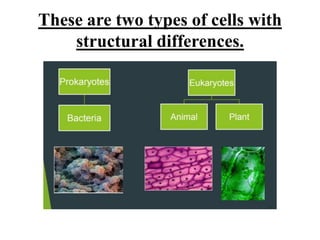
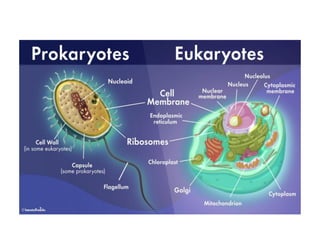
These are two types of cells with
structural differences.
Types of cell:
• There are two types of cell; prokaryotic and
Eukaryotic cell:
• Eukaryotic cell contains a nucleus and
Prokaryotic do not.
• Prokaryotes are single-celled organisms,
while Eukaryotes can be either single-celled or
multi-celled
• Prokaryotic cell: it is mean Pro- first formed,
Karyo- nucleus
• Eukaryotic cell: it is Eu- true, Karyo- nucleus
1.Prokaryotes cell
1. They do not have a nucleus, and their genetic
material is not stored in the nucleus.
2. They have some organelles( structures), but
not many.
3. They are less complicated that eukaryotes.
4. All bacteria are prokaryotes.
5. Most are unicellular, but some prokaryotes
are multicellular
2.Eukaryotes cell
1. They all have a nucleus where the genetic
material of the cell is stored.
2. They have many organelles that work together to
help the cell function.
3.Eukaryotic cells are much more complex then
prokaryotic cells.
4. They can be just one cell or can make up more
complex multi-cellular organisms.
5. All plants, animals, fungi, and protists are
eukaryotic cells
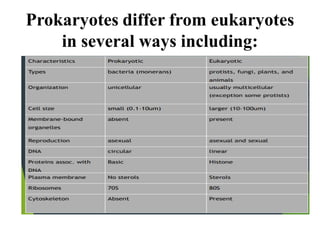
Prokaryotes differ from eukaryotes
in several ways including:
Thanks for attention

Biology theory 1/Health Sciences

  • 1.
    College of HealthSciences Dep. of Anesthesia Biology/1st Stage Lecture 1 Dr: Shameeran S. Ismael BVM & S, M.Sc Medical Microbiology(Parasitology), PhD Molecular Parasitology
  • 2.
    Introduction to Biology Whatis Biology? Derived from two Greek words; Bio: it is mean life and logoy it is mean knowledge. Therefore, Biology is the study of living things(organisms). It is divided in different branches.
  • 3.
    Branches of biology: •There are many branches, but the main branches are: 1. Zoology: is a study of animals 2. Botany: is a study of plants 3. Microbiology: is a study of microscopic organisms such as bacteria and viruse
  • 4.
    • Other branches: Biotechnology:-which is deals with development of techniques for the application if biological processes to produce materials for use in medicine, industry and farming. Anatomy: is a study of internal structure of living things. Physiology: is a study of body functions. Genetics: is a study of inheritance and variation.
  • 5.
    Ecology: is astudy of relationship/interaction between living organisms and their environment. Parasitology: is a study of parasites. Entomology: is a study of insects. Cytology: is a study of cell
  • 6.
    Why biology isimportant? Need to know about cells to learn more about whole organisms
  • 7.
    Why we studyBiology? Study of Biology helps us:  To understand how our bodies work/function when we are healthy or diseased. To understand our environment and use the natural resources well/sustainably e.g. forests, water and soil and avoid pollution.  To make career choices e.g. medicine, agriculture, veterinary, dentistry etc. that are based on Biology knowledge.
  • 8.
    Cell: • Cell :is the basic structural and functional unit of all living organisms. • It is the smallest unit of life and can replicate independently • The study of cell is called Cell Biology
  • 9.
  • 10.
    Cellular Composition • Madeup of at least one cell • Unicellular - made of one cell (bacteria, amoeba, paramecium) • Multicellular - made up of two or more cells (plants, fungi, animals)
  • 11.
    The functions oflife • Metabolism • Nutrition • Growth • Reproduction • Homeostasis • Response to stimuli
  • 12.
    History Robert Hooke (1635-1703):He observed that cork has small regular boxes in it that he called “cells 1675 Dutchman Antonie van Leeuwenhoek: discovers unicellular organisms. (A replica of his microscope at left)
  • 13.
    Rudolph Virchow (1821-1902):German scientist who discovered that all cells come from pre existing – cells Theodor Schwann and Matthais Schleiden stated that all living things are made of cells . (1839)
  • 14.
  • 17.
    Cell theory: • Allorganisms are composed of one or more cells . • Cell is the basic unit of life in all living things. • All cells are produced by the division of preexisting cells • New cells are only made from existing cells.
  • 18.
    Modern cell theory ModernCell Theory contains four statements, in addition to the original Cell Theory: 1. All organisms composed of cells. 2. An organism’s structure/functions are due to the activities of its cells. 3. Cells come from preexisting cells; all life traces its ancestry to the same original cells. 4. The cells of all species have fundamental similarities.
  • 19.
    Uses of CellTheory • Disease/Health/Medical Research and Cures (AIDS, Cancer, Vaccines, Cloning, Stem Cell Research etc.) • It is amazing to think that the cells that make up our bodies are just as alive as we are. Humans are just a designed community of cells, which must work together to survive. • The average human being is composed of around 100 Trillion individual cells
  • 20.
    These are twotypes of cells with structural differences.
  • 21.
    Types of cell: •There are two types of cell; prokaryotic and Eukaryotic cell: • Eukaryotic cell contains a nucleus and Prokaryotic do not. • Prokaryotes are single-celled organisms, while Eukaryotes can be either single-celled or multi-celled
  • 22.
    • Prokaryotic cell:it is mean Pro- first formed, Karyo- nucleus • Eukaryotic cell: it is Eu- true, Karyo- nucleus
  • 23.
    1.Prokaryotes cell 1. Theydo not have a nucleus, and their genetic material is not stored in the nucleus. 2. They have some organelles( structures), but not many. 3. They are less complicated that eukaryotes. 4. All bacteria are prokaryotes. 5. Most are unicellular, but some prokaryotes are multicellular
  • 24.
    2.Eukaryotes cell 1. Theyall have a nucleus where the genetic material of the cell is stored. 2. They have many organelles that work together to help the cell function. 3.Eukaryotic cells are much more complex then prokaryotic cells. 4. They can be just one cell or can make up more complex multi-cellular organisms. 5. All plants, animals, fungi, and protists are eukaryotic cells
  • 26.
    Prokaryotes differ fromeukaryotes in several ways including:
  • 27.