‫الرحيم‬ ‫الرحمن‬ ‫هللا‬ ‫بسم‬
‫القضارف‬ ‫جامعة‬
Faculty of Medical Laboratory
Sciences
Cell Biology
Introduction to the course
:
Presented by
HASSAN ELNUR ADAM M.Sc
Introduction to the Study of
Cell Biology
Objectives
A brief outline of the early history of cell
biology.
Familiarize with the basic properties of
all cells.
Describe the differences between
prokaryotic and eukaryotic cells.
• Biology = science of life
– Characteristics, classification and behaviors of
organisms,
– how species and individuals come into
existence, and
– the interactions they have with each other and
with their environment.
• Modern biology is divided into 2 categories
based on primary level of focus:
–Organismic biology ~ emphasize on biodiversity,
evolutionary relationships , adaptations, and
ecology of plants & animals.
–Molecular & cellular biology
• MB – concerns with interactions between the
various systems of a cell, including the
interrelationship of DNA, RNA, and protein
synthesis and how these interactions are
regulated.
• CB –studies the physiological properties of
cells, as well as their behaviors, interactions,
and environment.
Modern Cell Biology
• Involve interweaving of 3 historically distinct
disciplines
1. Cytology (the study of cells)
– Microscopic study of cell structure organization
2. Biochemistry
– chemistry of biological structure & function/cellular
function
3. Genetics
– Information flow
The Discovery of Cells
- The cell theory
• The term cell was first used by the English scientist Robert
Hooke (1635-1703), who, in the mid-seventeenth century,
used the term to describe the structure of cork.
• The Dutch scientist Anton van Leeuwenhoek (1632-1723)
made the first recorded observations of bacterial cells
(termed "animalcules") from pond water & tooth scrapings.
• 1830s –importance of cells realised
– 1838 - German botanist Matthias Schleiden (1804-1881) observed
that despite differences in tissue structure, all plants tissues were
made of cells.
Rudolph Virchow 1821 - 1902
Cell Theory
• All living things are made up of cells.
• Cells are the smallest working units of all living
things.
• All cells come from preexisting cells through
cell division.
Definition of Cell
A cell is the smallest unit that is
capable of performing life functions.
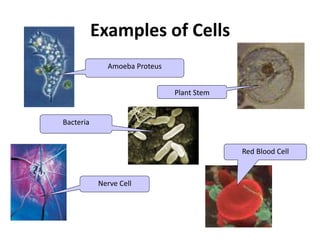
Examples of Cells
Amoeba Proteus
Plant Stem
Red Blood Cell
Nerve Cell
Bacteria
11
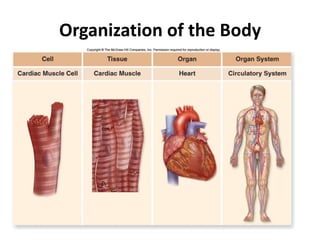
Organization of the Body
Two Types of Cells
•Prokaryotic
•Eukaryotic
Prokaryotes
• Lack a nucleus
• Have a single chromosome
• Reproduce by binary fission
• Include bacteria
Prokaryotic
http://library.thinkquest.org/C004535/prokaryotic_cells.html
Eukaryotes
• Contain a nucleus & membrane bound
organelles
• Multiply cells by mitosis
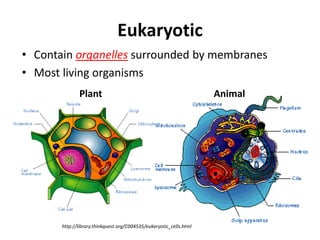
Eukaryotic
• Contain organelles surrounded by membranes
• Most living organisms
Plant Animal
http://library.thinkquest.org/C004535/eukaryotic_cells.html
Questions???
Thanks
18

CELL STRUCTURE & FUNCTION.pptx

  • 1.
    ‫الرحيم‬ ‫الرحمن‬ ‫هللا‬‫بسم‬ ‫القضارف‬ ‫جامعة‬ Faculty of Medical Laboratory Sciences Cell Biology Introduction to the course : Presented by HASSAN ELNUR ADAM M.Sc
  • 2.
    Introduction to theStudy of Cell Biology Objectives A brief outline of the early history of cell biology. Familiarize with the basic properties of all cells. Describe the differences between prokaryotic and eukaryotic cells.
  • 3.
    • Biology =science of life – Characteristics, classification and behaviors of organisms, – how species and individuals come into existence, and – the interactions they have with each other and with their environment.
  • 4.
    • Modern biologyis divided into 2 categories based on primary level of focus: –Organismic biology ~ emphasize on biodiversity, evolutionary relationships , adaptations, and ecology of plants & animals. –Molecular & cellular biology • MB – concerns with interactions between the various systems of a cell, including the interrelationship of DNA, RNA, and protein synthesis and how these interactions are regulated. • CB –studies the physiological properties of cells, as well as their behaviors, interactions, and environment.
  • 5.
    Modern Cell Biology •Involve interweaving of 3 historically distinct disciplines 1. Cytology (the study of cells) – Microscopic study of cell structure organization 2. Biochemistry – chemistry of biological structure & function/cellular function 3. Genetics – Information flow
  • 6.
    The Discovery ofCells - The cell theory • The term cell was first used by the English scientist Robert Hooke (1635-1703), who, in the mid-seventeenth century, used the term to describe the structure of cork. • The Dutch scientist Anton van Leeuwenhoek (1632-1723) made the first recorded observations of bacterial cells (termed "animalcules") from pond water & tooth scrapings. • 1830s –importance of cells realised – 1838 - German botanist Matthias Schleiden (1804-1881) observed that despite differences in tissue structure, all plants tissues were made of cells.
  • 7.
  • 8.
    Cell Theory • Allliving things are made up of cells. • Cells are the smallest working units of all living things. • All cells come from preexisting cells through cell division.
  • 9.
    Definition of Cell Acell is the smallest unit that is capable of performing life functions.
  • 10.
    Examples of Cells AmoebaProteus Plant Stem Red Blood Cell Nerve Cell Bacteria
  • 11.
  • 12.
    Two Types ofCells •Prokaryotic •Eukaryotic
  • 13.
    Prokaryotes • Lack anucleus • Have a single chromosome • Reproduce by binary fission • Include bacteria
  • 14.
  • 15.
    Eukaryotes • Contain anucleus & membrane bound organelles • Multiply cells by mitosis
  • 16.
    Eukaryotic • Contain organellessurrounded by membranes • Most living organisms Plant Animal http://library.thinkquest.org/C004535/eukaryotic_cells.html
  • 17.
  • 18.