Koz 1
INTERNATIONAL BACCALAUREATE
BIOLOGY LAB REPORT
EFFECTS OF LIGHT INTENSITY ON PHOTOSYNTHESIS
--
Candidate: Serra Koz
Supervisor: --
May 2014
Koz 2
BACKGROUND INFORMATION
Photosynthesis is a complex series of reactions catalysed by a number of different enzymes.
To aid understanding, photosynthesis can consider in two stages.
The first stage is known as the ‘light-dependent reactions’ because light is essential for them
to occur. Chlorophyll absorbs light energy and this energy is used to produce ATP. The
energy is also used to split water molecules into hydrogen and oxygen in a process called
photolysis. Hydrogen ions and electrons (from the hydrogen part of water) and oxygen are
released. Oxygen is a waste product of photosynthesis but is vital to sustain the lives of
aerobic organisms once it has been released into the atmosphere. The ATP, hydrogen ions and
electrons are used in the light-independent reactions. ATP and hydrogen ions and electrons
are used in the second stage of photosynthesis, the ‘light-independent reactions’. During the
‘light-independent reactions’, carbon dioxide, taken in from the air, is combined with
hydrogen and ATP to form a range of organic molecules for the plant. The conversion of
inorganic carbon dioxide to organic molecules such as glucose is known as carbon fixation.
ATP provides the energy for the process. The series of reactions that occurs during
photosynthesis is summarised as:
carbon dioxide + water → glucose + oxygen
6CO2 + 6H2O → C6 H12O6 + 6O2
The equation above shows that when photosynthesis
occurs, carbon dioxide is used and oxygen is released.
The mass of the plant (its biomass) will also increase
as glucose is used to produce other plant materials.
Any of these three factors can be used to measure
how quickly the reactions of photosynthesis are
occurring.
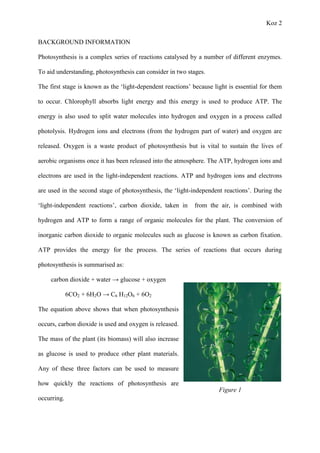
Figure 1
Koz 3
Aquatic plants release bubbles of oxygen as they photosynthesise and if the volume of these
bubbles is measured for a period of time, the rate of photosynthesis can be determined directly
(Figure 1).
The rate at which a plant can photosynthesise depends on factors in the environment that
surrounds it. On a warm, sunny afternoon, photosynthesis will be more rapid than on a cool,
shady morning.
More oxygen will be produced and more carbon dioxide used. But photosynthesis cannot
increase beyond certain limits. The effect of light, temperature and carbon dioxide in the air
can be measured experimentally, varying one factor while keeping the others the same.
(Walpole, Merson-Davies and Leighton, 2011, pg. 61, 62, 63)
AIM
The aim of this experiment is to investigate the effects of light intensity on the rate of
photosynthesis by counting oxygen bubbles.
RESEARCH QUESTION
How does light intensity affects rate of photosynthesis at the room temperature (25°C), by
using the same plant (elodea), same amount of water (230 mL) , same color of light (white)
and by changing the distance between light source and elodea plant?
HYPOTHESIS
Plants contains chlorophyll and if the light intensity increases, chlorophyll absorbs more light
and photosynthesis rate (oxygen bubbles) increases as well. After a period of time the number
of oxygen bubbles will remain constant.
Koz 4
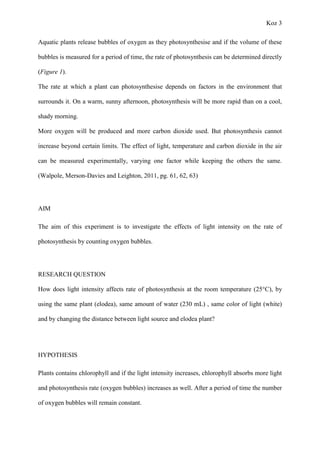
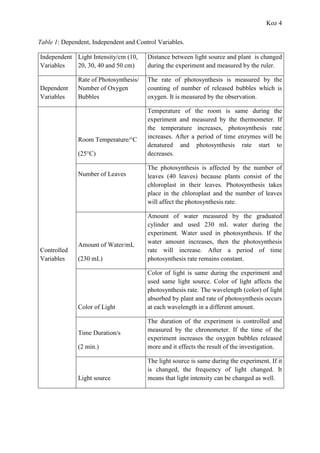
Table 1: Dependent, Independent and Control Variables.
Independent
Variables
Light Intensity/cm (10,
20, 30, 40 and 50 cm)
Distance between light source and plant is changed
during the experiment and measured by the ruler.
Dependent
Variables
Rate of Photosynthesis/
Number of Oxygen
Bubbles
The rate of photosynthesis is measured by the
counting of number of released bubbles which is
oxygen. It is measured by the observation.
Room Temperature/°C
(25°C)
Temperature of the room is same during the
experiment and measured by the thermometer. If
the temperature increases, photosynthesis rate
increases. After a period of time enzymes will be
denatured and photosynthesis rate start to
decreases.
Number of Leaves
The photosynthesis is affected by the number of
leaves (40 leaves) because plants consist of the
chloroplast in their leaves. Photosynthesis takes
place in the chloroplast and the number of leaves
will affect the photosynthesis rate.
Controlled
Variables
Amount of Water/mL
(230 mL)
Amount of water measured by the graduated
cylinder and used 230 mL water during the
experiment. Water used in photosynthesis. If the
water amount increases, then the photosynthesis
rate will increase. After a period of time
photosynthesis rate remains constant.
Color of Light
Color of light is same during the experiment and
used same light source. Color of light affects the
photosynthesis rate. The wavelength (color) of light
absorbed by plant and rate of photosynthesis occurs
at each wavelength in a different amount.
Time Duration/s
(2 min.)
The duration of the experiment is controlled and
measured by the chronometer. If the time of the
experiment increases the oxygen bubbles released
more and it effects the result of the investigation.
Light source
The light source is same during the experiment. If it
is changed, the frequency of light changed. It
means that light intensity can be changed as well.
Koz 5
MATERIALS
 Elodea Plant
 Water (230 mL)
 Light Source
 Small Test Tube
 100 mL Graduated Cylinder (±0.5)
 100 mL Erlenmeyer (±0.5)
 250 mL Beaker (±5)
 30 cm Ruler (±0.05)
 Chronometer (±1)
 Thermometer (±0.1)
 Cutter
PROCEDURE
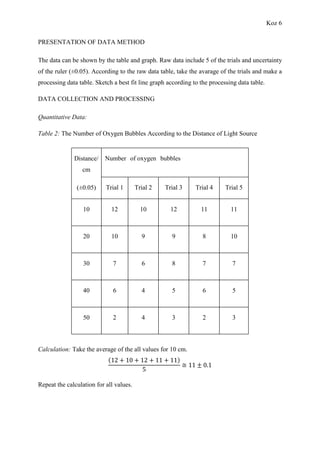
i. The elodea plant was cut that contains 40
leaves.
ii. 230 mL water was put into the beaker and
Erlenmeyer was placed into the beaker as
shown in the Figure 2.
iii. The test tube was placed on the top of the funnel.
iv. The light source was placed in 10 cm. (Safety: The electricity and water can be
dangerous.)
v. Chronometer was started.
vi. The numbers of oxygen bubbles from the elodea plant were counted in 2 minutes.
vii. The process ii, iii, iv, v, vi and vii for the 20 cm, 30 cm, 40 cm and 50 cm distance was
repeated.
viii. The experiment was repeated for more 4 times.
Figure 2
Koz 6
PRESENTATION OF DATA METHOD
The data can be shown by the table and graph. Raw data include 5 of the trials and uncertainty
of the ruler (±0.05). According to the raw data table, take the avarage of the trials and make a
processing data table. Sketch a best fit line graph according to the processing data table.
DATA COLLECTION AND PROCESSING
Quantitative Data:
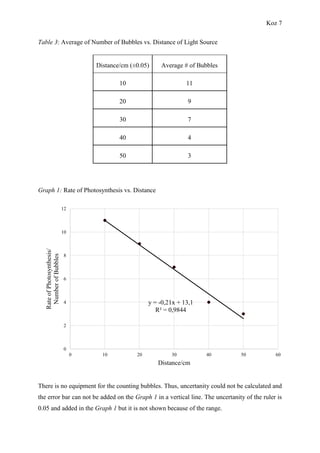
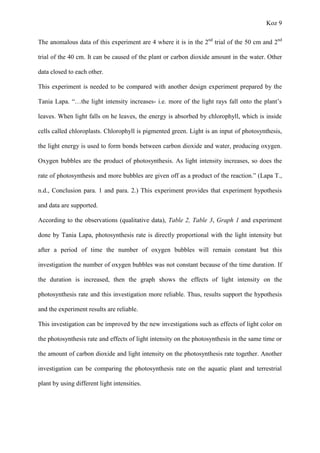
Table 2: The Number of Oxygen Bubbles According to the Distance of Light Source
Distance/
cm
Number of oxygen bubbles
(±0.05) Trial 1 Trial 2 Trial 3 Trial 4 Trial 5
10 12 10 12 11 11
20 10 9 9 8 10
30 7 6 8 7 7
40 6 4 5 6 5
50 2 4 3 2 3
Calculation: Take the average of the all values for 10 cm.
(12 + 10 + 12 + 11 + 11)
5
≅ 11 ± 0.1
Repeat the calculation for all values.
Koz 7
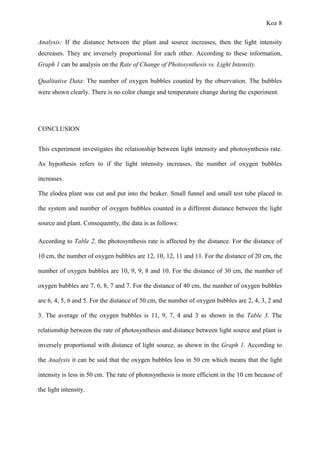
Table 3: Average of Number of Bubbles vs. Distance of Light Source
Distance/cm (±0.05) Average # of Bubbles
10 11
20 9
30 7
40 4
50 3
Graph 1: Rate of Photosynthesis vs. Distance
There is no equipment for the counting bubbles. Thus, uncertanity could not be calculated and
the error bar can not be added on the Graph 1 in a vertical line. The uncertanity of the ruler is
0.05 and added in the Graph 1 but it is not shown because of the range.
y = -0,21x + 13,1
R² = 0,9844
0
2
4
6
8
10
12
0 10 20 30 40 50 60
RateofPhotosynthesis/
NumberofBubbles
Distance/cm
Koz 8
Analysis: If the distance between the plant and source increases, then the light intensity
decreases. They are inversely proportional for each other. According to these information,
Graph 1 can be analysis on the Rate of Change of Photosynthesis vs. Light Intensity.
Qualitative Data: The number of oxygen bubbles counted by the observation. The bubbles
were shown clearly. There is no color change and temperature change during the experiment.
CONCLUSION
This experiment investigates the relationship between light intensity and photosynthesis rate.
As hypothesis refers to if the light intensity increases, the number of oxygen bubbles
increases.
The elodea plant was cut and put into the beaker. Small funnel and small test tube placed in
the system and number of oxygen bubbles counted in a different distance between the light
source and plant. Consequently, the data is as follows:
According to Table 2, the photosynthesis rate is affected by the distance. For the distance of
10 cm, the number of oxygen bubbles are 12, 10, 12, 11 and 11. For the distance of 20 cm, the
number of oxygen bubbles are 10, 9, 9, 8 and 10. For the distance of 30 cm, the number of
oxygen bubbles are 7, 6, 8, 7 and 7. For the distance of 40 cm, the number of oxygen bubbles
are 6, 4, 5, 6 and 5. For the distance of 50 cm, the number of oxygen bubbles are 2, 4, 3, 2 and
3. The average of the oxygen bubbles is 11, 9, 7, 4 and 3 as shown in the Table 3. The
relationship between the rate of photosynthesis and distance between light source and plant is
inversely proportional with distance of light source, as shown in the Graph 1. According to
the Analysis it can be said that the oxygen bubbles less in 50 cm which means that the light
intensity is less in 50 cm. The rate of photosynthesis is more efficient in the 10 cm because of
the light intensity.
Koz 9
The anomalous data of this experiment are 4 where it is in the 2nd
trial of the 50 cm and 2nd
trial of the 40 cm. It can be caused of the plant or carbon dioxide amount in the water. Other
data closed to each other.
This experiment is needed to be compared with another design experiment prepared by the
Tania Lapa. “…the light intensity increases- i.e. more of the light rays fall onto the plant’s
leaves. When light falls on he leaves, the energy is absorbed by chlorophyll, which is inside
cells called chloroplasts. Chlorophyll is pigmented green. Light is an input of photosynthesis,
the light energy is used to form bonds between carbon dioxide and water, producing oxygen.
Oxygen bubbles are the product of photosynthesis. As light intensity increases, so does the
rate of photosynthesis and more bubbles are given off as a product of the reaction.” (Lapa T.,
n.d., Conclusion para. 1 and para. 2.) This experiment provides that experiment hypothesis
and data are supported.
According to the observations (qualitative data), Table 2, Table 3, Graph 1 and experiment
done by Tania Lapa, photosynthesis rate is directly proportional with the light intensity but
after a period of time the number of oxygen bubbles will remain constant but this
investigation the number of oxygen bubbles was not constant because of the time duration. If
the duration is increased, then the graph shows the effects of light intensity on the
photosynthesis rate and this investigation more reliable. Thus, results support the hypothesis
and the experiment results are reliable.
This investigation can be improved by the new investigations such as effects of light color on
the photosynthesis rate and effects of light intensity on the photosynthesis in the same time or
the amount of carbon dioxide and light intensity on the photosynthesis rate together. Another
investigation can be comparing the photosynthesis rate on the aquatic plant and terrestrial
plant by using different light intensities.
Koz 10
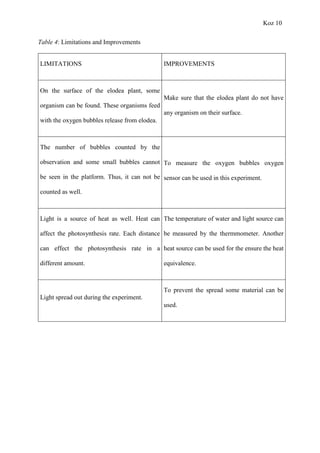
Table 4: Limitations and Improvements
LIMITATIONS IMPROVEMENTS
On the surface of the elodea plant, some
organism can be found. These organisms feed
with the oxygen bubbles release from elodea.
Make sure that the elodea plant do not have
any organism on their surface.
The number of bubbles counted by the
observation and some small bubbles cannot
be seen in the platform. Thus, it can not be
counted as well.
To measure the oxygen bubbles oxygen
sensor can be used in this experiment.
Light is a source of heat as well. Heat can
affect the photosynthesis rate. Each distance
can effect the photosynthesis rate in a
different amount.
The temperature of water and light source can
be measured by the thermmometer. Another
heat source can be used for the ensure the heat
equivalence.
Light spread out during the experiment.
To prevent the spread some material can be
used.
Koz 11
REFERENCES
“Factors affecting the rate of photosynthesis biology essay.” Retrieved from:
<http://www.ukessays.com/essays/biology/factors-affecting-the-rate-of-photosynthesis-
biology-essay.php>
"Investigation of Photosynthesis in Elodea." 123HelpMe.com. 19th
January 2014
<http://www.123HelpMe.com/view.asp?id=120346>
Lapa, T. (n. d.). Investigation the effect of light intensity on elodea. No city of publication.
Retrieved from:
<http://www.courseworkbank.info/courseworkbank.info.php?f=R0NTRS9CaW9sb2d5L0l
udmVzdGlnYXRpbmcgdGhlIGVmZmVjdCBvZiBMaWdodCBJbnRlbnNpdHkgb24gRW
xvZGVhLnBkZg== >
Walpole, B., Merson-Davies A. and Dann L. (2011). Biology for the ib diploma
Cambridge: Cambridge University Press.

Biology Lab Report 1

  • 1.
    Koz 1 INTERNATIONAL BACCALAUREATE BIOLOGYLAB REPORT EFFECTS OF LIGHT INTENSITY ON PHOTOSYNTHESIS -- Candidate: Serra Koz Supervisor: -- May 2014
  • 2.
    Koz 2 BACKGROUND INFORMATION Photosynthesisis a complex series of reactions catalysed by a number of different enzymes. To aid understanding, photosynthesis can consider in two stages. The first stage is known as the ‘light-dependent reactions’ because light is essential for them to occur. Chlorophyll absorbs light energy and this energy is used to produce ATP. The energy is also used to split water molecules into hydrogen and oxygen in a process called photolysis. Hydrogen ions and electrons (from the hydrogen part of water) and oxygen are released. Oxygen is a waste product of photosynthesis but is vital to sustain the lives of aerobic organisms once it has been released into the atmosphere. The ATP, hydrogen ions and electrons are used in the light-independent reactions. ATP and hydrogen ions and electrons are used in the second stage of photosynthesis, the ‘light-independent reactions’. During the ‘light-independent reactions’, carbon dioxide, taken in from the air, is combined with hydrogen and ATP to form a range of organic molecules for the plant. The conversion of inorganic carbon dioxide to organic molecules such as glucose is known as carbon fixation. ATP provides the energy for the process. The series of reactions that occurs during photosynthesis is summarised as: carbon dioxide + water → glucose + oxygen 6CO2 + 6H2O → C6 H12O6 + 6O2 The equation above shows that when photosynthesis occurs, carbon dioxide is used and oxygen is released. The mass of the plant (its biomass) will also increase as glucose is used to produce other plant materials. Any of these three factors can be used to measure how quickly the reactions of photosynthesis are occurring. Figure 1
  • 3.
    Koz 3 Aquatic plantsrelease bubbles of oxygen as they photosynthesise and if the volume of these bubbles is measured for a period of time, the rate of photosynthesis can be determined directly (Figure 1). The rate at which a plant can photosynthesise depends on factors in the environment that surrounds it. On a warm, sunny afternoon, photosynthesis will be more rapid than on a cool, shady morning. More oxygen will be produced and more carbon dioxide used. But photosynthesis cannot increase beyond certain limits. The effect of light, temperature and carbon dioxide in the air can be measured experimentally, varying one factor while keeping the others the same. (Walpole, Merson-Davies and Leighton, 2011, pg. 61, 62, 63) AIM The aim of this experiment is to investigate the effects of light intensity on the rate of photosynthesis by counting oxygen bubbles. RESEARCH QUESTION How does light intensity affects rate of photosynthesis at the room temperature (25°C), by using the same plant (elodea), same amount of water (230 mL) , same color of light (white) and by changing the distance between light source and elodea plant? HYPOTHESIS Plants contains chlorophyll and if the light intensity increases, chlorophyll absorbs more light and photosynthesis rate (oxygen bubbles) increases as well. After a period of time the number of oxygen bubbles will remain constant.
  • 4.
    Koz 4 Table 1:Dependent, Independent and Control Variables. Independent Variables Light Intensity/cm (10, 20, 30, 40 and 50 cm) Distance between light source and plant is changed during the experiment and measured by the ruler. Dependent Variables Rate of Photosynthesis/ Number of Oxygen Bubbles The rate of photosynthesis is measured by the counting of number of released bubbles which is oxygen. It is measured by the observation. Room Temperature/°C (25°C) Temperature of the room is same during the experiment and measured by the thermometer. If the temperature increases, photosynthesis rate increases. After a period of time enzymes will be denatured and photosynthesis rate start to decreases. Number of Leaves The photosynthesis is affected by the number of leaves (40 leaves) because plants consist of the chloroplast in their leaves. Photosynthesis takes place in the chloroplast and the number of leaves will affect the photosynthesis rate. Controlled Variables Amount of Water/mL (230 mL) Amount of water measured by the graduated cylinder and used 230 mL water during the experiment. Water used in photosynthesis. If the water amount increases, then the photosynthesis rate will increase. After a period of time photosynthesis rate remains constant. Color of Light Color of light is same during the experiment and used same light source. Color of light affects the photosynthesis rate. The wavelength (color) of light absorbed by plant and rate of photosynthesis occurs at each wavelength in a different amount. Time Duration/s (2 min.) The duration of the experiment is controlled and measured by the chronometer. If the time of the experiment increases the oxygen bubbles released more and it effects the result of the investigation. Light source The light source is same during the experiment. If it is changed, the frequency of light changed. It means that light intensity can be changed as well.
  • 5.
    Koz 5 MATERIALS  ElodeaPlant  Water (230 mL)  Light Source  Small Test Tube  100 mL Graduated Cylinder (±0.5)  100 mL Erlenmeyer (±0.5)  250 mL Beaker (±5)  30 cm Ruler (±0.05)  Chronometer (±1)  Thermometer (±0.1)  Cutter PROCEDURE i. The elodea plant was cut that contains 40 leaves. ii. 230 mL water was put into the beaker and Erlenmeyer was placed into the beaker as shown in the Figure 2. iii. The test tube was placed on the top of the funnel. iv. The light source was placed in 10 cm. (Safety: The electricity and water can be dangerous.) v. Chronometer was started. vi. The numbers of oxygen bubbles from the elodea plant were counted in 2 minutes. vii. The process ii, iii, iv, v, vi and vii for the 20 cm, 30 cm, 40 cm and 50 cm distance was repeated. viii. The experiment was repeated for more 4 times. Figure 2
  • 6.
    Koz 6 PRESENTATION OFDATA METHOD The data can be shown by the table and graph. Raw data include 5 of the trials and uncertainty of the ruler (±0.05). According to the raw data table, take the avarage of the trials and make a processing data table. Sketch a best fit line graph according to the processing data table. DATA COLLECTION AND PROCESSING Quantitative Data: Table 2: The Number of Oxygen Bubbles According to the Distance of Light Source Distance/ cm Number of oxygen bubbles (±0.05) Trial 1 Trial 2 Trial 3 Trial 4 Trial 5 10 12 10 12 11 11 20 10 9 9 8 10 30 7 6 8 7 7 40 6 4 5 6 5 50 2 4 3 2 3 Calculation: Take the average of the all values for 10 cm. (12 + 10 + 12 + 11 + 11) 5 ≅ 11 ± 0.1 Repeat the calculation for all values.
  • 7.
    Koz 7 Table 3:Average of Number of Bubbles vs. Distance of Light Source Distance/cm (±0.05) Average # of Bubbles 10 11 20 9 30 7 40 4 50 3 Graph 1: Rate of Photosynthesis vs. Distance There is no equipment for the counting bubbles. Thus, uncertanity could not be calculated and the error bar can not be added on the Graph 1 in a vertical line. The uncertanity of the ruler is 0.05 and added in the Graph 1 but it is not shown because of the range. y = -0,21x + 13,1 R² = 0,9844 0 2 4 6 8 10 12 0 10 20 30 40 50 60 RateofPhotosynthesis/ NumberofBubbles Distance/cm
  • 8.
    Koz 8 Analysis: Ifthe distance between the plant and source increases, then the light intensity decreases. They are inversely proportional for each other. According to these information, Graph 1 can be analysis on the Rate of Change of Photosynthesis vs. Light Intensity. Qualitative Data: The number of oxygen bubbles counted by the observation. The bubbles were shown clearly. There is no color change and temperature change during the experiment. CONCLUSION This experiment investigates the relationship between light intensity and photosynthesis rate. As hypothesis refers to if the light intensity increases, the number of oxygen bubbles increases. The elodea plant was cut and put into the beaker. Small funnel and small test tube placed in the system and number of oxygen bubbles counted in a different distance between the light source and plant. Consequently, the data is as follows: According to Table 2, the photosynthesis rate is affected by the distance. For the distance of 10 cm, the number of oxygen bubbles are 12, 10, 12, 11 and 11. For the distance of 20 cm, the number of oxygen bubbles are 10, 9, 9, 8 and 10. For the distance of 30 cm, the number of oxygen bubbles are 7, 6, 8, 7 and 7. For the distance of 40 cm, the number of oxygen bubbles are 6, 4, 5, 6 and 5. For the distance of 50 cm, the number of oxygen bubbles are 2, 4, 3, 2 and 3. The average of the oxygen bubbles is 11, 9, 7, 4 and 3 as shown in the Table 3. The relationship between the rate of photosynthesis and distance between light source and plant is inversely proportional with distance of light source, as shown in the Graph 1. According to the Analysis it can be said that the oxygen bubbles less in 50 cm which means that the light intensity is less in 50 cm. The rate of photosynthesis is more efficient in the 10 cm because of the light intensity.
  • 9.
    Koz 9 The anomalousdata of this experiment are 4 where it is in the 2nd trial of the 50 cm and 2nd trial of the 40 cm. It can be caused of the plant or carbon dioxide amount in the water. Other data closed to each other. This experiment is needed to be compared with another design experiment prepared by the Tania Lapa. “…the light intensity increases- i.e. more of the light rays fall onto the plant’s leaves. When light falls on he leaves, the energy is absorbed by chlorophyll, which is inside cells called chloroplasts. Chlorophyll is pigmented green. Light is an input of photosynthesis, the light energy is used to form bonds between carbon dioxide and water, producing oxygen. Oxygen bubbles are the product of photosynthesis. As light intensity increases, so does the rate of photosynthesis and more bubbles are given off as a product of the reaction.” (Lapa T., n.d., Conclusion para. 1 and para. 2.) This experiment provides that experiment hypothesis and data are supported. According to the observations (qualitative data), Table 2, Table 3, Graph 1 and experiment done by Tania Lapa, photosynthesis rate is directly proportional with the light intensity but after a period of time the number of oxygen bubbles will remain constant but this investigation the number of oxygen bubbles was not constant because of the time duration. If the duration is increased, then the graph shows the effects of light intensity on the photosynthesis rate and this investigation more reliable. Thus, results support the hypothesis and the experiment results are reliable. This investigation can be improved by the new investigations such as effects of light color on the photosynthesis rate and effects of light intensity on the photosynthesis in the same time or the amount of carbon dioxide and light intensity on the photosynthesis rate together. Another investigation can be comparing the photosynthesis rate on the aquatic plant and terrestrial plant by using different light intensities.
  • 10.
    Koz 10 Table 4:Limitations and Improvements LIMITATIONS IMPROVEMENTS On the surface of the elodea plant, some organism can be found. These organisms feed with the oxygen bubbles release from elodea. Make sure that the elodea plant do not have any organism on their surface. The number of bubbles counted by the observation and some small bubbles cannot be seen in the platform. Thus, it can not be counted as well. To measure the oxygen bubbles oxygen sensor can be used in this experiment. Light is a source of heat as well. Heat can affect the photosynthesis rate. Each distance can effect the photosynthesis rate in a different amount. The temperature of water and light source can be measured by the thermmometer. Another heat source can be used for the ensure the heat equivalence. Light spread out during the experiment. To prevent the spread some material can be used.
  • 11.
    Koz 11 REFERENCES “Factors affectingthe rate of photosynthesis biology essay.” Retrieved from: <http://www.ukessays.com/essays/biology/factors-affecting-the-rate-of-photosynthesis- biology-essay.php> "Investigation of Photosynthesis in Elodea." 123HelpMe.com. 19th January 2014 <http://www.123HelpMe.com/view.asp?id=120346> Lapa, T. (n. d.). Investigation the effect of light intensity on elodea. No city of publication. Retrieved from: <http://www.courseworkbank.info/courseworkbank.info.php?f=R0NTRS9CaW9sb2d5L0l udmVzdGlnYXRpbmcgdGhlIGVmZmVjdCBvZiBMaWdodCBJbnRlbnNpdHkgb24gRW xvZGVhLnBkZg== > Walpole, B., Merson-Davies A. and Dann L. (2011). Biology for the ib diploma Cambridge: Cambridge University Press.