The document discusses various aspects of plant reproduction through diagrams and descriptions. It addresses pollination methods in sugar cane and other wind-dispersed flowers. It also examines the variation in heights of groundsel plants that germinated in the same conditions and the roles of insect pollination. Seeds can form with or without insect visits through self-pollination. A diagram shows a bee transferring pollen between flowers and enabling fertilization and fruit and seed development, making the offspring similar but not identical.
![REPRODUCTION
PAPER – II AND III
PLANT REPRODUCTION
1. (a) Fig. 1.1 shows a sugar cane flower that is wind pollinated.
Fig. 1.1
1
(i) Name structures X and Y.
X .........................................................................................................................................................................................
Y ...................................................................................................................................................................................[2]
(ii) Explain how a feature, visible in Fig. 1.1, suggests that this flower is wind
pollinated.
...........................................................................................................................................................................................
...........................................................................................................................................................................................
...................................................................................................................................................................................... [2]
(iii) Suggest two other features in which the sugar cane flower might be different from
an insect-pollinated flower.
1. ......................................................................................................................................................................................
2. ........................................................................................................................................... ........................................[2]](https://image.slidesharecdn.com/reproductionpracticequestions-plantfocus-141130211816-conversion-gate01/85/Reproduction-practice-questions-plant-focus-1-320.jpg)
![REPRODUCTION
PAPER – II AND III
PLANT REPRODUCTION
1. (a) Fig. 1.1 shows a sugar cane flower that is wind pollinated.
Fig. 1.1
1
(i) Name structures X and Y.
X .........................................................................................................................................................................................
Y ...................................................................................................................................................................................[2]
(ii) Explain how a feature, visible in Fig. 1.1, suggests that this flower is wind
pollinated.
...........................................................................................................................................................................................
...........................................................................................................................................................................................
...................................................................................................................................................................................... [2]
(iii) Suggest two other features in which the sugar cane flower might be different from
an insect-pollinated flower.
1. ......................................................................................................................................................................................
2. ........................................................................................................................................... ........................................[2]](https://image.slidesharecdn.com/reproductionpracticequestions-plantfocus-141130211816-conversion-gate01/75/Reproduction-practice-questions-plant-focus-1-2048.jpg)
![(b) Fig. 1.2 shows the dispersal of winged fruits around a tree in open grassland. Samples
were taken along straight lines at 5 metre intervals.
(i) From which direction does the wind usually blow?
...................................................................................................................................................................................... [1]
(ii) Explain how you arrived at your answer.
.................................................................................................................................. ...........................................................
...................................................................................................................................................................................... [1]
(iii) Suggest a reason, other than the wind, that might affect the distribution of these
fruits.
.......................................................................................................................................................................................... ...
...................................................................................................................................................................................... [1]
2](https://image.slidesharecdn.com/reproductionpracticequestions-plantfocus-141130211816-conversion-gate01/85/Reproduction-practice-questions-plant-focus-2-320.jpg)
![2. All the plants were removed in an area of ground next to a path. Four weeks later there
were 113 groundsel plants growing there. The heights of the plants were measured, sorted
into groups and recorded in Table 2.1
The graph, Fig. 2.1, shows the spread of data but is incomplete.
(a) Complete the graph by adding the missing column and labelling the axes.
Fig. 2.1 [3]
(b) (i) State the type of variation shown by the graph.
.............................................................................................................................................................................................
...................................................................................................................................................................................... [1]
3](https://image.slidesharecdn.com/reproductionpracticequestions-plantfocus-141130211816-conversion-gate01/85/Reproduction-practice-questions-plant-focus-3-320.jpg)
![(ii) The plants were all growing in the same soil and germinated at the same time.
Suggest three reasons why the plants were not all the same height.
1.......................................................................................................................................................................................
2. ............................................................................................................................................................................... ....
3. ...................................................................................................................................................................................[3]
(c) Some of the plants had developed flowers that had features to attract insects.
(i) State two features a flower could have to attract insects.
1.......................................................................................................................................................................................
2. ...................................................................................................................................................................................
(ii) State the role insects have when visiting these flowers.
.............................................................................................................................................................................................
...................................................................................................................................................................................... [1]
(d) Some of the flowers developed seeds although insects had not visited them.
Suggest how seed formation could occur in the flowers not visited by insects.
...........................................................................................................................................................................................
............................................................................................................................................................................. ..............
...................................................................................................................................................................................... [2]
4](https://image.slidesharecdn.com/reproductionpracticequestions-plantfocus-141130211816-conversion-gate01/85/Reproduction-practice-questions-plant-focus-4-320.jpg)
![3. Fig.3.1 shows a bee that collects food materials from some flowers belonging to the same
species. While it does this the bee also assists in the reproductive processes of the
flowers.
(a) (i) Name the stage in the reproduction of the plants in which the bee is involved.
.............................................................................................................................................................................................
...................................................................................................................................................................................... [1]
(ii) Suggest how this process might take place between flowers A and B.
...........................................................................................................................................................................................
............................................................................................................................................................. ..............................
...........................................................................................................................................................................................
...........................................................................................................................................................................................
...................................................................................................................................................................................... [3]
(b) The ovules in each flower can develop into seeds.
(i) Which reproductive process must happen inside an ovule before it can become a seed?
.............................................................................................................................................................................................
...................................................................................................................................................................................... [1]
5](https://image.slidesharecdn.com/reproductionpracticequestions-plantfocus-141130211816-conversion-gate01/85/Reproduction-practice-questions-plant-focus-5-320.jpg)
![(ii) State which part of the flower develops into a fruit.
.............................................................................................................................................................................................
...................................................................................................................................................................................... [1]
(c) Explain why plants grown from the seeds produced by these flowers will be similar to
each other but may not be identical.
...........................................................................................................................................................................................
...................................................................................................................................... .....................................................
...........................................................................................................................................................................................
...........................................................................................................................................................................................
...........................................................................................................................................................................................
................................................................................................................................................... ............................... [4]
4. Fig. 4.1 shows a longitudinal section through a broad bean seed.
Fig. 4.1
(a) On Fig. 1.1, label parts A, B, C and D. [4]
(b) Name the part of the flower in which the seed was formed.
.............................................................................................................................................................................................
...................................................................................................................................................................................... [1]
6](https://image.slidesharecdn.com/reproductionpracticequestions-plantfocus-141130211816-conversion-gate01/85/Reproduction-practice-questions-plant-focus-6-320.jpg)
![(c) Broad bean flowers are pollinated by insects such as bees.
(i) Describe the function of bees in pollination.
.............................................................................................................................................................................................
..............................................................................................................................................................................................
.............................................................................................................................................................. ........................ [2]
(ii) State two structural adaptations you would expect to find in a flower, such as a broad
bean, that would attract bees.
1. ......................................................................................................................................................................................
2. ...................................................................................................................................................................................[2]
(iii) The activity of bees usually results in cross-pollination.
Explain why cross-pollination may be an advantage to a species of plant.
.............................................................................................................................................................................................
.......................................................................................................................................................................... ....................
...................................................................................................................................................................................... [2]
(d) The micropyle is shown on Fig. 4.1.
Describe the role of the micropyle in
(i) fertilization............................................................................................................................................................
..............................................................................................................................................................................................
...................................................................................................................................................................................... [2]
(ii) germination. ........................................................................................................................................................
..............................................................................................................................................................................................
...................................................................................................................................................................................... [1]
(e) The carbohydrate stored inside the broad bean seed is mainly starch.
What must happen to the starch before the seed can use it for growth?
.............................................................................................................................................................................................
..............................................................................................................................................................................................
...................................................................................................................................... ................................................ [1]
7](https://image.slidesharecdn.com/reproductionpracticequestions-plantfocus-141130211816-conversion-gate01/85/Reproduction-practice-questions-plant-focus-7-320.jpg)
![6. (a) Fig. 7.1 shows some of the features of a typical wind-pollinated flower.
Fig. 7.1
(i) Describe the features that make a typical wind-pollinated flower different from a typical
insect-pollinated flower.
...........................................................................................................................................................................................
...........................................................................................................................................................................................
...........................................................................................................................................................................................
...........................................................................................................................................................................................
...........................................................................................................................................................................................
............................................................................................................................................. ..............................................
..........................................................................................................................................................................................
...........................................................................................................................................................................................
...........................................................................................................................................................................................
.............................................................................................................................................................. .............................
...........................................................................................................................................................................................
................................................................................................................................................................................... [9]
(ii) Suggest how pollen of a wind-pollinated flower would be different from that of an
insect pollinated flower.
...........................................................................................................................................................................................
..........................................................................................................................................................................................
...........................................................................................................................................................................................
...........................................................................................................................................................................................
...........................................................................................................................................................................................
................................................................................................................................................................................... [3]
8](https://image.slidesharecdn.com/reproductionpracticequestions-plantfocus-141130211816-conversion-gate01/85/Reproduction-practice-questions-plant-focus-8-320.jpg)
![(b) Outline the implications to a species of self-pollination.
HUMAN REPRODUCTION
1. Fig. 1.1 shows a fetus developing in a uterus.
Fig. 1.1
(a) (i) Name the part labelled A.
A...................................................................................................................................................................................[1]
(ii) What is unusual about the blood in the artery in A compared with the blood in most
of the arteries in the mother?
............................................................................................................................................................................................
............................................................................................................................. ......................................................... [1]
(iii) The structures labelled B are called placental villi.
Suggest one feature these might have that helps them to carry out their function efficiently.
............................................................................................................................................................................................
...................................................................................................................................................................................... [1]
9](https://image.slidesharecdn.com/reproductionpracticequestions-plantfocus-141130211816-conversion-gate01/85/Reproduction-practice-questions-plant-focus-9-320.jpg)
![(b) The blood of the mother and the fetus do not normally mix.
State two reasons why this is important.
1. ........................................................................................................................................................................................
............................................................................................................................................................................................
2. ........................................................................................................................................................................................
...................................................................................................................................................................................... [2]
(c) The placenta is often described as the ‘lung and kidney’ of the fetus.
Explain why this is a good description.
...................................................................................................................................................... ......................................
............................................................................................................................................................................................
............................................................................................................................................................................................
........................................................................................................................................................................................[3]
2. Fig. 2.1 shows a human sperm cell.
(a) On Fig. 2.1, label the cell parts A, B and C. [3]
(b) Sperm cells contain only half the number of chromosomes present in other body cells.
(i) State the term used to describe this reduced number of chromosomes.
.............................................................................................................................................................. ........................ [1]
(ii) Define the term chromosome.
............................................................................................................................................................................................
........................................................................................................................................................................................[2]
10](https://image.slidesharecdn.com/reproductionpracticequestions-plantfocus-141130211816-conversion-gate01/85/Reproduction-practice-questions-plant-focus-10-320.jpg)
![3. (a) Name and describe one example of each of the following methods of birth control:
(i) natural; ……………………………………………………………………………………………………………………
............................................................................................................................................................................................
...................................................................................................................................................................................... [3]
(ii) chemical; …………………………………………………………………………………………………………………
............................................................................................................................................................................................
...................................................................................................................................................................................... [3]
(iii) mechanical; ………………………………………………………………………………………………………………
............................................................................................................................................................................................
...................................................................................................................................................................................... [3]
(iv) surgical. ……………………………………………………………………………………………………………………
............................................................................................................................................................................................
................................................................................................................................................................. ..................... [3]
(b) Describe the process of reproduction in bacteria.
............................................................................................................................................................................................
............................................................................................................................................................................................
............................................................................................................................................................................................
............................................................................................................................................................................................
......................................................................................................................................... ..................................................
...................................................................................................................................................................................... [3]
11](https://image.slidesharecdn.com/reproductionpracticequestions-plantfocus-141130211816-conversion-gate01/85/Reproduction-practice-questions-plant-focus-11-320.jpg)
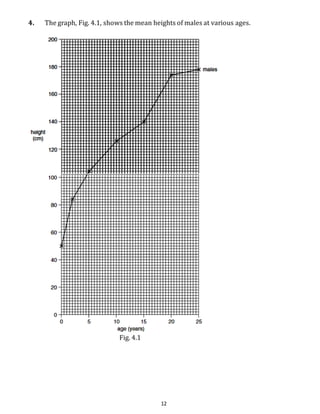
![Table 4.1 shows the mean heights of females over the same age range.
Table 4.1
(a) (i) Plot these data on Fig. 4.1. [2]
(ii) Between which ages is the rate of growth fastest in females?
...................................................................................................................................................................................... [1]
(iii) Between which ages are females taller than males?
...................................................................................................................................................................................... [1]
(iv) At what age is the mean height of males 140 cm?
............................................................................................................................................ .......................................... [1]
(b) Normally, puberty for females occurs in the early teenage years.
State three changes, other than increase in height or mass, that occur in females during
puberty.
1. ......................................................................................................................................................................................
...........................................................................................................................................................................................
2. ................................................................................................................................................................................ ......
...........................................................................................................................................................................................
3. .......................................................................................................................................................................................
.................................................................................................................................. .................................................... [3]
13](https://image.slidesharecdn.com/reproductionpracticequestions-plantfocus-141130211816-conversion-gate01/85/Reproduction-practice-questions-plant-focus-13-320.jpg)
![5. Fig. 5.1 shows the male reproductive system.
Fig. 5.1
(a) Name the parts labelled A, B and C.
A .........................................................................................................................................................................................
B ........................................................................................................................................................... ..............................
C ................................................................................................................................................................................... [3]
(b) A disease that can affect the male reproductive system is gonorrhoea.
(i) State two signs or symptoms of this disease in males.
1. .......................................................................................................................................................................................
...........................................................................................................................................................................................
2. .......................................................................................................................................................................................
..................................................................................................................................................................................... [2]
(ii) What long-term effect can this disease have in males?
...........................................................................................................................................................................................
............................................................................................................................................................. ........................[1]
(iii) What is the normal method of treatment for a gonorrhoea infection?
...........................................................................................................................................................................................
.....................................................................................................................................................................................[1]
(iv) What is the best method of preventing the spread of this disease during sexual
intercourse?
...........................................................................................................................................................................................
.....................................................................................................................................................................................[1]
14](https://image.slidesharecdn.com/reproductionpracticequestions-plantfocus-141130211816-conversion-gate01/85/Reproduction-practice-questions-plant-focus-14-320.jpg)
![6. State the sites of production and describe the roles of oestrogen and progesterone
(i) in the menstrual cycle;
...........................................................................................................................................................................................
...........................................................................................................................................................................................
...........................................................................................................................................................................................
........................................................................................................................................................................... ................
...........................................................................................................................................................................................
...........................................................................................................................................................................................
...........................................................................................................................................................................................
...........................................................................................................................................................................................
...........................................................................................................................................................................................
...........................................................................................................................................................................................
.....................................................................................................................................................................................[6]
(ii) during pregnancy.
...........................................................................................................................................................................................
...........................................................................................................................................................................................
...........................................................................................................................................................................................
...........................................................................................................................................................................................
...........................................................................................................................................................................................
...........................................................................................................................................................................................
......................................................................................................................................... ..................................................
...........................................................................................................................................................................................
...........................................................................................................................................................................................
...........................................................................................................................................................................................
......................................................................................................................................................... ..................................
...........................................................................................................................................................................................
..........................................................................................................................................................................................
15](https://image.slidesharecdn.com/reproductionpracticequestions-plantfocus-141130211816-conversion-gate01/85/Reproduction-practice-questions-plant-focus-15-320.jpg)
![7. Fig. 7.1 shows stages in the formation of a human fetus.
Fig. 7.1
(a) (i) Name the process of cell division that results in the formation of sperm cells.
...........................................................................................................................................................................................
................................................................................................................................................................................... [1]
(ii) State one way in which the sperm cell is different from cells in the developing fetus.
...........................................................................................................................................................................................
............................................................................................................................................................................. ...... [1]
(iii) State the term used to describe the fertilised egg cell.
...................................................................................................................................................................................... .....
................................................................................................................................................................................... [1]
(iv) Explain what determines that a fertilised egg cell develops into a girl rather than a
boy.
...........................................................................................................................................................................................
................................................................................................................................................................................... [1]
(b) State where each of the following is produced.
(i) the egg cell
...........................................................................................................................................................................................
..........................................................................................................................................................................................
..........................................................................................................................................................................................
16](https://image.slidesharecdn.com/reproductionpracticequestions-plantfocus-141130211816-conversion-gate01/85/Reproduction-practice-questions-plant-focus-16-320.jpg)
![(ii) the fertilised egg
...........................................................................................................................................................................................
..........................................................................................................................................................................................
..........................................................................................................................................................................................
(iii) the fetus
...........................................................................................................................................................................................
..........................................................................................................................................................................................
........................................................................................................................................................................................[3]
c) The fetus is surrounded by amniotic fluid and an amniotic sac.
State their functions.
amniotic fluid
...........................................................................................................................................................................................
...........................................................................................................................................................................................
..........................................................................................................................................................................................
..........................................................................................................................................................................................
amniotic sac
...........................................................................................................................................................................................
.................................................................................................................................. .........................................................
..........................................................................................................................................................................................
................................................................................................................................................................................... [2]
(d) (i) Outline the role of the placenta in the development of the fetus.
...........................................................................................................................................................................................
...........................................................................................................................................................................................
. .............................................................................................................................................. .............................................
..........................................................................................................................................................................................
.........................................................................................................................................................................................
................................................................................................................................................................................... [4]
17](https://image.slidesharecdn.com/reproductionpracticequestions-plantfocus-141130211816-conversion-gate01/85/Reproduction-practice-questions-plant-focus-17-320.jpg)
![(ii) Describe the role of the placenta in maintaining pregnancy.
...........................................................................................................................................................................................
...........................................................................................................................................................................................
.................................................................................................................................................... ......................................
..........................................................................................................................................................................................
................................................................................................................................................................................... [2]
8. Fig. 8.1 shows a side view of the female reproductive system.
Fig 8.1
(a) On Fig 8.1 label each of the following with the appropriate letter and a label line.
(i) The site where sperm are deposited. D [1]
(ii) The site where fertilization normally occurs. F [1]
(iii) The site where oestrogen is produced. O [1]
(iv) A site where the placenta would normally develop during pregnancy. P [1]
(v) The site where a surgical method of birth control could be used. S [1]
(b) The placenta has many roles during pregnancy. For example maternal and fetal blood
are prevented from mixing but digested nutrients pass across the placenta to the fetus.
(i) State two reasons why maternal and fetal blood should not mix.
1. .......................................................................................................................................................................................
...........................................................................................................................................................................................
2. .......................................................................................................................................................................................
..................................................................................................................................................................................... [2]
18](https://image.slidesharecdn.com/reproductionpracticequestions-plantfocus-141130211816-conversion-gate01/85/Reproduction-practice-questions-plant-focus-18-320.jpg)
![(ii) List three other roles of the placenta.
1. .......................................................................................................................................................................................
.......................................................................................................................................................................... .................
2. .............................................................................................................. .........................................................................
..........................................................................................................................................................................................
3. .......................................................................................................................................................................................
..................................................................................................................................................................................... [3]
9. (a) State the functions of five named parts of the male reproductive system.
...........................................................................................................................................................................................
...........................................................................................................................................................................................
...........................................................................................................................................................................................
...........................................................................................................................................................................................
............................................................................................................................................. .............................................
..........................................................................................................................................................................................
..........................................................................................................................................................................................
................................................................................................................................................................................... [5]
(b) (i) Explain how sperm, deposited in the vagina during sexual intercourse,
reach an egg.
...........................................................................................................................................................................................
...........................................................................................................................................................................................
...........................................................................................................................................................................................
...........................................................................................................................................................................................
..........................................................................................................................................................................................
..........................................................................................................................................................................................
..........................................................................................................................................................................................
..........................................................................................................................................................................................
................................................................................................................................................................................... [4]
19](https://image.slidesharecdn.com/reproductionpracticequestions-plantfocus-141130211816-conversion-gate01/85/Reproduction-practice-questions-plant-focus-19-320.jpg)
![20
(ii) Describe the process of fertilisation.
...........................................................................................................................................................................................
...........................................................................................................................................................................................
.................................................................................................................................................................................... .......
...........................................................................................................................................................................................
..........................................................................................................................................................................................
..........................................................................................................................................................................................
..........................................................................................................................................................................................
..........................................................................................................................................................................................
..........................................................................................................................................................................................
..........................................................................................................................................................................................
................................................................................................................................................................................... [3]
(c) Outline the ways in which HIV can be prevented from spreading.
...........................................................................................................................................................................................
...........................................................................................................................................................................................
...........................................................................................................................................................................................
...........................................................................................................................................................................................
............................................................................................................................................. .............................................
..........................................................................................................................................................................................
..........................................................................................................................................................................................
..........................................................................................................................................................................................
................................................................................................................................................................. .........................
..........................................................................................................................................................................................
................................................................................................................................................................................... [3]](https://image.slidesharecdn.com/reproductionpracticequestions-plantfocus-141130211816-conversion-gate01/85/Reproduction-practice-questions-plant-focus-20-320.jpg)
![10. Fig. 10.1 shows the female reproductive system.
Fig. 10.1
(a) On Fig. 10.1, label
(i) where sperm are deposited during intercourse;
..........................................................................................................................................................................................
................................................................................................................................................................................... [1]
(ii) where fertilisation normally takes place;
..........................................................................................................................................................................................
................................................................................................................................................................................... [1]
(iii) where implantation normally takes place;
..........................................................................................................................................................................................
................................................................................................................................................................................... [1]
(iv) where oestrogen is produced.
................................................................................................................................................................. .........................
................................................................................................................................................................................... [1]
(b) State three effects oestrogen can have on parts of the body other than those shown in
Fig. 10.1.
1. ........................................................................................................................................................................................
...........................................................................................................................................................................................
2. ........................................................................................................................................................................................
.................................................................................................................................................... .......................................
3. ........................................................................................................................................................................................
.....................................................................................................................................................................................[3]
21](https://image.slidesharecdn.com/reproductionpracticequestions-plantfocus-141130211816-conversion-gate01/85/Reproduction-practice-questions-plant-focus-21-320.jpg)
![(c) Complete the table, by using ticks (✓) to show what can cross the placenta from the
mother’s blood to the fetus.
11. Fig. 11.1 shows the female reproductive system.
22
Fig. 11.1
(a) Name the structures labelled A and B.
A ......................................................................................................................................................................................
B ............................................................................................................................................................................... [2]
(b) Label, on Fig . 11.1, with the appropriate letter, where
(i) fertilisation normally occurs – F. [1]
(ii) gametes are produced – G. [1]
(iii) oestrogen is produced – O. [1]
(c) List three secondary sexual characteristics that are stimulated by oestrogen.
1. .................................................................................................................. ......................................................................
2. ........................................................................................................................................................................................
3. ...................................................................................................................................................................................[3]](https://image.slidesharecdn.com/reproductionpracticequestions-plantfocus-141130211816-conversion-gate01/85/Reproduction-practice-questions-plant-focus-22-320.jpg)
![(d) Outline the changes occurring in the ovaries and uterus during the menstrual cycle.
...........................................................................................................................................................................................
.......................................................................................................................................................................... .................
...........................................................................................................................................................................................
..........................................................................................................................................................................................
..........................................................................................................................................................................................
..........................................................................................................................................................................................
..........................................................................................................................................................................................
..........................................................................................................................................................................................
..........................................................................................................................................................................................
................................................................................................................................................................................... [4]
12. Use only words or letters from the list below to complete the sentences in the
23
following
paragraph.
The nuclei of human body cells contain …………………… pairs of chromosomes, that is
…………………… chromosomes and two sex chromosomes. Sperm cells have a ……………………
nucleus with a single sex chromosome. The …………………… formed from the fusion of an
ovum with a sperm cell, containing a …………………… sex chromosome, will develop into a
male. [ 5]](https://image.slidesharecdn.com/reproductionpracticequestions-plantfocus-141130211816-conversion-gate01/85/Reproduction-practice-questions-plant-focus-23-320.jpg)
![13. Fig. 13.1 shows the male reproductive system.
Fig 13.1
(a) Name the structures labelled A and B.
A ..............................................................................................................................................................................
B ............................................................................................................................................................................[2]
(b) Label on Fig. 14.1, with the appropriate letter, where
(i) seminal fluid is produced – S. [1]
(ii) gametes are formed – G. [1]
(iii) testosterone is produced – T. [1]
(c) List three secondary sexual characteristics that are stimulated by testosterone.
1. ........................................................................................................................................................................................
2. ........................................................................................................................................................................................
3. ...................................................................................................................................................................................[3]
24](https://image.slidesharecdn.com/reproductionpracticequestions-plantfocus-141130211816-conversion-gate01/85/Reproduction-practice-questions-plant-focus-24-320.jpg)
![(d) Identify with an X, on Fig. 14.1, where surgery would normally be carried out to bring
about birth control.
..........................................................................................................................................................................................
................................................................................................................................................................................... [1]
(e) (i) HIV is a virus that can be sexually transmitted. State how its transmission can be
prevented during sexual intercourse.
..........................................................................................................................................................................................
......................................................................................................................................... .......................................... [1]
(ii) State two methods, other than by sexual intercourse, by which HIV can be passed
from person to person.
1. ........................................................................................................................................................................................
2. ...................................................................................................................................................................................[2]
(f) State the difference in function of the urethra in males and females.
..........................................................................................................................................................................................
................................................................................................................................................................................... [1]
25](https://image.slidesharecdn.com/reproductionpracticequestions-plantfocus-141130211816-conversion-gate01/85/Reproduction-practice-questions-plant-focus-25-320.jpg)
![GROWTH REPRODUCTION
1. (a) Fig. 1.1 shows a section through a seed of a dicotyledon.
Fig. 1.1
26
(i) What is the role of part A?
..........................................................................................................................................................................................
................................................................................................................................................................................... [1]
(ii) What do parts B and C of the seed develop into after germination?
B ......................................................................................................................................................................................
C ................................................................................................................................................................................ [2]](https://image.slidesharecdn.com/reproductionpracticequestions-plantfocus-141130211816-conversion-gate01/85/Reproduction-practice-questions-plant-focus-26-320.jpg)
![(b) The graph, Fig. 1.2, shows changes in mass of sets of pea seeds as they germinate
and grow into seedlings. After germination, set P was grown in the dark and set Q in the
light.
Fig. 1.2
(i) Why is mass measured as dry mass?
..........................................................................................................................................................................................
................................................................................................................................................................................... [1]
(ii) Explain the changes in dry mass between days X and Y in both sets of seedlings.
.................................................................................................................................................................................... ......
..........................................................................................................................................................................................
..........................................................................................................................................................................................
................................................................................................................................... .......................................................
..........................................................................................................................................................................................
..........................................................................................................................................................................................
..........................................................................................................................................................................................
..................................................................................................................................................................................... [4]
27](https://image.slidesharecdn.com/reproductionpracticequestions-plantfocus-141130211816-conversion-gate01/85/Reproduction-practice-questions-plant-focus-27-320.jpg)
![(iii) Explain why there is a difference in the dry mass of sets P and Q between days
Y and Z.
..........................................................................................................................................................................................
..........................................................................................................................................................................................
..........................................................................................................................................................................................
..........................................................................................................................................................................................
..........................................................................................................................................................................................
................................................................................................................................................. .........................................
..........................................................................................................................................................................................
..................................................................................................................................................................................... [4]
2. A large number of seeds were germinated on damp sand. Random samples of 10
seedlings were taken every two days. The fresh mass and the dry mass of each sample
were measured and are shown in the graph, Fig. 2.1.
Fig. 2.1.
28](https://image.slidesharecdn.com/reproductionpracticequestions-plantfocus-141130211816-conversion-gate01/85/Reproduction-practice-questions-plant-focus-28-320.jpg)
![(a) (i) State why the fresh mass and dry mass of a seedling are different.
..........................................................................................................................................................................................
..................................................................................................................................................................................... [1]
(ii) Fresh mass is not reliable as a measure of plant growth.
Suggest why dry mass is a more reliable measure of plant growth.
..........................................................................................................................................................................................
..................................................................................................................................................................................... [1]
(iii) Explain why 10 seedlings, rather than 1, were used for each sample.
..........................................................................................................................................................................................
..................................................................................................................................................................................... [1]
(b) (i) Describe what happens to the fresh mass of the seedlings in the first 2 days after
the seeds were set to germinate.
..........................................................................................................................................................................................
..........................................................................................................................................................................................
..........................................................................................................................................................................................
..................................................................................................................................................................................... [2]
(ii) Suggest a reason for this change in mass.
..........................................................................................................................................................................................
.....................................................................................................................................................................................[1]
(c) (i) Describe what happens to the dry mass of the seedlings during the first 8 days.
..........................................................................................................................................................................................
.....................................................................................................................................................................................[1]
29](https://image.slidesharecdn.com/reproductionpracticequestions-plantfocus-141130211816-conversion-gate01/85/Reproduction-practice-questions-plant-focus-29-320.jpg)
![(ii) Suggest a reason for this change in mass.
..........................................................................................................................................................................................
..........................................................................................................................................................................................
..........................................................................................................................................................................................
..................................................................................................................................................................................... [2]
(d) Suggest which processes begin in the living seed during the early stages of
germination.
..........................................................................................................................................................................................
..........................................................................................................................................................................................
..........................................................................................................................................................................................
..........................................................................................................................................................................................
..........................................................................................................................................................................................
..........................................................................................................................................................................................
............................................................................................................................................. .............................................
..........................................................................................................................................................................................
..........................................................................................................................................................................................
..................................................................................................................................................................................... [4]
30](https://image.slidesharecdn.com/reproductionpracticequestions-plantfocus-141130211816-conversion-gate01/85/Reproduction-practice-questions-plant-focus-30-320.jpg)


