MY BIOLOGY S.B.A
Lab #1
Topic: Classification
Aim: To classify organisms into groups
Apparatus:
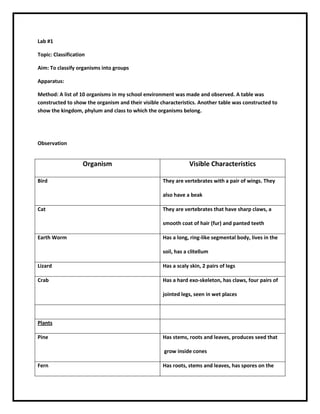
Method: A list of 10 organisms in my school environment was made and observed. A table was
constructed to show the organism and their visible characteristics. Another table was constructed to
show the kingdom, phylum and class to which the organisms belong.

Observation

Organism
Bird

Visible Characteristics
They are vertebrates with a pair of wings. They
also have a beak

Cat

They are vertebrates that have sharp claws, a
smooth coat of hair (fur) and panted teeth

Earth Worm

Has a long, ring-like segmental body, lives in the
soil, has a clitellum

Lizard

Has a scaly skin, 2 pairs of legs

Crab

Has a hard exo-skeleton, has claws, four pairs of
jointed legs, seen in wet places

Plants
Pine

Has stems, roots and leaves, produces seed that
grow inside cones

Fern

Has roots, stems and leaves, has spores on the
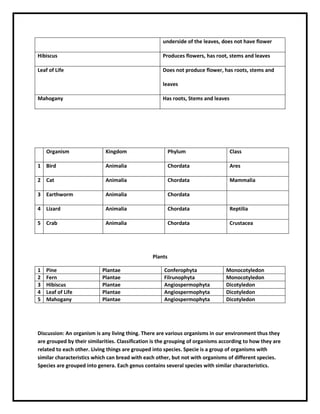
underside of the leaves, does not have flower
Hibiscus

Produces flowers, has root, stems and leaves

Leaf of Life

Does not produce flower, has roots, stems and
leaves

Mahogany

Organism

Has roots, Stems and leaves

Kingdom

Phylum

Class

1 Bird

Animalia

Chordata

Ares

2 Cat

Animalia

Chordata

Mammalia

3 Earthworm

Animalia

Chordata

4 Lizard

Animalia

Chordata

Reptilia

5 Crab

Animalia

Chordata

Crustacea

Plants
1
2
3
4
5

Pine
Fern
Hibiscus
Leaf of Life
Mahogany

Plantae
Plantae
Plantae
Plantae
Plantae

Conferophyta
Filrunophyta
Angiospermophyta
Angiospermophyta
Angiospermophyta

Monocotyledon
Monocotyledon
Dicotyledon
Dicotyledon
Dicotyledon

Discussion: An organism is any living thing. There are various organisms in our environment thus they
are grouped by their similarities. Classification is the grouping of organisms according to how they are
related to each other. Living things are grouped into species. Specie is a group of organisms with
similar characteristics which can bread with each other, but not with organisms of different species.
Species are grouped into genera. Each genus contains several species with similar characteristics.
Genera are then grouped into a family, families into order, orders into classes, classes into phyla and
phyla into kingdoms.

Conclusion: It can be concluded that organisms can be classified into groups.
Lab #2
Topic: Interdependence amo. organisms
Aim: To investigate interdependence amo. organisms
Apparatus: Note book, Ruler, Pen, Paper
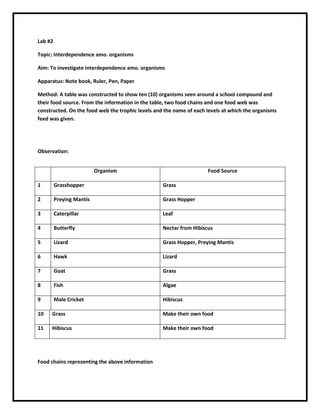
Method: A table was constructed to show ten (10) organisms seen around a school compound and
their food source. From the information in the table, two food chains and one food web was
constructed. On the food web the trophic levels and the name of each levels at which the organisms
feed was given.

Observation:
Organism

Food Source

1

Grasshopper

Grass

2

Preying Mantis

Grass Hopper

3

Caterpillar

Leaf

4

Butterfly

Nectar from Hibiscus

5

Lizard

Grass Hopper, Preying Mantis

6

Hawk

Lizard

7

Goat

Grass

8

Fish

Algae

9

Male Cricket

Hibiscus

10

Grass

Make their own food

11

Hibiscus

Make their own food

Food chains representing the above information
(1) Grass > Grasshopper > Preying Mantis > Lizard > Hawk
(2) Hibiscus > Mole Cricket > Insect

Food Web
Trophic Level

Hawk

5

Lizard

4

Preying Mantis

Grasshopper

3

Goat

Grass

1 – Primary Producers
2 – Primary Consumers
3 – Secondary Consumers
4 – Tertiary Consumers

Mole Cricket

Hibiscus

Butterfly

2

1
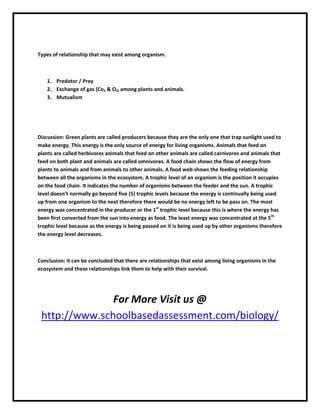
Types of relationship that may exist among organism.

1. Predator / Prey
2. Exchange of gas (Co2 & O2) among plants and animals.
3. Mutualism

Discussion: Green plants are called producers because they are the only one that trap sunlight used to
make energy. This energy is the only source of energy for living organisms. Animals that feed on
plants are called herbivores animals that feed on other animals are called carnivores and animals that
feed on both plant and animals are called omnivores. A food chain shows the flow of energy from
plants to animals and from animals to other animals. A food web shows the feeding relationship
between all the organisms in the ecosystem. A trophic level of an organism is the position it occupies
on the food chain. It indicates the number of organisms between the feeder and the sun. A trophic
level doesn’t normally go beyond five (5) trophic levels because the energy is continually being used
up from one organism to the next therefore there would be no energy left to be pass on. The most
energy was concentrated in the producer or the 1st trophic level because this is where the energy has
been first converted from the sun into energy as food. The least energy was concentrated at the 5 th
trophic level because as the energy is being passed on it is being used up by other organisms therefore
the energy level decreases.

Conclusion: it can be concluded that there are relationships that exist among living organisms in the
ecosystem and these relationships link them to help with their survival.

For More Visit us @
http://www.schoolbasedassessment.com/biology/

BIOLOGY SBA (LAB)

  • 1.
  • 2.
    Lab #1 Topic: Classification Aim:To classify organisms into groups Apparatus: Method: A list of 10 organisms in my school environment was made and observed. A table was constructed to show the organism and their visible characteristics. Another table was constructed to show the kingdom, phylum and class to which the organisms belong. Observation Organism Bird Visible Characteristics They are vertebrates with a pair of wings. They also have a beak Cat They are vertebrates that have sharp claws, a smooth coat of hair (fur) and panted teeth Earth Worm Has a long, ring-like segmental body, lives in the soil, has a clitellum Lizard Has a scaly skin, 2 pairs of legs Crab Has a hard exo-skeleton, has claws, four pairs of jointed legs, seen in wet places Plants Pine Has stems, roots and leaves, produces seed that grow inside cones Fern Has roots, stems and leaves, has spores on the
  • 3.
    underside of theleaves, does not have flower Hibiscus Produces flowers, has root, stems and leaves Leaf of Life Does not produce flower, has roots, stems and leaves Mahogany Organism Has roots, Stems and leaves Kingdom Phylum Class 1 Bird Animalia Chordata Ares 2 Cat Animalia Chordata Mammalia 3 Earthworm Animalia Chordata 4 Lizard Animalia Chordata Reptilia 5 Crab Animalia Chordata Crustacea Plants 1 2 3 4 5 Pine Fern Hibiscus Leaf of Life Mahogany Plantae Plantae Plantae Plantae Plantae Conferophyta Filrunophyta Angiospermophyta Angiospermophyta Angiospermophyta Monocotyledon Monocotyledon Dicotyledon Dicotyledon Dicotyledon Discussion: An organism is any living thing. There are various organisms in our environment thus they are grouped by their similarities. Classification is the grouping of organisms according to how they are related to each other. Living things are grouped into species. Specie is a group of organisms with similar characteristics which can bread with each other, but not with organisms of different species. Species are grouped into genera. Each genus contains several species with similar characteristics.
  • 4.
    Genera are thengrouped into a family, families into order, orders into classes, classes into phyla and phyla into kingdoms. Conclusion: It can be concluded that organisms can be classified into groups.
  • 5.
    Lab #2 Topic: Interdependenceamo. organisms Aim: To investigate interdependence amo. organisms Apparatus: Note book, Ruler, Pen, Paper Method: A table was constructed to show ten (10) organisms seen around a school compound and their food source. From the information in the table, two food chains and one food web was constructed. On the food web the trophic levels and the name of each levels at which the organisms feed was given. Observation: Organism Food Source 1 Grasshopper Grass 2 Preying Mantis Grass Hopper 3 Caterpillar Leaf 4 Butterfly Nectar from Hibiscus 5 Lizard Grass Hopper, Preying Mantis 6 Hawk Lizard 7 Goat Grass 8 Fish Algae 9 Male Cricket Hibiscus 10 Grass Make their own food 11 Hibiscus Make their own food Food chains representing the above information
  • 6.
    (1) Grass >Grasshopper > Preying Mantis > Lizard > Hawk (2) Hibiscus > Mole Cricket > Insect Food Web Trophic Level Hawk 5 Lizard 4 Preying Mantis Grasshopper 3 Goat Grass 1 – Primary Producers 2 – Primary Consumers 3 – Secondary Consumers 4 – Tertiary Consumers Mole Cricket Hibiscus Butterfly 2 1
  • 7.
    Types of relationshipthat may exist among organism. 1. Predator / Prey 2. Exchange of gas (Co2 & O2) among plants and animals. 3. Mutualism Discussion: Green plants are called producers because they are the only one that trap sunlight used to make energy. This energy is the only source of energy for living organisms. Animals that feed on plants are called herbivores animals that feed on other animals are called carnivores and animals that feed on both plant and animals are called omnivores. A food chain shows the flow of energy from plants to animals and from animals to other animals. A food web shows the feeding relationship between all the organisms in the ecosystem. A trophic level of an organism is the position it occupies on the food chain. It indicates the number of organisms between the feeder and the sun. A trophic level doesn’t normally go beyond five (5) trophic levels because the energy is continually being used up from one organism to the next therefore there would be no energy left to be pass on. The most energy was concentrated in the producer or the 1st trophic level because this is where the energy has been first converted from the sun into energy as food. The least energy was concentrated at the 5 th trophic level because as the energy is being passed on it is being used up by other organisms therefore the energy level decreases. Conclusion: it can be concluded that there are relationships that exist among living organisms in the ecosystem and these relationships link them to help with their survival. For More Visit us @ http://www.schoolbasedassessment.com/biology/