DISCOVER . LEARN . EMPOWER
TOPIC : BIOETHICS
UNIVERSITY INSTITUTE OF
BIOTECHNOLOGY
Bachelor of Sciences (Biotechnology)
Subject Name : IPR, Biosafety & Bioethics
Code : BTT-355
2
BIOSAFETY
CO
Number
Title Level
CO1
Ability to interpret basics of biosafety and
bioethics and its impact on all the
biological sciences and the quality of
human life.
Understan
d
CO2
Power to recognize importance of biosafety
practices and guidelines in research.
Understan
d
CO3
Capability to recognize importance of
protection of new knowledge and innovations
and its role in business.
Understan
d
Course Outcome
3
Contents
• Introduction
• Ethics and Morals
• Importance of Bioethics
• Health & Medical Ethics
• Importance
• Principles
• Bioethics in Patent Care
• Professional Attribute
• Bioethics in Teamwork
• UNESCO Bioethics Principle
4
Introduction
•The study of the ethical and moral implications of new biological
discoveries and biomedical advances, as in the fields of genetic
engineering and drug research is bioethics.
•The term “bioethics” was introduced in the 70s by Van
RensselaerPotter for a study aiming at ensuring the preservation
of the biosphere.
5
Ethics
 Discipline concerned with right or wrong conduct
Guides to moral behaviour
Making choices
Judgements
Ethics vs Morals
6
Morals are an individual frame work for decision making
that includes personal values
Ethics are a generalized conceptual framework for
decision making
7
Importance of Bioethics
Bioethics education for medical practice is essential
in today’s complex world because:
•Medical policies and patient rights legislation are
ever changing
•Health care systems function differently than before
•Clinical practice practice now involves decision-
making about many new issues
Health Ethics
8
The rules or standards governing the conduct of a person or
the members of a profession relating to the study or practice
of midicine
9
Ethics in Medical Science (Medical
Ethics)
Patients are entitled to good standards of practice and care
from their doctors
Essential elements of this are professional competence, good
relationships with patients and colleagues and observance of
professional ethical obligation.
(From Good Medical Practice, GMP)
10
Why Bioethics has Become
Important ?
Nowadays, conflicts of interests between the
government and medical institutions, between medical
institutions and medical personnel, between physicians
and patients are getting more and more serious and
complex
High technologies not only brought us hope of cure but
have also created a heavy economic burden
The ethical dilemmas of prescribing high technology
medicine, organ transplantation, and concerns about
quality of life-have become increasingly prominent
11
There are 4 (Four) Principles of
Bioethics
• Autonomy- Right of self-determination
• Beneficence- To do well and to promote well-being
• Non-maleficence- To do no harm or to avoid doing harm
• Justice- Treat everyone alike
(Beauchamp and Childress, 2001)
12
Bioethics in Patient Care
Bioethics involves making the best possible health care decisions with
attention to more than just medical factors- especially when there is
disagreement about an appropriate course of action
Decisions: Making decisions can be difficult. Bioethics helps to consider life-
sustaining treatments (including cardio-pulmonary resuscitation, artificial
ventilation and artificial methods of providing food and fluids) and discusses
aspects of their use.
13
Ethical and Regulatory Aspects of
Clinical Research
Utilize a systematic framework for evaluating the ethics of a clinical research
protocol
Apply appropriate codes, regulations, and other documents governing the
ethical conduct of humna subject research to their own research
Discuss controversial issues relating to human subject research, including
Phase I research, randomization, children in research, international research
etc.
Identify the critical elements of informed consent and strategies for
implementing informed consent for clinical research
14
Professional Attributes & Bioethics
Displaying honesty and integrity:
• Never misrepresent or falsify information and/or actions (cheating)
• Do not engage in other unethical behaviour
Showing respect for patient’s dignity and rights:
• Make appropriate attempt to establish report with patients or families
• Show sensitivity to the patient’s or families feeling, needs or wishes
• Demonstrate appropriate empathy
• Show respect for patient autonomy
• Maintain confidentiality of patient information
15
Conti………
Maintaining a Professional demeanor
• Maintain professional demeanor even when stressed; not verbally
hostile, abusive, dismissive or inappropriate angry
• Never expresses anger physically
• Accept professionally accepted boundaries for patient relationships
• Not to be arrogant or insolent
• Proper appearance, dress, professional behavior. Follow generally
accepted professional norms
16
Bioethics in Team Work
 Responding to supervision
• Accept and incorporates feedback in a non-resistant and non-
defensive manner
• Accept responsibility for failure or errors
17
Bioethics in Team Work
Demonstrating dependability and appropriate initiative:
• Complete tasks in a timely fashion (papers, reports)
• Examinations, appointments, patient notes, patient care tasks
• Do not need reminders about academic responsibilities, responsibilities
to patients or to other health care
• Professionals in order to complete them
• Appropriate available for professional responsibilities (i.e. required
activities, available on clinical service)
• Take on appropriate responsibilities willingly (not resistant or defensive)
• Take on appropriate patient care activities (does not “turf” patients or
responsibilties
18
Conti……
Interacting with other members of the team:
• Communicate with other members of the health care team in a timely
manner
• Show sensitivity to the needs, feelings, wishes of health care team
members
• Relate and cooperates well with members of the health care team
19
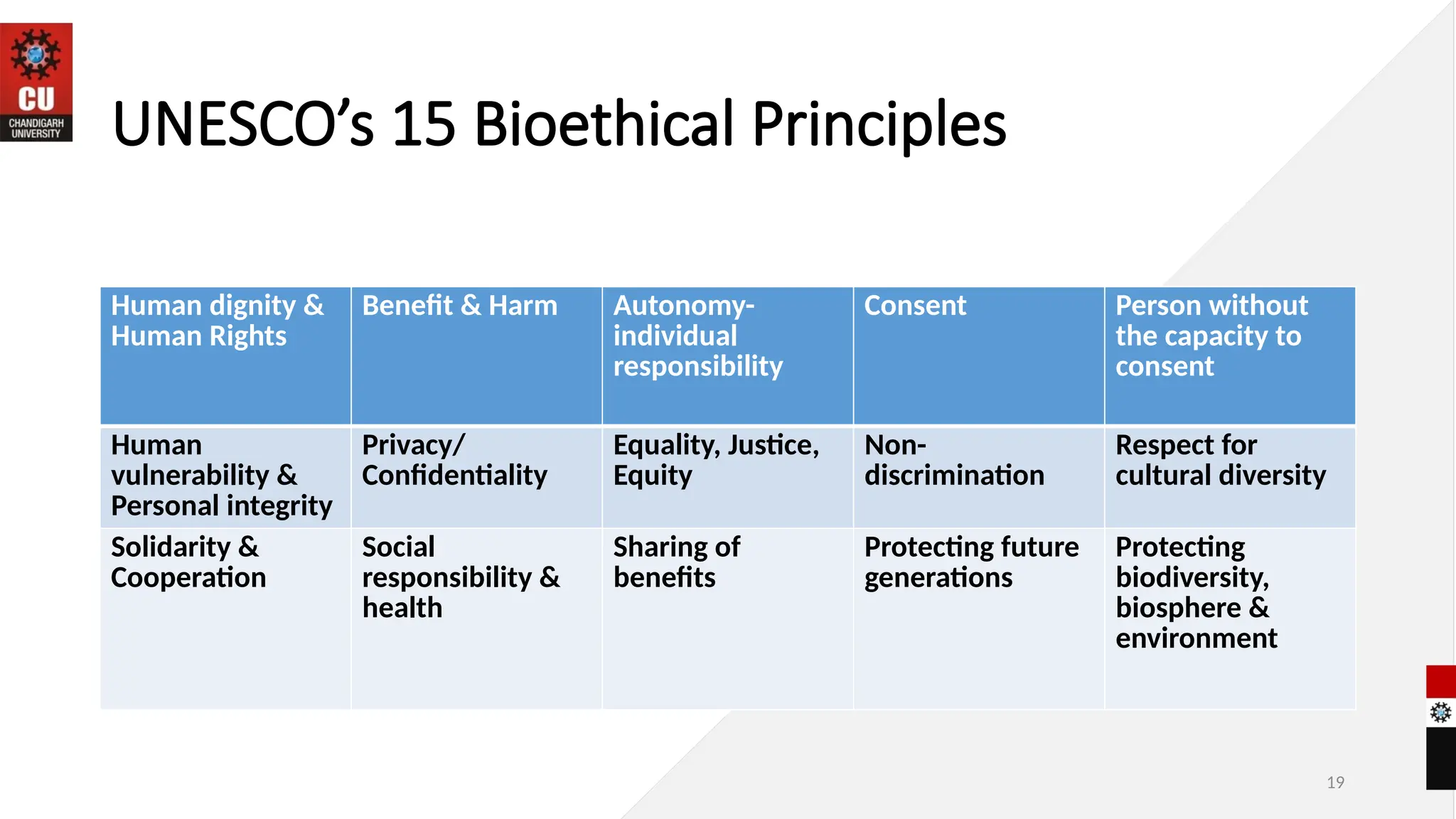
UNESCO’s 15 Bioethical Principles
Human dignity &
Human Rights
Benefit & Harm Autonomy-
individual
responsibility
Consent Person without
the capacity to
consent
Human
vulnerability &
Personal integrity
Privacy/
Confidentiality
Equality, Justice,
Equity
Non-
discrimination
Respect for
cultural diversity
Solidarity &
Cooperation
Social
responsibility &
health
Sharing of
benefits
Protecting future
generations
Protecting
biodiversity,
biosphere &
environment
THANK YOU
For queries
Email: swaati.e10067@cumail.in

Bioethics and its principle application and difference between Bioethics and ethics

  • 1.
    DISCOVER . LEARN. EMPOWER TOPIC : BIOETHICS UNIVERSITY INSTITUTE OF BIOTECHNOLOGY Bachelor of Sciences (Biotechnology) Subject Name : IPR, Biosafety & Bioethics Code : BTT-355
  • 2.
    2 BIOSAFETY CO Number Title Level CO1 Ability tointerpret basics of biosafety and bioethics and its impact on all the biological sciences and the quality of human life. Understan d CO2 Power to recognize importance of biosafety practices and guidelines in research. Understan d CO3 Capability to recognize importance of protection of new knowledge and innovations and its role in business. Understan d Course Outcome
  • 3.
    3 Contents • Introduction • Ethicsand Morals • Importance of Bioethics • Health & Medical Ethics • Importance • Principles • Bioethics in Patent Care • Professional Attribute • Bioethics in Teamwork • UNESCO Bioethics Principle
  • 4.
    4 Introduction •The study ofthe ethical and moral implications of new biological discoveries and biomedical advances, as in the fields of genetic engineering and drug research is bioethics. •The term “bioethics” was introduced in the 70s by Van RensselaerPotter for a study aiming at ensuring the preservation of the biosphere.
  • 5.
    5 Ethics  Discipline concernedwith right or wrong conduct Guides to moral behaviour Making choices Judgements
  • 6.
    Ethics vs Morals 6 Moralsare an individual frame work for decision making that includes personal values Ethics are a generalized conceptual framework for decision making
  • 7.
    7 Importance of Bioethics Bioethicseducation for medical practice is essential in today’s complex world because: •Medical policies and patient rights legislation are ever changing •Health care systems function differently than before •Clinical practice practice now involves decision- making about many new issues
  • 8.
    Health Ethics 8 The rulesor standards governing the conduct of a person or the members of a profession relating to the study or practice of midicine
  • 9.
    9 Ethics in MedicalScience (Medical Ethics) Patients are entitled to good standards of practice and care from their doctors Essential elements of this are professional competence, good relationships with patients and colleagues and observance of professional ethical obligation. (From Good Medical Practice, GMP)
  • 10.
    10 Why Bioethics hasBecome Important ? Nowadays, conflicts of interests between the government and medical institutions, between medical institutions and medical personnel, between physicians and patients are getting more and more serious and complex High technologies not only brought us hope of cure but have also created a heavy economic burden The ethical dilemmas of prescribing high technology medicine, organ transplantation, and concerns about quality of life-have become increasingly prominent
  • 11.
    11 There are 4(Four) Principles of Bioethics • Autonomy- Right of self-determination • Beneficence- To do well and to promote well-being • Non-maleficence- To do no harm or to avoid doing harm • Justice- Treat everyone alike (Beauchamp and Childress, 2001)
  • 12.
    12 Bioethics in PatientCare Bioethics involves making the best possible health care decisions with attention to more than just medical factors- especially when there is disagreement about an appropriate course of action Decisions: Making decisions can be difficult. Bioethics helps to consider life- sustaining treatments (including cardio-pulmonary resuscitation, artificial ventilation and artificial methods of providing food and fluids) and discusses aspects of their use.
  • 13.
    13 Ethical and RegulatoryAspects of Clinical Research Utilize a systematic framework for evaluating the ethics of a clinical research protocol Apply appropriate codes, regulations, and other documents governing the ethical conduct of humna subject research to their own research Discuss controversial issues relating to human subject research, including Phase I research, randomization, children in research, international research etc. Identify the critical elements of informed consent and strategies for implementing informed consent for clinical research
  • 14.
    14 Professional Attributes &Bioethics Displaying honesty and integrity: • Never misrepresent or falsify information and/or actions (cheating) • Do not engage in other unethical behaviour Showing respect for patient’s dignity and rights: • Make appropriate attempt to establish report with patients or families • Show sensitivity to the patient’s or families feeling, needs or wishes • Demonstrate appropriate empathy • Show respect for patient autonomy • Maintain confidentiality of patient information
  • 15.
    15 Conti……… Maintaining a Professionaldemeanor • Maintain professional demeanor even when stressed; not verbally hostile, abusive, dismissive or inappropriate angry • Never expresses anger physically • Accept professionally accepted boundaries for patient relationships • Not to be arrogant or insolent • Proper appearance, dress, professional behavior. Follow generally accepted professional norms
  • 16.
    16 Bioethics in TeamWork  Responding to supervision • Accept and incorporates feedback in a non-resistant and non- defensive manner • Accept responsibility for failure or errors
  • 17.
    17 Bioethics in TeamWork Demonstrating dependability and appropriate initiative: • Complete tasks in a timely fashion (papers, reports) • Examinations, appointments, patient notes, patient care tasks • Do not need reminders about academic responsibilities, responsibilities to patients or to other health care • Professionals in order to complete them • Appropriate available for professional responsibilities (i.e. required activities, available on clinical service) • Take on appropriate responsibilities willingly (not resistant or defensive) • Take on appropriate patient care activities (does not “turf” patients or responsibilties
  • 18.
    18 Conti…… Interacting with othermembers of the team: • Communicate with other members of the health care team in a timely manner • Show sensitivity to the needs, feelings, wishes of health care team members • Relate and cooperates well with members of the health care team
  • 19.
    19 UNESCO’s 15 BioethicalPrinciples Human dignity & Human Rights Benefit & Harm Autonomy- individual responsibility Consent Person without the capacity to consent Human vulnerability & Personal integrity Privacy/ Confidentiality Equality, Justice, Equity Non- discrimination Respect for cultural diversity Solidarity & Cooperation Social responsibility & health Sharing of benefits Protecting future generations Protecting biodiversity, biosphere & environment
  • 20.
    THANK YOU For queries Email:swaati.e10067@cumail.in