CELL DISRUPTION
AISHWARYA BABU
M.SC. BIOTECHNOLOGY
SEMESTER 2
CUSAT
1
Contents
 1. Introduction
 2. Methods of microbial cell disruption
 3. Ideal technology characterization
 4. Mechanical methods
Bead mill
Ultrasound
French press and high pressure homogeniser
 5. Non-mechanical physical methods
Thermolysis
Decompression
Osmotic shock
 6. Non-mechanical chemical and enzymatic methods
Detergents
Solvents
Alkali treatment
Enzymes
 7. Summary
 8. References
8/4/2017
2
Introduction
 Cell disruption is an essential part of biotechnology and the downstream processes related
to the manufacturing of biological products.
 It is necessary for the extraction and retrieval of the desired products, as cell disruption
significantly enhances the recovery of biological products.
 It affects the physical properties of the cell slurry, thus indirectly influencing further
downstream processes.
 Several types of cell disruption methods exist, as biological products may be extracellular,
intracellular or periplasmic.
8/4/2017
3
Methods of microbial
cell disruption
8/4/2017
4
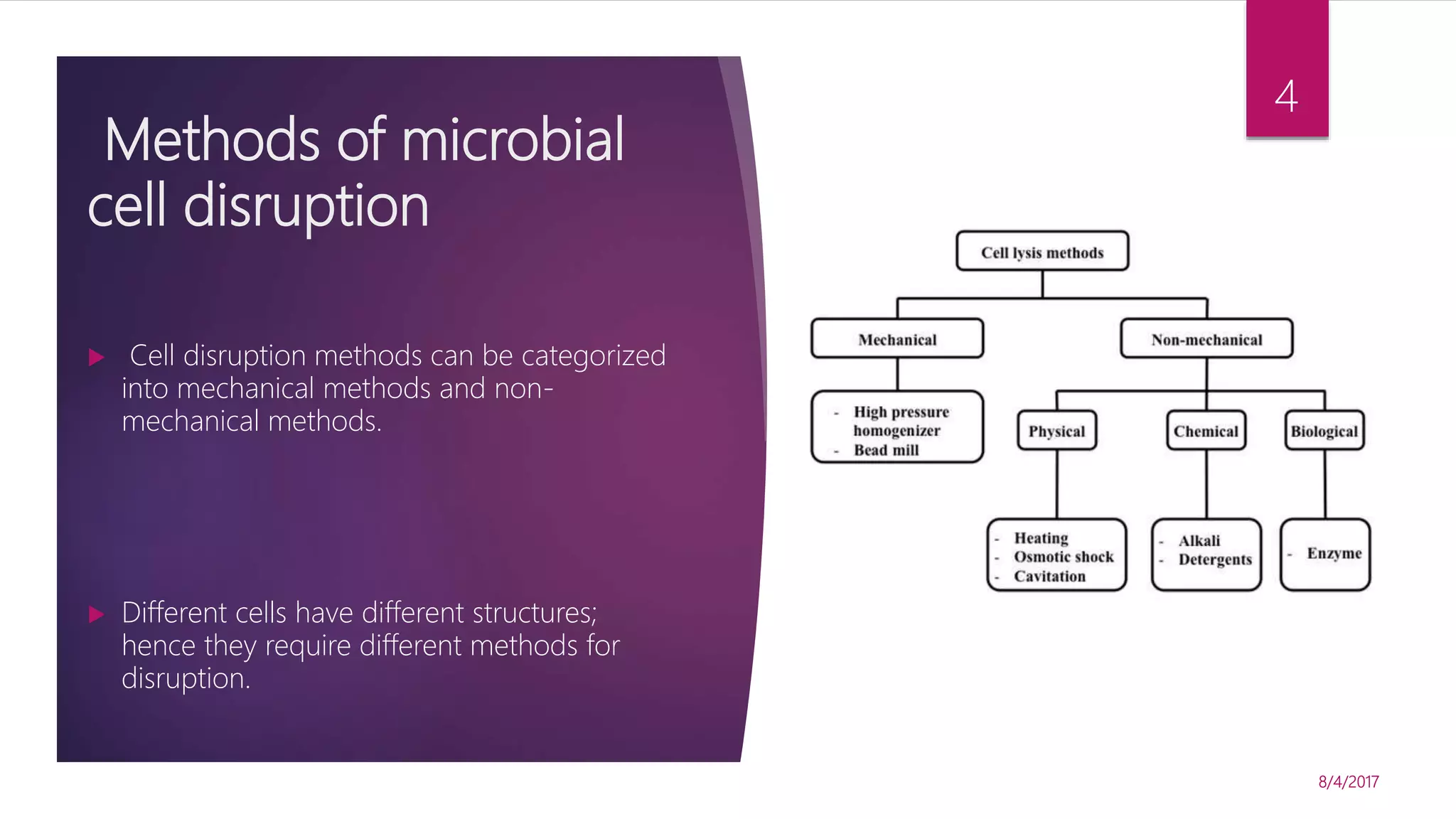
 Cell disruption methods can be categorized
into mechanical methods and non-
mechanical methods.
 Different cells have different structures;
hence they require different methods for
disruption.
Ideal technology characterization
Maximum release of
the product of
interest.
No mechanical or
thermal denaturation
of the product during
disruption.
Minimal release of
proteases which may
degrade the product.
Minimal release of
particulates or
soluble contaminants
that may influence
downstream
processing.
8/4/2017
5
Contd.
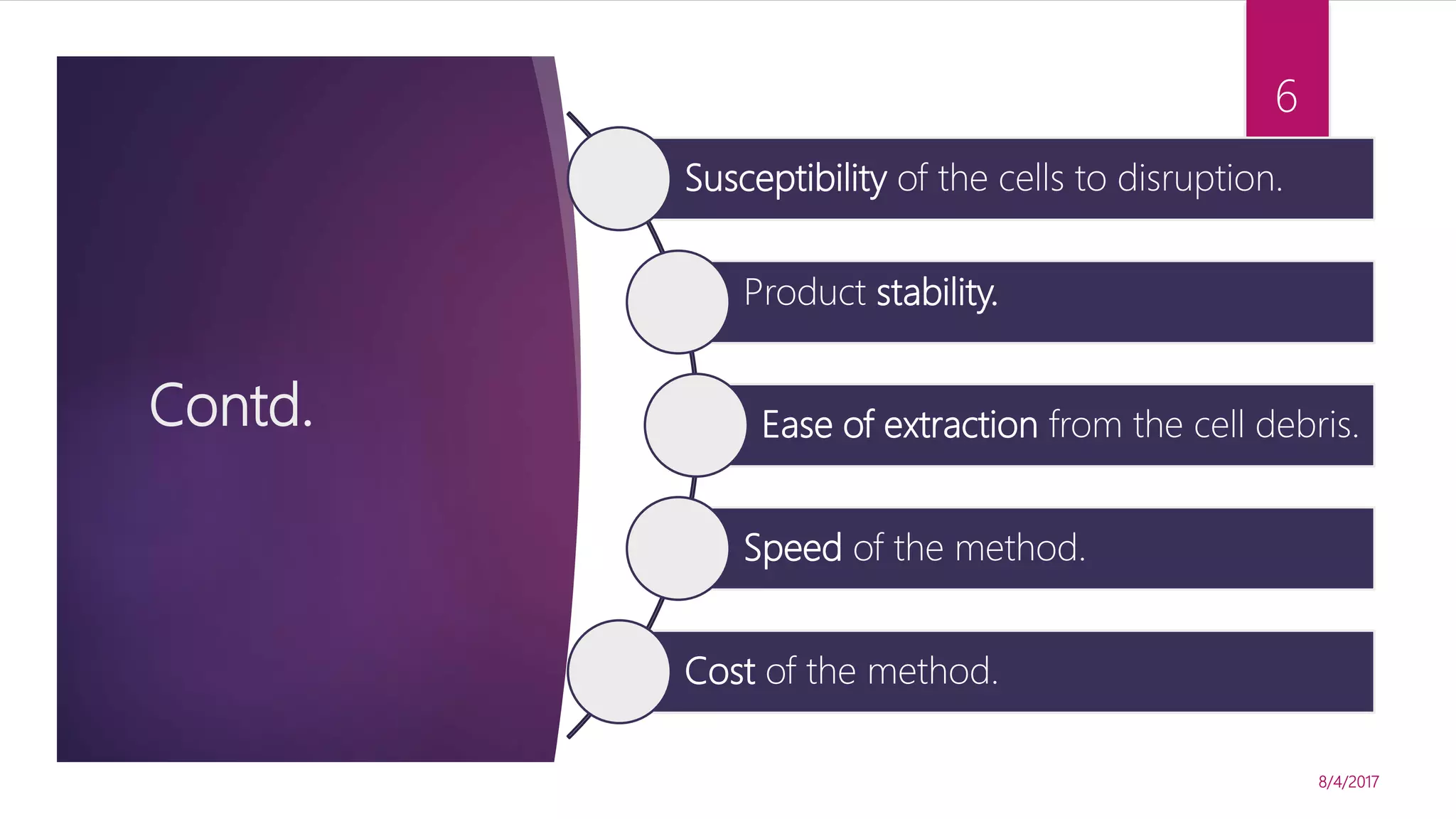
Susceptibility of the cells to disruption.
Product stability.
Ease of extraction from the cell debris.
Speed of the method.
Cost of the method.
8/4/2017
6
 Before cell disruption can take place, the cells must be separated from the culture
medium.
 Secreted extracellular components need to be decreased and unutilized media
components also need to be reduced.
 The drying of the cell mass enhances disruption methods and may help bring down the
costs.
 In some cases, more than one disruption method may be necessary to achieve full product
recovery.
8/4/2017
7
Mechanical Methods
 Principle - cells are being subjected to high stress via pressure, abrasion with rapid agitation
with beads, or ultrasound.
 Methods of disruption include cavitation, shearing, impingement, or combination of those.
 Intensive cooling of the suspension after the treatment is required in order to remove the heat
generated by the dissipation of the mechanical energy.
 Some high-pressure methods can only be applied in laboratory scale, such as French press
and Hughes press.
8/4/2017
8
Bead mills
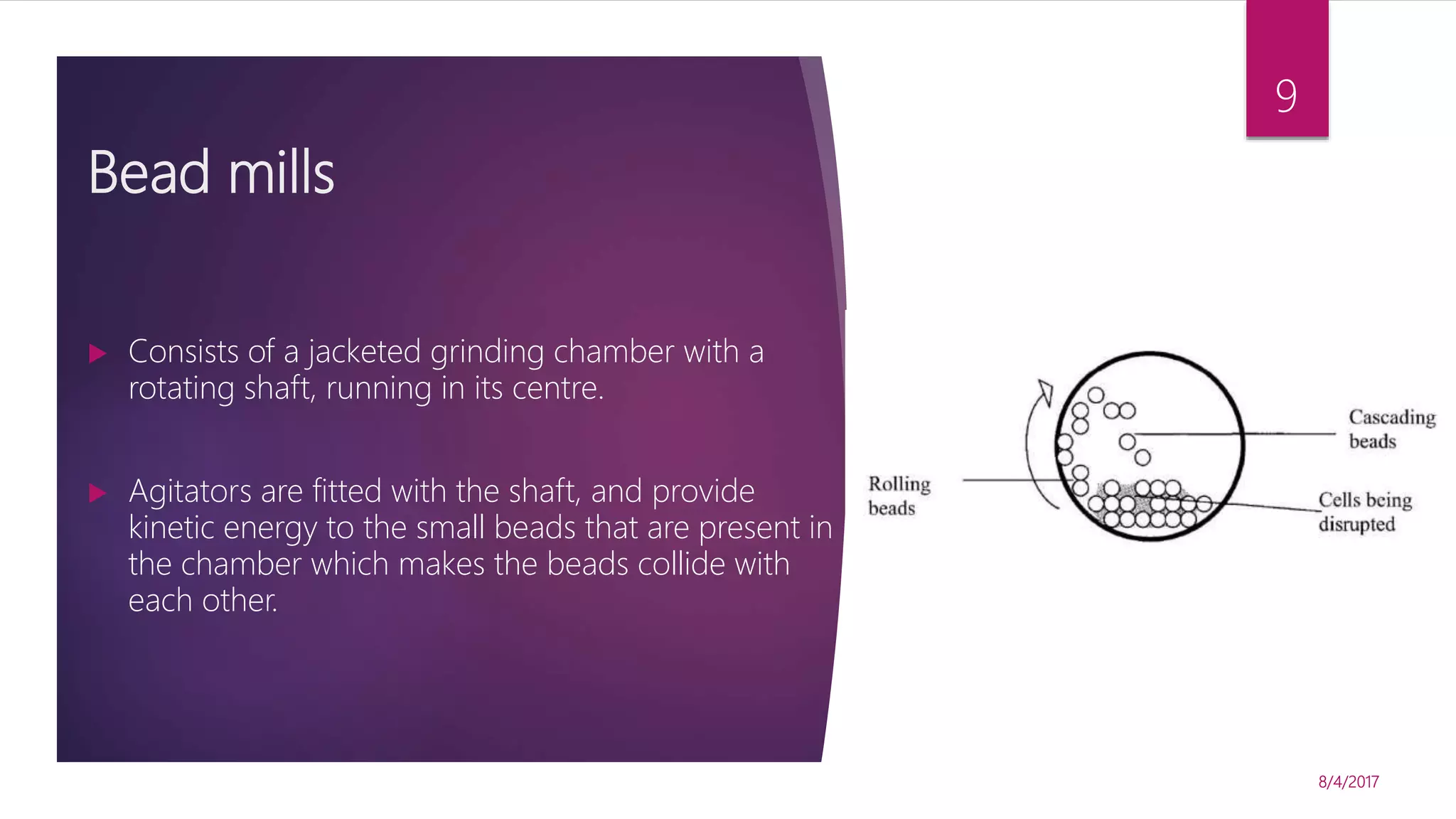
 Consists of a jacketed grinding chamber with a
rotating shaft, running in its centre.
 Agitators are fitted with the shaft, and provide
kinetic energy to the small beads that are present in
the chamber which makes the beads collide with
each other.
8/4/2017
9
8/4/2017
10
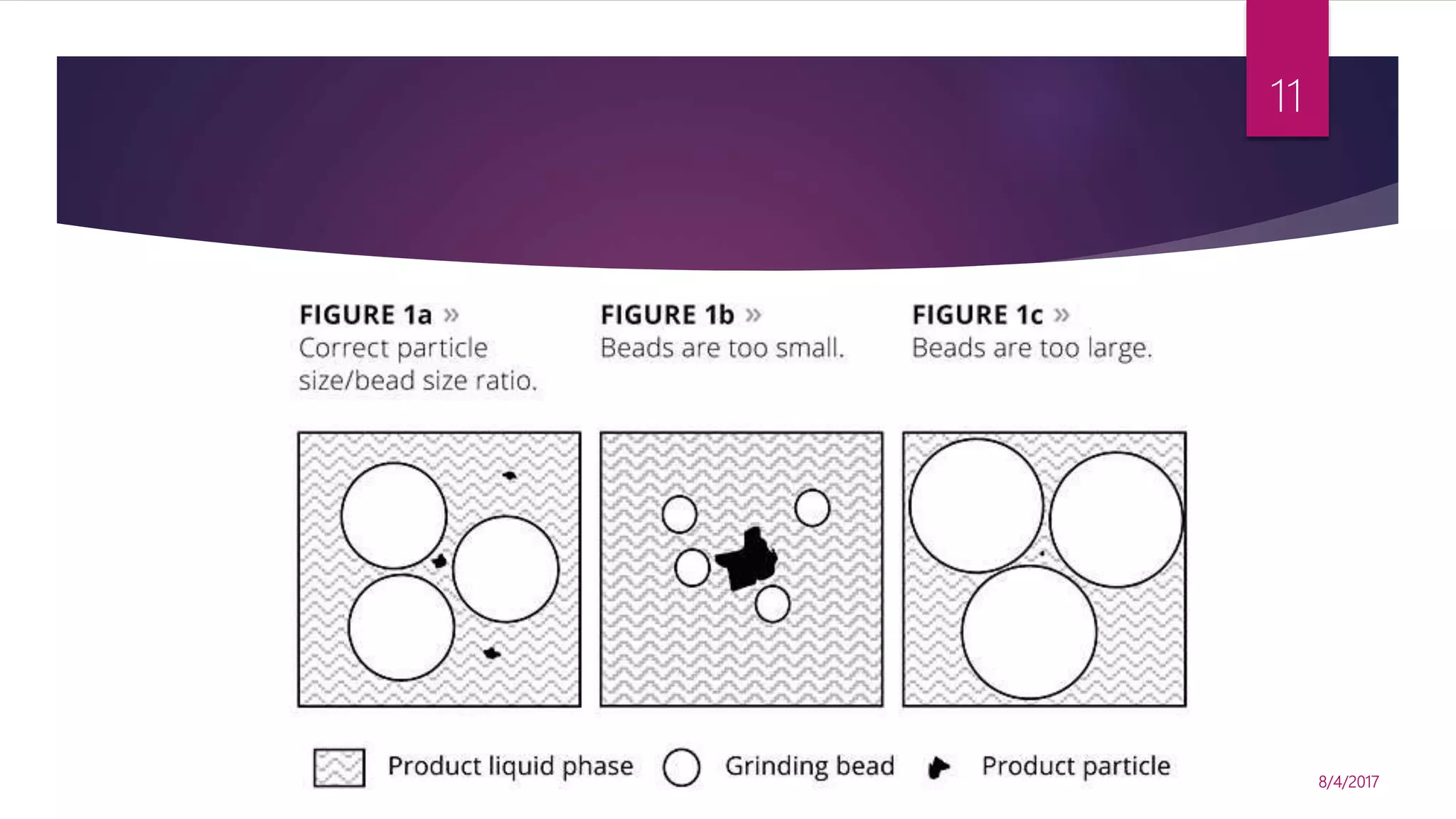
 Glass Ballotini or stainless steel balls are
used, size range being selected for
most effective release of the enzyme
required.
 Increased number of beads increases
the degree of disruption, due to the
increased bead-to-bead interaction.
 However, it also affects the heating and
power consumption.
8/4/2017
11
Process variables
• Agitator speed,
• Proportion of the beads,
• Beads size,
• Cell suspension concentration,
• Cell suspension flow rate, and
• Agitator disc design.
8/4/2017
12
 The kinetics of protein release from bead mills follows the relationship with
respect to the time (t) that a particle spends in the mill.
Ln[ Pm/Pm – Pr] = kt
 P represents the protein content remaining associated with cells.
 t is the time.
 k is a release constant dependent on the system.
 Pm is the maximum possible protein releasable.
8/4/2017
13
Drawbacks
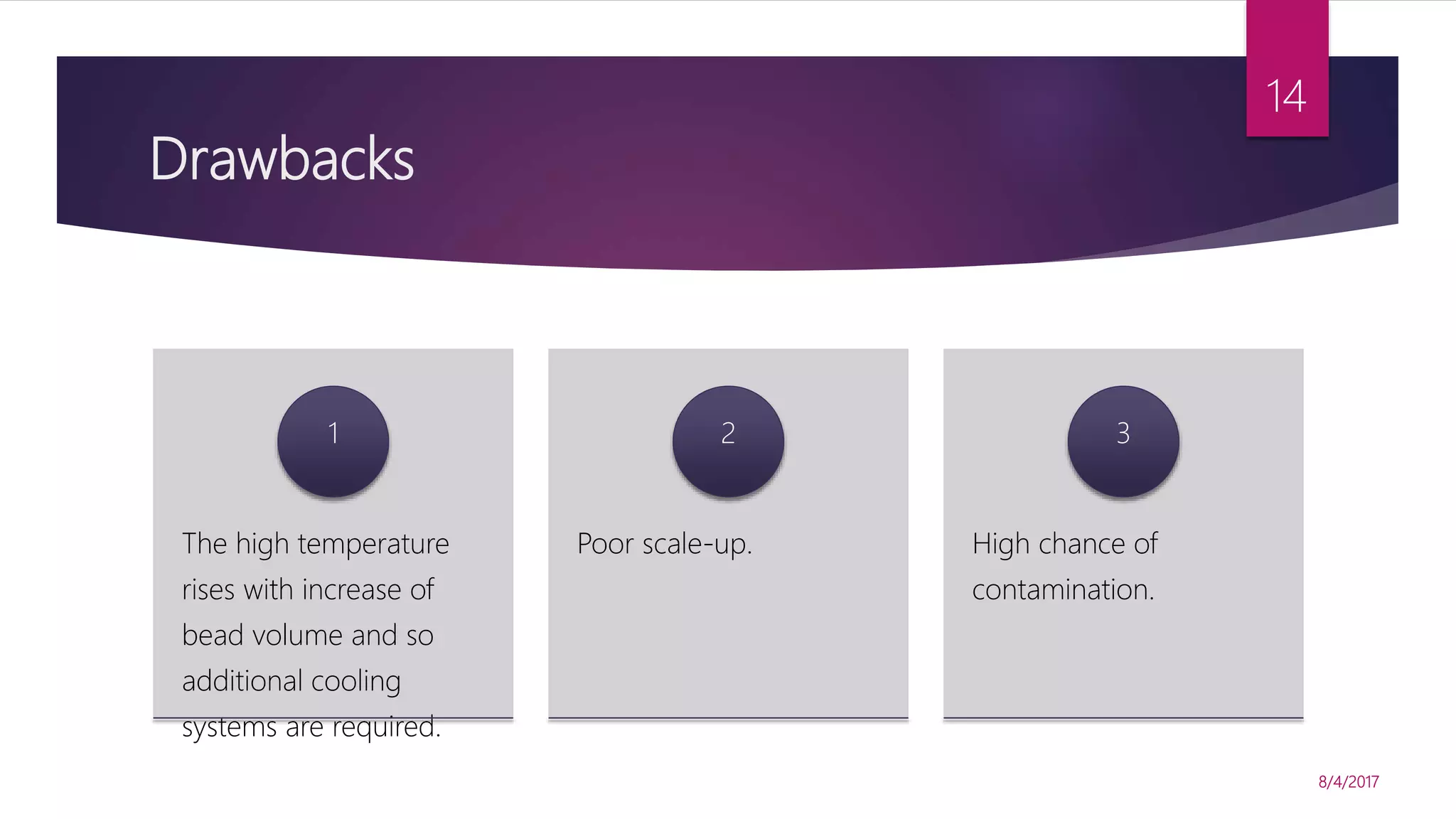
The high temperature
rises with increase of
bead volume and so
additional cooling
systems are required.
1
Poor scale-up.
2
High chance of
contamination.
3
8/4/2017
14
Ultrasound
8/4/2017
15
 Ultrasonic disruption is caused by ultrasonic vibrators
that produce a high frequency sound with a wave
density of about 20 kHz/s.
 A transducer then converts the waves into mechanical
oscillations through a titanium probe, which is
immersed into the cell suspension.
 Very effective in small scale work.
Mechanism of cell disruption by ultrasound
8/4/2017
16
Drawbacks
Upscaling is
very poor.
01
Has high
energy
requirements.
02
High health
and safety
issues, due to
noise.
03
It is not
continuous.
04
8/4/2017
17
French press and high
pressure homogeniser
8/4/2017
18
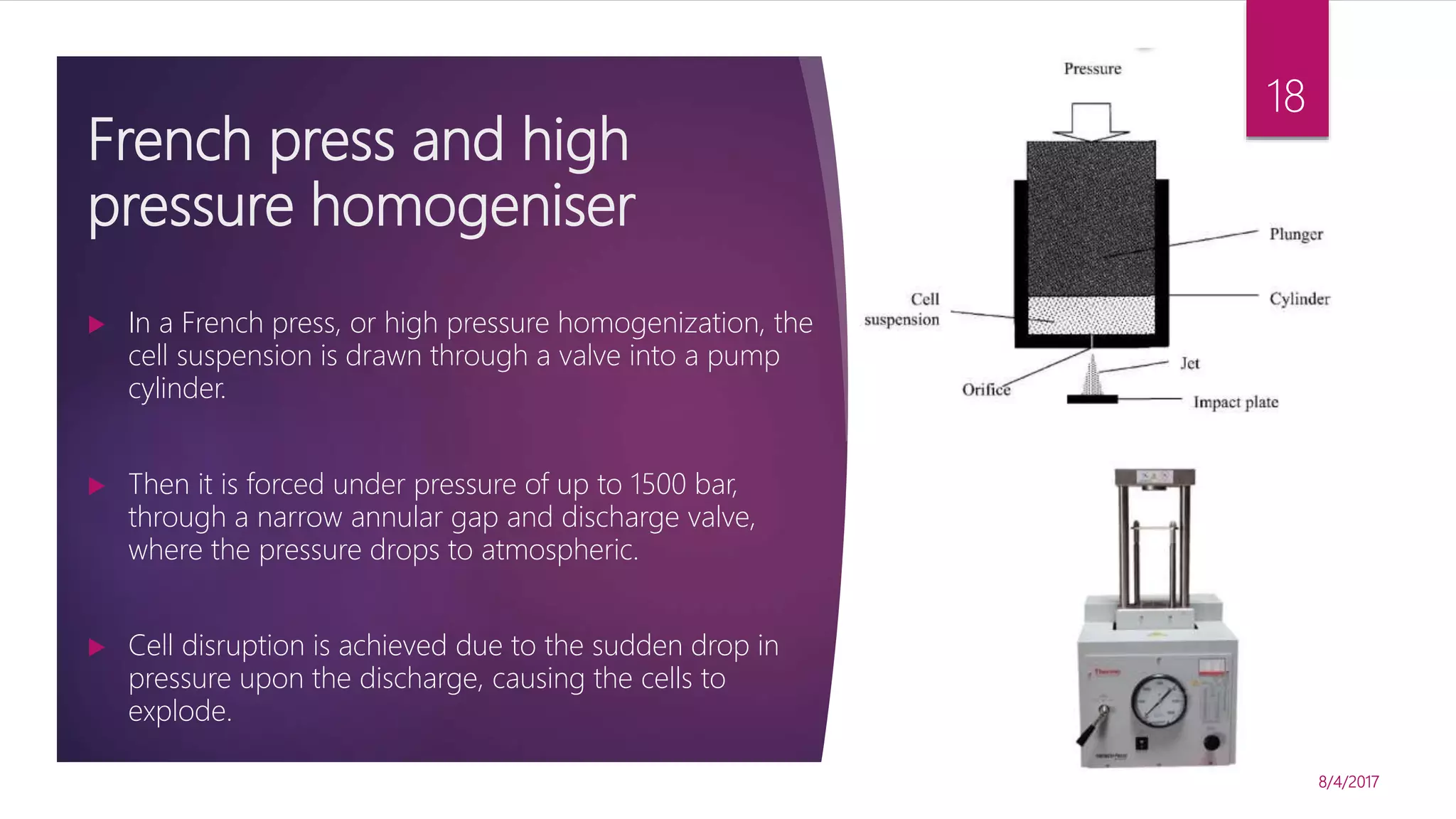
 In a French press, or high pressure homogenization, the
cell suspension is drawn through a valve into a pump
cylinder.
 Then it is forced under pressure of up to 1500 bar,
through a narrow annular gap and discharge valve,
where the pressure drops to atmospheric.
 Cell disruption is achieved due to the sudden drop in
pressure upon the discharge, causing the cells to
explode.
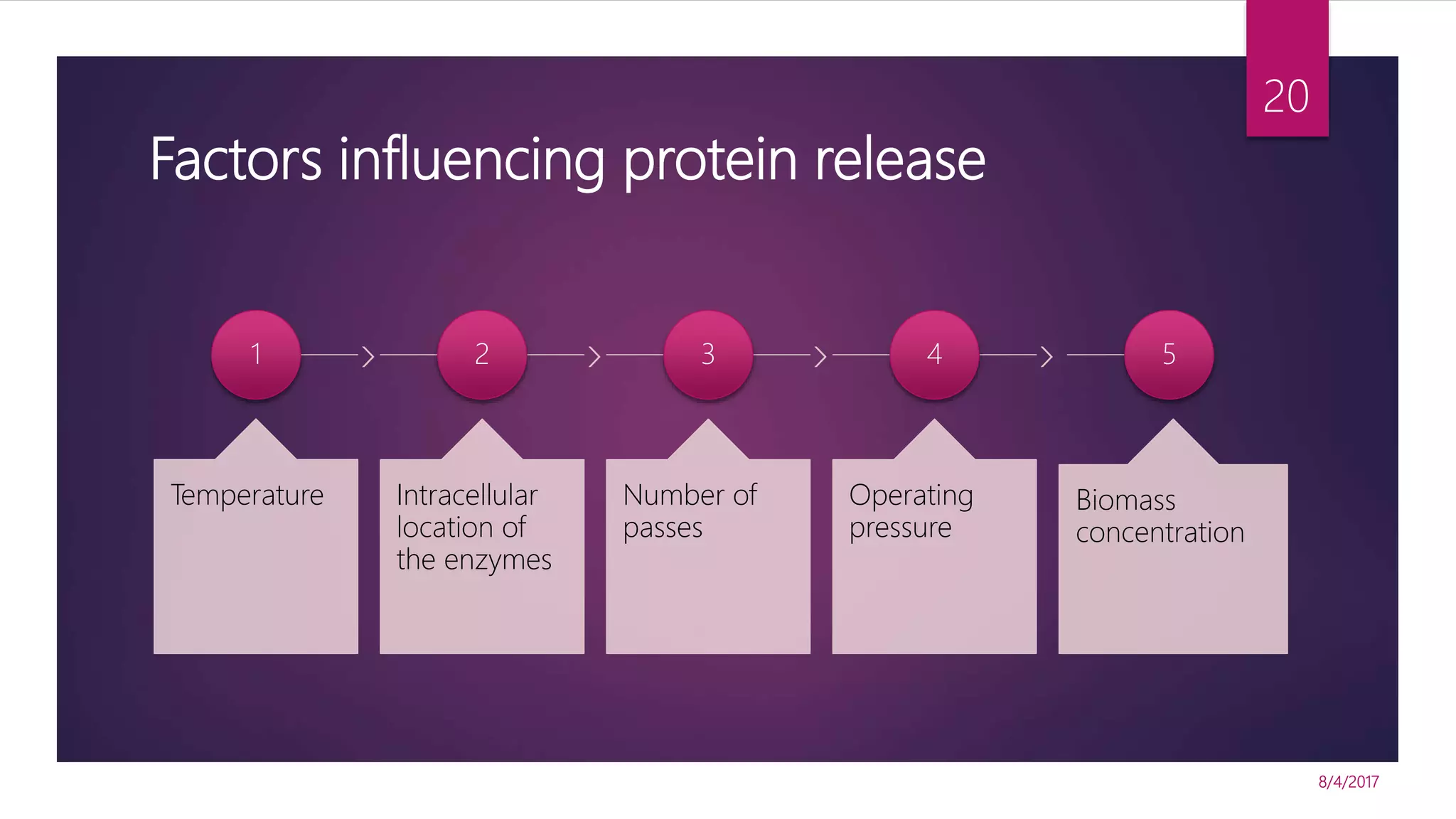
 Operating the press at higher pressures, the number of passes of the slurry
through it can be decreased in order to obtain the desired degree of disruption.
 However, the operating pressure may be limited due to the deactivation of
certain heat-sensitive proteins, which may increase the number of passages
required.
8/4/2017
19
Factors influencing protein release
1
Temperature
2
Intracellular
location of
the enzymes
3
Number of
passes
4
Operating
pressure
5
Biomass
concentration
8/4/2017
20
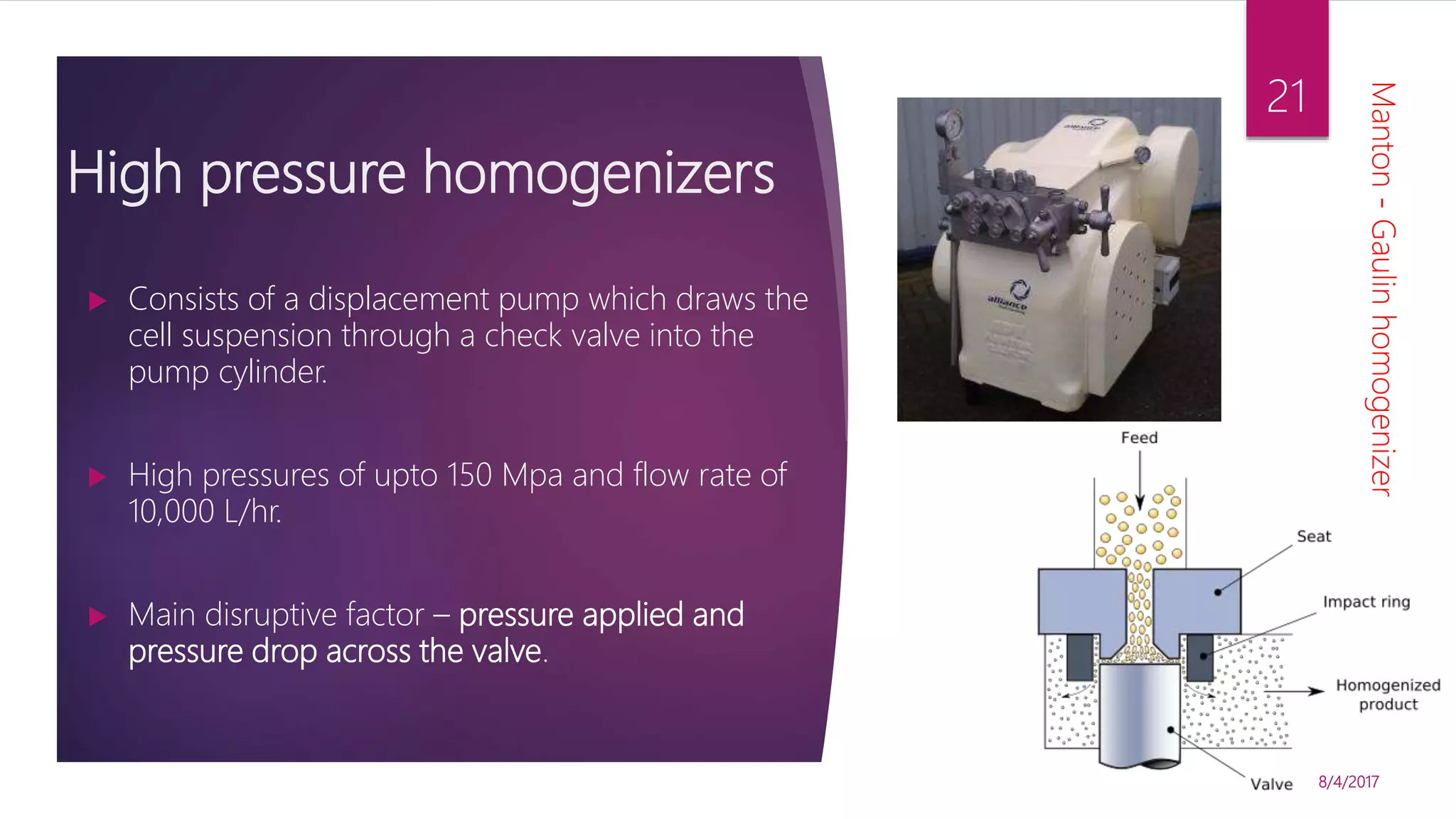
High pressure homogenizers
 Consists of a displacement pump which draws the
cell suspension through a check valve into the
pump cylinder.
 High pressures of upto 150 Mpa and flow rate of
10,000 L/hr.
 Main disruptive factor – pressure applied and
pressure drop across the valve.
8/4/2017
21
Manton-Gaulinhomogenizer
 The higher the operating pressure, the more efficient is the disruption.
 Multiple passes decreases the throughput productivity rate and results in fine
debris which is difficult to remove further downstream.
 Used at highest pressures compatible with the reliability and safety of
equipment and the temperature stability of the enzyme.
 Valve unit is prone to erosion and must be well maintained.
8/4/2017
22
Non-mechanical physical methods
1. Thermolysis
 Periplasmic proteins in G(-) bacteria are released when the cells are heated up to 50ºC.
 Cytoplasmic proteins can be released from E.coli within 10min at 90 ºC.
 Improved protein release has been obtained after short high temperature shocks, than when at
longer temperature exposures at lower values.
 The results are highly unreliable, as the protein solubility changes with temperature fluctuations.
8/4/2017
23
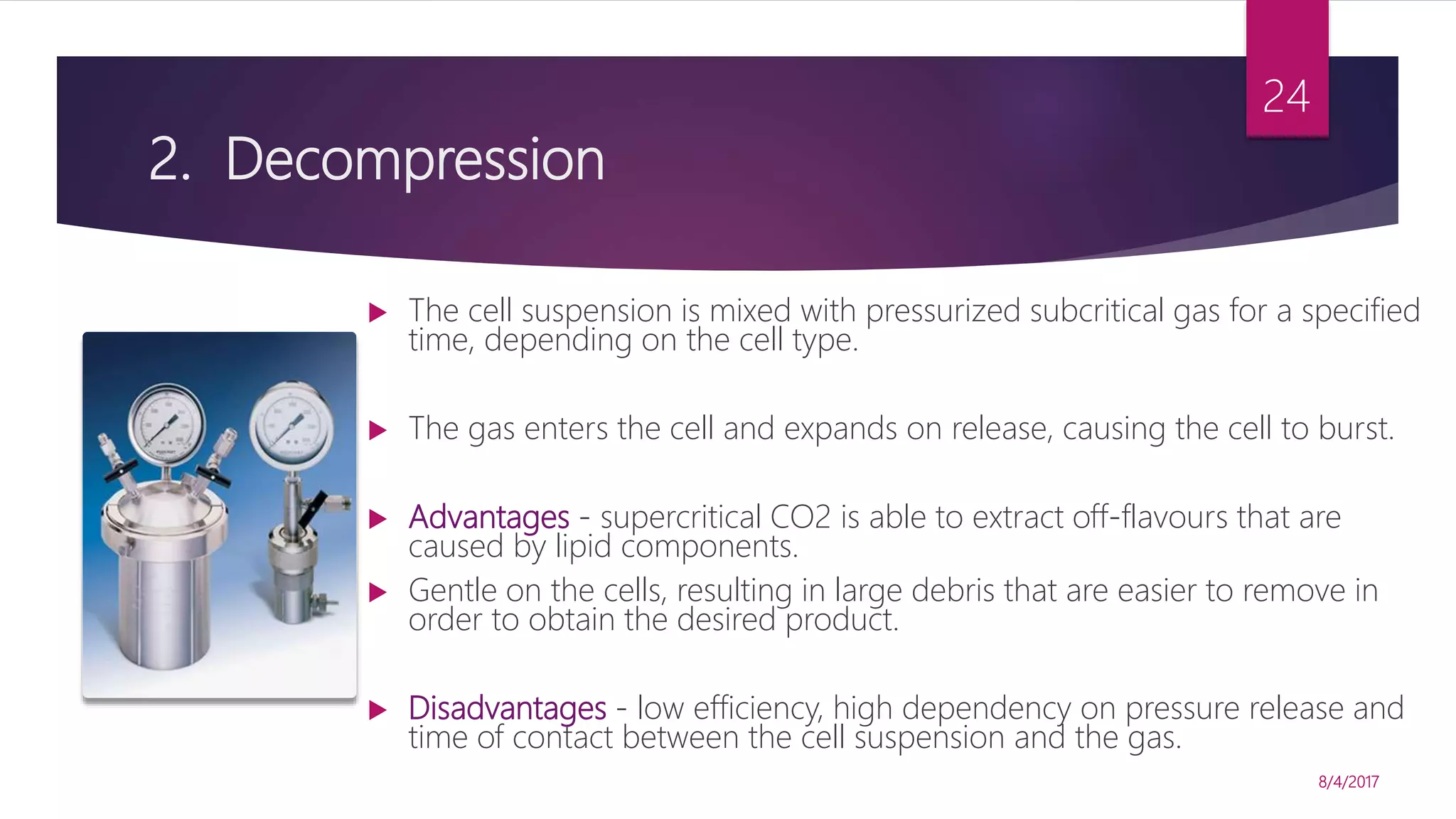
2. Decompression
 The cell suspension is mixed with pressurized subcritical gas for a specified
time, depending on the cell type.
 The gas enters the cell and expands on release, causing the cell to burst.
 Advantages - supercritical CO2 is able to extract off-flavours that are
caused by lipid components.
 Gentle on the cells, resulting in large debris that are easier to remove in
order to obtain the desired product.
 Disadvantages - low efficiency, high dependency on pressure release and
time of contact between the cell suspension and the gas.
8/4/2017
24
3. Osmotic shock
 Caused by a sudden change in salt
concentration.
 Cells are first exposed to either high or low
salt concentration.
 Conditions are quickly changed to opposite
conditions which leads to osmotic pressure
and cell lysis.
8/4/2017
25
Disadvantages
Low
efficiency.
01
Require
enzymatic
pre-treatment
to weaken
the cells.
02
Requires
addition of
high amounts
of salts.
03
Water usage
is high.
04
Product may
be diluted
which
increases
downstream
processing
costs.
05
8/4/2017
26
Non-mechanical chemical methods
1. Detergents
 Detergents damage the lipoproteins of the microbial cell membrane and lead to release of
intracellular components.
 Detergents that are used for disrupting cells are divided into anionic, cationic and non-ionic
detergents.
 Commonly used anionic detergent is sodium dodecyl sulfate (SDS) which reorganizes the cell
membrane by disturbing protein-protein interactions.
 Triton X100, a non-ionic detergent solubilize membrane proteins.
 Cationic detergent, ethyl trimethyl ammonium bromide acts on cell membrane
lipopolysaccharides and phospholipids.
8/4/2017
27
Cell disruption with detergents
8/4/2017
28
• Detergents interact with cell membrane
compounds which will lead to disassembly of cell
membrane.
Disadvantages
Proteins will
be
denatured in
lysis process.
Detergents
may also
disturb
subsequent
downstream
processing
steps.
Additional
purification
step may be
required
after cell
lysis.
8/4/2017
29
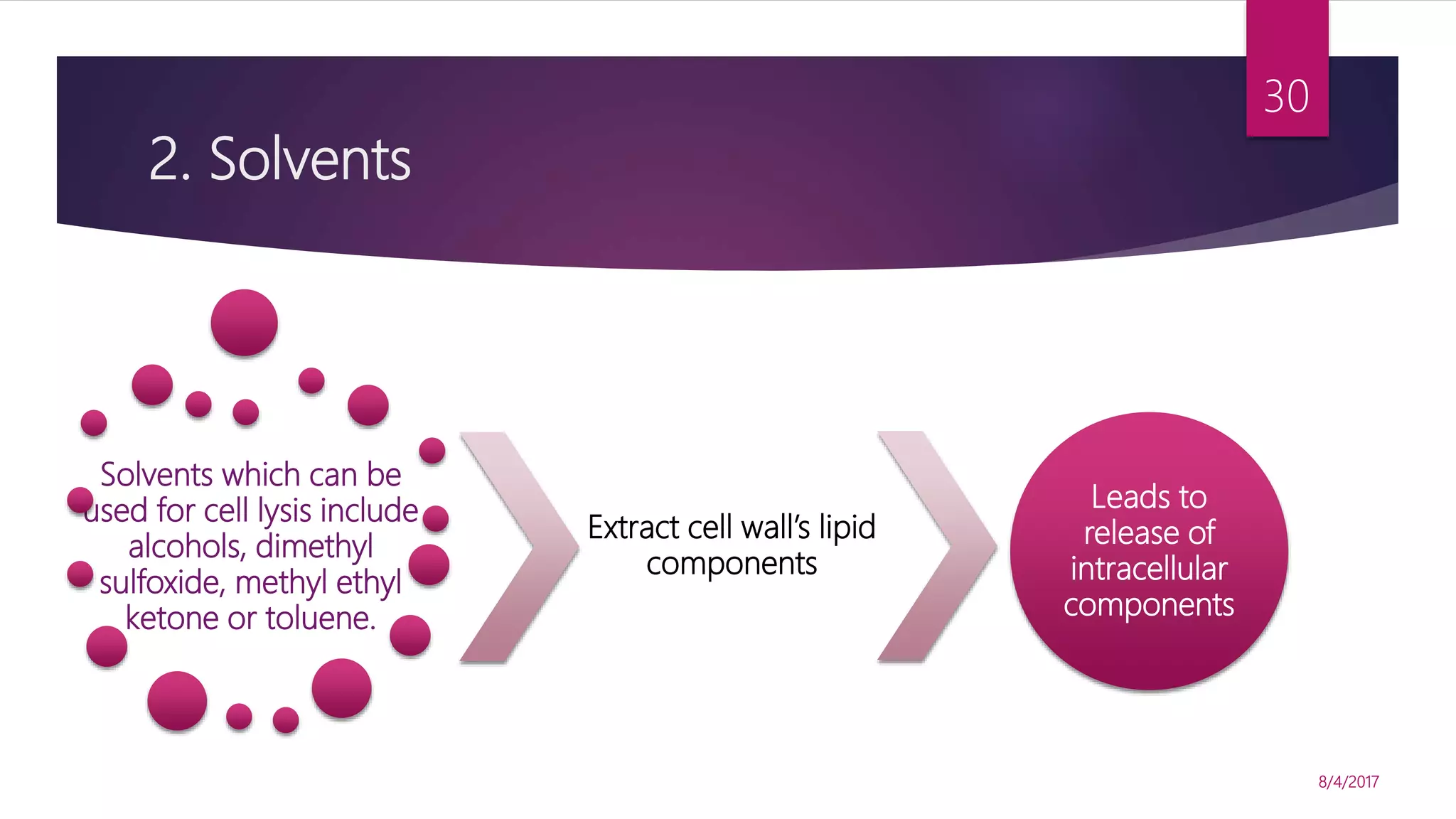
2. Solvents
Solvents which can be
used for cell lysis include
alcohols, dimethyl
sulfoxide, methyl ethyl
ketone or toluene.
Extract cell wall’s lipid
components
Leads to
release of
intracellular
components
8/4/2017
30
3.Alkali treatment
Used for hydrolysis
of microbial cell wall
material provided
that the desired
enzyme will tolerate
a pH of 10.5 to 12.5
for 20 to 30 minutes.
Disadvantages chemical
costs for neutralization
of alkali are high.
Product may not be
stable in alkali
conditions.
8/4/2017
31
Non-mechanical enzymatic methods
 Use of digestive enzyme decomposes the microbial cell wall.
 Used enzyme depends on microbe.
8/4/2017
32
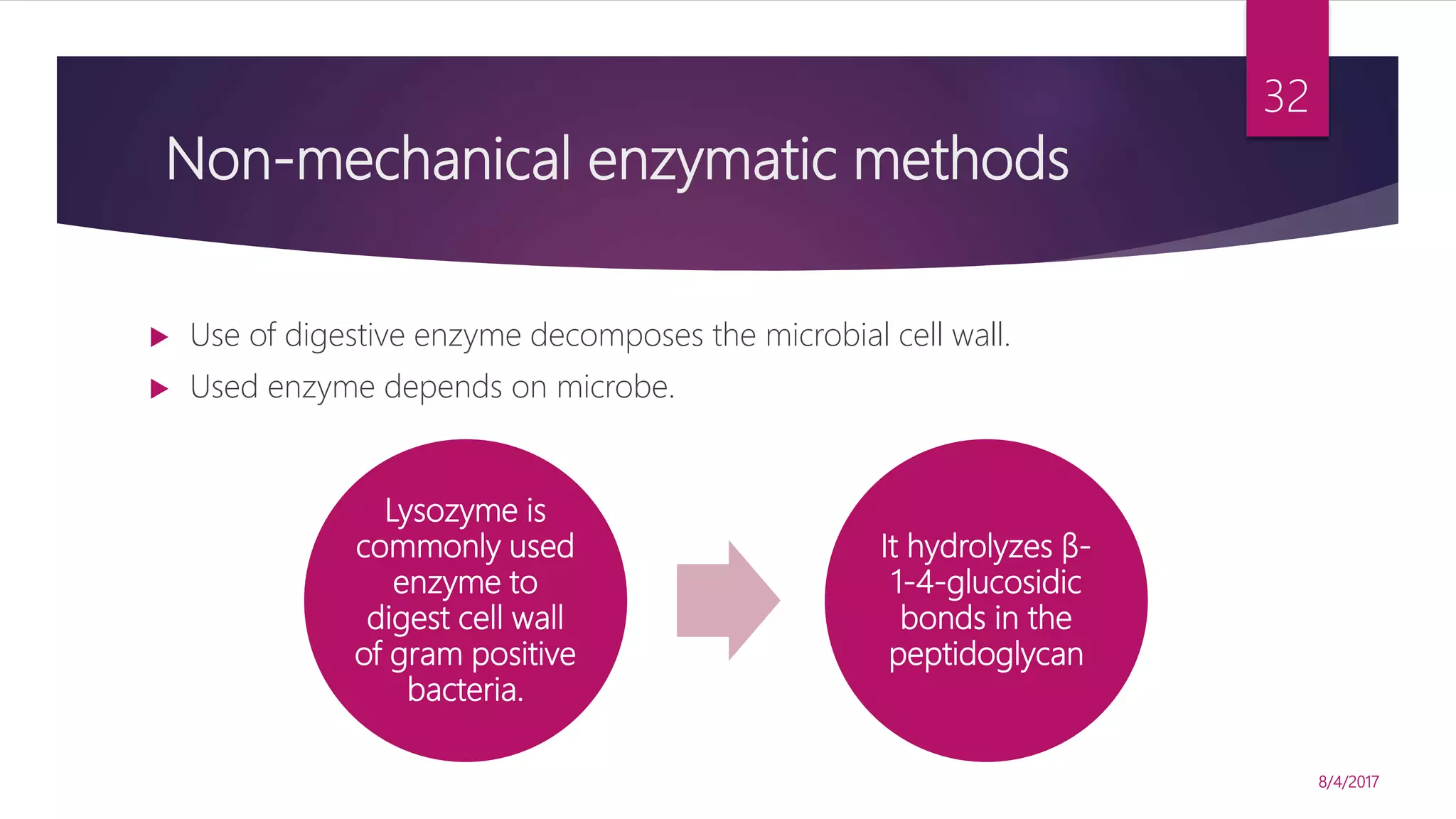
Lysozyme is
commonly used
enzyme to
digest cell wall
of gram positive
bacteria.
It hydrolyzes β-
1-4-glucosidic
bonds in the
peptidoglycan
Contd.
Enzymes commonly
used for degradation
of cell wall of yeast
and fungi include
different cellulases,
pectinases, xylanases
and chitinases.
The enzyme’s high
price and limited
availability limits their
utilization in large
scale processes.
In addition, the
added enzyme may
complicate
downstream
processing (e.g.
purification).
Drawbacks could be
minimized by
immobilization of
enzymes
8/4/2017
33
Summary
 Certain mechanical methods are only viable at a laboratory scale, due to their cost-
effectiveness and scale-up difficulty.
 Mechanical methods are well suited for industrial scale, and are the most popular disruption
methods in use.
 High energy requirements and high pressure requirements are disadvantages of mechanical
methods.
 Many variables ranging from required apparatus to optimal materials affect the efficacy of
mechanical methods.
 Methods like ultrasound may offer significant energy savings when compared to solid shear
mechanical methods.
 The difficulty of sterilization and cleaning procedures makes mechanical methods susceptible
to contamination though. 8/4/2017
34
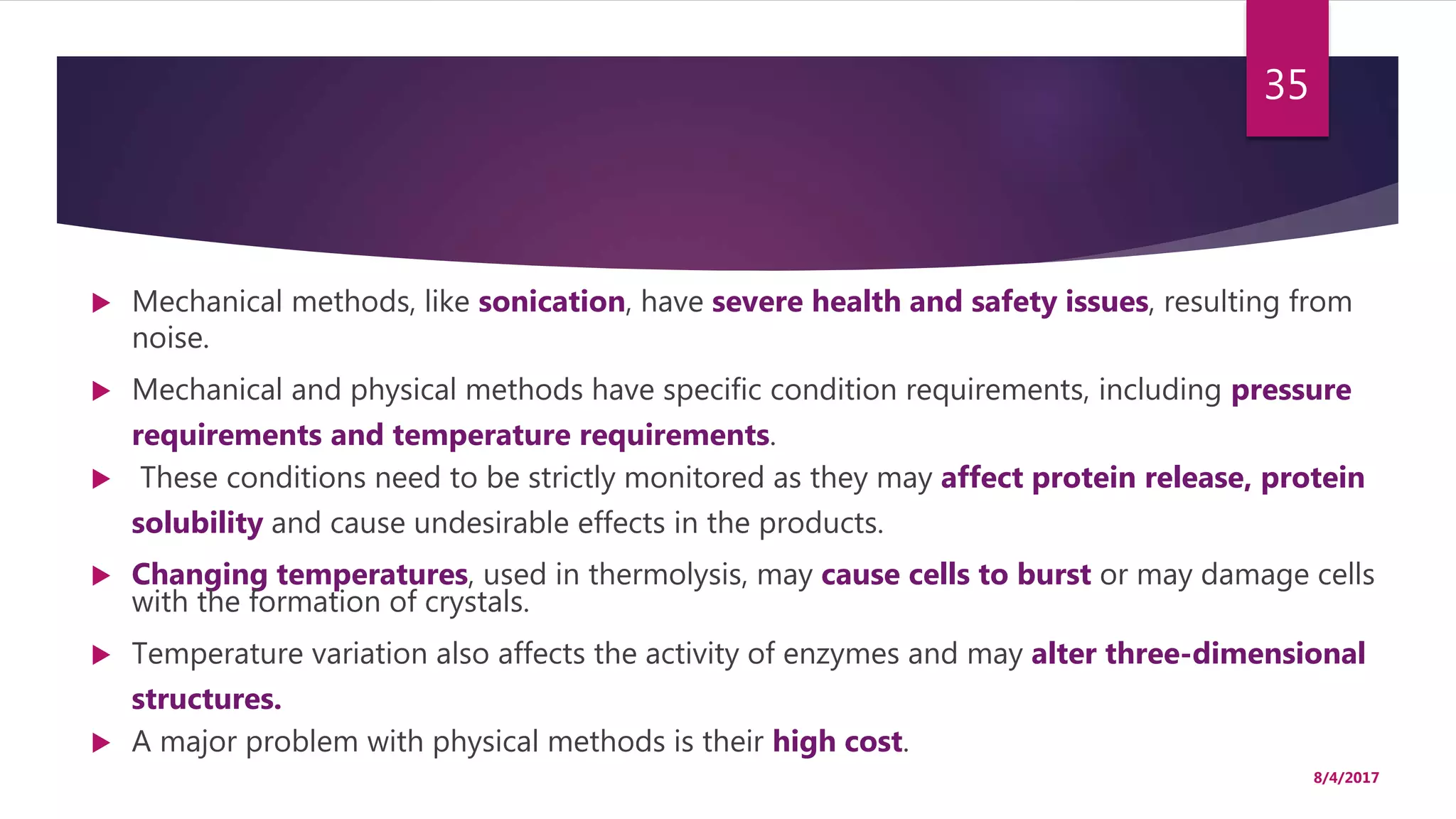
 Mechanical methods, like sonication, have severe health and safety issues, resulting from
noise.
 Mechanical and physical methods have specific condition requirements, including pressure
requirements and temperature requirements.
 These conditions need to be strictly monitored as they may affect protein release, protein
solubility and cause undesirable effects in the products.
 Changing temperatures, used in thermolysis, may cause cells to burst or may damage cells
with the formation of crystals.
 Temperature variation also affects the activity of enzymes and may alter three-dimensional
structures.
 A major problem with physical methods is their high cost.
8/4/2017
35
 Chemical methods are risky to use for the disruption of sensitive cells, as the used solvents and
detergents can cause protein denaturation, damaging the final product.
 A significant issue is the removal and recovery of the chemical disrupter, making chemical
methods highly applicable at a laboratory scale.
 Chemical methods also have low efficacy, making them more expensive and less useful as
disruption methods.
 The high consumption of solvents and water makes chemical methods environmentally
unfriendly.
 Enzymatic methods are gentle, with fewer side effects, yet high costs make them impractical.
8/4/2017
36
References
 Cell disruption methods. Natalia Kakko, Nicoletta Ivanova and Anssi Rantasalo.
 Stanbury, P., Whitaker, A. & Hall, S. (2016) Principles of Fermentation Technology (Third
Edition), Chapter 10.
 Abhilasha S. Mathuriya. (2009) Industrial biotechnology, Ane Books Pvt Ltd. Chapter 13.
 Elliott Goldberg. (1997). Handbook of downstream processing. Blackie Academic and
Professional, London. Chapter 1.
8/4/2017
37
Thank You
8/4/2017
38

Cell disruption methods

  • 1.
    CELL DISRUPTION AISHWARYA BABU M.SC.BIOTECHNOLOGY SEMESTER 2 CUSAT 1
  • 2.
    Contents  1. Introduction 2. Methods of microbial cell disruption  3. Ideal technology characterization  4. Mechanical methods Bead mill Ultrasound French press and high pressure homogeniser  5. Non-mechanical physical methods Thermolysis Decompression Osmotic shock  6. Non-mechanical chemical and enzymatic methods Detergents Solvents Alkali treatment Enzymes  7. Summary  8. References 8/4/2017 2
  • 3.
    Introduction  Cell disruptionis an essential part of biotechnology and the downstream processes related to the manufacturing of biological products.  It is necessary for the extraction and retrieval of the desired products, as cell disruption significantly enhances the recovery of biological products.  It affects the physical properties of the cell slurry, thus indirectly influencing further downstream processes.  Several types of cell disruption methods exist, as biological products may be extracellular, intracellular or periplasmic. 8/4/2017 3
  • 4.
    Methods of microbial celldisruption 8/4/2017 4  Cell disruption methods can be categorized into mechanical methods and non- mechanical methods.  Different cells have different structures; hence they require different methods for disruption.
  • 5.
    Ideal technology characterization Maximumrelease of the product of interest. No mechanical or thermal denaturation of the product during disruption. Minimal release of proteases which may degrade the product. Minimal release of particulates or soluble contaminants that may influence downstream processing. 8/4/2017 5
  • 6.
    Contd. Susceptibility of thecells to disruption. Product stability. Ease of extraction from the cell debris. Speed of the method. Cost of the method. 8/4/2017 6
  • 7.
     Before celldisruption can take place, the cells must be separated from the culture medium.  Secreted extracellular components need to be decreased and unutilized media components also need to be reduced.  The drying of the cell mass enhances disruption methods and may help bring down the costs.  In some cases, more than one disruption method may be necessary to achieve full product recovery. 8/4/2017 7
  • 8.
    Mechanical Methods  Principle- cells are being subjected to high stress via pressure, abrasion with rapid agitation with beads, or ultrasound.  Methods of disruption include cavitation, shearing, impingement, or combination of those.  Intensive cooling of the suspension after the treatment is required in order to remove the heat generated by the dissipation of the mechanical energy.  Some high-pressure methods can only be applied in laboratory scale, such as French press and Hughes press. 8/4/2017 8
  • 9.
    Bead mills  Consistsof a jacketed grinding chamber with a rotating shaft, running in its centre.  Agitators are fitted with the shaft, and provide kinetic energy to the small beads that are present in the chamber which makes the beads collide with each other. 8/4/2017 9
  • 10.
    8/4/2017 10  Glass Ballotinior stainless steel balls are used, size range being selected for most effective release of the enzyme required.  Increased number of beads increases the degree of disruption, due to the increased bead-to-bead interaction.  However, it also affects the heating and power consumption.
  • 11.
  • 12.
    Process variables • Agitatorspeed, • Proportion of the beads, • Beads size, • Cell suspension concentration, • Cell suspension flow rate, and • Agitator disc design. 8/4/2017 12
  • 13.
     The kineticsof protein release from bead mills follows the relationship with respect to the time (t) that a particle spends in the mill. Ln[ Pm/Pm – Pr] = kt  P represents the protein content remaining associated with cells.  t is the time.  k is a release constant dependent on the system.  Pm is the maximum possible protein releasable. 8/4/2017 13
  • 14.
    Drawbacks The high temperature riseswith increase of bead volume and so additional cooling systems are required. 1 Poor scale-up. 2 High chance of contamination. 3 8/4/2017 14
  • 15.
    Ultrasound 8/4/2017 15  Ultrasonic disruptionis caused by ultrasonic vibrators that produce a high frequency sound with a wave density of about 20 kHz/s.  A transducer then converts the waves into mechanical oscillations through a titanium probe, which is immersed into the cell suspension.  Very effective in small scale work.
  • 16.
    Mechanism of celldisruption by ultrasound 8/4/2017 16
  • 17.
    Drawbacks Upscaling is very poor. 01 Hashigh energy requirements. 02 High health and safety issues, due to noise. 03 It is not continuous. 04 8/4/2017 17
  • 18.
    French press andhigh pressure homogeniser 8/4/2017 18  In a French press, or high pressure homogenization, the cell suspension is drawn through a valve into a pump cylinder.  Then it is forced under pressure of up to 1500 bar, through a narrow annular gap and discharge valve, where the pressure drops to atmospheric.  Cell disruption is achieved due to the sudden drop in pressure upon the discharge, causing the cells to explode.
  • 19.
     Operating thepress at higher pressures, the number of passes of the slurry through it can be decreased in order to obtain the desired degree of disruption.  However, the operating pressure may be limited due to the deactivation of certain heat-sensitive proteins, which may increase the number of passages required. 8/4/2017 19
  • 20.
    Factors influencing proteinrelease 1 Temperature 2 Intracellular location of the enzymes 3 Number of passes 4 Operating pressure 5 Biomass concentration 8/4/2017 20
  • 21.
    High pressure homogenizers Consists of a displacement pump which draws the cell suspension through a check valve into the pump cylinder.  High pressures of upto 150 Mpa and flow rate of 10,000 L/hr.  Main disruptive factor – pressure applied and pressure drop across the valve. 8/4/2017 21 Manton-Gaulinhomogenizer
  • 22.
     The higherthe operating pressure, the more efficient is the disruption.  Multiple passes decreases the throughput productivity rate and results in fine debris which is difficult to remove further downstream.  Used at highest pressures compatible with the reliability and safety of equipment and the temperature stability of the enzyme.  Valve unit is prone to erosion and must be well maintained. 8/4/2017 22
  • 23.
    Non-mechanical physical methods 1.Thermolysis  Periplasmic proteins in G(-) bacteria are released when the cells are heated up to 50ºC.  Cytoplasmic proteins can be released from E.coli within 10min at 90 ºC.  Improved protein release has been obtained after short high temperature shocks, than when at longer temperature exposures at lower values.  The results are highly unreliable, as the protein solubility changes with temperature fluctuations. 8/4/2017 23
  • 24.
    2. Decompression  Thecell suspension is mixed with pressurized subcritical gas for a specified time, depending on the cell type.  The gas enters the cell and expands on release, causing the cell to burst.  Advantages - supercritical CO2 is able to extract off-flavours that are caused by lipid components.  Gentle on the cells, resulting in large debris that are easier to remove in order to obtain the desired product.  Disadvantages - low efficiency, high dependency on pressure release and time of contact between the cell suspension and the gas. 8/4/2017 24
  • 25.
    3. Osmotic shock Caused by a sudden change in salt concentration.  Cells are first exposed to either high or low salt concentration.  Conditions are quickly changed to opposite conditions which leads to osmotic pressure and cell lysis. 8/4/2017 25
  • 26.
    Disadvantages Low efficiency. 01 Require enzymatic pre-treatment to weaken the cells. 02 Requires additionof high amounts of salts. 03 Water usage is high. 04 Product may be diluted which increases downstream processing costs. 05 8/4/2017 26
  • 27.
    Non-mechanical chemical methods 1.Detergents  Detergents damage the lipoproteins of the microbial cell membrane and lead to release of intracellular components.  Detergents that are used for disrupting cells are divided into anionic, cationic and non-ionic detergents.  Commonly used anionic detergent is sodium dodecyl sulfate (SDS) which reorganizes the cell membrane by disturbing protein-protein interactions.  Triton X100, a non-ionic detergent solubilize membrane proteins.  Cationic detergent, ethyl trimethyl ammonium bromide acts on cell membrane lipopolysaccharides and phospholipids. 8/4/2017 27
  • 28.
    Cell disruption withdetergents 8/4/2017 28 • Detergents interact with cell membrane compounds which will lead to disassembly of cell membrane.
  • 29.
    Disadvantages Proteins will be denatured in lysisprocess. Detergents may also disturb subsequent downstream processing steps. Additional purification step may be required after cell lysis. 8/4/2017 29
  • 30.
    2. Solvents Solvents whichcan be used for cell lysis include alcohols, dimethyl sulfoxide, methyl ethyl ketone or toluene. Extract cell wall’s lipid components Leads to release of intracellular components 8/4/2017 30
  • 31.
    3.Alkali treatment Used forhydrolysis of microbial cell wall material provided that the desired enzyme will tolerate a pH of 10.5 to 12.5 for 20 to 30 minutes. Disadvantages chemical costs for neutralization of alkali are high. Product may not be stable in alkali conditions. 8/4/2017 31
  • 32.
    Non-mechanical enzymatic methods Use of digestive enzyme decomposes the microbial cell wall.  Used enzyme depends on microbe. 8/4/2017 32 Lysozyme is commonly used enzyme to digest cell wall of gram positive bacteria. It hydrolyzes β- 1-4-glucosidic bonds in the peptidoglycan
  • 33.
    Contd. Enzymes commonly used fordegradation of cell wall of yeast and fungi include different cellulases, pectinases, xylanases and chitinases. The enzyme’s high price and limited availability limits their utilization in large scale processes. In addition, the added enzyme may complicate downstream processing (e.g. purification). Drawbacks could be minimized by immobilization of enzymes 8/4/2017 33
  • 34.
    Summary  Certain mechanicalmethods are only viable at a laboratory scale, due to their cost- effectiveness and scale-up difficulty.  Mechanical methods are well suited for industrial scale, and are the most popular disruption methods in use.  High energy requirements and high pressure requirements are disadvantages of mechanical methods.  Many variables ranging from required apparatus to optimal materials affect the efficacy of mechanical methods.  Methods like ultrasound may offer significant energy savings when compared to solid shear mechanical methods.  The difficulty of sterilization and cleaning procedures makes mechanical methods susceptible to contamination though. 8/4/2017 34
  • 35.
     Mechanical methods,like sonication, have severe health and safety issues, resulting from noise.  Mechanical and physical methods have specific condition requirements, including pressure requirements and temperature requirements.  These conditions need to be strictly monitored as they may affect protein release, protein solubility and cause undesirable effects in the products.  Changing temperatures, used in thermolysis, may cause cells to burst or may damage cells with the formation of crystals.  Temperature variation also affects the activity of enzymes and may alter three-dimensional structures.  A major problem with physical methods is their high cost. 8/4/2017 35
  • 36.
     Chemical methodsare risky to use for the disruption of sensitive cells, as the used solvents and detergents can cause protein denaturation, damaging the final product.  A significant issue is the removal and recovery of the chemical disrupter, making chemical methods highly applicable at a laboratory scale.  Chemical methods also have low efficacy, making them more expensive and less useful as disruption methods.  The high consumption of solvents and water makes chemical methods environmentally unfriendly.  Enzymatic methods are gentle, with fewer side effects, yet high costs make them impractical. 8/4/2017 36
  • 37.
    References  Cell disruptionmethods. Natalia Kakko, Nicoletta Ivanova and Anssi Rantasalo.  Stanbury, P., Whitaker, A. & Hall, S. (2016) Principles of Fermentation Technology (Third Edition), Chapter 10.  Abhilasha S. Mathuriya. (2009) Industrial biotechnology, Ane Books Pvt Ltd. Chapter 13.  Elliott Goldberg. (1997). Handbook of downstream processing. Blackie Academic and Professional, London. Chapter 1. 8/4/2017 37
  • 38.