Origin of Biopotentials
Mr.A.Rameshbabu AP/ECE
Ramco Institute of Technology
Academic Year 2017 – 2018 (Even)
Origin of Biopotentials
The systems in the human body generate their own
monitoring signals when they carry out their
functions.
These signals provide useful information about their
function.
Bioelectric potentials are actually ionic voltages
produced as a result of electro chemical activity of
certain cell.
Transducers are used to convert these ionic potentials
in to electrical signals.
Resting and Action potentials
Certain types of cells within the body such as nerve
and muscle cells are encased in a semi permeable
membrane.
This membrane permits some substances to pass
through while others are kept out.
Surrounding the cells of the body are the body fluids.
These fluids are conductive solutions containing
charged atoms known as ions.
The principle ions are sodium(Na+), Potassium(K+)
and chloride(C-)
The membrane of excitable cells permit entry of
Potassium(K+) and chloride(C-) ions but blocks the
entry of sodium(Na+) ions.
So inside the cell is more negative than outside cell
This membrane potentials is called Resting potentials.
This resting potential ranging from -60mv to -100 mv.
Cell in the resting state is called polarized cell.
After that the membrane change its characteristics
and start allow sodium(Na+) ions to pass through it.
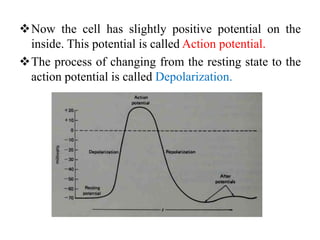
Now the cell has slightly positive potential on the
inside. This potential is called Action potential.
The process of changing from the resting state to the
action potential is called Depolarization.
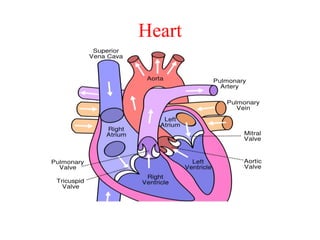
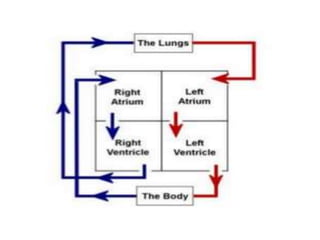
Heart
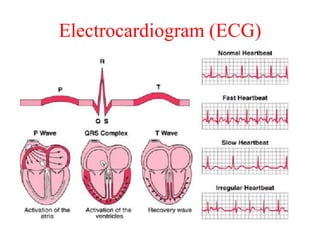
Electrocardiogram (ECG)
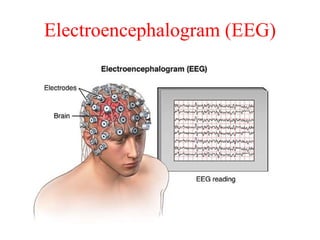
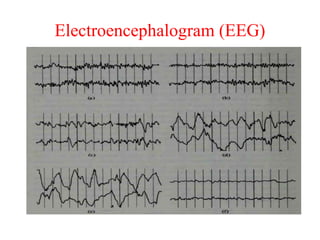
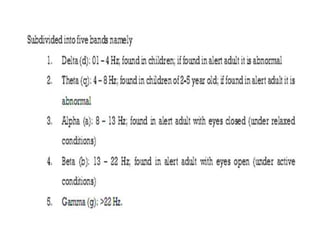
Electroencephalogram (EEG)
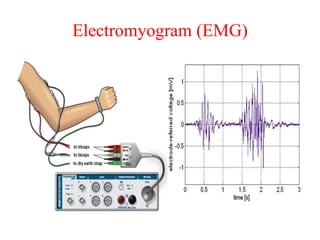
Electromyogram (EMG)
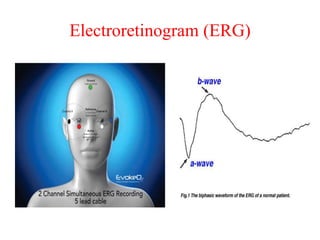
Electroretinogram (ERG)
Reference
Leslie Cromwell, “Biomedical
Instrumentation and Measurement”,
Prentice Hall of India, New Delhi,
2007.

Origin of biopotentials

  • 1.
    Origin of Biopotentials Mr.A.RameshbabuAP/ECE Ramco Institute of Technology Academic Year 2017 – 2018 (Even)
  • 2.
    Origin of Biopotentials Thesystems in the human body generate their own monitoring signals when they carry out their functions. These signals provide useful information about their function. Bioelectric potentials are actually ionic voltages produced as a result of electro chemical activity of certain cell. Transducers are used to convert these ionic potentials in to electrical signals.
  • 3.
    Resting and Actionpotentials Certain types of cells within the body such as nerve and muscle cells are encased in a semi permeable membrane. This membrane permits some substances to pass through while others are kept out. Surrounding the cells of the body are the body fluids. These fluids are conductive solutions containing charged atoms known as ions.
  • 4.
    The principle ionsare sodium(Na+), Potassium(K+) and chloride(C-) The membrane of excitable cells permit entry of Potassium(K+) and chloride(C-) ions but blocks the entry of sodium(Na+) ions. So inside the cell is more negative than outside cell This membrane potentials is called Resting potentials. This resting potential ranging from -60mv to -100 mv. Cell in the resting state is called polarized cell. After that the membrane change its characteristics and start allow sodium(Na+) ions to pass through it.
  • 5.
    Now the cellhas slightly positive potential on the inside. This potential is called Action potential. The process of changing from the resting state to the action potential is called Depolarization.
  • 6.
  • 8.
  • 9.
  • 10.
  • 12.
  • 13.
  • 14.
    Reference Leslie Cromwell, “Biomedical Instrumentationand Measurement”, Prentice Hall of India, New Delhi, 2007.