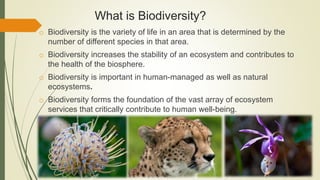
What is Biodiversity?
o Biodiversity is the variety of life in an area that is determined by the
number of different species in that area.
o Biodiversity increases the stability of an ecosystem and contributes to
the health of the biosphere.
o Biodiversity is important in human-managed as well as natural
ecosystems.
o Biodiversity forms the foundation of the vast array of ecosystem
services that critically contribute to human well-being.
What is the importance of Biodiversity?
Biodiversity has a number of functions on the Earth. These are as follows:
 Maintaining balance of the ecosystem: Recycling and storage of
nutrients, combating pollution, and stabilizing climate, protecting water
resources, forming and protecting soil and maintaining the eco-balance.
 Provision of biological resources: Provision of medicines and
pharmaceuticals, food for the human population and animals, ornamental
plants, wood products, breeding stock and diversity of species, ecosystems
and genes.
 Social benefits: Recreation and tourism, cultural value and education and
research.
Types of Biodiversity
• Genetic diversity - Diversity of genes within a species. i.e. genetic
variability among the populations and the individuals of the same
species.
• Species diversity- Diversity among species in an ecosystem.
“Biodiversity hotspots” are excellent examples of species diversity.
• Ecosystem diversity- Diversity at a higher level of organization, the
ecosystem. To do with the variety of ecosystems on Earth.
Various Plant Species
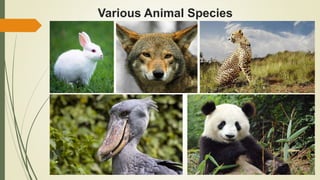
Various Animal Species
What is the need for conservation of
Biodiversity?
Biodiversity must be conserved because of the following reasons:
 Providing important natural functions. Ecosystems serve humans because they provide
natural functions. For example, the microbes in an ecosystem are vital in the breakdown of
dead plant and animal remains and in the recycling of
 Aesthetic reasons. Landscapes and species should all be conserved because they are
beautiful and enrich the lives of humans.
 Moral reasons. A culture that encourages respect and stewardship for wildlife and landscapes
is preferable to a culture which does not take these things seriously.
 Biodiversity provides actual and potential material and economic benefits to people.
 Insurance. No one knows what humans may need in the future. If species have become
extinct, humans can never benefit from them.
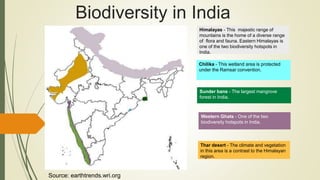
Biodiversity in India
Thar desert - The climate and vegetation
in this area is a contrast to the Himalayan
region.
Western Ghats - One of the two
biodiversity hotspots in India.
Sunder bans - The largest mangrove
forest in India.
Chilika - This wetland area is protected
under the Ramsar convention.
Himalayas - This majestic range of
mountains is the home of a diverse range
of flora and fauna. Eastern Himalayas is
one of the two biodiversity hotspots in
India.
Source: earthtrends.wri.org
Protecting Biodiversity
 Many efforts are underway worldwide to slow the loss of biodiversity and to
work toward sustainable use of natural resources.
 Currently, about seven percent of the world’s land is set aside as some type
of reserve.
 The United Nations supports a system of Biosphere Reserves and World
Heritage sites.
 As of May 2004, the protected areas of India cover 156,700 square
kilometres (60,500 sq mi), roughly 4.95% of the total surface area.
 India has over 120 National Parks , 500 Animal Sanctuaries , 18 Biosphere
Reserves and many Reserved and Protected Forests.
Source: http://en.wikipedia.org/wiki/Protected_areas_of_India
Steps taken by the government to
protect Biodiversity in India
i. The Central Government has enacted the Wild Life (Protection) Act, 1972.
ii. Wildlife Crime Control Bureau has been established for control of illegal trade in wildlife,
including endangered species.
iii. Wildlife Institute of India, Bombay Natural History society and Salim Ali Centre for Ornithology and
Natural History are some of the research organizations undertaking research on conservation
of wildlife.
iv. Financial and technical assistance is extended to the State Governments under various Centrally
Sponsored Schemes, viz, ‘Integrated Development of Wildlife Habitats’, ‘Project Tiger’ and ‘Project
Elephant’ for providing better protection and conservation to wildlife.
v. The Central Bureau of Investigation (CBI) has been empowered under the Wild Life (Protection)
Act, 1972 to apprehend and prosecute wildlife offenders.
vi. The Centrally Sponsored Scheme of National Plan for Conservation of Aquatic Eco-
System also provides assistance to the States for management of wet lands including Ramsar
sites in the country.
Thank You!
Made by – Mridul Mohta

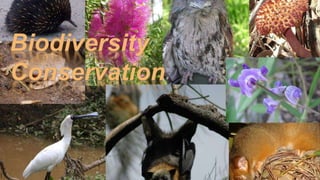
Biodiversity conservation

  • 2.
    What is Biodiversity? oBiodiversity is the variety of life in an area that is determined by the number of different species in that area. o Biodiversity increases the stability of an ecosystem and contributes to the health of the biosphere. o Biodiversity is important in human-managed as well as natural ecosystems. o Biodiversity forms the foundation of the vast array of ecosystem services that critically contribute to human well-being.
  • 3.
    What is theimportance of Biodiversity? Biodiversity has a number of functions on the Earth. These are as follows:  Maintaining balance of the ecosystem: Recycling and storage of nutrients, combating pollution, and stabilizing climate, protecting water resources, forming and protecting soil and maintaining the eco-balance.  Provision of biological resources: Provision of medicines and pharmaceuticals, food for the human population and animals, ornamental plants, wood products, breeding stock and diversity of species, ecosystems and genes.  Social benefits: Recreation and tourism, cultural value and education and research.
  • 4.
    Types of Biodiversity •Genetic diversity - Diversity of genes within a species. i.e. genetic variability among the populations and the individuals of the same species. • Species diversity- Diversity among species in an ecosystem. “Biodiversity hotspots” are excellent examples of species diversity. • Ecosystem diversity- Diversity at a higher level of organization, the ecosystem. To do with the variety of ecosystems on Earth.
  • 5.
  • 6.
  • 7.
    What is theneed for conservation of Biodiversity? Biodiversity must be conserved because of the following reasons:  Providing important natural functions. Ecosystems serve humans because they provide natural functions. For example, the microbes in an ecosystem are vital in the breakdown of dead plant and animal remains and in the recycling of  Aesthetic reasons. Landscapes and species should all be conserved because they are beautiful and enrich the lives of humans.  Moral reasons. A culture that encourages respect and stewardship for wildlife and landscapes is preferable to a culture which does not take these things seriously.  Biodiversity provides actual and potential material and economic benefits to people.  Insurance. No one knows what humans may need in the future. If species have become extinct, humans can never benefit from them.
  • 8.
    Biodiversity in India Thardesert - The climate and vegetation in this area is a contrast to the Himalayan region. Western Ghats - One of the two biodiversity hotspots in India. Sunder bans - The largest mangrove forest in India. Chilika - This wetland area is protected under the Ramsar convention. Himalayas - This majestic range of mountains is the home of a diverse range of flora and fauna. Eastern Himalayas is one of the two biodiversity hotspots in India. Source: earthtrends.wri.org
  • 9.
    Protecting Biodiversity  Manyefforts are underway worldwide to slow the loss of biodiversity and to work toward sustainable use of natural resources.  Currently, about seven percent of the world’s land is set aside as some type of reserve.  The United Nations supports a system of Biosphere Reserves and World Heritage sites.  As of May 2004, the protected areas of India cover 156,700 square kilometres (60,500 sq mi), roughly 4.95% of the total surface area.  India has over 120 National Parks , 500 Animal Sanctuaries , 18 Biosphere Reserves and many Reserved and Protected Forests. Source: http://en.wikipedia.org/wiki/Protected_areas_of_India
  • 10.
    Steps taken bythe government to protect Biodiversity in India i. The Central Government has enacted the Wild Life (Protection) Act, 1972. ii. Wildlife Crime Control Bureau has been established for control of illegal trade in wildlife, including endangered species. iii. Wildlife Institute of India, Bombay Natural History society and Salim Ali Centre for Ornithology and Natural History are some of the research organizations undertaking research on conservation of wildlife. iv. Financial and technical assistance is extended to the State Governments under various Centrally Sponsored Schemes, viz, ‘Integrated Development of Wildlife Habitats’, ‘Project Tiger’ and ‘Project Elephant’ for providing better protection and conservation to wildlife. v. The Central Bureau of Investigation (CBI) has been empowered under the Wild Life (Protection) Act, 1972 to apprehend and prosecute wildlife offenders. vi. The Centrally Sponsored Scheme of National Plan for Conservation of Aquatic Eco- System also provides assistance to the States for management of wet lands including Ramsar sites in the country.
  • 11.
    Thank You! Made by– Mridul Mohta