BIODIVERSITY
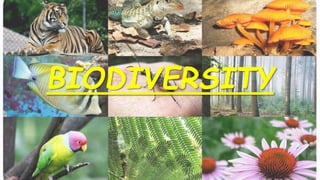
BIODIVERSITY
The occurrence of different types of genes, gene
pools, species, habitats and ecosystems in a particular
place and various parts of earth is called biodiversity.
The term biodiversity was coined by WALTER
G.ROSEN in 1985.
Biodiversity is divided into three levels:
1. Genetic diversity
2. Species diversity
3. Ecological diversity
GENETIC DIVERSITY
It is the measure of variety in genetic information contained
in the organisms. It enables a population to adapt to its environment.
EXAMPLE:
Genetic diversity in Dogs:
BEAGLE CHIHUAHUA ROTTWEILERS BOXER
SPECIES DIVERSITY
It is the measure of the variety of species and their relative
abundance present within a region.
EXAMPLE:
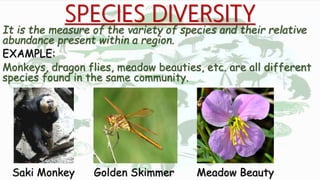
Monkeys, dragon flies, meadow beauties, etc. are all different
species found in the same community.
Saki Monkey Golden Skimmer Meadow Beauty
ECOLOGICAL DIVERSITY
It is a measure of the diversity at community and
ecosystem levels. They represent the local, unique
habitat and regional components of species diversity.
Ecological diversity is the largest scale of biodiversity,
and within each ecosystem, there is a great deal of
both species and genetic diversity.
EXAMPLE:
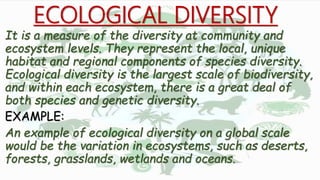
An example of ecological diversity on a global scale
would be the variation in ecosystems, such as deserts,
forests, grasslands, wetlands and oceans.
GLOBAL SPECIES DIVERSITY
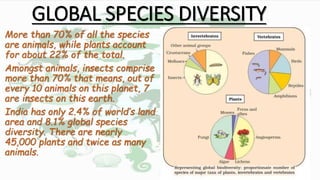
More than 70% of all the species
are animals, while plants account
for about 22% of the total.
Amongst animals, insects comprise
more than 70% that means, out of
every 10 animals on this planet, 7
are insects on this earth.
India has only 2.4% of world’s land
area and 8.1% global species
diversity. There are nearly
45,000 plants and twice as many
animals.
IMPORTANCE OF BIODIVERSITY
Human beings derive direct economic benefits from nature,
like food, firewood, fibre, construction material, industrial
products (resins, gums, dyes, tannins, etc.) and medicinally
important products.
More than 25% of the drugs are derived from plants and
about 25,000 species of plants are used by native people as
traditional medicines.
Biodiversity plays a major role in maintaining and sustaining
supply of goods and services from various species as well as
ecological systems.
LOSS OF BIODIVERSITY
The current rate of global biodiversity loss is estimated to be
100 to 1000 times higher than the normal extinction rate and
expected to still grow in upcoming years.
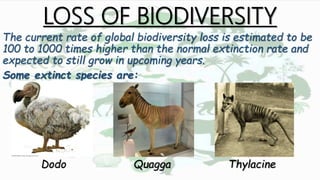
Some extinct species are:
Dodo Quagga Thylacine
CAUSES OF BIODIVERSITY LOSSES
Habitat loss and fragmentation
Destruction of habitat is the primary cause of extinction of
species. When large sized habitats are broken or
fragmented due to human settlements, building of roads,
digging of canals, etc., the population of animals requiring
large territories and some animals with migratory habitats
declines.
Over exploitation
When biological system is over exploited by humans for the
resources, it results in degradation and extinction of the
resources
Alien (exotic) species invasions
Some exotic species when introduced unintentionally,
become invasive and cause harmful impact, resulting in
extinction of the indigenous species.
Co-extinctions
When a species become extinct, the plant and animal
species associated with it, also becomes extinct.
BIODIVERSITY CONSERVATION
There are two basic approaches for conservation of
biodiversity:
1. In situ Conservation
This approach involves protection of species in their natural
habitat.
(a)Biodiversity Hot spots
These are regions of high level of species richness. There are
34 hot spots in the world. These reduce mass extinction by
30%.
(b) Protected areas
India has 14 biosphere reserves, 90 national parks and 448
wildlife sanctuaries.
(c) Ramsar sites
Ramsar sites are wetlands which are considered to be of
national importance.
Ramsar Convention is an international treaty for conservation
of wetlands.
There are 26 Ramsar sites in India. Some of these are
Ashtamudi wetland, Sambhar lake, Chilka lake, etc.
(d) Sacred Groves
These are forest patches set aside for worship. All the trees
and wildlife within are given total protection by tribal people.
Some of the sacred groves in India are: Khasi and Jaintia
Hills in Meghalaya, Aravalli Hills of Rajasthan, etc.
2. Ex situ Conservation
This approach involves placing threatened
animals and plants in special care units for
their protection.
It is desirable approach to save species from
extinction.
Biodiversity

Biodiversity

  • 1.
  • 2.
    BIODIVERSITY The occurrence ofdifferent types of genes, gene pools, species, habitats and ecosystems in a particular place and various parts of earth is called biodiversity. The term biodiversity was coined by WALTER G.ROSEN in 1985. Biodiversity is divided into three levels: 1. Genetic diversity 2. Species diversity 3. Ecological diversity
  • 3.
    GENETIC DIVERSITY It isthe measure of variety in genetic information contained in the organisms. It enables a population to adapt to its environment. EXAMPLE: Genetic diversity in Dogs: BEAGLE CHIHUAHUA ROTTWEILERS BOXER
  • 4.
    SPECIES DIVERSITY It isthe measure of the variety of species and their relative abundance present within a region. EXAMPLE: Monkeys, dragon flies, meadow beauties, etc. are all different species found in the same community. Saki Monkey Golden Skimmer Meadow Beauty
  • 5.
    ECOLOGICAL DIVERSITY It isa measure of the diversity at community and ecosystem levels. They represent the local, unique habitat and regional components of species diversity. Ecological diversity is the largest scale of biodiversity, and within each ecosystem, there is a great deal of both species and genetic diversity. EXAMPLE: An example of ecological diversity on a global scale would be the variation in ecosystems, such as deserts, forests, grasslands, wetlands and oceans.
  • 6.
    GLOBAL SPECIES DIVERSITY Morethan 70% of all the species are animals, while plants account for about 22% of the total. Amongst animals, insects comprise more than 70% that means, out of every 10 animals on this planet, 7 are insects on this earth. India has only 2.4% of world’s land area and 8.1% global species diversity. There are nearly 45,000 plants and twice as many animals.
  • 7.
    IMPORTANCE OF BIODIVERSITY Humanbeings derive direct economic benefits from nature, like food, firewood, fibre, construction material, industrial products (resins, gums, dyes, tannins, etc.) and medicinally important products. More than 25% of the drugs are derived from plants and about 25,000 species of plants are used by native people as traditional medicines. Biodiversity plays a major role in maintaining and sustaining supply of goods and services from various species as well as ecological systems.
  • 8.
    LOSS OF BIODIVERSITY Thecurrent rate of global biodiversity loss is estimated to be 100 to 1000 times higher than the normal extinction rate and expected to still grow in upcoming years. Some extinct species are: Dodo Quagga Thylacine
  • 9.
    CAUSES OF BIODIVERSITYLOSSES Habitat loss and fragmentation Destruction of habitat is the primary cause of extinction of species. When large sized habitats are broken or fragmented due to human settlements, building of roads, digging of canals, etc., the population of animals requiring large territories and some animals with migratory habitats declines. Over exploitation When biological system is over exploited by humans for the resources, it results in degradation and extinction of the resources
  • 10.
    Alien (exotic) speciesinvasions Some exotic species when introduced unintentionally, become invasive and cause harmful impact, resulting in extinction of the indigenous species. Co-extinctions When a species become extinct, the plant and animal species associated with it, also becomes extinct.
  • 11.
    BIODIVERSITY CONSERVATION There aretwo basic approaches for conservation of biodiversity: 1. In situ Conservation This approach involves protection of species in their natural habitat. (a)Biodiversity Hot spots These are regions of high level of species richness. There are 34 hot spots in the world. These reduce mass extinction by 30%. (b) Protected areas India has 14 biosphere reserves, 90 national parks and 448 wildlife sanctuaries.
  • 12.
    (c) Ramsar sites Ramsarsites are wetlands which are considered to be of national importance. Ramsar Convention is an international treaty for conservation of wetlands. There are 26 Ramsar sites in India. Some of these are Ashtamudi wetland, Sambhar lake, Chilka lake, etc. (d) Sacred Groves These are forest patches set aside for worship. All the trees and wildlife within are given total protection by tribal people. Some of the sacred groves in India are: Khasi and Jaintia Hills in Meghalaya, Aravalli Hills of Rajasthan, etc.
  • 13.
    2. Ex situConservation This approach involves placing threatened animals and plants in special care units for their protection. It is desirable approach to save species from extinction.