
FLOATINGTUNNEL
PRESENTED BY
AGLAIA
CONTENTS
• SUBMERGED FLOATING TUNNEL
• TRANSATLANTIC TUNNEL
• REASON FOR FLOATING
• CONSTRUCTION OF TUNNEL
• COMPONENTS OF TUNNEL
• PROBLEMS TO BE FACED
• CONCLUSION
• REFERANCES
The Submerged Floating Tunnel
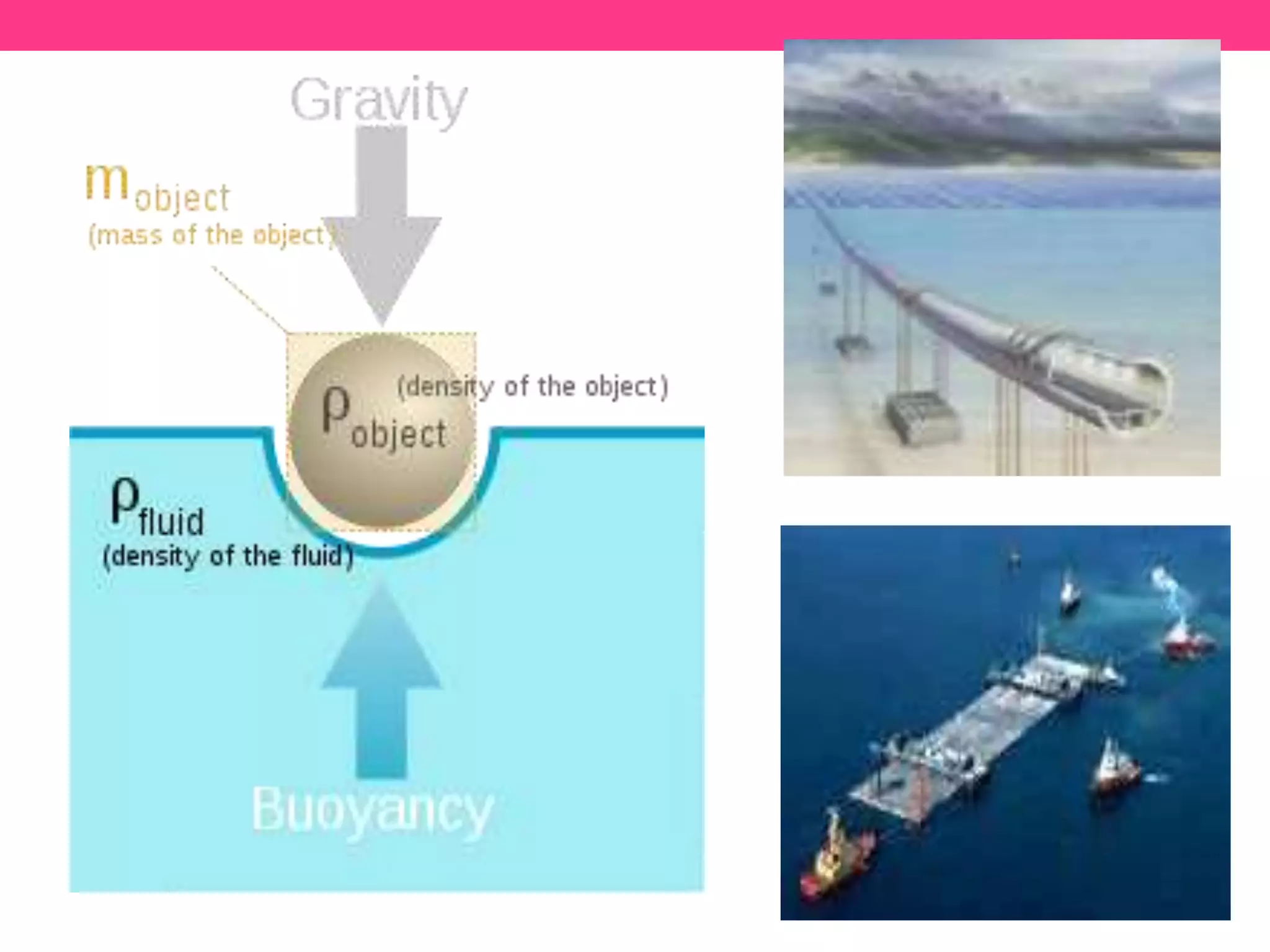
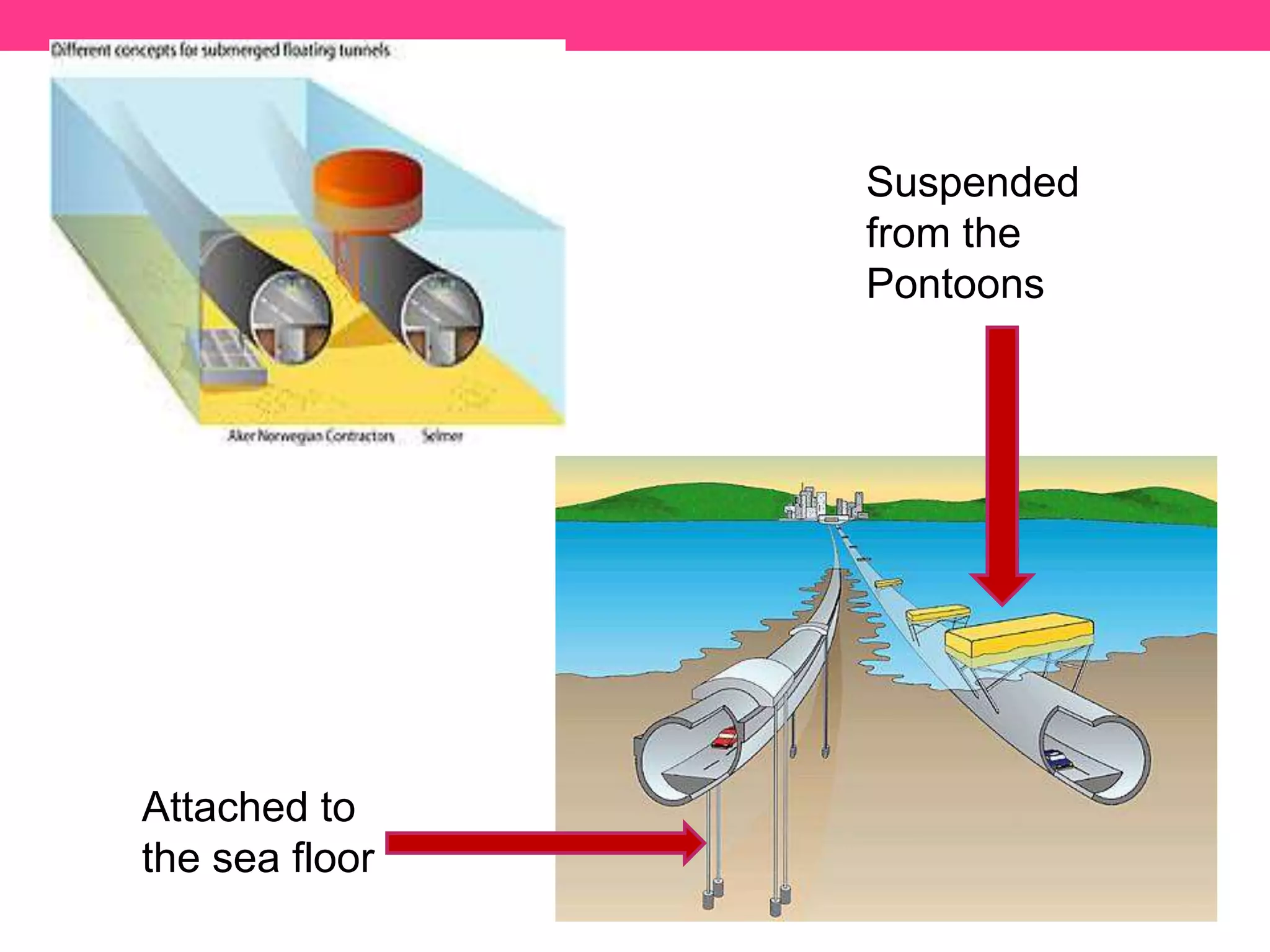
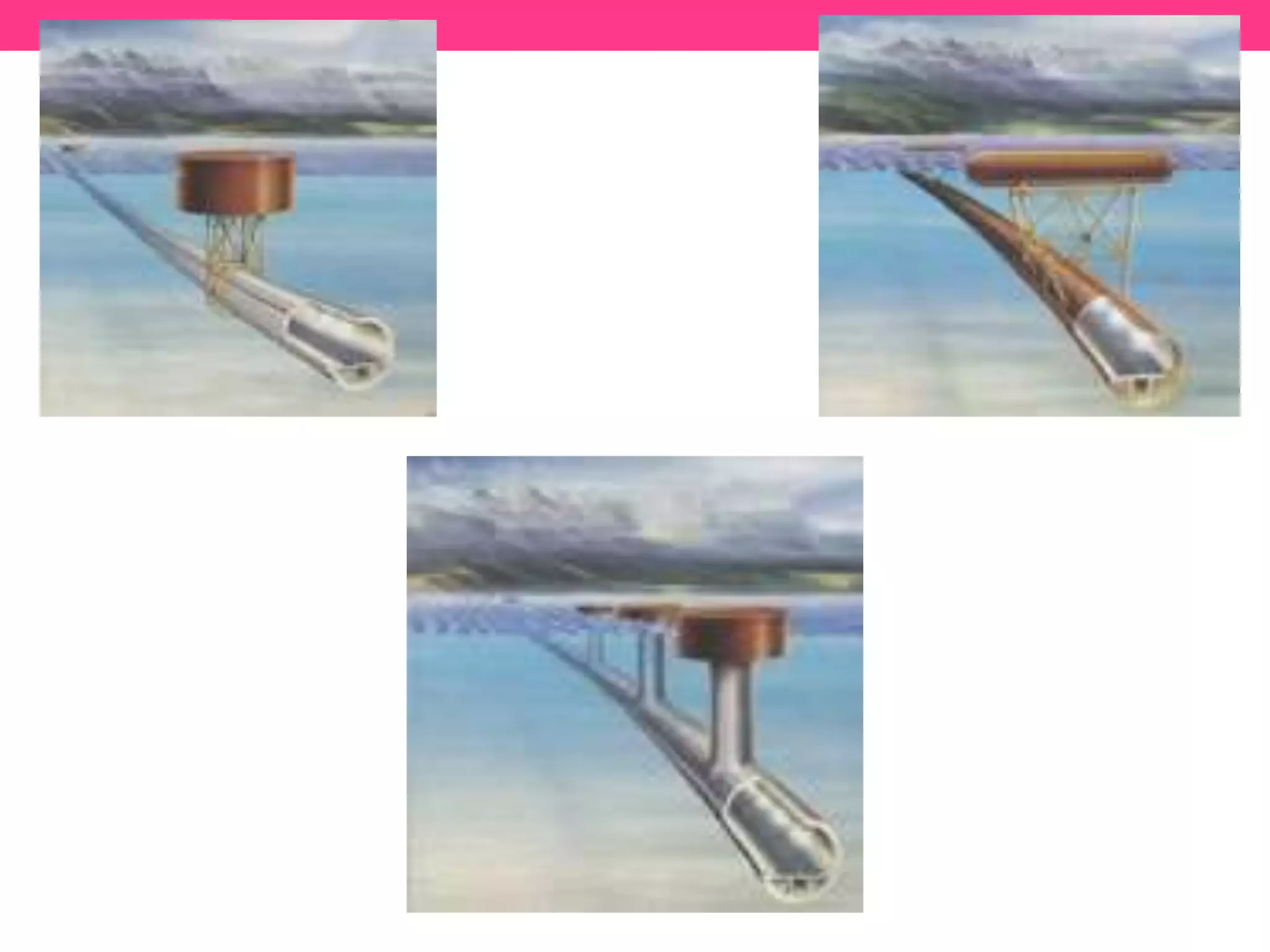
• The Submerged floating Tunnel is a tube like structure of
Steel or Concrete made to through buoyancy and
supported on columns or held in place by tethers
attached to the sea floor or by pontoons floating on the
surface.
• The Submerged floating tunnel utilizes lakes and
waterways to carry traffic under water and on to the other
side, where it can be conveniently linked to the rural
network or to the underground infrastructure of modern
cities.
• In recent times, the needs of society for regional growth
and the protection of the environment have assumed
increased importance. In this wider context the
submerged floating tunnel offers new opportunities.
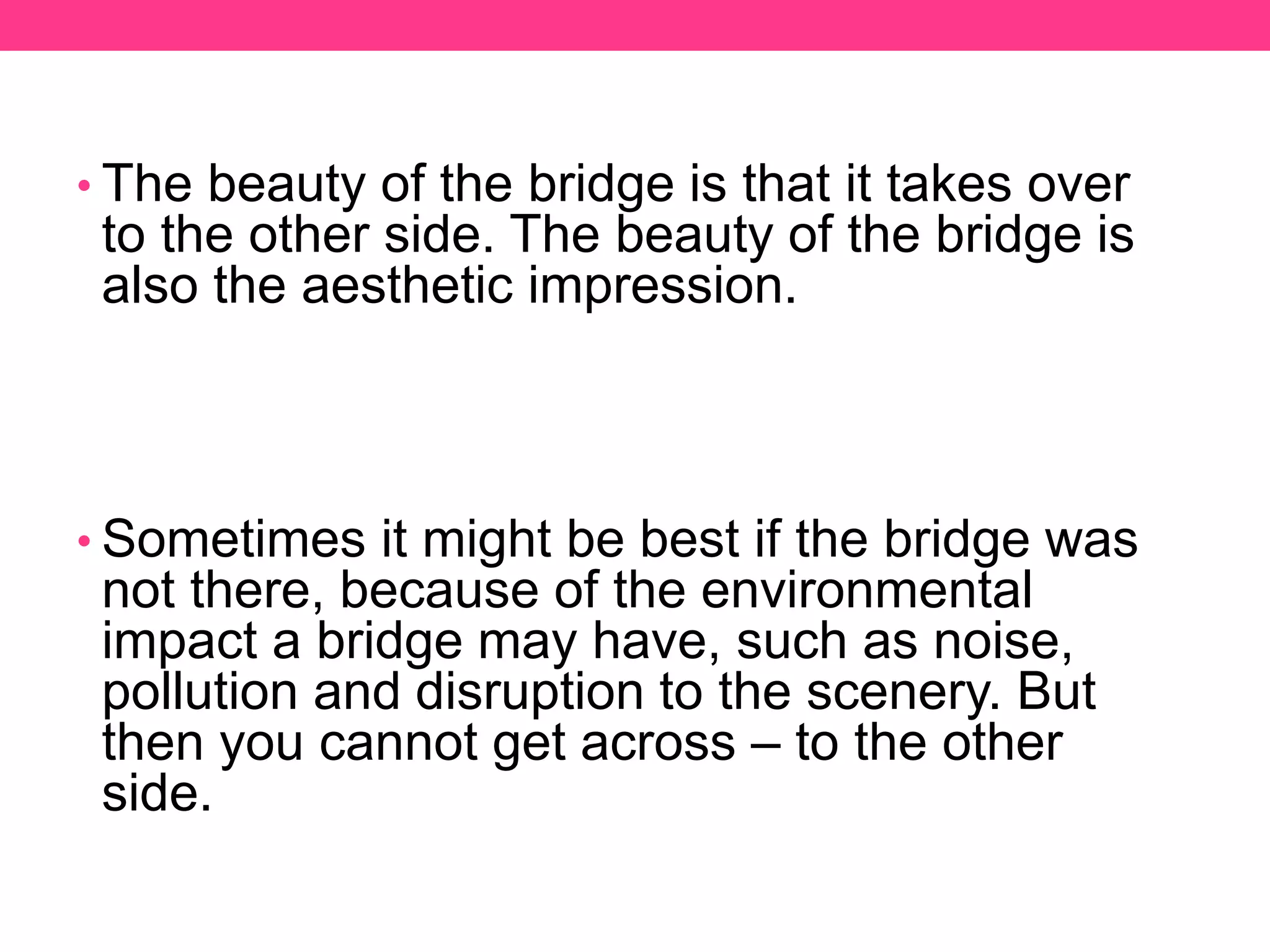
• The submerged floating tunnel is an innovative concept
for crossing waterways, utilizing the law of buoyancy to
support the structure at a moderate and convenient
depth.
• The beauty of the bridge is that it takes over
to the other side. The beauty of the bridge is
also the aesthetic impression.
• Sometimes it might be best if the bridge was
not there, because of the environmental
impact a bridge may have, such as noise,
pollution and disruption to the scenery. But
then you cannot get across – to the other
side.
Attached to
the sea floor
Suspended
from the
Pontoons
TRANSATLANTIC TUNNEL
• A Transatlantic tunnel is a theoretical tunnel
which would span the Atlantic Ocean between
North America and Europe and would carry
some sort of mass transit—trains are envisioned
in most proposals. Using advanced
technologies, speeds of 300 to 5,000 mph (500
to 800 km/h) are envisioned.
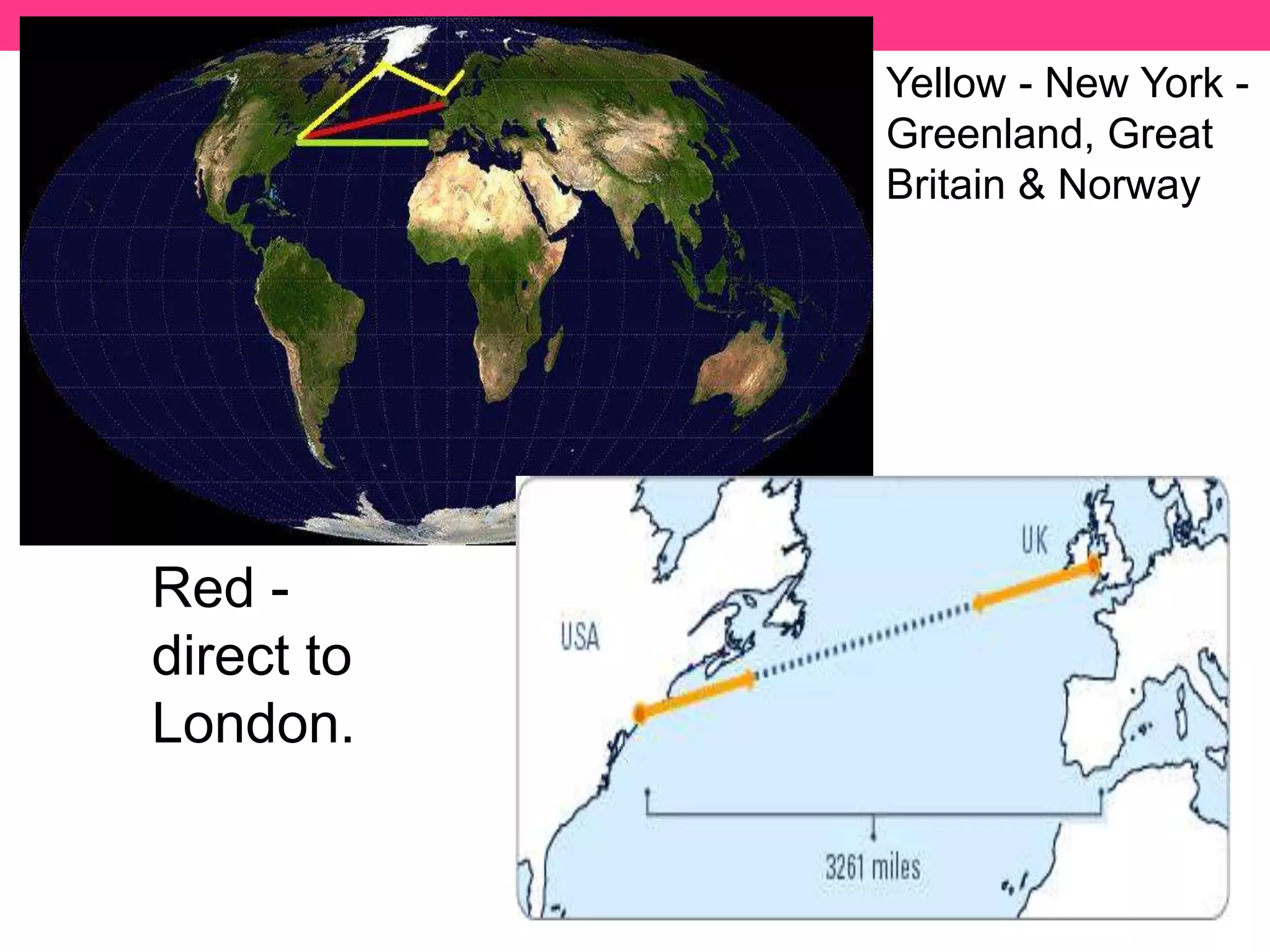
Yellow - New York -
Greenland, Great
Britain & Norway
Red -
direct to
London.
• Plans for such a tunnel have not progressed beyond the
conceptual stage, and no one is actively pursuing such a
project.
• The main barriers to constructing such a tunnel are
cost—as much as $12 trillion and the limits of current
materials science.
• A Transatlantic Tunnel is 215 times longer than the
longest current tunnel and would cost perhaps 3000 times
as much.
REASON FOR FLOATING
• Floating tunnel is the totally new concept and never
before use even for very small length.
• It can be observed that depth from place to place on a
great extent. The max depth is up to 8 km. also at
certain sections. (avg. Depth 3.3 km)
• The two more alternatives are available for
constructions are bridge above water level or tunnel
below ground level.
But as we seen,
the depth is up to 8 km it is impossible to construct
concrete columns of such height.
Secondly,
If we go for 2nd option,
the pressure below 8km from sea surface is nearly about
500 times than atmospheric pressure so one can not
survive in such a high pressure zone.
• Therefore, floating tunnel is finalised which is at a depth
30m from sea level At which there is no problem of high
pressure. This is sufficient to go any big ship to pass over
it without any obstruction.
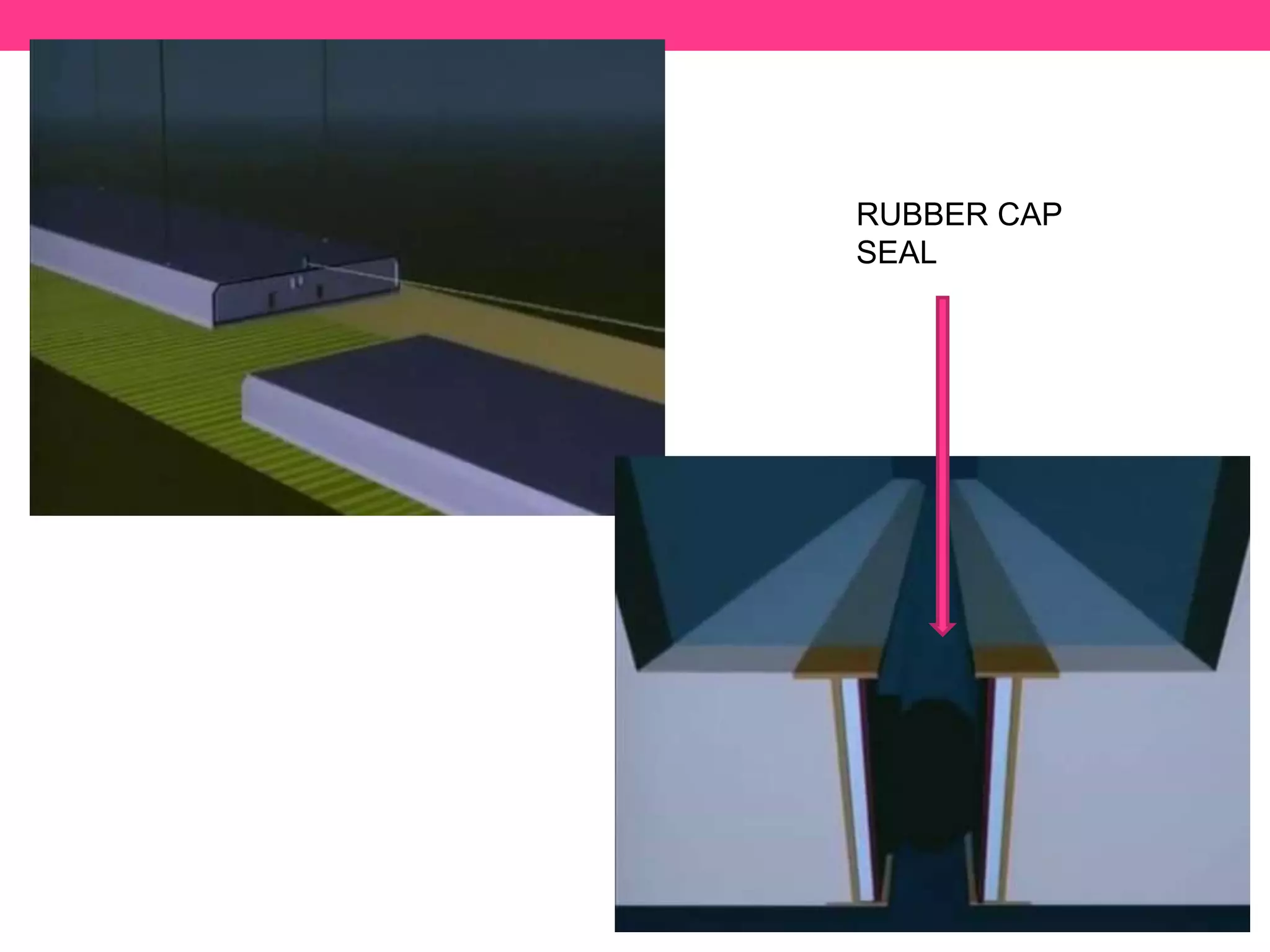
RUBBER CAP
SEAL
COMPONENTS OF TUNNEL
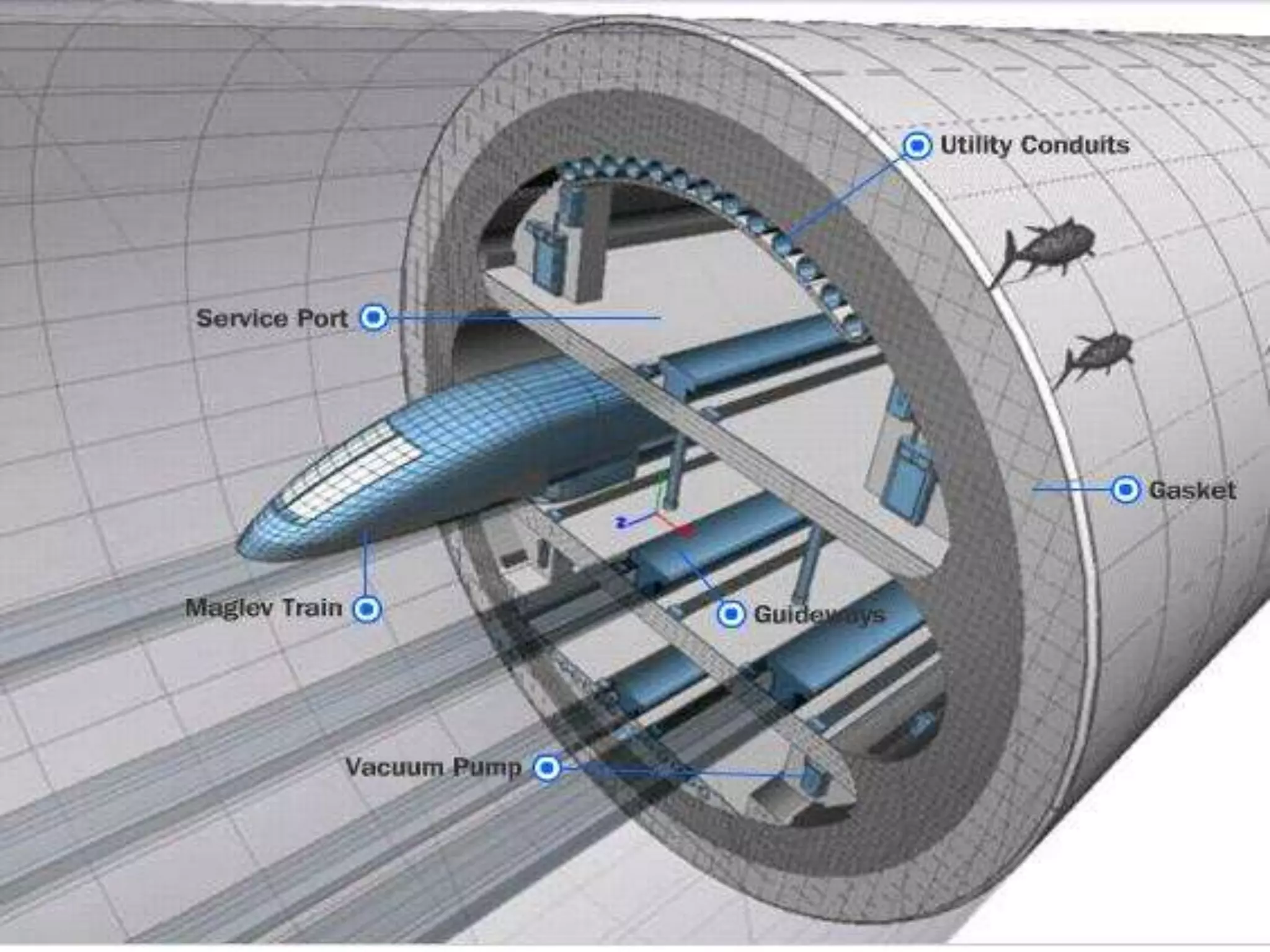
Following are the main components of this Tunnel
• Gasket/shell
• Sea anchors
• Utility conduits and service port
• Vacuum pumps
• Maglev train
• Guide ways
GASKET/SHELL
• As the tunnel is situated at a depth of 30m, it should be
perfectly water tight and secondly it should resist the
salty sea water and thirdly it should be withstand against
hydrostatic forces coming on it.
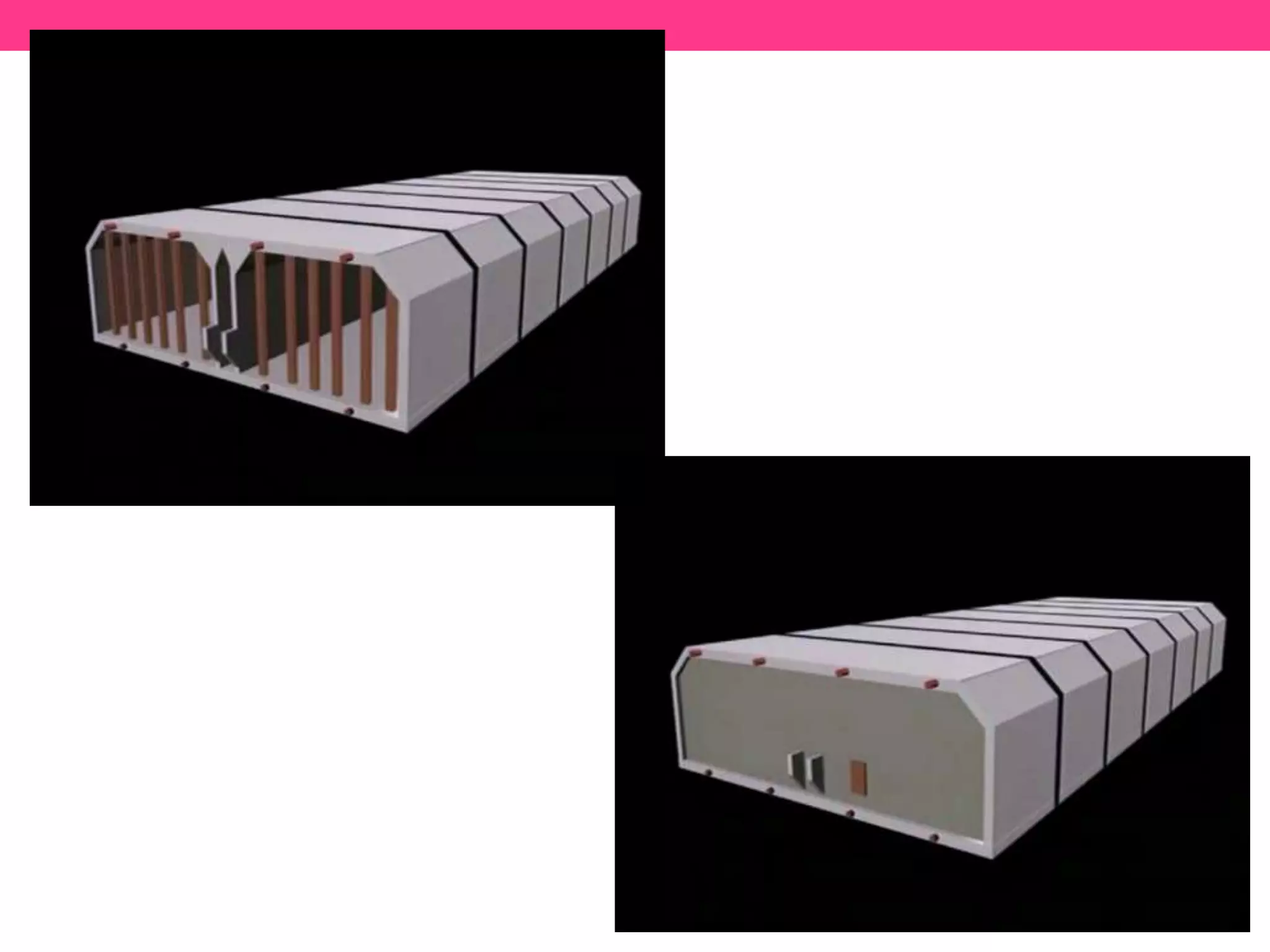
• Therefore it is made of 4 layers. Outermost layer is
constructed of aluminium to resist the salty sea water.
Second and third layer is made of the foam to float the
tunnel easily in water. Fourth layer is of concrete which
gives strength to the tunnel.
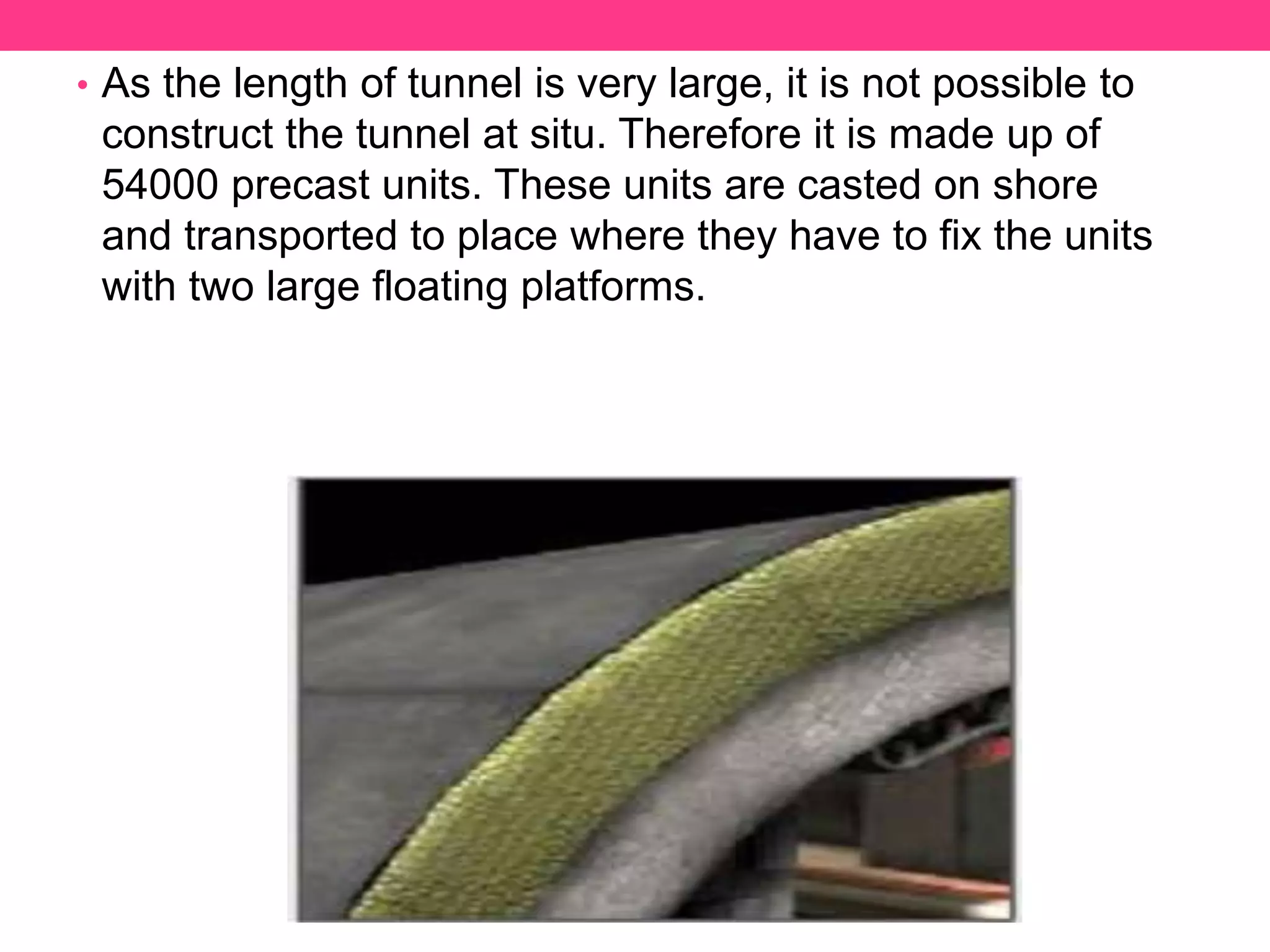
• As the length of tunnel is very large, it is not possible to
construct the tunnel at situ. Therefore it is made up of
54000 precast units. These units are casted on shore
and transported to place where they have to fix the units
with two large floating platforms.
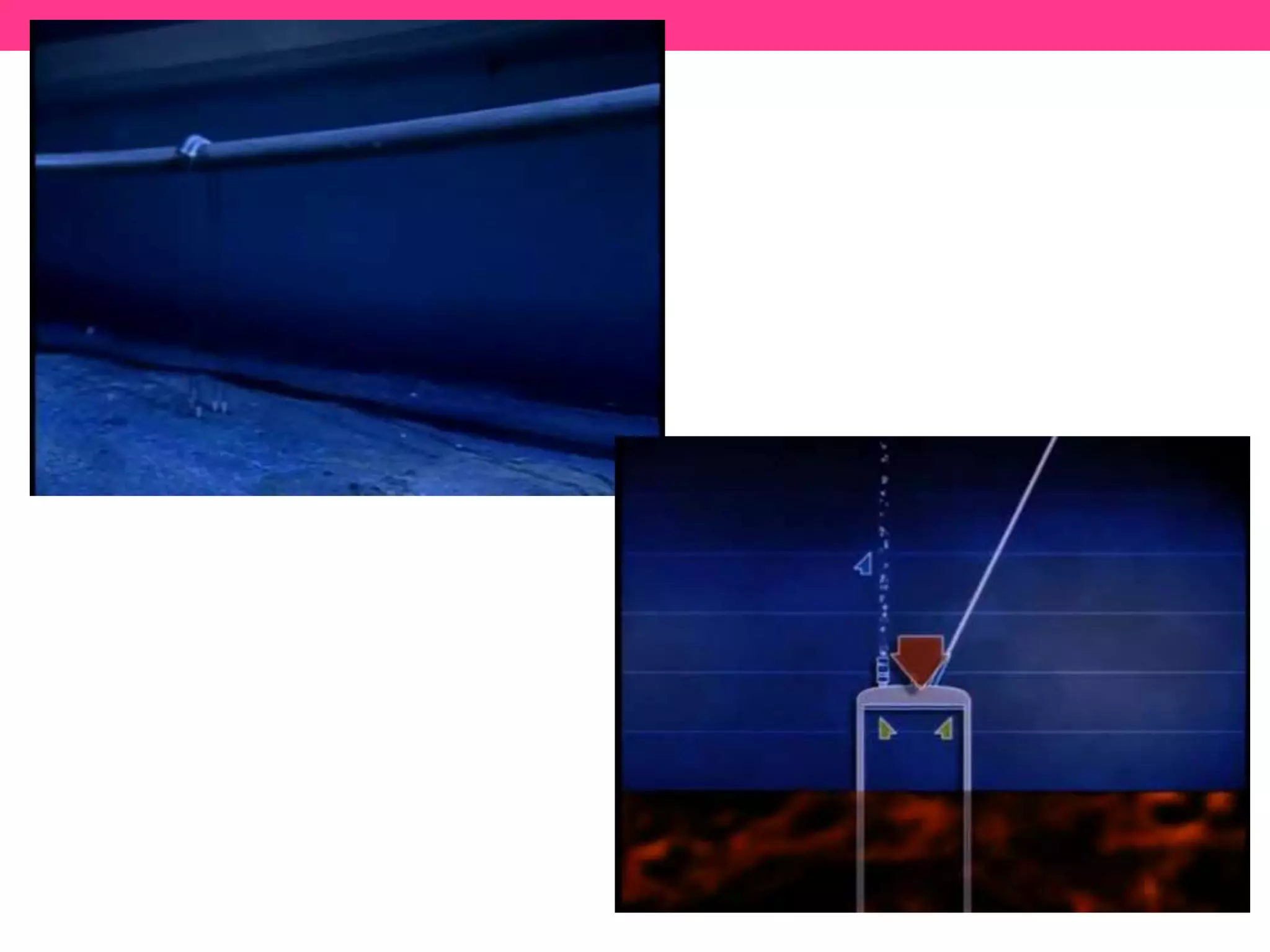
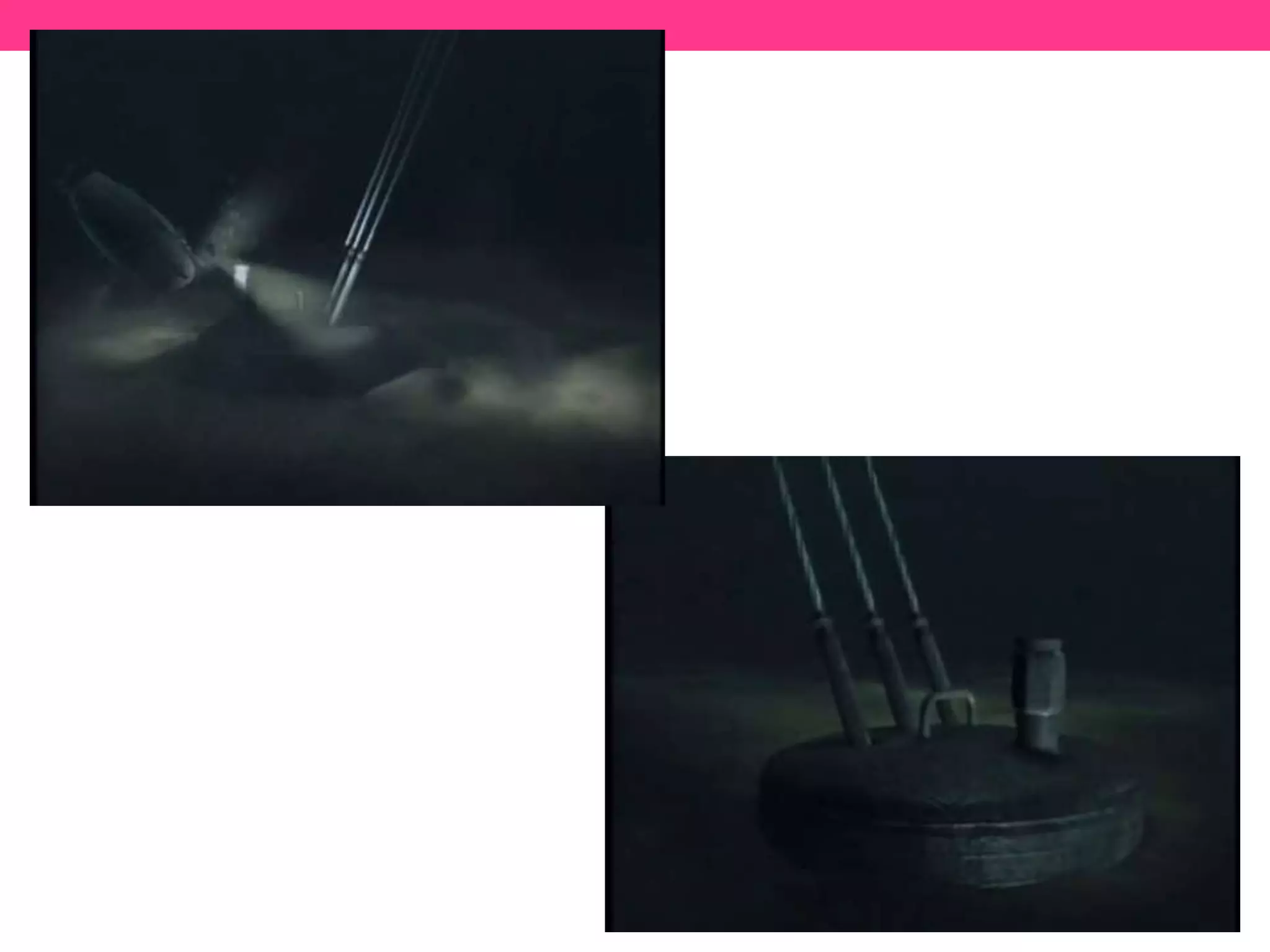
SEA ANCHORS
• As the tunnel is in the Atlantic Ocean, it should have to
face high current velocity in Atlantic Ocean.
• The tunnel should not deflect much with water current.
Therefore it anchored to the sea bed with the help of steel
anchors.
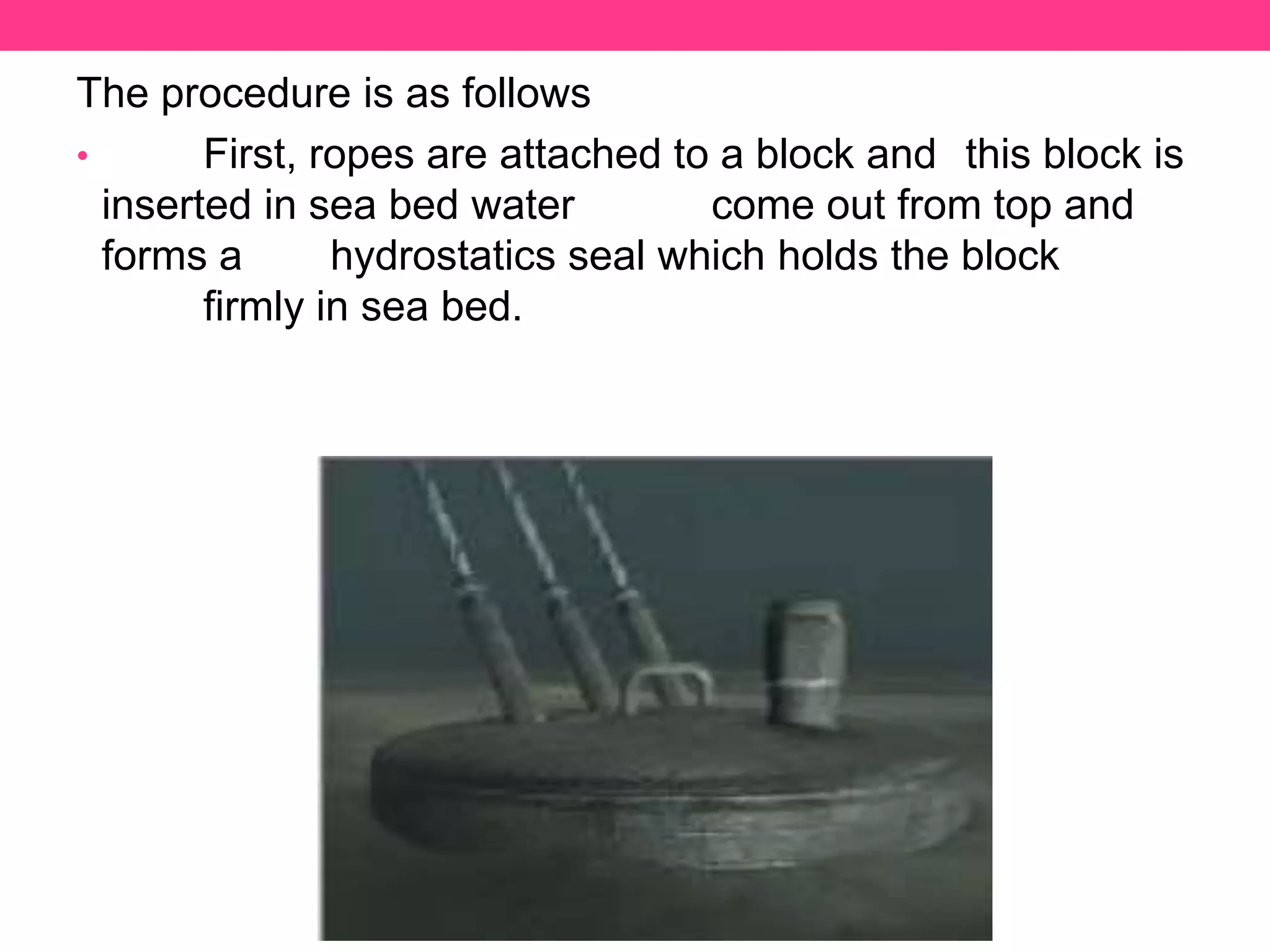
The procedure is as follows
• First, ropes are attached to a block and this block is
inserted in sea bed water come out from top and
forms a hydrostatics seal which holds the block
firmly in sea bed.
VACUUM PUMP
• The train is running with such a thrilling speed of 5000
mph in the tunnel. The air resistance is too high on such a
high speed. Therefore to reduce it and increase the speed
of train, vacuum is created in tunnel.
• But creating vacuum in such a long tunnel is very difficult
task. With available equipments, 100 propellers of most
powerful boing jet are require to evacuate the air
continuously for 15 days. The vacuum pumps are installed
throughout the length of tunnel to maintain the vacuum in
it.
SERVICE PORT
• The tunnel is powered by electrically which should be
available for entire length of tunnel. These electrical wires
are carried out through utility conduits.
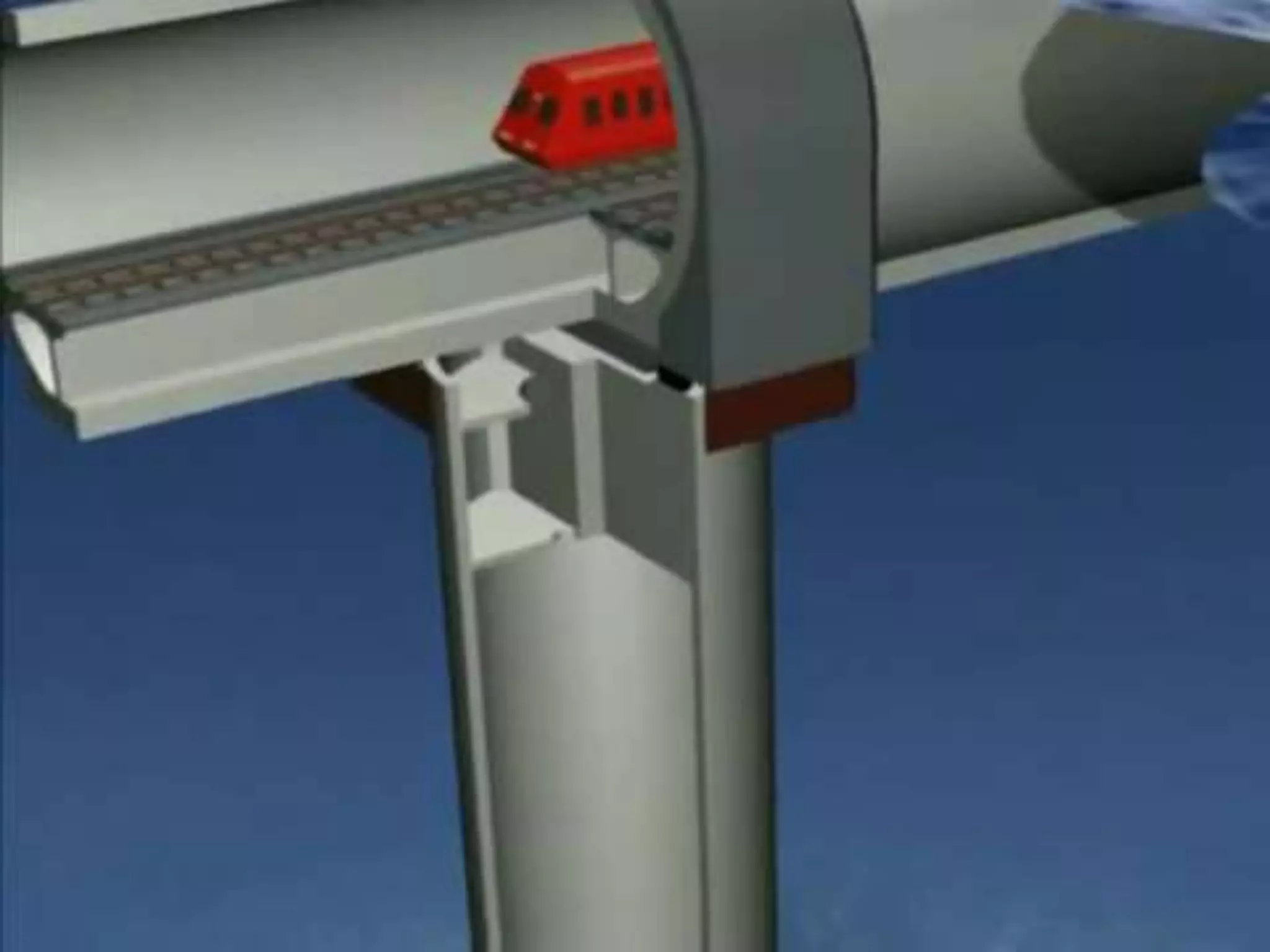
• The two service ports are provided in tunnel, one above and
other below the track conduit. These are provided for
communication and access for repair works.
MAGLEV TRAIN
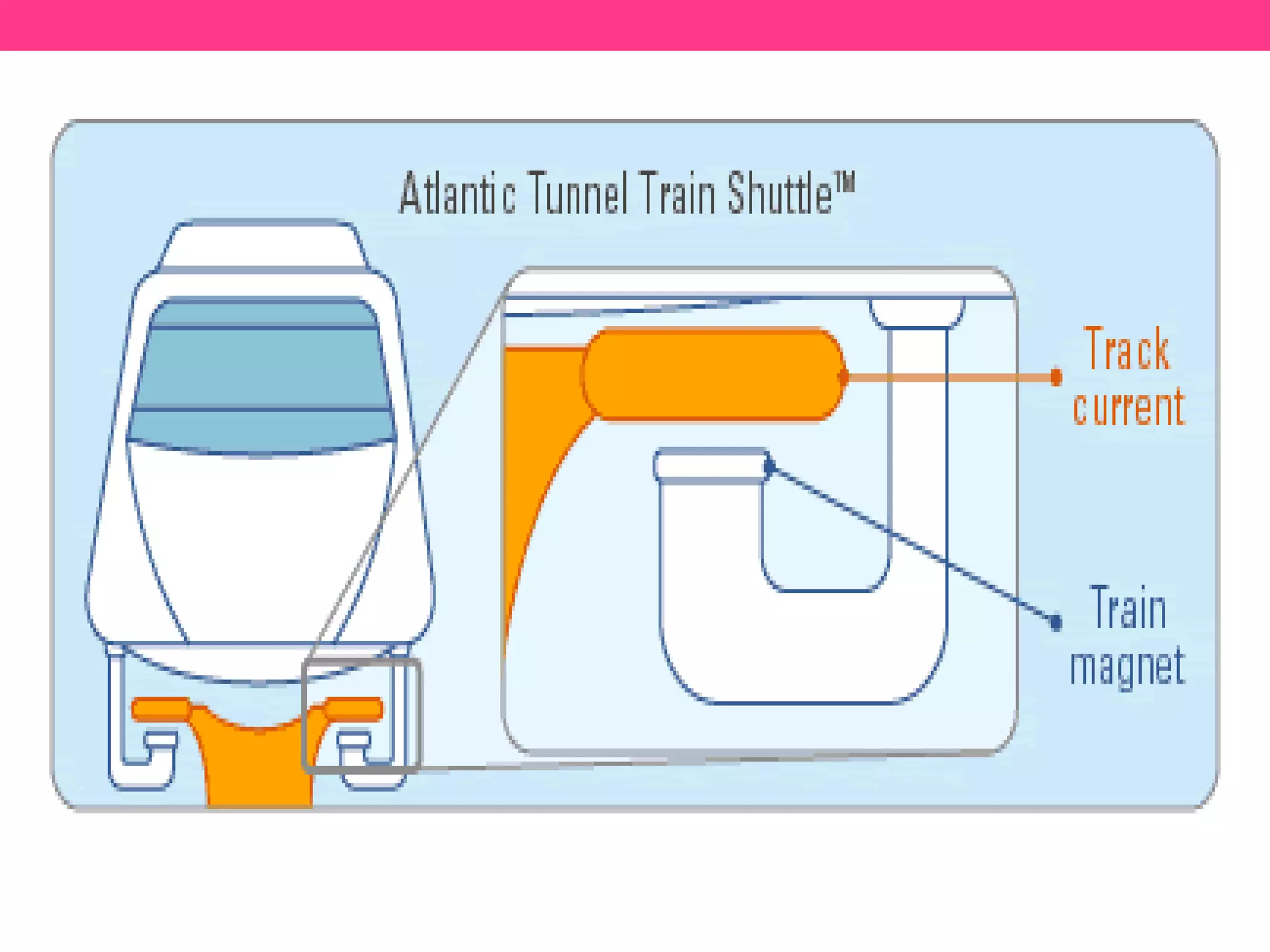
• These are magnetically elevated trains. These trains do
not run over the track but floats slightly above the track.
• Thus we can achieve practically zero tractive resistance
between train and track.
• Further this train will pass though vacuum, which
increase the speed of train.
• The sensation of flying at 400mph with no engine noise or
vibration will make the journey through the tunnel a
unique experience.
• Special rotating and pivoting seats are provided to further
reduce the effect of gravitational force.
CHALLENGES TO BE FACED
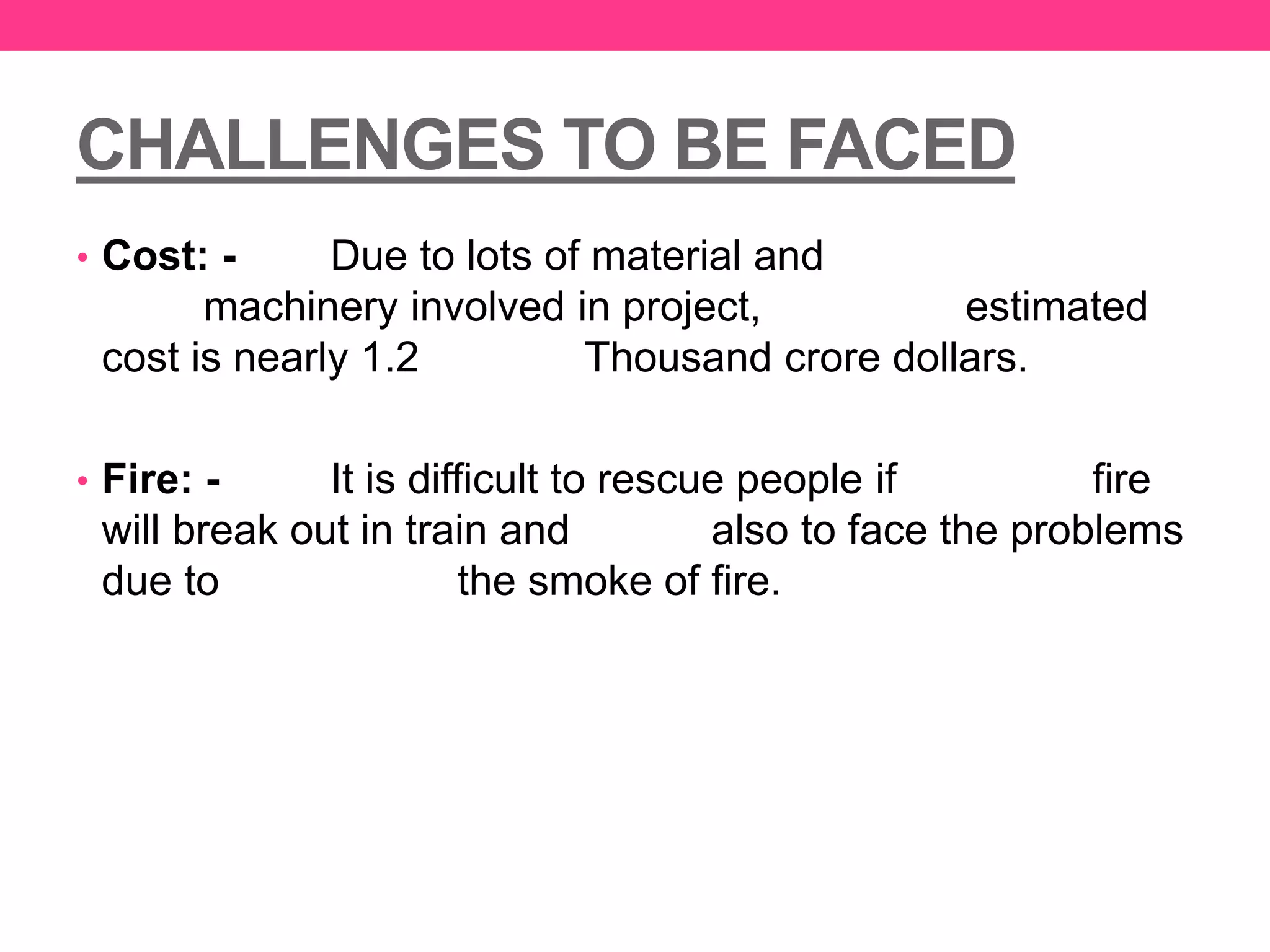
• Cost: - Due to lots of material and
machinery involved in project, estimated
cost is nearly 1.2 Thousand crore dollars.
• Fire: - It is difficult to rescue people if fire
will break out in train and also to face the problems
due to the smoke of fire.
• Collision: - If in case of collision of two
trains took place , it is very
difficult to rescue the people.
• No Stoppage: - It is very difficult to stop
the train travelling on
such a high speed.
“TITANIC AGAIN?”
“SHIP HITS THE TRANS-ATLANTIC TUNNEL ENDED
UP IN GREAT TRADEGY”
CONCLUSION
• The tunnel will set new trends in transportation
engineering and which shows with the advances in
technology we can reduce the time required for travelling
and make the transportation more effective.
• By hiding the traffic under water, the beauty of landscape
is maintained and valuable land is available for other
purposes. Benefits can be obtained with respect to energy
consumption, air pollution and reduced noise emission.
• For wide and deep crossings the submerged floating
tunnel may be the only feasible fix link , replacing
present days ferries and providing local communities
with new opportunities for improved communication and
regional development.
Thank you
For more…. Mail to
aglaiaconnect2018@gmail.com

Transatlantic tunnel-floating-tunnel

  • 1.
  • 2.
    CONTENTS • SUBMERGED FLOATINGTUNNEL • TRANSATLANTIC TUNNEL • REASON FOR FLOATING • CONSTRUCTION OF TUNNEL • COMPONENTS OF TUNNEL • PROBLEMS TO BE FACED • CONCLUSION • REFERANCES
  • 3.
    The Submerged FloatingTunnel • The Submerged floating Tunnel is a tube like structure of Steel or Concrete made to through buoyancy and supported on columns or held in place by tethers attached to the sea floor or by pontoons floating on the surface. • The Submerged floating tunnel utilizes lakes and waterways to carry traffic under water and on to the other side, where it can be conveniently linked to the rural network or to the underground infrastructure of modern cities.
  • 4.
    • In recenttimes, the needs of society for regional growth and the protection of the environment have assumed increased importance. In this wider context the submerged floating tunnel offers new opportunities. • The submerged floating tunnel is an innovative concept for crossing waterways, utilizing the law of buoyancy to support the structure at a moderate and convenient depth.
  • 5.
    • The beautyof the bridge is that it takes over to the other side. The beauty of the bridge is also the aesthetic impression. • Sometimes it might be best if the bridge was not there, because of the environmental impact a bridge may have, such as noise, pollution and disruption to the scenery. But then you cannot get across – to the other side.
  • 7.
    Attached to the seafloor Suspended from the Pontoons
  • 9.
    TRANSATLANTIC TUNNEL • ATransatlantic tunnel is a theoretical tunnel which would span the Atlantic Ocean between North America and Europe and would carry some sort of mass transit—trains are envisioned in most proposals. Using advanced technologies, speeds of 300 to 5,000 mph (500 to 800 km/h) are envisioned.
  • 10.
    Yellow - NewYork - Greenland, Great Britain & Norway Red - direct to London.
  • 11.
    • Plans forsuch a tunnel have not progressed beyond the conceptual stage, and no one is actively pursuing such a project. • The main barriers to constructing such a tunnel are cost—as much as $12 trillion and the limits of current materials science. • A Transatlantic Tunnel is 215 times longer than the longest current tunnel and would cost perhaps 3000 times as much.
  • 12.
    REASON FOR FLOATING •Floating tunnel is the totally new concept and never before use even for very small length. • It can be observed that depth from place to place on a great extent. The max depth is up to 8 km. also at certain sections. (avg. Depth 3.3 km) • The two more alternatives are available for constructions are bridge above water level or tunnel below ground level.
  • 13.
    But as weseen, the depth is up to 8 km it is impossible to construct concrete columns of such height. Secondly, If we go for 2nd option, the pressure below 8km from sea surface is nearly about 500 times than atmospheric pressure so one can not survive in such a high pressure zone.
  • 14.
    • Therefore, floatingtunnel is finalised which is at a depth 30m from sea level At which there is no problem of high pressure. This is sufficient to go any big ship to pass over it without any obstruction.
  • 17.
  • 20.
    COMPONENTS OF TUNNEL Followingare the main components of this Tunnel • Gasket/shell • Sea anchors • Utility conduits and service port • Vacuum pumps • Maglev train • Guide ways
  • 21.
    GASKET/SHELL • As thetunnel is situated at a depth of 30m, it should be perfectly water tight and secondly it should resist the salty sea water and thirdly it should be withstand against hydrostatic forces coming on it. • Therefore it is made of 4 layers. Outermost layer is constructed of aluminium to resist the salty sea water. Second and third layer is made of the foam to float the tunnel easily in water. Fourth layer is of concrete which gives strength to the tunnel.
  • 22.
    • As thelength of tunnel is very large, it is not possible to construct the tunnel at situ. Therefore it is made up of 54000 precast units. These units are casted on shore and transported to place where they have to fix the units with two large floating platforms.
  • 23.
    SEA ANCHORS • Asthe tunnel is in the Atlantic Ocean, it should have to face high current velocity in Atlantic Ocean. • The tunnel should not deflect much with water current. Therefore it anchored to the sea bed with the help of steel anchors.
  • 24.
    The procedure isas follows • First, ropes are attached to a block and this block is inserted in sea bed water come out from top and forms a hydrostatics seal which holds the block firmly in sea bed.
  • 25.
    VACUUM PUMP • Thetrain is running with such a thrilling speed of 5000 mph in the tunnel. The air resistance is too high on such a high speed. Therefore to reduce it and increase the speed of train, vacuum is created in tunnel. • But creating vacuum in such a long tunnel is very difficult task. With available equipments, 100 propellers of most powerful boing jet are require to evacuate the air continuously for 15 days. The vacuum pumps are installed throughout the length of tunnel to maintain the vacuum in it.
  • 26.
    SERVICE PORT • Thetunnel is powered by electrically which should be available for entire length of tunnel. These electrical wires are carried out through utility conduits. • The two service ports are provided in tunnel, one above and other below the track conduit. These are provided for communication and access for repair works.
  • 28.
    MAGLEV TRAIN • Theseare magnetically elevated trains. These trains do not run over the track but floats slightly above the track. • Thus we can achieve practically zero tractive resistance between train and track. • Further this train will pass though vacuum, which increase the speed of train. • The sensation of flying at 400mph with no engine noise or vibration will make the journey through the tunnel a unique experience. • Special rotating and pivoting seats are provided to further reduce the effect of gravitational force.
  • 31.
    CHALLENGES TO BEFACED • Cost: - Due to lots of material and machinery involved in project, estimated cost is nearly 1.2 Thousand crore dollars. • Fire: - It is difficult to rescue people if fire will break out in train and also to face the problems due to the smoke of fire.
  • 32.
    • Collision: -If in case of collision of two trains took place , it is very difficult to rescue the people. • No Stoppage: - It is very difficult to stop the train travelling on such a high speed.
  • 33.
    “TITANIC AGAIN?” “SHIP HITSTHE TRANS-ATLANTIC TUNNEL ENDED UP IN GREAT TRADEGY”
  • 34.
    CONCLUSION • The tunnelwill set new trends in transportation engineering and which shows with the advances in technology we can reduce the time required for travelling and make the transportation more effective. • By hiding the traffic under water, the beauty of landscape is maintained and valuable land is available for other purposes. Benefits can be obtained with respect to energy consumption, air pollution and reduced noise emission.
  • 35.
    • For wideand deep crossings the submerged floating tunnel may be the only feasible fix link , replacing present days ferries and providing local communities with new opportunities for improved communication and regional development.
  • 36.
    Thank you For more….Mail to aglaiaconnect2018@gmail.com