BIODEGRADATION OF
POLYMERS
POLYMERS AND ENVIRONMENT
KEJ 4604
GROUP 2
NAME : MUHAMMAD HELMI BIN SAPERI (UK29519)
: MOHD SYUKRI BIN ABDULLAH (UK29529)
LECTURER : ASSOCIATE PROF DR MOHAMAD AWANG
DATE : 22 MARCH 2016
SEMESTER : II 2015/2016
APPLICATION
MECHANISM
INTRODUCTION
CLASSIFICATION
BIODGRADABLE
POLYMERS
TALK LAYOUT
FACTORS
INTRODUCTION
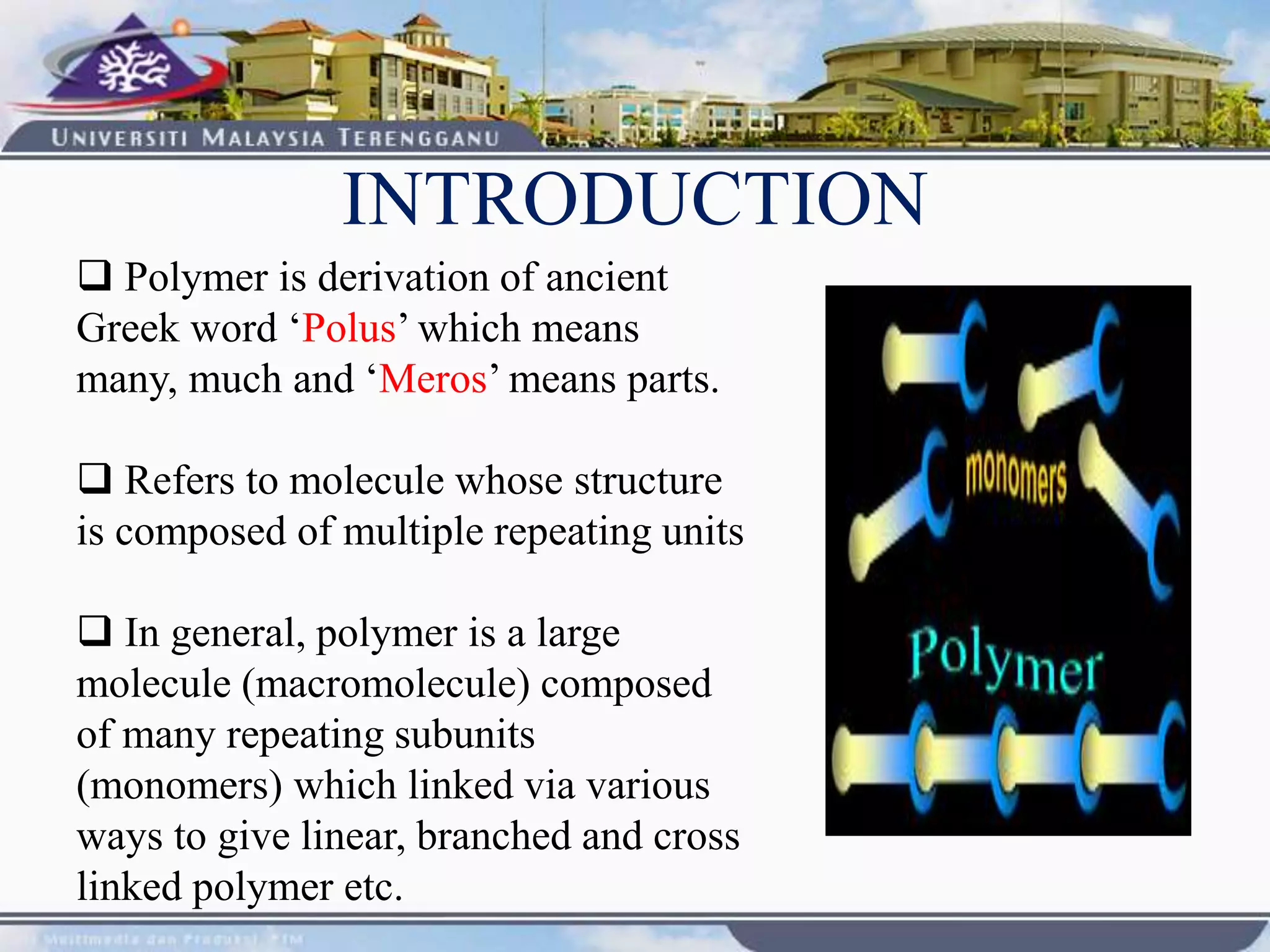
 Polymer is derivation of ancient
Greek word ‘Polus’ which means
many, much and ‘Meros’ means parts.
 Refers to molecule whose structure
is composed of multiple repeating units
 In general, polymer is a large
molecule (macromolecule) composed
of many repeating subunits
(monomers) which linked via various
ways to give linear, branched and cross
linked polymer etc.
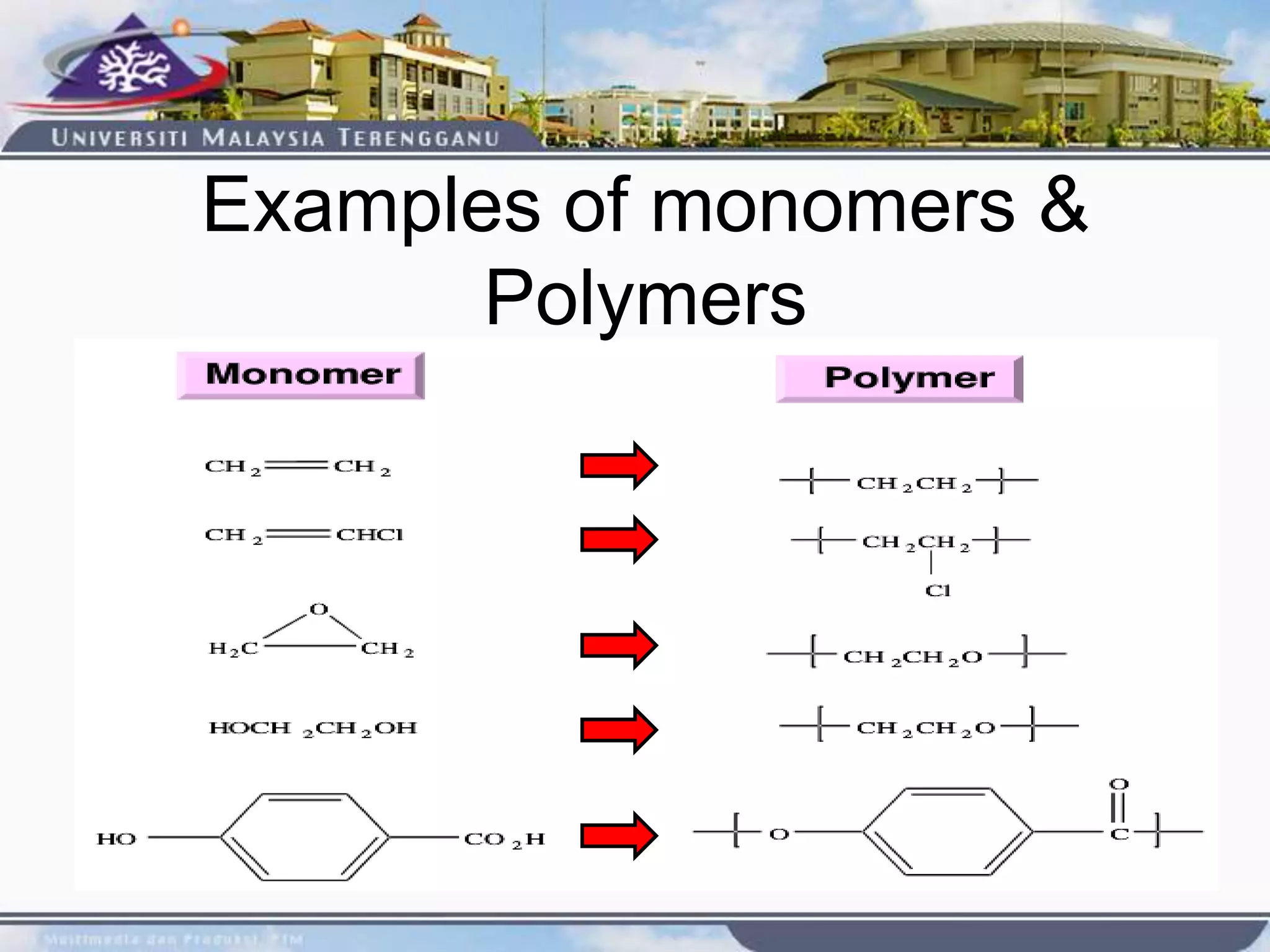
Examples of monomers &
Polymers
What do we mean by ‘biodegradable polymer’ ?
• Based on Europian Union norm EN13432
defines as:
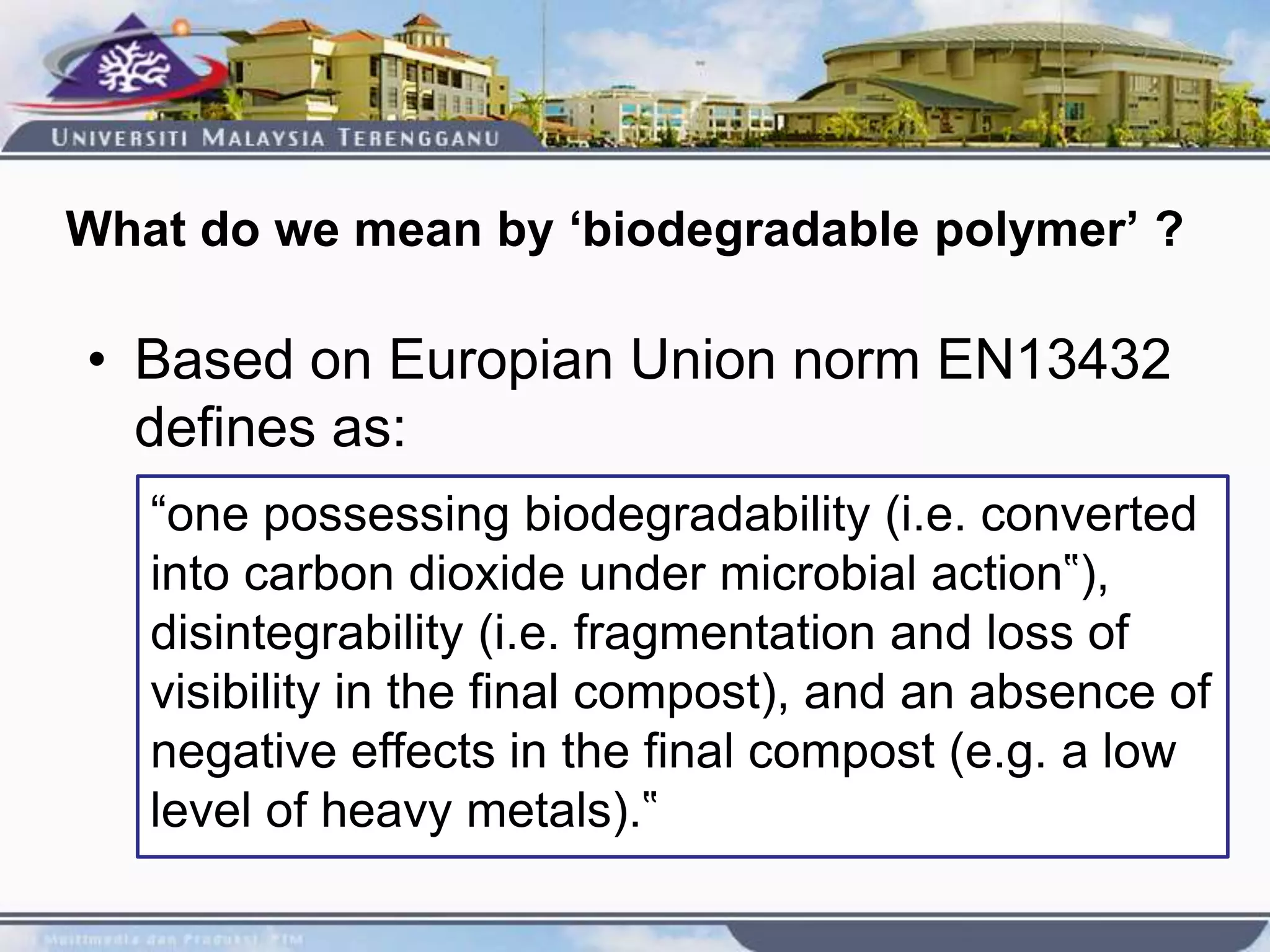
“one possessing biodegradability (i.e. converted
into carbon dioxide under microbial action‟),
disintegrability (i.e. fragmentation and loss of
visibility in the final compost), and an absence of
negative effects in the final compost (e.g. a low
level of heavy metals).‟
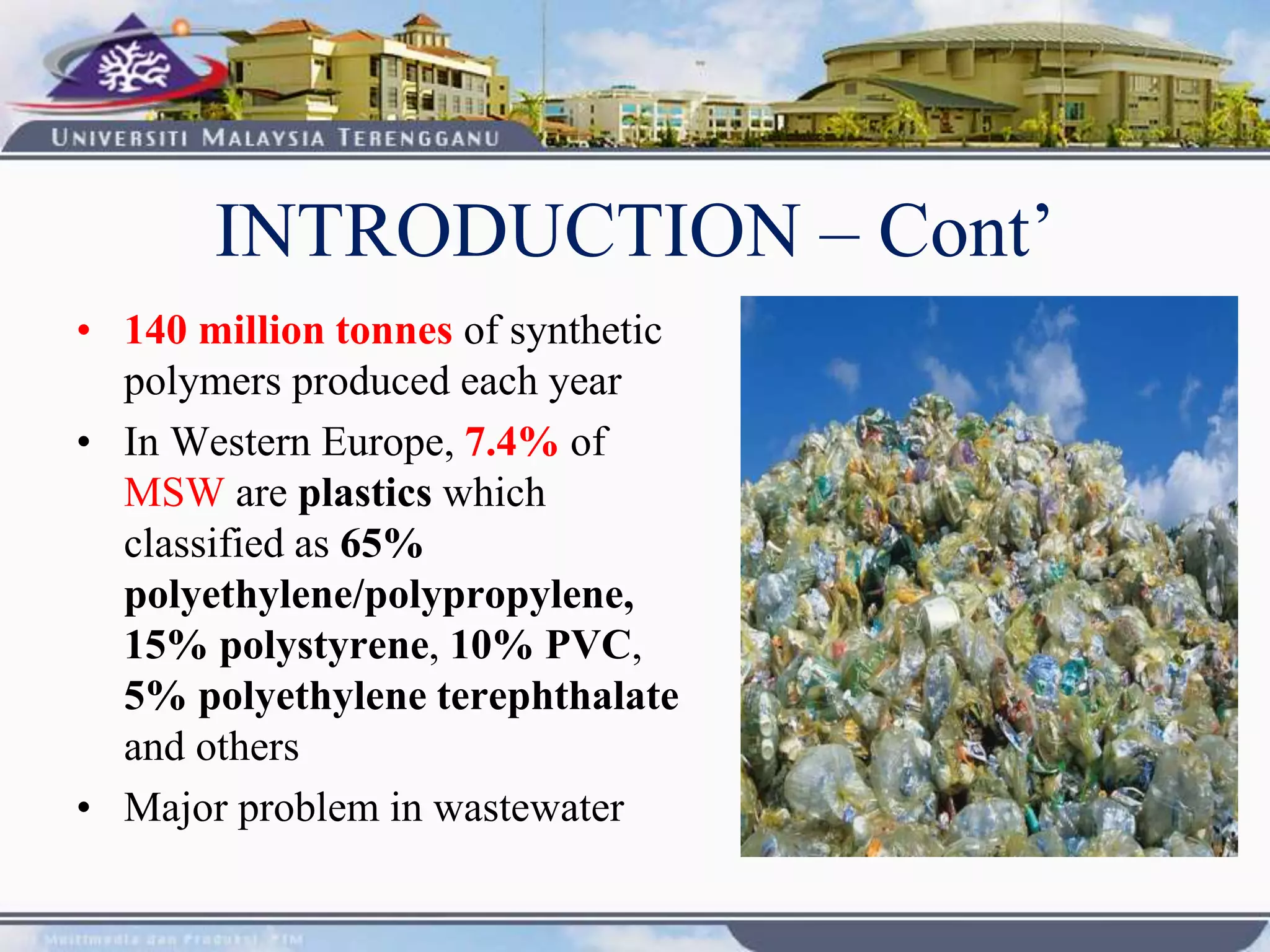
• 140 million tonnes of synthetic
polymers produced each year
• In Western Europe, 7.4% of
MSW are plastics which
classified as 65%
polyethylene/polypropylene,
15% polystyrene, 10% PVC,
5% polyethylene terephthalate
and others
• Major problem in wastewater
INTRODUCTION – Cont’
WHAT
TO DO
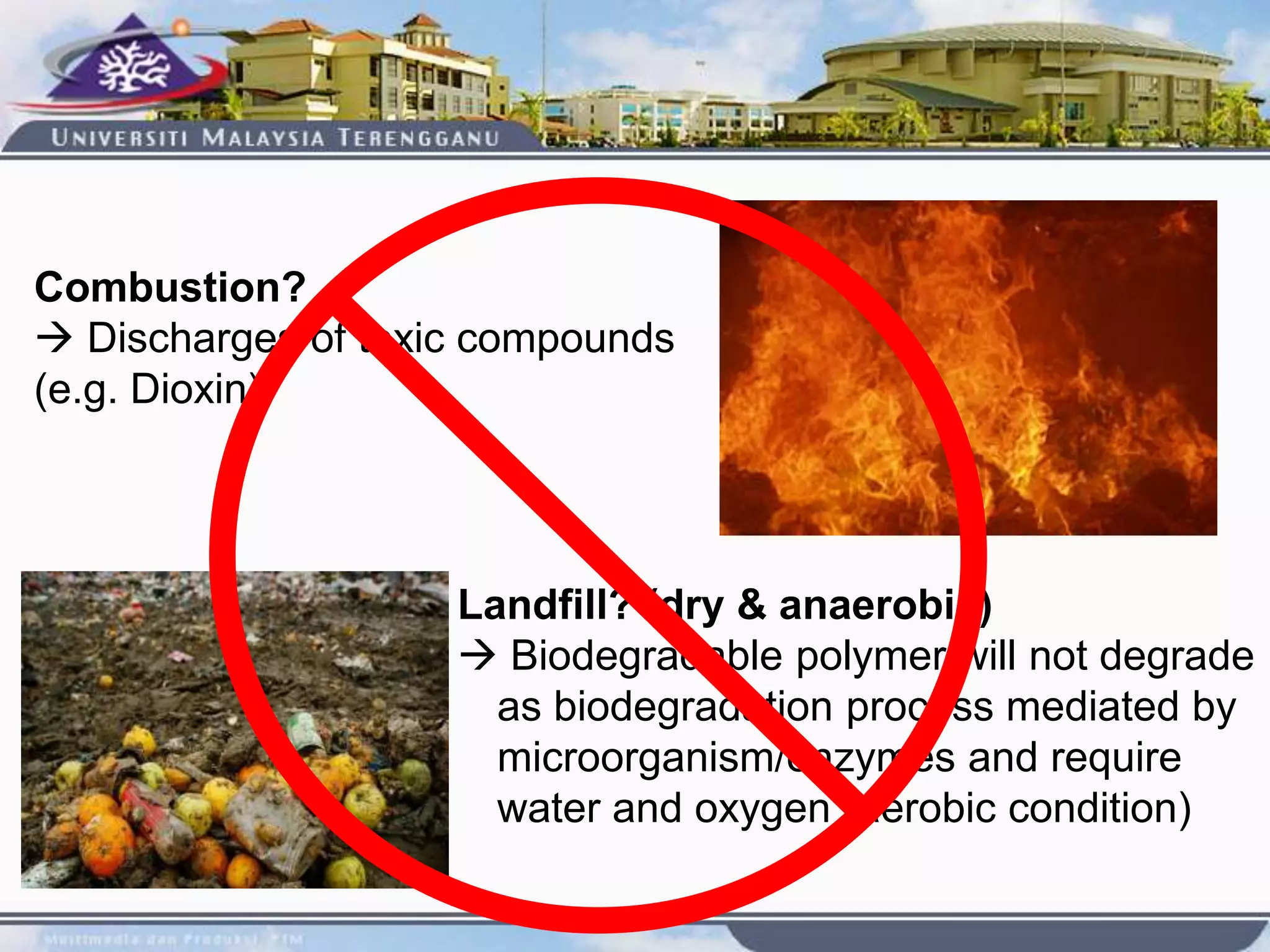
Combustion?
 Discharges of toxic compounds
(e.g. Dioxin)
Landfill? (dry & anaerobic)
 Biodegradable polymer will not degrade
as biodegradation process mediated by
microorganism/enzymes and require
water and oxygen (aerobic condition)
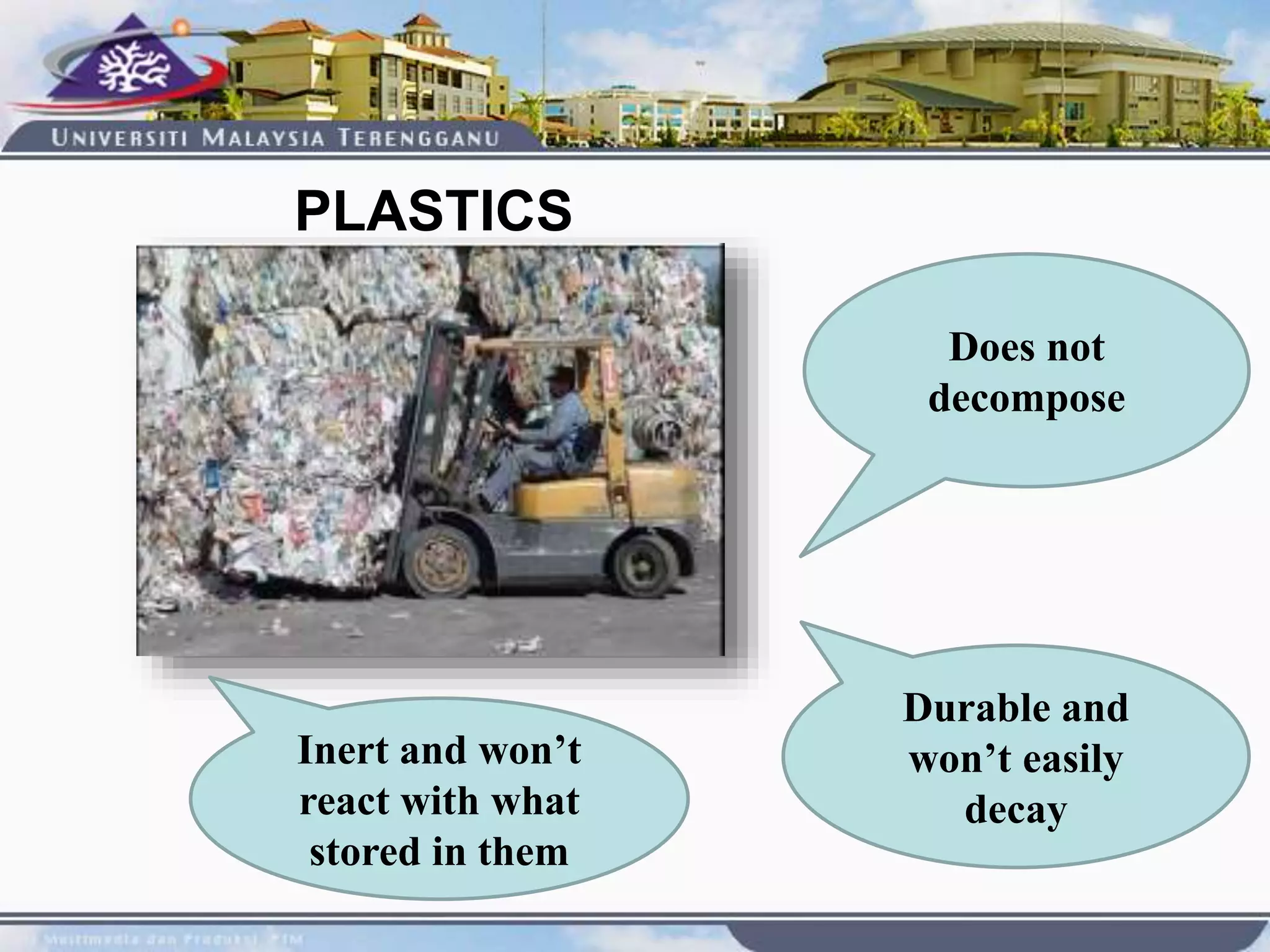
Does not
decompose
Inert and won’t
react with what
stored in them
Durable and
won’t easily
decay
PLASTICS
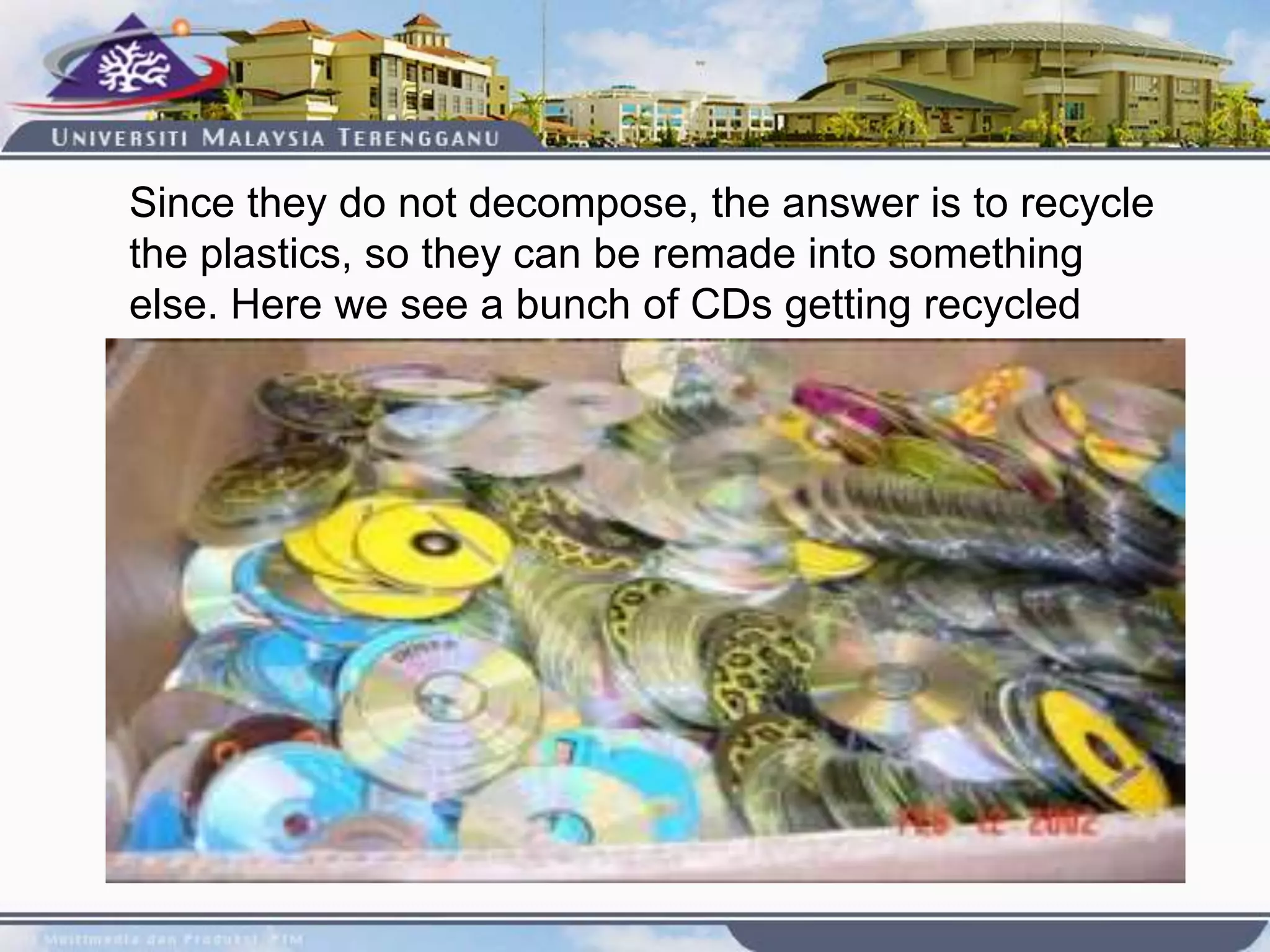
Since they do not decompose, the answer is to recycle
the plastics, so they can be remade into something
else. Here we see a bunch of CDs getting recycled
WHY POLYMERS
IS POPULAR?
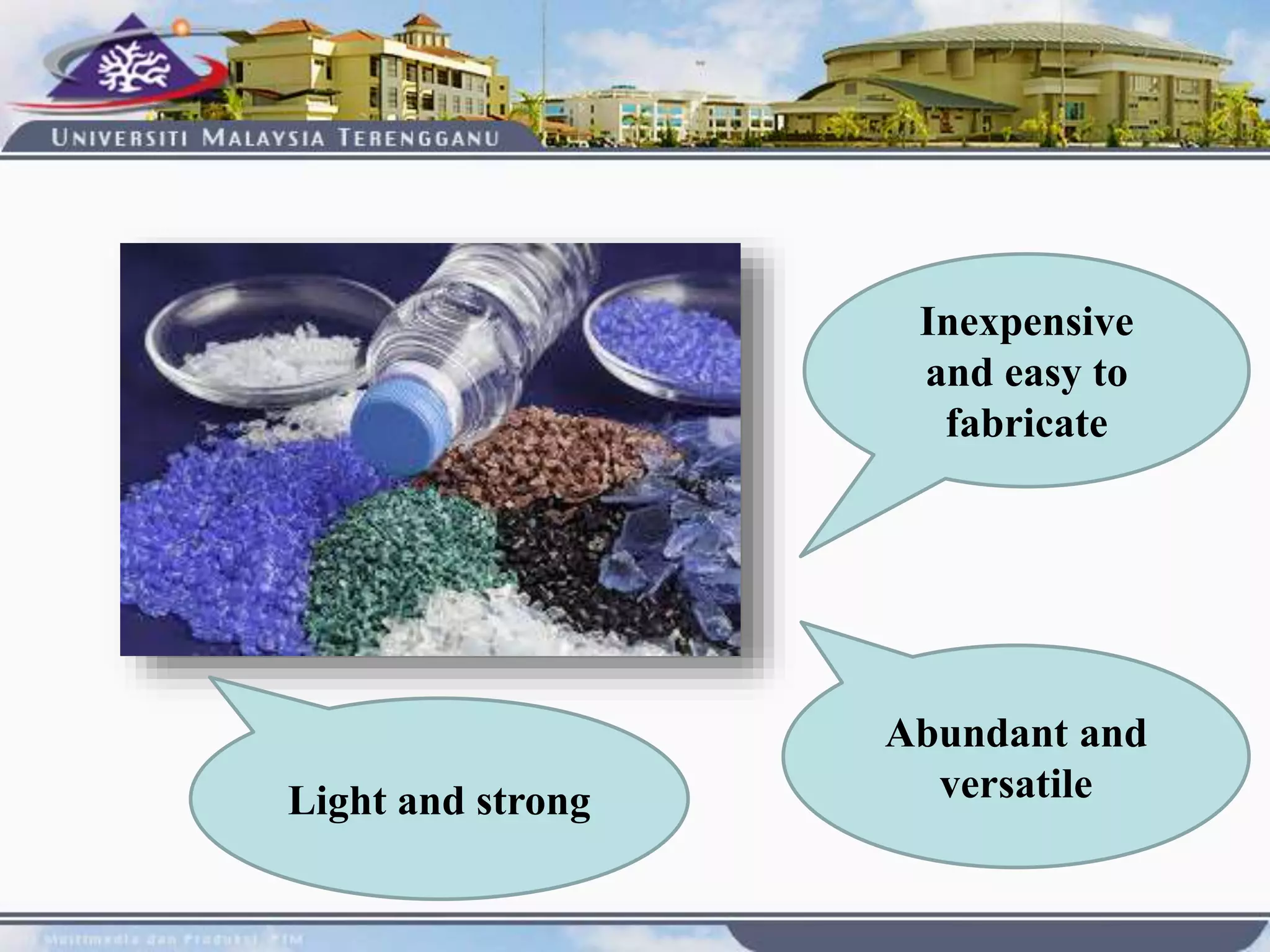
Inexpensive
and easy to
fabricate
Light and strong
Abundant and
versatile
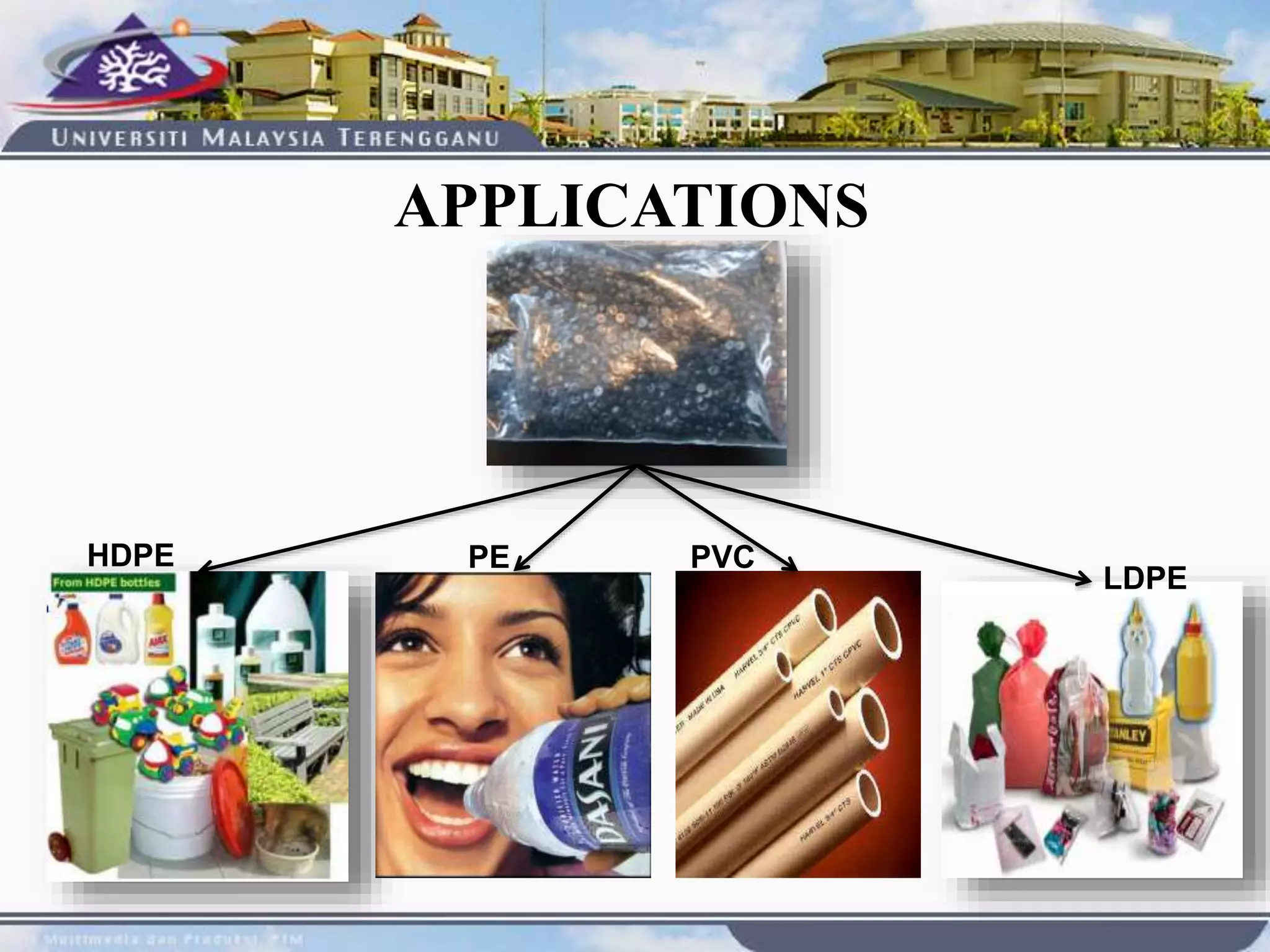
APPLICATIONS
LDPE
HDPE PE PVC
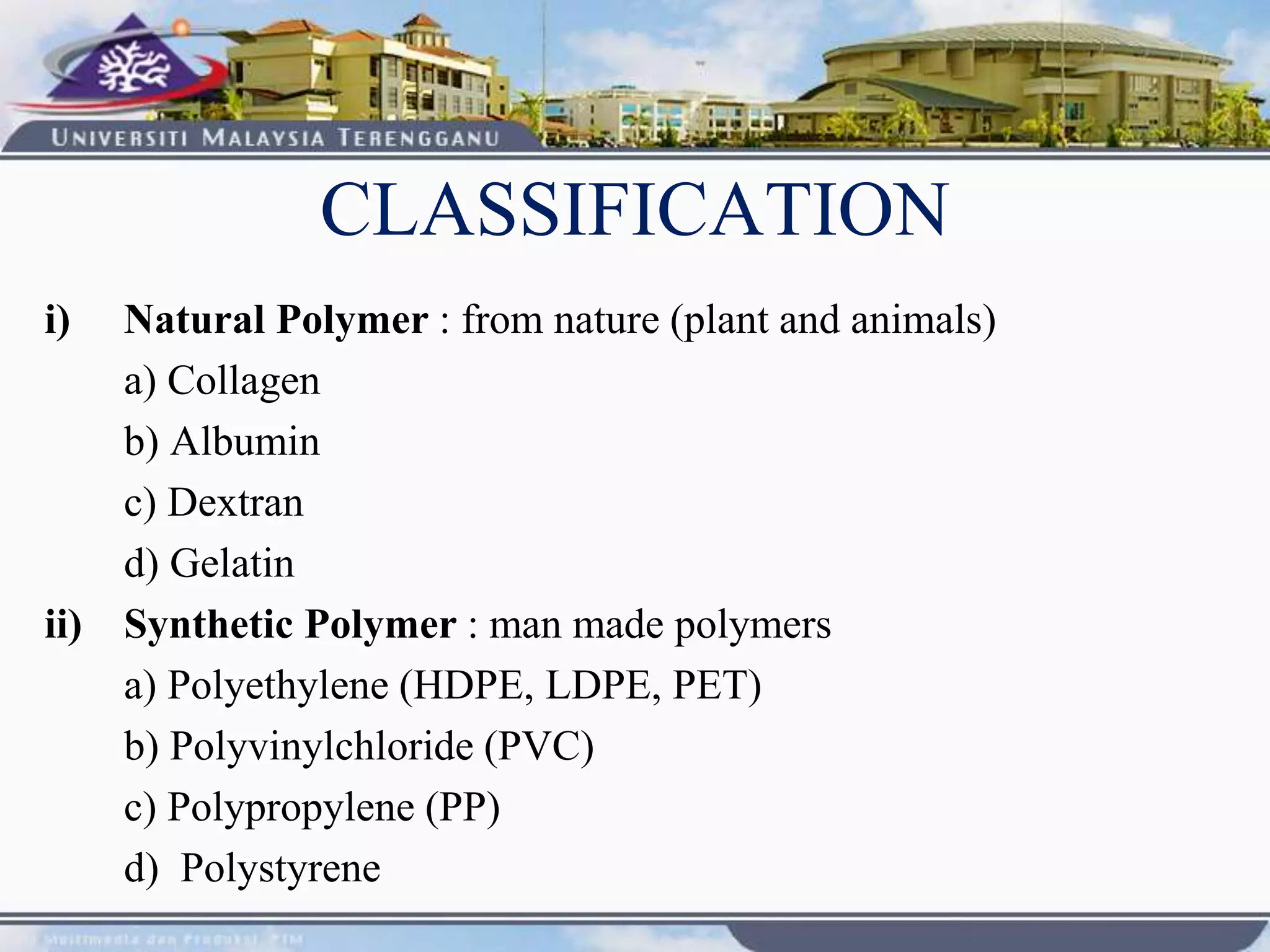
i) Natural Polymer : from nature (plant and animals)
a) Collagen
b) Albumin
c) Dextran
d) Gelatin
ii) Synthetic Polymer : man made polymers
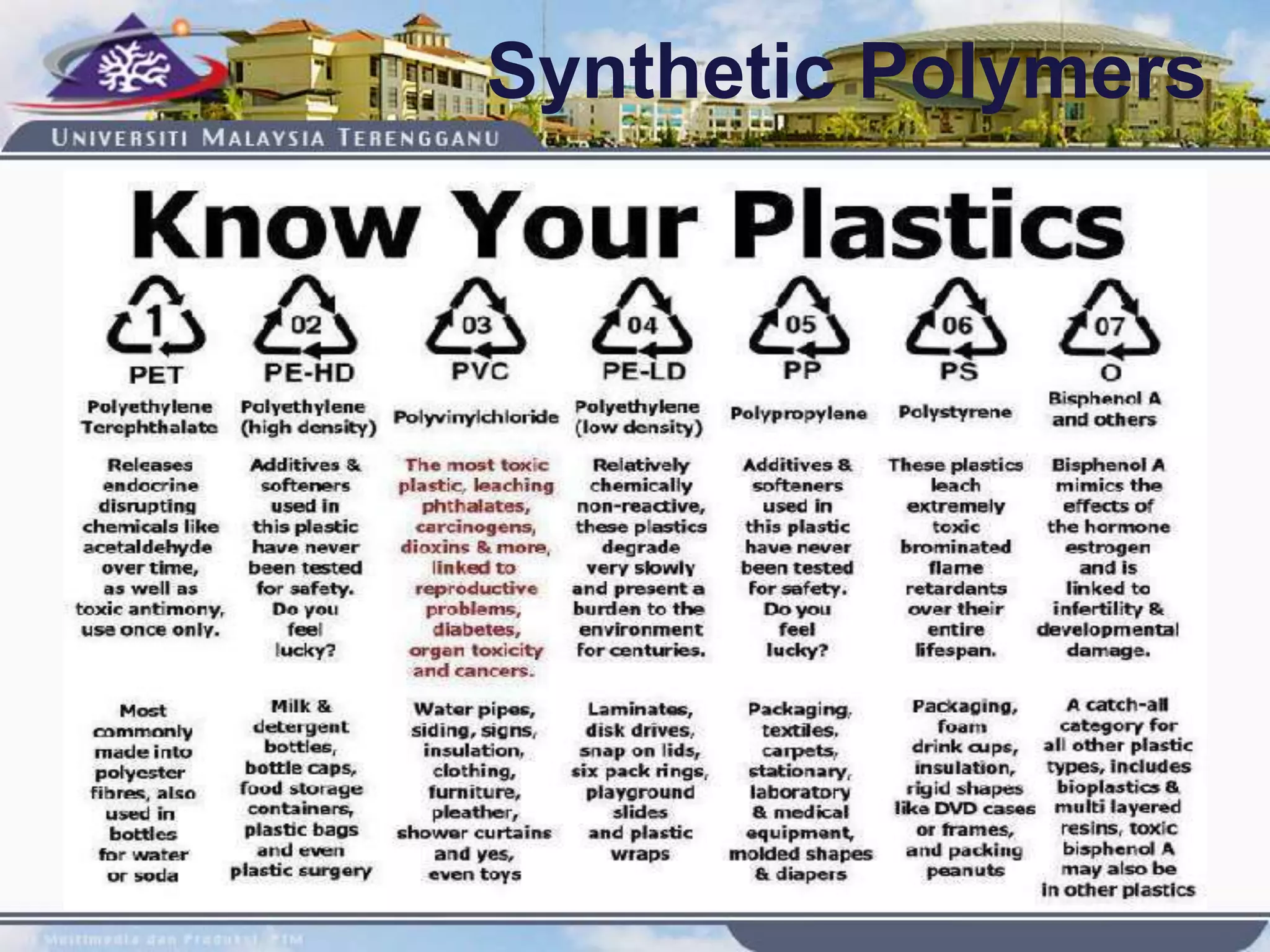
a) Polyethylene (HDPE, LDPE, PET)
b) Polyvinylchloride (PVC)
c) Polypropylene (PP)
d) Polystyrene
CLASSIFICATION
Natural Polymers
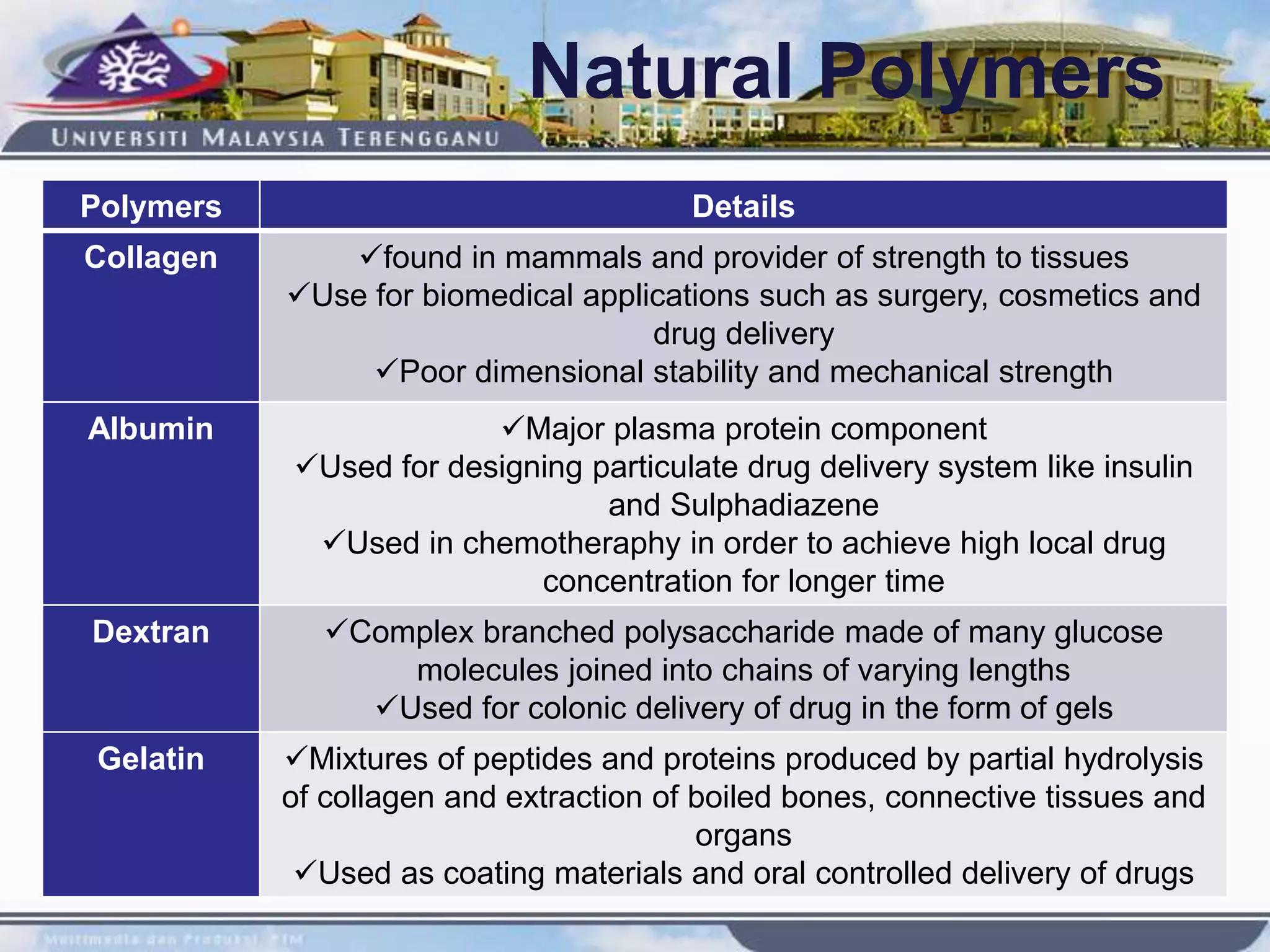
Polymers Details
Collagen found in mammals and provider of strength to tissues
Use for biomedical applications such as surgery, cosmetics and
drug delivery
Poor dimensional stability and mechanical strength
Albumin Major plasma protein component
Used for designing particulate drug delivery system like insulin
and Sulphadiazene
Used in chemotheraphy in order to achieve high local drug
concentration for longer time
Dextran Complex branched polysaccharide made of many glucose
molecules joined into chains of varying lengths
Used for colonic delivery of drug in the form of gels
Gelatin Mixtures of peptides and proteins produced by partial hydrolysis
of collagen and extraction of boiled bones, connective tissues and
organs
Used as coating materials and oral controlled delivery of drugs
Synthetic Polymers
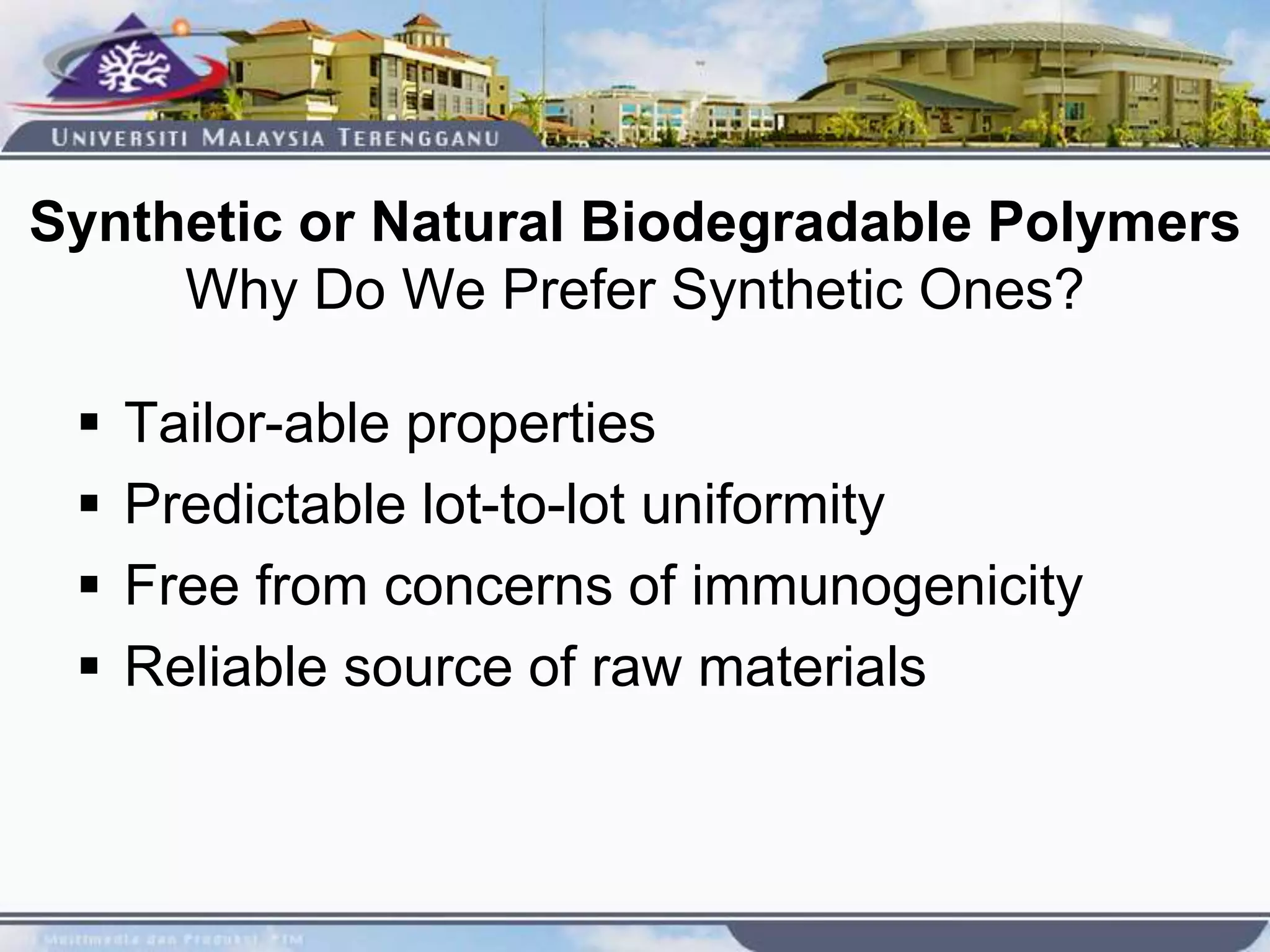
Synthetic or Natural Biodegradable Polymers
Why Do We Prefer Synthetic Ones?
 Tailor-able properties
 Predictable lot-to-lot uniformity
 Free from concerns of immunogenicity
 Reliable source of raw materials
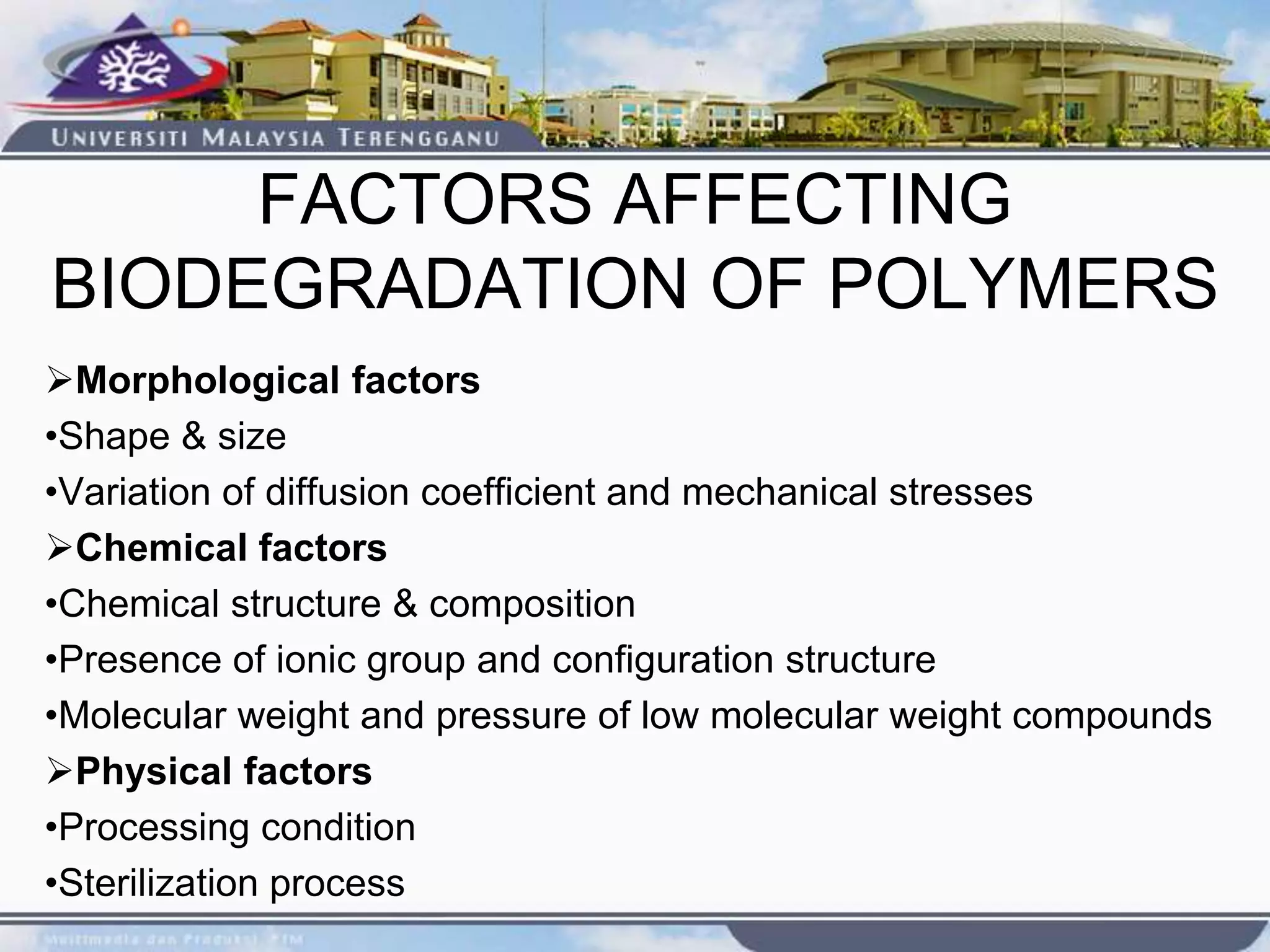
FACTORS AFFECTING
BIODEGRADATION OF POLYMERS
Morphological factors
•Shape & size
•Variation of diffusion coefficient and mechanical stresses
Chemical factors
•Chemical structure & composition
•Presence of ionic group and configuration structure
•Molecular weight and pressure of low molecular weight compounds
Physical factors
•Processing condition
•Sterilization process
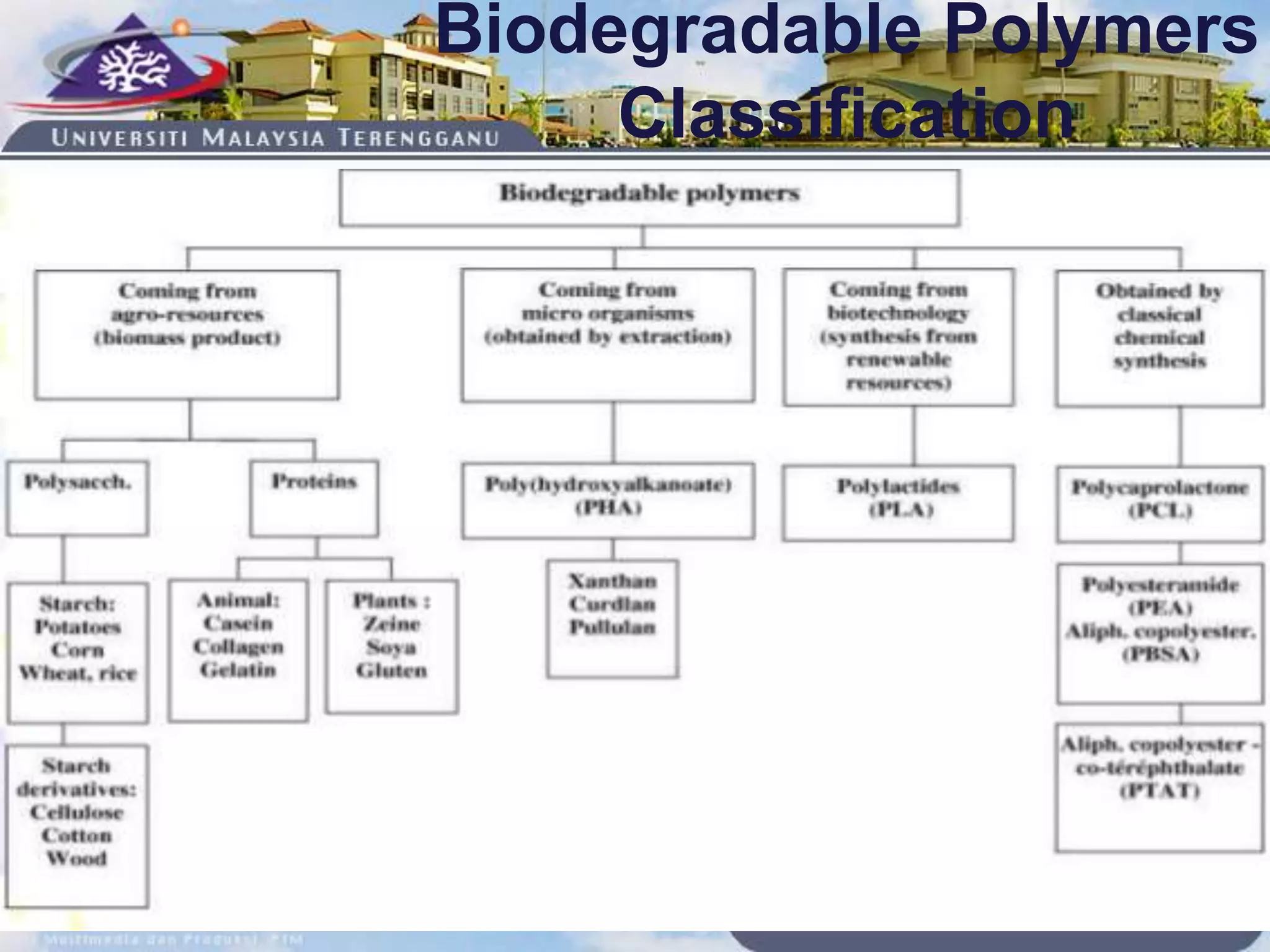
Biodegradable Polymers
Classification
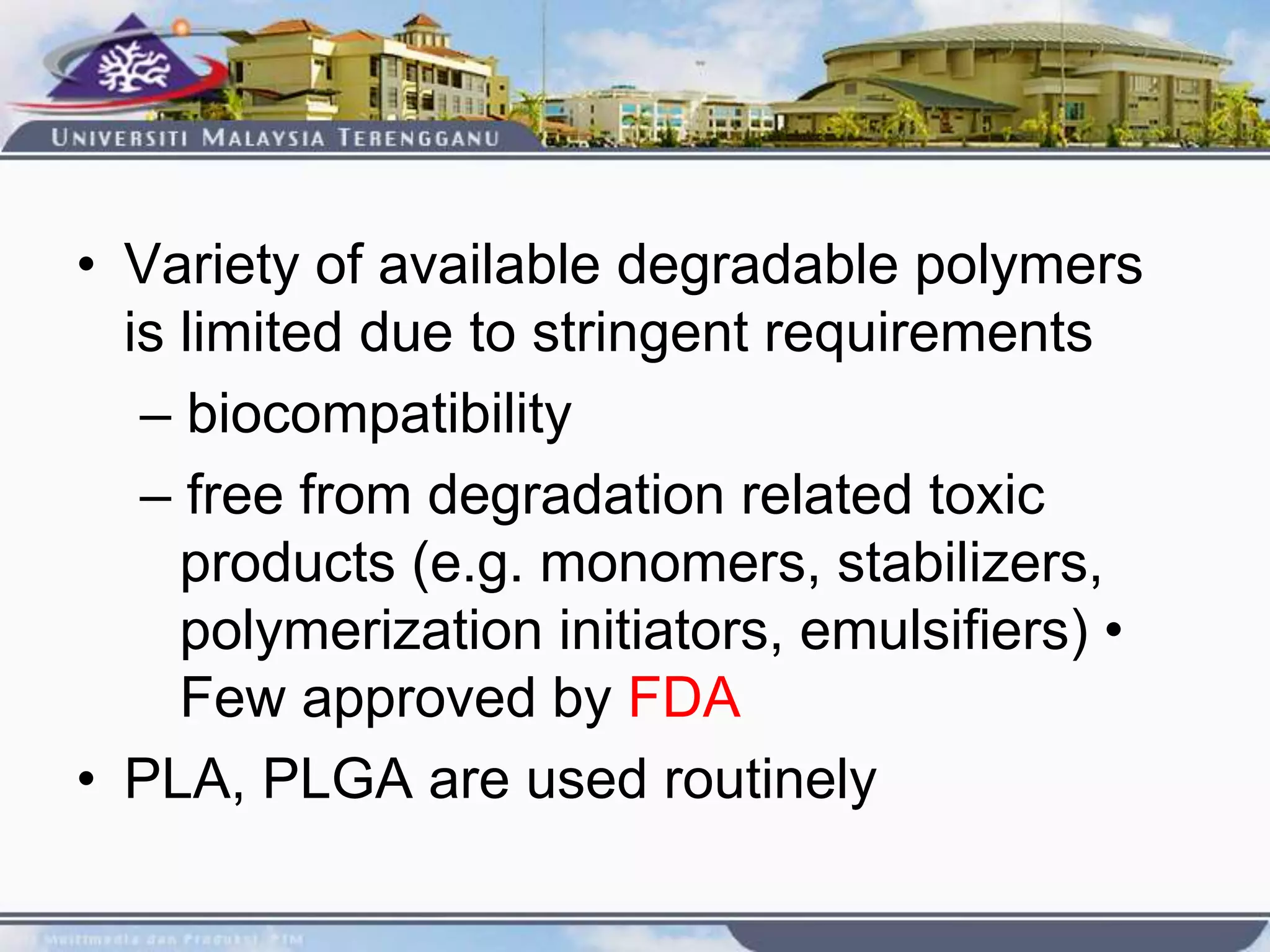
• Variety of available degradable polymers
is limited due to stringent requirements
– biocompatibility
– free from degradation related toxic
products (e.g. monomers, stabilizers,
polymerization initiators, emulsifiers) •
Few approved by FDA
• PLA, PLGA are used routinely
Polyesters
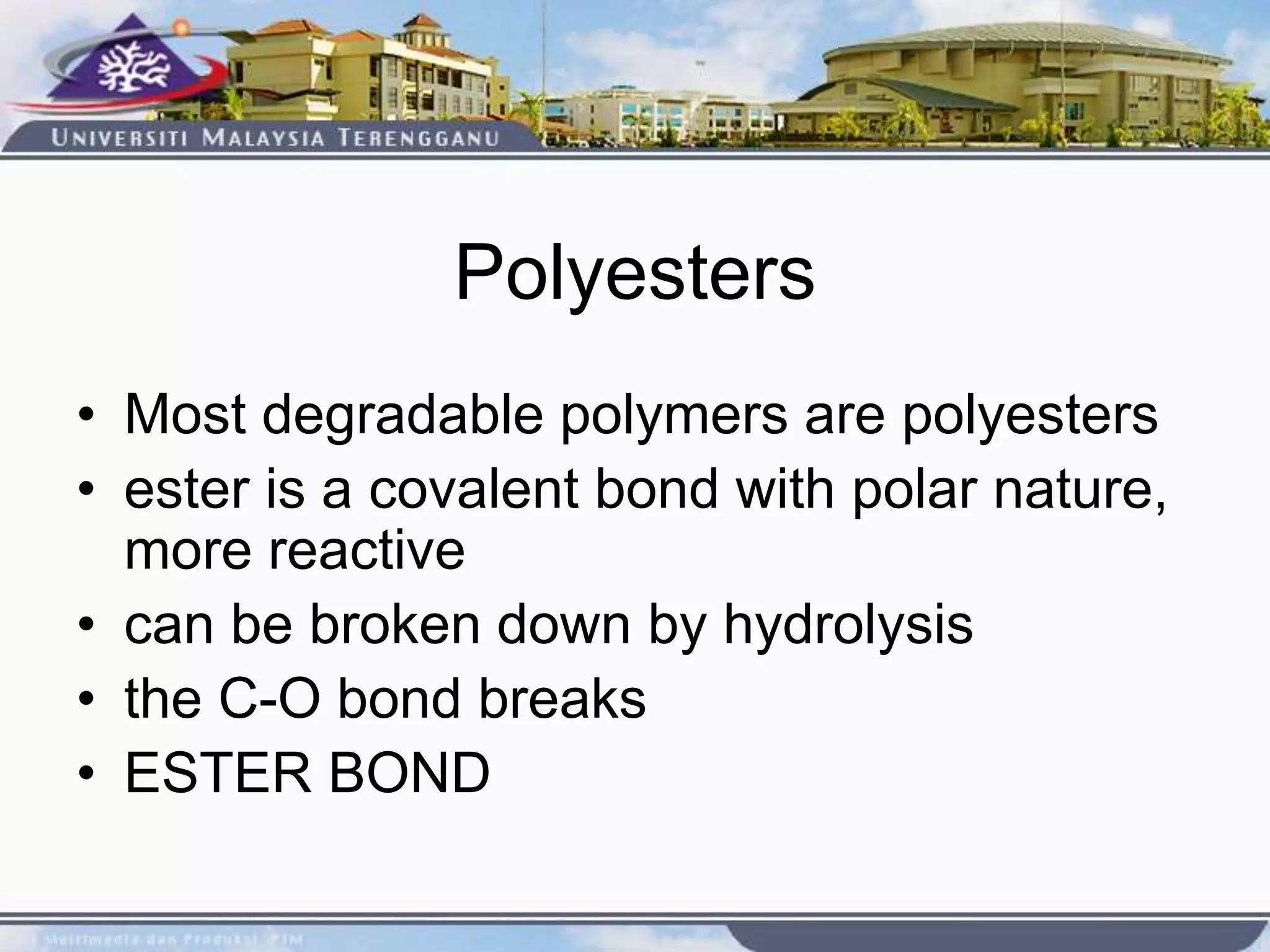
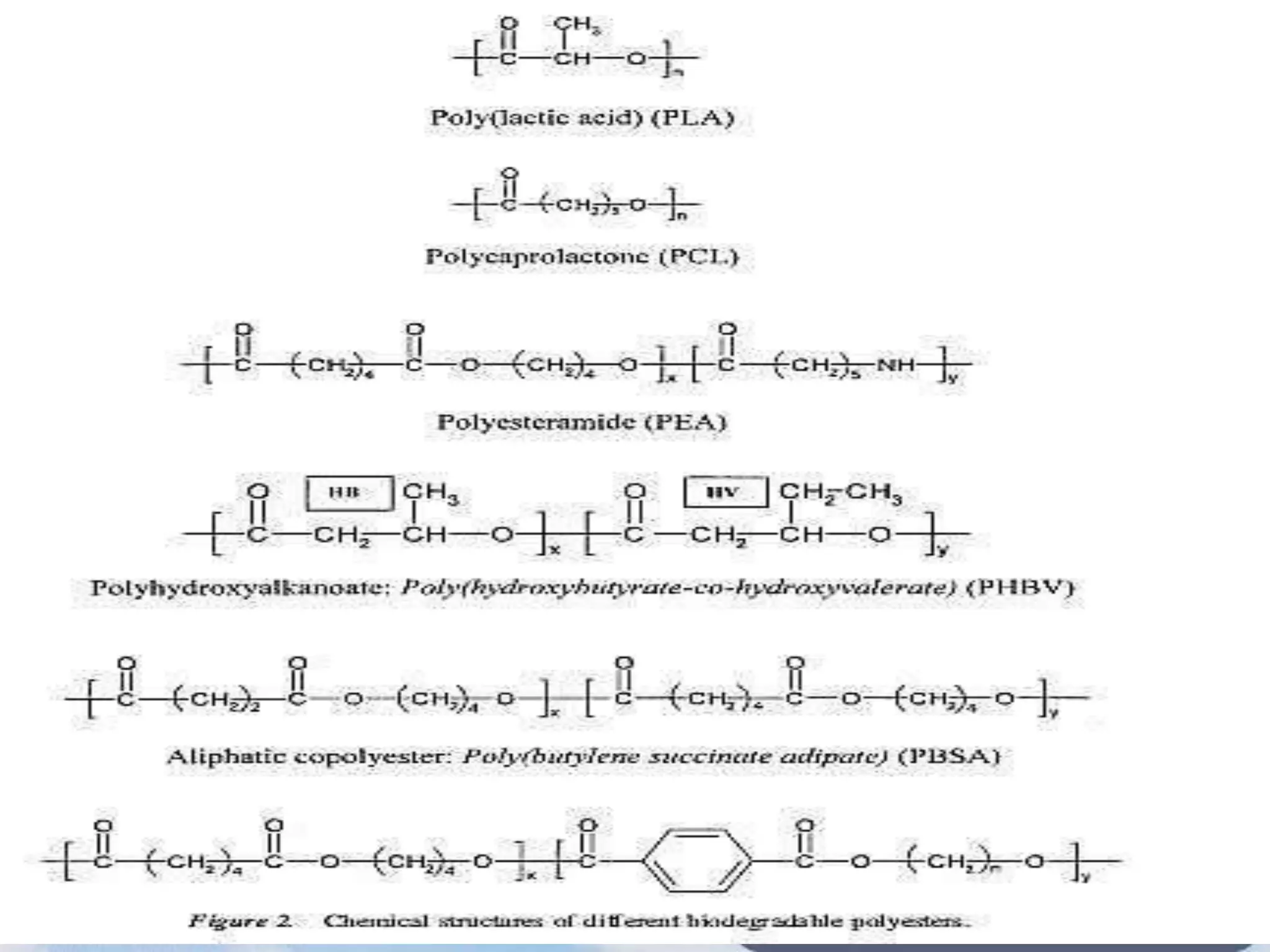
• Most degradable polymers are polyesters
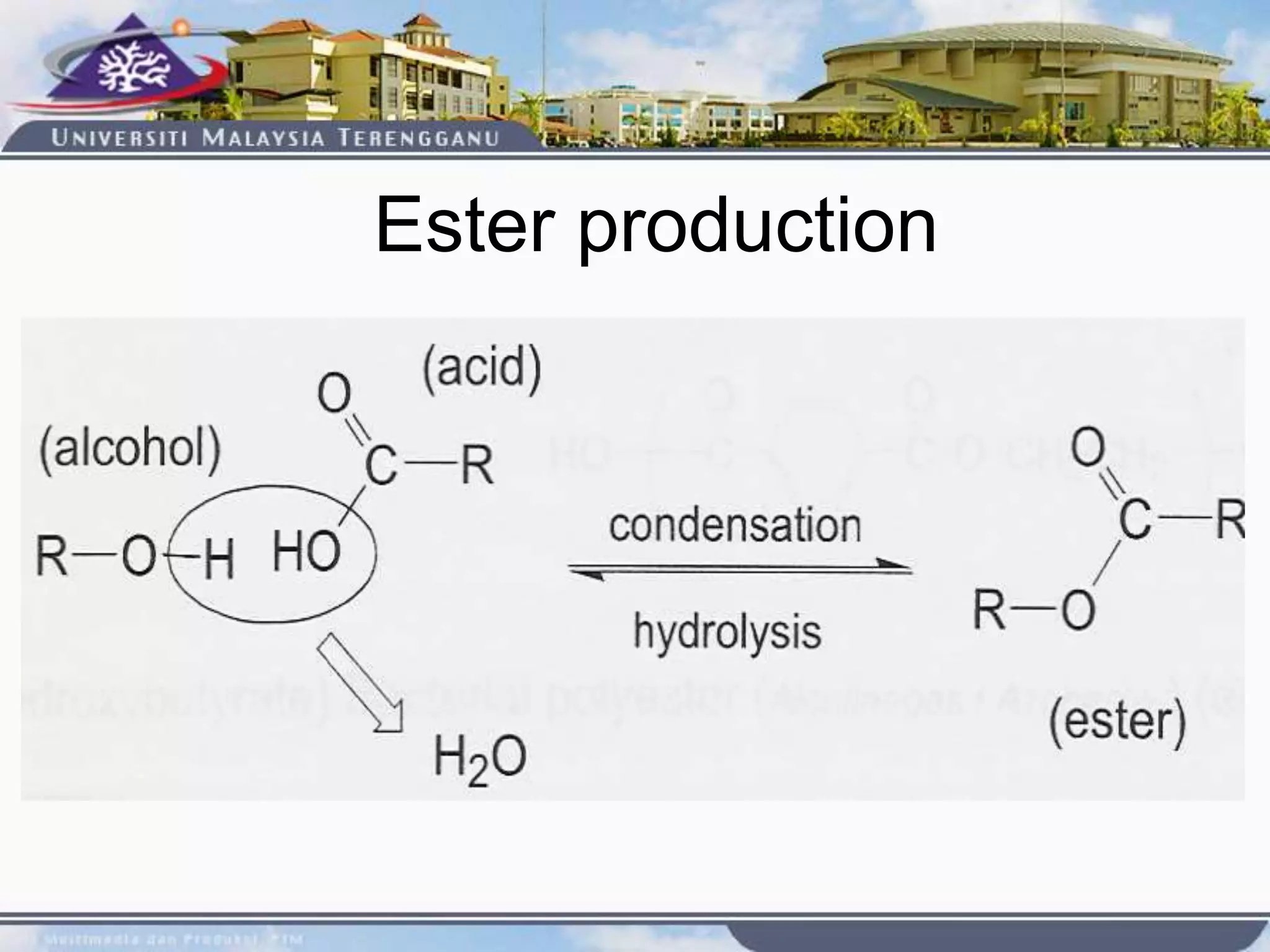
• ester is a covalent bond with polar nature,
more reactive
• can be broken down by hydrolysis
• the C-O bond breaks
• ESTER BOND
Ester production
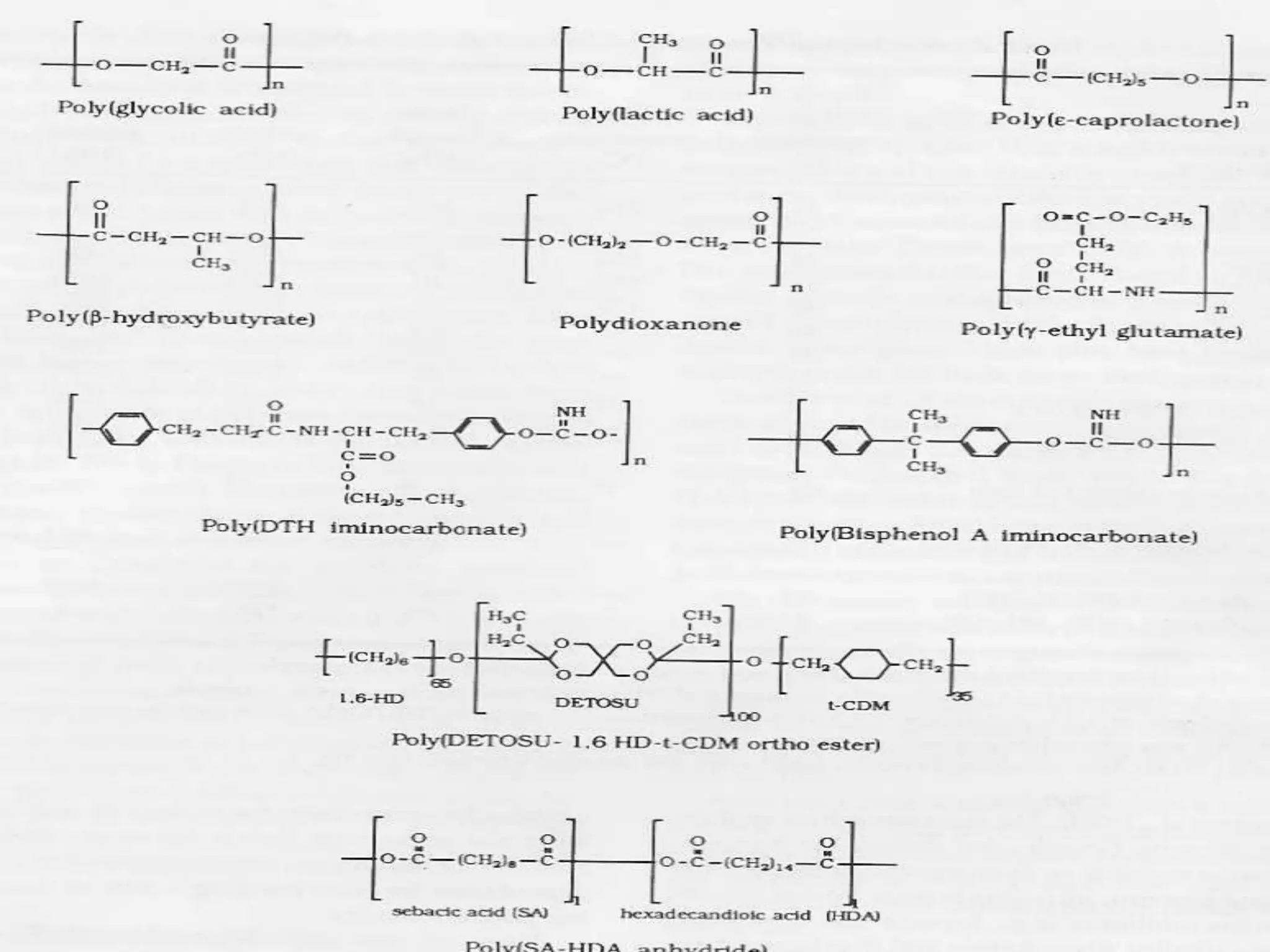
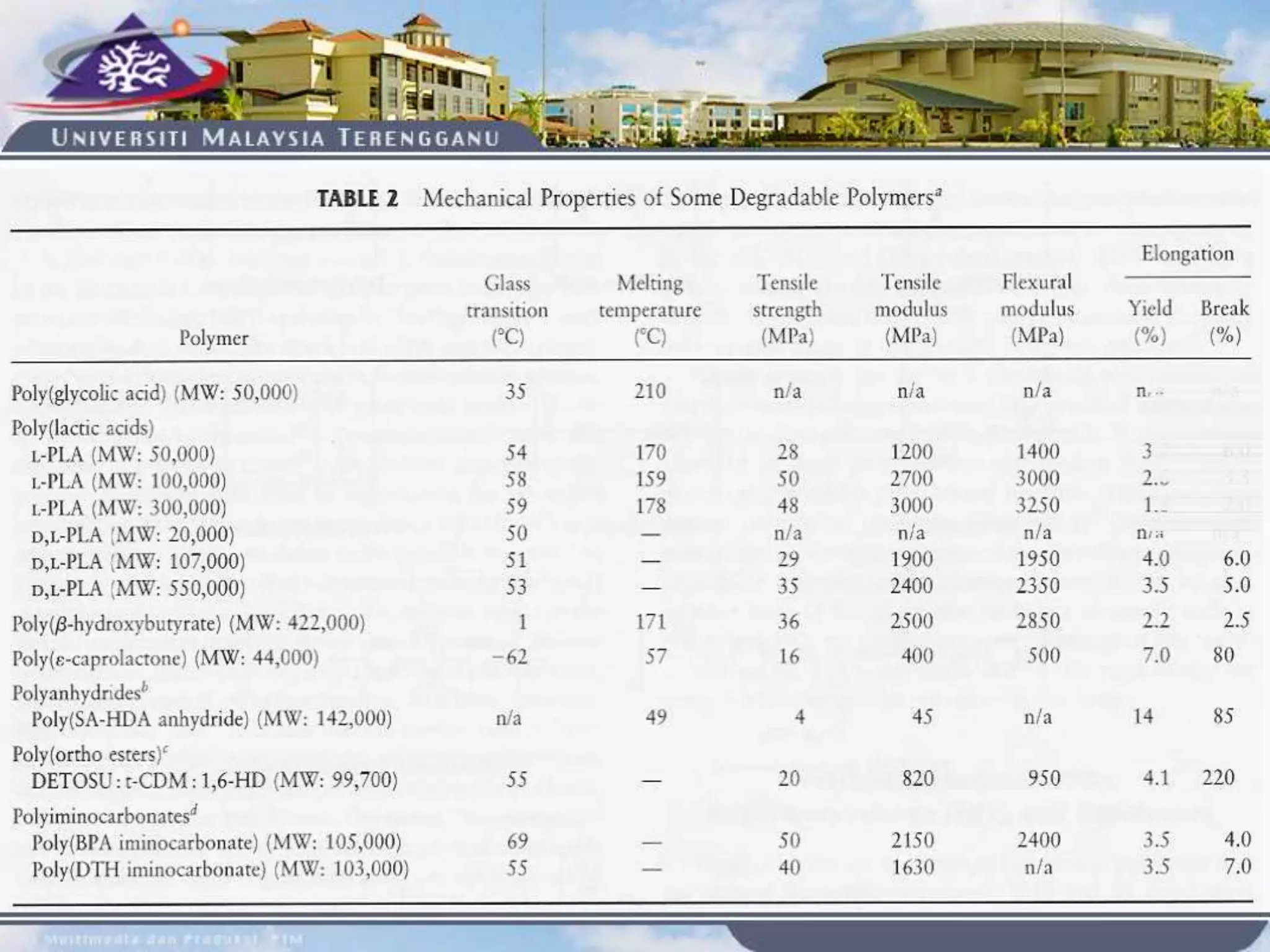
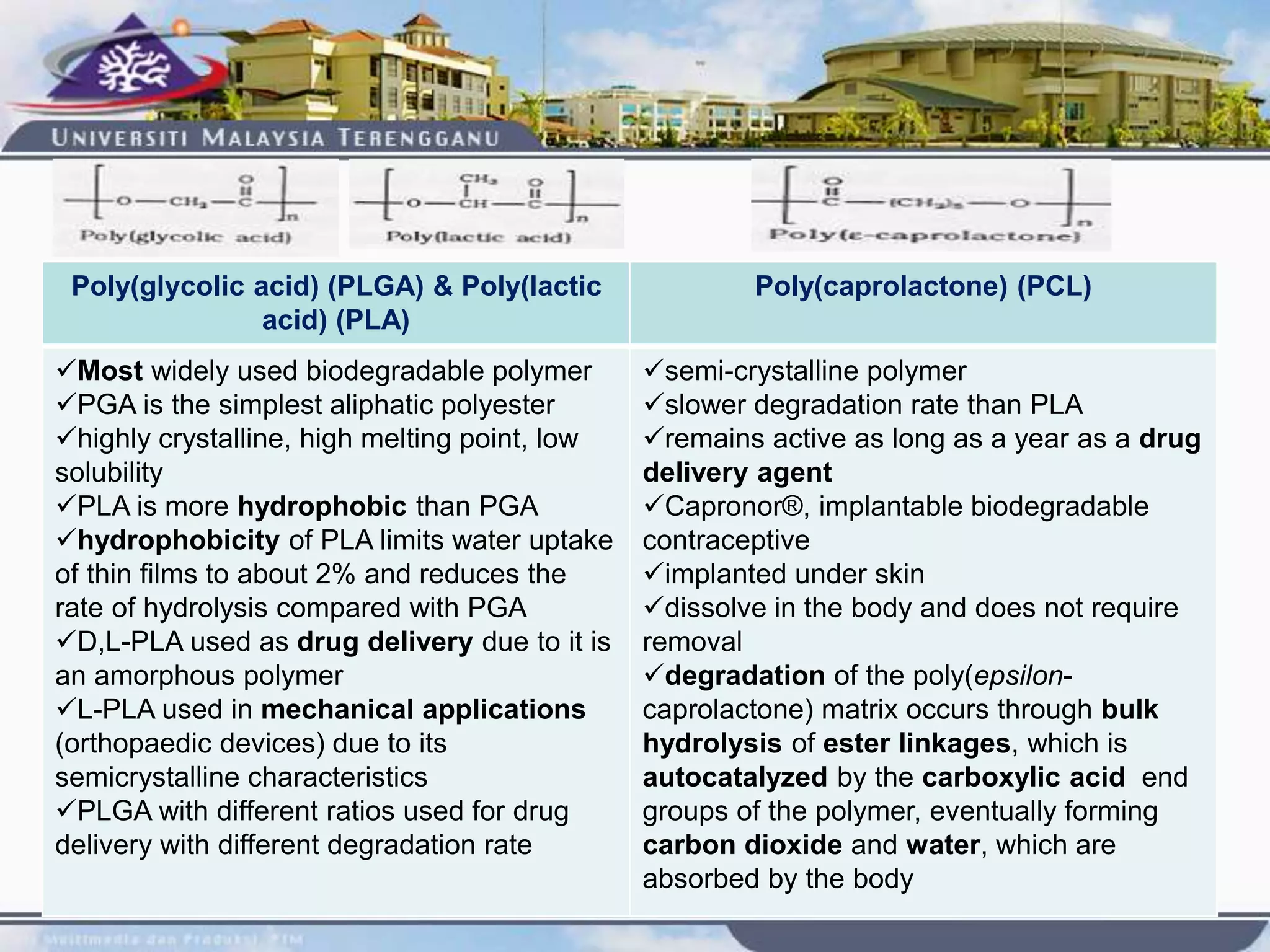
Poly(glycolic acid) (PLGA) & Poly(lactic
acid) (PLA)
Poly(caprolactone) (PCL)
Most widely used biodegradable polymer
PGA is the simplest aliphatic polyester
highly crystalline, high melting point, low
solubility
PLA is more hydrophobic than PGA
hydrophobicity of PLA limits water uptake
of thin films to about 2% and reduces the
rate of hydrolysis compared with PGA
D,L-PLA used as drug delivery due to it is
an amorphous polymer
L-PLA used in mechanical applications
(orthopaedic devices) due to its
semicrystalline characteristics
PLGA with different ratios used for drug
delivery with different degradation rate
semi-crystalline polymer
slower degradation rate than PLA
remains active as long as a year as a drug
delivery agent
Capronor®, implantable biodegradable
contraceptive
implanted under skin
dissolve in the body and does not require
removal
degradation of the poly(epsilon-
caprolactone) matrix occurs through bulk
hydrolysis of ester linkages, which is
autocatalyzed by the carboxylic acid end
groups of the polymer, eventually forming
carbon dioxide and water, which are
absorbed by the body
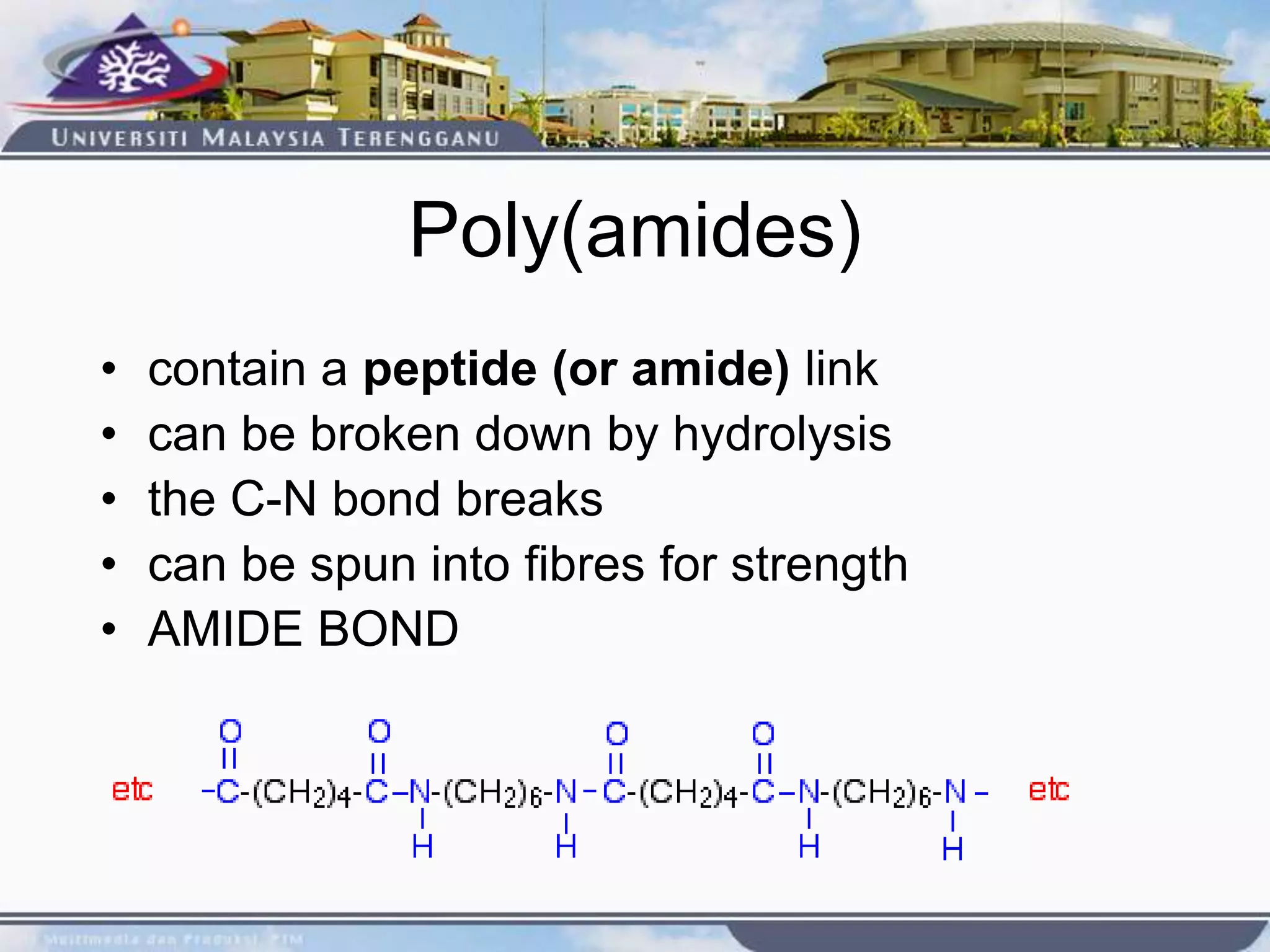
Poly(amides)
• contain a peptide (or amide) link
• can be broken down by hydrolysis
• the C-N bond breaks
• can be spun into fibres for strength
• AMIDE BOND
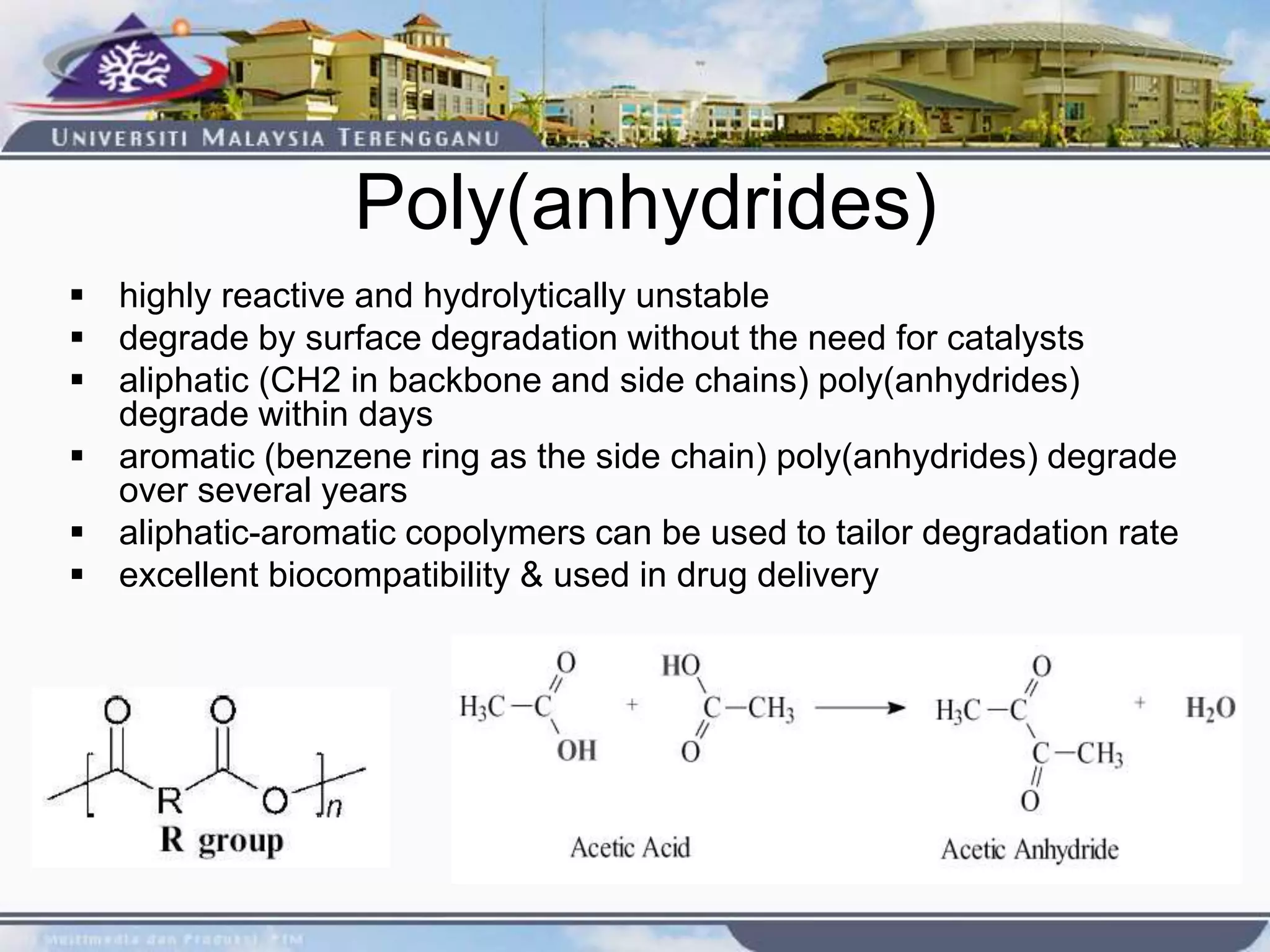
Poly(anhydrides)
 highly reactive and hydrolytically unstable
 degrade by surface degradation without the need for catalysts
 aliphatic (CH2 in backbone and side chains) poly(anhydrides)
degrade within days
 aromatic (benzene ring as the side chain) poly(anhydrides) degrade
over several years
 aliphatic-aromatic copolymers can be used to tailor degradation rate
 excellent biocompatibility & used in drug delivery
Poly(orthoesters)
 formulated so that degradation occurs
by surface erosion
 drug release at a constant rate
 degradation rate adjusted by acidic and
basic excipients (acidic excipients
increasing degradation rate)
Poly(amino acids)
• poly-L-lycine, polyglutamic acid
• Amino acid side-chains offer sites for drug attachment
• low-level systemic toxicity owing to their similarity to
naturally occurring amino acids
• artificial skin substitutes
• limited applicability as biomaterials due to limited
solubility and processsibility
• polymers containing more than three or more amino
acids may trigger antigenic response
Other polymers
• Poly(cyanocrylates)
– used as bioadhesives
– use as implantable material is limited due to
significant inflammatory response
• Poly(phosphazenes)
– inorganic polymer
– backbone consists of nitrogen-phosphorus
bonds
– use for drug delivery under investigation
Polymer Degradation
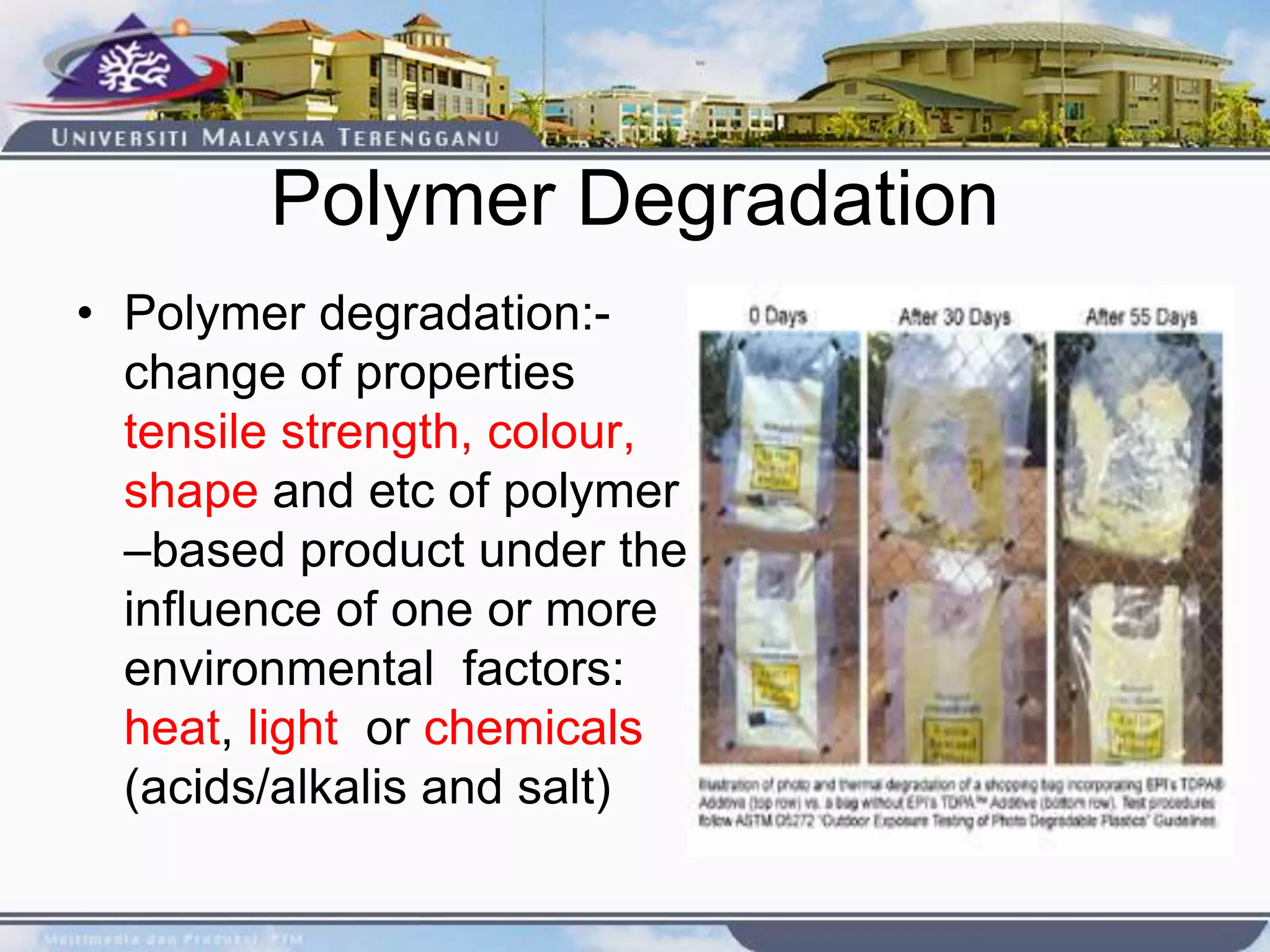
• Polymer degradation:-
change of properties
tensile strength, colour,
shape and etc of polymer
–based product under the
influence of one or more
environmental factors:
heat, light or chemicals
(acids/alkalis and salt)
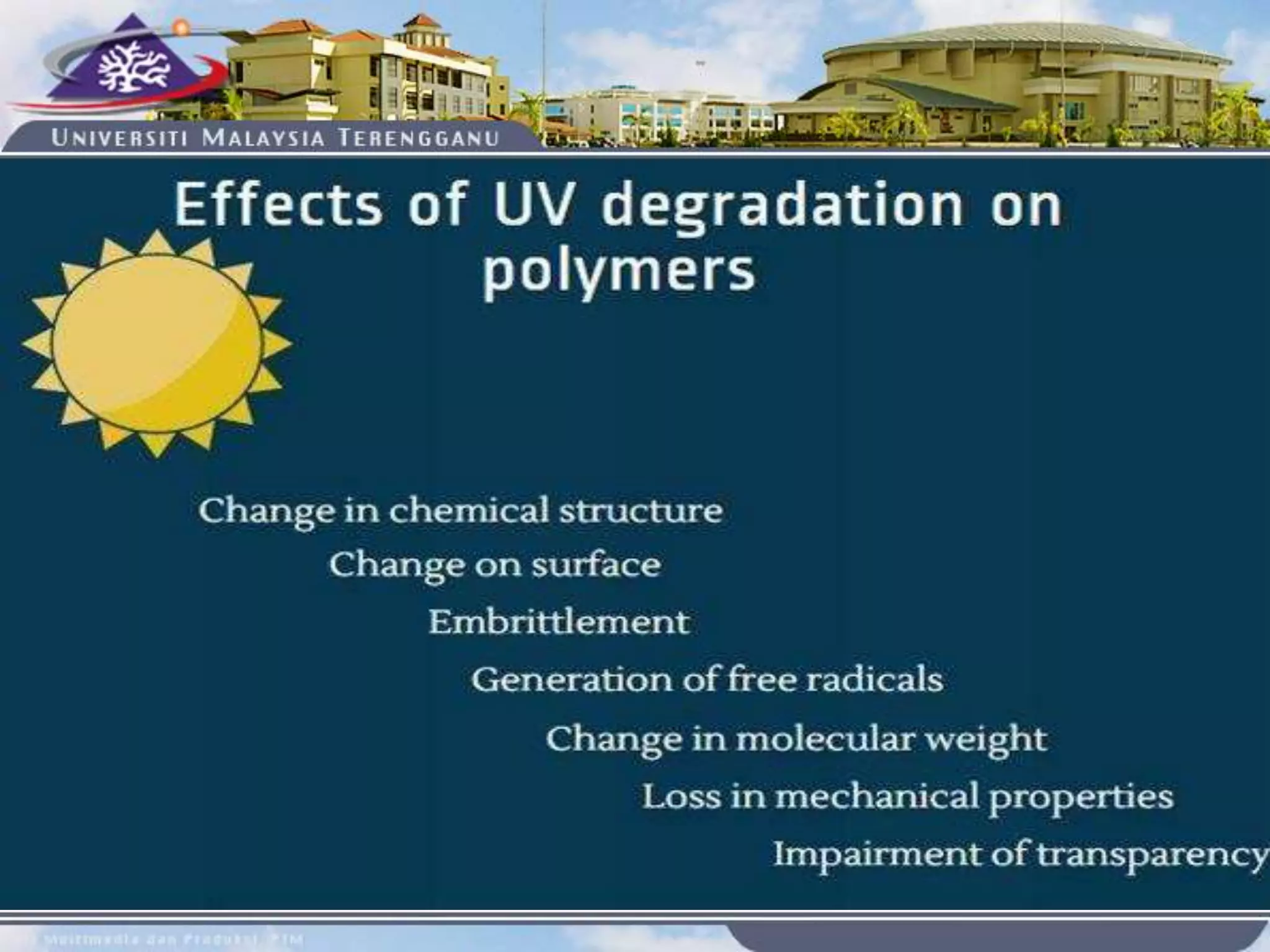
Chemical degradation Degradation by hydrolysis to give lower molecular
weight molecules. Hydrolysis takes place in the
presence of water containing acid or base
Biological degradation Biologically degraded by microorganism to give
lower molecular weight
Mechanical degradation polymer chain is ruptured by mechanical means.
The effect is to reduce the polymer molecular
mass.
Chlorine induce cracking Chlorine – highly reactive gas that attack
susceptible polymers such as acetal resin and
polybutylene pipe work
Thermal degradation Molecular deterioration as a result of overheating
by breaking down its molecular chain
Photo degradation Known as weathering process that resulting in
discoloration and loss of mechanical properties
Degradation
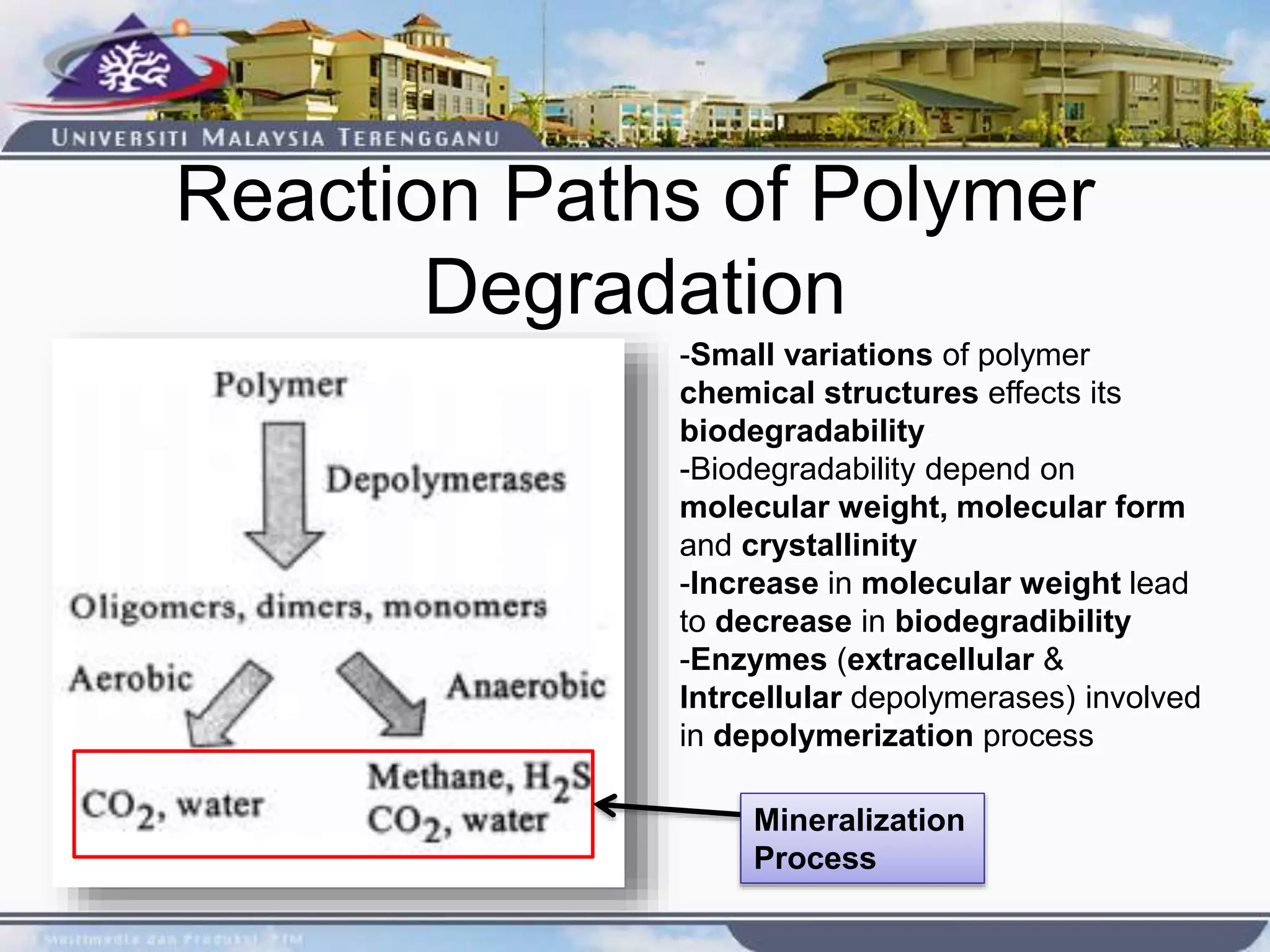
Reaction Paths of Polymer
Degradation
Mineralization
Process
-Small variations of polymer
chemical structures effects its
biodegradability
-Biodegradability depend on
molecular weight, molecular form
and crystallinity
-Increase in molecular weight lead
to decrease in biodegradibility
-Enzymes (extracellular &
Intrcellular depolymerases) involved
in depolymerization process
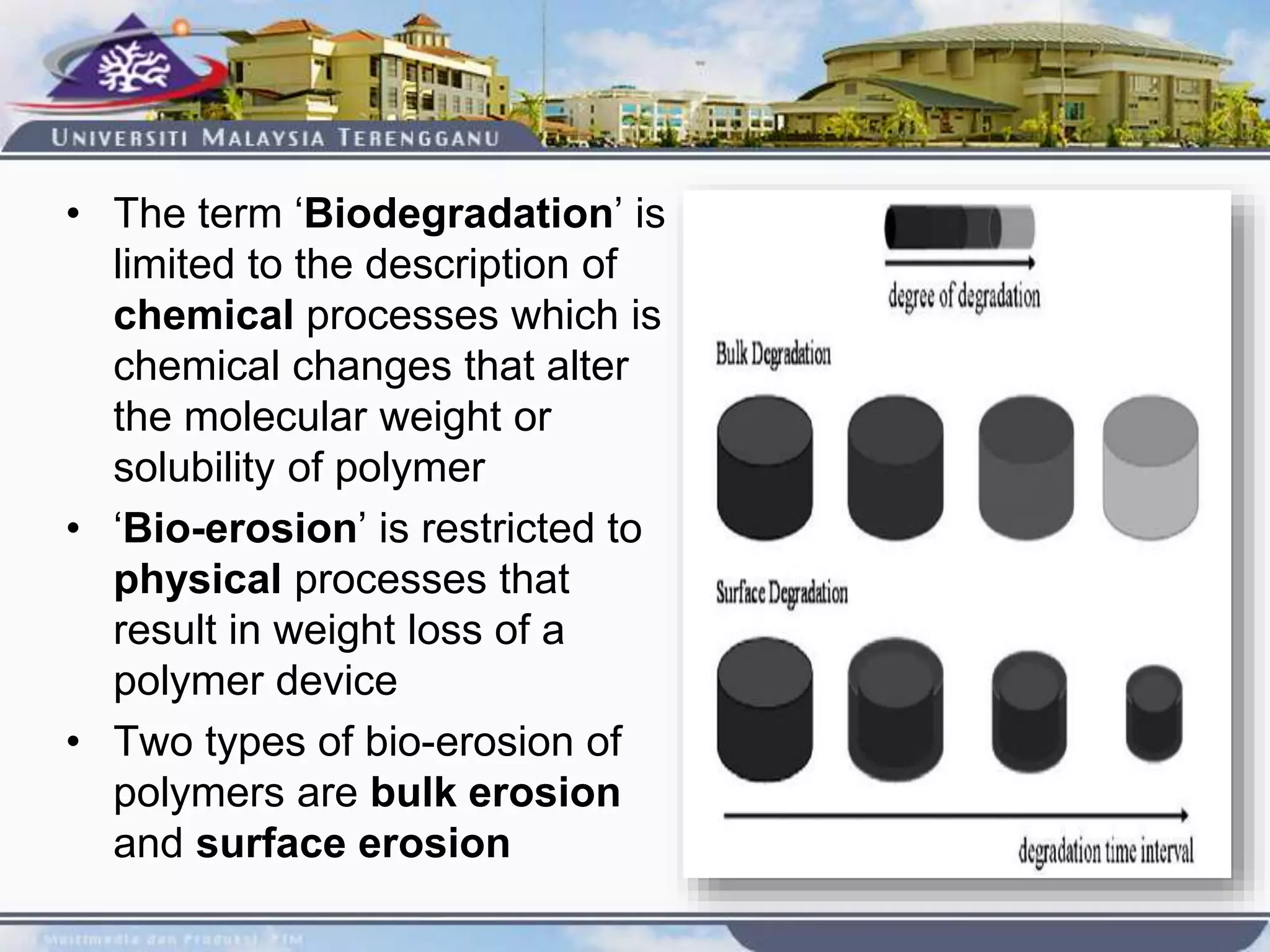
• The term ‘Biodegradation’ is
limited to the description of
chemical processes which is
chemical changes that alter
the molecular weight or
solubility of polymer
• ‘Bio-erosion’ is restricted to
physical processes that
result in weight loss of a
polymer device
• Two types of bio-erosion of
polymers are bulk erosion
and surface erosion
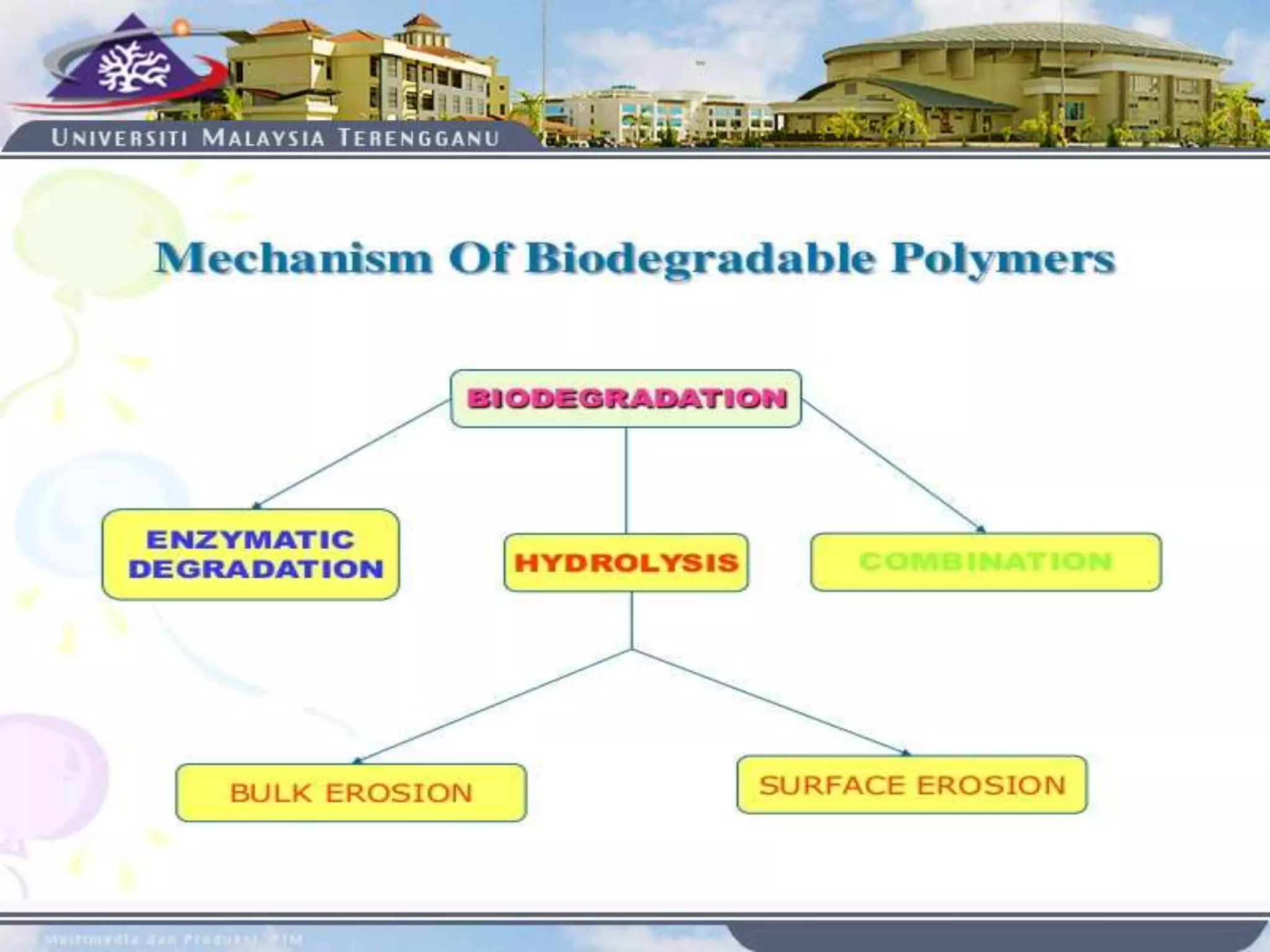
Mechanism of Biodegradable
Polymers
Types of bioerosion
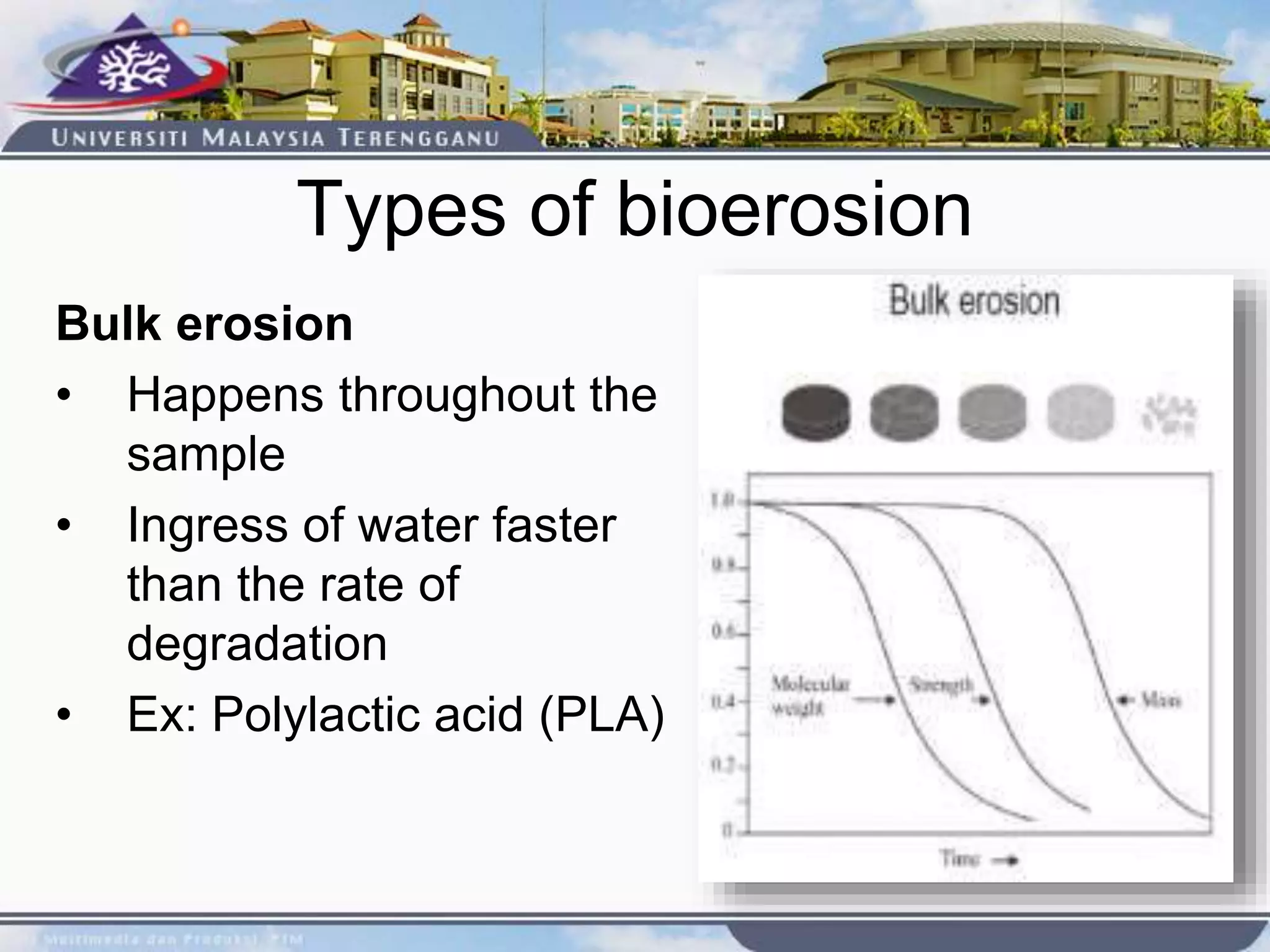
Bulk erosion
• Happens throughout the
sample
• Ingress of water faster
than the rate of
degradation
• Ex: Polylactic acid (PLA)
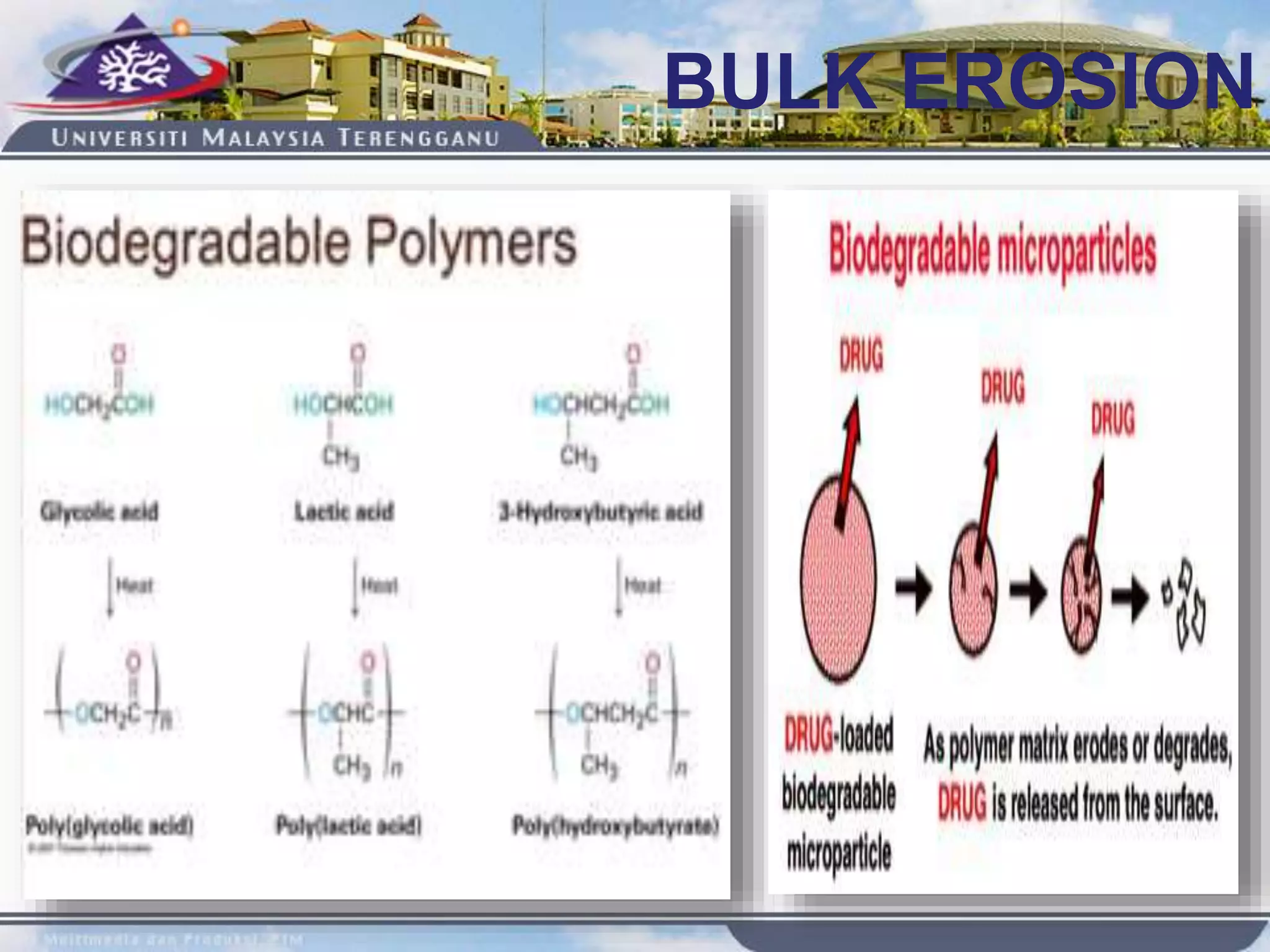
BULK EROSION
Types of bioerosion - Cont
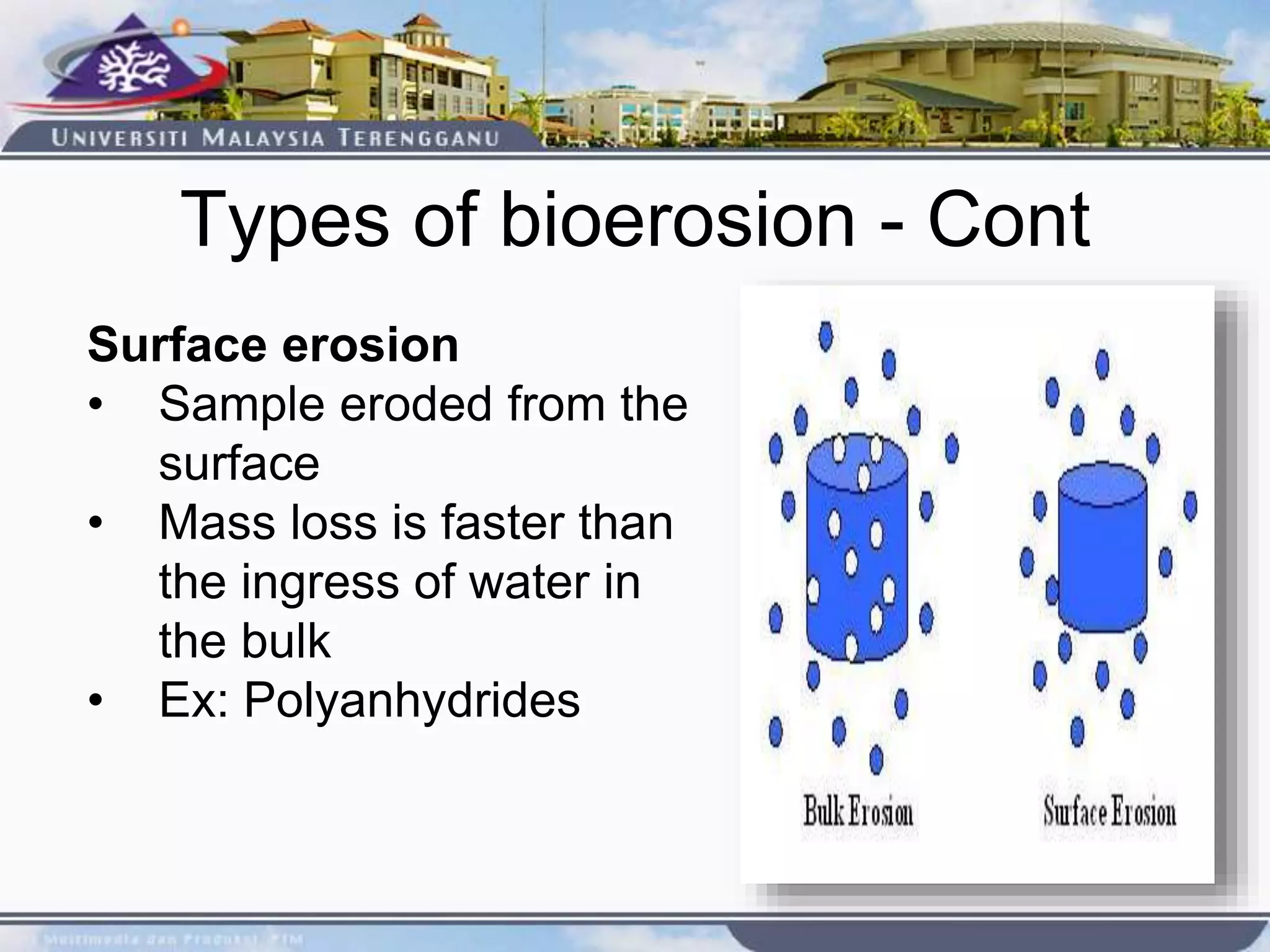
Surface erosion
• Sample eroded from the
surface
• Mass loss is faster than
the ingress of water in
the bulk
• Ex: Polyanhydrides
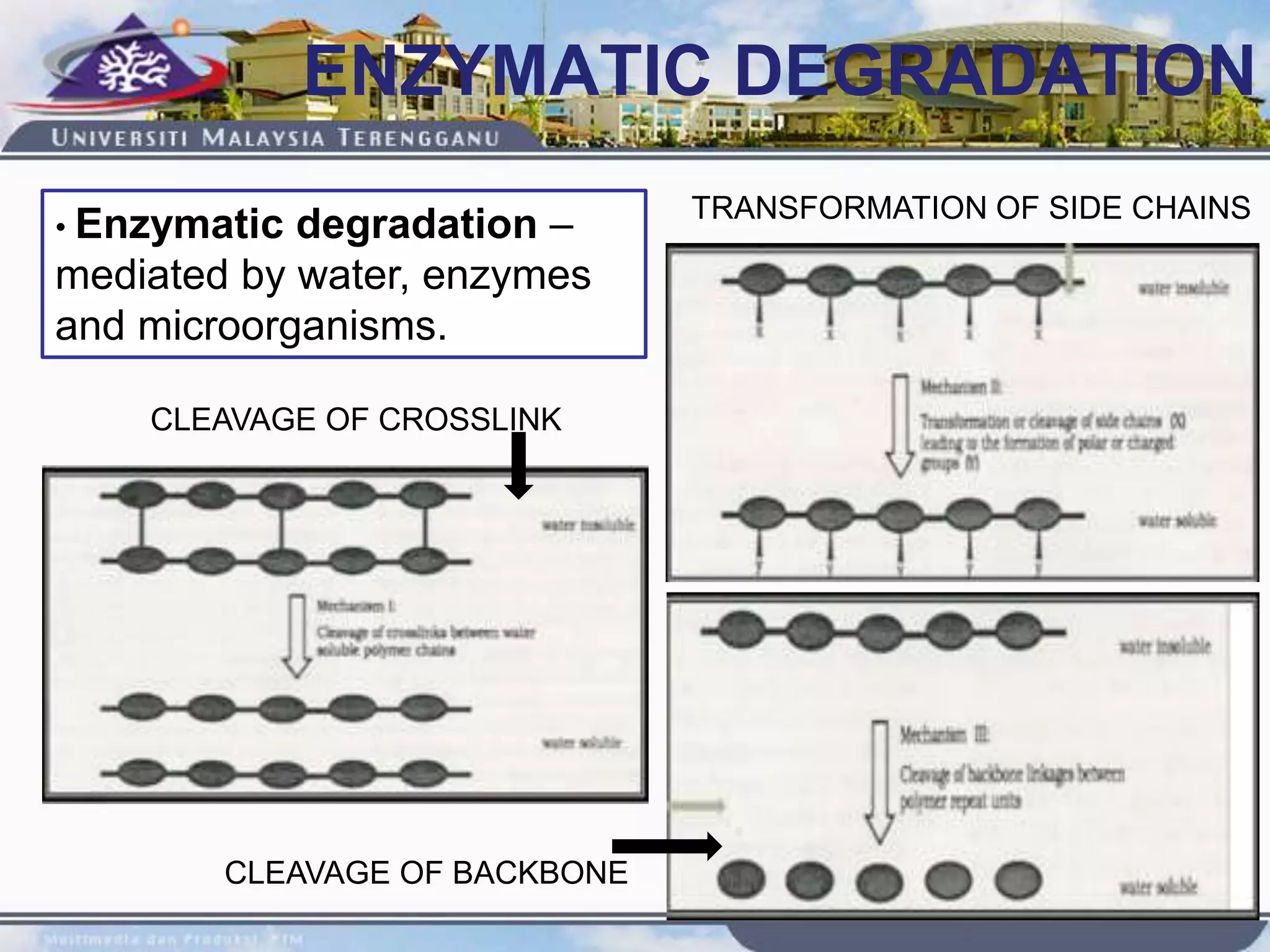
CLEAVAGE OF CROSSLINK
TRANSFORMATION OF SIDE CHAINS
CLEAVAGE OF BACKBONE
ENZYMATIC DEGRADATION
• Enzymatic degradation –
mediated by water, enzymes
and microorganisms.
ADVANTAGES OF
BIODEGRADABLE POLYMERS
•Decrease in dosing frequency
•Localized delivery of drug
•Sustained delivery of drug
•Stabilization of drug
•Reduce side effects
•Improved patient compliance
•Controllable degradation rate
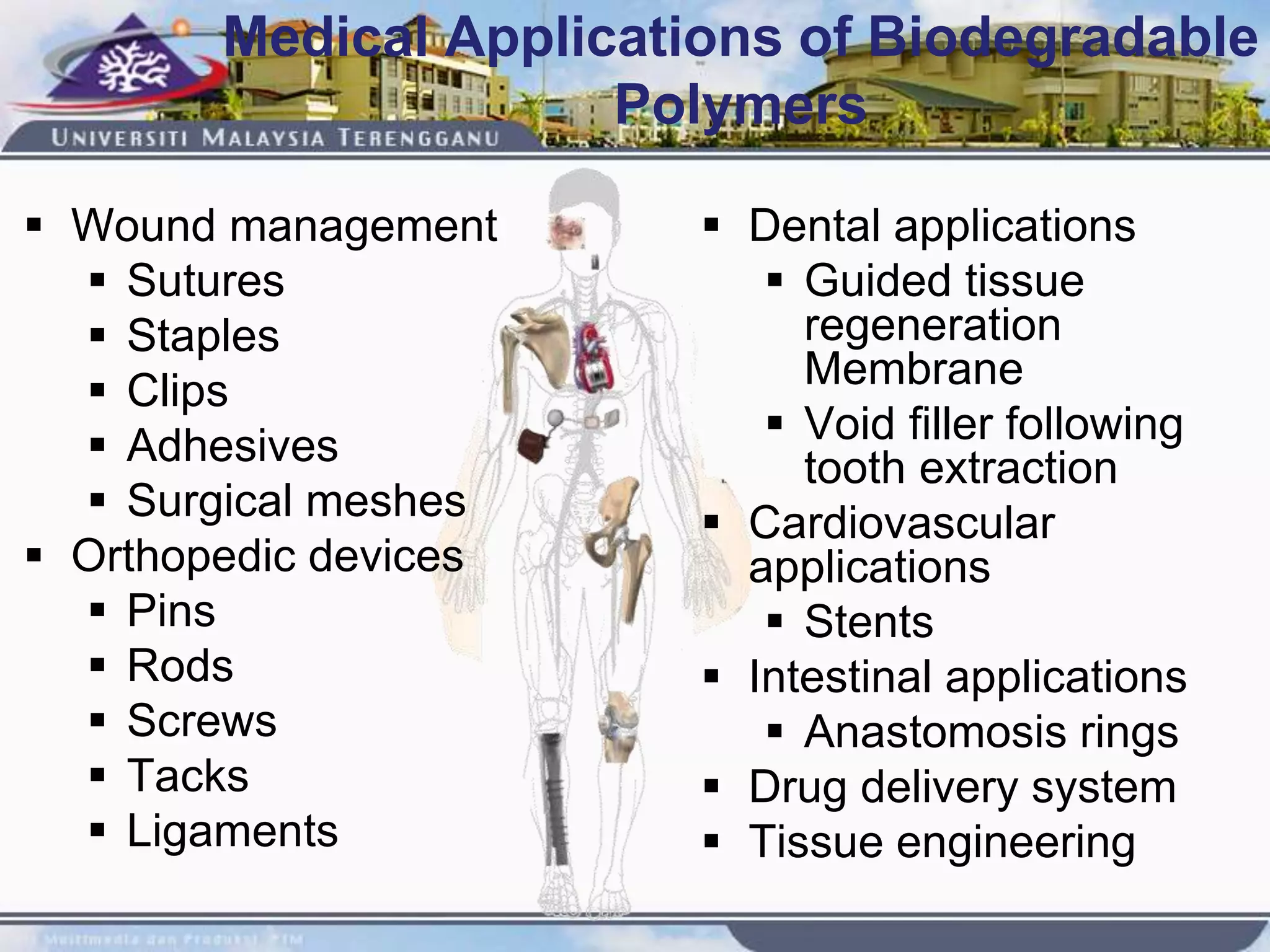
Medical Applications of Biodegradable
Polymers
 Wound management
 Sutures
 Staples
 Clips
 Adhesives
 Surgical meshes
 Orthopedic devices
 Pins
 Rods
 Screws
 Tacks
 Ligaments
 Dental applications
 Guided tissue
regeneration
Membrane
 Void filler following
tooth extraction
 Cardiovascular
applications
 Stents
 Intestinal applications
 Anastomosis rings
 Drug delivery system
 Tissue engineering
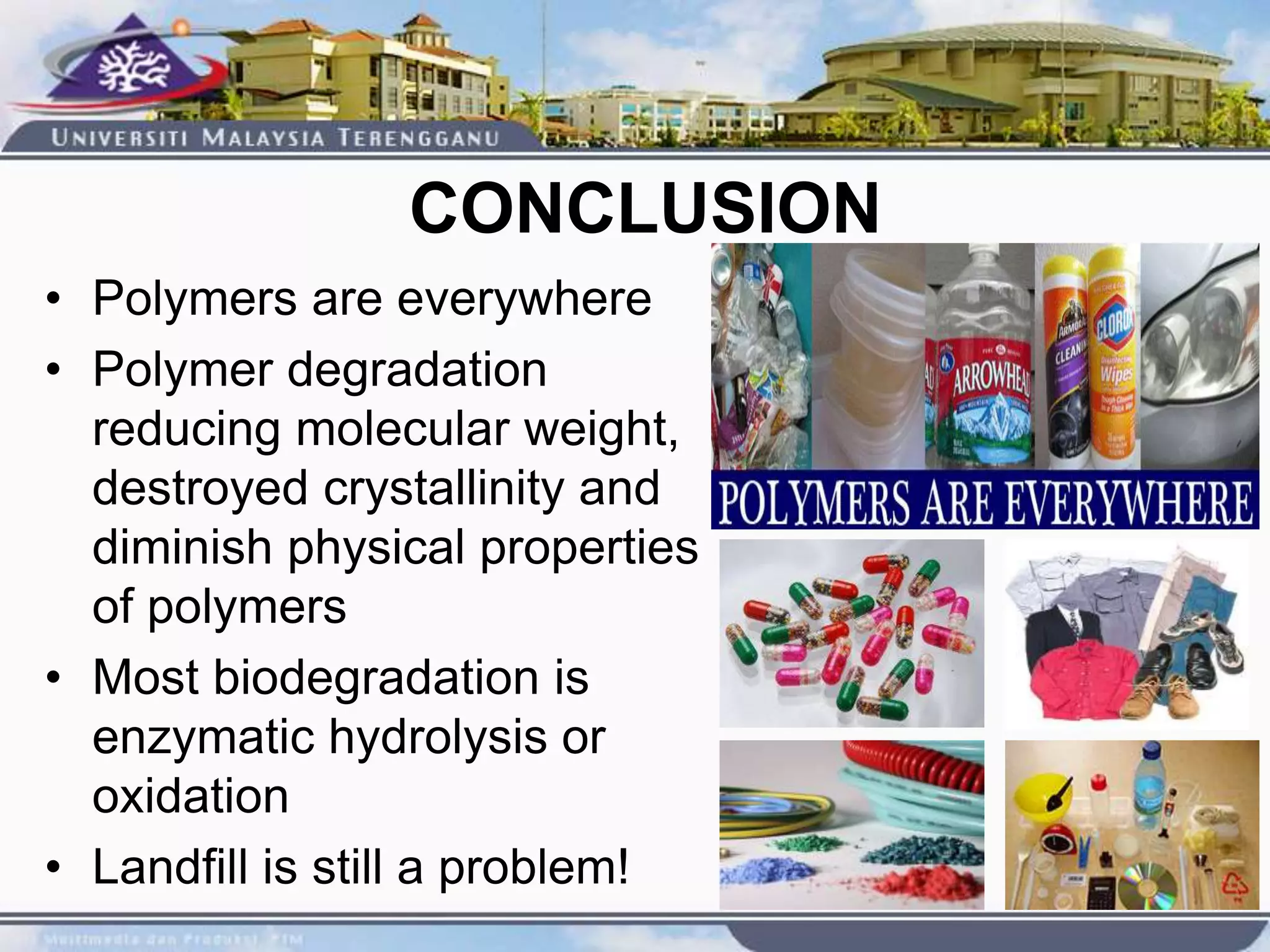
• Polymers are everywhere
• Polymer degradation
reducing molecular weight,
destroyed crystallinity and
diminish physical properties
of polymers
• Most biodegradation is
enzymatic hydrolysis or
oxidation
• Landfill is still a problem!
CONCLUSION
Glossary of Terms
Biodegradable plastics : Plastics that will fully decompose to carbon dioxide, methane, water, biomass and
inorganic compounds under aerobic and anaerobic conditions
Aerobic decomposition : Biological decomposition in the presence of oxygen or air, where carbon is
converted to carbon dioxide and biomass
Anaerobic decomposition : Biological decomposition in the absence of oxygen or air, where carbon is
converted to methane and biomass
Biological decomposition : Decomposition under the influence of biological system
Biomass : Substance of biological origin, with the exception of geological formations and fossilized
biological matter
Bioplastics : Plastics that are biodegradable and/or biomass-based
OXO-Biodegradable : Degradation resulting from oxidative and cell mediated phenomena either
simultaneously or successively
Biopolymers : Polymers produced by living organism
Biodegradation: A biological agent (an enzyme, microbe or cell) responsible for degradation
Bioerosion: A water-insoluble polymer that turns water soluble under physiological conditions without
regard to the mechanism involved during erosion. Bioerosion contains both physical (such as dissolution)
and chemical processes (such as backbone cleavage).
Bioresorption, Bioabsorption: Polymer or its degradation products removed by cellular activity
REFERENCE
• Kumar, A. A., Karthick, K., & Arumugam, K. P. (2011). Properties of
biodegradable polymers and degradation for sustainable
development.International Journal of Chemical Engineering and
Applications, 2(3), 164.
• Krzan, A. (2012). Biodegradable Polymer and Plastic.
• Leja, K., & Lewandowicz, G. (2010). Polymer biodegradation and
biodegradable polymers—a review. Polish Journal of Environmental
Studies,19(2), 255-266.
• Premraj, R., & Doble, M. (2005). Biodegradation of polymers. Indian
Journal of Biotechnology, 4(2), 186-193.
• Vroman, I., & Tighzert, L. (2009). Biodegradable
polymers. Materials, 2(2), 307-344.
THANK
YOU

Biodegradation of polymers group 2

  • 1.
    BIODEGRADATION OF POLYMERS POLYMERS ANDENVIRONMENT KEJ 4604 GROUP 2 NAME : MUHAMMAD HELMI BIN SAPERI (UK29519) : MOHD SYUKRI BIN ABDULLAH (UK29529) LECTURER : ASSOCIATE PROF DR MOHAMAD AWANG DATE : 22 MARCH 2016 SEMESTER : II 2015/2016
  • 2.
  • 3.
    INTRODUCTION  Polymer isderivation of ancient Greek word ‘Polus’ which means many, much and ‘Meros’ means parts.  Refers to molecule whose structure is composed of multiple repeating units  In general, polymer is a large molecule (macromolecule) composed of many repeating subunits (monomers) which linked via various ways to give linear, branched and cross linked polymer etc.
  • 4.
  • 5.
    What do wemean by ‘biodegradable polymer’ ? • Based on Europian Union norm EN13432 defines as: “one possessing biodegradability (i.e. converted into carbon dioxide under microbial action‟), disintegrability (i.e. fragmentation and loss of visibility in the final compost), and an absence of negative effects in the final compost (e.g. a low level of heavy metals).‟
  • 6.
    • 140 milliontonnes of synthetic polymers produced each year • In Western Europe, 7.4% of MSW are plastics which classified as 65% polyethylene/polypropylene, 15% polystyrene, 10% PVC, 5% polyethylene terephthalate and others • Major problem in wastewater INTRODUCTION – Cont’
  • 9.
  • 10.
    Combustion?  Discharges oftoxic compounds (e.g. Dioxin) Landfill? (dry & anaerobic)  Biodegradable polymer will not degrade as biodegradation process mediated by microorganism/enzymes and require water and oxygen (aerobic condition)
  • 11.
    Does not decompose Inert andwon’t react with what stored in them Durable and won’t easily decay PLASTICS
  • 12.
    Since they donot decompose, the answer is to recycle the plastics, so they can be remade into something else. Here we see a bunch of CDs getting recycled
  • 15.
  • 16.
    Inexpensive and easy to fabricate Lightand strong Abundant and versatile
  • 17.
  • 18.
    i) Natural Polymer: from nature (plant and animals) a) Collagen b) Albumin c) Dextran d) Gelatin ii) Synthetic Polymer : man made polymers a) Polyethylene (HDPE, LDPE, PET) b) Polyvinylchloride (PVC) c) Polypropylene (PP) d) Polystyrene CLASSIFICATION
  • 19.
    Natural Polymers Polymers Details Collagenfound in mammals and provider of strength to tissues Use for biomedical applications such as surgery, cosmetics and drug delivery Poor dimensional stability and mechanical strength Albumin Major plasma protein component Used for designing particulate drug delivery system like insulin and Sulphadiazene Used in chemotheraphy in order to achieve high local drug concentration for longer time Dextran Complex branched polysaccharide made of many glucose molecules joined into chains of varying lengths Used for colonic delivery of drug in the form of gels Gelatin Mixtures of peptides and proteins produced by partial hydrolysis of collagen and extraction of boiled bones, connective tissues and organs Used as coating materials and oral controlled delivery of drugs
  • 20.
  • 21.
    Synthetic or NaturalBiodegradable Polymers Why Do We Prefer Synthetic Ones?  Tailor-able properties  Predictable lot-to-lot uniformity  Free from concerns of immunogenicity  Reliable source of raw materials
  • 22.
    FACTORS AFFECTING BIODEGRADATION OFPOLYMERS Morphological factors •Shape & size •Variation of diffusion coefficient and mechanical stresses Chemical factors •Chemical structure & composition •Presence of ionic group and configuration structure •Molecular weight and pressure of low molecular weight compounds Physical factors •Processing condition •Sterilization process
  • 24.
  • 25.
    • Variety ofavailable degradable polymers is limited due to stringent requirements – biocompatibility – free from degradation related toxic products (e.g. monomers, stabilizers, polymerization initiators, emulsifiers) • Few approved by FDA • PLA, PLGA are used routinely
  • 28.
    Polyesters • Most degradablepolymers are polyesters • ester is a covalent bond with polar nature, more reactive • can be broken down by hydrolysis • the C-O bond breaks • ESTER BOND
  • 29.
  • 31.
    Poly(glycolic acid) (PLGA)& Poly(lactic acid) (PLA) Poly(caprolactone) (PCL) Most widely used biodegradable polymer PGA is the simplest aliphatic polyester highly crystalline, high melting point, low solubility PLA is more hydrophobic than PGA hydrophobicity of PLA limits water uptake of thin films to about 2% and reduces the rate of hydrolysis compared with PGA D,L-PLA used as drug delivery due to it is an amorphous polymer L-PLA used in mechanical applications (orthopaedic devices) due to its semicrystalline characteristics PLGA with different ratios used for drug delivery with different degradation rate semi-crystalline polymer slower degradation rate than PLA remains active as long as a year as a drug delivery agent Capronor®, implantable biodegradable contraceptive implanted under skin dissolve in the body and does not require removal degradation of the poly(epsilon- caprolactone) matrix occurs through bulk hydrolysis of ester linkages, which is autocatalyzed by the carboxylic acid end groups of the polymer, eventually forming carbon dioxide and water, which are absorbed by the body
  • 32.
    Poly(amides) • contain apeptide (or amide) link • can be broken down by hydrolysis • the C-N bond breaks • can be spun into fibres for strength • AMIDE BOND
  • 33.
    Poly(anhydrides)  highly reactiveand hydrolytically unstable  degrade by surface degradation without the need for catalysts  aliphatic (CH2 in backbone and side chains) poly(anhydrides) degrade within days  aromatic (benzene ring as the side chain) poly(anhydrides) degrade over several years  aliphatic-aromatic copolymers can be used to tailor degradation rate  excellent biocompatibility & used in drug delivery
  • 34.
    Poly(orthoesters)  formulated sothat degradation occurs by surface erosion  drug release at a constant rate  degradation rate adjusted by acidic and basic excipients (acidic excipients increasing degradation rate)
  • 35.
    Poly(amino acids) • poly-L-lycine,polyglutamic acid • Amino acid side-chains offer sites for drug attachment • low-level systemic toxicity owing to their similarity to naturally occurring amino acids • artificial skin substitutes • limited applicability as biomaterials due to limited solubility and processsibility • polymers containing more than three or more amino acids may trigger antigenic response
  • 36.
    Other polymers • Poly(cyanocrylates) –used as bioadhesives – use as implantable material is limited due to significant inflammatory response • Poly(phosphazenes) – inorganic polymer – backbone consists of nitrogen-phosphorus bonds – use for drug delivery under investigation
  • 37.
    Polymer Degradation • Polymerdegradation:- change of properties tensile strength, colour, shape and etc of polymer –based product under the influence of one or more environmental factors: heat, light or chemicals (acids/alkalis and salt)
  • 38.
    Chemical degradation Degradationby hydrolysis to give lower molecular weight molecules. Hydrolysis takes place in the presence of water containing acid or base Biological degradation Biologically degraded by microorganism to give lower molecular weight Mechanical degradation polymer chain is ruptured by mechanical means. The effect is to reduce the polymer molecular mass. Chlorine induce cracking Chlorine – highly reactive gas that attack susceptible polymers such as acetal resin and polybutylene pipe work Thermal degradation Molecular deterioration as a result of overheating by breaking down its molecular chain Photo degradation Known as weathering process that resulting in discoloration and loss of mechanical properties Degradation
  • 39.
    Reaction Paths ofPolymer Degradation Mineralization Process -Small variations of polymer chemical structures effects its biodegradability -Biodegradability depend on molecular weight, molecular form and crystallinity -Increase in molecular weight lead to decrease in biodegradibility -Enzymes (extracellular & Intrcellular depolymerases) involved in depolymerization process
  • 40.
    • The term‘Biodegradation’ is limited to the description of chemical processes which is chemical changes that alter the molecular weight or solubility of polymer • ‘Bio-erosion’ is restricted to physical processes that result in weight loss of a polymer device • Two types of bio-erosion of polymers are bulk erosion and surface erosion
  • 41.
  • 42.
    Types of bioerosion Bulkerosion • Happens throughout the sample • Ingress of water faster than the rate of degradation • Ex: Polylactic acid (PLA)
  • 43.
  • 44.
    Types of bioerosion- Cont Surface erosion • Sample eroded from the surface • Mass loss is faster than the ingress of water in the bulk • Ex: Polyanhydrides
  • 45.
    CLEAVAGE OF CROSSLINK TRANSFORMATIONOF SIDE CHAINS CLEAVAGE OF BACKBONE ENZYMATIC DEGRADATION • Enzymatic degradation – mediated by water, enzymes and microorganisms.
  • 46.
    ADVANTAGES OF BIODEGRADABLE POLYMERS •Decreasein dosing frequency •Localized delivery of drug •Sustained delivery of drug •Stabilization of drug •Reduce side effects •Improved patient compliance •Controllable degradation rate
  • 47.
    Medical Applications ofBiodegradable Polymers  Wound management  Sutures  Staples  Clips  Adhesives  Surgical meshes  Orthopedic devices  Pins  Rods  Screws  Tacks  Ligaments  Dental applications  Guided tissue regeneration Membrane  Void filler following tooth extraction  Cardiovascular applications  Stents  Intestinal applications  Anastomosis rings  Drug delivery system  Tissue engineering
  • 48.
    • Polymers areeverywhere • Polymer degradation reducing molecular weight, destroyed crystallinity and diminish physical properties of polymers • Most biodegradation is enzymatic hydrolysis or oxidation • Landfill is still a problem! CONCLUSION
  • 49.
    Glossary of Terms Biodegradableplastics : Plastics that will fully decompose to carbon dioxide, methane, water, biomass and inorganic compounds under aerobic and anaerobic conditions Aerobic decomposition : Biological decomposition in the presence of oxygen or air, where carbon is converted to carbon dioxide and biomass Anaerobic decomposition : Biological decomposition in the absence of oxygen or air, where carbon is converted to methane and biomass Biological decomposition : Decomposition under the influence of biological system Biomass : Substance of biological origin, with the exception of geological formations and fossilized biological matter Bioplastics : Plastics that are biodegradable and/or biomass-based OXO-Biodegradable : Degradation resulting from oxidative and cell mediated phenomena either simultaneously or successively Biopolymers : Polymers produced by living organism Biodegradation: A biological agent (an enzyme, microbe or cell) responsible for degradation Bioerosion: A water-insoluble polymer that turns water soluble under physiological conditions without regard to the mechanism involved during erosion. Bioerosion contains both physical (such as dissolution) and chemical processes (such as backbone cleavage). Bioresorption, Bioabsorption: Polymer or its degradation products removed by cellular activity
  • 50.
    REFERENCE • Kumar, A.A., Karthick, K., & Arumugam, K. P. (2011). Properties of biodegradable polymers and degradation for sustainable development.International Journal of Chemical Engineering and Applications, 2(3), 164. • Krzan, A. (2012). Biodegradable Polymer and Plastic. • Leja, K., & Lewandowicz, G. (2010). Polymer biodegradation and biodegradable polymers—a review. Polish Journal of Environmental Studies,19(2), 255-266. • Premraj, R., & Doble, M. (2005). Biodegradation of polymers. Indian Journal of Biotechnology, 4(2), 186-193. • Vroman, I., & Tighzert, L. (2009). Biodegradable polymers. Materials, 2(2), 307-344.
  • 51.