Presented By: SANDEEP  MOLLIDAIN M.Pharmacy (pharmaceutical technology) Dept. of pharmaceutical technology. Vsp.
C O N T E N T S Introduction Classification  of  Hydrogels Advantages of Hydrogels Disadvantages of Hydrogels Types of Hydrogels  Monomers Used In The Synthesis of Synthetic Hydrogels Method of Preparation of Hydrogels Characterization of Hydrogels Common Uses For Hydrogels Pharmaceutical Applications of Hydrogels Summary and conclusions References Acknowledgement
Introduction: Hydrogel  is a network of polymer chains that are  hydrophilic, water  insoluble, sometimes found as a  colloidal gel in which water is the dispersion medium.  Hydrogels are highly absorbent natural or synthetic  polymers. Definition:
Introduction: Hydrogels are crosslinked polymer networks that absorb  substantial amounts of  aqueous solutions. Hydrogels can contain over 99.9% water. Hydrogels are three-dimensional, hydrophilic, polymeric networks capable of imbibing large amounts of water or  biological fluids.
Introduction: The networks are composed of homopolymers or  copolymers, and are insoluble due to the presence of  chemical crosslinks (tie-points, junctions), or physical  crosslinks, such as entanglements or crystallites.   The high water content of the materials contributes to  their biocompatibility.
Introduction: These crosslinks provide the network structure and  physical integrity.  These hydrogels exhibit a thermodynamic compatibility with water which allows them to swell in aqueous media.
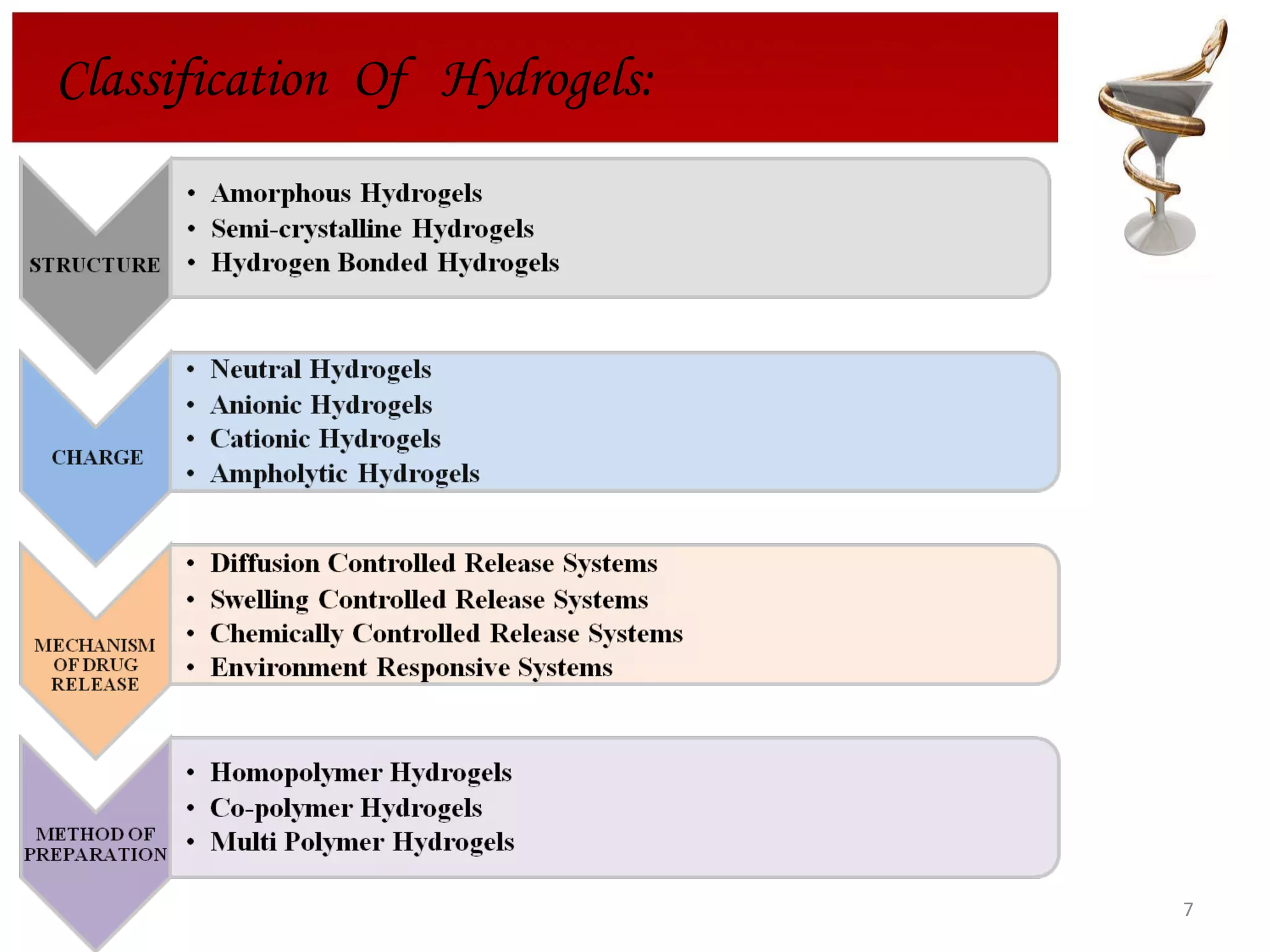
Classification  Of  Hydrogels:
Advantages of Hydrogels : Hydrogels possess a degree of flexibility very similar  to natural tissue, due to their significant water content. Entrapment of microbial cells within  Hydrogel  beads has the advantage of low toxicity. Environmentally sensitive Hydrogels have the  ability to sense changes of pH, temperature, or the  concentration of metabolite and release their load as  result of such a change.
Advantages of Hydrogels: Timed release of growth factors and other nutrients  to ensure proper tissue growth.  Hydrogels have good transport properties. Hydrogels  are Biocompatible. Hydrogels  can be injected. Hydrogels are easy to modify.
Disadvantages of Hydrogels:  Hydrogels  are expensive. Hydrogels causes sensation felt by movement of the  maggots. Hydrogels causes thrombosis at Anastomosis sites. The surgical risk associated with the device  implantation and retrieval. Hydrogels are non-adherent; they may need to be  secured by a secondary dressing.
Disadvantages of Hydrogels:  Hydrogels used as contact lenses causes lens  deposition,hypoxia, dehydration and red eye  reactions. Hydrogels have low mechanical strength Difficulty in handling.  Difficulty in loading. Difficulty in Sterilization
Types of Hydrogels : Natural Polymers  e.g.: Dextran, Chitosan, Collagen, Dextran Sulfate Disadvantages: Low mechanical Strength. Batch variation. Animal derived materials may pass on viruses.
Types of Hydrogels :   Synthetic Polymers e.g.:Poly (vinyl alcohol) Disadvantages: Low biodegradability Can include toxic substances
Hydrogels can be used in different types of  controlled release systems. These are classified according to the mechanism  controlling the release of drug from the device as - Diffusion controlled systems. - Swelling controlled system. - Chemically controlled system. - Environmental responsive systems. Classification Of Hydrogel Based Systems:
Diffusion is the most common mechanism controlling release. In hydrogel based drug delivery system. There two types : -Reservoir devices. -Matrices devices Diffusion Controlled Release Systems:
Reservoir devices: They consists of polymeric membrane surrounding a core containing a drug .  Typically reservoir devices are capsules, cylinders, slabs or spheres. Rate limiting step for drug release is diffusion through the outer membrane of the device. Diffusion Controlled Release Systems:
Draw backs: In the event that the outer membrane ruptures the entire content of the device are delivered instantaneously . While preparing these device care must taken to ensure that the device doesn't contain pin holes or defects that may lead to rupture. Diffusion Controlled Release Systems:
Matrix devices: In matrix devices the drug is dispersed through out the  3D structure of the hydrogel. Release occur due to diffusion of the drug through out the macro molecular mesh or water filled pores.  Diffusion Controlled Release Systems:
In these release drug systems the drug is dispersed within a glassy polymer . Up on contact with biological fluid, the polymer begins to swell. As the penetrant enters the glassy polymer, the glass transition temperature of the polymer is lowered allowing for relaxations of the macro molecular chains. Swelling Controlled Release Systems:
They are of two types: Erodible drug delivery system -In erodible system drug release occurs due to  degradation or dissolution of the hydrogel. Pendent chain system -In pendent chain system drug is affixed to the  polymer back bone through degradable  linkages. -As these linkages degrade drug is released Chemically Controlled  Release Systems
It is also known as degradable or absorbable release system, can be either matrix or reservoir type. In reservoir type devices the membrane erodes significantly and drug is released by diffusion mechanism. Zero order release can be obtained by this system. Erodible Drug Delivery System
This system consists of linear homo/co-polymers with drug attached to the back  bone chains. The drug is released from the polymer by hydrolysis or enzymatic degradation of these linkages. Pendent Chain System
Stimuli-sensitive Swelling-controlled Release  Systems Environmentally-sensitive hydrogels have the ability  to respond to changes in their external environment.  They exhibit dramatic changes in their swelling  behavior, network structure, permeability or  mechanical strength in response to changes in the pH or ionic strength of the surrounding  biological fluid, or temperature.
Stimuli-sensitive Swelling-controlled Release  Systems Other hydrogels have the ability to respond to applied electrical or magnetic fields, or to changes in the concentration of glucose. Because of their nature, these materials can be used in a wide variety of applications, such as separation  membranes, biosensors, artificial muscles, chemical  valves and drug delivery devices.
pH-Sensitive Hydrogels: Hydrogels exhibiting pH-dependent swelling  behavior contain ionic networks contain either acidic or basic groups. In aqueous media of appropriate pH and ionic  strength, these groups ionize,  and develop fixed  charges on the gel.
pH-Sensitive Hydrogels: As a result of the electrostatic repulsions, the  uptake of solvent in the network is increased. Ionic groups, such as carboxylic or sulfonic acid,  show sudden or gradual changes in their dynamic  and equilibrium swelling behavior as a result of  changing the external pH.
pH-Sensitive Hydrogels: In these gels, ionization occurs when the pH of the environment is above the pKa of the ionizable group. As the degree of ionization increases (increased system pH), the number of fixed charges increases,  resulting in increased electrostatic repulsions between  the chains. This, in turn, results in an increased hydrophilicity of  the network, and greater swelling ratios.
pH-Sensitive Hydrogels: Conversely, cationic materials contain groups such  as amines.  These groups ionize in media which are at a pH below the pKb of the ionizable species.  Thus, in a low pH environment, ionization  increases, causing increased electrostatic repulsions.  The hydrogel becomes increasingly hydrophilic and will swell to an increased level.
Temperature-sensitive Hydrogels: Temperature-sensitive hydrogels have gained  considerable attention due to the ability of the  hydrogels to swell or deswell as a result of  changing the temperature of the surrounding fluid.  Widely used in on±off drug release regulations,  biosensors and  intelligent cell culture dishes.
Temperature-sensitive Hydrogels: Thermosensitive hydrogels can be classified as  positive or negative temperature-sensitive systems.  A positive temperature-sensitive hydrogel has an  upper critical solution temperature (UCST).  Such hydrogels contract upon cooling below the  UCST.
Temperature-sensitive Hydrogels: Negative temperature-sensitive hydrogels have a lower critical solution temperature (LCST).  These hydrogels contract upon heating above the  LCST.
Other Stimuli-sensitive Hydrogels: Several stimuli, other than pH and temperature, can  trigger drug release from a depot.  These include physical stimuli, such as light,  magnetic field , electric current  and ultrasound ,  which can be applied to the systems externally. Chemical stimuli, like ionic species , certain  chemical substances and biological compounds.
Monomers Used In The Synthesis Of Synthetic Hydrogels: Monomer abbreviation Monomer HEMA Hydroxyethyl methacrylate HEEMA Hydroxyethoxyethyl  methacrylate HDEEMA Hydroxydiethoxyethyl methacrylate MEMA Methoxyethyl methacrylate MEEMA  Methoxyethoxyethyl methacrylate
Monomers Used In The Synthesis Of Synthetic Hydrogels: Monomer abbreviation Monomer EG Ethylene glycol EGDMA Ethylene glycol dimethacrylate NVP N-vinyl-2-pyrrolidone AA Acrylic acid PEGMA PEG methacrylate
Method Of Preparation Of Hydrogels: Crosslinking Isostatic Ultra High Pressure Nucleophilic Substitution Reaction Using Gelling Agents Use Of Irradiation Freeze Thawing
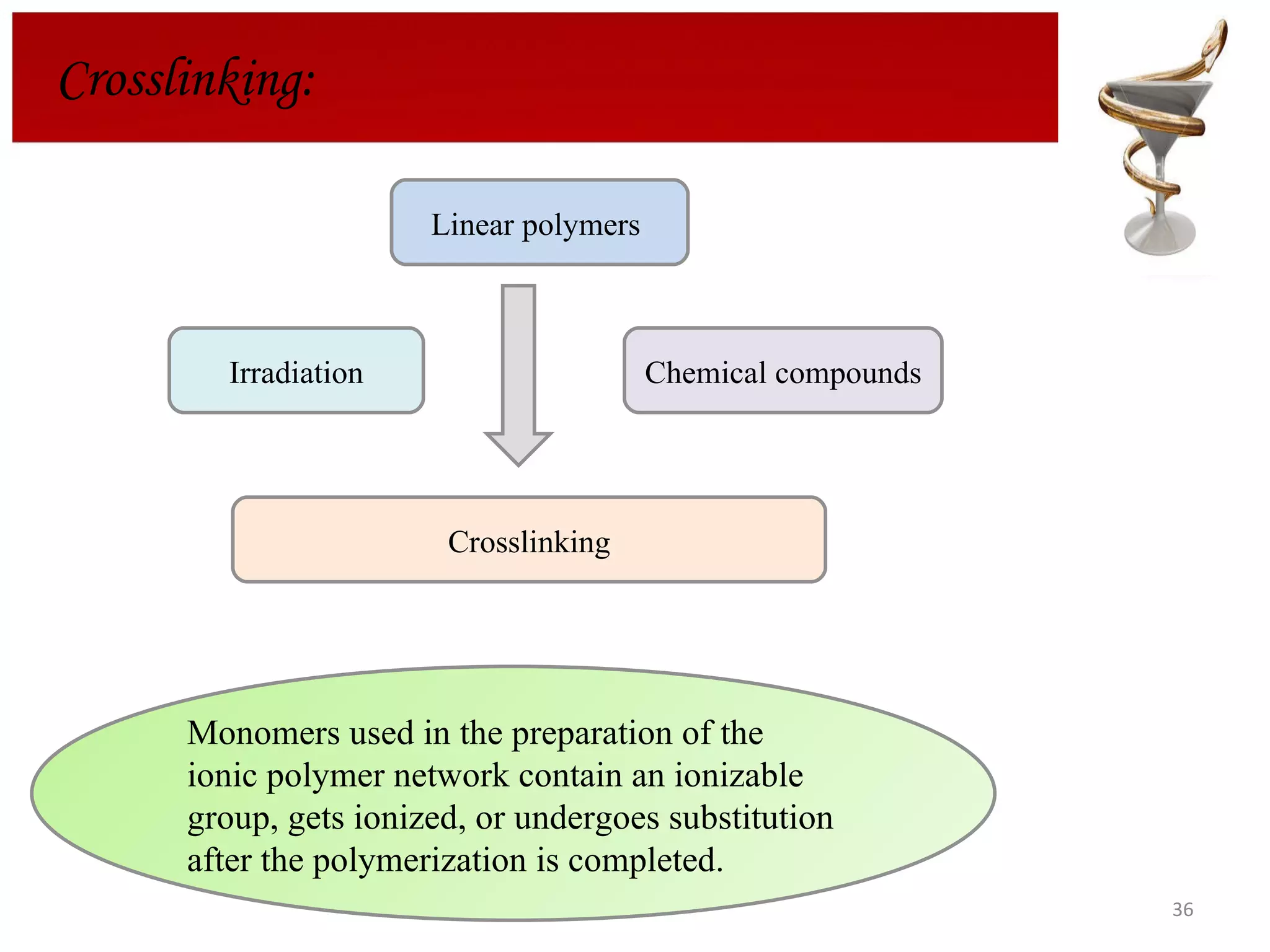
Crosslinking: Linear polymers  Crosslinking Chemical compounds Irradiation Monomers used in the preparation of the ionic polymer network contain an ionizable group, gets ionized, or undergoes substitution after the polymerization is completed.
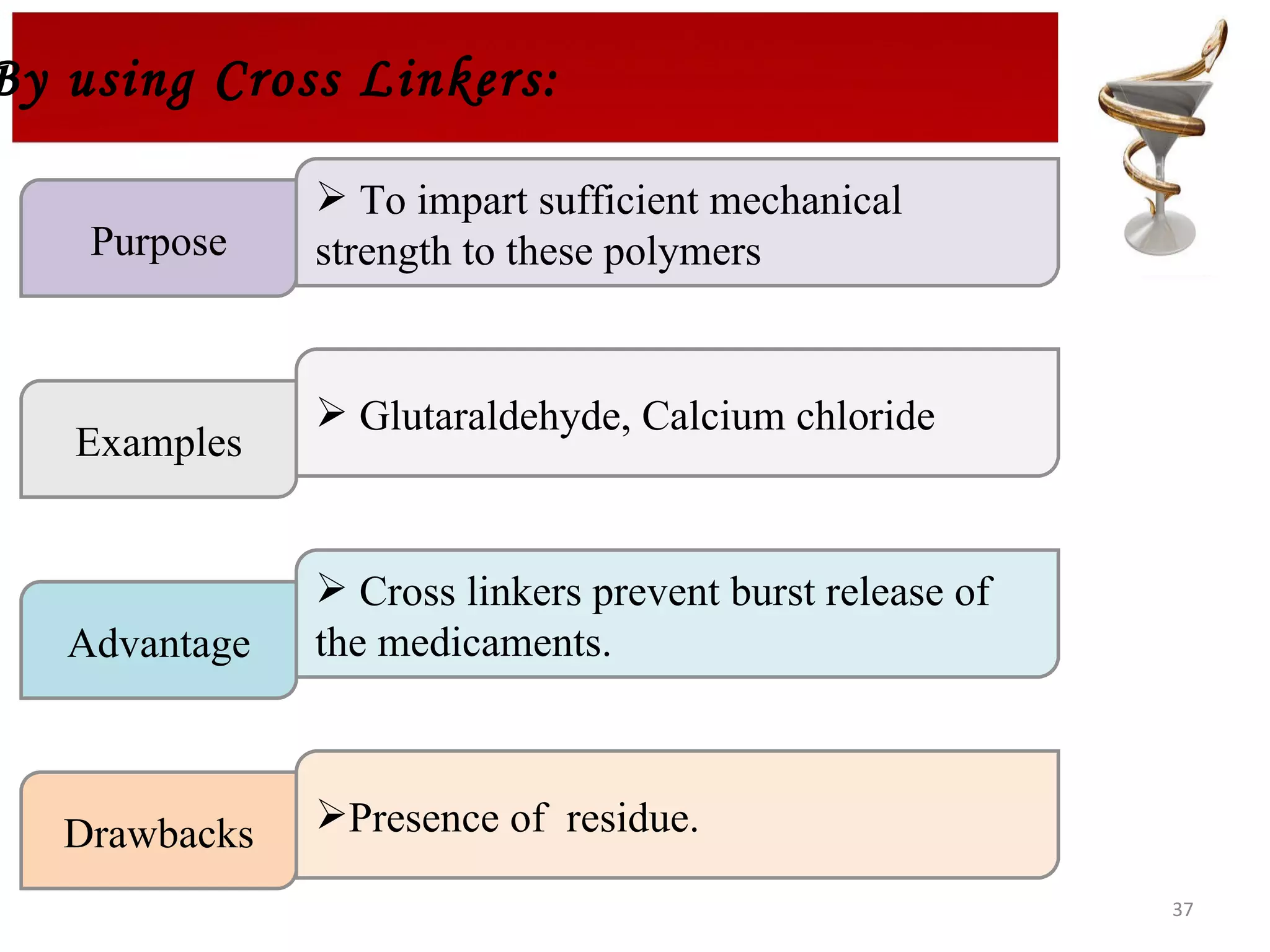
By using Cross Linkers: Purpose To impart sufficient mechanical strength to these polymers Examples Cross linkers prevent burst release of the medicaments. Glutaraldehyde, Calcium chloride  Presence of  residue.  Advantage Drawbacks
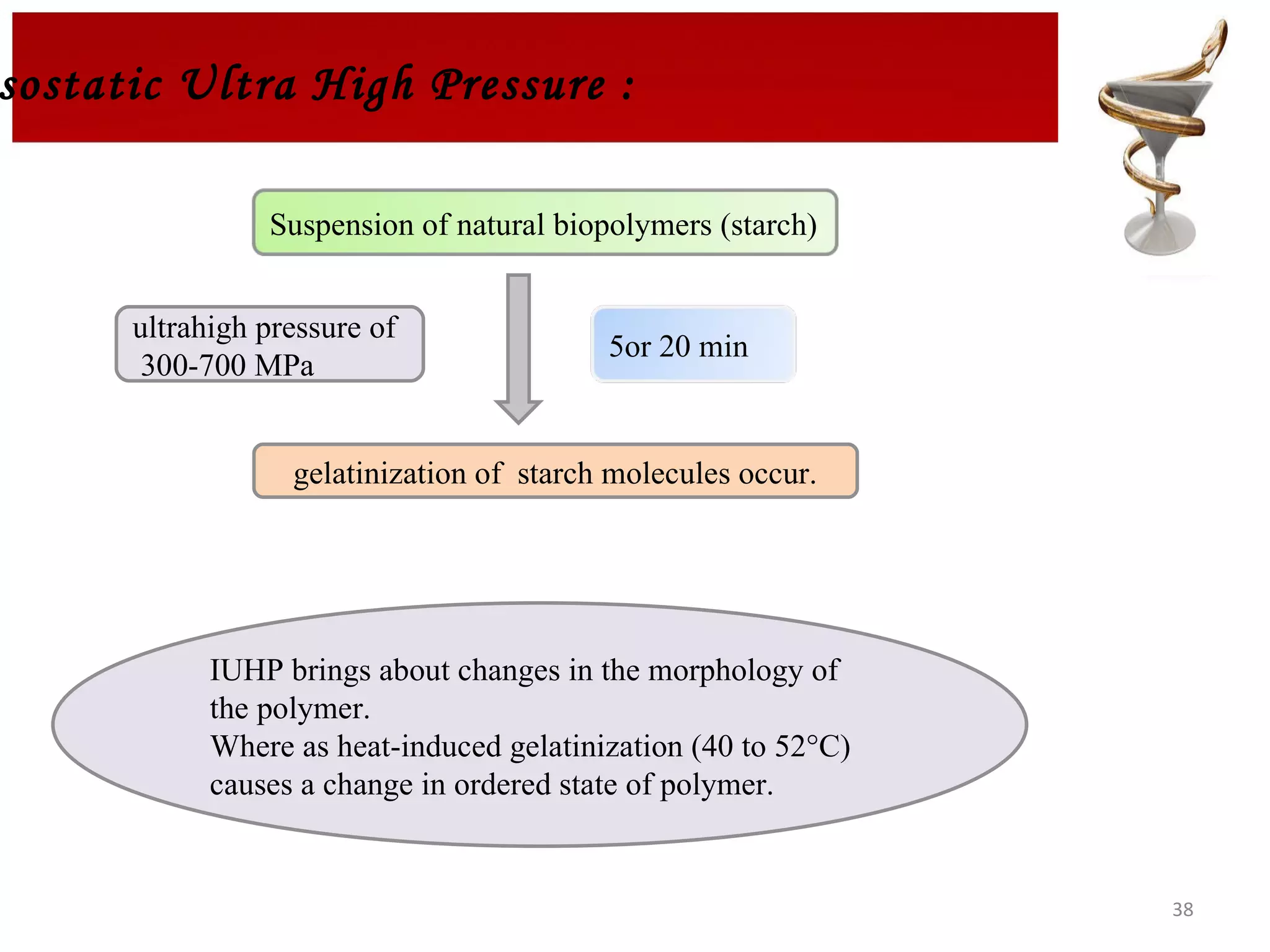
Isostatic Ultra High Pressure : ultrahigh pressure of  300-700 MPa  gelatinization of  starch molecules occur. IUHP brings about changes in the morphology of the polymer. Where as heat-induced gelatinization (40 to 52°C) causes a change in ordered state of polymer.  Suspension of natural biopolymers (starch) 5or 20 min
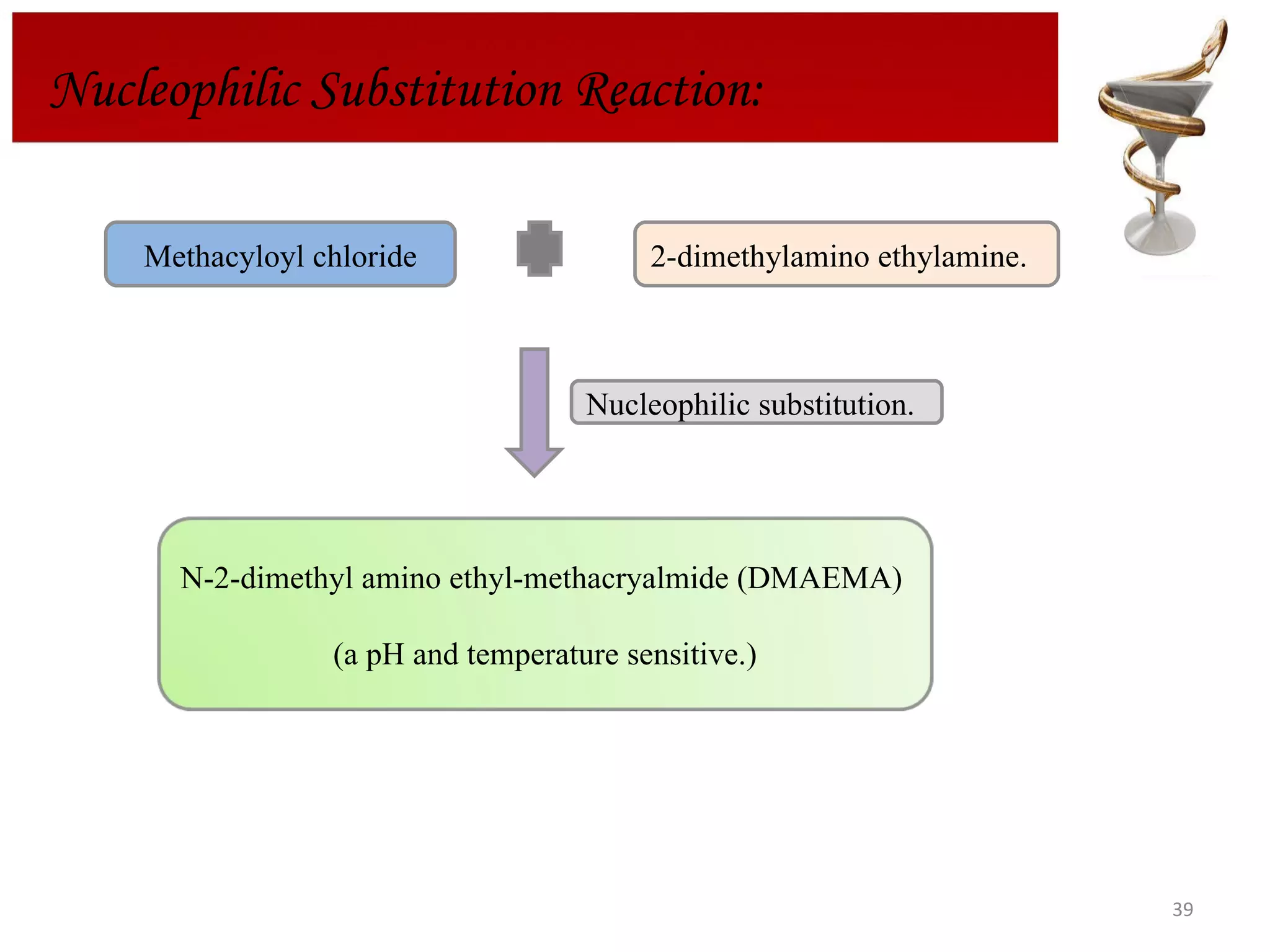
Nucleophilic Substitution Reaction: Methacyloyl chloride 2-dimethylamino ethylamine.  Nucleophilic substitution. N-2-dimethyl amino ethyl-methacryalmide (DMAEMA) (a pH and temperature sensitive.)
By Using Gelling Agents: Examples Glycophosphate. 1-2 Propanediol. Glycerol.  Mannitol. Drawbacks Turbidity. Presence of negative charged  moieties pose problem of interaction with the drug.
Use Of Irradiation: Irradiation method processing is costly Mechanical strength of such Hydrogels is less. Advantages Drawbacks Irradiation method is convenient. Hydrogels prepared by microwave  irradiation are more porous than conventional methods.
Freeze Thawing: Opaque in appearance  Little swelling capacity. Advantage Drawbacks Sufficient mechanical strength.  Good Stability.
Characterization Of Hydrogels:
Atomic Force Microscope Atomic Force Microscopy (AFM): A Multimode Atomic Force Microscope form Digital  Instrument is used to study the surface morphology of  the hydrogels.
X-ray Diffraction: Used to understand whether the polymers  retain their crystalline structure or they get deformed during the  pressurization process
FTIR (Fourier Transform Infrared Spectroscopy) Formation of coil or helix which is indicative of cross linking is evident by appearance of bands near 1648 cm -1 FTIR Any change in the morphology of Hydrogels changes their IR absorption spectra.
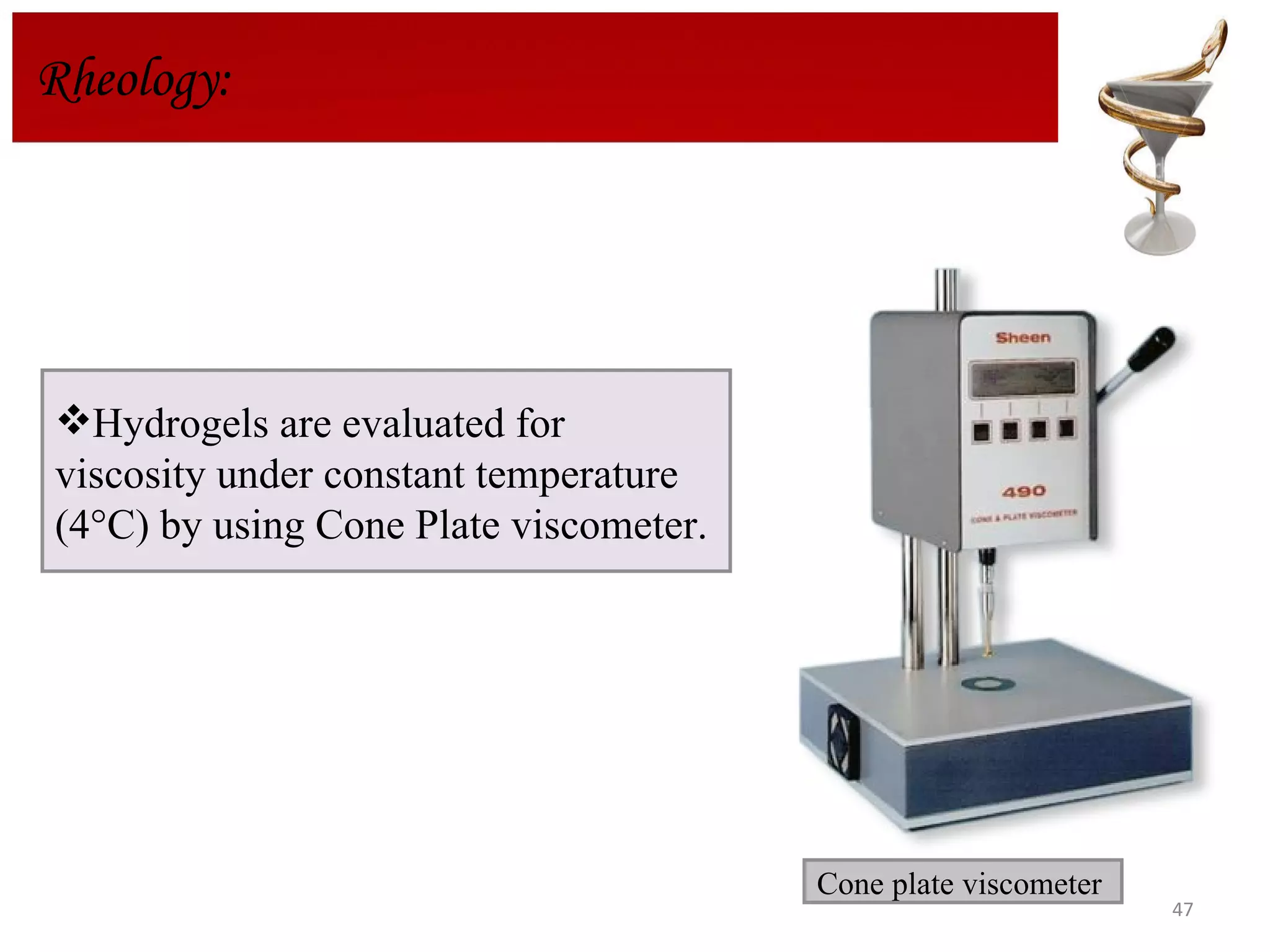
Rheology : Hydrogels are evaluated for viscosity under constant temperature (4°C) by using Cone Plate  viscometer. Cone plate viscometer
Swelling Behavior: The Hydrogels are allowed to immerse in aqueous medium or medium of specific pH to know their swellability. of these polymeric networks.  These polymers show increase in dimensions related to swelling.
Swelling degrees (SDs) of hydrogels were measured  at 37 0  C. The fresh made samples (wet) were weighted  and immersed in buffer solutions with different pH values. These samples were gently wiped with filter  paper to remove the surface solution when taken out  from the solutions, then weighted and returned to the  Same container at pre-determined time intervals.  Swelling Behavior:
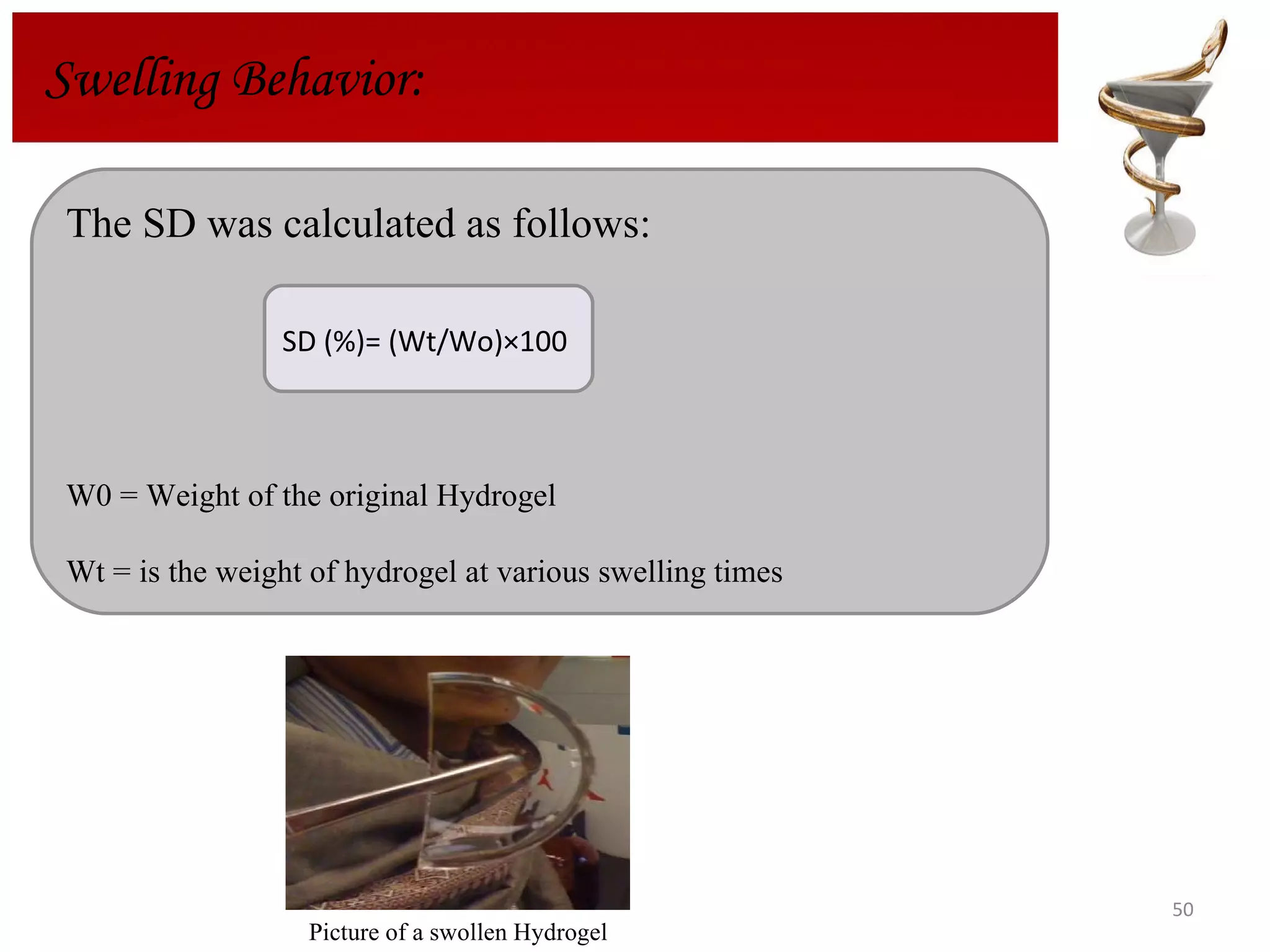
Swelling Behavior: The SD was calculated as follows: W0 = Weight of the original Hydrogel  Wt = is the weight of hydrogel at various swelling times SD (%)= (Wt/Wo)×100 Picture of a swollen Hydrogel
In-vitro Release Study For  Drugs: Since Hydrogels are the swollen polymeric networks, interior of which is occupied by drug molecules,  therefore, release studies are carried out to understand  the mechanism of release over a period of application
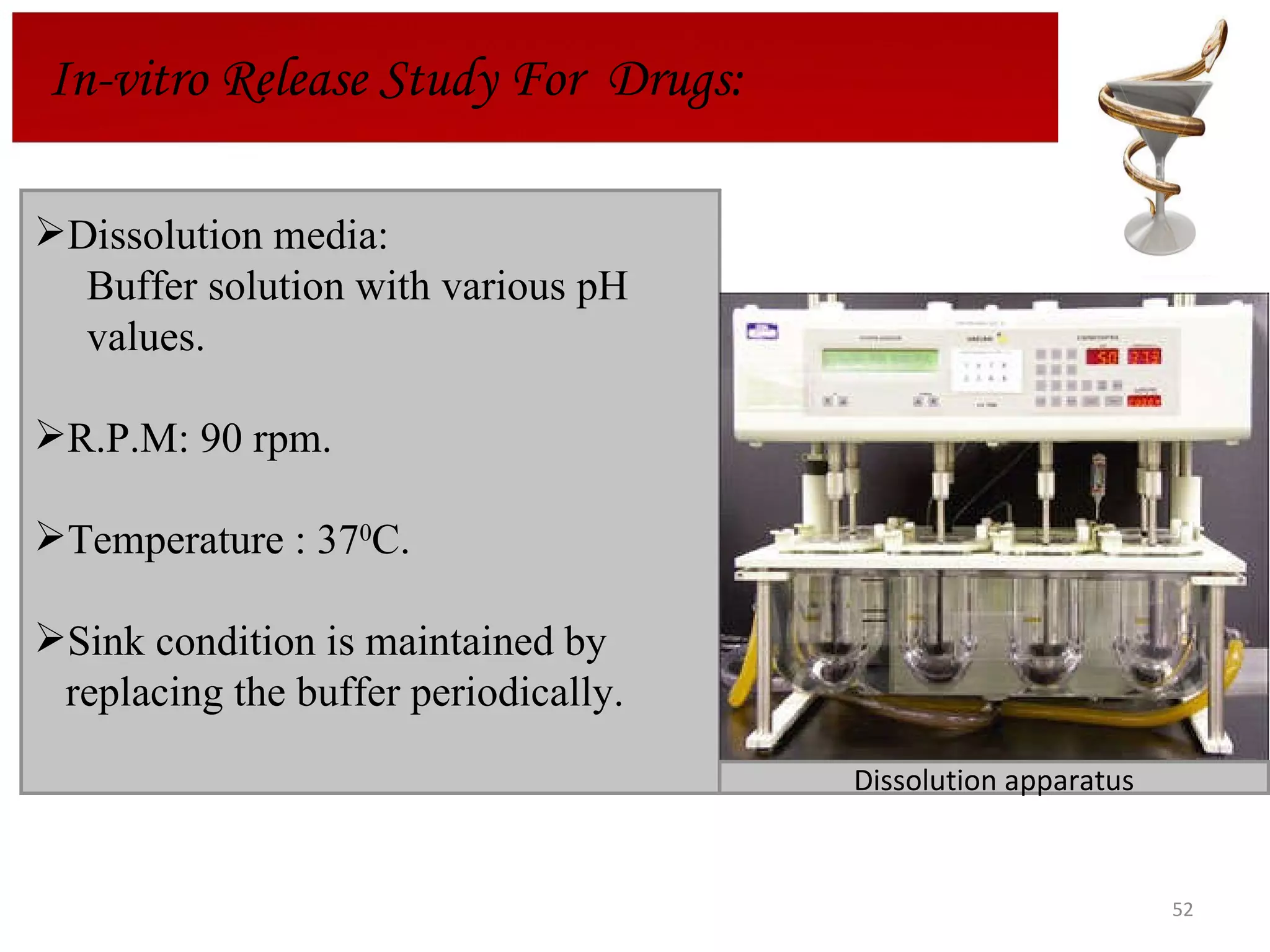
In-vitro Release Study For  Drugs: Dissolution media: Buffer solution with various pH values. R.P.M: 90 rpm.  Temperature : 37 0 C.  Sink condition is maintained by replacing the buffer periodically. Dissolution apparatus
Physical, Chemical And Toxicological Properties Of Hydrogels: Factors affecting swelling of hydrogels. Mechanical properties. Cytotoxicity and in-vivo toxicity.
Factors Affecting Swelling Of Hydrogels: It is defined as the ratio of moles of crosslinking agent to the moles of polymer repeating units.  The higher the crosslinking ratio, the more crosslinking agent is incorporated in the hydrogel  structure. Crosslinking ratio
Factors Affecting Swelling Of Hydrogels: Highly crosslinked hydrogels have a tighter structure, and will swell less compared to the  same hydrogels with lower crosslinking ratios.  Crosslinking hinders the mobility of the polymer  chain, hence lowering the swelling ratio. Crosslinking ratio
Factors Affecting Swelling Of Hydrogels: The chemical structure of the polymer may also  affect the swelling ratio of the hydrogels.  Hydrogels containing hydrophilic groups swell to a  higher degree compared to those containing  hydrophobic groups.. Chemical Structure
Factors Affecting Swelling Of Hydrogels: Hydrophobic groups collapse in the presence of water, thus minimizing their exposure to the water  molecule.  As a result, the hydrogels will swell much less  compared to hydrogels containing hydrophilic  groups. Chemical Structure
Factors Affecting Swelling Of Hydrogels: Swelling of environmentally-sensitive hydrogels  can be affected by specific stimuli.  Swelling of  temperature-sensitive hydrogels can be  affected by changes in the temperature of the  swelling media.  Chemical Structure
Factors Affecting Swelling Of Hydrogels: Ionic strength and pH affect the swelling of ionic  strength- and pH-sensitive Hydrogels, respectively. There are many other specific stimuli that can affect the swelling of other environmentally-responsive  Hydrogels. Chemical Structure
Mechanical properties: Mechanical properties of hydrogels are very  important for pharmaceutical applications.  The integrity of the drug delivery device during  the lifetime of the application is very important to  obtain FDA approval, unless the device is  designed as a biodegradable system.
Mechanical properties: A drug delivery system designed to protect a  sensitive therapeutic agent,such as protein, must  maintain its integrity to be able to protect the protein  until it is released out of the system. Changing the degree of crosslinking has been  utilized to achieve the desired mechanical property  of the hydrogel.
Mechanical properties: Increasing the degree of crosslinking of the system  will result in a stronger gel. However, a higher degree of cross-linking creates a  more brittle structure.  Hence, there is an optimum degree of crosslinking  to achieve a relatively strong and yet elastic  hydrogel.
Mechanical properties: Copolymerization has also been utilized to achieve  the desired mechanical properties of hydrogels.  Incorporating a co-monomer that will contribute to H-bonding can increase the strength of the  hydrogel.
Cytotoxicity And In-vivo Toxicity: Cell culture methods, also known as cytotoxicity  tests, can be used to evaluate the toxicity of  hydrogels.  Three common assays to evaluate the toxicity of  hydrogels include -extract dilution.  -direct contact. -agar diffusion.
Cytotoxicity And In-vivo Toxicity: Most of the problems with toxicity associated with  hydrogel carriers are the unreacted monomers,  oligomers and initiators that leach out during  application.  So, a good understanding the toxicity of the monomers and initiators used is very important.
Cytotoxicity And In-vivo Toxicity: Approaches to solve this problem:  Modifying the rate of polymerization in order to  achieve a higher conversion Extensive washing of the resulting hydrogel.  Formation of hydrogels without any initiators to  eliminate the problem of the residual initiator.
Cytotoxicity And In-vivo Toxicity: Commonly used technique to eliminate the problem of the residual initiator is by using gamma  irradiation.  Hydrogels  can be made without the presence of  initiators by using thermal cycle to induce  crystallization. The crystals formed act as physical  crosslinks and are able to absorb the load applied to the hydrogels.
Common Uses For Hydrogels:
Pharmaceutical Applications Of Hydrogels: Peroral Drug Delivery Drug Delivery In The Oral Cavity Drug Delivery in the G.I.T Ocular Delivery  Transdermal Delivery Subcutaneous  Drug  Delivery Hydrogels To Fix  Bone Replacements Tissue Engineering Protein Drug Delivery Topical Drug Delivery
Drug delivery through the oral route has been the  most common method in the pharmaceutical  applications of hydrogels.  In peroral administration, hydrogels can deliver drugs to four major specific sites; mouth, stomach,  small intestine and colon.  Peroral Drug Delivery:
By controlling their swelling properties or  bio-adhesive characteristics in the presence of a  biological fluid, hydrogels can be a useful device  for releasing drugs in a controlled manner at these  desired sites.  Peroral Drug Delivery:
Additionally, they can also adhere to certain specific  regions in the oral pathway, leading to a locally  increased drug concentration, and thus, enhancing  the drug absorption at the release site. Peroral Drug Delivery:
Drug delivery to the oral cavity can have versatile  applications in local treatment of diseases of the  mouth, such as periodontal disease, stomatitis,  fungal and viral infections,and oral cavity cancers.  Long-term adhesion of the drug containing hydrogel  against copious salivary flow, which bathes the oral  cavity mucosa, is required to achieve this local drug  delivery.  Drug Delivery In The Oral Cavity:
Drug Delivery in the G.I.T: Ease of administration of drugs. Availability of large surface area for drug absorption  High patient compliance.  First pass metabolism.  Pre-systemic metabolism.  Advantages with oral route Drawbacks with oral route
Drug Delivery in the G.I.T: Hydrogel-based devices can be designed to deliver drugs locally to specific sites in the GI tract. E.g.,: Specific antibiotic drug delivery systems for the treatment of H.pylori infection in peptic ulcer disease These Hydrogels protect the insulin in the harsh, acidic environment of the stomach before releasing the drug  in the small intestine.
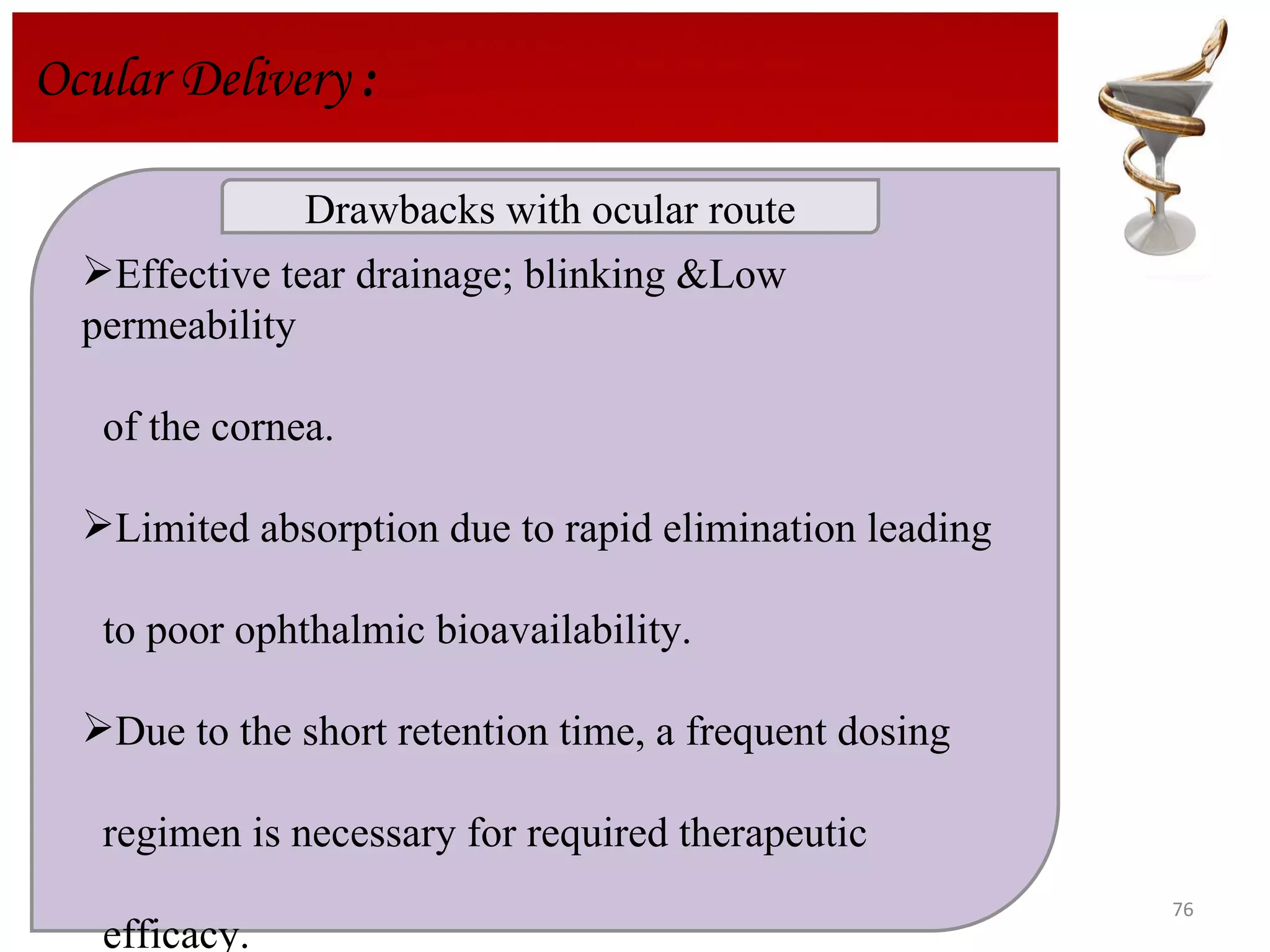
Ocular Delivery  : Effective tear drainage; blinking &Low permeability of the cornea.  Limited absorption due to rapid elimination leading to poor ophthalmic bioavailability.  Due to the short retention time, a frequent dosing regimen is necessary for required therapeutic  efficacy. Drawbacks with ocular route
Ocular Delivery  : Silicone rubber Hydrogel composite ophthalmic  inserts extended the duration of the Pilocarpine to  10 hr, compared to 3 hr when Pilocarpine nitrate was  dosed as a solution.  Hydrogels in Ocular Delivery
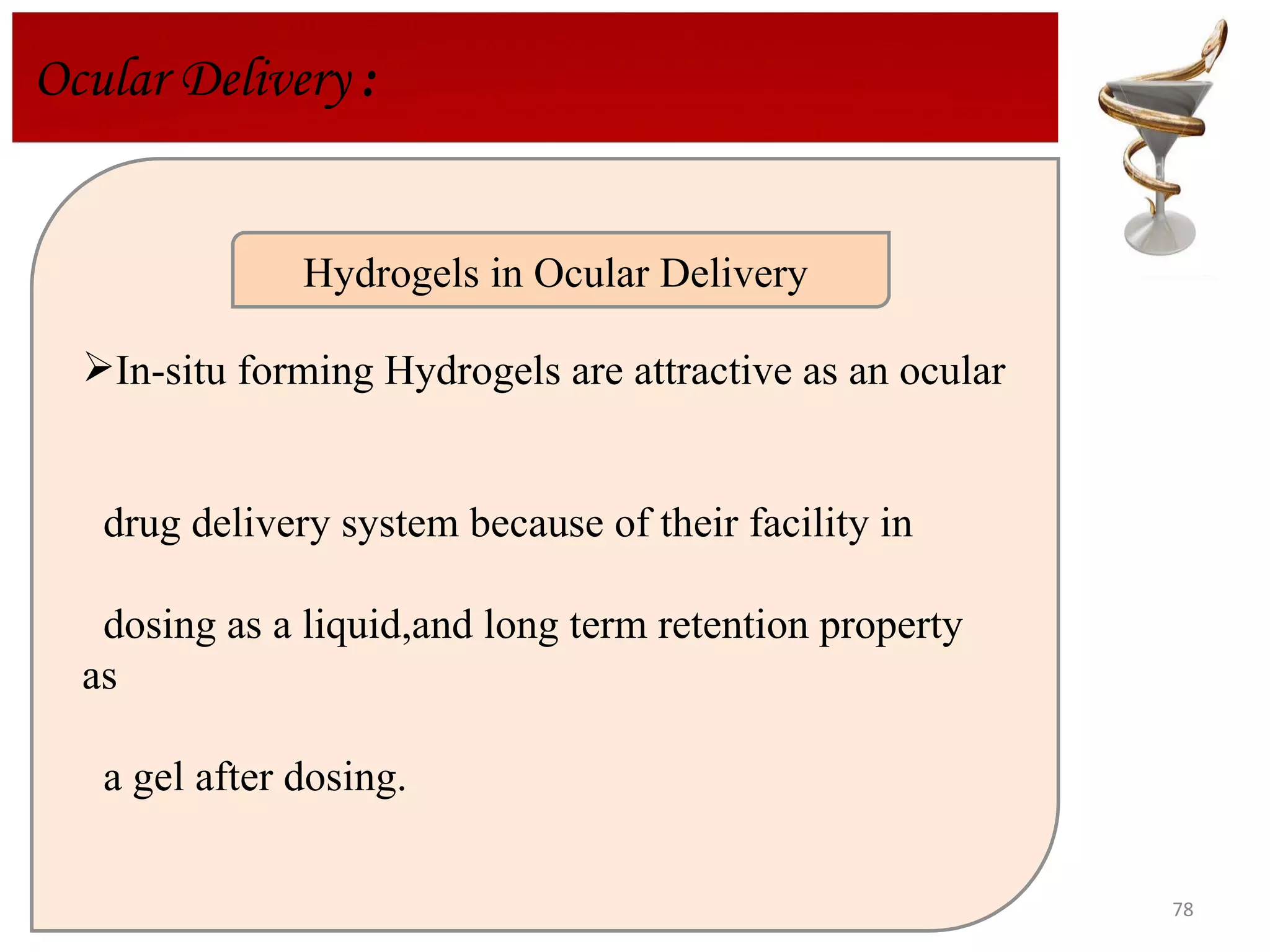
Ocular Delivery  : In-situ forming Hydrogels are attractive as an ocular  drug delivery system because of their facility in  dosing as a liquid,and long term retention property as  a gel after dosing.  Hydrogels in Ocular Delivery
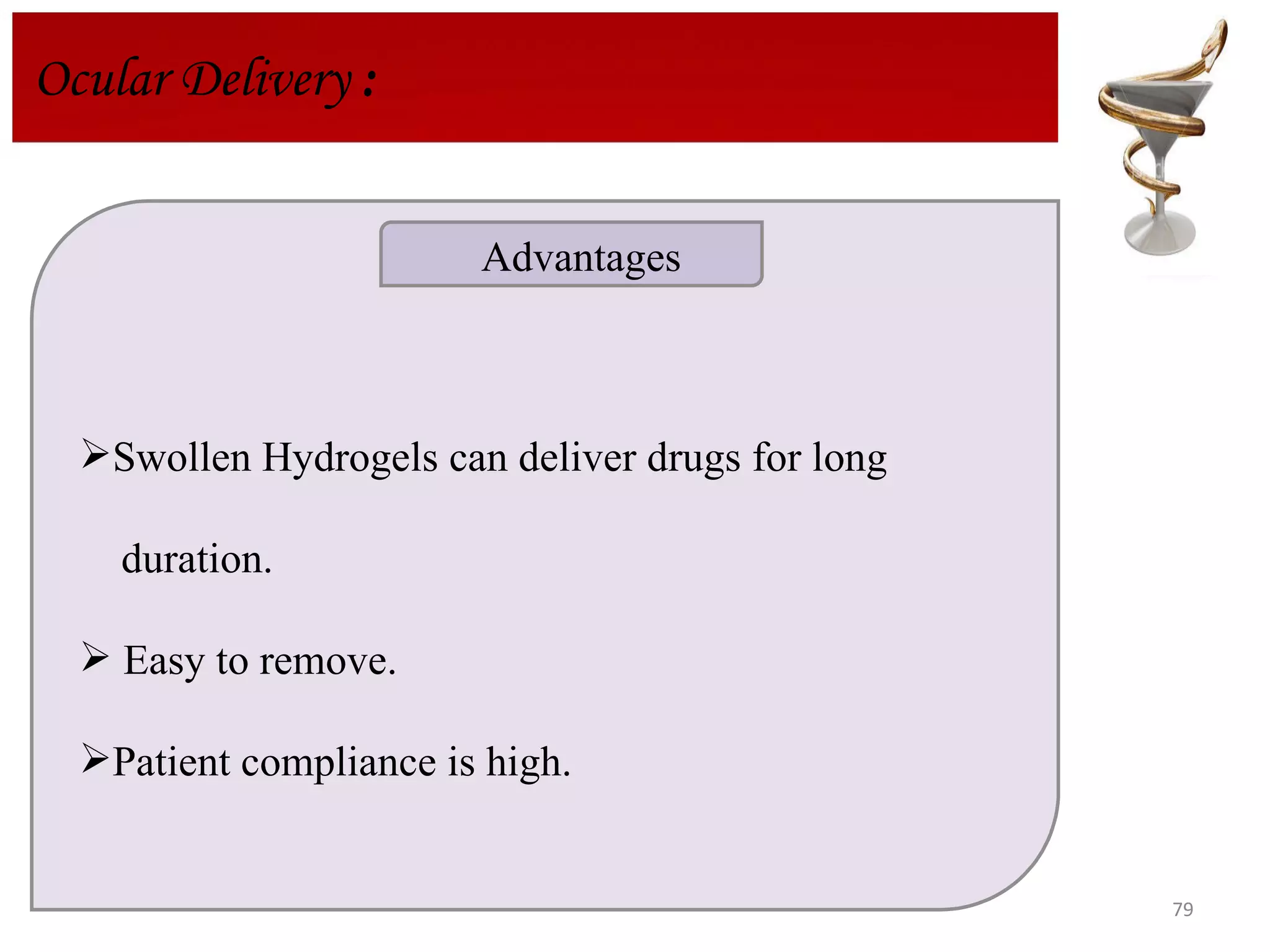
Ocular Delivery  : Swollen Hydrogels can deliver drugs for long  duration.  Easy to remove.  Patient compliance is high. Advantages
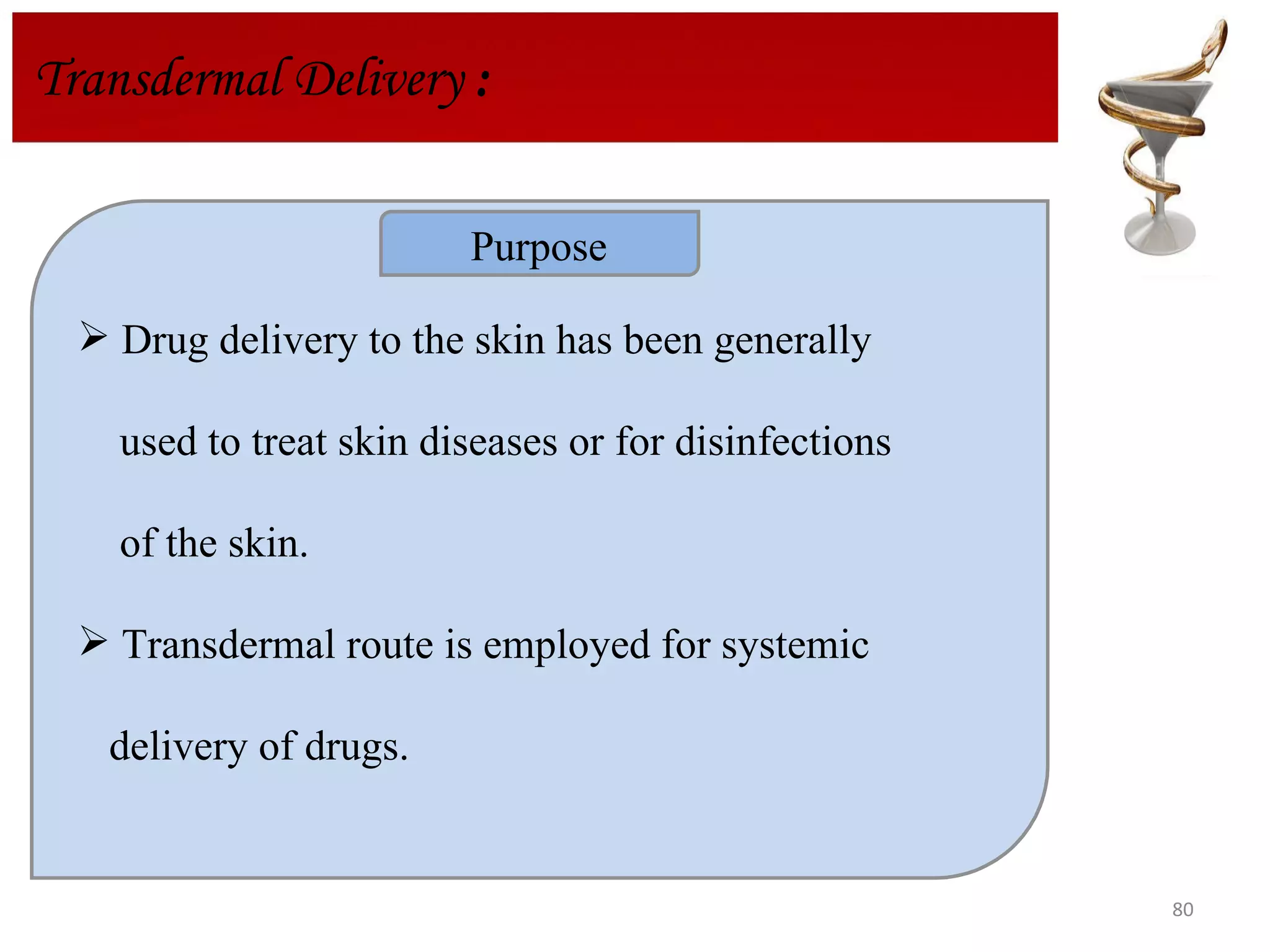
Transdermal Delivery  : Drug delivery to the skin has been generally used to treat skin diseases or for disinfections  of the skin.  Transdermal route is employed for systemic delivery of drugs.  Purpose
Transdermal Delivery  : The possible benefits of transdermal drug delivery  are  - drugs can be delivered for a long duration.    - drugs can be delivered at a constant rate.  - drug delivery can be easily interrupted on  demand by simply removing the devices. - drugs can bypass hepatic first-pass  metabolism.
Transdermal Delivery  : Furthermore, because of their high water content, swollen hydrogels can provide a better feeling for  the skin in comparison to conventional ointments  and patches.
Subcutaneous delivery: Subcutaneously inserted exogenous materials may  more or less evoke potentially undesirable body  responses, such as inflammation, carcinogenecity and immunogenecity.  Therefore, biocompatibility is a prerequisite that  makes materials implantable.
Subcutaneous delivery: Due to their high water content, hydrogels are  generally considered as biocompatible materials.  They also provide several promising properties:  * minimal mechanical irritation upon in-vivo    implantation, due to their soft, elastic      properties.
Subcutaneous delivery: * Prevention of protein adsorption and cell    adhesion arising from the low interfacial    tension between water and hydrogels;  * Broad acceptability for individual drugs with    different hydrophilicities and molecular sizes * Unique possibilities to manipulate the release      of incorporated drugs by crosslinking density    and swelling.
Hydrogels To Fix Bone Replacements: Provided  orthopedic fasteners and replacements hip and knee replacements, etc. are  coated with  Hydrogels which expand in the presence of liquids. Swelling of such coatings causes the fastener or replacement to be securely fixed into position once  inserted into bone material.
Hydrogels To Fix Bone Replacements:
Protein Drug Delivery: Interleukins are conventionally given as injection. Hydrogels have the following advantages  -Better patient compliance. -Hydrogels form  insitu  and release proteins    slowly   -They are biodegradable and biocompatible.
Topical Drug Delivery: Hydrogels are  used to deliver drugs like Desonide  (synthetic corticosteroid) usually  used as an anti- inflammatory.  Hydrogels with  their moisturizing properties avoids  scaling and dryness and has better patient  compliance.
Topical Drug Delivery: Antifungal  formulations like Cotrimazole has been  developed as Hydrogel formulation for vaginitis and  shows better absorption than conventional cream  formulations.
Tissue Engineering: Microgels (micronized Hydrogels) can be used to  deliver macromolecules like phagosomes in to  cytoplasm of antigen-presenting cells.  The release is because of  acidic conditions.  Hydrogels mold themselves to the pattern of membranes of the  tissues and have sufficient mechanical strength.  This property  is also used in cartilage repairing
In The  Treatment Lower Extremity Diabetic ulcers: Diabetic ulcers are the primary cause of amputations  of the leg, foot,or toe. NanoDOX™ A topical doxycycline Hydrogel for chronic wounds  NanoDOX™ contains 1% Doxycycline Monohydrate  Hydrogel.  Improve the topical delivery  to increase local efficacy
Rectal Delivery: This route has been used to deliver many types of drugs  for treatment of diseases associated with the rectum, such as hemorrhoids.  ADVANTAGES: This route is an ideal way to administer drugs suffering  heavy first-pass metabolism.
Rectal Delivery: DRAWBACKS: Patients compliance is less due to discomfort arising  from given dosage  forms.  Substantial variability in patient’s acceptance of  treatment. this leads to variation of availability of  drugs.
Summary & Conclusion:  Recent developments in the field of polymer  science and technology has led to the development  of various stimuli sensitive hydrogels like pH,  temperature sensitive, which are used for the targeted  delivery of proteins to colon, and chemotherapeutic  agents to tumors.
Summary & Conclusion:  Some environmental variables, such as low pH and  elevated temperatures, are found in the body. For this reason, either pH-sensitive and/or  temperature sensitive hydrogels can be used for  site-specific controlled drug delivery.
Summary & Conclusion:  Hydrogels that are responsive to specific molecules,  such as glucose or antigens, can be used as  biosensors as well as drug delivery systems.  The hydrogels may be suitable as a wound  substitutes and can be used in wound healing.
Summary & Conclusion:  New synthetic methods have been used to prepare  homo- and co-polymeric hydrogels for a wide  range of drugs, peptides, and protein delivery  applications.  Hydrogels are also used in regenerating  human tissue cells.
References: 1.Remington: The Science and Practice of  Pharmacy.  Published by Lippincott Williams & Wilkins, 2005. Twenty-First Editions. P.NO. 294,756,867,868. 2. Handbook of Pharmaceutical Excipients, A. Wade and P.J. Weller ed., The Pharmaceutical Press, London, 1994, pp.  229–232. 3. British Pharmacopoeia 2002, the Stationary Office,  London, 2002, p. 2092–2094.
Thank You

2.hydrogels

  • 1.
    Presented By: SANDEEP MOLLIDAIN M.Pharmacy (pharmaceutical technology) Dept. of pharmaceutical technology. Vsp.
  • 2.
    C O NT E N T S Introduction Classification of Hydrogels Advantages of Hydrogels Disadvantages of Hydrogels Types of Hydrogels Monomers Used In The Synthesis of Synthetic Hydrogels Method of Preparation of Hydrogels Characterization of Hydrogels Common Uses For Hydrogels Pharmaceutical Applications of Hydrogels Summary and conclusions References Acknowledgement
  • 3.
    Introduction: Hydrogel is a network of polymer chains that are hydrophilic, water insoluble, sometimes found as a colloidal gel in which water is the dispersion medium. Hydrogels are highly absorbent natural or synthetic polymers. Definition:
  • 4.
    Introduction: Hydrogels arecrosslinked polymer networks that absorb substantial amounts of aqueous solutions. Hydrogels can contain over 99.9% water. Hydrogels are three-dimensional, hydrophilic, polymeric networks capable of imbibing large amounts of water or biological fluids.
  • 5.
    Introduction: The networksare composed of homopolymers or copolymers, and are insoluble due to the presence of chemical crosslinks (tie-points, junctions), or physical crosslinks, such as entanglements or crystallites. The high water content of the materials contributes to their biocompatibility.
  • 6.
    Introduction: These crosslinksprovide the network structure and physical integrity. These hydrogels exhibit a thermodynamic compatibility with water which allows them to swell in aqueous media.
  • 7.
    Classification Of Hydrogels:
  • 8.
    Advantages of Hydrogels: Hydrogels possess a degree of flexibility very similar to natural tissue, due to their significant water content. Entrapment of microbial cells within Hydrogel beads has the advantage of low toxicity. Environmentally sensitive Hydrogels have the ability to sense changes of pH, temperature, or the concentration of metabolite and release their load as result of such a change.
  • 9.
    Advantages of Hydrogels:Timed release of growth factors and other nutrients to ensure proper tissue growth. Hydrogels have good transport properties. Hydrogels are Biocompatible. Hydrogels can be injected. Hydrogels are easy to modify.
  • 10.
    Disadvantages of Hydrogels: Hydrogels are expensive. Hydrogels causes sensation felt by movement of the maggots. Hydrogels causes thrombosis at Anastomosis sites. The surgical risk associated with the device implantation and retrieval. Hydrogels are non-adherent; they may need to be secured by a secondary dressing.
  • 11.
    Disadvantages of Hydrogels: Hydrogels used as contact lenses causes lens deposition,hypoxia, dehydration and red eye reactions. Hydrogels have low mechanical strength Difficulty in handling. Difficulty in loading. Difficulty in Sterilization
  • 12.
    Types of Hydrogels: Natural Polymers e.g.: Dextran, Chitosan, Collagen, Dextran Sulfate Disadvantages: Low mechanical Strength. Batch variation. Animal derived materials may pass on viruses.
  • 13.
    Types of Hydrogels: Synthetic Polymers e.g.:Poly (vinyl alcohol) Disadvantages: Low biodegradability Can include toxic substances
  • 14.
    Hydrogels can beused in different types of controlled release systems. These are classified according to the mechanism controlling the release of drug from the device as - Diffusion controlled systems. - Swelling controlled system. - Chemically controlled system. - Environmental responsive systems. Classification Of Hydrogel Based Systems:
  • 15.
    Diffusion is themost common mechanism controlling release. In hydrogel based drug delivery system. There two types : -Reservoir devices. -Matrices devices Diffusion Controlled Release Systems:
  • 16.
    Reservoir devices: Theyconsists of polymeric membrane surrounding a core containing a drug . Typically reservoir devices are capsules, cylinders, slabs or spheres. Rate limiting step for drug release is diffusion through the outer membrane of the device. Diffusion Controlled Release Systems:
  • 17.
    Draw backs: Inthe event that the outer membrane ruptures the entire content of the device are delivered instantaneously . While preparing these device care must taken to ensure that the device doesn't contain pin holes or defects that may lead to rupture. Diffusion Controlled Release Systems:
  • 18.
    Matrix devices: Inmatrix devices the drug is dispersed through out the 3D structure of the hydrogel. Release occur due to diffusion of the drug through out the macro molecular mesh or water filled pores. Diffusion Controlled Release Systems:
  • 19.
    In these releasedrug systems the drug is dispersed within a glassy polymer . Up on contact with biological fluid, the polymer begins to swell. As the penetrant enters the glassy polymer, the glass transition temperature of the polymer is lowered allowing for relaxations of the macro molecular chains. Swelling Controlled Release Systems:
  • 20.
    They are oftwo types: Erodible drug delivery system -In erodible system drug release occurs due to degradation or dissolution of the hydrogel. Pendent chain system -In pendent chain system drug is affixed to the polymer back bone through degradable linkages. -As these linkages degrade drug is released Chemically Controlled Release Systems
  • 21.
    It is alsoknown as degradable or absorbable release system, can be either matrix or reservoir type. In reservoir type devices the membrane erodes significantly and drug is released by diffusion mechanism. Zero order release can be obtained by this system. Erodible Drug Delivery System
  • 22.
    This system consistsof linear homo/co-polymers with drug attached to the back bone chains. The drug is released from the polymer by hydrolysis or enzymatic degradation of these linkages. Pendent Chain System
  • 23.
    Stimuli-sensitive Swelling-controlled Release Systems Environmentally-sensitive hydrogels have the ability to respond to changes in their external environment. They exhibit dramatic changes in their swelling behavior, network structure, permeability or mechanical strength in response to changes in the pH or ionic strength of the surrounding biological fluid, or temperature.
  • 24.
    Stimuli-sensitive Swelling-controlled Release Systems Other hydrogels have the ability to respond to applied electrical or magnetic fields, or to changes in the concentration of glucose. Because of their nature, these materials can be used in a wide variety of applications, such as separation membranes, biosensors, artificial muscles, chemical valves and drug delivery devices.
  • 25.
    pH-Sensitive Hydrogels: Hydrogelsexhibiting pH-dependent swelling behavior contain ionic networks contain either acidic or basic groups. In aqueous media of appropriate pH and ionic strength, these groups ionize, and develop fixed charges on the gel.
  • 26.
    pH-Sensitive Hydrogels: Asa result of the electrostatic repulsions, the uptake of solvent in the network is increased. Ionic groups, such as carboxylic or sulfonic acid, show sudden or gradual changes in their dynamic and equilibrium swelling behavior as a result of changing the external pH.
  • 27.
    pH-Sensitive Hydrogels: Inthese gels, ionization occurs when the pH of the environment is above the pKa of the ionizable group. As the degree of ionization increases (increased system pH), the number of fixed charges increases, resulting in increased electrostatic repulsions between the chains. This, in turn, results in an increased hydrophilicity of the network, and greater swelling ratios.
  • 28.
    pH-Sensitive Hydrogels: Conversely,cationic materials contain groups such as amines. These groups ionize in media which are at a pH below the pKb of the ionizable species. Thus, in a low pH environment, ionization increases, causing increased electrostatic repulsions. The hydrogel becomes increasingly hydrophilic and will swell to an increased level.
  • 29.
    Temperature-sensitive Hydrogels: Temperature-sensitivehydrogels have gained considerable attention due to the ability of the hydrogels to swell or deswell as a result of changing the temperature of the surrounding fluid. Widely used in on±off drug release regulations, biosensors and intelligent cell culture dishes.
  • 30.
    Temperature-sensitive Hydrogels: Thermosensitivehydrogels can be classified as positive or negative temperature-sensitive systems. A positive temperature-sensitive hydrogel has an upper critical solution temperature (UCST). Such hydrogels contract upon cooling below the UCST.
  • 31.
    Temperature-sensitive Hydrogels: Negativetemperature-sensitive hydrogels have a lower critical solution temperature (LCST). These hydrogels contract upon heating above the LCST.
  • 32.
    Other Stimuli-sensitive Hydrogels:Several stimuli, other than pH and temperature, can trigger drug release from a depot. These include physical stimuli, such as light, magnetic field , electric current and ultrasound , which can be applied to the systems externally. Chemical stimuli, like ionic species , certain chemical substances and biological compounds.
  • 33.
    Monomers Used InThe Synthesis Of Synthetic Hydrogels: Monomer abbreviation Monomer HEMA Hydroxyethyl methacrylate HEEMA Hydroxyethoxyethyl methacrylate HDEEMA Hydroxydiethoxyethyl methacrylate MEMA Methoxyethyl methacrylate MEEMA Methoxyethoxyethyl methacrylate
  • 34.
    Monomers Used InThe Synthesis Of Synthetic Hydrogels: Monomer abbreviation Monomer EG Ethylene glycol EGDMA Ethylene glycol dimethacrylate NVP N-vinyl-2-pyrrolidone AA Acrylic acid PEGMA PEG methacrylate
  • 35.
    Method Of PreparationOf Hydrogels: Crosslinking Isostatic Ultra High Pressure Nucleophilic Substitution Reaction Using Gelling Agents Use Of Irradiation Freeze Thawing
  • 36.
    Crosslinking: Linear polymers Crosslinking Chemical compounds Irradiation Monomers used in the preparation of the ionic polymer network contain an ionizable group, gets ionized, or undergoes substitution after the polymerization is completed.
  • 37.
    By using CrossLinkers: Purpose To impart sufficient mechanical strength to these polymers Examples Cross linkers prevent burst release of the medicaments. Glutaraldehyde, Calcium chloride Presence of residue. Advantage Drawbacks
  • 38.
    Isostatic Ultra HighPressure : ultrahigh pressure of 300-700 MPa gelatinization of starch molecules occur. IUHP brings about changes in the morphology of the polymer. Where as heat-induced gelatinization (40 to 52°C) causes a change in ordered state of polymer. Suspension of natural biopolymers (starch) 5or 20 min
  • 39.
    Nucleophilic Substitution Reaction:Methacyloyl chloride 2-dimethylamino ethylamine. Nucleophilic substitution. N-2-dimethyl amino ethyl-methacryalmide (DMAEMA) (a pH and temperature sensitive.)
  • 40.
    By Using GellingAgents: Examples Glycophosphate. 1-2 Propanediol. Glycerol. Mannitol. Drawbacks Turbidity. Presence of negative charged moieties pose problem of interaction with the drug.
  • 41.
    Use Of Irradiation:Irradiation method processing is costly Mechanical strength of such Hydrogels is less. Advantages Drawbacks Irradiation method is convenient. Hydrogels prepared by microwave irradiation are more porous than conventional methods.
  • 42.
    Freeze Thawing: Opaquein appearance Little swelling capacity. Advantage Drawbacks Sufficient mechanical strength. Good Stability.
  • 43.
  • 44.
    Atomic Force MicroscopeAtomic Force Microscopy (AFM): A Multimode Atomic Force Microscope form Digital Instrument is used to study the surface morphology of the hydrogels.
  • 45.
    X-ray Diffraction: Usedto understand whether the polymers retain their crystalline structure or they get deformed during the pressurization process
  • 46.
    FTIR (Fourier TransformInfrared Spectroscopy) Formation of coil or helix which is indicative of cross linking is evident by appearance of bands near 1648 cm -1 FTIR Any change in the morphology of Hydrogels changes their IR absorption spectra.
  • 47.
    Rheology : Hydrogelsare evaluated for viscosity under constant temperature (4°C) by using Cone Plate viscometer. Cone plate viscometer
  • 48.
    Swelling Behavior: TheHydrogels are allowed to immerse in aqueous medium or medium of specific pH to know their swellability. of these polymeric networks. These polymers show increase in dimensions related to swelling.
  • 49.
    Swelling degrees (SDs)of hydrogels were measured at 37 0 C. The fresh made samples (wet) were weighted and immersed in buffer solutions with different pH values. These samples were gently wiped with filter paper to remove the surface solution when taken out from the solutions, then weighted and returned to the Same container at pre-determined time intervals. Swelling Behavior:
  • 50.
    Swelling Behavior: TheSD was calculated as follows: W0 = Weight of the original Hydrogel Wt = is the weight of hydrogel at various swelling times SD (%)= (Wt/Wo)×100 Picture of a swollen Hydrogel
  • 51.
    In-vitro Release StudyFor Drugs: Since Hydrogels are the swollen polymeric networks, interior of which is occupied by drug molecules, therefore, release studies are carried out to understand the mechanism of release over a period of application
  • 52.
    In-vitro Release StudyFor Drugs: Dissolution media: Buffer solution with various pH values. R.P.M: 90 rpm. Temperature : 37 0 C. Sink condition is maintained by replacing the buffer periodically. Dissolution apparatus
  • 53.
    Physical, Chemical AndToxicological Properties Of Hydrogels: Factors affecting swelling of hydrogels. Mechanical properties. Cytotoxicity and in-vivo toxicity.
  • 54.
    Factors Affecting SwellingOf Hydrogels: It is defined as the ratio of moles of crosslinking agent to the moles of polymer repeating units. The higher the crosslinking ratio, the more crosslinking agent is incorporated in the hydrogel structure. Crosslinking ratio
  • 55.
    Factors Affecting SwellingOf Hydrogels: Highly crosslinked hydrogels have a tighter structure, and will swell less compared to the same hydrogels with lower crosslinking ratios. Crosslinking hinders the mobility of the polymer chain, hence lowering the swelling ratio. Crosslinking ratio
  • 56.
    Factors Affecting SwellingOf Hydrogels: The chemical structure of the polymer may also affect the swelling ratio of the hydrogels. Hydrogels containing hydrophilic groups swell to a higher degree compared to those containing hydrophobic groups.. Chemical Structure
  • 57.
    Factors Affecting SwellingOf Hydrogels: Hydrophobic groups collapse in the presence of water, thus minimizing their exposure to the water molecule. As a result, the hydrogels will swell much less compared to hydrogels containing hydrophilic groups. Chemical Structure
  • 58.
    Factors Affecting SwellingOf Hydrogels: Swelling of environmentally-sensitive hydrogels can be affected by specific stimuli. Swelling of temperature-sensitive hydrogels can be affected by changes in the temperature of the swelling media. Chemical Structure
  • 59.
    Factors Affecting SwellingOf Hydrogels: Ionic strength and pH affect the swelling of ionic strength- and pH-sensitive Hydrogels, respectively. There are many other specific stimuli that can affect the swelling of other environmentally-responsive Hydrogels. Chemical Structure
  • 60.
    Mechanical properties: Mechanicalproperties of hydrogels are very important for pharmaceutical applications. The integrity of the drug delivery device during the lifetime of the application is very important to obtain FDA approval, unless the device is designed as a biodegradable system.
  • 61.
    Mechanical properties: Adrug delivery system designed to protect a sensitive therapeutic agent,such as protein, must maintain its integrity to be able to protect the protein until it is released out of the system. Changing the degree of crosslinking has been utilized to achieve the desired mechanical property of the hydrogel.
  • 62.
    Mechanical properties: Increasingthe degree of crosslinking of the system will result in a stronger gel. However, a higher degree of cross-linking creates a more brittle structure. Hence, there is an optimum degree of crosslinking to achieve a relatively strong and yet elastic hydrogel.
  • 63.
    Mechanical properties: Copolymerizationhas also been utilized to achieve the desired mechanical properties of hydrogels. Incorporating a co-monomer that will contribute to H-bonding can increase the strength of the hydrogel.
  • 64.
    Cytotoxicity And In-vivoToxicity: Cell culture methods, also known as cytotoxicity tests, can be used to evaluate the toxicity of hydrogels. Three common assays to evaluate the toxicity of hydrogels include -extract dilution. -direct contact. -agar diffusion.
  • 65.
    Cytotoxicity And In-vivoToxicity: Most of the problems with toxicity associated with hydrogel carriers are the unreacted monomers, oligomers and initiators that leach out during application. So, a good understanding the toxicity of the monomers and initiators used is very important.
  • 66.
    Cytotoxicity And In-vivoToxicity: Approaches to solve this problem: Modifying the rate of polymerization in order to achieve a higher conversion Extensive washing of the resulting hydrogel. Formation of hydrogels without any initiators to eliminate the problem of the residual initiator.
  • 67.
    Cytotoxicity And In-vivoToxicity: Commonly used technique to eliminate the problem of the residual initiator is by using gamma irradiation. Hydrogels can be made without the presence of initiators by using thermal cycle to induce crystallization. The crystals formed act as physical crosslinks and are able to absorb the load applied to the hydrogels.
  • 68.
    Common Uses ForHydrogels:
  • 69.
    Pharmaceutical Applications OfHydrogels: Peroral Drug Delivery Drug Delivery In The Oral Cavity Drug Delivery in the G.I.T Ocular Delivery Transdermal Delivery Subcutaneous Drug Delivery Hydrogels To Fix Bone Replacements Tissue Engineering Protein Drug Delivery Topical Drug Delivery
  • 70.
    Drug delivery throughthe oral route has been the most common method in the pharmaceutical applications of hydrogels. In peroral administration, hydrogels can deliver drugs to four major specific sites; mouth, stomach, small intestine and colon. Peroral Drug Delivery:
  • 71.
    By controlling theirswelling properties or bio-adhesive characteristics in the presence of a biological fluid, hydrogels can be a useful device for releasing drugs in a controlled manner at these desired sites. Peroral Drug Delivery:
  • 72.
    Additionally, they canalso adhere to certain specific regions in the oral pathway, leading to a locally increased drug concentration, and thus, enhancing the drug absorption at the release site. Peroral Drug Delivery:
  • 73.
    Drug delivery tothe oral cavity can have versatile applications in local treatment of diseases of the mouth, such as periodontal disease, stomatitis, fungal and viral infections,and oral cavity cancers. Long-term adhesion of the drug containing hydrogel against copious salivary flow, which bathes the oral cavity mucosa, is required to achieve this local drug delivery. Drug Delivery In The Oral Cavity:
  • 74.
    Drug Delivery inthe G.I.T: Ease of administration of drugs. Availability of large surface area for drug absorption High patient compliance. First pass metabolism. Pre-systemic metabolism. Advantages with oral route Drawbacks with oral route
  • 75.
    Drug Delivery inthe G.I.T: Hydrogel-based devices can be designed to deliver drugs locally to specific sites in the GI tract. E.g.,: Specific antibiotic drug delivery systems for the treatment of H.pylori infection in peptic ulcer disease These Hydrogels protect the insulin in the harsh, acidic environment of the stomach before releasing the drug in the small intestine.
  • 76.
    Ocular Delivery : Effective tear drainage; blinking &Low permeability of the cornea. Limited absorption due to rapid elimination leading to poor ophthalmic bioavailability. Due to the short retention time, a frequent dosing regimen is necessary for required therapeutic efficacy. Drawbacks with ocular route
  • 77.
    Ocular Delivery : Silicone rubber Hydrogel composite ophthalmic inserts extended the duration of the Pilocarpine to 10 hr, compared to 3 hr when Pilocarpine nitrate was dosed as a solution. Hydrogels in Ocular Delivery
  • 78.
    Ocular Delivery : In-situ forming Hydrogels are attractive as an ocular drug delivery system because of their facility in dosing as a liquid,and long term retention property as a gel after dosing. Hydrogels in Ocular Delivery
  • 79.
    Ocular Delivery : Swollen Hydrogels can deliver drugs for long duration. Easy to remove. Patient compliance is high. Advantages
  • 80.
    Transdermal Delivery : Drug delivery to the skin has been generally used to treat skin diseases or for disinfections of the skin. Transdermal route is employed for systemic delivery of drugs. Purpose
  • 81.
    Transdermal Delivery : The possible benefits of transdermal drug delivery are - drugs can be delivered for a long duration. - drugs can be delivered at a constant rate. - drug delivery can be easily interrupted on demand by simply removing the devices. - drugs can bypass hepatic first-pass metabolism.
  • 82.
    Transdermal Delivery : Furthermore, because of their high water content, swollen hydrogels can provide a better feeling for the skin in comparison to conventional ointments and patches.
  • 83.
    Subcutaneous delivery: Subcutaneouslyinserted exogenous materials may more or less evoke potentially undesirable body responses, such as inflammation, carcinogenecity and immunogenecity. Therefore, biocompatibility is a prerequisite that makes materials implantable.
  • 84.
    Subcutaneous delivery: Dueto their high water content, hydrogels are generally considered as biocompatible materials. They also provide several promising properties: * minimal mechanical irritation upon in-vivo implantation, due to their soft, elastic properties.
  • 85.
    Subcutaneous delivery: *Prevention of protein adsorption and cell adhesion arising from the low interfacial tension between water and hydrogels; * Broad acceptability for individual drugs with different hydrophilicities and molecular sizes * Unique possibilities to manipulate the release of incorporated drugs by crosslinking density and swelling.
  • 86.
    Hydrogels To FixBone Replacements: Provided orthopedic fasteners and replacements hip and knee replacements, etc. are coated with Hydrogels which expand in the presence of liquids. Swelling of such coatings causes the fastener or replacement to be securely fixed into position once inserted into bone material.
  • 87.
    Hydrogels To FixBone Replacements:
  • 88.
    Protein Drug Delivery:Interleukins are conventionally given as injection. Hydrogels have the following advantages -Better patient compliance. -Hydrogels form insitu and release proteins slowly -They are biodegradable and biocompatible.
  • 89.
    Topical Drug Delivery:Hydrogels are used to deliver drugs like Desonide (synthetic corticosteroid) usually used as an anti- inflammatory. Hydrogels with their moisturizing properties avoids scaling and dryness and has better patient compliance.
  • 90.
    Topical Drug Delivery:Antifungal formulations like Cotrimazole has been developed as Hydrogel formulation for vaginitis and shows better absorption than conventional cream formulations.
  • 91.
    Tissue Engineering: Microgels(micronized Hydrogels) can be used to deliver macromolecules like phagosomes in to cytoplasm of antigen-presenting cells. The release is because of acidic conditions. Hydrogels mold themselves to the pattern of membranes of the tissues and have sufficient mechanical strength. This property is also used in cartilage repairing
  • 92.
    In The Treatment Lower Extremity Diabetic ulcers: Diabetic ulcers are the primary cause of amputations of the leg, foot,or toe. NanoDOX™ A topical doxycycline Hydrogel for chronic wounds NanoDOX™ contains 1% Doxycycline Monohydrate Hydrogel. Improve the topical delivery to increase local efficacy
  • 93.
    Rectal Delivery: Thisroute has been used to deliver many types of drugs for treatment of diseases associated with the rectum, such as hemorrhoids. ADVANTAGES: This route is an ideal way to administer drugs suffering heavy first-pass metabolism.
  • 94.
    Rectal Delivery: DRAWBACKS:Patients compliance is less due to discomfort arising from given dosage forms. Substantial variability in patient’s acceptance of treatment. this leads to variation of availability of drugs.
  • 95.
    Summary & Conclusion: Recent developments in the field of polymer science and technology has led to the development of various stimuli sensitive hydrogels like pH, temperature sensitive, which are used for the targeted delivery of proteins to colon, and chemotherapeutic agents to tumors.
  • 96.
    Summary & Conclusion: Some environmental variables, such as low pH and elevated temperatures, are found in the body. For this reason, either pH-sensitive and/or temperature sensitive hydrogels can be used for site-specific controlled drug delivery.
  • 97.
    Summary & Conclusion: Hydrogels that are responsive to specific molecules, such as glucose or antigens, can be used as biosensors as well as drug delivery systems. The hydrogels may be suitable as a wound substitutes and can be used in wound healing.
  • 98.
    Summary & Conclusion: New synthetic methods have been used to prepare homo- and co-polymeric hydrogels for a wide range of drugs, peptides, and protein delivery applications. Hydrogels are also used in regenerating human tissue cells.
  • 99.
    References: 1.Remington: TheScience and Practice of Pharmacy. Published by Lippincott Williams & Wilkins, 2005. Twenty-First Editions. P.NO. 294,756,867,868. 2. Handbook of Pharmaceutical Excipients, A. Wade and P.J. Weller ed., The Pharmaceutical Press, London, 1994, pp. 229–232. 3. British Pharmacopoeia 2002, the Stationary Office, London, 2002, p. 2092–2094.
  • 100.