WELCOME TO OUR PRESENTATION
PRESENTED BY:
GROUP – G
GROUP NAME: BIR SRESHTHO SHAHEED MOHIUDDIN JAHANGIR
182-047-801
182-052-801
182-064-801
182-070-801
171-122-0-155
Bir Sreshtho Shaheed Mohiuddin Jahangir
1949 - 1971
Captain Mohiuddin Jahangir was an officer in the Pakistan Army and joined the Mukti
Bahini during the 1971 Liberation War. He was born on 7 March 1949 in the village of
Rahimgonj under Babugonj Upazila of Barisal district. He was an officer in Sector 7 of
the Muktibahini. In 1971 ,he was killed in an attempt to break through enemy defences
on the bank of the Mahananda River. His initiative seriously undermined the Pakistani
Army's resistance in the area; eventually the Muktibahini overcame and took the
position from the Pakistan army. The main gate of Dhaka Cantonment, "Shaheed
Jahangir Gate", is named in his honour. He was awarded the highest recognition of
bravery inBangladesh, Bir Sreshtho
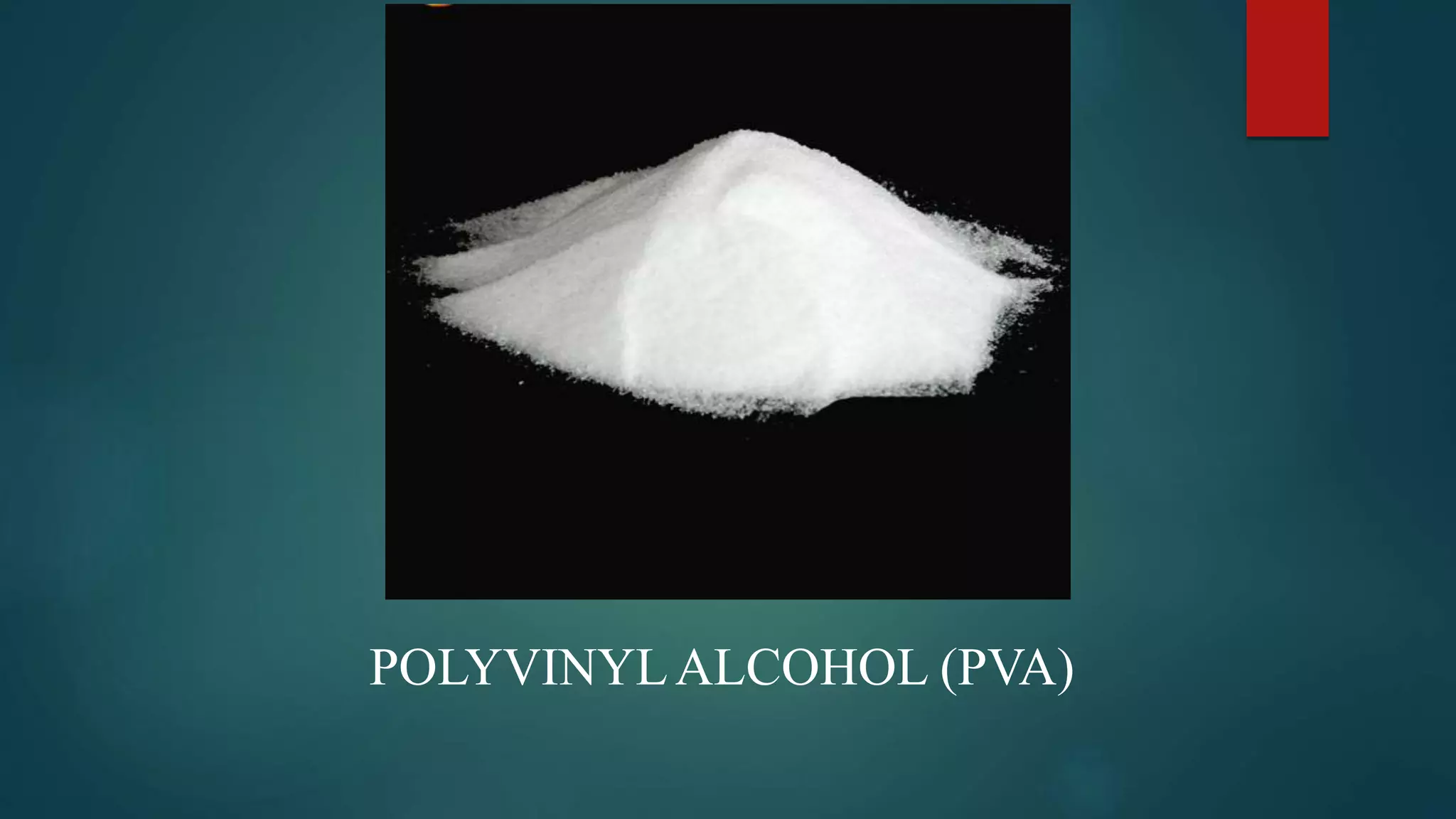
POLYVINYLALCOHOL (PVA)
Introduction
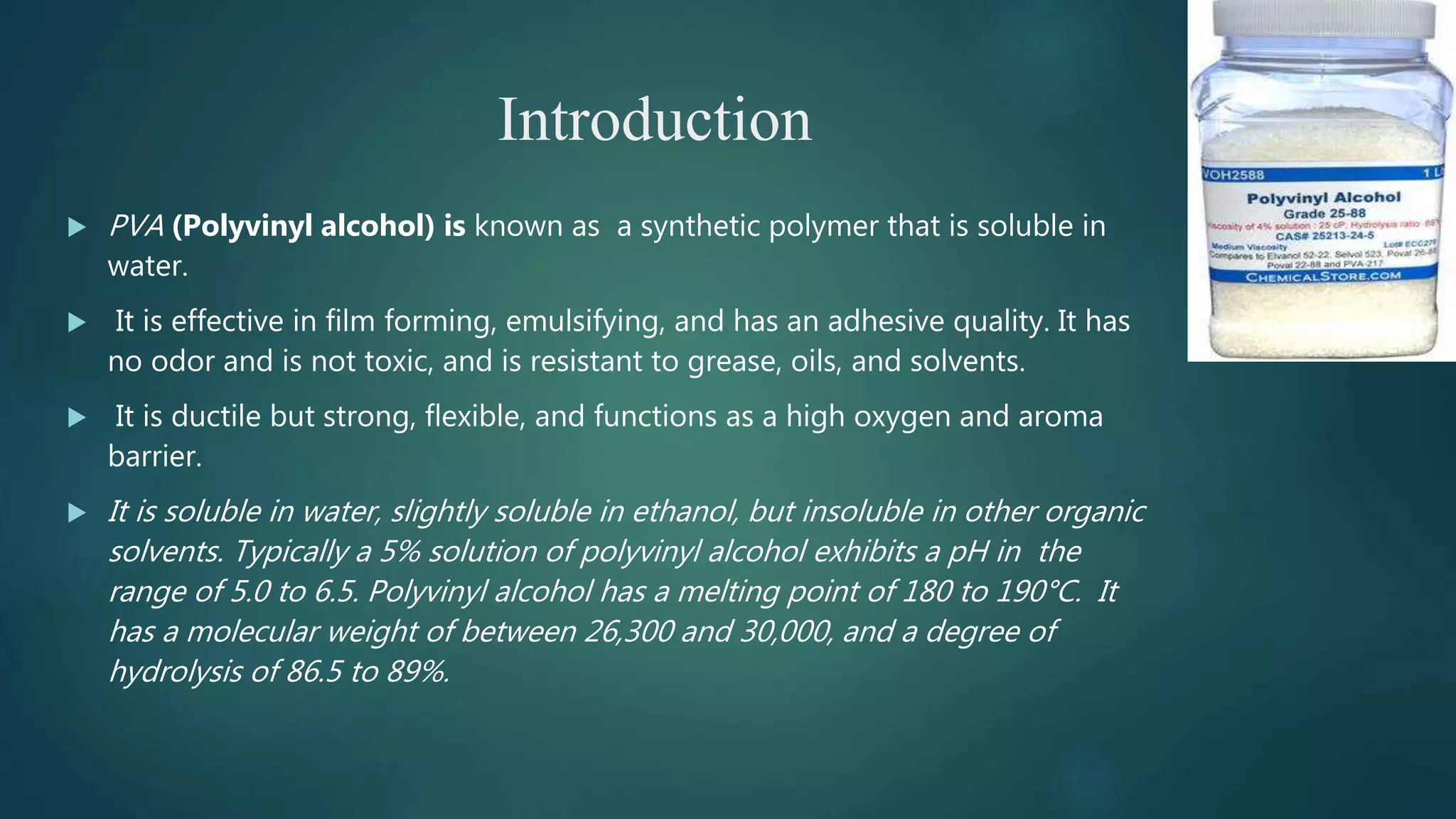
 PVA (Polyvinyl alcohol) is known as a synthetic polymer that is soluble in
water.
 It is effective in film forming, emulsifying, and has an adhesive quality. It has
no odor and is not toxic, and is resistant to grease, oils, and solvents.
 It is ductile but strong, flexible, and functions as a high oxygen and aroma
barrier.
 It is soluble in water, slightly soluble in ethanol, but insoluble in other organic
solvents. Typically a 5% solution of polyvinyl alcohol exhibits a pH in the
range of 5.0 to 6.5. Polyvinyl alcohol has a melting point of 180 to 190°C. It
has a molecular weight of between 26,300 and 30,000, and a degree of
hydrolysis of 86.5 to 89%.
Chemical structure of PVA
Manufacturing of PVA
PVA is not prepared by polymerization of the corresponding monomer as the
monomer, vinyl alcohol, is less thermodynamically stable with respect to its
tautomer acetaldehyde. PVA instead is prepared by first polymerizing vinyl acetate,
and the resulting polyvinyl acetate is converted to the PVA. Other precursor polymers
are sometimes used, with format, chloroacetate groups instead of acetate. The
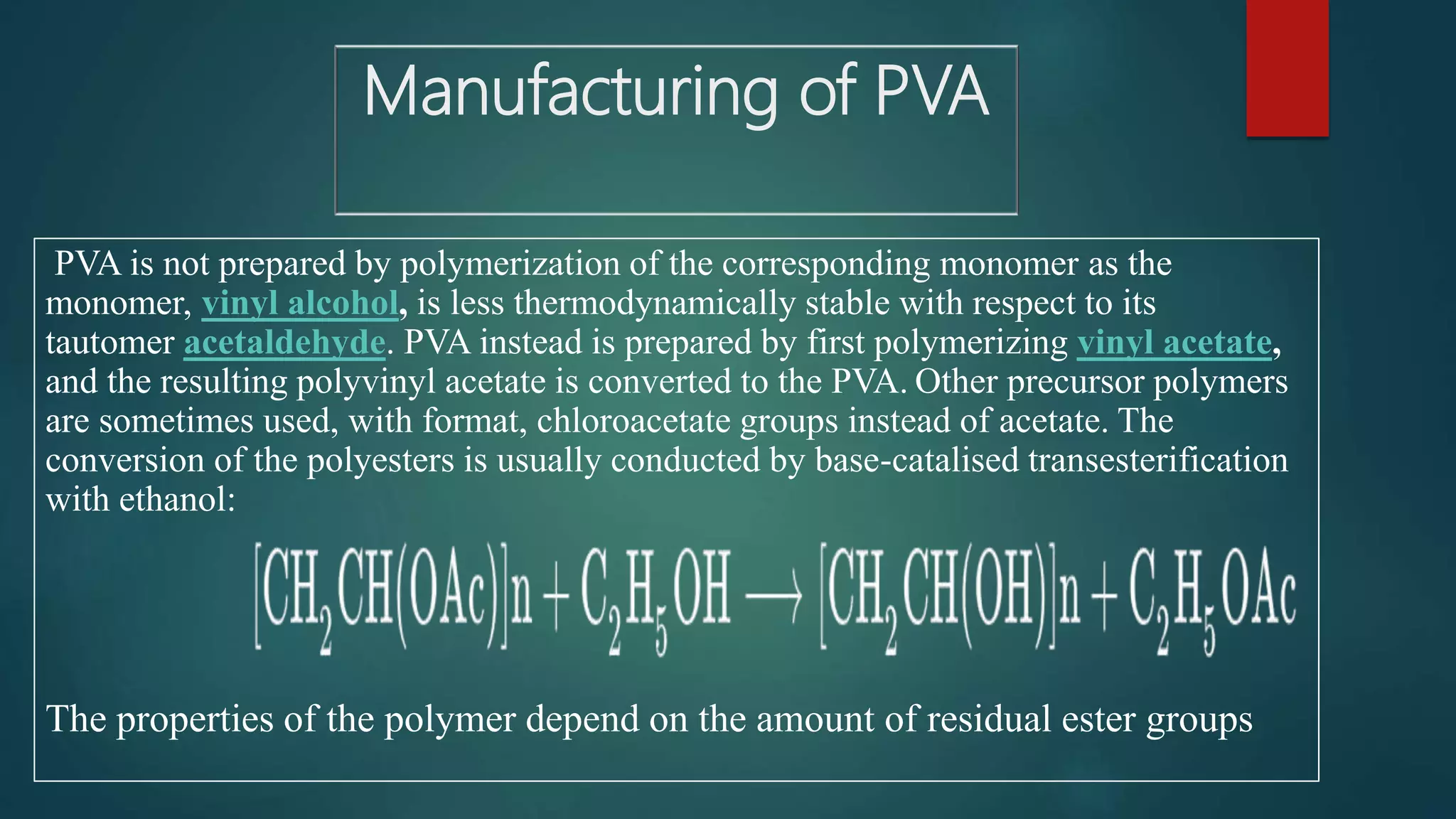
conversion of the polyesters is usually conducted by base-catalised transesterification
with ethanol:
The properties of the polymer depend on the amount of residual ester groups
Applications
Applications
 Used with polyvinyl acetate to make Elmer's glue
 In eye drops and hard solution as a lubricant.
 Used in protective chemical-resistant gloves
 As a for specimen collection, especially stool samples
 In water transfer printing process
 PVA fiber, as reinforcement in concrete
Conclusion
PVA is an artificial polymer that has been used in the
medical and other fields for the last 30 years. Polyvinyl
alcohol is a resin, a natural or synthetic organic compound
made of non-crystalline or viscous substance. Polyvinyl
alcohol is widely used to strengthen textile yarn and papers,
particularly to make the latter more resilient to oils and grease.
It is also used in freshwater sports fishing. PVA is added into
bags that are filled with oil-based or dry fishing bait and
attached to the hook.
Thank You

Polyvinyl alcohol (pva)

  • 1.
    WELCOME TO OURPRESENTATION PRESENTED BY: GROUP – G GROUP NAME: BIR SRESHTHO SHAHEED MOHIUDDIN JAHANGIR 182-047-801 182-052-801 182-064-801 182-070-801 171-122-0-155
  • 2.
    Bir Sreshtho ShaheedMohiuddin Jahangir 1949 - 1971
  • 3.
    Captain Mohiuddin Jahangirwas an officer in the Pakistan Army and joined the Mukti Bahini during the 1971 Liberation War. He was born on 7 March 1949 in the village of Rahimgonj under Babugonj Upazila of Barisal district. He was an officer in Sector 7 of the Muktibahini. In 1971 ,he was killed in an attempt to break through enemy defences on the bank of the Mahananda River. His initiative seriously undermined the Pakistani Army's resistance in the area; eventually the Muktibahini overcame and took the position from the Pakistan army. The main gate of Dhaka Cantonment, "Shaheed Jahangir Gate", is named in his honour. He was awarded the highest recognition of bravery inBangladesh, Bir Sreshtho
  • 4.
  • 5.
    Introduction  PVA (Polyvinylalcohol) is known as a synthetic polymer that is soluble in water.  It is effective in film forming, emulsifying, and has an adhesive quality. It has no odor and is not toxic, and is resistant to grease, oils, and solvents.  It is ductile but strong, flexible, and functions as a high oxygen and aroma barrier.  It is soluble in water, slightly soluble in ethanol, but insoluble in other organic solvents. Typically a 5% solution of polyvinyl alcohol exhibits a pH in the range of 5.0 to 6.5. Polyvinyl alcohol has a melting point of 180 to 190°C. It has a molecular weight of between 26,300 and 30,000, and a degree of hydrolysis of 86.5 to 89%.
  • 6.
  • 8.
    Manufacturing of PVA PVAis not prepared by polymerization of the corresponding monomer as the monomer, vinyl alcohol, is less thermodynamically stable with respect to its tautomer acetaldehyde. PVA instead is prepared by first polymerizing vinyl acetate, and the resulting polyvinyl acetate is converted to the PVA. Other precursor polymers are sometimes used, with format, chloroacetate groups instead of acetate. The conversion of the polyesters is usually conducted by base-catalised transesterification with ethanol: The properties of the polymer depend on the amount of residual ester groups
  • 9.
  • 10.
    Applications  Used withpolyvinyl acetate to make Elmer's glue  In eye drops and hard solution as a lubricant.  Used in protective chemical-resistant gloves  As a for specimen collection, especially stool samples  In water transfer printing process  PVA fiber, as reinforcement in concrete
  • 11.
    Conclusion PVA is anartificial polymer that has been used in the medical and other fields for the last 30 years. Polyvinyl alcohol is a resin, a natural or synthetic organic compound made of non-crystalline or viscous substance. Polyvinyl alcohol is widely used to strengthen textile yarn and papers, particularly to make the latter more resilient to oils and grease. It is also used in freshwater sports fishing. PVA is added into bags that are filled with oil-based or dry fishing bait and attached to the hook.
  • 13.