wel come
Jayappa
PALB4255
Jayappa
ID.No: 4255
Sr. M.Sc (Agri)
OUTLINE OF SEMINAR
Introduction
Components
Types
Applications
Case studies
Conclusion
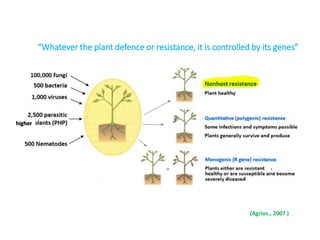
“Whatever the plant defence or resistance, it is controlled by its genes”
(Agrios., 2007 )
higher
,
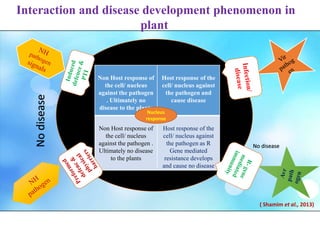
Non Host response of
the cell/ nucleus
against the pathogen
. Ultimately no
disease to the plants
Host response of the
cell/ nucleus against
the pathogen and
cause disease
Non Host response of
the cell/ nucleus
against the pathogen .
Ultimately no disease
to the plants
Host response of the
cell/ nucleus against
the pathogen as R
Gene mediated
resistance develops
and cause no disease
Nucleus
response
( Shamim et al., 2013)
Nodisease
No disease
Interaction and disease development phenomenon in
plant
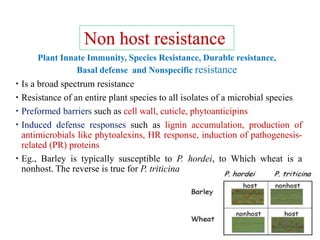
 Is a broad spectrum resistance
 Resistance of an entire plant species to all isolates of a microbial species
 Preformed barriers such as cell wall, cuticle, phytoanticipins
 Induced defense responses such as lignin accumulation, production of
antimicrobials like phytoalexins, HR response, induction of pathogenesis-
related (PR) proteins
 Eg., Barley is typically susceptible to P. hordei, to Which wheat is a
nonhost. The reverse is true for P. triticina
Non host resistance
Plant Innate Immunity, Species Resistance, Durable resistance,
Basal defense and Nonspecific resistance
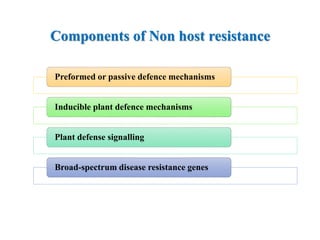
Components of Non host resistance
Preformed or passive defence mechanisms
Inducible plant defence mechanisms
Plant defense signalling
Broad-spectrum disease resistance genes
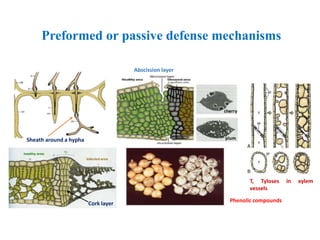
Preformed or passive defense mechanisms
Sheath around a hypha
Cork layer
Phenolic compounds
T, Tyloses in xylem
vessels
Abscission layer
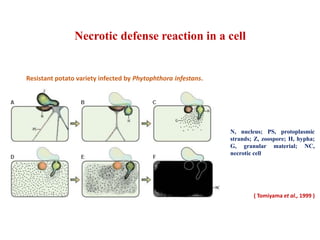
Necrotic defense reaction in a cell
N, nucleus; PS, protoplasmic
strands; Z, zoospore; H, hypha;
G, granular material; NC,
necrotic cell
( Tomiyama et al., 1999 )
Resistant potato variety infected by Phytophthora infestans.
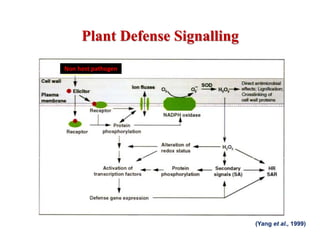
Plant Defense Signalling
(Yang et al., 1999)
Non host pathogen
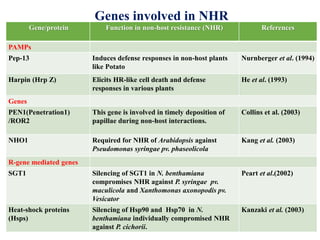
Gene/protein Function in non-host resistance (NHR) References
PAMPs
Pep-13 Induces defense responses in non-host plants
like Potato
Nurnberger et al. (1994)
Harpin (Hrp Z) Elicits HR-like cell death and defense
responses in various plants
He et al. (1993)
Genes
PEN1(Penetration1)
/ROR2
This gene is involved in timely deposition of
papillae during non-host interactions.
Collins et al. (2003)
NHO1 Required for NHR of Arabidopsis against
Pseudomonas syringae pv. phaseolicola
Kang et al. (2003)
R-gene mediated genes
SGT1 Silencing of SGT1 in N. benthamiana
compromises NHR against P. syringae pv.
maculicola and Xanthomonas axonopodis pv.
Vesicator
Peart et al.(2002)
Heat-shock proteins
(Hsps)
Silencing of Hsp90 and Hsp70 in N.
benthamiana individually compromised NHR
against P. cichorii.
Kanzaki et al. (2003)
Genes involved in NHR
Types of Non host resistance
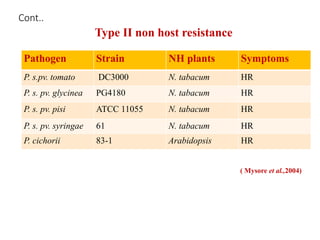
( Mysore et al.,2004)
Examples of type I
( Mysore et al.,2004)
Pathogen Strain NH plants Symptoms
P. s. pv. syringe B76 Arabidopsis None
P.s. pv. phaseolicola S2 N. tabacum None
P.s.pv.delphini PDDCC529 Arabidopsis None
P. infestans 88069 N. clevalandi None
P. infestans 88069 N. tabacum cv. xanthi None
Cont..
( Mysore et al.,2004)
Type II non host resistance
Pathogen Strain NH plants Symptoms
P. s.pv. tomato DC3000 N. tabacum HR
P. s. pv. glycinea PG4180 N. tabacum HR
P. s. pv. pisi ATCC 11055 N. tabacum HR
P. s. pv. syringae 61 N. tabacum HR
P. cichorii 83-1 Arabidopsis HR
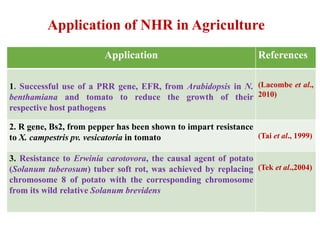
Application of NHR in Agriculture
Application References
1. Successful use of a PRR gene, EFR, from Arabidopsis in N.
benthamiana and tomato to reduce the growth of their
respective host pathogens
(Lacombe et al.,
2010)
2. R gene, Bs2, from pepper has been shown to impart resistance
to X. campestris pv. vesicatoria in tomato (Tai et al., 1999)
3. Resistance to Erwinia carotovora, the causal agent of potato
(Solanum tuberosum) tuber soft rot, was achieved by replacing
chromosome 8 of potato with the corresponding chromosome
from its wild relative Solanum brevidens
(Tek et al.,2004)
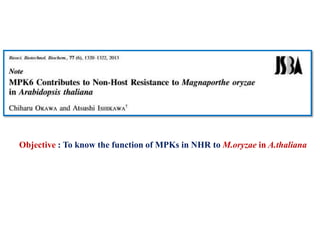
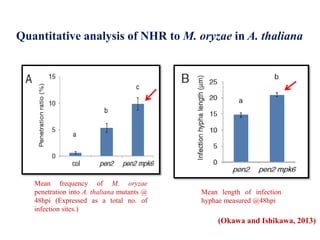
Objective : To know the function of MPKs in NHR to M.oryzae in A.thaliana
Quantitative analysis of NHR to M. oryzae in A. thaliana
Mean frequency of M. oryzae
penetration into A. thaliana mutants @
48hpi (Expressed as a total no. of
infection sites.)
Mean length of infection
hyphae measured @48hpi
(Okawa and Ishikawa, 2013)
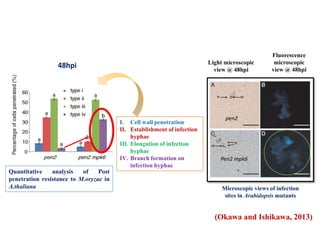
Quantitative analysis of Post
penetration resistance to M.oryzae in
A.thaliana
I. Cell wall penetration
II. Establishment of infection
hyphae
III. Elongation of infection
hyphae
IV. Branch formation on
infection hyphae
Microscopic views of infection
sites in Arabidopsis mutants
Light microscopic
view @ 48hpi
Fluorescence
microscopic
view @ 48hpi
pen2
Pen2 mpk6
48hpi
(Okawa and Ishikawa, 2013)
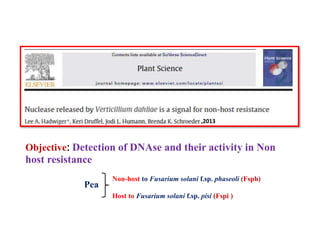
Objective: Detection of DNAse and their activity in Non
host resistance
Non-host to Fusarium solani f.sp. phaseoli (Fsph)
Host to Fusarium solani f.sp. pisi (Fspi )
Pea
,2013
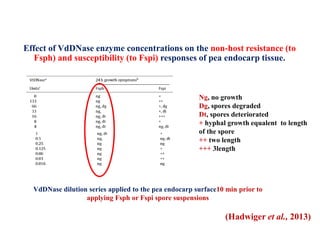
Effect of VdDNase enzyme concentrations on the non-host resistance (to
Fsph) and susceptibility (to Fspi) responses of pea endocarp tissue.
Ng, no growth
Dg, spores degraded
Dt, spores deteriorated
+ hyphal growth equalent to length
of the spore
++ two length
+++ 3length
VdDNase dilution series applied to the pea endocarp surface10 min prior to
applying Fsph or Fspi spore suspensions
(Hadwiger et al., 2013)
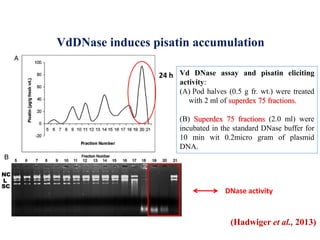
VdDNase induces pisatin accumulation
Vd DNase assay and pisatin eliciting
activity:
(A) Pod halves (0.5 g fr. wt.) were treated
with 2 ml of superdex 75 fractions.
(B) Superdex 75 fractions (2.0 ml) were
incubated in the standard DNase buffer for
10 min wit 0.2micro gram of plasmid
DNA.
DNase activity
24 h
(Hadwiger et al., 2013)
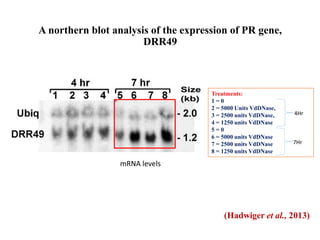
A northern blot analysis of the expression of PR gene,
DRR49
Treatments:
1 = 0
2 = 5000 Units VdDNase,
3 = 2500 units VdDNase,
4 = 1250 units VdDNase
5 = 0
6 = 5000 units VdDNase
7 = 2500 units VdDNase
8 = 1250 units VdDNase
4Hr
7Hr
mRNA levels
(Hadwiger et al., 2013)
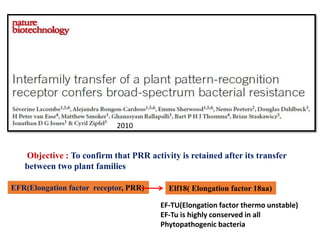
Objective : To confirm that PRR activity is retained after its transfer
between two plant families
EFR(Elongation factor receptor, PRR) Elf18( Elongation factor 18aa)
EF-TU(Elongation factor thermo unstable)
EF-Tu is highly conserved in all
Phytopathogenic bacteria
2010
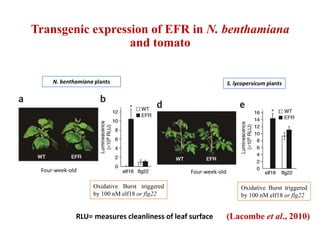
Transgenic expression of EFR in N. benthamiana
and tomato
N. benthamiana plants S. lycopersicum plants
Oxidative Burst triggered
by 100 nM elf18 or flg22
Four-week-old Four-week-old
Oxidative Burst triggered
by 100 nM elf18 or flg22
(Lacombe et al., 2010)RLU= measures cleanliness of leaf surface
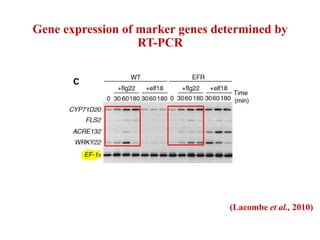
Gene expression of marker genes determined by
RT-PCR
(Lacombe et al., 2010)
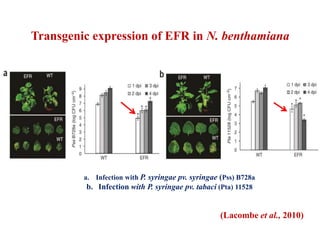
Transgenic expression of EFR in N. benthamiana
a. Infection with P. syringae pv. syringae (Pss) B728a
b. Infection with P. syringae pv. tabaci (Pta) 11528
(Lacombe et al., 2010)
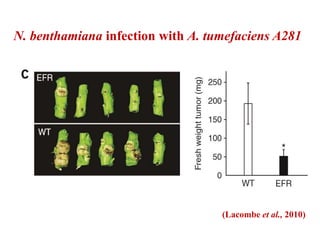
N. benthamiana infection with A. tumefaciens A281
(Lacombe et al., 2010)
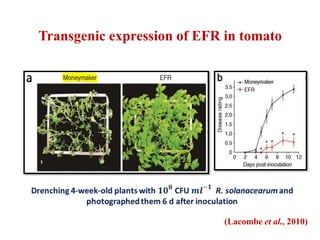
Transgenic expression of EFR in tomato
(Lacombe et al., 2010)
Objective:
1. Identification of non-adapted P. cucumerina isolates
2. To find out the role of different trp-derived compounds.
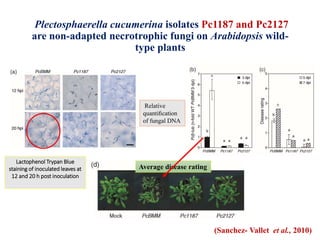
Plectosphaerella cucumerina isolates Pc1187 and Pc2127
are non-adapted necrotrophic fungi on Arabidopsis wild-
type plants
Lactophenol Trypan Blue
staining of inoculated leaves at
12 and 20 h post inoculation
Relative
quantification
of fungal DNA
Average disease rating
(Sanchez- Vallet et al., 2010)
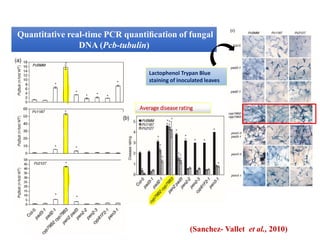
Quantitative real-time PCR quantification of fungal
DNA (Pcb-tubulin)
Average disease rating
Lactophenol Trypan Blue
staining of inoculated leaves
(Sanchez- Vallet et al., 2010)
Objective:
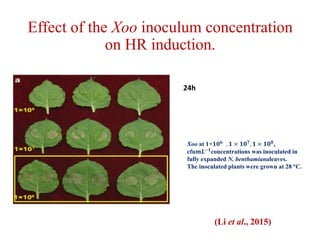
1. Inoculation with a Xoo results in induction of HR and
nonhost resistance
2. Exogenous supply of 𝐻2 𝑂2 accelerated Xoo induced HR
,2015
Effect of the Xoo inoculum concentration
on HR induction.
Xoo at 1×𝟏𝟎 𝟔
, 𝟏 × 𝟏𝟎 𝟕
, 𝟏 × 𝟏𝟎 𝟖
,
cfu𝒎𝑳−𝟏
concentrations was inoculated in
fully expanded N. benthamianaleaves.
The inoculated plants were grown at 28 °C.
24h
(Li et al., 2015)
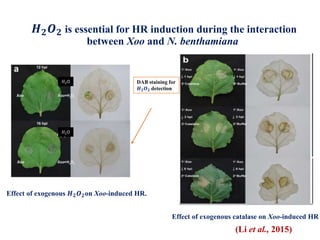
𝑯 𝟐 𝑶 𝟐 is essential for HR induction during the interaction
between Xoo and N. benthamiana
Effect of exogenous 𝑯 𝟐 𝑶 𝟐on Xoo-induced HR.
Effect of exogenous catalase on Xoo-induced HR
DAB staining for
𝑯 𝟐 𝑶 𝟐 detection
𝐻2O
𝐻2O
(Li et al., 2015)
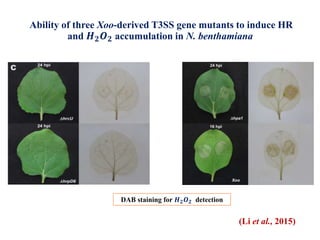
Ability of three Xoo-derived T3SS gene mutants to induce HR
and 𝑯 𝟐 𝑶 𝟐 accumulation in N. benthamiana
DAB staining for 𝑯 𝟐 𝑶 𝟐 detection
(Li et al., 2015)
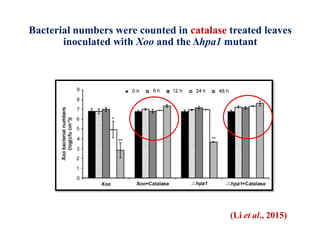
Bacterial numbers were counted in catalase treated leaves
inoculated with Xoo and the Δhpa1 mutant
(Li et al., 2015)
NON HOST RESISTANCE IN PLANTS

NON HOST RESISTANCE IN PLANTS

  • 1.
  • 2.
  • 3.
  • 5.
    “Whatever the plantdefence or resistance, it is controlled by its genes” (Agrios., 2007 ) higher ,
  • 6.
    Non Host responseof the cell/ nucleus against the pathogen . Ultimately no disease to the plants Host response of the cell/ nucleus against the pathogen and cause disease Non Host response of the cell/ nucleus against the pathogen . Ultimately no disease to the plants Host response of the cell/ nucleus against the pathogen as R Gene mediated resistance develops and cause no disease Nucleus response ( Shamim et al., 2013) Nodisease No disease Interaction and disease development phenomenon in plant
  • 7.
     Is abroad spectrum resistance  Resistance of an entire plant species to all isolates of a microbial species  Preformed barriers such as cell wall, cuticle, phytoanticipins  Induced defense responses such as lignin accumulation, production of antimicrobials like phytoalexins, HR response, induction of pathogenesis- related (PR) proteins  Eg., Barley is typically susceptible to P. hordei, to Which wheat is a nonhost. The reverse is true for P. triticina Non host resistance Plant Innate Immunity, Species Resistance, Durable resistance, Basal defense and Nonspecific resistance
  • 8.
    Components of Nonhost resistance Preformed or passive defence mechanisms Inducible plant defence mechanisms Plant defense signalling Broad-spectrum disease resistance genes
  • 9.
    Preformed or passivedefense mechanisms Sheath around a hypha Cork layer Phenolic compounds T, Tyloses in xylem vessels Abscission layer
  • 10.
    Necrotic defense reactionin a cell N, nucleus; PS, protoplasmic strands; Z, zoospore; H, hypha; G, granular material; NC, necrotic cell ( Tomiyama et al., 1999 ) Resistant potato variety infected by Phytophthora infestans.
  • 11.
    Plant Defense Signalling (Yanget al., 1999) Non host pathogen
  • 12.
    Gene/protein Function innon-host resistance (NHR) References PAMPs Pep-13 Induces defense responses in non-host plants like Potato Nurnberger et al. (1994) Harpin (Hrp Z) Elicits HR-like cell death and defense responses in various plants He et al. (1993) Genes PEN1(Penetration1) /ROR2 This gene is involved in timely deposition of papillae during non-host interactions. Collins et al. (2003) NHO1 Required for NHR of Arabidopsis against Pseudomonas syringae pv. phaseolicola Kang et al. (2003) R-gene mediated genes SGT1 Silencing of SGT1 in N. benthamiana compromises NHR against P. syringae pv. maculicola and Xanthomonas axonopodis pv. Vesicator Peart et al.(2002) Heat-shock proteins (Hsps) Silencing of Hsp90 and Hsp70 in N. benthamiana individually compromised NHR against P. cichorii. Kanzaki et al. (2003) Genes involved in NHR
  • 13.
    Types of Nonhost resistance ( Mysore et al.,2004)
  • 14.
    Examples of typeI ( Mysore et al.,2004) Pathogen Strain NH plants Symptoms P. s. pv. syringe B76 Arabidopsis None P.s. pv. phaseolicola S2 N. tabacum None P.s.pv.delphini PDDCC529 Arabidopsis None P. infestans 88069 N. clevalandi None P. infestans 88069 N. tabacum cv. xanthi None
  • 15.
    Cont.. ( Mysore etal.,2004) Type II non host resistance Pathogen Strain NH plants Symptoms P. s.pv. tomato DC3000 N. tabacum HR P. s. pv. glycinea PG4180 N. tabacum HR P. s. pv. pisi ATCC 11055 N. tabacum HR P. s. pv. syringae 61 N. tabacum HR P. cichorii 83-1 Arabidopsis HR
  • 16.
    Application of NHRin Agriculture Application References 1. Successful use of a PRR gene, EFR, from Arabidopsis in N. benthamiana and tomato to reduce the growth of their respective host pathogens (Lacombe et al., 2010) 2. R gene, Bs2, from pepper has been shown to impart resistance to X. campestris pv. vesicatoria in tomato (Tai et al., 1999) 3. Resistance to Erwinia carotovora, the causal agent of potato (Solanum tuberosum) tuber soft rot, was achieved by replacing chromosome 8 of potato with the corresponding chromosome from its wild relative Solanum brevidens (Tek et al.,2004)
  • 18.
    Objective : Toknow the function of MPKs in NHR to M.oryzae in A.thaliana
  • 19.
    Quantitative analysis ofNHR to M. oryzae in A. thaliana Mean frequency of M. oryzae penetration into A. thaliana mutants @ 48hpi (Expressed as a total no. of infection sites.) Mean length of infection hyphae measured @48hpi (Okawa and Ishikawa, 2013)
  • 20.
    Quantitative analysis ofPost penetration resistance to M.oryzae in A.thaliana I. Cell wall penetration II. Establishment of infection hyphae III. Elongation of infection hyphae IV. Branch formation on infection hyphae Microscopic views of infection sites in Arabidopsis mutants Light microscopic view @ 48hpi Fluorescence microscopic view @ 48hpi pen2 Pen2 mpk6 48hpi (Okawa and Ishikawa, 2013)
  • 21.
    Objective: Detection ofDNAse and their activity in Non host resistance Non-host to Fusarium solani f.sp. phaseoli (Fsph) Host to Fusarium solani f.sp. pisi (Fspi ) Pea ,2013
  • 22.
    Effect of VdDNaseenzyme concentrations on the non-host resistance (to Fsph) and susceptibility (to Fspi) responses of pea endocarp tissue. Ng, no growth Dg, spores degraded Dt, spores deteriorated + hyphal growth equalent to length of the spore ++ two length +++ 3length VdDNase dilution series applied to the pea endocarp surface10 min prior to applying Fsph or Fspi spore suspensions (Hadwiger et al., 2013)
  • 23.
    VdDNase induces pisatinaccumulation Vd DNase assay and pisatin eliciting activity: (A) Pod halves (0.5 g fr. wt.) were treated with 2 ml of superdex 75 fractions. (B) Superdex 75 fractions (2.0 ml) were incubated in the standard DNase buffer for 10 min wit 0.2micro gram of plasmid DNA. DNase activity 24 h (Hadwiger et al., 2013)
  • 24.
    A northern blotanalysis of the expression of PR gene, DRR49 Treatments: 1 = 0 2 = 5000 Units VdDNase, 3 = 2500 units VdDNase, 4 = 1250 units VdDNase 5 = 0 6 = 5000 units VdDNase 7 = 2500 units VdDNase 8 = 1250 units VdDNase 4Hr 7Hr mRNA levels (Hadwiger et al., 2013)
  • 25.
    Objective : Toconfirm that PRR activity is retained after its transfer between two plant families EFR(Elongation factor receptor, PRR) Elf18( Elongation factor 18aa) EF-TU(Elongation factor thermo unstable) EF-Tu is highly conserved in all Phytopathogenic bacteria 2010
  • 26.
    Transgenic expression ofEFR in N. benthamiana and tomato N. benthamiana plants S. lycopersicum plants Oxidative Burst triggered by 100 nM elf18 or flg22 Four-week-old Four-week-old Oxidative Burst triggered by 100 nM elf18 or flg22 (Lacombe et al., 2010)RLU= measures cleanliness of leaf surface
  • 27.
    Gene expression ofmarker genes determined by RT-PCR (Lacombe et al., 2010)
  • 28.
    Transgenic expression ofEFR in N. benthamiana a. Infection with P. syringae pv. syringae (Pss) B728a b. Infection with P. syringae pv. tabaci (Pta) 11528 (Lacombe et al., 2010)
  • 29.
    N. benthamiana infectionwith A. tumefaciens A281 (Lacombe et al., 2010)
  • 30.
    Transgenic expression ofEFR in tomato (Lacombe et al., 2010)
  • 31.
    Objective: 1. Identification ofnon-adapted P. cucumerina isolates 2. To find out the role of different trp-derived compounds.
  • 32.
    Plectosphaerella cucumerina isolatesPc1187 and Pc2127 are non-adapted necrotrophic fungi on Arabidopsis wild- type plants Lactophenol Trypan Blue staining of inoculated leaves at 12 and 20 h post inoculation Relative quantification of fungal DNA Average disease rating (Sanchez- Vallet et al., 2010)
  • 33.
    Quantitative real-time PCRquantification of fungal DNA (Pcb-tubulin) Average disease rating Lactophenol Trypan Blue staining of inoculated leaves (Sanchez- Vallet et al., 2010)
  • 34.
    Objective: 1. Inoculation witha Xoo results in induction of HR and nonhost resistance 2. Exogenous supply of 𝐻2 𝑂2 accelerated Xoo induced HR ,2015
  • 35.
    Effect of theXoo inoculum concentration on HR induction. Xoo at 1×𝟏𝟎 𝟔 , 𝟏 × 𝟏𝟎 𝟕 , 𝟏 × 𝟏𝟎 𝟖 , cfu𝒎𝑳−𝟏 concentrations was inoculated in fully expanded N. benthamianaleaves. The inoculated plants were grown at 28 °C. 24h (Li et al., 2015)
  • 36.
    𝑯 𝟐 𝑶𝟐 is essential for HR induction during the interaction between Xoo and N. benthamiana Effect of exogenous 𝑯 𝟐 𝑶 𝟐on Xoo-induced HR. Effect of exogenous catalase on Xoo-induced HR DAB staining for 𝑯 𝟐 𝑶 𝟐 detection 𝐻2O 𝐻2O (Li et al., 2015)
  • 37.
    Ability of threeXoo-derived T3SS gene mutants to induce HR and 𝑯 𝟐 𝑶 𝟐 accumulation in N. benthamiana DAB staining for 𝑯 𝟐 𝑶 𝟐 detection (Li et al., 2015)
  • 38.
    Bacterial numbers werecounted in catalase treated leaves inoculated with Xoo and the Δhpa1 mutant (Li et al., 2015)

Editor's Notes

  • #10 Formation of a sheath around a hypha, abscission layer cork layer , phenolic compounds, tyloses in xylem vessels.
  • #11  Stages in the development of the necrotic defense reaction in a cell of a very resistant potato variety infected by Phytophthora infestans. N, nucleus; PS, protoplasmic strands; Z, zoospore; H, hypha; G, granular material; NC, necrotic cell. [After Tomiyama (1956). Ann. Phytopathol. Soc. Jpn. 21, 54–62.] The hypersensitive response is considered a biochemical rather than a structural defense mechanism but is described here briefly because some of the cellular responses that accompany it can be seen with the naked eye or with the microscope. In many host–pathogen combinations, as soon as the pathogen establishes contact with the cell, the nucleus moves toward the invading pathogen and soon disintegrates. At the same time, brown, resin-like granules form in the cytoplasm, first around the point of penetration of the pathogen and then throughout the cytoplasm. As the browning discoloration of the plant cell cytoplasm continues and death sets in, the invading hypha begins to degenerate
  • #12 A simplified model for signal transduction in plant defense responses. Host recognition of pathogen elicitors ini- tiates early signaling events such as protein phosphorylation/dephosphorylation, ion fluxes and oxidative burst. Subsequent transcriptional and/or posttranslational activation of transcription factors leads to induction of plant defense genes such as GST and PAL, and biosynthesis of endog- enous secondary signals such as SA. In ad- dition, the activated NADPH oxidase complex generates reactive oxygen species (ROS) such as 02"- and H202 that alter the redox status of plant cells and affect defense signaling. SA, ROS, as well as de- fense genes, all contribute to the develop- ment of HR and SAR during plant-patho- gen interactions. SOD, superoxide dismu- tase
  • #14 Type I nonhost resistance does not produce any visible symptoms/ no HR Type II nonhost resistance results in a rapid hypersensitive response with cell death
  • #25 within 4–7 h following the application of VdDNase to pea endocarp tissue.
  • #26 To confirm that EFR detects EF-Tu proteins from important phyto pathogenic bacteria, we first assessed the variability and eliciting activity of elf18 peptides derived from a selection of phytopathogenic bacteria spanning several genera. The ‘classical’ elf18 peptide sequence (acetyl-MSKEKFERTKPHVNVGTI) is based on the EF-Tu from Escherichia coli22. EF-Tu eliciting activities in all phytopathogenic bacteria tested. elongation factor Tu (EF-Tu), the most abundant bacterial protein, acts as a PAMP in Arabidopsis thaliana and other Brassicaceae. EF-Tu is highly conserved in all bacteria and is known to be N-acetylated inEscherichia coli. Arabidopsis plants specifically recognize the N terminus of the protein, and an N-acetylated peptide comprising the first 18 amino acids, termed elf18, is fully active as inducer of defense responses. The shorter peptide, elf12, comprising the acetyl group and the first 12 N-terminal amino acids, is inactive as elicitor but acts as a specific antagonist for EF-Tu–related elicitors. In leaves of Arabidopsis plants, elf18 induces an oxidative burst and biosynthesis of ethylene, and it triggers resistance to subsequent infection with pathogenic bacteria.
  • #27 1) Stable transformation of two solanaceous species with EFR confers responsiveness to EF-Tu. We have previously reported that Agrobacterium-mediated transient expression of EFR in N. benthamiana is sufficient to confer binding and responses to elf18 (ref. 4). We generated transgenic N. benthamiana plants expressing EFR under the control of its native promoter and selected homozygous plants carrying the EFR transgene for detailed phenotypic analysis (Fig. 2a). Whereas wild-type N. benthamiana plants were insensitive to elf18, transgenic EFR plants produced ROS in response to elf18 (Fig. 2b). 2) Similarly, homozygous transgenic tomato lines (S. lycopersicum variety Moneymaker) expressing EFR under the control of the constitutive promoter 35S also gained elf18 responsiveness (Fig. 2d,e). Together, these results show that stable expression of EFR in N. benthamiana and tomato confers responsiveness to elf18.
  • #28  Indeed, the expression of the PAMP-inducible genes CYP71D20, FLS2, ACRE132 and WRKY22 was induced by elf18 in the transgenic plants expressing EFR, but not in wild-type plants .Transfer of EFR to solanaceous plants could affect the function of the related endogenous PRR FLS2, we compared responsiveness to flg22 in wild-type and transgenic N. benthamiana plants expressing EFR. flg22 induced similar levels of ROS production and defense-marker gene expression in wild-type and transgenic plants expressing EFR.
  • #29 1. Inoculation of N. benthamiana with P. syringae pv. syringae (Pss) B728a, the causal agent of bacterial brown spot of bean, caused severe disease symptoms and substantial bacterial growth23 (Fig. 3a). However, transgenic N. benthamiana plants expressing EFR developed less severe disease symptoms and allowed only 1.25% of the bacterial growth observed in wild-type leaves 4 d post-inoculation (Fig. 3a). ` To assess whether EFR confers resistance to other P. syringae pathovars, we next infected transgenic N. benthamiana plants expressing EFR with P. syringae pv. tabaci (Pta) 11528, the causal agent of tobacco wildfire (also known as angular leaf spot). Leaves of transgenic plants expressing EFR showed only minor disease symptoms compared with wild-type plants (Fig. 3b). This corresponded with very weak growth of Pta 11528 bacteria in leaves from transgenic plants expressing EFR, reaching only 0.02% of the bacterial growth observed in wild-type leaves 4 d post-inoculation (Fig. 3b).
  • #30 Next, we tested whether EF-Tu perception restricts gall formation caused by a virulent tumorigenic A. tumefaciens strain. Notably, stabinoculated stems of transgenic N. benthamiana plants expressing EFR developed tumors ~75% smaller than the ones present on wild-type stems (Fig. 3c).
  • #31 Ralstonia solanacearum and Xanthomonas perforans (previously known as X. axonopodis pv. vesicatoria) are major pathogens of solanaceous plants, causing bacterial wilt and spot diseases, respectively. Whereas soil drenching with R. solanacearum led to massive wilting of wild-type tomato plants, transgenic plants expressing EFR showed drastically reduced wilting symptoms (Fig. 4a,b). Similarly, transgenic tomato plants expressing EFR were more resistant to X. perforans than were wild-type strains of tomato plants (Fig. 4c
  • #32 isolates that were unable to colonize Arabidopsis Col-0 wild-type plants which is required for effective non-host resistance to necrotrophs.
  • #33 Three-week-old Arabidopsis Col-0 leaves were sprayed either with water or a spore suspension (4 · 106 spores ml)1) of the virulent PcBMM or isolates Pc1187, Pc2127 and Pc2125. The infection progression was examined at different hours/days post-inoculation (hpi/dpi) by trypan blue staining (TB) of the inoculated leaves, determination of fungal biomass by quantitative real-time PCR (qRT-PCR) of the P. cucumerina b-tubulin gene and by macroscopic evaluation of the disease rating (DR) of the inoculated plants. TB staining at 12 hpi revealed similar spore germination rates on the leaf surface, but differences at 20 hpi, with PcBMM having longer hyphae than Pc1187, Pc2127 and Pc2125 (Figure 1a, and data not shown). The sparse hyphal growth of the putative non-adapted isolates was not associated with a host cell death response at fungal contact sites with plant cells (not shown). Fungal biomass at 3 and 5 dpi was lower in plants inoculated with Pc1187, Pc2127 and Pc2125, and increased over time only in the plants inoculated with PcBMM (Figure 1b, and data not shown). There was a positive correlation between fungal biomass and macroscopic disease symptoms .
  • #35 .We demonstrated that inoculating with a Xoo concentration of 1×10⁸ cfu mL−1 in fully expanded leaves of N. benthamiana plants resulted in the strongest induction of HR and nonhost resistance. Furthermore, we probed the role ofhydrogenperoxide(H2O2)inXoo-inducedHRandnonhost resistance. An exogenous supply of H2O2 accelerated Xooinduced HR, while the elimination ofH2O2 bythe application of a catalase blocked the HR-mediated suppression of bacterial growth in N. benthamiana. Moreover,ΔhrpD6 and ΔhrcU Xoo mutants, which are deficient in H2O2 production, did not show an induction of HR, while another Xoo mutant, Δhpa1, caused a strong H2O2 accumulation prior to its delayed HR induction. Collectively, our results reveal that H2O2 is indispensable to Xoo-induced HR and nonhost resistance in N. benthamiana.
  • #37 To probe the role of ROS in Xoo-induced HR in N. benthamiana, we examined the effect of exogenously supplied H2O2 on Xoo-induced HR. H2O2 at a concentration of 0.1M was chosen for this analysis since it was not toxic to leaf tissues (Supplementary Material, Fig. S1). To maintain supplied H2O2 at a relatively high concentration to keep consistency for phenotypic observations, H2O2 was applied twice within the bacterial inoculated area at 9 and 11 hpi’ b Effect of exogenous catalase on Xoo-induced HR. Leaves were first infiltrated with Xoo and then with catalase (2000 U mL−1) solution, or the buffer as the control, at 1, 3 and 6 hpi. Photographs were taken at 24 hpi. DAB staining was conducted immediately (right panel). TofurtherunderstandtheroleofROSinXoo-inducedHR,the effects of H2O2 elimination on Xoo-induced HR were investigated. Catalase was used as an in vivo H2O2 scavenger to remove H2O2 from inside plant cells (Mellersh et al. 2002). Theenzymesolution(2000UmL−1)wasinfiltratedat1,3and 6 hpi withXoo. To maintain the catalase concentration, the enzyme was applied a total of three times with 2-h intervals. The results showed that 75 % of the leaves treated with catalase first at 1 hpi did not formobvious HRs, those treated first at 3 hpi formed HRs but they were weaker than that of the control, while those treated first at 6 hpi exhibited HRs as strong as those in the controls at 24 hpi (Fig. 2b, left panel). To clarify whether the variation in HR development in differentially catalase-treated leaves was due to the difference inH2O2 accumulation levels, we examined H2O2 accumulation in these leaves using DAB staining. Correspondingly, leaves treated with catalase first at 1 hpi were not obvious stained, those treated first at 3 hpi were only partially stained, while those treated first at 6 hpi were as strongly stained as the control at 24 hpi (Fig. 2b, right panel). This demonstrates a strong positive correlation between H2O2 accumulation and HRdevelopment.ThesedataalsoprovideevidencethatH2O2 plays a key role in HR induction by Xoo in the nonhost plant N. benthamiana.
  • #38 To further dissect the role of ROS in Xoo-induced HR, Xoo derived mutants with lost or decreased abilities to induce HR innonhostplantswerecheckedfortheirabilitytoinduceROS accumulation. The Xoo T3SS gene deletion mutants ΔhrcU andΔhrpD6 fail to elicit HR in their nonhost N. benthamiana andN.tabacum,respectively(Guoetal.2010;Lietal.2012). In this work, ΔhrpD6 was unable to cause HR in yet another nonhost plant species, N. benthamiana. Nor did they result in accumulationofH2O2 asindicatedbyDABstaining(Fig.2c). In addition, we observed that another Xoo T3SS gene hpa1 deletion mutant (Δhpa1) caused delayed HR in N. benthamiana, which appeared at 24 hpi, while the wildtype Xoo induced strong HR starting at about 16 hpi. Accordingly, Δhpa1 induced H2O2 accumulation (at 24 hpi) about 12 h later than wild-type Xoo, which induced a strong accumulation of H2O2 at 12 hpi (Fig. 2c). However, when catalase was infiltrated three times, at 3, 5 and 8 h after Δhpa1 inoculation, to remove H 2O2, 80 % of the inoculated leavesshowednoHRat 3 dpi (Fig. 2d). These results suggest that ROS is essential for HR induction during interactions between Xoo and its nonhost N. benthamiana.
  • #39 To understand the effects of H2O2 accumulation on nonhost resistance toXoo,bacterial numbers were counted in catalase treated leaves inoculated with Xoo and the Δhpa1 mutant. Unlike buffer-treated control leaves, in which both Xoo and Δhpa1 numbers exhibited a significant decrease at 24 hpi, the bacterial numbers in the catalase-treated leaves showed a slight increase from 0 to 48hpi (Fig. 3). Taken together, these results demonstrated that H2O2 is required for nonhost resistance to Xoo in N. benthamiana. Collectively, our results provide evidence that H2O2 is indispensable for both Xoo-induced HR and nonhost resistance in N. benthamiana.