CREDIT SEMINAR
ON
PROGRAMMED CELL DEATH IN PLANT
DISEASE PERSPECTIVE
PRESENTED BY
WANGKHEM TAMPAKLEIMA CHANU
Ph.D 1st yr 2nd sem
Adm. No.2A-16(Ph.D)
DEPARTMENT OF PLANT PATHOLOGY
COLLEGE OFAGRICULTURE,CAU
Programmed cell death (PCD)……???
Programmed cell death (PCD) has been defined as a sequence of
(potentially interruptible) events that lead to the controlled and
organized destruction of the cell (Lockshin and Zakeri, 2004).
The term apoptosis –A Greek word
originally means that ‘’fall of the leaf
or leaf falling’’ . (John et al., 1972)
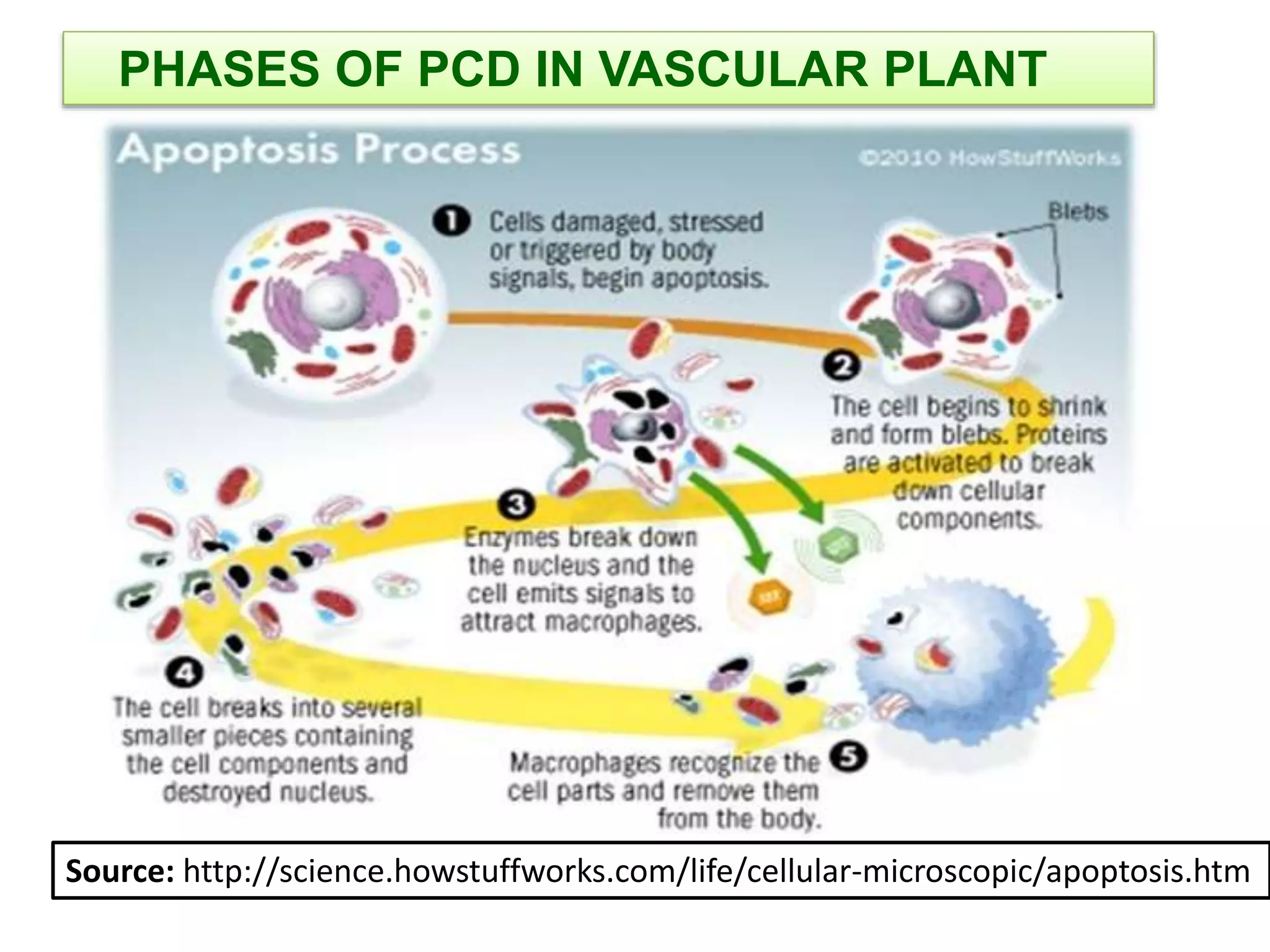
PHASES OF PCD IN VASCULAR PLANT
Source: http://science.howstuffworks.com/life/cellular-microscopic/apoptosis.htm
What is the purpose of this PCD ?
1. Essential for successful development & growth of complex
multicellular organisms.
2. Regulates the rate of cell division.
3. Shaping of cells, tissues & organs.
4. Control of cell populations & defense against invading
microbes.
5. PCD is needed to destroy the cells that represent a threat
to the integrity of the organism.
Examples: Cells infected with virus
Cells with DNA damage
Morphological difference between Necrosis (Death by
injury) and PCD (Death by suicide)
Source: Studzinski, 1999
Table 1: Pathological features of necrosis and apoptosis
Necrosis Apoptosis
1. Pattern of death Group of neighboring cells Single cells
2. Cell size Swelling Shrinkage
3. Plasma
membrane
Smoothing Blebbed
4. Mitochondria Swelling disordered
structure
Contents released into the
cytoplasm and contracted
5. Organelle shape Disruption Apoptotic bodies
6. Nuclei Membrane disruption Clumps and fragmented
7. DNA
degradation
DNA fragmentation is
random or smeared
Ladder like- DNA
fragmentation
8. Cell degradation Macrophage invasion
Inflammation
Phagocytosis
No inflammation
Source: Unsal, N.P. et al., 2005
Classes of plant PCD
Two classes of plant PCD
PCD Class Examples
Autolytic Developmental PCD.
Example: PCD that occurs during the formation of the
male and female zygotes, in seeds (except endosperm in
cereals), in embryonic structures, and during development
of roots and shoots.
Non-
autolytic
It is a class of PCD where tonoplast rupture may or may
not occur and is not followed by complete clearance of the
cytoplasm.
Example: Hypersensitive response (HR)-related PCD.
Endosperm in cereal seeds is an example of non- autolytic
PCD (no tonoplast rupture).
Source: Wouter G. van Doorn, 2011
PROGRAMMED CELL DEATH
MECHANISM
PCD REGULATORS
Most important player
Proteases
Aspartate-
directed
Cysteine
dependent
Cysteine
dependent
Aspartate-
directed
Proteases
Caspases
Caspases
Initiator caspases Executioner caspases
Initiate the process of
apoptosis
Execute the process of
apoptosis
Caspases 2,8,9 & 10 Caspases 3,6 & 7
All caspases are in inactive form. These are called
procaspases
The initiator caspases are activated by extrinsic or intrinsic
pathway
The executioner caspases are activated by initiator
caspases
Programmed cell death in response to biotic stress
Two types of cell death occur following the infection of a plant
with a pathogen:
1. Hypersensitive response: HR is a process of PCD associated with
plant resistance to pathogen infection and occurs at incompatible and
sometimes in compatible plant pathogen interactions.
2. Disease symptoms: This type of cell death which appears
relatively late during the development of some diseases and is
considered to result from toxins produced by invading pathogen.
Source: Unsal, N.P. et al., 2005
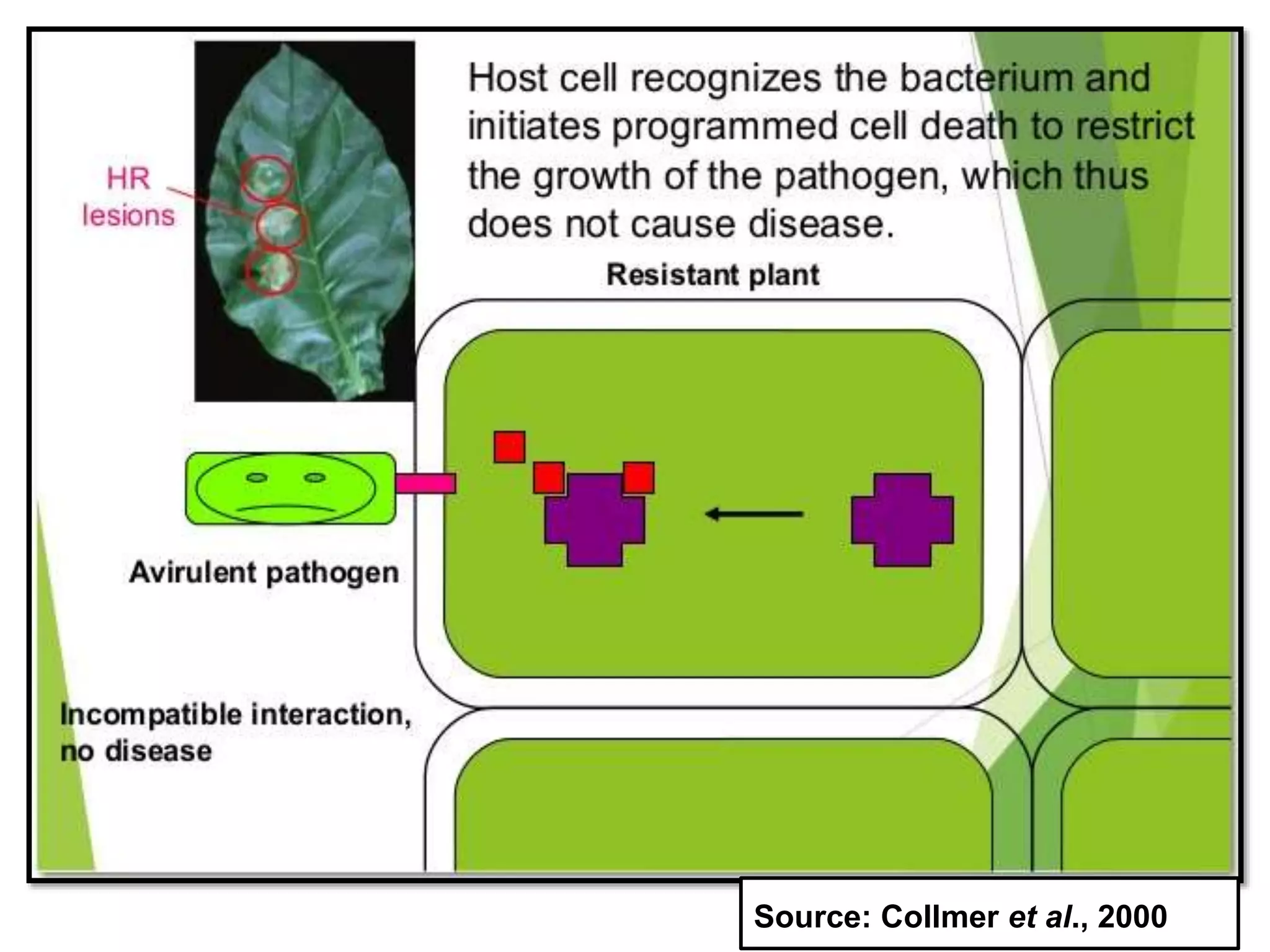
Hypersensitive response (HR) - mechanism, used by plants,
prevent the spread of infection, microbial pathogens
Strong resistance reaction of plants against pathogens
Interaction, ‘avr’ gene (pathogen) and ‘R’ gene (plant)
E. C. Stakman (1915) credited, hypersensitive reaction (HR)
HR - plant disease, bacteria was 1st recognized, Klement
(1963)
 HR, result, ‘incompatible reaction’, ‘R’ gene (non-host) plant
corresponds to ‘avr’ gene, (pathogen)
 ‘Compatible reaction’ ‘R’ gene (host plant ) does not match
with ‘avr’ gene (pathogen) resulting, spread of pathogen,
disease occurs.
When the virulent pathogen
artificially injected to non-host or
resistant plant and when
Avirulent strain into susceptible
plant, it induce HR
Occurs – vertical resistance
Source: Collmer et al., 2000
Hypersensitive Response
Hypersensitive
responses kill small
parts of the leaf
Source: res2.agr.gc.ca/ecorc/ corn-
mais/images/fig-22.jpg
HR - programmed cell death (PCD) associated with death of small no.
of cells at and around site of infection (Fig.1)
HR – inhibit, growth of invading pathogen, killing infected and
uninfected cells, producing a physical barrier composed of dead cells.
Fig 1: Hypersensitive response
on a tobacco leaf during
pathogen infection
HR manifested with development
of necrotic lesions (stained with
Evans blue), localized desiccation
and browning of the affected cells.
A) initial hours of infection B) late
hours of infection
Source: Wright et al., 2000
During HR, dying plant cells strengthen their cell walls and
accumulate certain toxic compounds, phenols and phytoalexins
Fig 2: Accumulation of phenolic
compounds during HR
Autofluorescence of phenolic
compounds and cell wall
thickenings in plant tissues
during HR, UV light
 A) initial hours of pathogen
infection (absence of phenols
shown with asterix)
 B) late hours of infection
(phenol compounds shown with
arrows)
Source: Soylu, 2006
HR also occurs when pathogen-derived molecules or unique
proteinaceous bacterial elicitors like ‘harpin’ interact with non-host
plants
Fig 3: HarpinPss infiltration induces
HR on tobacco leaves
Reaction of tobacco leaves with
(A) Harpin Pss
(B) control leaf (buffer alone).
Source: Greenberg et al., 1994
Characteristics
1. Rapid death of cells: Seals of the wounded
tissue, prevent the pathogen, moving into the
plant
2. Restrict growth and spread of the pathogens
3. Analogous to the innate immune system,
animals and precedes a slower systemic (whole
plant) response, leads to SAR
1. Interaction of the Avr-gene (X1, X2, X3) with the
Resistance gene (R-gene) (RX1, RX2, RX3),
2. Convergence of the signals from the individual R genes
into a conserved HR pathway;
3. Activation of NADPH oxidase induces the PCD.
Critical steps in the HR are:
1. The activation of cell death in the absence of pathogens
by mutations in certain genes thought to be involved in
the cell death pathway.
2. The activation of cell death upon recognition of elicitors
produced by the pathogen, and
3. The activation of the HR by expressing of transgenes in
plants
Evidences suggesting that HR results from PCD process are:
Source: Heath, 2000
MECHANISM of HR
Phase 1: The activation of R genes triggers an ion flux,
involving an efflux of hydroxide and potassium outside the cells,
and an influx of calcium and hydrogen ions into the cell.
Phase 2: These generate an oxidative burst by
producing reactive oxygen species(ROS), superoxide
anions hydrogen peroxide hydroxyl radicals and nitrous oxide.
Compatible interaction between R gene product and Elicitor
activates a cascade of biochemical reaction, activate defense
related compound
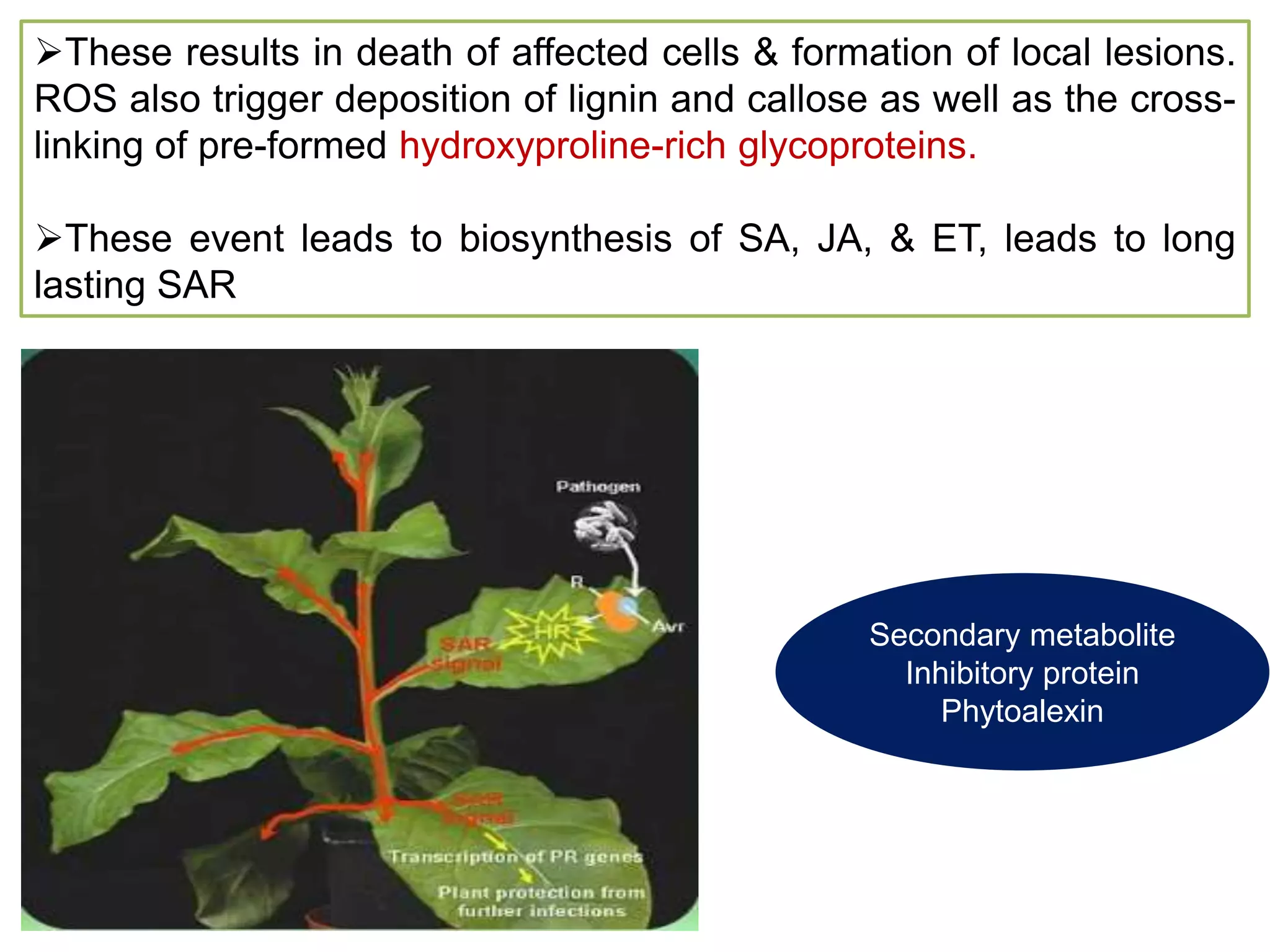
These results in death of affected cells & formation of local lesions.
ROS also trigger deposition of lignin and callose as well as the cross-
linking of pre-formed hydroxyproline-rich glycoproteins.
These event leads to biosynthesis of SA, JA, & ET, leads to long
lasting SAR
Secondary metabolite
Inhibitory protein
Phytoalexin
Pathogen Defense – Hypersensitive Response
Abiotic stress Ultrastructural changes
Hypoxia-lysigenous Chromatin condensation and DNA fragmentation
Aerenchyma
formation
Organelle surrounded by membranes
Plasma membrane invagination and tonoplast degradation
Cell wall degradation
Light radiation Oligonucleosomal fragmentation of DNA
Migration of nuclear contents to cell periphery
Mechanical stress TUNEL positive material around nuclear periphery
Oligonucleosomal fragmentation of DNA in chloroplast and
nuclei
Cold stress Chloroplast swelling, thylakoids distort and swell, grana unstuck
and chloroplast lyse, nuclei swell, chromatin fragments, ER and
golgi cisternae swell, cytoplasmic condensation occurs
Ozone Ozone enters the apoplast where it elicits generation of ROS,
mainly hydrogen peroxide
Programmed cell death in response to abiotic stress
Source: Evans, 2004.
CASE STUDY….
Case study 1- Beneficial effect of Programmed
cell death in plant
Mittler et al., 1997 worked on ‘’Pathogen-
induced programmed cell death in tobacco’’
Activation of cell death, following recognition of invading
pathogens, results in the formation of a zone of dead cells localized
around the site of infection also called a hypersensitive response
(HR) lesion.
Material and methods
Plant material and pathogen infection
1. Wild-type tobacco plants were grown under continuous
illumination provided by cool-white fluorescent lamps .
2. Fully expanded young leaves of 5- to 6-week-old plants were
infected with TMV strain U1 and kept at 30°C for 4 days
under continuous light.
3. PCD was induced by shifting of TMV-infected and control
uninfected plants from 30°C to 25°C and cell death was
assayed by measuring ion leakage from leaf discs.
Fig. 4. Cross sections through stems (A,B,C) or leaves (D,E,F) fixed 0 (A,D), 24 (B,E)
and 48 (C,F) hours after induction of PCD (a shift from 30°C to 25°C of TMV-infected
plants). Cells at different stages of cell death can be seen at the border of lesions,
indicated by arrows in B,C. E, epidermis; P, parenchyma.
RESULTS
Case study 2- Detrimental effect of Programmed
cell death in plant
Lincoln et al., (2002) worked on “Expression
of the antiapoptotic baculovirus p35 gene in
tomato blocks programmed cell death and
provides broad-spectrum resistance to
disease”
 The sphinganine analog mycotoxin, AAL-toxin, is
the primary determinant of the Alternaria stem
canker disease of tomato, thus linking apoptosis to
this disease caused by Alternaria alternata f. sp.
lycopersici.
 The product of the baculovirus p35 gene is
a specific inhibitor of a class of cysteine
proteases termed caspases, transgenic
tomato plants bearing the p35 gene were
protected against AAL-toxin-induced death
and pathogen infection.
Pathogenicity Assays
Alternaria alternata f. sp lycopersici
 This forma specialis of A. alternata causes the Alternaria stem canker
disease of tomato and secretes the host-selective AAL toxins as primary
chemical determinants of the disease
 Spore concentrations of 1 X 10⁴, 1 X 10⁵ and 1 X 10⁶ spores per ml were
used to assess the dosage dependent contribution of p35 to resistance.
A. alternata.
 The strain of A. alternata that causes the black mold disease of tomato
does not produce any detectable AAL-toxin, can only infect ripening
tomato fruit, and has no known genetic resistance.
 Mean lesion diameter of lesions on p35 expressing fruit was compared with
mean lesion diameter on susceptible control fruit.
RESULTS
In case of A. alternata f.sp. lycopersici
Given the host-selective nature of AAL-toxin, it was reasoned that
decreased toxin sensitivity would translate into decreased disease
symptoms caused by the toxin-producing fungus, Aal.
Fig 5: Expression of p35 and pathogenicity of Aal fungus.
In case of A. alternata :
 The size of the lesions is at least 50% smaller in p35-expressing
fruit than in control fruit (Fig.6), and in some cases they were
free of black mold symptoms.
 This means that p35 expression provides postharvest protection
against this fungal necrotroph.
Fig 6: Expression of p35 and pathogenicity of black mold
 From this report it is evident that in vivo
expression of the baculovirus p35 gene
effectively blocks apoptotic cell death as
induced by either a host-selective toxin or any
of several necrotrophic pathogens, leading to
protection against the disease caused by these
pathogens.
 The process of PCD is essential for ensuring the proper
development of plants as well as ensuring a robust defense
response against invading pathogens.
 But major contributions will come from research focused
specifically on how cell death occurs with in unique biological
contexts (Hypersensitive response, etc.) that are of interest to
plant biologists & important for improving agriculture
CONCLUSION
Programmed cell death in plant disease perspective

Programmed cell death in plant disease perspective

  • 1.
    CREDIT SEMINAR ON PROGRAMMED CELLDEATH IN PLANT DISEASE PERSPECTIVE PRESENTED BY WANGKHEM TAMPAKLEIMA CHANU Ph.D 1st yr 2nd sem Adm. No.2A-16(Ph.D) DEPARTMENT OF PLANT PATHOLOGY COLLEGE OFAGRICULTURE,CAU
  • 2.
    Programmed cell death(PCD)……??? Programmed cell death (PCD) has been defined as a sequence of (potentially interruptible) events that lead to the controlled and organized destruction of the cell (Lockshin and Zakeri, 2004). The term apoptosis –A Greek word originally means that ‘’fall of the leaf or leaf falling’’ . (John et al., 1972)
  • 4.
    PHASES OF PCDIN VASCULAR PLANT Source: http://science.howstuffworks.com/life/cellular-microscopic/apoptosis.htm
  • 6.
    What is thepurpose of this PCD ? 1. Essential for successful development & growth of complex multicellular organisms. 2. Regulates the rate of cell division. 3. Shaping of cells, tissues & organs. 4. Control of cell populations & defense against invading microbes. 5. PCD is needed to destroy the cells that represent a threat to the integrity of the organism. Examples: Cells infected with virus Cells with DNA damage
  • 7.
    Morphological difference betweenNecrosis (Death by injury) and PCD (Death by suicide) Source: Studzinski, 1999
  • 8.
    Table 1: Pathologicalfeatures of necrosis and apoptosis Necrosis Apoptosis 1. Pattern of death Group of neighboring cells Single cells 2. Cell size Swelling Shrinkage 3. Plasma membrane Smoothing Blebbed 4. Mitochondria Swelling disordered structure Contents released into the cytoplasm and contracted 5. Organelle shape Disruption Apoptotic bodies 6. Nuclei Membrane disruption Clumps and fragmented 7. DNA degradation DNA fragmentation is random or smeared Ladder like- DNA fragmentation 8. Cell degradation Macrophage invasion Inflammation Phagocytosis No inflammation Source: Unsal, N.P. et al., 2005
  • 9.
  • 10.
    Two classes ofplant PCD PCD Class Examples Autolytic Developmental PCD. Example: PCD that occurs during the formation of the male and female zygotes, in seeds (except endosperm in cereals), in embryonic structures, and during development of roots and shoots. Non- autolytic It is a class of PCD where tonoplast rupture may or may not occur and is not followed by complete clearance of the cytoplasm. Example: Hypersensitive response (HR)-related PCD. Endosperm in cereal seeds is an example of non- autolytic PCD (no tonoplast rupture). Source: Wouter G. van Doorn, 2011
  • 11.
  • 12.
    PCD REGULATORS Most importantplayer Proteases Aspartate- directed Cysteine dependent Cysteine dependent Aspartate- directed Proteases Caspases
  • 13.
    Caspases Initiator caspases Executionercaspases Initiate the process of apoptosis Execute the process of apoptosis Caspases 2,8,9 & 10 Caspases 3,6 & 7
  • 14.
    All caspases arein inactive form. These are called procaspases The initiator caspases are activated by extrinsic or intrinsic pathway The executioner caspases are activated by initiator caspases
  • 16.
    Programmed cell deathin response to biotic stress Two types of cell death occur following the infection of a plant with a pathogen: 1. Hypersensitive response: HR is a process of PCD associated with plant resistance to pathogen infection and occurs at incompatible and sometimes in compatible plant pathogen interactions. 2. Disease symptoms: This type of cell death which appears relatively late during the development of some diseases and is considered to result from toxins produced by invading pathogen. Source: Unsal, N.P. et al., 2005
  • 17.
    Hypersensitive response (HR)- mechanism, used by plants, prevent the spread of infection, microbial pathogens Strong resistance reaction of plants against pathogens Interaction, ‘avr’ gene (pathogen) and ‘R’ gene (plant) E. C. Stakman (1915) credited, hypersensitive reaction (HR) HR - plant disease, bacteria was 1st recognized, Klement (1963)
  • 18.
     HR, result,‘incompatible reaction’, ‘R’ gene (non-host) plant corresponds to ‘avr’ gene, (pathogen)  ‘Compatible reaction’ ‘R’ gene (host plant ) does not match with ‘avr’ gene (pathogen) resulting, spread of pathogen, disease occurs. When the virulent pathogen artificially injected to non-host or resistant plant and when Avirulent strain into susceptible plant, it induce HR Occurs – vertical resistance
  • 19.
  • 20.
  • 21.
    Hypersensitive responses kill small partsof the leaf Source: res2.agr.gc.ca/ecorc/ corn- mais/images/fig-22.jpg
  • 22.
    HR - programmedcell death (PCD) associated with death of small no. of cells at and around site of infection (Fig.1) HR – inhibit, growth of invading pathogen, killing infected and uninfected cells, producing a physical barrier composed of dead cells. Fig 1: Hypersensitive response on a tobacco leaf during pathogen infection HR manifested with development of necrotic lesions (stained with Evans blue), localized desiccation and browning of the affected cells. A) initial hours of infection B) late hours of infection Source: Wright et al., 2000
  • 23.
    During HR, dyingplant cells strengthen their cell walls and accumulate certain toxic compounds, phenols and phytoalexins Fig 2: Accumulation of phenolic compounds during HR Autofluorescence of phenolic compounds and cell wall thickenings in plant tissues during HR, UV light  A) initial hours of pathogen infection (absence of phenols shown with asterix)  B) late hours of infection (phenol compounds shown with arrows) Source: Soylu, 2006
  • 24.
    HR also occurswhen pathogen-derived molecules or unique proteinaceous bacterial elicitors like ‘harpin’ interact with non-host plants Fig 3: HarpinPss infiltration induces HR on tobacco leaves Reaction of tobacco leaves with (A) Harpin Pss (B) control leaf (buffer alone). Source: Greenberg et al., 1994
  • 25.
    Characteristics 1. Rapid deathof cells: Seals of the wounded tissue, prevent the pathogen, moving into the plant 2. Restrict growth and spread of the pathogens 3. Analogous to the innate immune system, animals and precedes a slower systemic (whole plant) response, leads to SAR
  • 26.
    1. Interaction ofthe Avr-gene (X1, X2, X3) with the Resistance gene (R-gene) (RX1, RX2, RX3), 2. Convergence of the signals from the individual R genes into a conserved HR pathway; 3. Activation of NADPH oxidase induces the PCD. Critical steps in the HR are:
  • 27.
    1. The activationof cell death in the absence of pathogens by mutations in certain genes thought to be involved in the cell death pathway. 2. The activation of cell death upon recognition of elicitors produced by the pathogen, and 3. The activation of the HR by expressing of transgenes in plants Evidences suggesting that HR results from PCD process are: Source: Heath, 2000
  • 28.
    MECHANISM of HR Phase1: The activation of R genes triggers an ion flux, involving an efflux of hydroxide and potassium outside the cells, and an influx of calcium and hydrogen ions into the cell. Phase 2: These generate an oxidative burst by producing reactive oxygen species(ROS), superoxide anions hydrogen peroxide hydroxyl radicals and nitrous oxide. Compatible interaction between R gene product and Elicitor activates a cascade of biochemical reaction, activate defense related compound
  • 29.
    These results indeath of affected cells & formation of local lesions. ROS also trigger deposition of lignin and callose as well as the cross- linking of pre-formed hydroxyproline-rich glycoproteins. These event leads to biosynthesis of SA, JA, & ET, leads to long lasting SAR Secondary metabolite Inhibitory protein Phytoalexin
  • 30.
    Pathogen Defense –Hypersensitive Response
  • 31.
    Abiotic stress Ultrastructuralchanges Hypoxia-lysigenous Chromatin condensation and DNA fragmentation Aerenchyma formation Organelle surrounded by membranes Plasma membrane invagination and tonoplast degradation Cell wall degradation Light radiation Oligonucleosomal fragmentation of DNA Migration of nuclear contents to cell periphery Mechanical stress TUNEL positive material around nuclear periphery Oligonucleosomal fragmentation of DNA in chloroplast and nuclei Cold stress Chloroplast swelling, thylakoids distort and swell, grana unstuck and chloroplast lyse, nuclei swell, chromatin fragments, ER and golgi cisternae swell, cytoplasmic condensation occurs Ozone Ozone enters the apoplast where it elicits generation of ROS, mainly hydrogen peroxide Programmed cell death in response to abiotic stress Source: Evans, 2004.
  • 32.
  • 33.
    Case study 1-Beneficial effect of Programmed cell death in plant Mittler et al., 1997 worked on ‘’Pathogen- induced programmed cell death in tobacco’’
  • 34.
    Activation of celldeath, following recognition of invading pathogens, results in the formation of a zone of dead cells localized around the site of infection also called a hypersensitive response (HR) lesion.
  • 35.
    Material and methods Plantmaterial and pathogen infection 1. Wild-type tobacco plants were grown under continuous illumination provided by cool-white fluorescent lamps . 2. Fully expanded young leaves of 5- to 6-week-old plants were infected with TMV strain U1 and kept at 30°C for 4 days under continuous light. 3. PCD was induced by shifting of TMV-infected and control uninfected plants from 30°C to 25°C and cell death was assayed by measuring ion leakage from leaf discs.
  • 36.
    Fig. 4. Crosssections through stems (A,B,C) or leaves (D,E,F) fixed 0 (A,D), 24 (B,E) and 48 (C,F) hours after induction of PCD (a shift from 30°C to 25°C of TMV-infected plants). Cells at different stages of cell death can be seen at the border of lesions, indicated by arrows in B,C. E, epidermis; P, parenchyma. RESULTS
  • 37.
    Case study 2-Detrimental effect of Programmed cell death in plant Lincoln et al., (2002) worked on “Expression of the antiapoptotic baculovirus p35 gene in tomato blocks programmed cell death and provides broad-spectrum resistance to disease”
  • 38.
     The sphinganineanalog mycotoxin, AAL-toxin, is the primary determinant of the Alternaria stem canker disease of tomato, thus linking apoptosis to this disease caused by Alternaria alternata f. sp. lycopersici.  The product of the baculovirus p35 gene is a specific inhibitor of a class of cysteine proteases termed caspases, transgenic tomato plants bearing the p35 gene were protected against AAL-toxin-induced death and pathogen infection.
  • 39.
    Pathogenicity Assays Alternaria alternataf. sp lycopersici  This forma specialis of A. alternata causes the Alternaria stem canker disease of tomato and secretes the host-selective AAL toxins as primary chemical determinants of the disease  Spore concentrations of 1 X 10⁴, 1 X 10⁵ and 1 X 10⁶ spores per ml were used to assess the dosage dependent contribution of p35 to resistance. A. alternata.  The strain of A. alternata that causes the black mold disease of tomato does not produce any detectable AAL-toxin, can only infect ripening tomato fruit, and has no known genetic resistance.  Mean lesion diameter of lesions on p35 expressing fruit was compared with mean lesion diameter on susceptible control fruit.
  • 40.
    RESULTS In case ofA. alternata f.sp. lycopersici Given the host-selective nature of AAL-toxin, it was reasoned that decreased toxin sensitivity would translate into decreased disease symptoms caused by the toxin-producing fungus, Aal. Fig 5: Expression of p35 and pathogenicity of Aal fungus.
  • 41.
    In case ofA. alternata :  The size of the lesions is at least 50% smaller in p35-expressing fruit than in control fruit (Fig.6), and in some cases they were free of black mold symptoms.  This means that p35 expression provides postharvest protection against this fungal necrotroph.
  • 42.
    Fig 6: Expressionof p35 and pathogenicity of black mold
  • 43.
     From thisreport it is evident that in vivo expression of the baculovirus p35 gene effectively blocks apoptotic cell death as induced by either a host-selective toxin or any of several necrotrophic pathogens, leading to protection against the disease caused by these pathogens.
  • 44.
     The processof PCD is essential for ensuring the proper development of plants as well as ensuring a robust defense response against invading pathogens.  But major contributions will come from research focused specifically on how cell death occurs with in unique biological contexts (Hypersensitive response, etc.) that are of interest to plant biologists & important for improving agriculture CONCLUSION