








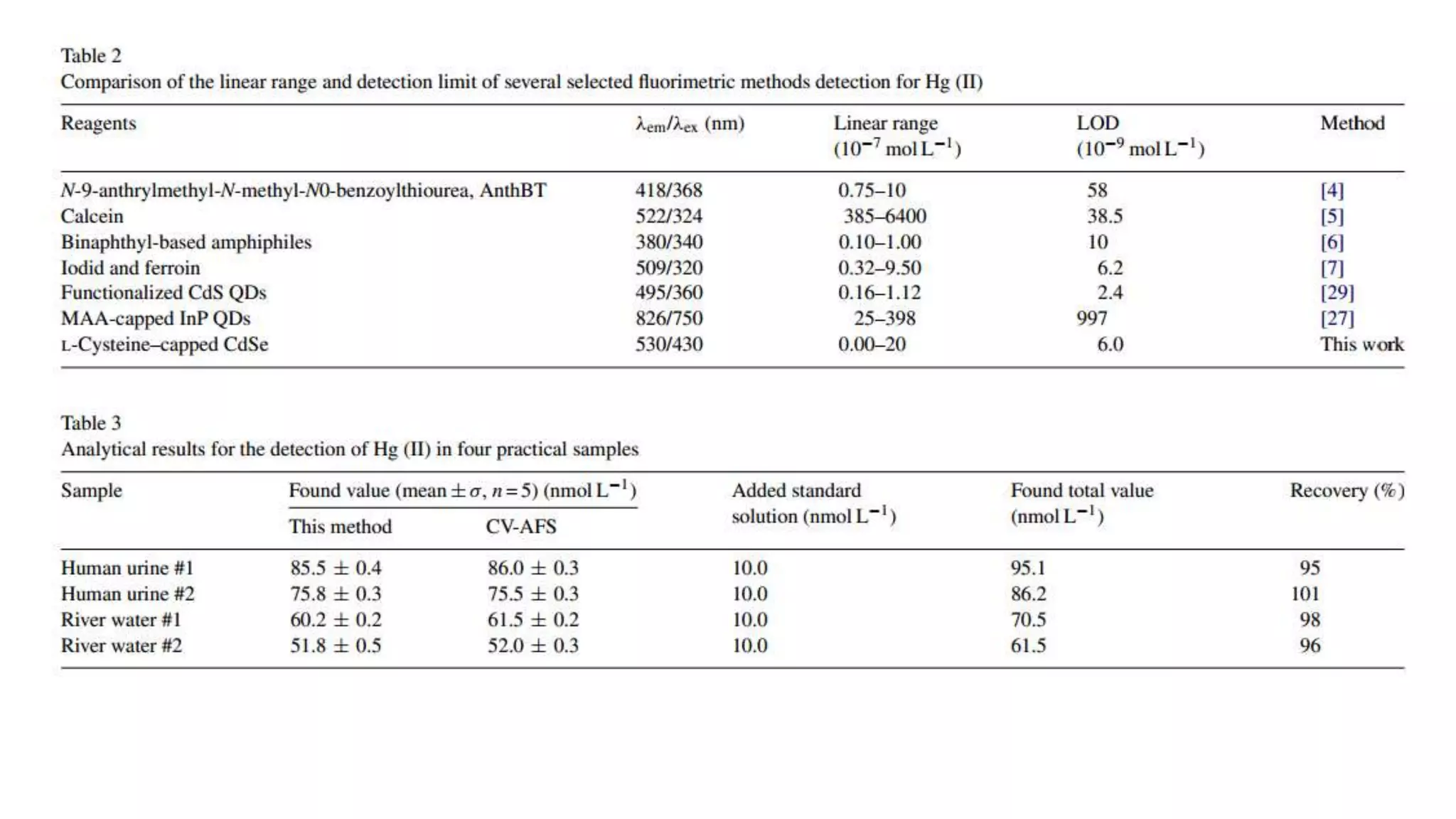

Various Hazardous
Material on
Made By : Fajar Budi Laksono
OR
E
Hazardous Material cannot be
by Human
OR
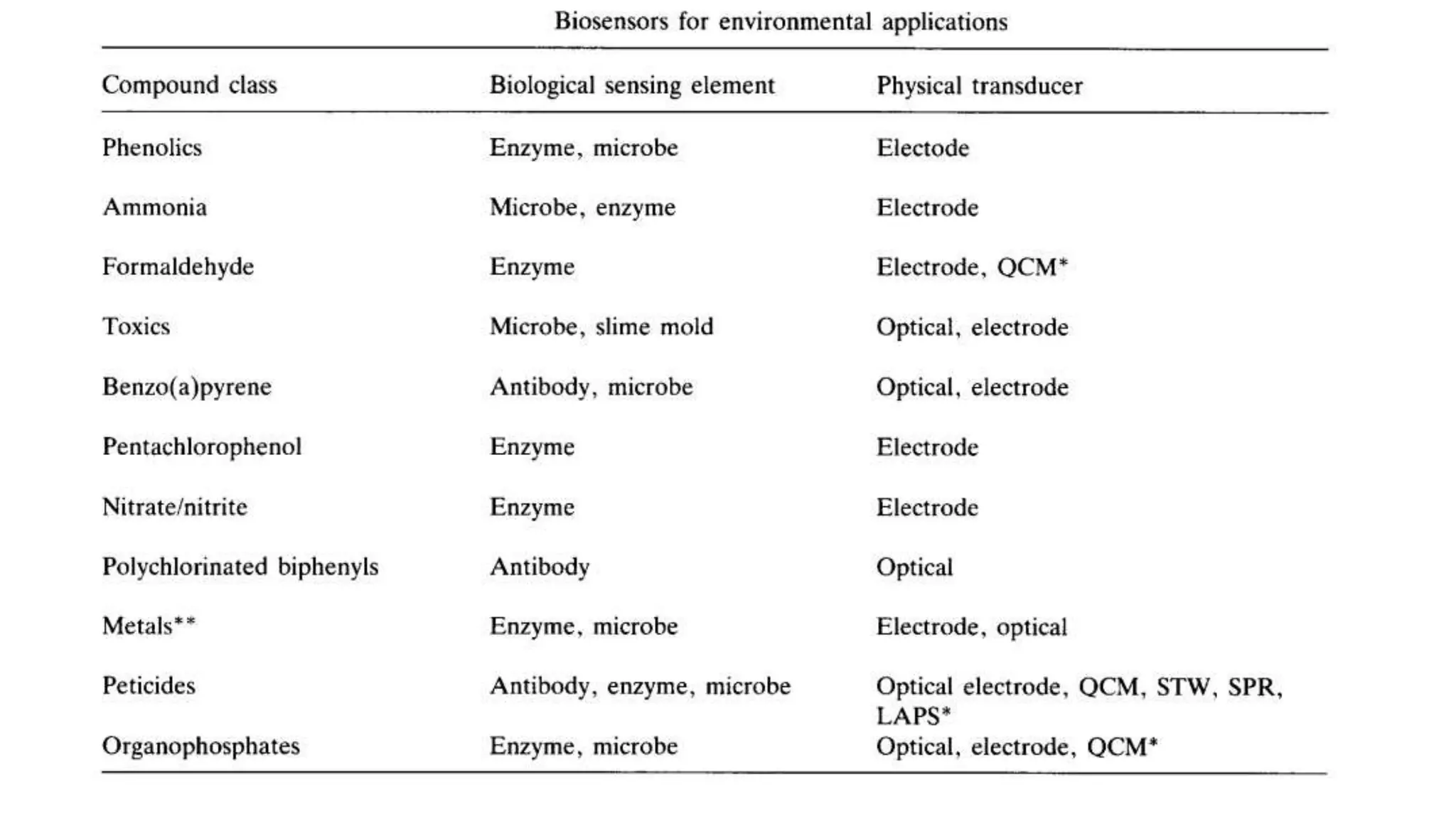
1.Biosensor
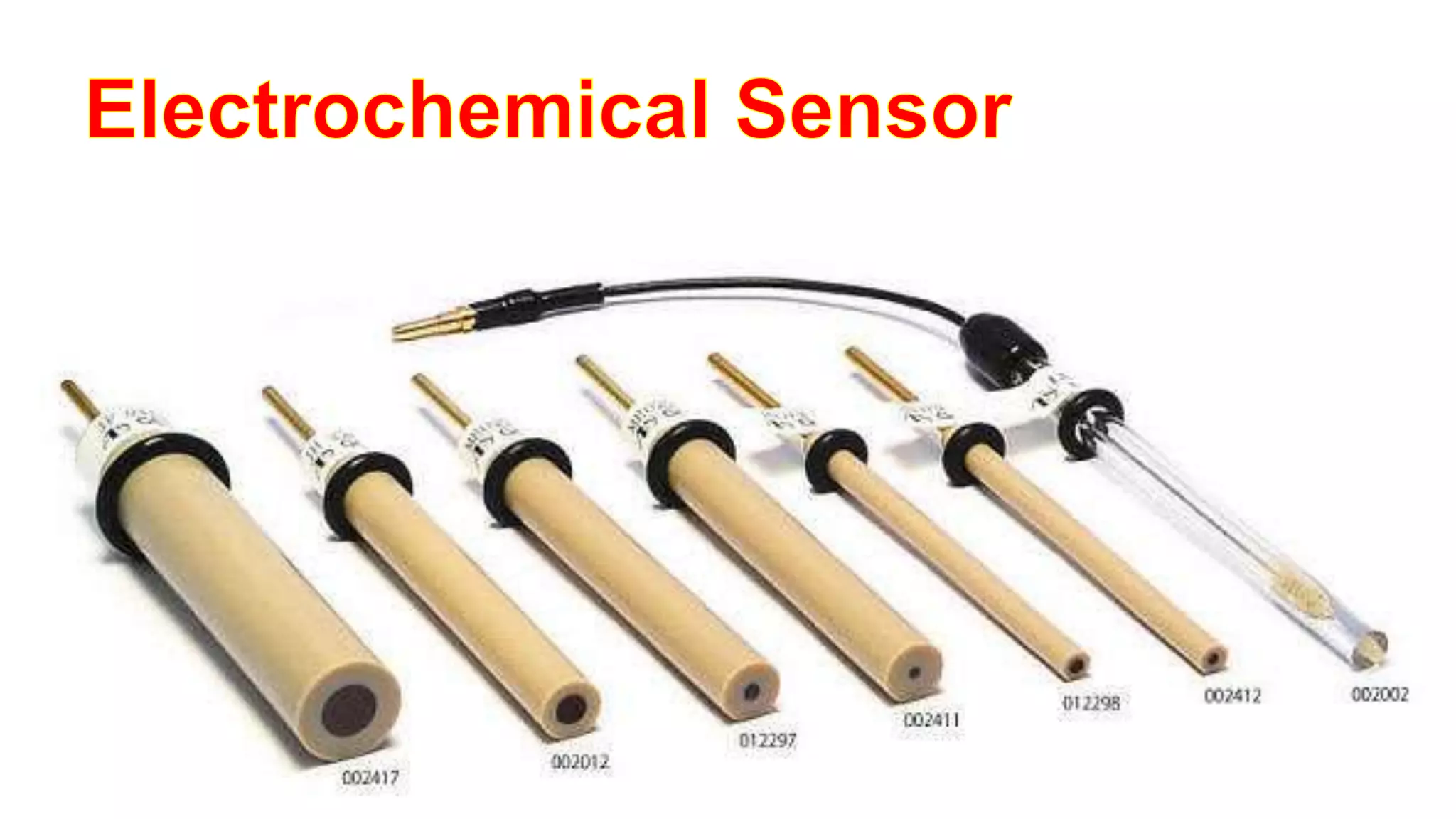
2.Electrochemical Sensor
3.Nanosensor
4.Fluoroscence Sensor
5.SPR Sensor
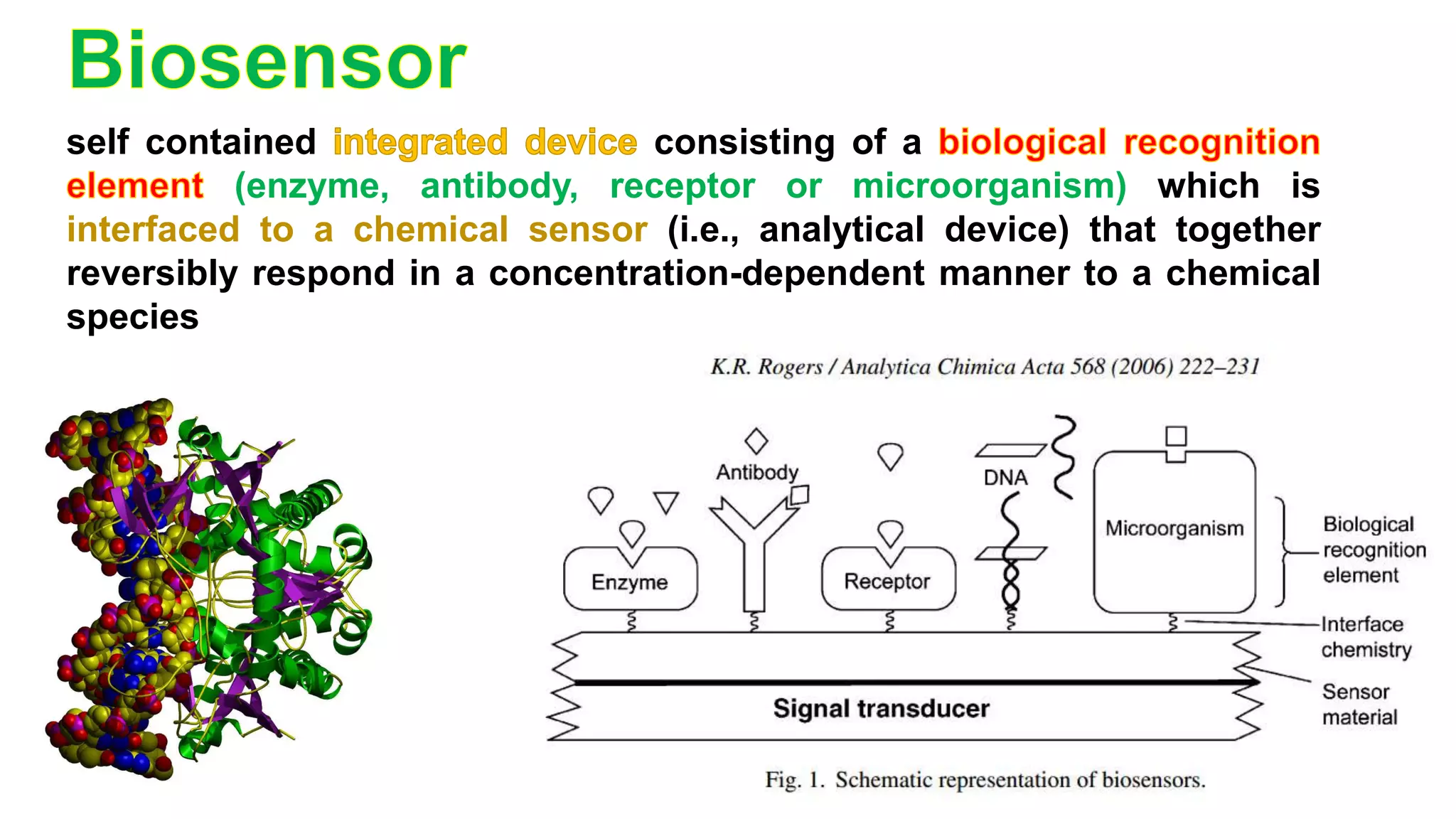
self contained consisting of a
(enzyme, antibody, receptor or microorganism) which is
interfaced to a chemical sensor (i.e., analytical device) that together
reversibly respond in a concentration-dependent manner to a chemical
species
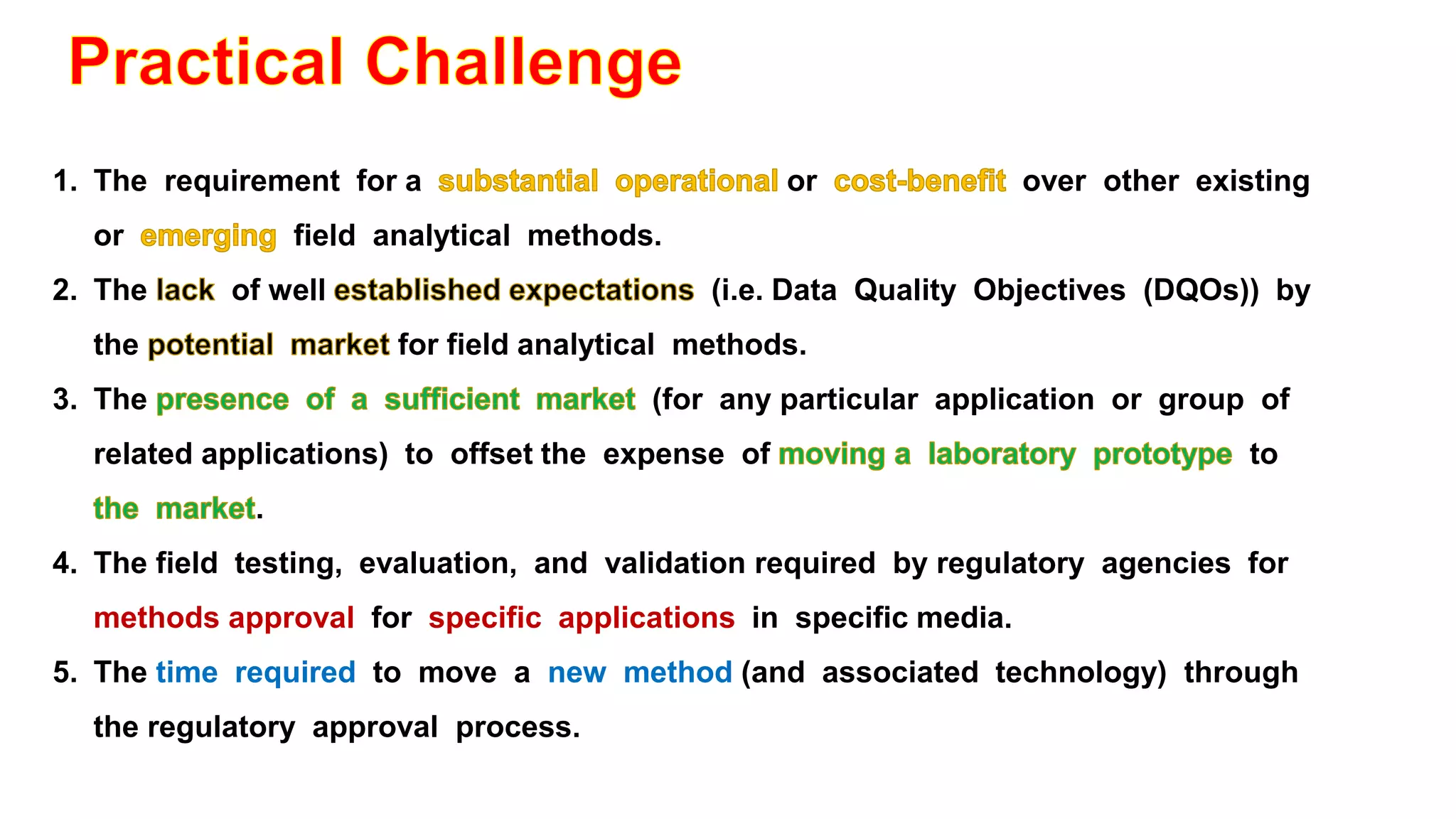
1. The requirement for a or over other existing
or field analytical methods.
2. The of well (i.e. Data Quality Objectives (DQOs)) by
the for field analytical methods.
3. The (for any particular application or group of
related applications) to offset the expense of to
.
4. The field testing, evaluation, and validation required by regulatory agencies for
methods approval for specific applications in specific media.
5. The time required to move a new method (and associated technology) through
the regulatory approval process.
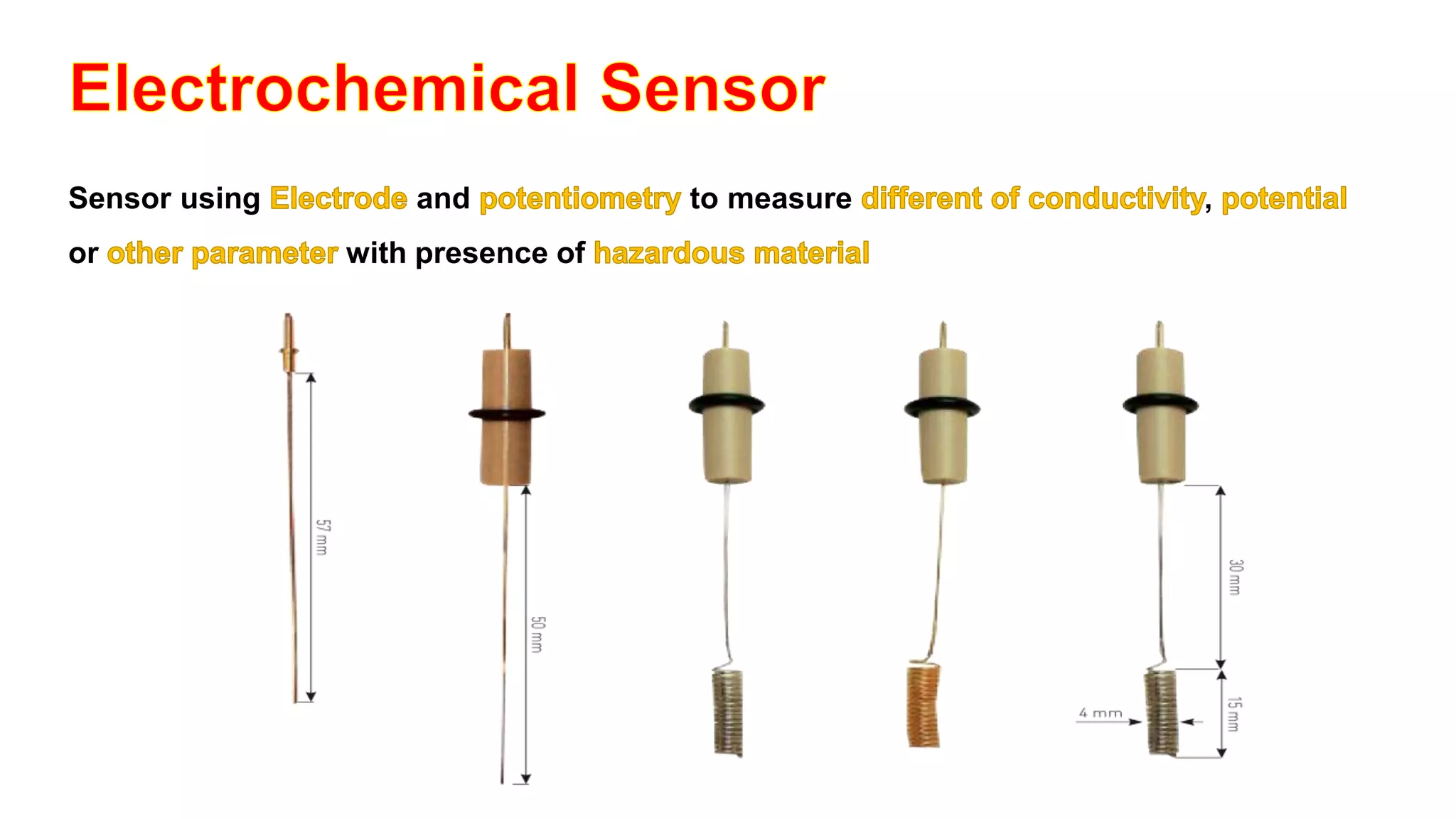
Sensor using and to measure ,
or with presence of
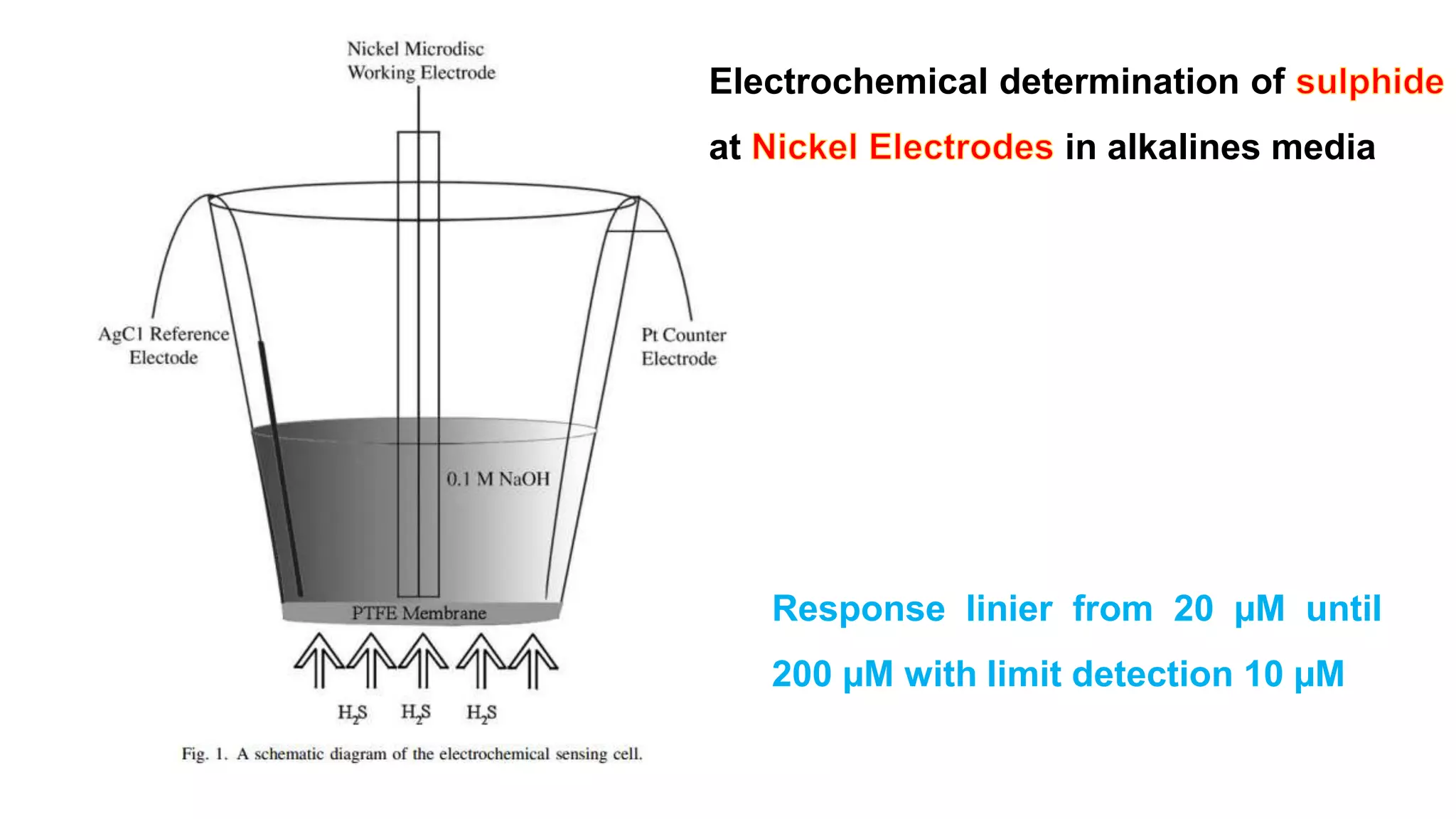
Electrochemical determination of
at in alkalines media
Response linier from 20 µM until
200 µM with limit detection 10 µM
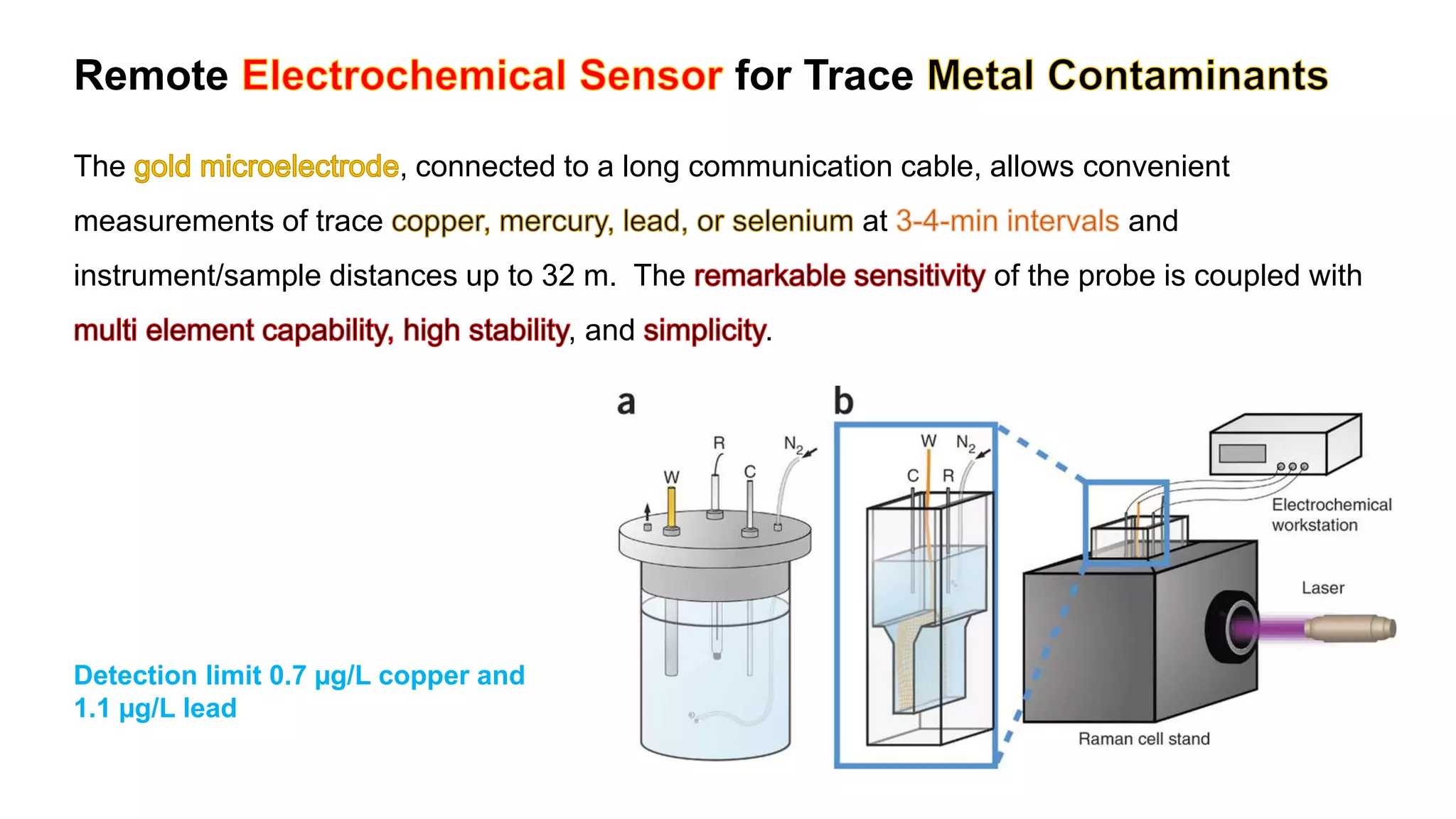
Remote for Trace
The , connected to a long communication cable, allows convenient
measurements of trace at and
instrument/sample distances up to 32 m. The of the probe is coupled with
, and .
Detection limit 0.7 µg/L copper and
1.1 µg/L lead
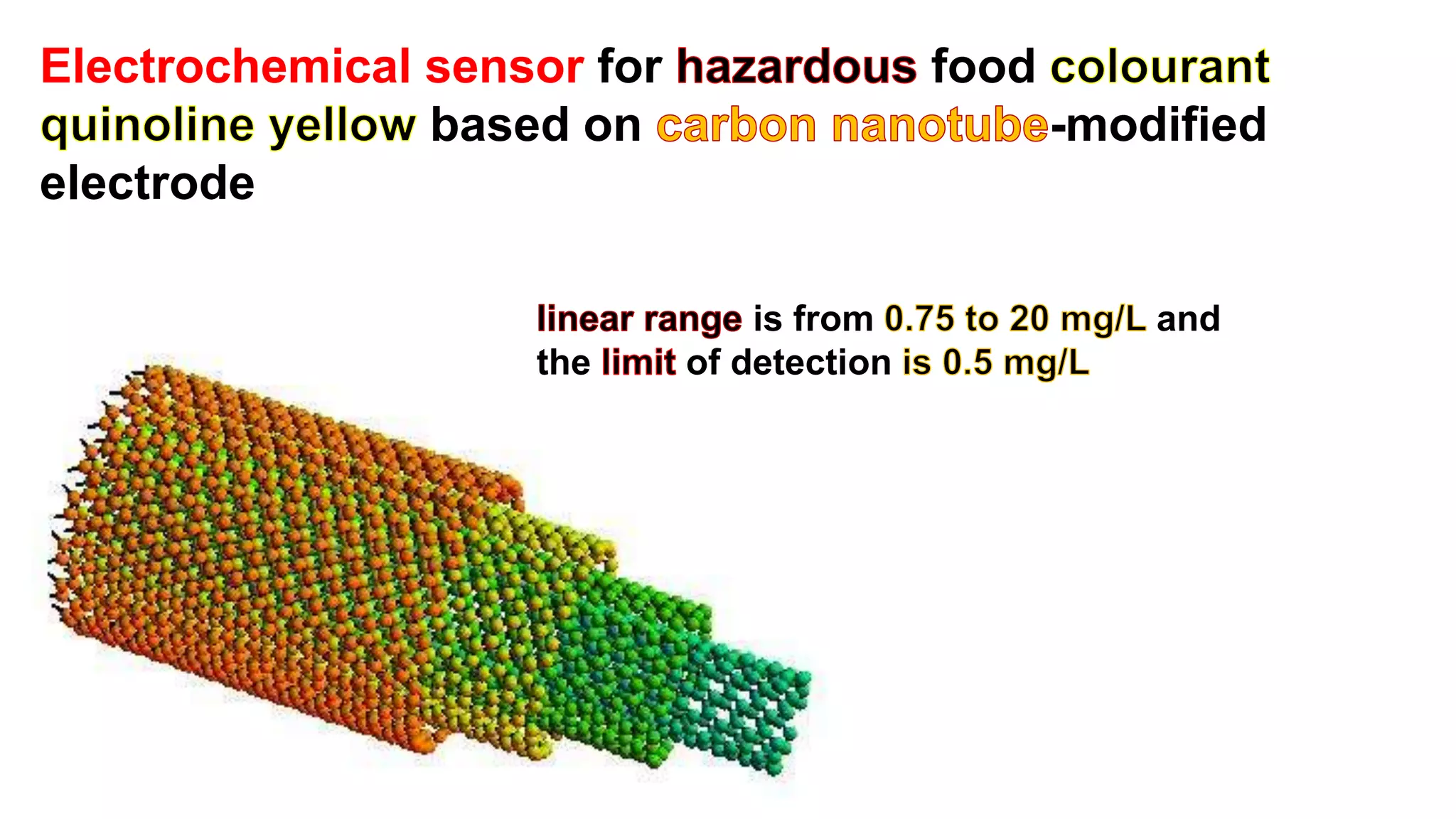
Electrochemical sensor for food
based on -modified
electrode
is from and
the of detection
Nanosensor
Nanosensor
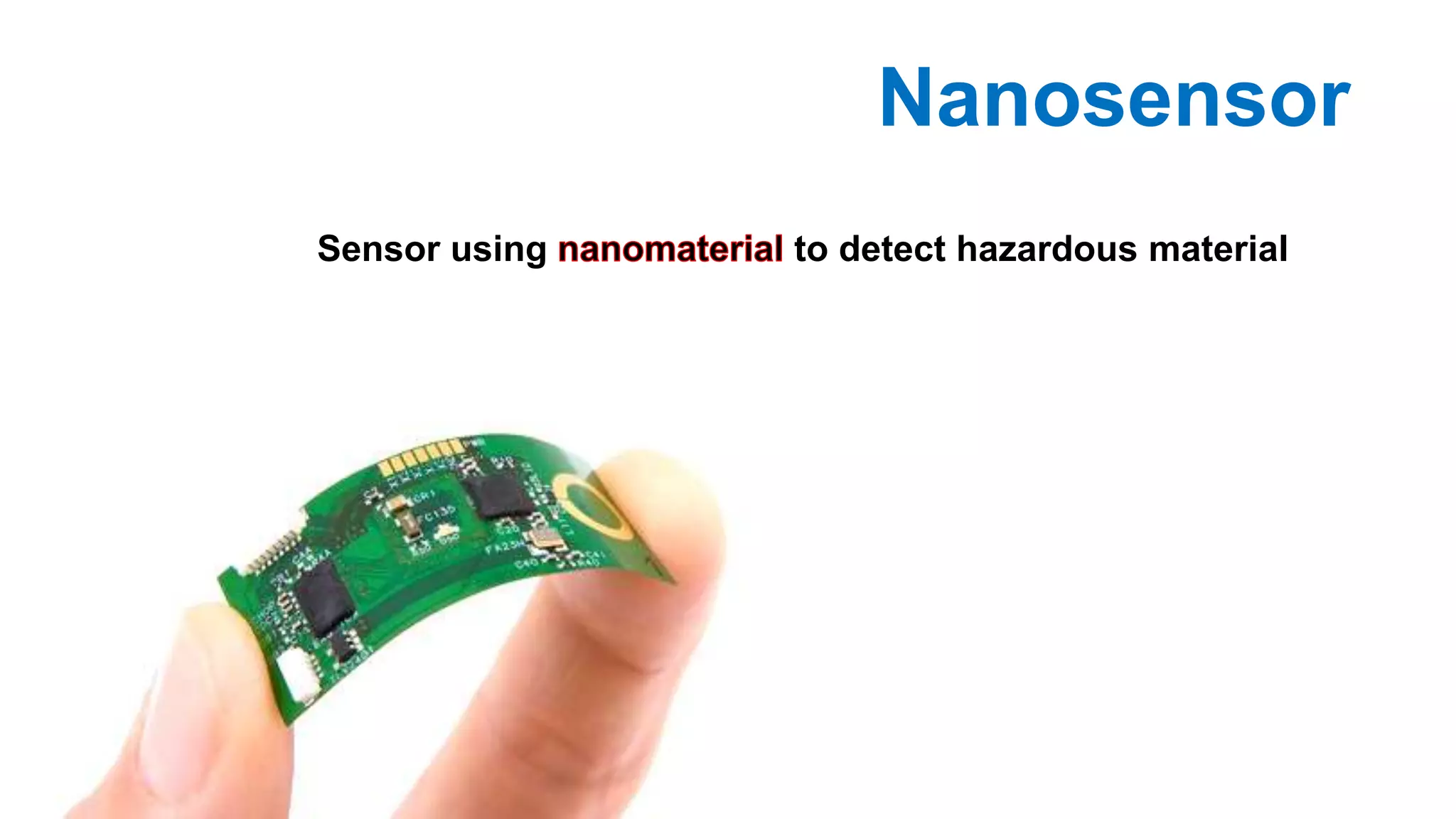
Sensor using to detect hazardous material
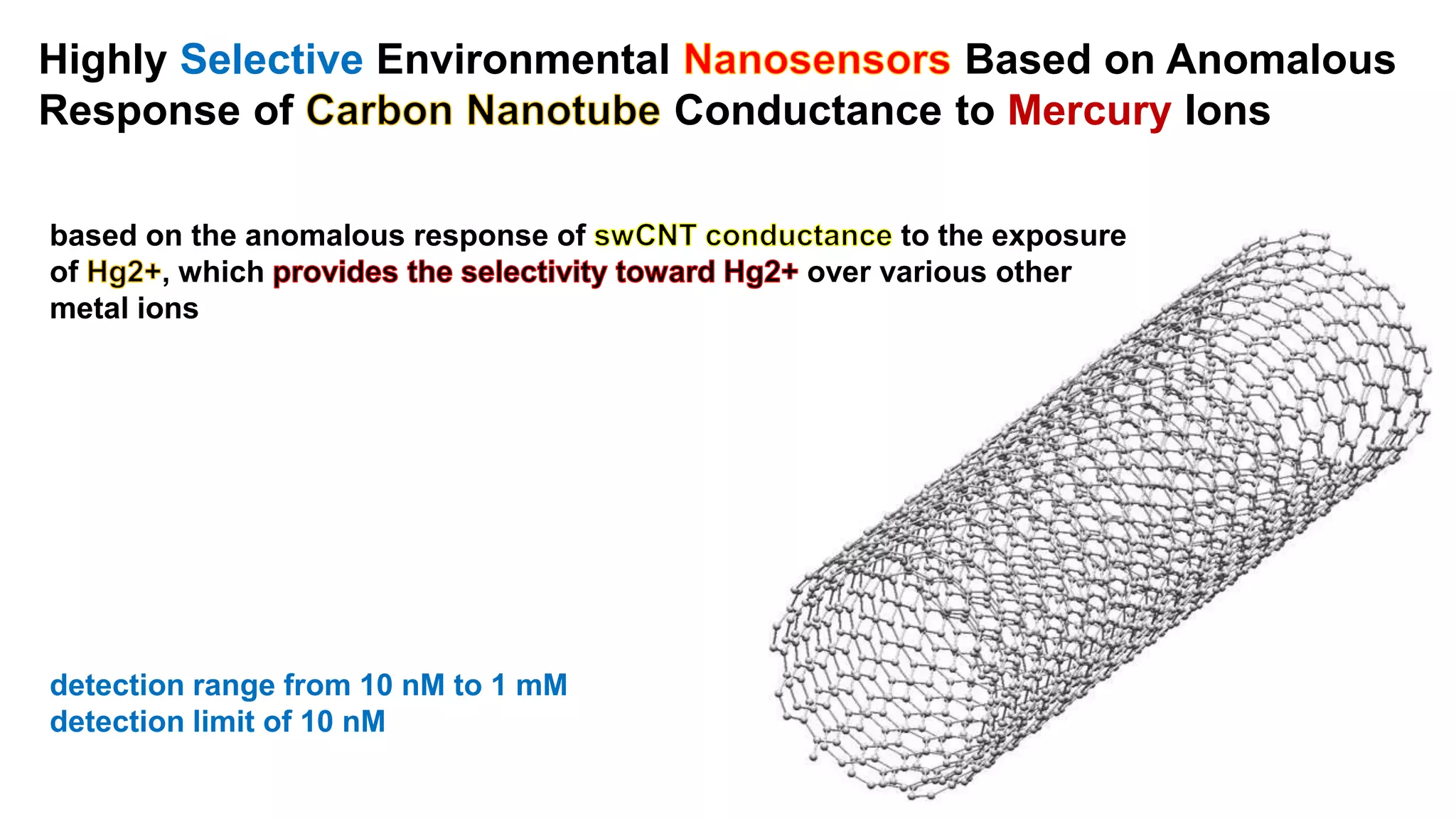
Highly Selective Environmental Based on Anomalous
Response of Conductance to Mercury Ions
based on the anomalous response of to the exposure
of , which over various other
metal ions
detection range from 10 nM to 1 mM
detection limit of 10 nM
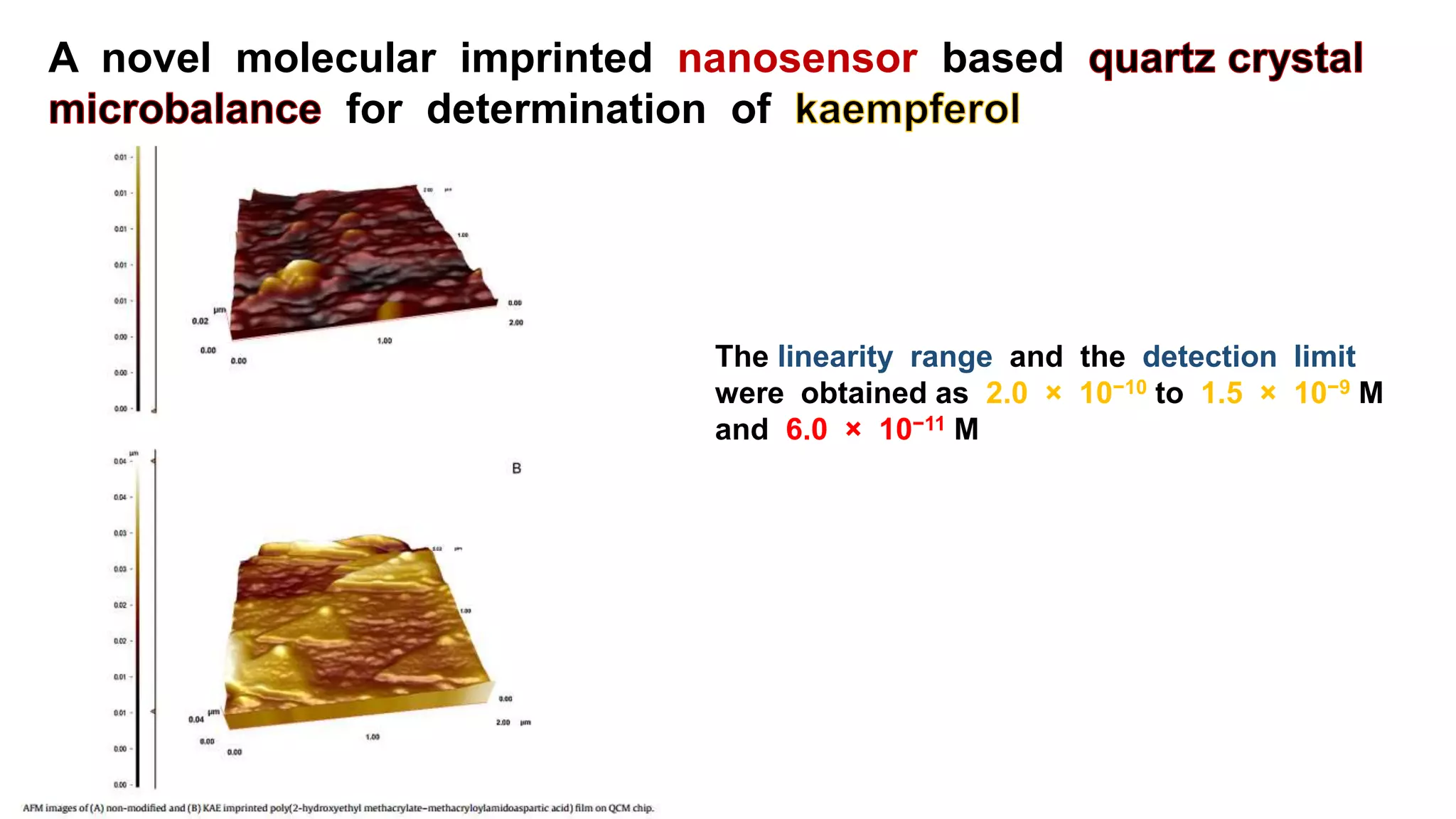
A novel molecular imprinted nanosensor based
for determination of
The linearity range and the detection limit
were obtained as 2.0 × 10⁻¹⁰ to 1.5 × 10⁻⁹ M
and 6.0 × 10⁻¹¹ M
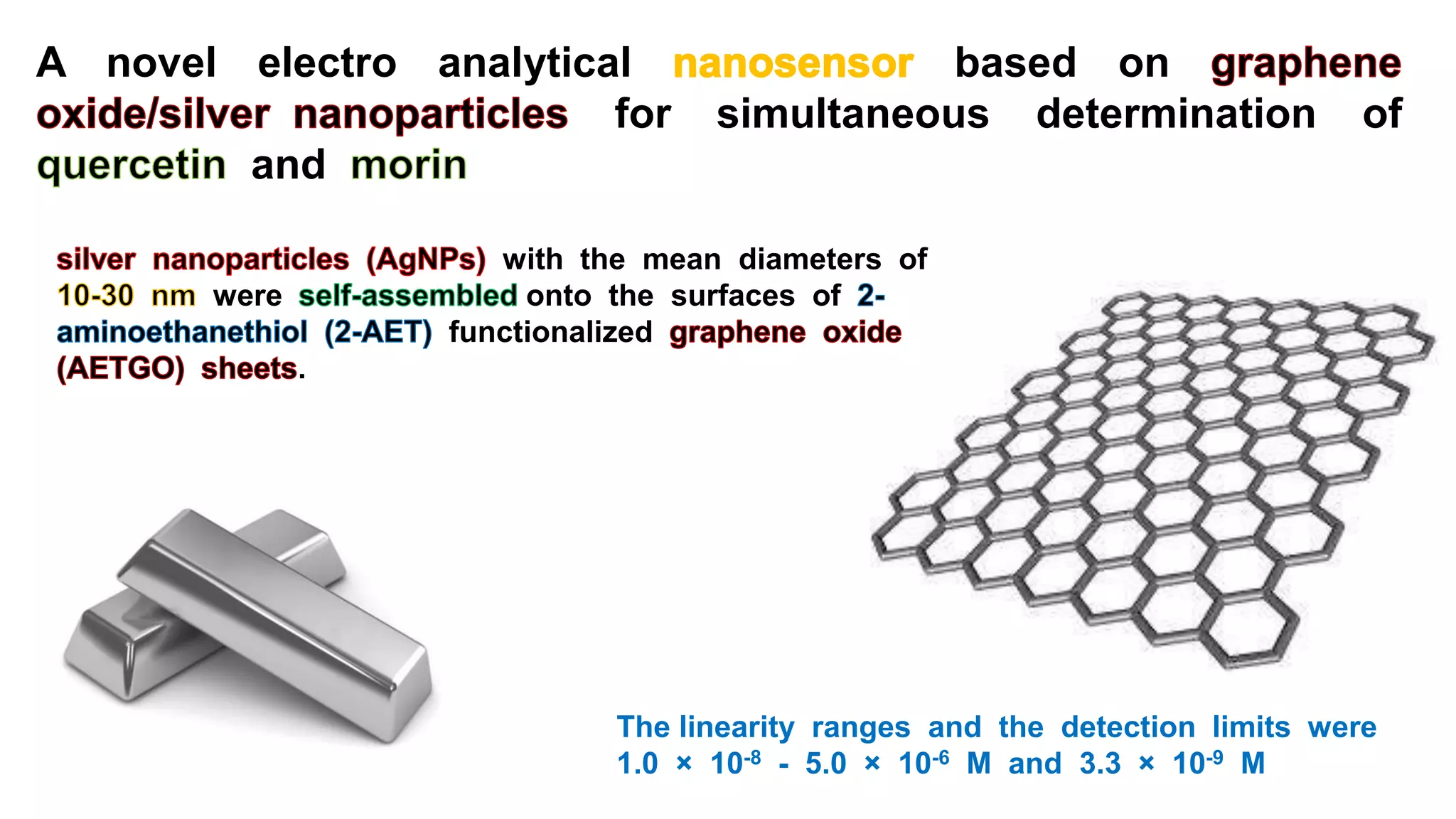
A novel electro analytical based on
for simultaneous determination of
and
with the mean diameters of
were onto the surfaces of
functionalized
.
The linearity ranges and the detection limits were
1.0 × 10⁻⁸ - 5.0 × 10⁻⁶ M and 3.3 × 10⁻⁹ M
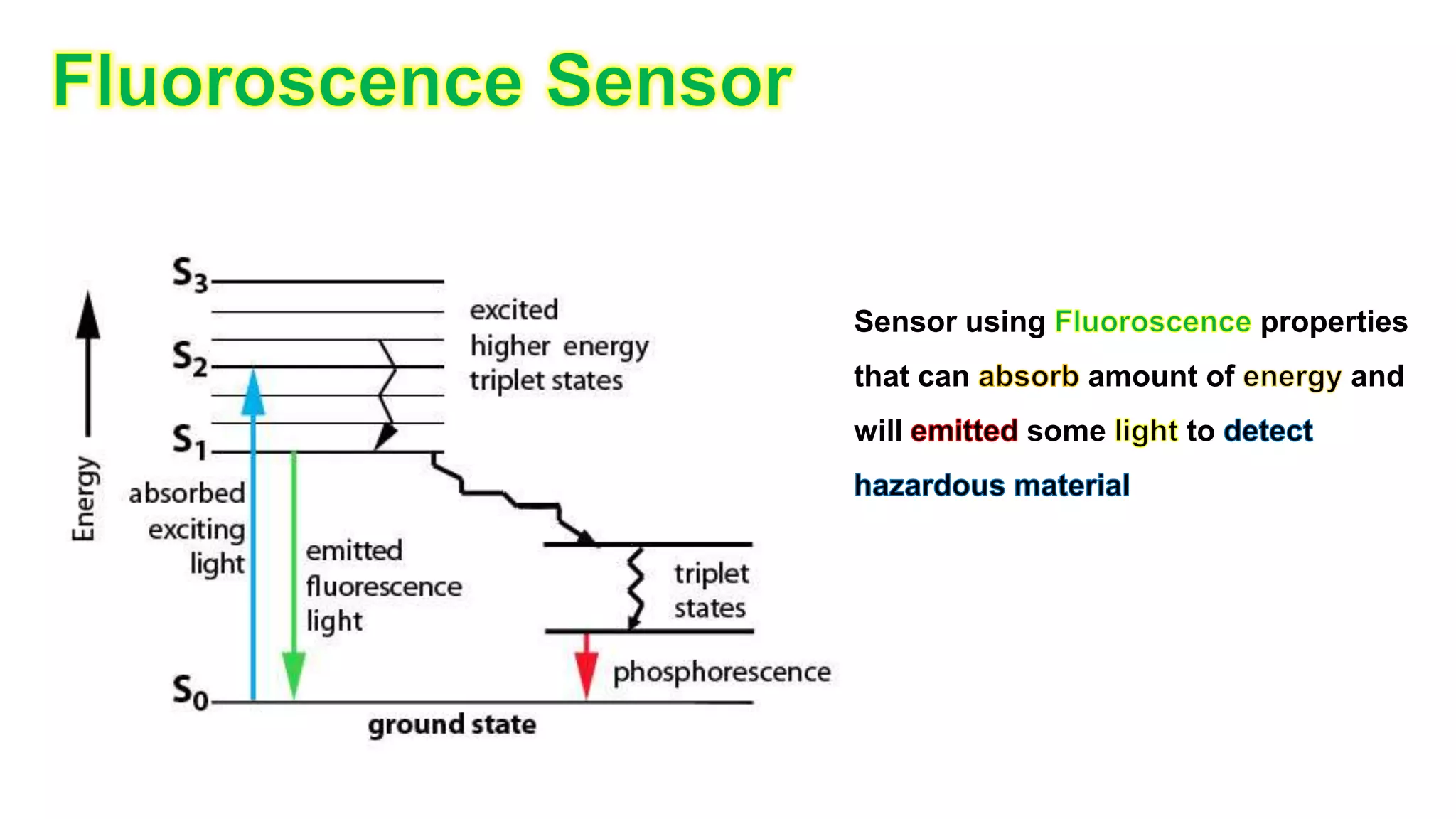
Sensor using properties
that can amount of and
will some to
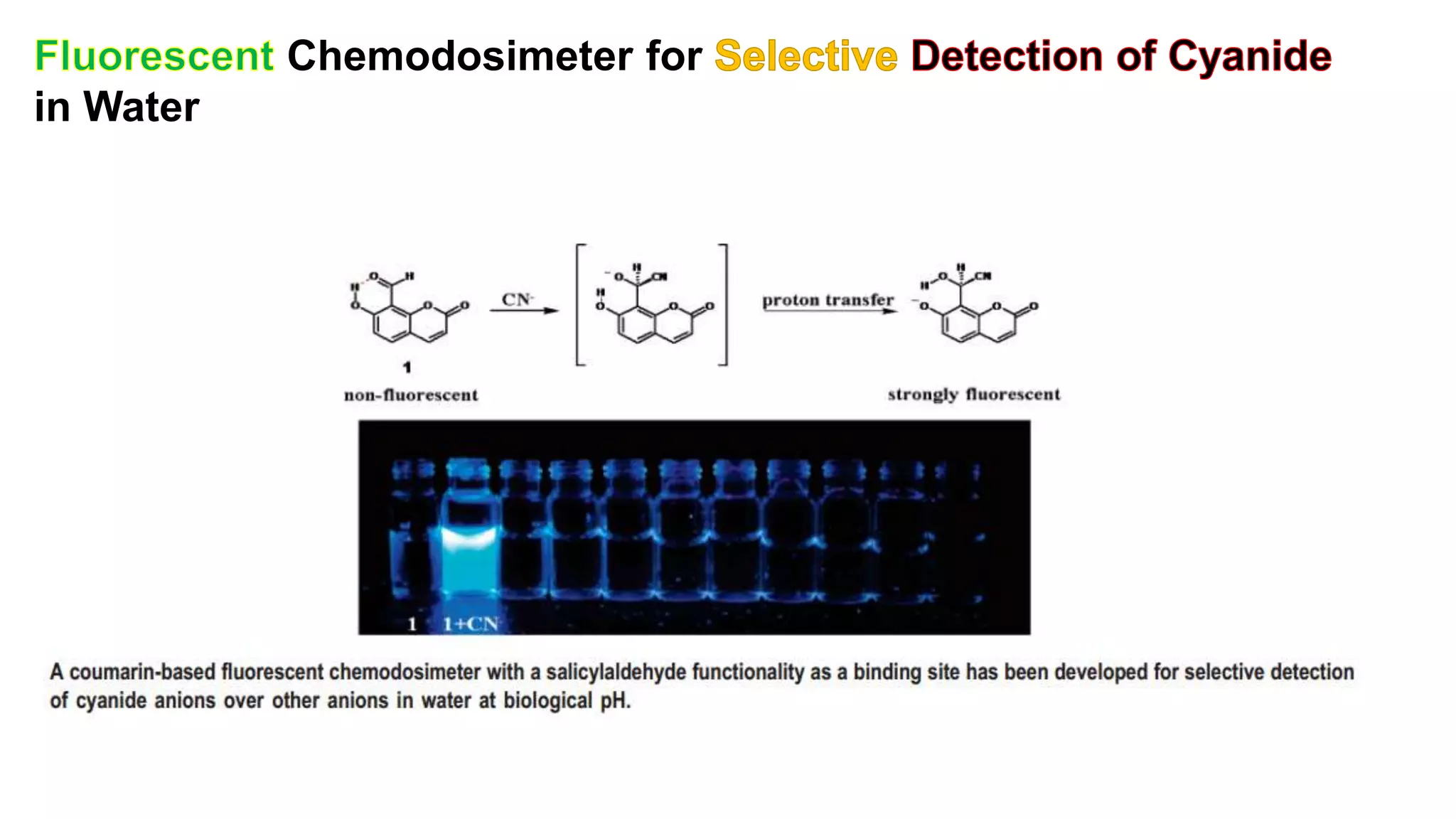
Chemodosimeter for
in Water
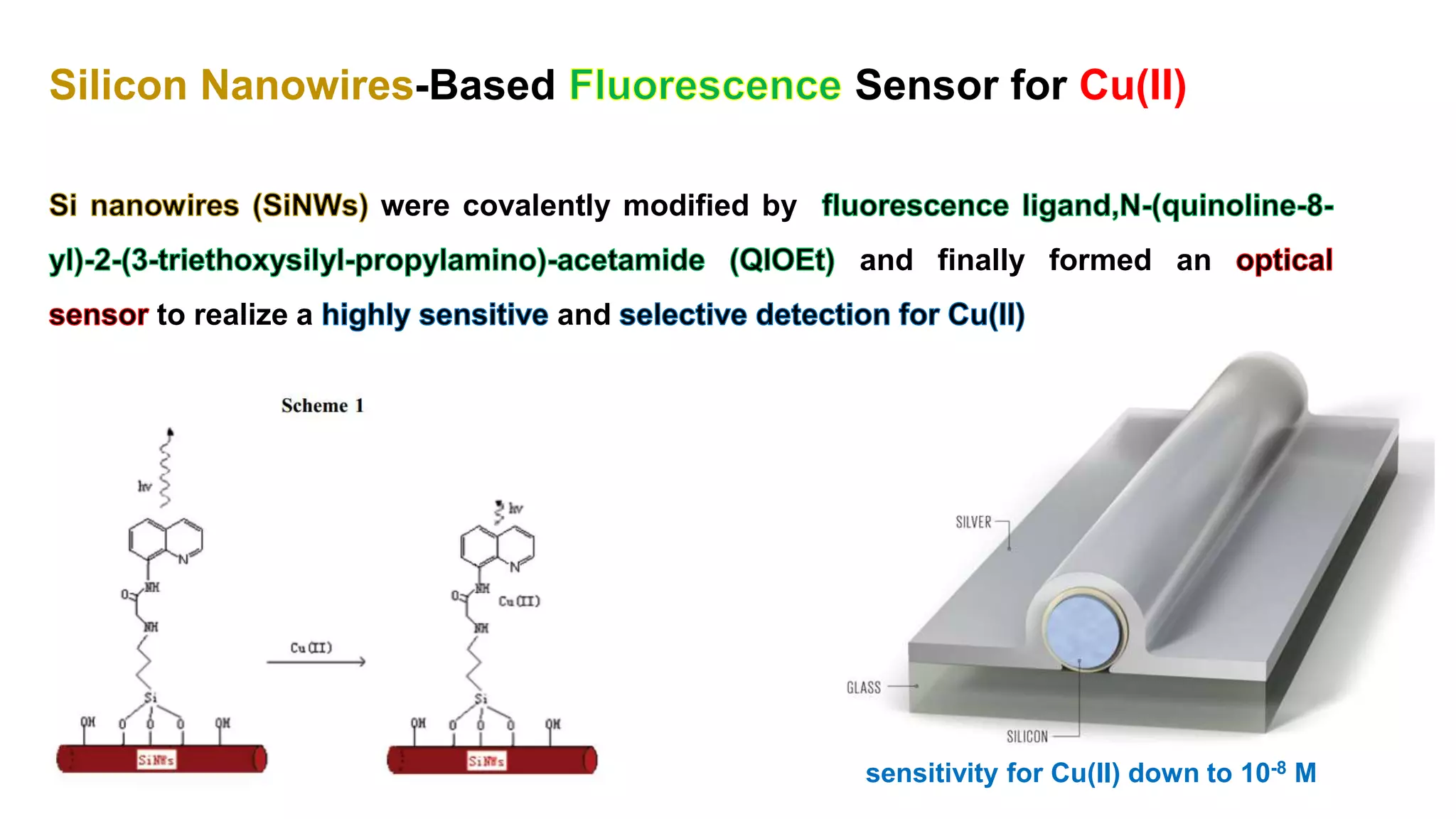
Silicon Nanowires-Based Sensor for Cu(II)
were covalently modified by
and finally formed an
to realize a and
sensitivity for Cu(II) down to 10-8 M
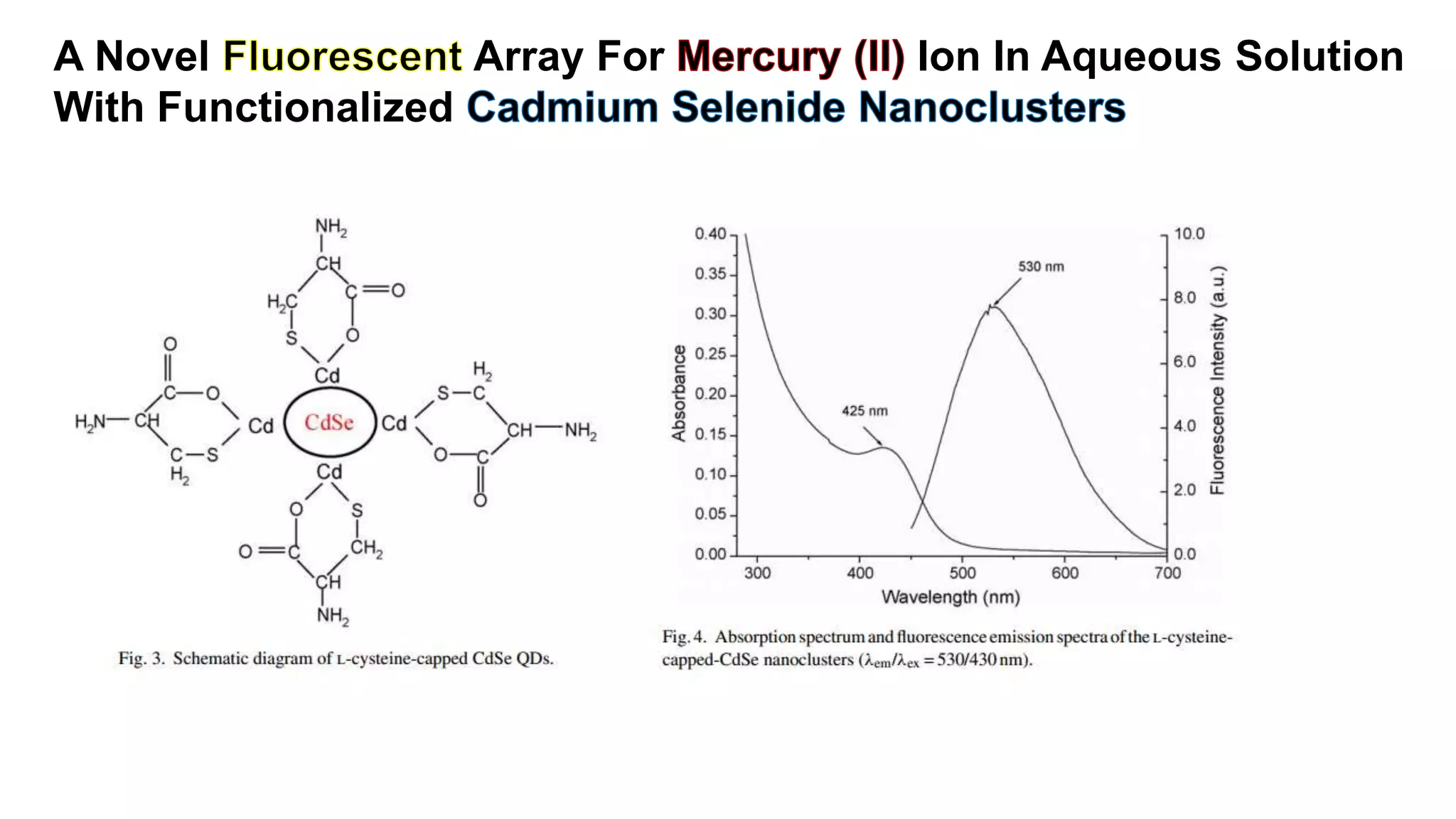
A Novel Array For Ion In Aqueous Solution
With Functionalized
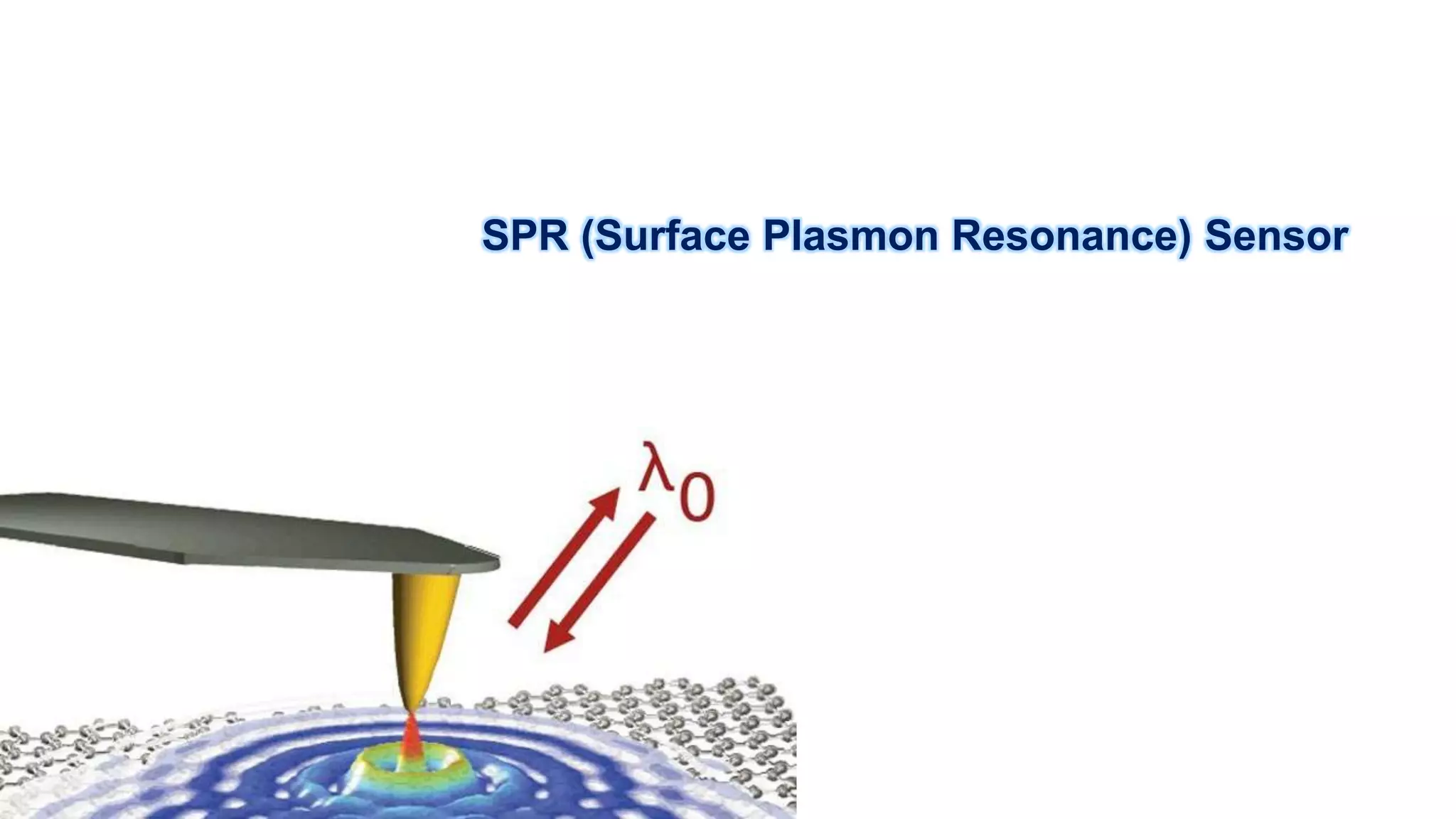
SPR (Surface Plasmon Resonance) Sensor
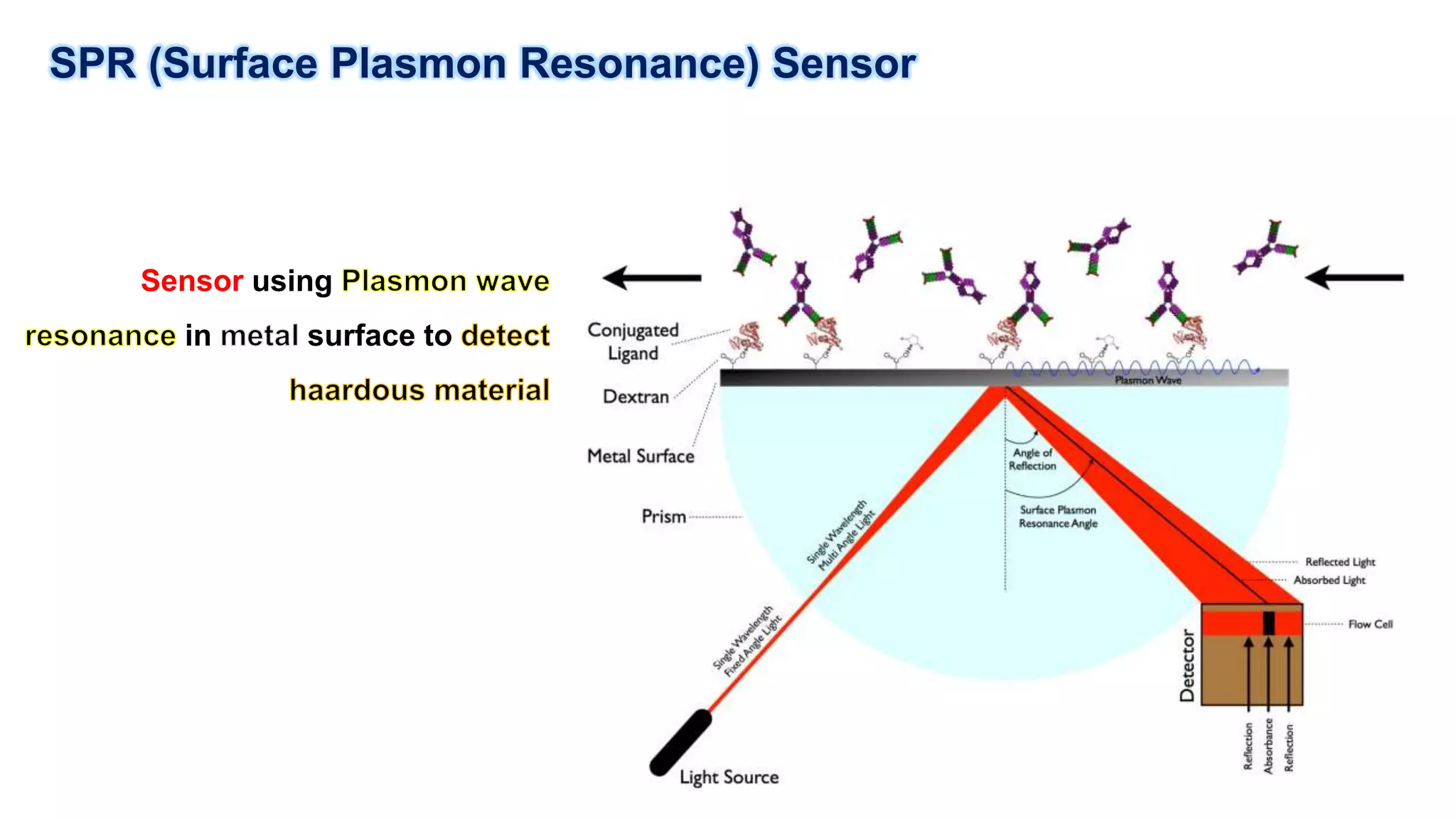
Sensor using
in surface to
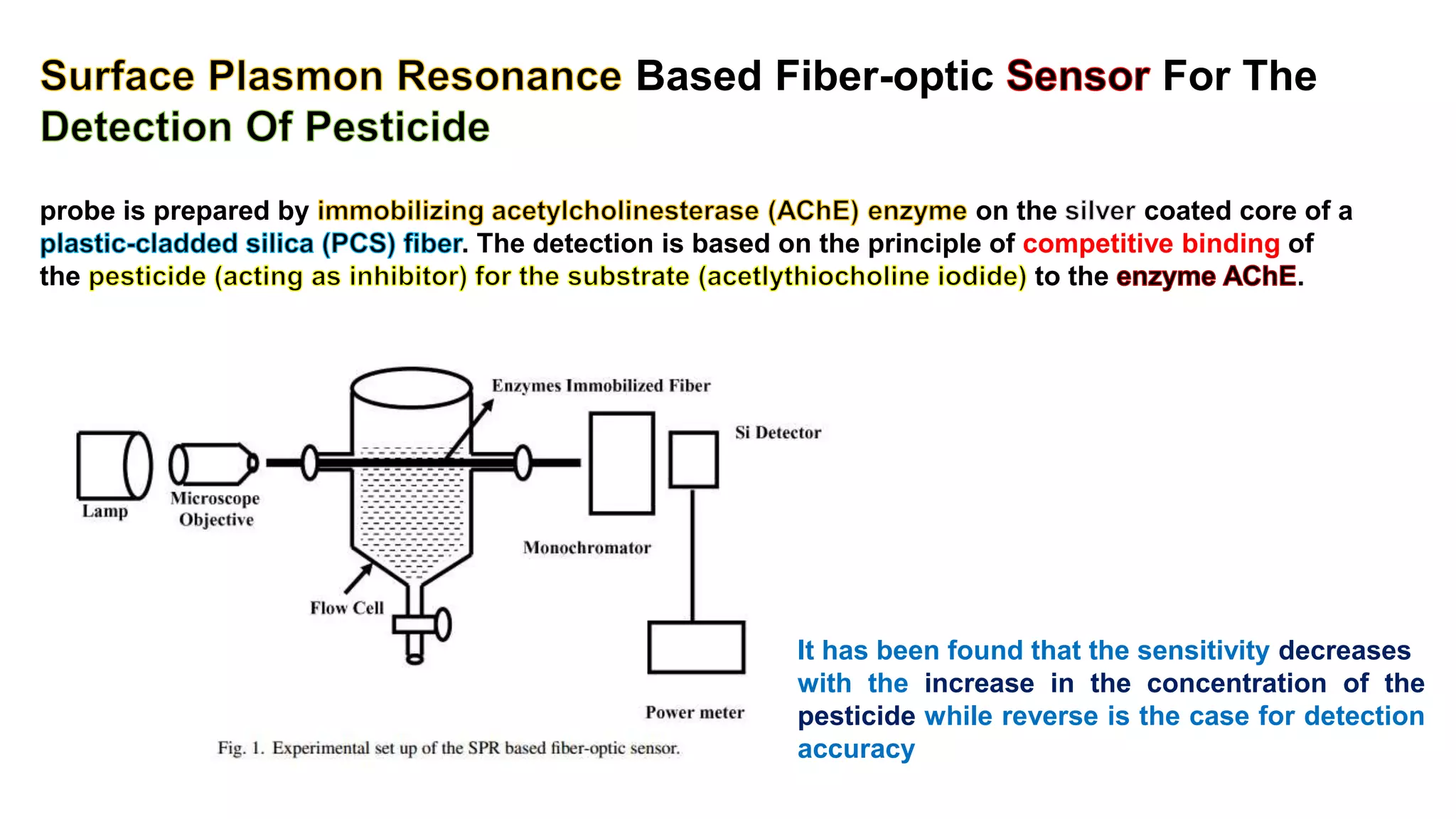
Based Fiber-optic For The
probe is prepared by on the coated core of a
. The detection is based on the principle of competitive binding of
the to the .
It has been found that the sensitivity decreases
with the increase in the concentration of the
pesticide while reverse is the case for detection
accuracy
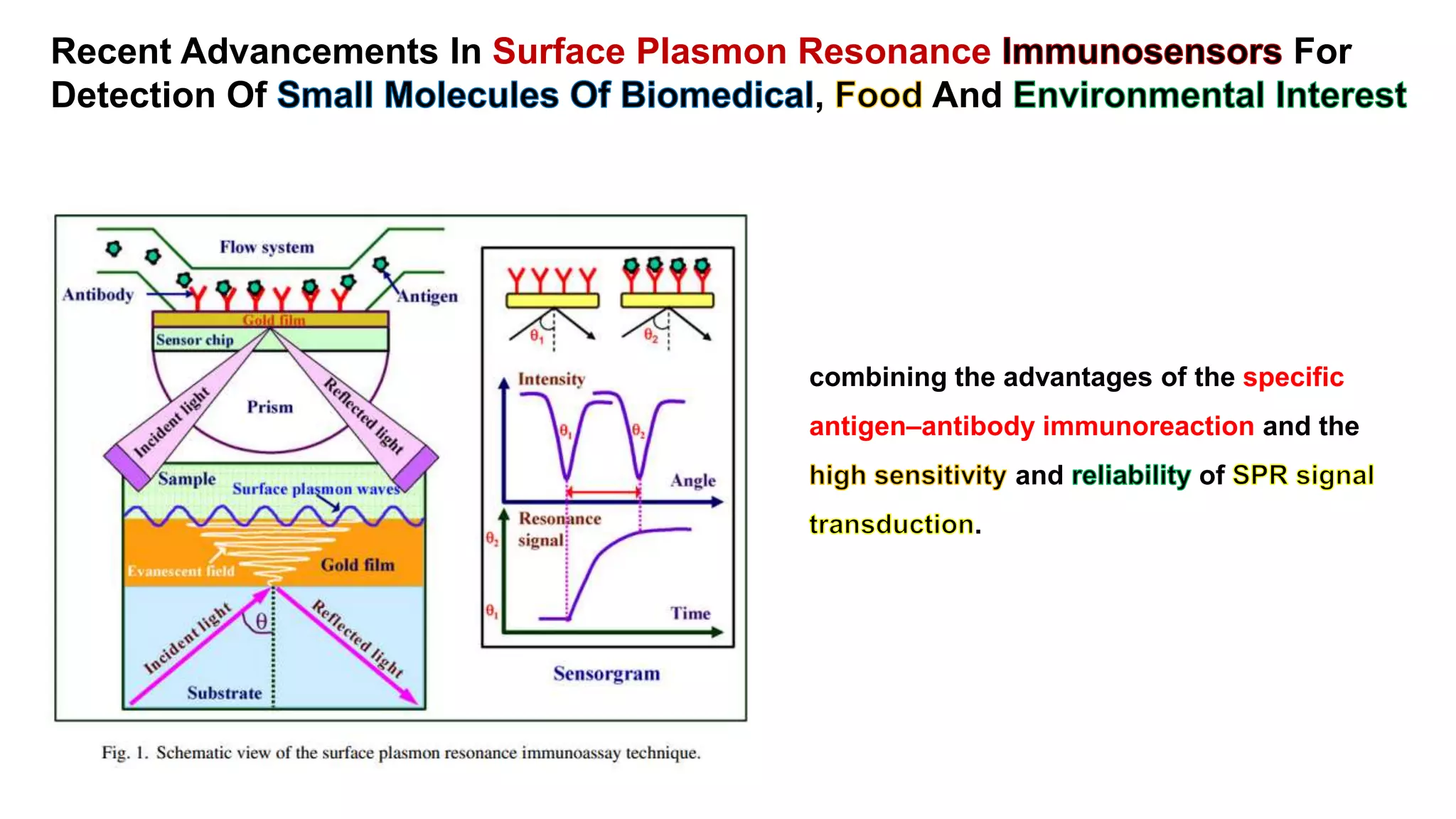
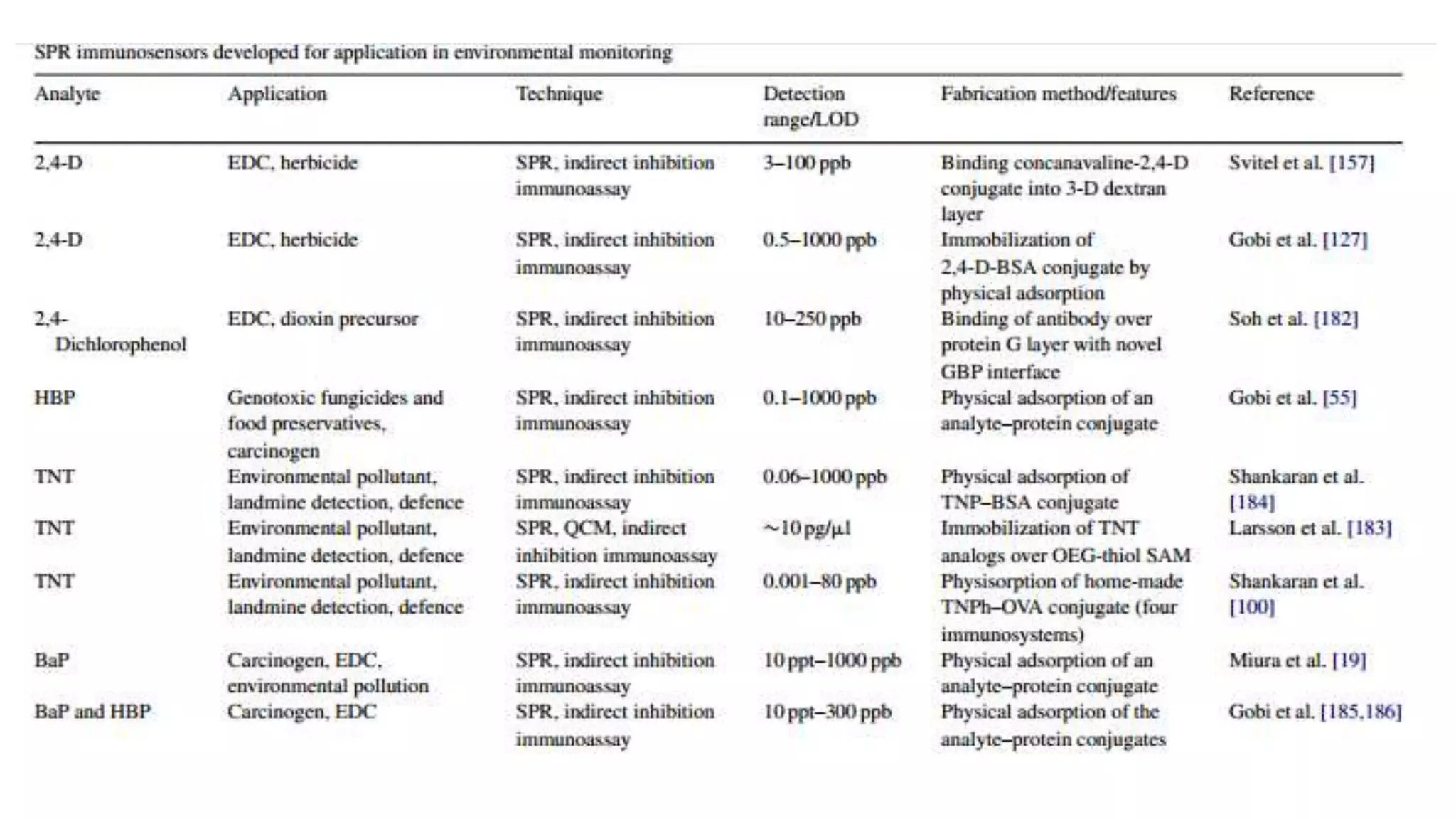
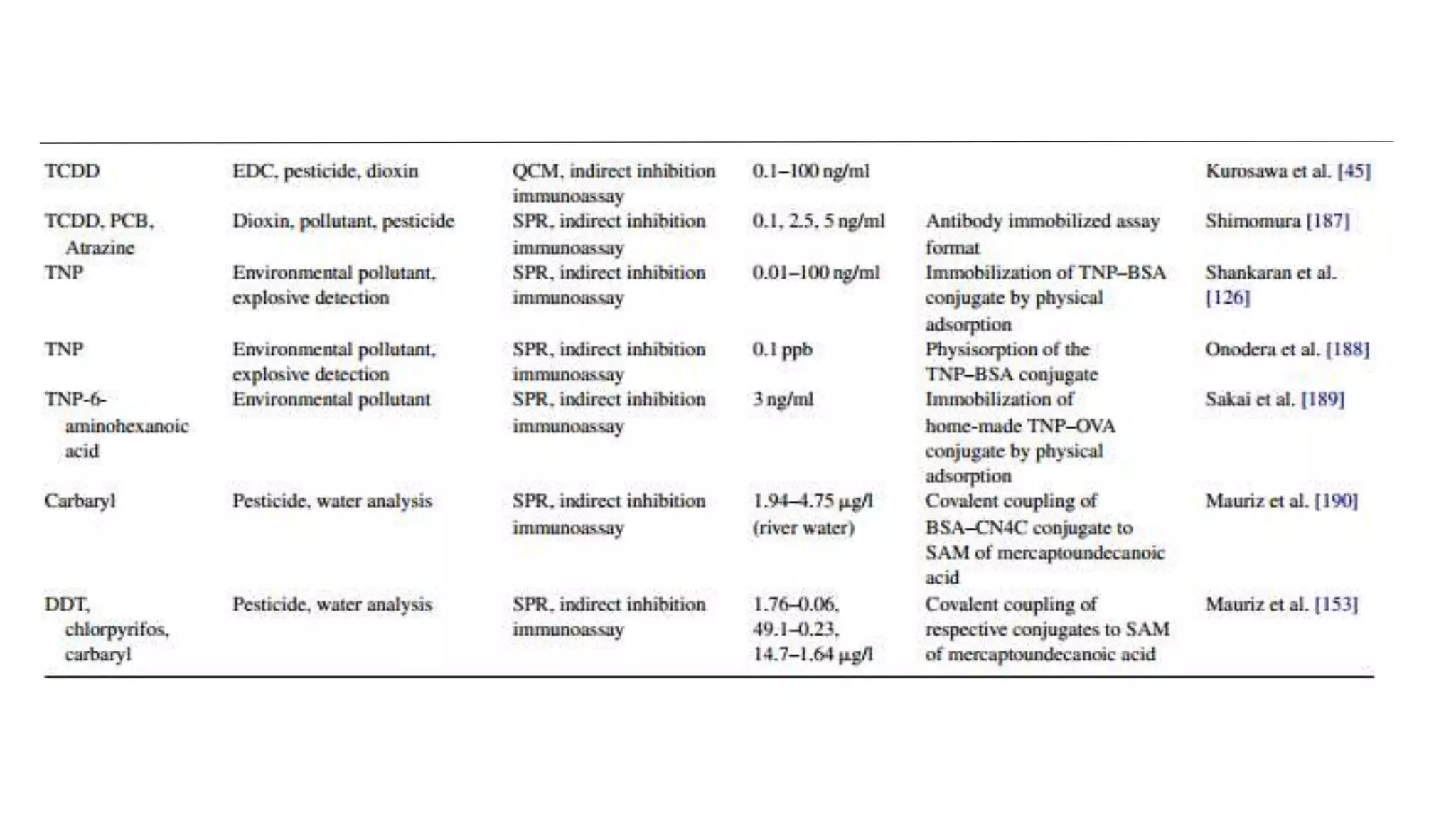
Recent Advancements In Surface Plasmon Resonance For
Detection Of , And
combining the advantages of the specific
antigen–antibody immunoreaction and the
and of
.
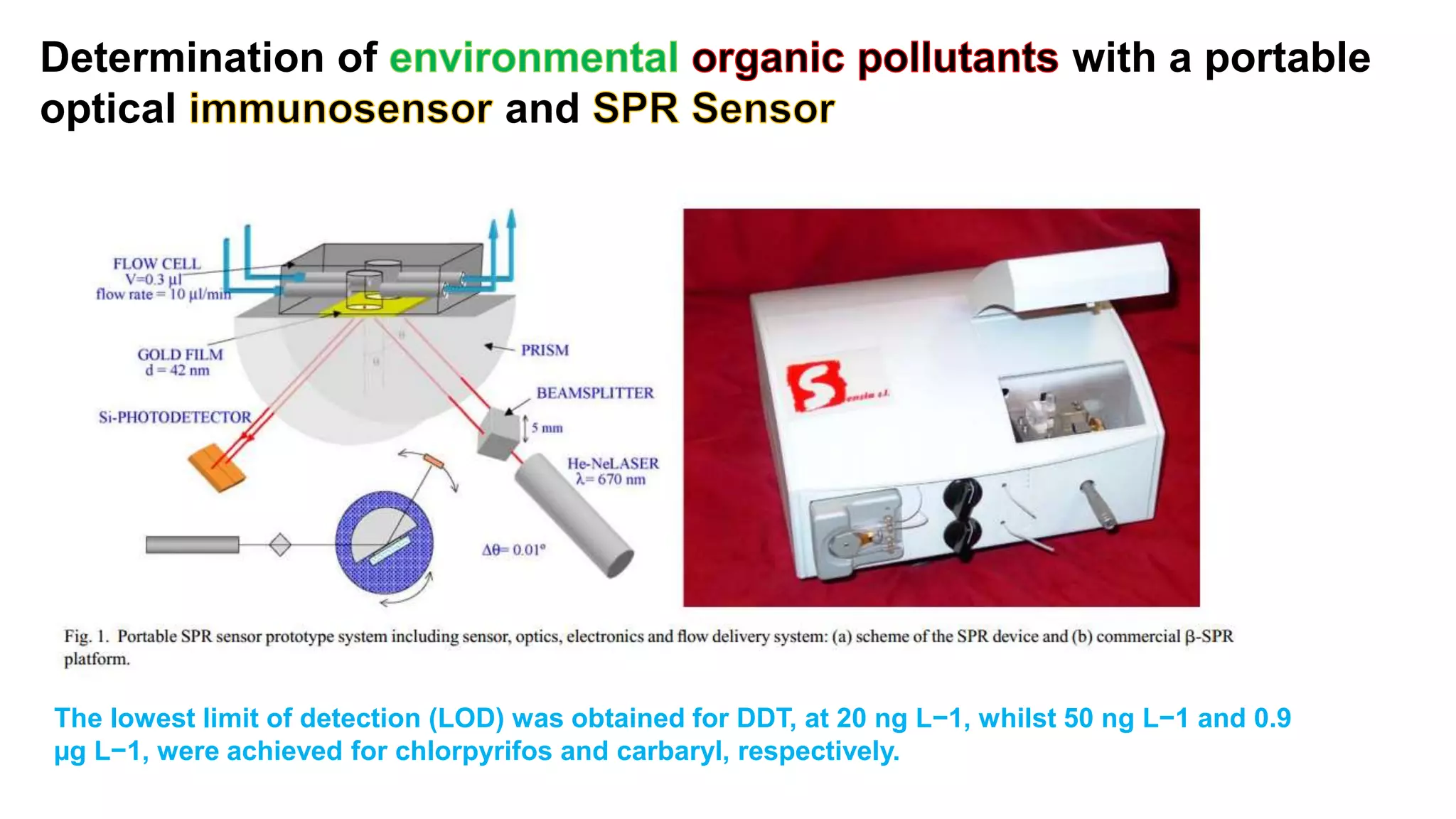
Determination of with a portable
optical and
The lowest limit of detection (LOD) was obtained for DDT, at 20 ng L−1, whilst 50 ng L−1 and 0.9
µg L−1, were achieved for chlorpyrifos and carbaryl, respectively.
Sensor
Sensor

Sensor

  • 1.
    Various Hazardous Material on MadeBy : Fajar Budi Laksono
  • 2.
  • 3.
  • 4.
  • 7.
  • 13.
  • 15.
    self contained consistingof a (enzyme, antibody, receptor or microorganism) which is interfaced to a chemical sensor (i.e., analytical device) that together reversibly respond in a concentration-dependent manner to a chemical species
  • 18.
    1. The requirementfor a or over other existing or field analytical methods. 2. The of well (i.e. Data Quality Objectives (DQOs)) by the for field analytical methods. 3. The (for any particular application or group of related applications) to offset the expense of to . 4. The field testing, evaluation, and validation required by regulatory agencies for methods approval for specific applications in specific media. 5. The time required to move a new method (and associated technology) through the regulatory approval process.
  • 20.
    Sensor using andto measure , or with presence of
  • 21.
    Electrochemical determination of atin alkalines media Response linier from 20 µM until 200 µM with limit detection 10 µM
  • 22.
    Remote for Trace The, connected to a long communication cable, allows convenient measurements of trace at and instrument/sample distances up to 32 m. The of the probe is coupled with , and . Detection limit 0.7 µg/L copper and 1.1 µg/L lead
  • 23.
    Electrochemical sensor forfood based on -modified electrode is from and the of detection
  • 24.
  • 25.
    Nanosensor Sensor using todetect hazardous material
  • 26.
    Highly Selective EnvironmentalBased on Anomalous Response of Conductance to Mercury Ions based on the anomalous response of to the exposure of , which over various other metal ions detection range from 10 nM to 1 mM detection limit of 10 nM
  • 27.
    A novel molecularimprinted nanosensor based for determination of The linearity range and the detection limit were obtained as 2.0 × 10⁻¹⁰ to 1.5 × 10⁻⁹ M and 6.0 × 10⁻¹¹ M
  • 28.
    A novel electroanalytical based on for simultaneous determination of and with the mean diameters of were onto the surfaces of functionalized . The linearity ranges and the detection limits were 1.0 × 10⁻⁸ - 5.0 × 10⁻⁶ M and 3.3 × 10⁻⁹ M
  • 30.
    Sensor using properties thatcan amount of and will some to
  • 31.
  • 32.
    Silicon Nanowires-Based Sensorfor Cu(II) were covalently modified by and finally formed an to realize a and sensitivity for Cu(II) down to 10-8 M
  • 33.
    A Novel ArrayFor Ion In Aqueous Solution With Functionalized
  • 35.
    SPR (Surface PlasmonResonance) Sensor
  • 36.
    SPR (Surface PlasmonResonance) Sensor Sensor using in surface to
  • 37.
    Based Fiber-optic ForThe probe is prepared by on the coated core of a . The detection is based on the principle of competitive binding of the to the . It has been found that the sensitivity decreases with the increase in the concentration of the pesticide while reverse is the case for detection accuracy
  • 38.
    Recent Advancements InSurface Plasmon Resonance For Detection Of , And combining the advantages of the specific antigen–antibody immunoreaction and the and of .
  • 41.
    Determination of witha portable optical and The lowest limit of detection (LOD) was obtained for DDT, at 20 ng L−1, whilst 50 ng L−1 and 0.9 µg L−1, were achieved for chlorpyrifos and carbaryl, respectively.