An Overview of Bio–Battery Working Principle, Types & Applications
By
MIGABO KISIMBANYI Evariste
Outline
• ABSTRACT
• OVERVIEW OF A BIO-BATTERY
• WORKING PRINCIPLE OF A BIO-BATTERY
• TYPES OF BIO-BATTERY
• ADVANTAGES AND DISADVANTAGES OF BIO-BATTERY
• SOME REAL-LIFE APPLICATION
OUTCOMES:
- AT THE END OF THIS PRESENTATION, YOU’LL BE ABLE TO LEARN AND KNOW
MORE ABOUT BIO-BATTERY
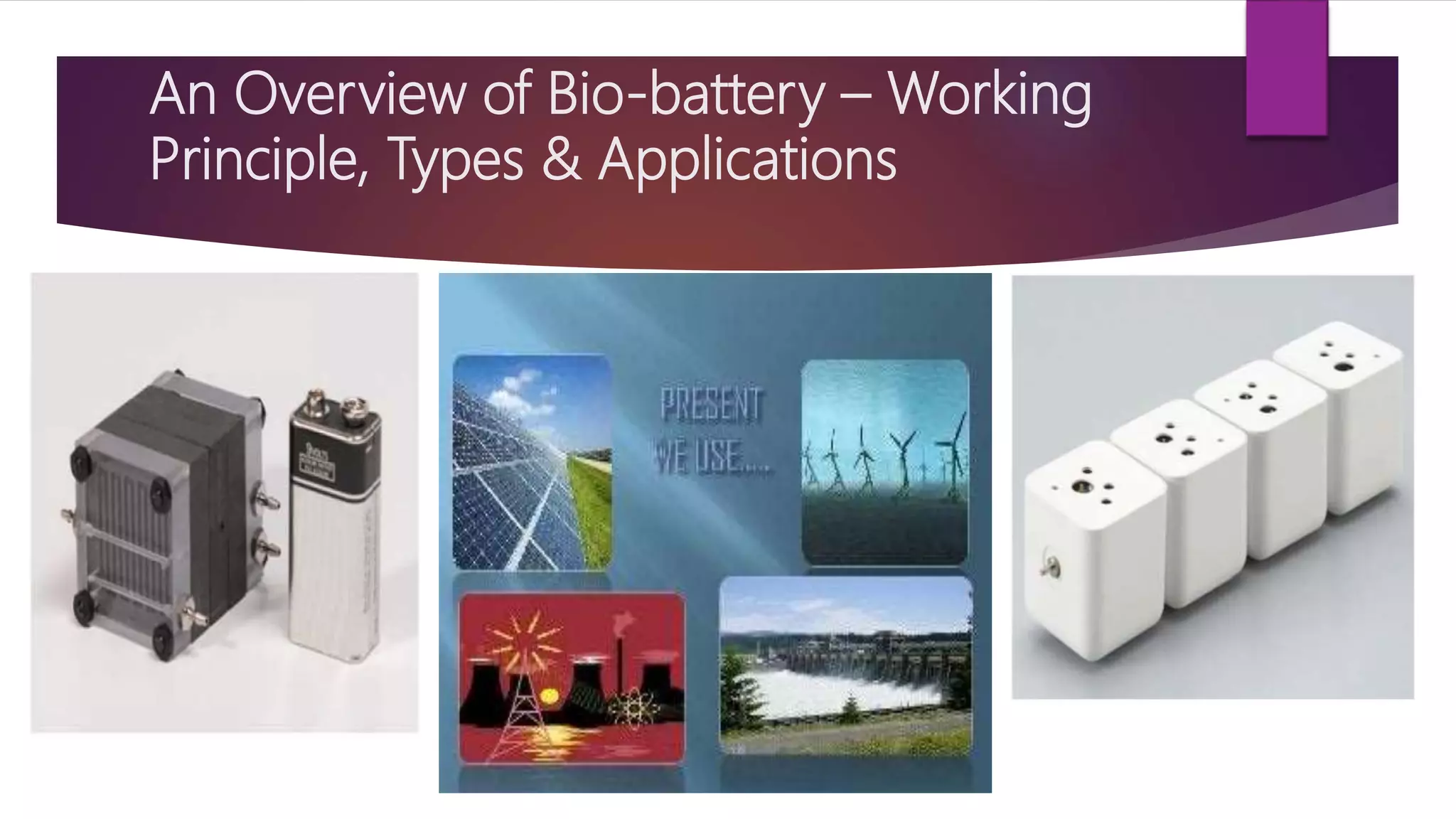
An Overview of Bio-battery – Working
Principle, Types & Applications
Abstract
 What is Battery?
A battery is a device which is used to convert chemical energy to electrical energy.
Batteries, are classified into different types based on the application, and these are used in several electrical as
well as electronic devices. An electrical battery includes certain chemicals like compounds of mercury, lead etc.
And the lead chemicals in a battery are extremely dangerous in nature and are not environment-friendly. Apart
from these, there is a chance for chemical leakage as well as the explosion of the battery in certain cases. To
overcome this problem researchers have invented Bio-battery which reduced the impact of these chemicals
and reduces the harm to the environment which gives a great advantage to humans.
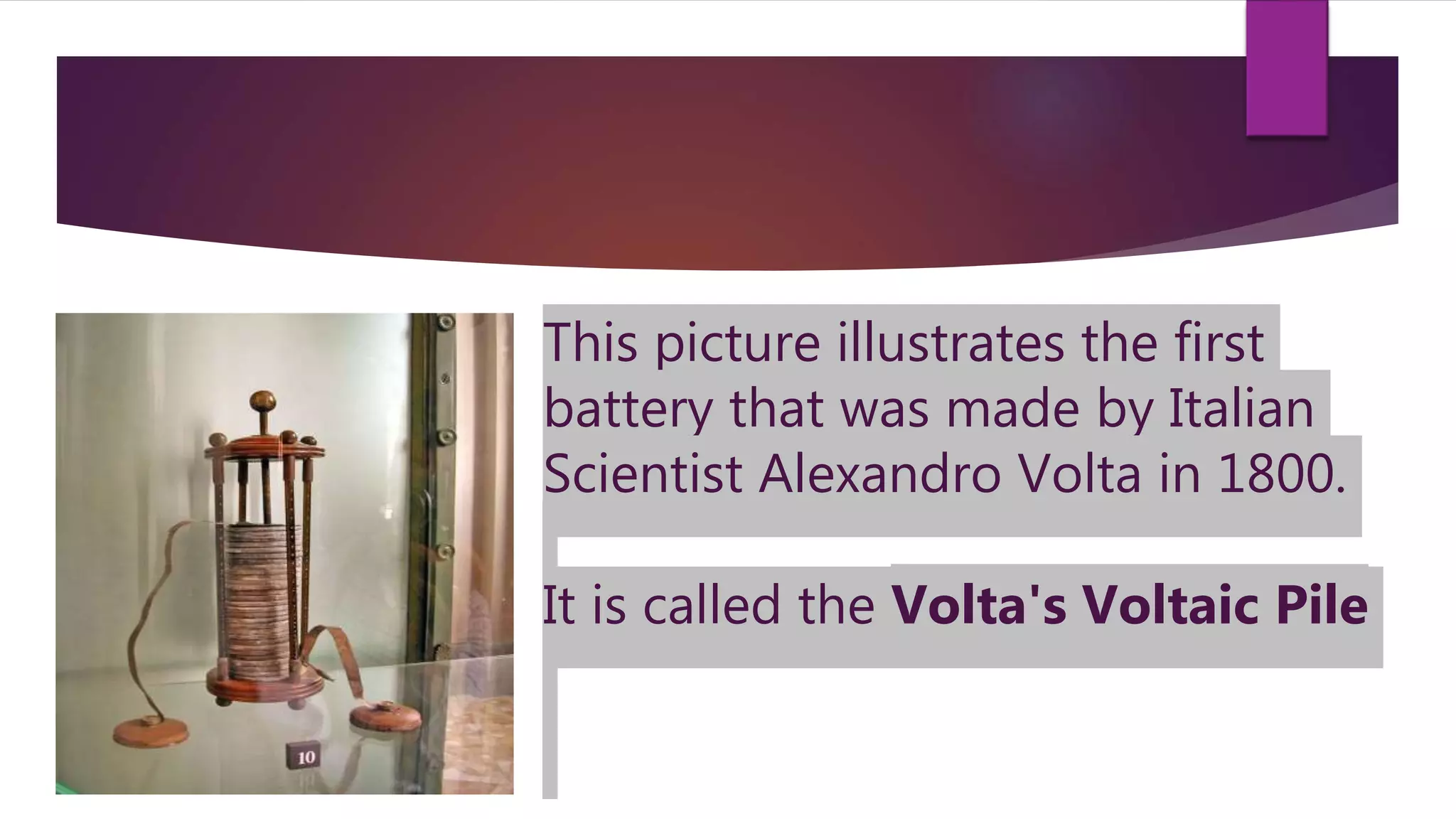
This picture illustrates the first
battery that was made by Italian
Scientist Alexandro Volta in 1800.
It is called the Volta's Voltaic Pile
Overview of a Bio-Battery
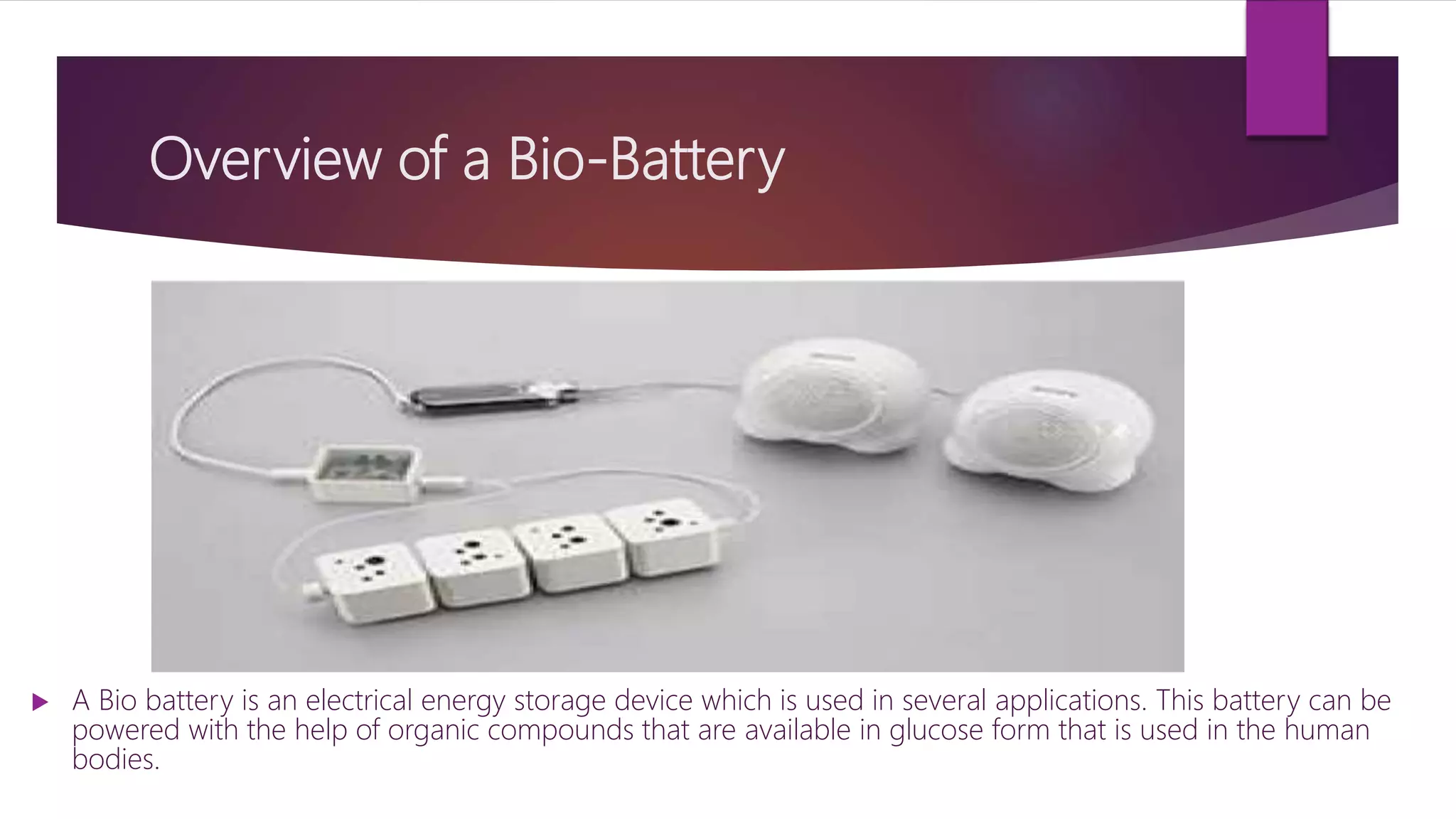
 A Bio battery is an electrical energy storage device which is used in several applications. This battery can be
powered with the help of organic compounds that are available in glucose form that is used in the human
bodies.
Bio-Battery Construction
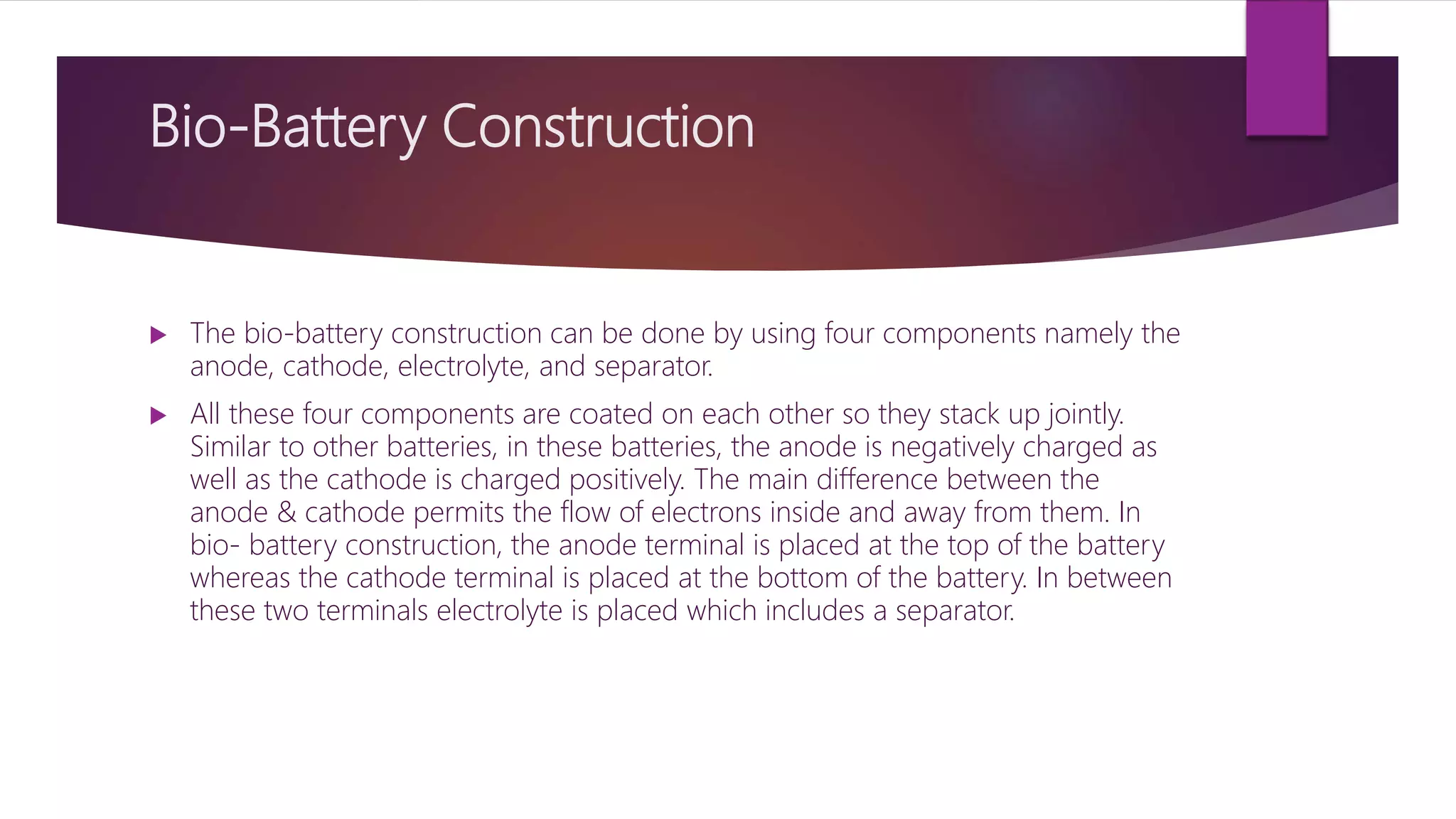
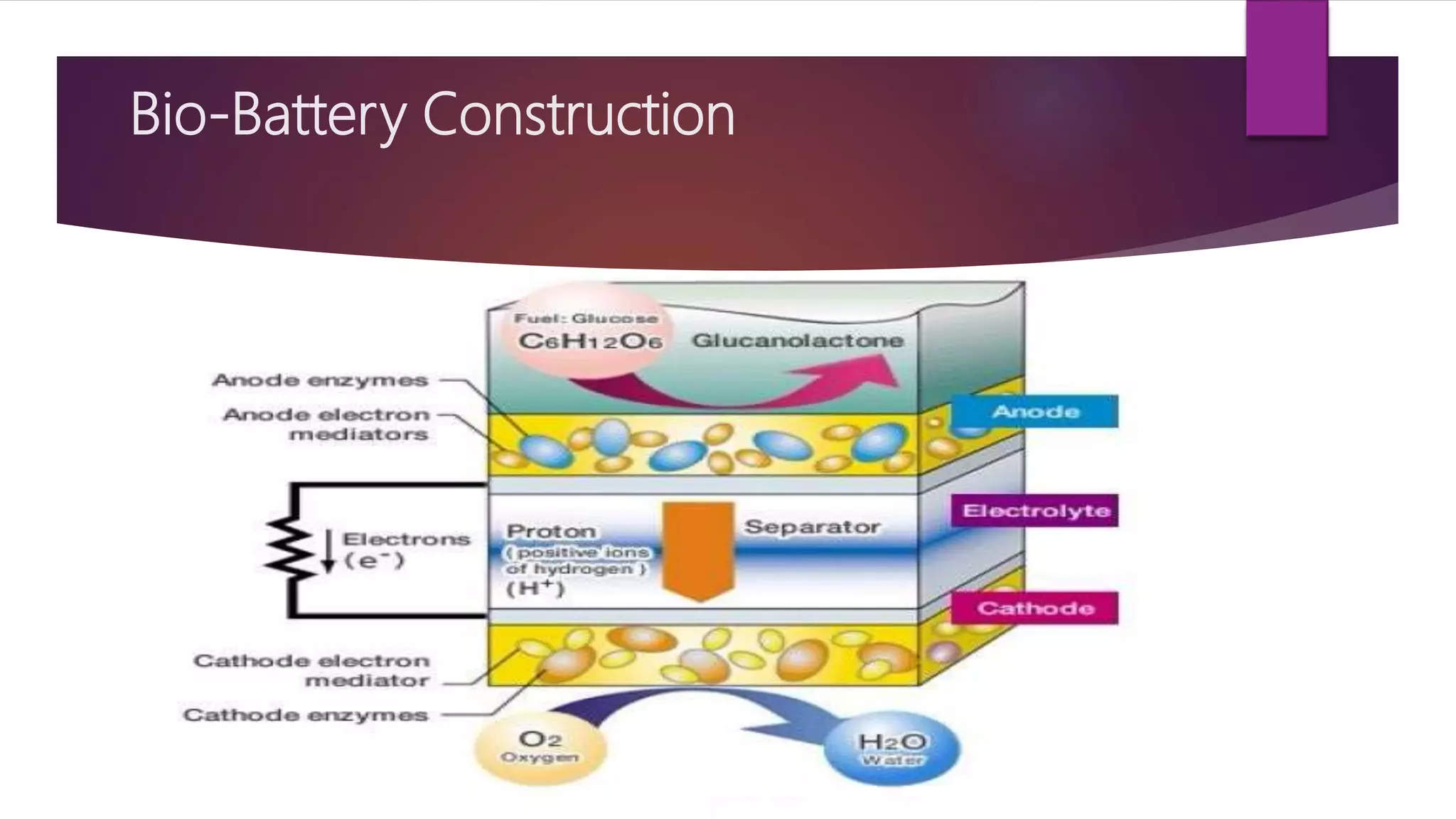
 The bio-battery construction can be done by using four components namely the
anode, cathode, electrolyte, and separator.
 All these four components are coated on each other so they stack up jointly.
Similar to other batteries, in these batteries, the anode is negatively charged as
well as the cathode is charged positively. The main difference between the
anode & cathode permits the flow of electrons inside and away from them. In
bio- battery construction, the anode terminal is placed at the top of the battery
whereas the cathode terminal is placed at the bottom of the battery. In between
these two terminals electrolyte is placed which includes a separator.
Bio-Battery Construction
Bio-Battery Working Principle
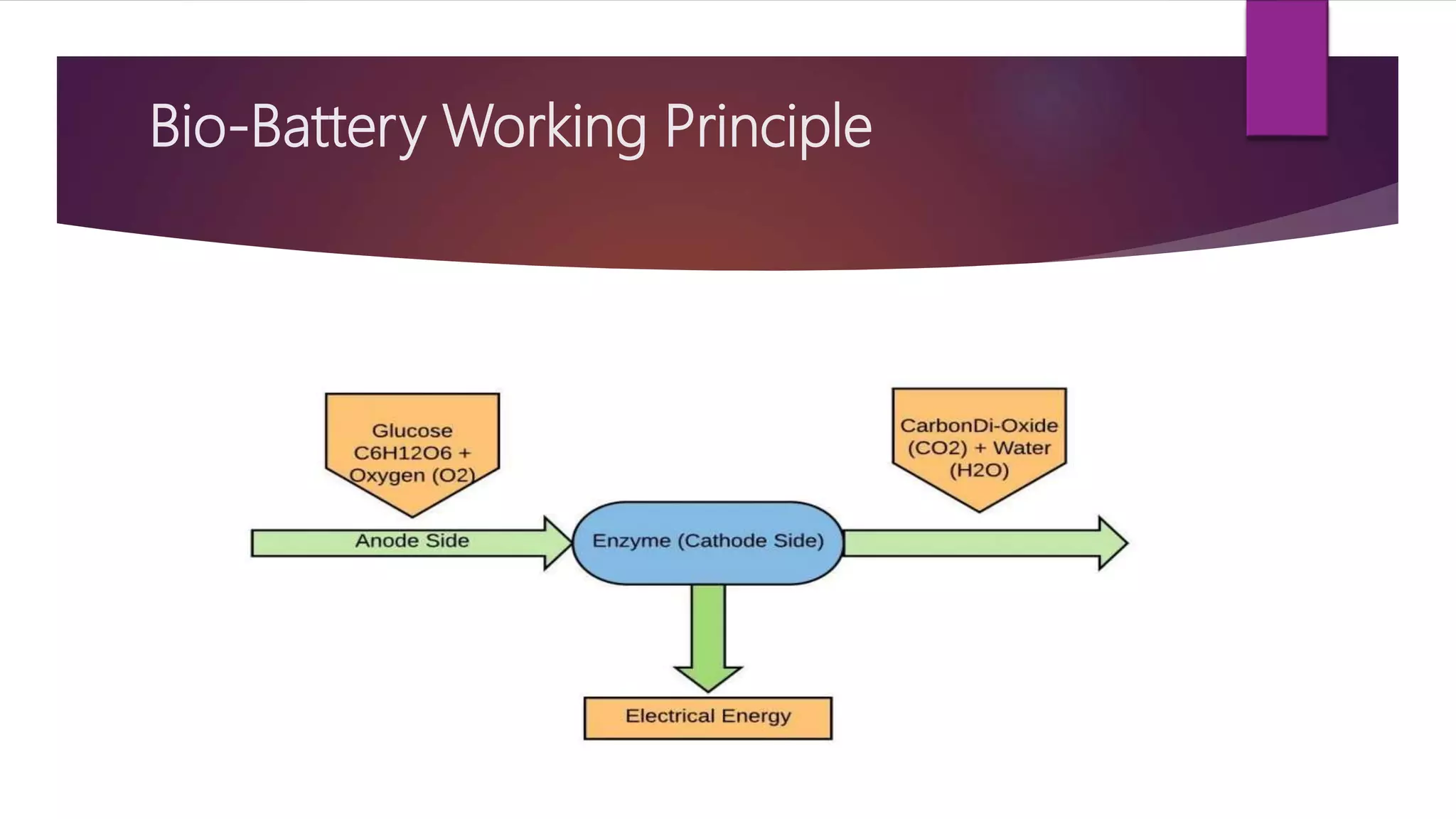
 In the above figure, glucose is used at the anode side whereas enzyme is used
at the cathode side
 Glucose gets broken down into electrons and protons
 The flow of protons can travel to cathode side via a separator and the flow
electrons can travel to cathode side via a mediator.
 Enzymes are utilized at cathode side which generates water by both protons as
well as electrons traveled from the anode side. Here, the reaction of Oxygen
reduction is being used here.
 Above reactions will generate electrons as well as protons in the system. Finally,
electric energy will be generated.
Chemical Reactions In Bio-Battery:
 Between the anode and the cathode lies the electrolyte which contains a
separator. The main function of the separator is to keep the cathode and anode
separated, to avoid electrical short circuits. This system as a whole, allows for a
flow of protons (H+ ) and electrons (e− ) which ultimately generates electricity
At the anode, the sugar is oxidized, producing both electrons and protons.
Glucose → Gluconolactone + 2H+ + 2e−
These electrons and protons now play an important role in the release of
stored chemical energy. The electrons travel from the surface of the anode
through an external circuit to get to the cathode. On the other hand, the
protons are transferred via the electrolyte through the separator to the cathode
side of the battery.
Chemical Reactions In Bio-Battery:
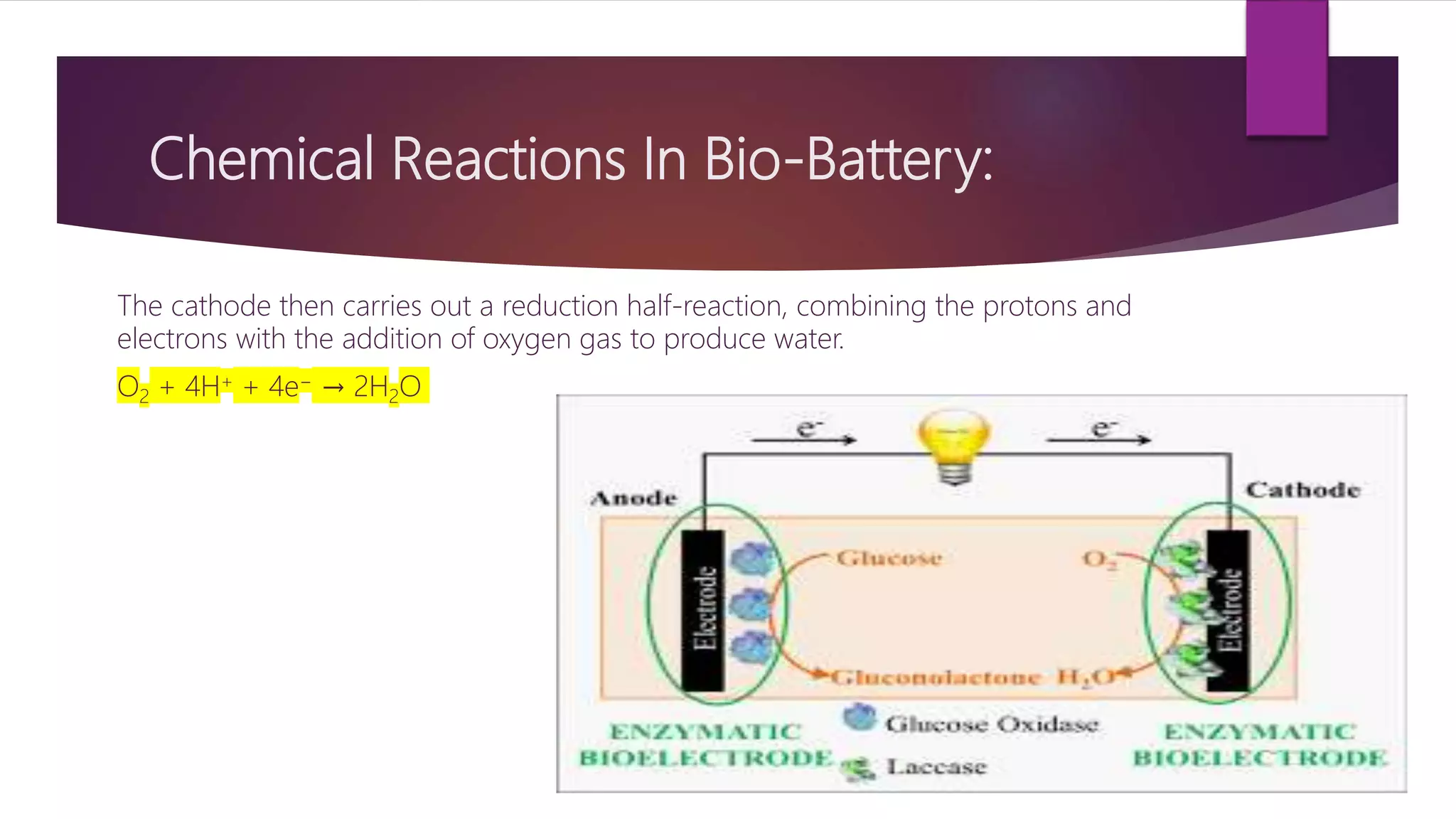
The cathode then carries out a reduction half-reaction, combining the protons and
electrons with the addition of oxygen gas to produce water.
O2 + 4H+ + 4e− → 2H2O
Types of Bio-Batteries
 There are commonly two types of Bio-battery namely:
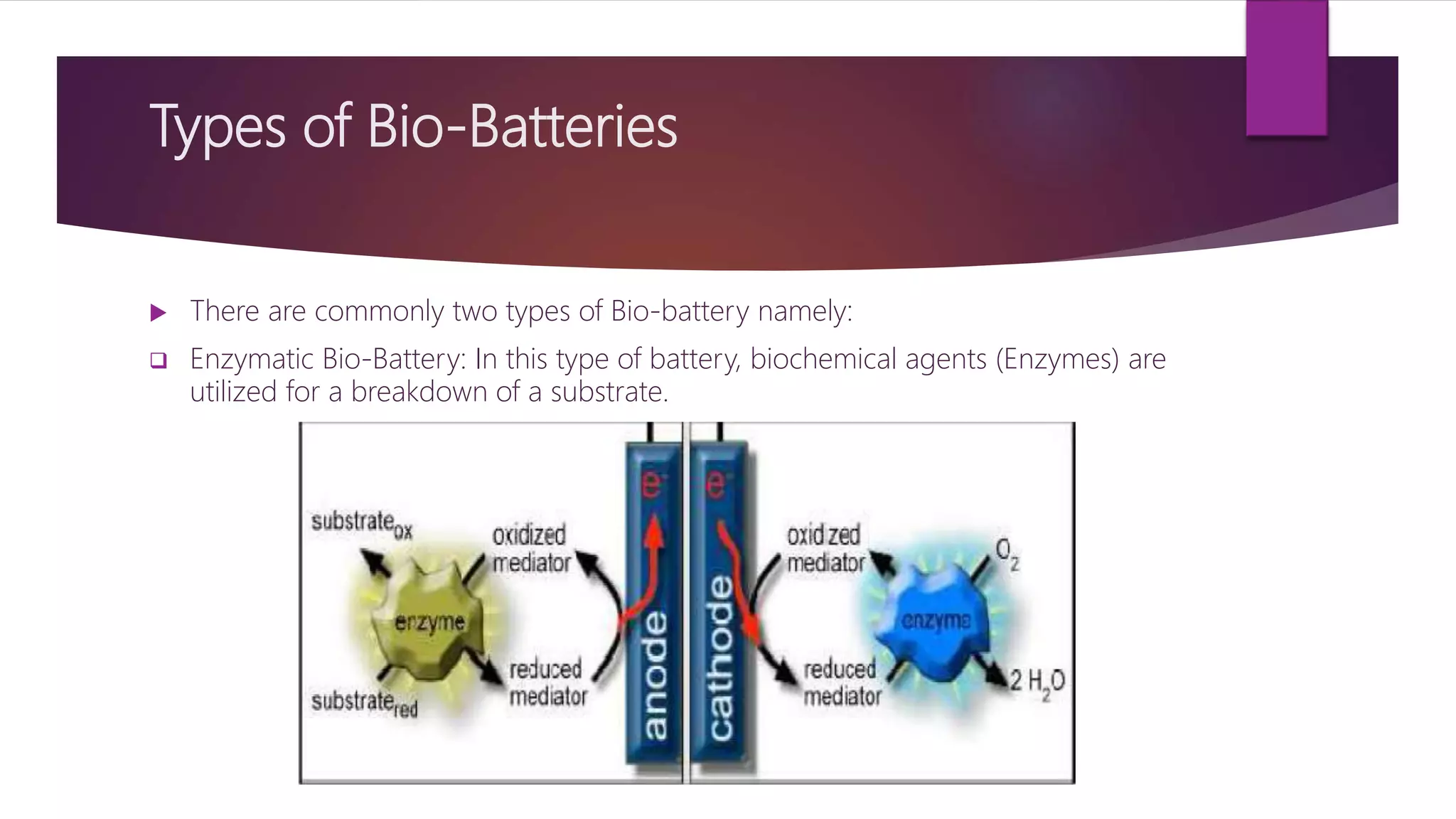
 Enzymatic Bio-Battery: In this type of battery, biochemical agents (Enzymes) are
utilized for a breakdown of a substrate.
Types of Bio-Batteries
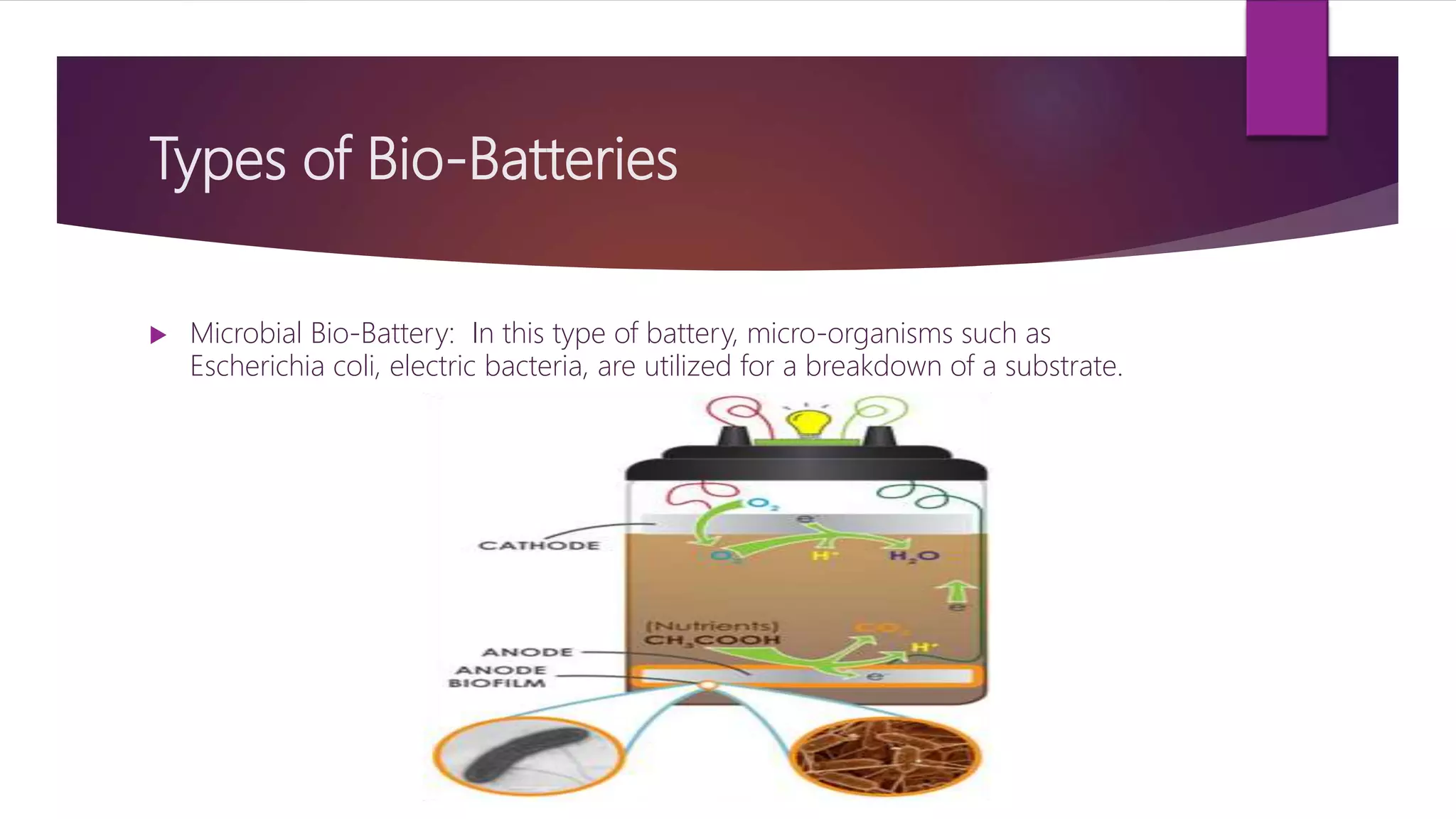
 Microbial Bio-Battery: In this type of battery, micro-organisms such as
Escherichia coli, electric bacteria, are utilized for a breakdown of a substrate.
Advantages of Bio-battery
 Biobatteries are much faster in charging the devices because of the quick action
of the enzymes when we compared to other batteries.
 Bio-batteries don’t require external power supply due to the constant supply of
glucose or sugar.
 Bio-batteries available by a high-energy density and it can be used easily at
room temperature.
 Biobatteries are totally non-polluting, renewable, and also environmentally
friendly.
 Biobatteries are very secure to use due to no leakage and explosions like
chemical batteries.
Disadvantages of Bio-battery
 Bio-battery preserve less amount of energy as compared to lithium-based
electrical batteries.
 These batteries cannot be used for the long-term as well as storage
Applications of Bio-Battery
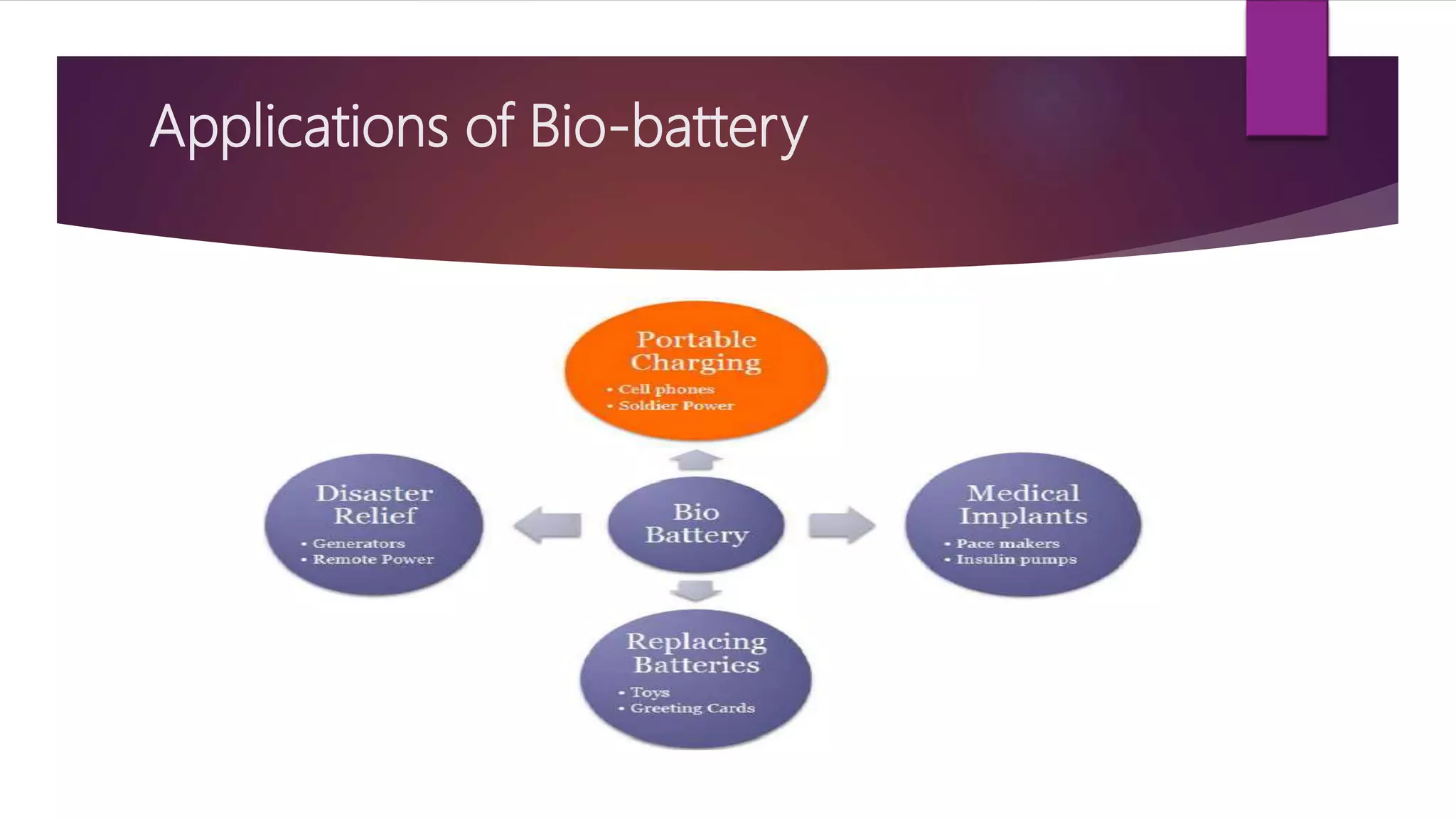
Some applications of bio-battery include the following.
 Bio-batteries are used in medical implants like pacemakers, insulin pumps, etc.
 It can be used as a charger for electronic devices like cell phones, tabs, power
banks, etc.
 Bio-batteries can be used for toys as well as on the greeting cards
 Bio-batteries are used in the defense field in the remote sensing devices i.e:
spying devices, as well as surveillance.
Applications of Bio-battery
FOR MORE REFERENCES CHECK THE
LINKS BELOW:
 https://ijret.org/volumes/2013v02/i11/IJRET20130211017.pdf
 https://www.elprocus.com/an-overview-of-bio-battery-working-principle-types-
applications/
 https://en.wikipedia.org/wiki/Biobattery
THANKS!!! 
PRESENTED BY: MIGABO KISIMBANYI EVARISTE
DATE: 11/05/2022

Presentation5.pptx

  • 1.
    An Overview ofBio–Battery Working Principle, Types & Applications By MIGABO KISIMBANYI Evariste
  • 2.
    Outline • ABSTRACT • OVERVIEWOF A BIO-BATTERY • WORKING PRINCIPLE OF A BIO-BATTERY • TYPES OF BIO-BATTERY • ADVANTAGES AND DISADVANTAGES OF BIO-BATTERY • SOME REAL-LIFE APPLICATION OUTCOMES: - AT THE END OF THIS PRESENTATION, YOU’LL BE ABLE TO LEARN AND KNOW MORE ABOUT BIO-BATTERY
  • 3.
    An Overview ofBio-battery – Working Principle, Types & Applications
  • 4.
    Abstract  What isBattery? A battery is a device which is used to convert chemical energy to electrical energy. Batteries, are classified into different types based on the application, and these are used in several electrical as well as electronic devices. An electrical battery includes certain chemicals like compounds of mercury, lead etc. And the lead chemicals in a battery are extremely dangerous in nature and are not environment-friendly. Apart from these, there is a chance for chemical leakage as well as the explosion of the battery in certain cases. To overcome this problem researchers have invented Bio-battery which reduced the impact of these chemicals and reduces the harm to the environment which gives a great advantage to humans.
  • 5.
    This picture illustratesthe first battery that was made by Italian Scientist Alexandro Volta in 1800. It is called the Volta's Voltaic Pile
  • 6.
    Overview of aBio-Battery  A Bio battery is an electrical energy storage device which is used in several applications. This battery can be powered with the help of organic compounds that are available in glucose form that is used in the human bodies.
  • 7.
    Bio-Battery Construction  Thebio-battery construction can be done by using four components namely the anode, cathode, electrolyte, and separator.  All these four components are coated on each other so they stack up jointly. Similar to other batteries, in these batteries, the anode is negatively charged as well as the cathode is charged positively. The main difference between the anode & cathode permits the flow of electrons inside and away from them. In bio- battery construction, the anode terminal is placed at the top of the battery whereas the cathode terminal is placed at the bottom of the battery. In between these two terminals electrolyte is placed which includes a separator.
  • 8.
  • 9.
  • 10.
    Bio-Battery Working Principle In the above figure, glucose is used at the anode side whereas enzyme is used at the cathode side  Glucose gets broken down into electrons and protons  The flow of protons can travel to cathode side via a separator and the flow electrons can travel to cathode side via a mediator.  Enzymes are utilized at cathode side which generates water by both protons as well as electrons traveled from the anode side. Here, the reaction of Oxygen reduction is being used here.  Above reactions will generate electrons as well as protons in the system. Finally, electric energy will be generated.
  • 11.
    Chemical Reactions InBio-Battery:  Between the anode and the cathode lies the electrolyte which contains a separator. The main function of the separator is to keep the cathode and anode separated, to avoid electrical short circuits. This system as a whole, allows for a flow of protons (H+ ) and electrons (e− ) which ultimately generates electricity At the anode, the sugar is oxidized, producing both electrons and protons. Glucose → Gluconolactone + 2H+ + 2e− These electrons and protons now play an important role in the release of stored chemical energy. The electrons travel from the surface of the anode through an external circuit to get to the cathode. On the other hand, the protons are transferred via the electrolyte through the separator to the cathode side of the battery.
  • 12.
    Chemical Reactions InBio-Battery: The cathode then carries out a reduction half-reaction, combining the protons and electrons with the addition of oxygen gas to produce water. O2 + 4H+ + 4e− → 2H2O
  • 13.
    Types of Bio-Batteries There are commonly two types of Bio-battery namely:  Enzymatic Bio-Battery: In this type of battery, biochemical agents (Enzymes) are utilized for a breakdown of a substrate.
  • 14.
    Types of Bio-Batteries Microbial Bio-Battery: In this type of battery, micro-organisms such as Escherichia coli, electric bacteria, are utilized for a breakdown of a substrate.
  • 15.
    Advantages of Bio-battery Biobatteries are much faster in charging the devices because of the quick action of the enzymes when we compared to other batteries.  Bio-batteries don’t require external power supply due to the constant supply of glucose or sugar.  Bio-batteries available by a high-energy density and it can be used easily at room temperature.  Biobatteries are totally non-polluting, renewable, and also environmentally friendly.  Biobatteries are very secure to use due to no leakage and explosions like chemical batteries.
  • 16.
    Disadvantages of Bio-battery Bio-battery preserve less amount of energy as compared to lithium-based electrical batteries.  These batteries cannot be used for the long-term as well as storage
  • 17.
    Applications of Bio-Battery Someapplications of bio-battery include the following.  Bio-batteries are used in medical implants like pacemakers, insulin pumps, etc.  It can be used as a charger for electronic devices like cell phones, tabs, power banks, etc.  Bio-batteries can be used for toys as well as on the greeting cards  Bio-batteries are used in the defense field in the remote sensing devices i.e: spying devices, as well as surveillance.
  • 18.
  • 19.
    FOR MORE REFERENCESCHECK THE LINKS BELOW:  https://ijret.org/volumes/2013v02/i11/IJRET20130211017.pdf  https://www.elprocus.com/an-overview-of-bio-battery-working-principle-types- applications/  https://en.wikipedia.org/wiki/Biobattery
  • 20.
    THANKS!!!  PRESENTED BY:MIGABO KISIMBANYI EVARISTE DATE: 11/05/2022