A TECHNICAL PRESENTATION ON
BIO BATTERY
• PRESENTED BY
• ABSAR,ARFATH BIN (14-26214-1)
• DAS,INDRANI (14-25902-1)
• BARMAN,MANOZ (14-27882-1)
• TARIF,FAYSAL
• COURSE INSTRUCTOR : RETHWAN FAIZ
• AMERICAN INTERNATIONAL UNIVERSITY BANGLADESH
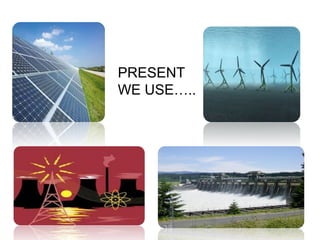
PRESENT
WE USE…..
Now we present a new era of energy
generation….
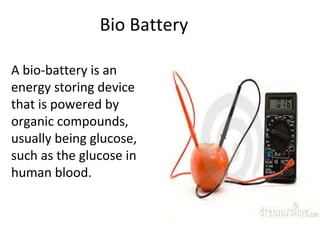
A bio-battery is an
energy storing device
that is powered by
organic compounds,
usually being glucose,
such as the glucose in
human blood.
Bio Battery
When enzymes in our bodies
break down glucose, several
electrons and protons are
released.
Therefore, by using enzymes
to break down glucose, bio-
batteries directly receive
energy from glucose.
These batteries then store this
energy for later use.
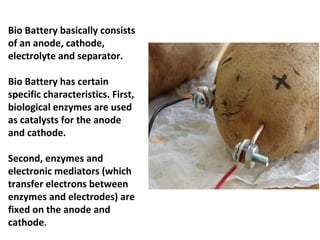
Bio Battery basically consists
of an anode, cathode,
electrolyte and separator.
Bio Battery has certain
specific characteristics. First,
biological enzymes are used
as catalysts for the anode
and cathode.
Second, enzymes and
electronic mediators (which
transfer electrons between
enzymes and electrodes) are
fixed on the anode and
cathode.
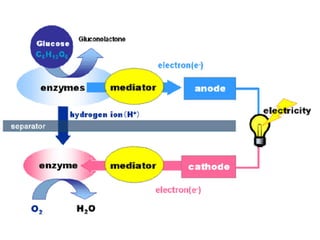
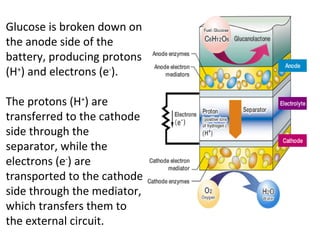
Glucose is broken down on
the anode side of the
battery, producing protons
(H+
) and electrons (e-
).
The protons (H+
) are
transferred to the cathode
side through the
separator, while the
electrons (e-
) are
transported to the cathode
side through the mediator,
which transfers them to
the external circuit.
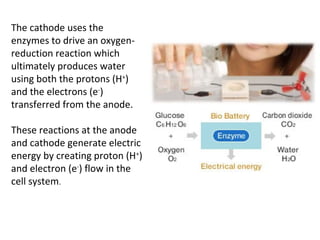
The cathode uses the
enzymes to drive an oxygen-
reduction reaction which
ultimately produces water
using both the protons (H+
)
and the electrons (e-
)
transferred from the anode.
These reactions at the anode
and cathode generate electric
energy by creating proton (H+
)
and electron (e-
) flow in the
cell system.
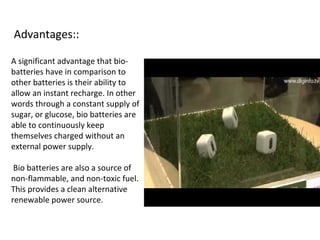
A significant advantage that bio-
batteries have in comparison to
other batteries is their ability to
allow an instant recharge. In other
words through a constant supply of
sugar, or glucose, bio batteries are
able to continuously keep
themselves charged without an
external power supply.
Bio batteries are also a source of
non-flammable, and non-toxic fuel.
This provides a clean alternative
renewable power source.
Advantages::
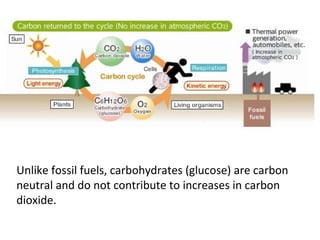
Unlike fossil fuels, carbohydrates (glucose) are carbon
neutral and do not contribute to increases in carbon
dioxide.
Disadvantages::
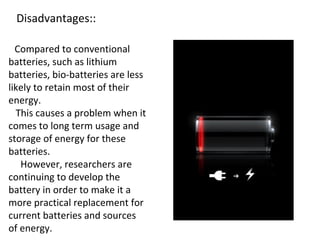
Compared to conventional
batteries, such as lithium
batteries, bio-batteries are less
likely to retain most of their
energy.
This causes a problem when it
comes to long term usage and
storage of energy for these
batteries.
However, researchers are
continuing to develop the
battery in order to make it a
more practical replacement for
current batteries and sources
of energy.
Need of bio battery
• An electricity shortage is felt most by those who depend on
electricity for heating, cooking, and water supply.
• In these circumstances, a sustained energy crisis may become
a humanitarian crisis.
• As it is known that the energy conservation is the major issue
these times so the bio-battery is one of the energy
conservation method.
• It can save a lot of power and it is also energy efficient
phenomenon.
• Bio-Battery is a renewable energy source which is again the
major requirement of current energy system
FUTURE
They serve as a new form of energy that is
proving to be environmentally friendly ,as well
as successful, in producing and reserving
energy although the battery are still being
tested before being commercially sold several
research teams and engineers are working to
further advance the development of this
battery .
Aspects
conclusion
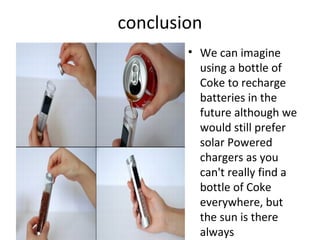
• We can imagine
using a bottle of
Coke to recharge
batteries in the
future although we
would still prefer
solar Powered
chargers as you
can't really find a
bottle of Coke
everywhere, but
the sun is there
always
Thank you

Bio battery

  • 1.
    A TECHNICAL PRESENTATIONON BIO BATTERY • PRESENTED BY • ABSAR,ARFATH BIN (14-26214-1) • DAS,INDRANI (14-25902-1) • BARMAN,MANOZ (14-27882-1) • TARIF,FAYSAL • COURSE INSTRUCTOR : RETHWAN FAIZ • AMERICAN INTERNATIONAL UNIVERSITY BANGLADESH
  • 2.
  • 3.
    Now we presenta new era of energy generation….
  • 4.
    A bio-battery isan energy storing device that is powered by organic compounds, usually being glucose, such as the glucose in human blood. Bio Battery
  • 5.
    When enzymes inour bodies break down glucose, several electrons and protons are released. Therefore, by using enzymes to break down glucose, bio- batteries directly receive energy from glucose. These batteries then store this energy for later use.
  • 6.
    Bio Battery basicallyconsists of an anode, cathode, electrolyte and separator. Bio Battery has certain specific characteristics. First, biological enzymes are used as catalysts for the anode and cathode. Second, enzymes and electronic mediators (which transfer electrons between enzymes and electrodes) are fixed on the anode and cathode.
  • 8.
    Glucose is brokendown on the anode side of the battery, producing protons (H+ ) and electrons (e- ). The protons (H+ ) are transferred to the cathode side through the separator, while the electrons (e- ) are transported to the cathode side through the mediator, which transfers them to the external circuit.
  • 9.
    The cathode usesthe enzymes to drive an oxygen- reduction reaction which ultimately produces water using both the protons (H+ ) and the electrons (e- ) transferred from the anode. These reactions at the anode and cathode generate electric energy by creating proton (H+ ) and electron (e- ) flow in the cell system.
  • 10.
    A significant advantagethat bio- batteries have in comparison to other batteries is their ability to allow an instant recharge. In other words through a constant supply of sugar, or glucose, bio batteries are able to continuously keep themselves charged without an external power supply. Bio batteries are also a source of non-flammable, and non-toxic fuel. This provides a clean alternative renewable power source. Advantages::
  • 11.
    Unlike fossil fuels,carbohydrates (glucose) are carbon neutral and do not contribute to increases in carbon dioxide.
  • 12.
    Disadvantages:: Compared to conventional batteries,such as lithium batteries, bio-batteries are less likely to retain most of their energy. This causes a problem when it comes to long term usage and storage of energy for these batteries. However, researchers are continuing to develop the battery in order to make it a more practical replacement for current batteries and sources of energy.
  • 13.
    Need of biobattery • An electricity shortage is felt most by those who depend on electricity for heating, cooking, and water supply. • In these circumstances, a sustained energy crisis may become a humanitarian crisis. • As it is known that the energy conservation is the major issue these times so the bio-battery is one of the energy conservation method. • It can save a lot of power and it is also energy efficient phenomenon. • Bio-Battery is a renewable energy source which is again the major requirement of current energy system
  • 14.
    FUTURE They serve asa new form of energy that is proving to be environmentally friendly ,as well as successful, in producing and reserving energy although the battery are still being tested before being commercially sold several research teams and engineers are working to further advance the development of this battery .
  • 15.
  • 16.
    conclusion • We canimagine using a bottle of Coke to recharge batteries in the future although we would still prefer solar Powered chargers as you can't really find a bottle of Coke everywhere, but the sun is there always
  • 17.