BIO BATTERY-
A fuel of next generation
Presented by-
Arpit Gupta
Arvind Vaswani
Prakhar Bilala
HISTORY
• The first enzyme-based bio-fuel cell was
reported in 1964.
• The first microbial BFC(Bio fuel cells) was
demonstrated in 1912.
What is a Bio-Battery?
A bio-battery is an energy storage device that is
powered by organic compounds, usually being
glucose, such as glucose in human blood.
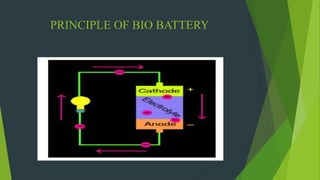
PRINCIPLE OF BIO BATTERY
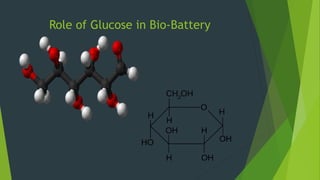
Role of Glucose in Bio-Battery
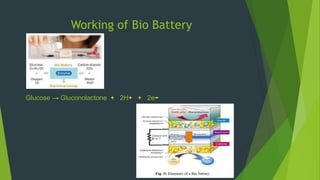
Working of Bio Battery
Glucose → Gluconolactone + 2H+ + 2e−
Need of Bio-Battery
• The people who depend on electricity for heating, cooking and water supply.
• The people who want a battery which saves a lot of power.
Types of Bio-Battery
• Enzymatic Bio-Battery
• Active type system
Applications of Bio-Battery
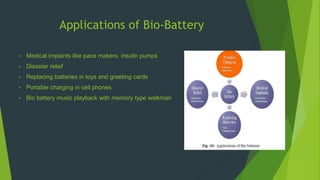
• Medical implants like pace makers, insulin pumps
• Disaster relief
• Replacing batteries in toys and greeting cards
• Portable charging in cell phones
• Bio battery music playback with memory type walkman
Advantages of Bio-Battery
• Instant recharge
• Eco friendly
• Raw materials available easily & plenty
• Portable & light weight compared to fuel cell.
• Provide a better employment scope for rural areas.
• Readily available fuel source.
Disadvantages of Bio-Battery
• Preserve less amount of energy
• Cannot be used for long-term as well as storage
Future Scope of Bio-Battery
• A new form of energy proving to be environmentally
friendly
• Successful in producing and reserving energy
Conclusion
• Have high performance and stability
• It is small, flexible, long lasting, and environmentally
friendly battery
• It causes a problem when it comes to long term usage and
storage of energy.
Bio Battery.pptx

Bio Battery.pptx

  • 1.
    BIO BATTERY- A fuelof next generation Presented by- Arpit Gupta Arvind Vaswani Prakhar Bilala
  • 2.
    HISTORY • The firstenzyme-based bio-fuel cell was reported in 1964. • The first microbial BFC(Bio fuel cells) was demonstrated in 1912.
  • 3.
    What is aBio-Battery? A bio-battery is an energy storage device that is powered by organic compounds, usually being glucose, such as glucose in human blood.
  • 4.
  • 5.
    Role of Glucosein Bio-Battery
  • 6.
    Working of BioBattery Glucose → Gluconolactone + 2H+ + 2e−
  • 8.
    Need of Bio-Battery •The people who depend on electricity for heating, cooking and water supply. • The people who want a battery which saves a lot of power.
  • 9.
    Types of Bio-Battery •Enzymatic Bio-Battery • Active type system
  • 10.
    Applications of Bio-Battery •Medical implants like pace makers, insulin pumps • Disaster relief • Replacing batteries in toys and greeting cards • Portable charging in cell phones • Bio battery music playback with memory type walkman
  • 11.
    Advantages of Bio-Battery •Instant recharge • Eco friendly • Raw materials available easily & plenty • Portable & light weight compared to fuel cell. • Provide a better employment scope for rural areas. • Readily available fuel source.
  • 12.
    Disadvantages of Bio-Battery •Preserve less amount of energy • Cannot be used for long-term as well as storage
  • 13.
    Future Scope ofBio-Battery • A new form of energy proving to be environmentally friendly • Successful in producing and reserving energy
  • 14.
    Conclusion • Have highperformance and stability • It is small, flexible, long lasting, and environmentally friendly battery • It causes a problem when it comes to long term usage and storage of energy.