1
BILIARY ATRESIA
DEFINITION:
Biliary atresia is a condition in which the normal
hepatic biliary system is disrupted. Progressive
damage of extrahepatic and intrahepatic bile ducts
which occur secondary to inflammation, leading to
fibrosis, biliary cirrhosis, and eventual liver failure.
INCIDENCE:
 Biliary atresia affects approximately 1 in
10,000- 15,000 births.
 Biliary atresia seems to affect girls more
than boys.
 Premature babies are at greater risk for
biliary atresia than full-term infants.
 Asian and African-American babies are also
at greater risk for the disorder.
ETIOLOGICAL FACTORS:
Fetal causes:
 Viral or bacterial infection
 Immune system problems
 10-20% of affected neonates have
associated congenital defects.
Associated congenital anomalies:
 Malrotation of abdominal viscera
 Interrupted inferior vena cava
 Midline liver
 Preduodenal portal vein
 Polysplenia
 Situs inversus
 Congenital heart anomalies
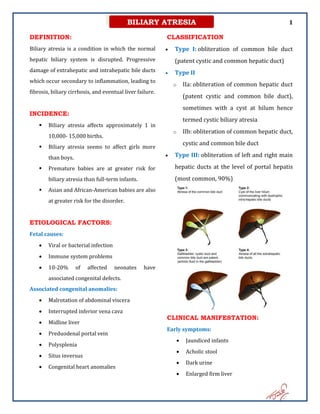
CLASSIFICATION
 Type I: obliteration of common bile duct
(patent cystic and common hepatic duct)
 Type II
o IIa: obliteration of common hepatic duct
(patent cystic and common bile duct),
sometimes with a cyst at hilum hence
termed cystic biliary atresia
o IIb: obliteration of common hepatic duct,
cystic and common bile duct
 Type III: obliteration of left and right main
hepatic ducts at the level of portal hepatis
(most common, 90%)
CLINICAL MANIFESTATION:
Early symptoms:
 Jaundiced infants
 Acholic stool
 Dark urine
 Enlarged firm liver
2
BILIARY ATRESIA
Late manifestations:
 Liver Cirrhosis
 Varices from Portal Hypertension
 Abdominal distention
 Weight loss
Associated symptoms:
 Ascites
 Splenomegaly
 Hard liver
DIAGNOSTIC EVALUATION:
 History collection: Family history, Pre and
past medical history, surgical history
 Physical examination:
 Abdominal X-ray:
 Duodenal intubation:
 Cholangiography
 Abdominal ultrasound
 HIDA or hepatobiliary scan.
Blood tests
 Liver enzymes test: Increased level of
enzymes signifies BA.
 Bilirubin: Increased bilirubin level due to
biliary atresia. ( normal direct bilirubin
value is 5.2 mg/dl)
 Albumin and total protein: Below-normal
levels of proteins made by the liver are
linked to many long-term (chronic) liver
disorders.
 Clotting factors: PT (prothrombin time) and
PTT (partial thromboplastin time). Blood
clotting requires vitamin K and proteins
made by the liver.
 Viral studies, including hepatitis and
HIV: These check for viruses in the
bloodstream.
 Blood culture: Identification of bacterial
invasion into blood stream.
Other tests
 Liver biopsy.
 Diagnostic surgery. The surgeon can see
the liver and bile ducts by making a cut or
incision in your child’s belly or abdomen. If
biliary atresia is diagnosed, the surgeon
may treat it with surgery at the same time.
MANAGEMENT:
Medical Management:
 Antibiotic regimen:
 Phototherapy
 Phenobarbital
 cholestyramine- to relive pruritus
Surgical management:
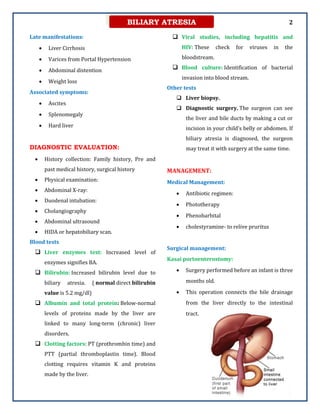
Kasai portoenterostomy:
 Surgery performed before an infant is three
months old.
 This operation connects the bile drainage
from the liver directly to the intestinal
tract.
3
BILIARY ATRESIA
Complication: cholestasis (backup of bile in the
liver) will occur, causing liver damage.
Liver transplant: A liver transplant operation
removes the damaged liver and replaces it with a
new liver from a donor.
Nutritional management:
 Balanced diet, consisting of three meals a
day plus small snacks in between meals.
 Vitamin supplements (Specifically Vitamins
A, D, E, and K as these are absorbed in fat.
 Adding medium-chain triglyceride (MCT) oil
to foods and liquids or infant formulas.
 High-calorie liquid feedings may be
recommended.
 Feedings are given through nasogastric tube.
Nursing Diagnosis:
 Hyperthermia related to inflammatory
damage due to progressive
extrahepatic biliary duct.
 Ineffective breathing pattern related to
an increase in abdominal distension.
 Imbalanced Nutrition Less Than Body
Requirements related to anorexia and
impaired absorption of fat.
 Impaired bowel elimination (diarrhea) related
to intestinal malabsorption.
 Impaired skin integrity related to
accumulation of bile salts in the network.
 Deficient fluid volume related to nausea and
vomiting.
 Anxiety related to lack of information about
the disease due to lack of knowledge.
REFERENCES;
 http://pgnrc.sbmu.ac.ir/uploads/BA-
for_patient.pdf
 https://www.stlouischildrens.org/conditio
ns-treatments/biliary-
atresia#:~:text=Biliary%20atresia%20is%
20a%20rare,fluid%20made%20by%20the
%20liver
 biliaryatresialulu-140506100744-
phpapp02.pdf

Biliary atresia

  • 1.
    1 BILIARY ATRESIA DEFINITION: Biliary atresiais a condition in which the normal hepatic biliary system is disrupted. Progressive damage of extrahepatic and intrahepatic bile ducts which occur secondary to inflammation, leading to fibrosis, biliary cirrhosis, and eventual liver failure. INCIDENCE:  Biliary atresia affects approximately 1 in 10,000- 15,000 births.  Biliary atresia seems to affect girls more than boys.  Premature babies are at greater risk for biliary atresia than full-term infants.  Asian and African-American babies are also at greater risk for the disorder. ETIOLOGICAL FACTORS: Fetal causes:  Viral or bacterial infection  Immune system problems  10-20% of affected neonates have associated congenital defects. Associated congenital anomalies:  Malrotation of abdominal viscera  Interrupted inferior vena cava  Midline liver  Preduodenal portal vein  Polysplenia  Situs inversus  Congenital heart anomalies CLASSIFICATION  Type I: obliteration of common bile duct (patent cystic and common hepatic duct)  Type II o IIa: obliteration of common hepatic duct (patent cystic and common bile duct), sometimes with a cyst at hilum hence termed cystic biliary atresia o IIb: obliteration of common hepatic duct, cystic and common bile duct  Type III: obliteration of left and right main hepatic ducts at the level of portal hepatis (most common, 90%) CLINICAL MANIFESTATION: Early symptoms:  Jaundiced infants  Acholic stool  Dark urine  Enlarged firm liver
  • 2.
    2 BILIARY ATRESIA Late manifestations: Liver Cirrhosis  Varices from Portal Hypertension  Abdominal distention  Weight loss Associated symptoms:  Ascites  Splenomegaly  Hard liver DIAGNOSTIC EVALUATION:  History collection: Family history, Pre and past medical history, surgical history  Physical examination:  Abdominal X-ray:  Duodenal intubation:  Cholangiography  Abdominal ultrasound  HIDA or hepatobiliary scan. Blood tests  Liver enzymes test: Increased level of enzymes signifies BA.  Bilirubin: Increased bilirubin level due to biliary atresia. ( normal direct bilirubin value is 5.2 mg/dl)  Albumin and total protein: Below-normal levels of proteins made by the liver are linked to many long-term (chronic) liver disorders.  Clotting factors: PT (prothrombin time) and PTT (partial thromboplastin time). Blood clotting requires vitamin K and proteins made by the liver.  Viral studies, including hepatitis and HIV: These check for viruses in the bloodstream.  Blood culture: Identification of bacterial invasion into blood stream. Other tests  Liver biopsy.  Diagnostic surgery. The surgeon can see the liver and bile ducts by making a cut or incision in your child’s belly or abdomen. If biliary atresia is diagnosed, the surgeon may treat it with surgery at the same time. MANAGEMENT: Medical Management:  Antibiotic regimen:  Phototherapy  Phenobarbital  cholestyramine- to relive pruritus Surgical management: Kasai portoenterostomy:  Surgery performed before an infant is three months old.  This operation connects the bile drainage from the liver directly to the intestinal tract.
  • 3.
    3 BILIARY ATRESIA Complication: cholestasis(backup of bile in the liver) will occur, causing liver damage. Liver transplant: A liver transplant operation removes the damaged liver and replaces it with a new liver from a donor. Nutritional management:  Balanced diet, consisting of three meals a day plus small snacks in between meals.  Vitamin supplements (Specifically Vitamins A, D, E, and K as these are absorbed in fat.  Adding medium-chain triglyceride (MCT) oil to foods and liquids or infant formulas.  High-calorie liquid feedings may be recommended.  Feedings are given through nasogastric tube. Nursing Diagnosis:  Hyperthermia related to inflammatory damage due to progressive extrahepatic biliary duct.  Ineffective breathing pattern related to an increase in abdominal distension.  Imbalanced Nutrition Less Than Body Requirements related to anorexia and impaired absorption of fat.  Impaired bowel elimination (diarrhea) related to intestinal malabsorption.  Impaired skin integrity related to accumulation of bile salts in the network.  Deficient fluid volume related to nausea and vomiting.  Anxiety related to lack of information about the disease due to lack of knowledge. REFERENCES;  http://pgnrc.sbmu.ac.ir/uploads/BA- for_patient.pdf  https://www.stlouischildrens.org/conditio ns-treatments/biliary- atresia#:~:text=Biliary%20atresia%20is% 20a%20rare,fluid%20made%20by%20the %20liver  biliaryatresialulu-140506100744- phpapp02.pdf