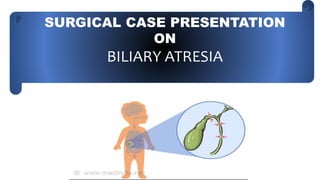
SURGICAL CASE PRESENTATION
ON
BILIARY ATRESIA
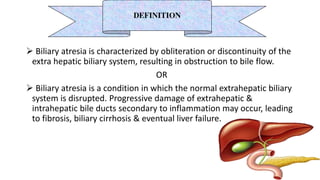
 Biliary atresia is characterized by obliteration or discontinuity of the
extra hepatic biliary system, resulting in obstruction to bile flow.
OR
 Biliary atresia is a condition in which the normal extrahepatic biliary
system is disrupted. Progressive damage of extrahepatic &
intrahepatic bile ducts secondary to inflammation may occur, leading
to fibrosis, biliary cirrhosis & eventual liver failure.
DEFINITION
EMBRYOLOGY
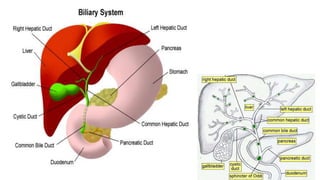
• The biliary system originates from the hepatic diverticulum of the
foregut at 4the week of gestation.
• Beginning in the fourth week of gestation, the liver bud arises from
the distal extent of the foregut.
• As the liver parenchyma develops, the cells between it and the
foregut proliferate, forming the precursor to the bile duct.
• Between the fourth and fifth weeks of gestation, the gallbladder
primordium buds off the caudal extent of the bile duct giving rise to
the gallbladder and cystic duct.
• This bud lies in close proximity to the ventral pancreatic bud. The
shared stalk rotates posteriorly and medially to join the dorsal
pancreatic bud .
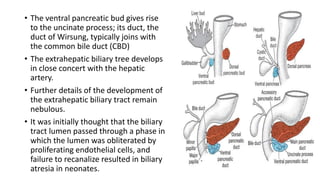
• The ventral pancreatic bud gives rise
to the uncinate process; its duct, the
duct of Wirsung, typically joins with
the common bile duct (CBD)
• The extrahepatic biliary tree develops
in close concert with the hepatic
artery.
• Further details of the development of
the extrahepatic biliary tract remain
nebulous.
• It was initially thought that the biliary
tract lumen passed through a phase in
which the lumen was obliterated by
proliferating endothelial cells, and
failure to recanalize resulted in biliary
atresia in neonates.
• 1:10,000 live births.
• International : highest in Asian populations, and it
may be more common in Chinese infants compared
with Japanese infants.
• Sex: more common in females than in males.
• Age: Biliary atresia is a disorder unique to the
neonatal period. The fetal/perinatal form is evident
within the first 2 weeks of life; the postnatal type
presents in infants aged 2-8 weeks.
E
P
I
D
E
M
I
O
L
G
Y
• Unknown.
• Reovirus 3 infection or rotavirus infection.
• Some chromosomal abnormality trisomy 17, 18 and 21;
• as well as the presence of anomalous organs in 30% of cases of
biliary atresia.
• congenital malformation ( believed to be caused by an inflammatory
process that obliterates the bile duct system) may begin utero or
postnataly.
• CMV infection.
• Autoimmunity.
ETIOLOGY
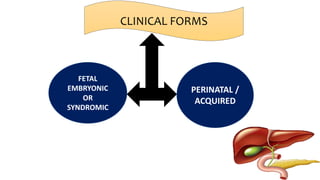
CLINICAL FORMS
FETAL
EMBRYONIC
OR
SYNDROMIC
PERINATAL /
ACQUIRED
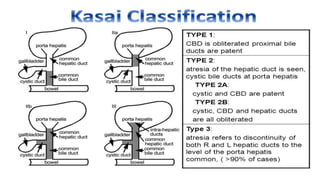
KASAI CLASSIFICATION SYSTEM
• Is widely used & divides cases of biliary atresia according to their
location & degree of pathology.
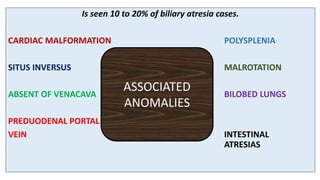
Is seen 10 to 20% of biliary atresia cases.
CARDIAC MALFORMATION POLYSPLENIA
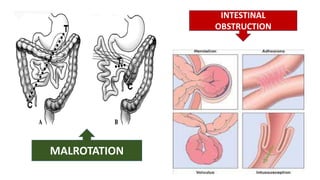
SITUS INVERSUS MALROTATION
ABSENT OF VENACAVA BILOBED LUNGS
PREDUODENAL PORTAL
VEIN INTESTINAL
ATRESIAS
ASSOCIATED
ANOMALIES
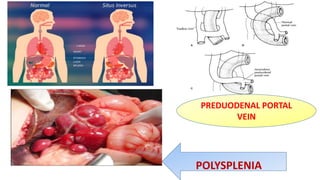
PREDUODENAL PORTAL
VEIN
POLYSPLENIA
MALROTATION
INTESTINAL
OBSTRUCTION
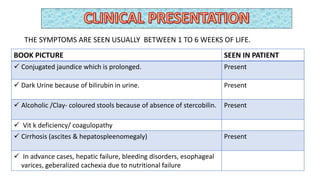
THE SYMPTOMS ARE SEEN USUALLY BETWEEN 1 TO 6 WEEKS OF LIFE.
BOOK PICTURE SEEN IN PATIENT
 Conjugated jaundice which is prolonged. Present
 Dark Urine because of bilirubin in urine. Present
 Alcoholic /Clay- coloured stools because of absence of stercobilin. Present
 Vit k deficiency/ coagulopathy
 Cirrhosis (ascites & hepatospleenomegaly) Present
 In advance cases, hepatic failure, bleeding disorders, esophageal
varices, geberalized cachexia due to nutritional failure
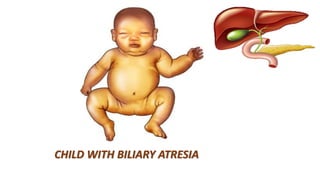
CHILD WITH BILIARY ATRESIA
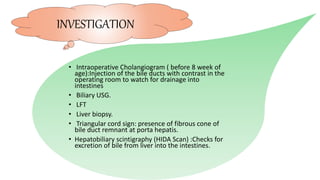
• Intraoperative Cholangiogram ( before 8 week of
age):Injection of the bile ducts with contrast in the
operating room to watch for drainage into
intestines
• Biliary USG.
• LFT
• Liver biopsy.
• Triangular cord sign: presence of fibrous cone of
bile duct remnant at porta hepatis.
• Hepatobiliary scintigraphy (HIDA Scan) :Checks for
excretion of bile from liver into the intestines.
INVESTIGATION
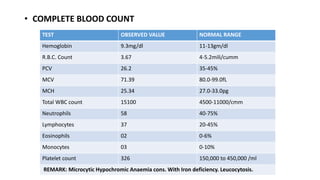
• COMPLETE BLOOD COUNT
TEST OBSERVED VALUE NORMAL RANGE
Hemoglobin 9.3mg/dl 11-13gm/dl
R.B.C. Count 3.67 4-5.2mili/cumm
PCV 26.2 35-45%
MCV 71.39 80.0-99.0fL
MCH 25.34 27.0-33.0pg
Total WBC count 15100 4500-11000/cmm
Neutrophils 58 40-75%
Lymphocytes 37 20-45%
Eosinophils 02 0-6%
Monocytes 03 0-10%
Platelet count 326 150,000 to 450,000 /ml
REMARK: Microcytic Hypochromic Anaemia cons. With Iron deficiency. Leucocytosis.
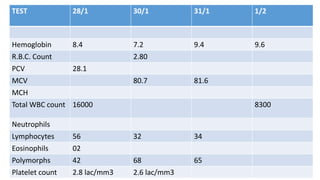
TEST 28/1 30/1 31/1 1/2
Hemoglobin 8.4 7.2 9.4 9.6
R.B.C. Count 2.80
PCV 28.1
MCV 80.7 81.6
MCH
Total WBC count 16000 8300
Neutrophils
Lymphocytes 56 32 34
Eosinophils 02
Polymorphs 42 68 65
Platelet count 2.8 lac/mm3 2.6 lac/mm3
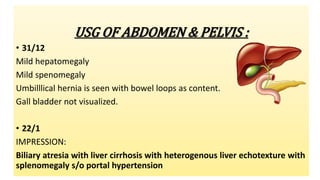
USG OF ABDOMEN & PELVIS :
• 31/12
Mild hepatomegaly
Mild spenomegaly
Umbilllical hernia is seen with bowel loops as content.
Gall bladder not visualized.
• 22/1
IMPRESSION:
Biliary atresia with liver cirrhosis with heterogenous liver echotexture with
splenomegaly s/o portal hypertension
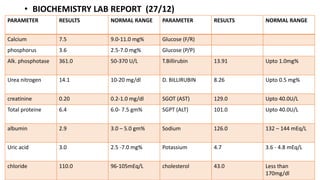
• BIOCHEMISTRY LAB REPORT (27/12)
PARAMETER RESULTS NORMAL RANGE PARAMETER RESULTS NORMAL RANGE
Calcium 7.5 9.0-11.0 mg% Glucose (F/R)
phosphorus 3.6 2.5-7.0 mg% Glucose (P/P)
Alk. phosphotase 361.0 50-370 U/L T.Billirubin 13.91 Upto 1.0mg%
Urea nitrogen 14.1 10-20 mg/dl D. BILLIRUBIN 8.26 Upto 0.5 mg%
creatinine 0.20 0.2-1.0 mg/dl SGOT (AST) 129.0 Upto 40.0U/L
Total proteine 6.4 6.0- 7.5 gm% SGPT (ALT) 101.0 Upto 40.0U/L
albumin 2.9 3.0 – 5.0 gm% Sodium 126.0 132 – 144 mEq/L
Uric acid 3.0 2.5 -7.0 mg% Potassium 4.7 3.6 - 4.8 mEq/L
chloride 110.0 96-105mEq/L cholesterol 43.0 Less than
170mg/dl
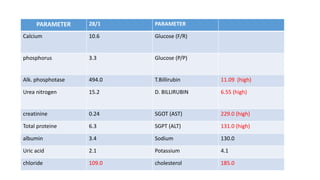
PARAMETER 28/1 PARAMETER
Calcium 10.6 Glucose (F/R)
phosphorus 3.3 Glucose (P/P)
Alk. phosphotase 494.0 T.Billirubin 11.09 (high)
Urea nitrogen 15.2 D. BILLIRUBIN 6.55 (high)
creatinine 0.24 SGOT (AST) 229.0 (high)
Total proteine 6.3 SGPT (ALT) 131.0 (high)
albumin 3.4 Sodium 130.0
Uric acid 2.1 Potassium 4.1
chloride 109.0 cholesterol 185.0
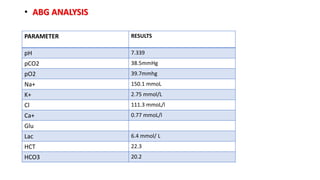
• ABG ANALYSIS
PARAMETER RESULTS
pH 7.339
pCO2 38.5mmHg
pO2 39.7mmhg
Na+ 150.1 mmoL
K+ 2.75 mmol/L
Cl 111.3 mmoL/l
Ca+ 0.77 mmoL/l
Glu
Lac 6.4 mmol/ L
HCT 22.3
HCO3 20.2
MANAGEMENT
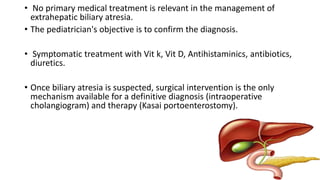
• No primary medical treatment is relevant in the management of
extrahepatic biliary atresia.
• The pediatrician's objective is to confirm the diagnosis.
• Symptomatic treatment with Vit k, Vit D, Antihistaminics, antibiotics,
diuretics.
• Once biliary atresia is suspected, surgical intervention is the only
mechanism available for a definitive diagnosis (intraoperative
cholangiogram) and therapy (Kasai portoenterostomy).
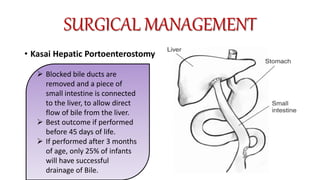
SURGICAL MANAGEMENT
• Kasai Hepatic Portoenterostomy
 Blocked bile ducts are
removed and a piece of
small intestine is connected
to the liver, to allow direct
flow of bile from the liver.
 Best outcome if performed
before 45 days of life.
 If performed after 3 months
of age, only 25% of infants
will have successful
drainage of Bile.
•LIVER TRANSPLANTATION:
Up to 80% of patients ultimately require a
liver transplant due to progression and
complications of end stage liver disease, such
as GI bleeding, ascites (increased abdominal
fluid), worsening jaundice, and poor growth.
 Only 25% of patients with a Kasai
procedure will survive into their 20s without
requiring a liver transplant.
 Long-term survival after liver
transplantation is over 90%, similar to
children receiving a liver transplant for other
reasons.
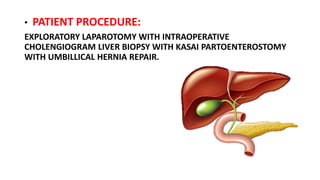
• PATIENT PROCEDURE:
EXPLORATORY LAPAROTOMY WITH INTRAOPERATIVE
CHOLENGIOGRAM LIVER BIOPSY WITH KASAI PARTOENTEROSTOMY
WITH UMBILLICAL HERNIA REPAIR.
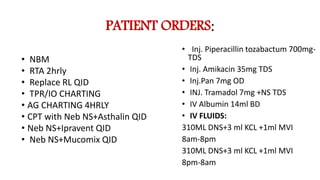
PATIENT ORDERS:
• NBM
• RTA 2hrly
• Replace RL QID
• TPR/IO CHARTING
• AG CHARTING 4HRLY
• CPT with Neb NS+Asthalin QID
• Neb NS+Ipravent QID
• Neb NS+Mucomix QID
• Inj. Piperacillin tozabactum 700mg-
TDS
• Inj. Amikacin 35mg TDS
• Inj.Pan 7mg OD
• INJ. Tramadol 7mg +NS TDS
• IV Albumin 14ml BD
• IV FLUIDS:
310ML DNS+3 ml KCL +1ml MVI
8am-8pm
310ML DNS+3 ml KCL +1ml MVI
8pm-8am
• FAILURE TO THRIVE.
• Without treatment, infants with biliary atresia would develop
cirrhosis within 6 months and liver failure within 1 year.
• MALNUTRITION
• PORTAL HYPERTENSION
• LIVER FAILURE
COMPLICATIONS
Overall survival with a native liver (not
transplanted) ranges from 30-55 percent
at 5 years of age;
30-40 percent at 10 years of age.
It is thought that approximately 80
percent of patients with biliary
atresia will require liver transplantation
by the age of 20.
• Nursing Diagnosis for Biliary Atresia
1) Hyperthermia related to inflammatory damage due to progressive
extrahepatic biliary duct.
2) Acute pain related to postoperative procedure.
3) Ineffective breathing pattern related to an increase
in abdominal distension.
4) Imbalanced Nutrition: Less Than Body Requirements related to
anorexia and impaired absorption of fat.
characterized by weight loss and conjunctival pallor.
5) Impaired skin integrity related to accumulation of bile salts in the
network. characterized by pruritis.
6) Deficient fluid volume related to nausea and vomiting.
7) Anxiety related to lack of information about the disease due to lack of
knowledge.
• Biliary Atresia – Clinical Series
Bárbara Netoa ;Mariana Borges-Dias (2017)
Biliary atresia is the main cause of death by hepatic failure and the main
indication for liver transplant in children. This study aims to analyze the
population with this diagnosis, treated between 2000 and 2015 at Hospital
de São João. Material and Methods: Descriptive, observational, and
retrospective study, including the patients with biliary atresia, diagnosed and
treated between January 1, 2000 and December 31, 2015. We analyzed
epidemiologic, clinical, biochemical, and image data, as well as registered
complications and present status. Results: Eighteen patients were evaluated.
The median age at time of Kasai portoenterostomy was 63 days of life, with
better prognosis for those patients who had surgery before 72 days. The
procedure was successful in 2/3 of cases. There was a significant association
between recurrent cholangitis and survival. Five cases of transplant and 2
deaths, one of them after transplant, were registered. Survival with native
liver was 77.8%, 72.2%, and 64.2% at 1, 5, and 10 years of follow-up,
respectively.
• Seyed Mohsen Dehghani conducted study on Long-term Outcome of
Kasai Operation on Children with Biliary Atresia between 2001-2010
in Namazi Hospital, Shiraz, Iran. : A database of medical records of 61
patients (F=41, M=20) with biliary atresia, aged between 30 to 100
days at the time of operation, who had undergone the Kasai
operation in Shiraz Namazi Hospital from 2001 to 2010 was examined
in a retrospective review. Risk factors of failure (death and liver
transplantation) were analyzed by Kaplan-Meier test. Results: Age at
the operation time, type of atresia, and dilatation of the bile ducts
were identified as the risk factors; 29 patients had signs of
hepatomegaly, 6 patients had liver transplantation. Among them, 3
survived.
• Conclusion: Of the patients, 61% with biliary atresia survived for more
than 5 years with their native liver while the overall survival rate
among 52 patients was 85.30±5.96 months. Postoperative care and
regular checkups should be considered for all survivors as a lifelong
procedure to prevent any possibilities of future hepatic deterioration

Biliary atresia

  • 1.
  • 3.
     Biliary atresiais characterized by obliteration or discontinuity of the extra hepatic biliary system, resulting in obstruction to bile flow. OR  Biliary atresia is a condition in which the normal extrahepatic biliary system is disrupted. Progressive damage of extrahepatic & intrahepatic bile ducts secondary to inflammation may occur, leading to fibrosis, biliary cirrhosis & eventual liver failure. DEFINITION
  • 4.
    EMBRYOLOGY • The biliarysystem originates from the hepatic diverticulum of the foregut at 4the week of gestation. • Beginning in the fourth week of gestation, the liver bud arises from the distal extent of the foregut. • As the liver parenchyma develops, the cells between it and the foregut proliferate, forming the precursor to the bile duct. • Between the fourth and fifth weeks of gestation, the gallbladder primordium buds off the caudal extent of the bile duct giving rise to the gallbladder and cystic duct. • This bud lies in close proximity to the ventral pancreatic bud. The shared stalk rotates posteriorly and medially to join the dorsal pancreatic bud .
  • 5.
    • The ventralpancreatic bud gives rise to the uncinate process; its duct, the duct of Wirsung, typically joins with the common bile duct (CBD) • The extrahepatic biliary tree develops in close concert with the hepatic artery. • Further details of the development of the extrahepatic biliary tract remain nebulous. • It was initially thought that the biliary tract lumen passed through a phase in which the lumen was obliterated by proliferating endothelial cells, and failure to recanalize resulted in biliary atresia in neonates.
  • 6.
    • 1:10,000 livebirths. • International : highest in Asian populations, and it may be more common in Chinese infants compared with Japanese infants. • Sex: more common in females than in males. • Age: Biliary atresia is a disorder unique to the neonatal period. The fetal/perinatal form is evident within the first 2 weeks of life; the postnatal type presents in infants aged 2-8 weeks. E P I D E M I O L G Y
  • 7.
    • Unknown. • Reovirus3 infection or rotavirus infection. • Some chromosomal abnormality trisomy 17, 18 and 21; • as well as the presence of anomalous organs in 30% of cases of biliary atresia. • congenital malformation ( believed to be caused by an inflammatory process that obliterates the bile duct system) may begin utero or postnataly. • CMV infection. • Autoimmunity. ETIOLOGY
  • 8.
  • 9.
    KASAI CLASSIFICATION SYSTEM •Is widely used & divides cases of biliary atresia according to their location & degree of pathology.
  • 11.
    Is seen 10to 20% of biliary atresia cases. CARDIAC MALFORMATION POLYSPLENIA SITUS INVERSUS MALROTATION ABSENT OF VENACAVA BILOBED LUNGS PREDUODENAL PORTAL VEIN INTESTINAL ATRESIAS ASSOCIATED ANOMALIES
  • 12.
  • 13.
  • 14.
    THE SYMPTOMS ARESEEN USUALLY BETWEEN 1 TO 6 WEEKS OF LIFE. BOOK PICTURE SEEN IN PATIENT  Conjugated jaundice which is prolonged. Present  Dark Urine because of bilirubin in urine. Present  Alcoholic /Clay- coloured stools because of absence of stercobilin. Present  Vit k deficiency/ coagulopathy  Cirrhosis (ascites & hepatospleenomegaly) Present  In advance cases, hepatic failure, bleeding disorders, esophageal varices, geberalized cachexia due to nutritional failure
  • 15.
  • 16.
    • Intraoperative Cholangiogram( before 8 week of age):Injection of the bile ducts with contrast in the operating room to watch for drainage into intestines • Biliary USG. • LFT • Liver biopsy. • Triangular cord sign: presence of fibrous cone of bile duct remnant at porta hepatis. • Hepatobiliary scintigraphy (HIDA Scan) :Checks for excretion of bile from liver into the intestines. INVESTIGATION
  • 17.
    • COMPLETE BLOODCOUNT TEST OBSERVED VALUE NORMAL RANGE Hemoglobin 9.3mg/dl 11-13gm/dl R.B.C. Count 3.67 4-5.2mili/cumm PCV 26.2 35-45% MCV 71.39 80.0-99.0fL MCH 25.34 27.0-33.0pg Total WBC count 15100 4500-11000/cmm Neutrophils 58 40-75% Lymphocytes 37 20-45% Eosinophils 02 0-6% Monocytes 03 0-10% Platelet count 326 150,000 to 450,000 /ml REMARK: Microcytic Hypochromic Anaemia cons. With Iron deficiency. Leucocytosis.
  • 18.
    TEST 28/1 30/131/1 1/2 Hemoglobin 8.4 7.2 9.4 9.6 R.B.C. Count 2.80 PCV 28.1 MCV 80.7 81.6 MCH Total WBC count 16000 8300 Neutrophils Lymphocytes 56 32 34 Eosinophils 02 Polymorphs 42 68 65 Platelet count 2.8 lac/mm3 2.6 lac/mm3
  • 19.
    USG OF ABDOMEN& PELVIS : • 31/12 Mild hepatomegaly Mild spenomegaly Umbilllical hernia is seen with bowel loops as content. Gall bladder not visualized. • 22/1 IMPRESSION: Biliary atresia with liver cirrhosis with heterogenous liver echotexture with splenomegaly s/o portal hypertension
  • 20.
    • BIOCHEMISTRY LABREPORT (27/12) PARAMETER RESULTS NORMAL RANGE PARAMETER RESULTS NORMAL RANGE Calcium 7.5 9.0-11.0 mg% Glucose (F/R) phosphorus 3.6 2.5-7.0 mg% Glucose (P/P) Alk. phosphotase 361.0 50-370 U/L T.Billirubin 13.91 Upto 1.0mg% Urea nitrogen 14.1 10-20 mg/dl D. BILLIRUBIN 8.26 Upto 0.5 mg% creatinine 0.20 0.2-1.0 mg/dl SGOT (AST) 129.0 Upto 40.0U/L Total proteine 6.4 6.0- 7.5 gm% SGPT (ALT) 101.0 Upto 40.0U/L albumin 2.9 3.0 – 5.0 gm% Sodium 126.0 132 – 144 mEq/L Uric acid 3.0 2.5 -7.0 mg% Potassium 4.7 3.6 - 4.8 mEq/L chloride 110.0 96-105mEq/L cholesterol 43.0 Less than 170mg/dl
  • 21.
    PARAMETER 28/1 PARAMETER Calcium10.6 Glucose (F/R) phosphorus 3.3 Glucose (P/P) Alk. phosphotase 494.0 T.Billirubin 11.09 (high) Urea nitrogen 15.2 D. BILLIRUBIN 6.55 (high) creatinine 0.24 SGOT (AST) 229.0 (high) Total proteine 6.3 SGPT (ALT) 131.0 (high) albumin 3.4 Sodium 130.0 Uric acid 2.1 Potassium 4.1 chloride 109.0 cholesterol 185.0
  • 22.
    • ABG ANALYSIS PARAMETERRESULTS pH 7.339 pCO2 38.5mmHg pO2 39.7mmhg Na+ 150.1 mmoL K+ 2.75 mmol/L Cl 111.3 mmoL/l Ca+ 0.77 mmoL/l Glu Lac 6.4 mmol/ L HCT 22.3 HCO3 20.2
  • 23.
  • 24.
    • No primarymedical treatment is relevant in the management of extrahepatic biliary atresia. • The pediatrician's objective is to confirm the diagnosis. • Symptomatic treatment with Vit k, Vit D, Antihistaminics, antibiotics, diuretics. • Once biliary atresia is suspected, surgical intervention is the only mechanism available for a definitive diagnosis (intraoperative cholangiogram) and therapy (Kasai portoenterostomy).
  • 25.
    SURGICAL MANAGEMENT • KasaiHepatic Portoenterostomy  Blocked bile ducts are removed and a piece of small intestine is connected to the liver, to allow direct flow of bile from the liver.  Best outcome if performed before 45 days of life.  If performed after 3 months of age, only 25% of infants will have successful drainage of Bile.
  • 26.
    •LIVER TRANSPLANTATION: Up to80% of patients ultimately require a liver transplant due to progression and complications of end stage liver disease, such as GI bleeding, ascites (increased abdominal fluid), worsening jaundice, and poor growth.  Only 25% of patients with a Kasai procedure will survive into their 20s without requiring a liver transplant.  Long-term survival after liver transplantation is over 90%, similar to children receiving a liver transplant for other reasons.
  • 27.
    • PATIENT PROCEDURE: EXPLORATORYLAPAROTOMY WITH INTRAOPERATIVE CHOLENGIOGRAM LIVER BIOPSY WITH KASAI PARTOENTEROSTOMY WITH UMBILLICAL HERNIA REPAIR.
  • 28.
    PATIENT ORDERS: • NBM •RTA 2hrly • Replace RL QID • TPR/IO CHARTING • AG CHARTING 4HRLY • CPT with Neb NS+Asthalin QID • Neb NS+Ipravent QID • Neb NS+Mucomix QID • Inj. Piperacillin tozabactum 700mg- TDS • Inj. Amikacin 35mg TDS • Inj.Pan 7mg OD • INJ. Tramadol 7mg +NS TDS • IV Albumin 14ml BD • IV FLUIDS: 310ML DNS+3 ml KCL +1ml MVI 8am-8pm 310ML DNS+3 ml KCL +1ml MVI 8pm-8am
  • 29.
    • FAILURE TOTHRIVE. • Without treatment, infants with biliary atresia would develop cirrhosis within 6 months and liver failure within 1 year. • MALNUTRITION • PORTAL HYPERTENSION • LIVER FAILURE COMPLICATIONS
  • 30.
    Overall survival witha native liver (not transplanted) ranges from 30-55 percent at 5 years of age; 30-40 percent at 10 years of age. It is thought that approximately 80 percent of patients with biliary atresia will require liver transplantation by the age of 20.
  • 31.
    • Nursing Diagnosisfor Biliary Atresia 1) Hyperthermia related to inflammatory damage due to progressive extrahepatic biliary duct. 2) Acute pain related to postoperative procedure. 3) Ineffective breathing pattern related to an increase in abdominal distension. 4) Imbalanced Nutrition: Less Than Body Requirements related to anorexia and impaired absorption of fat. characterized by weight loss and conjunctival pallor. 5) Impaired skin integrity related to accumulation of bile salts in the network. characterized by pruritis. 6) Deficient fluid volume related to nausea and vomiting. 7) Anxiety related to lack of information about the disease due to lack of knowledge.
  • 32.
    • Biliary Atresia– Clinical Series Bárbara Netoa ;Mariana Borges-Dias (2017) Biliary atresia is the main cause of death by hepatic failure and the main indication for liver transplant in children. This study aims to analyze the population with this diagnosis, treated between 2000 and 2015 at Hospital de São João. Material and Methods: Descriptive, observational, and retrospective study, including the patients with biliary atresia, diagnosed and treated between January 1, 2000 and December 31, 2015. We analyzed epidemiologic, clinical, biochemical, and image data, as well as registered complications and present status. Results: Eighteen patients were evaluated. The median age at time of Kasai portoenterostomy was 63 days of life, with better prognosis for those patients who had surgery before 72 days. The procedure was successful in 2/3 of cases. There was a significant association between recurrent cholangitis and survival. Five cases of transplant and 2 deaths, one of them after transplant, were registered. Survival with native liver was 77.8%, 72.2%, and 64.2% at 1, 5, and 10 years of follow-up, respectively.
  • 33.
    • Seyed MohsenDehghani conducted study on Long-term Outcome of Kasai Operation on Children with Biliary Atresia between 2001-2010 in Namazi Hospital, Shiraz, Iran. : A database of medical records of 61 patients (F=41, M=20) with biliary atresia, aged between 30 to 100 days at the time of operation, who had undergone the Kasai operation in Shiraz Namazi Hospital from 2001 to 2010 was examined in a retrospective review. Risk factors of failure (death and liver transplantation) were analyzed by Kaplan-Meier test. Results: Age at the operation time, type of atresia, and dilatation of the bile ducts were identified as the risk factors; 29 patients had signs of hepatomegaly, 6 patients had liver transplantation. Among them, 3 survived. • Conclusion: Of the patients, 61% with biliary atresia survived for more than 5 years with their native liver while the overall survival rate among 52 patients was 85.30±5.96 months. Postoperative care and regular checkups should be considered for all survivors as a lifelong procedure to prevent any possibilities of future hepatic deterioration