LEARNING OBJECTIVES:
 Case study
 What is BOO?
 Pathophysiology
 Clinical features
 IPSS
 BPH
 Investigations
 Treatment
CASE STUDY:
 A sixty year old male came to opd with
severe difficulty in voiding , weak urinary
stream & straining his ultrasound reveals 55
gm prostate & residual urine of 70ml . His PSA
is 2-4 gm per ml.
BOO
It’s urodynamic concept of low flow rates and
high intravesical pressures.
Causes:
*BPH.
*CAP.
*bladder neck stenosis.
*urethral stricture.
*neuropathic conditions.
Pathophysiology
 Boo over time will result in..
increase in the intravesical voiding pressure
(>80 cm H2O), bladder muscle hypertrophy
(trabiculation, sacculation and diverticulum
formation).
 High pressure may transmit to the upper tract
causing hydroureter, hydronephrosis and renal
insufficiency.
 Boo results in incomplete bladder evacuation
(residual urine) which predisposes to UTI and
stone formation.
 Decrease uro flow rate under 10 ml /sec
Symptomatology (LUTS)
 Obstructive:
Hesitancy
Straining
Weak stream
Intermittency.
Post voiding dribbling.
Retention of urine.
 Irritative:
Frequency.,nocturia
Urgency & incontinence.
Benign prostatic hyperplasia
BPH
Third most common urological
pathology.
Starts at late 30s & appear clinically at
60s.
Theories:
Hormonal: DHT, growth factor.
Neoplastic: fibromyoadenoma.
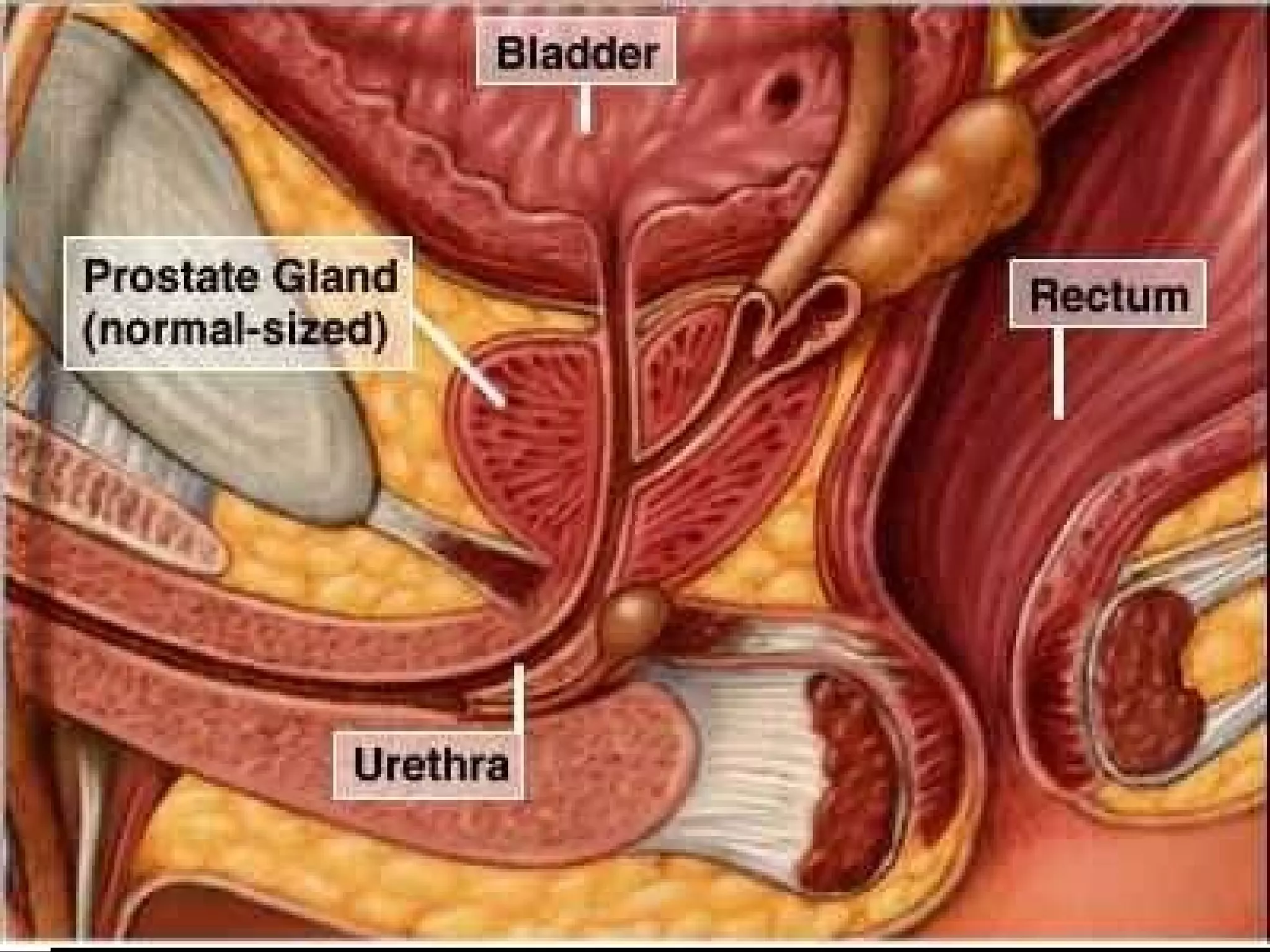
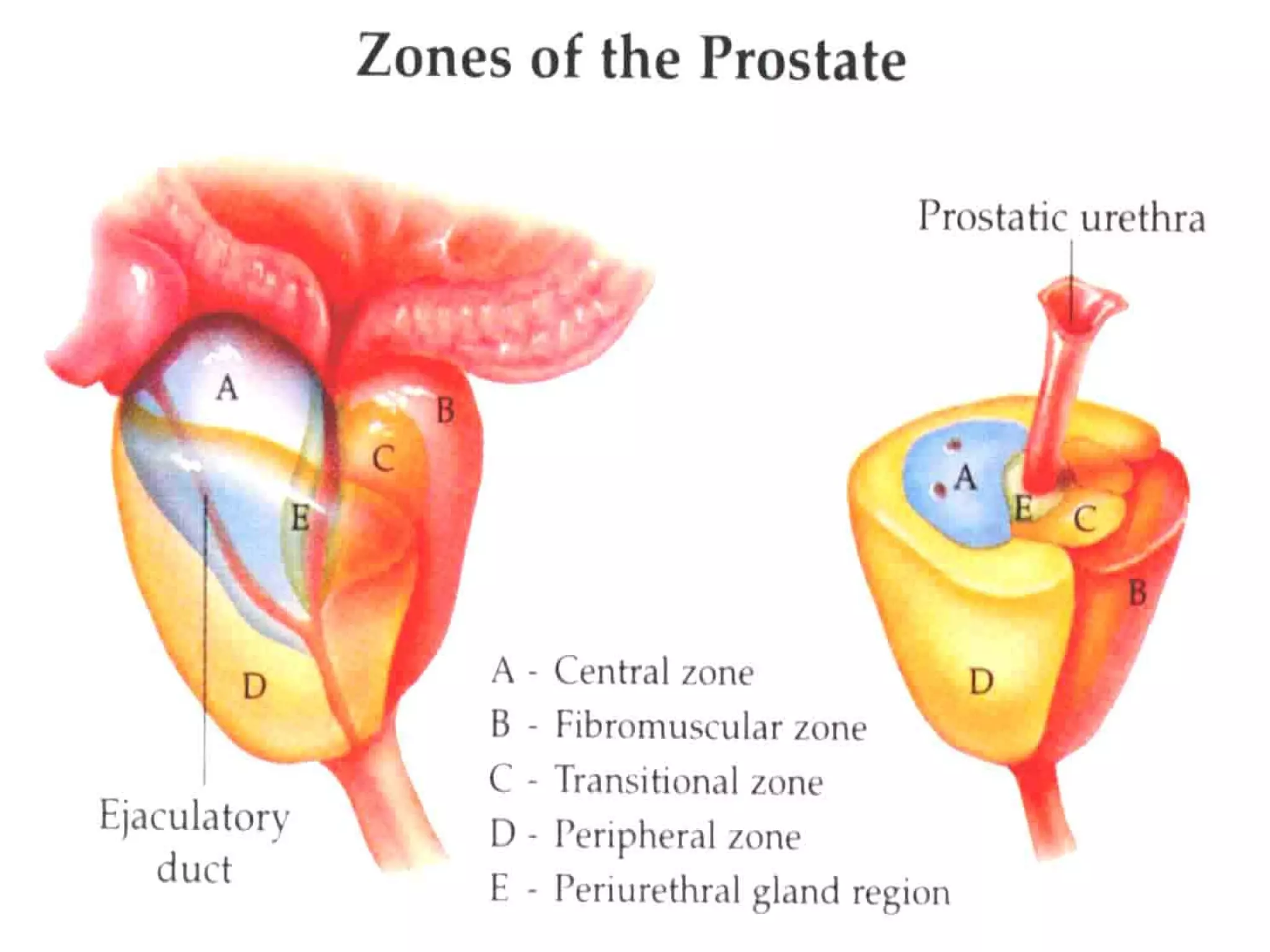
Typically affects submucosal glands at
transitional zone.
IPSS [international prostatic symptom score]
Precipitating causes for retention
 Severe pain. MI, joint pain.
 Psychological upset.
 Cold exposure.
 Constipation.
 Drugs
Anticholenergic & diuretic
,decongestant,antihistamin
 Ignoring first desire for urination.
Clinically
Usually normal.
Distended bladder.in acute or chronic
retention
PR ex: enlarged prostate, smooth,
regular, firm, maintained median
sulcus and mobile rectal mucosa
Normal anal sphincter tone.
Normal bulbocovernosus reflex
Investigations:
• Serum Creatinine
• X ray KUB
• Ultrasound Scan
• IVU
• PSA (0-4 mg/ml)
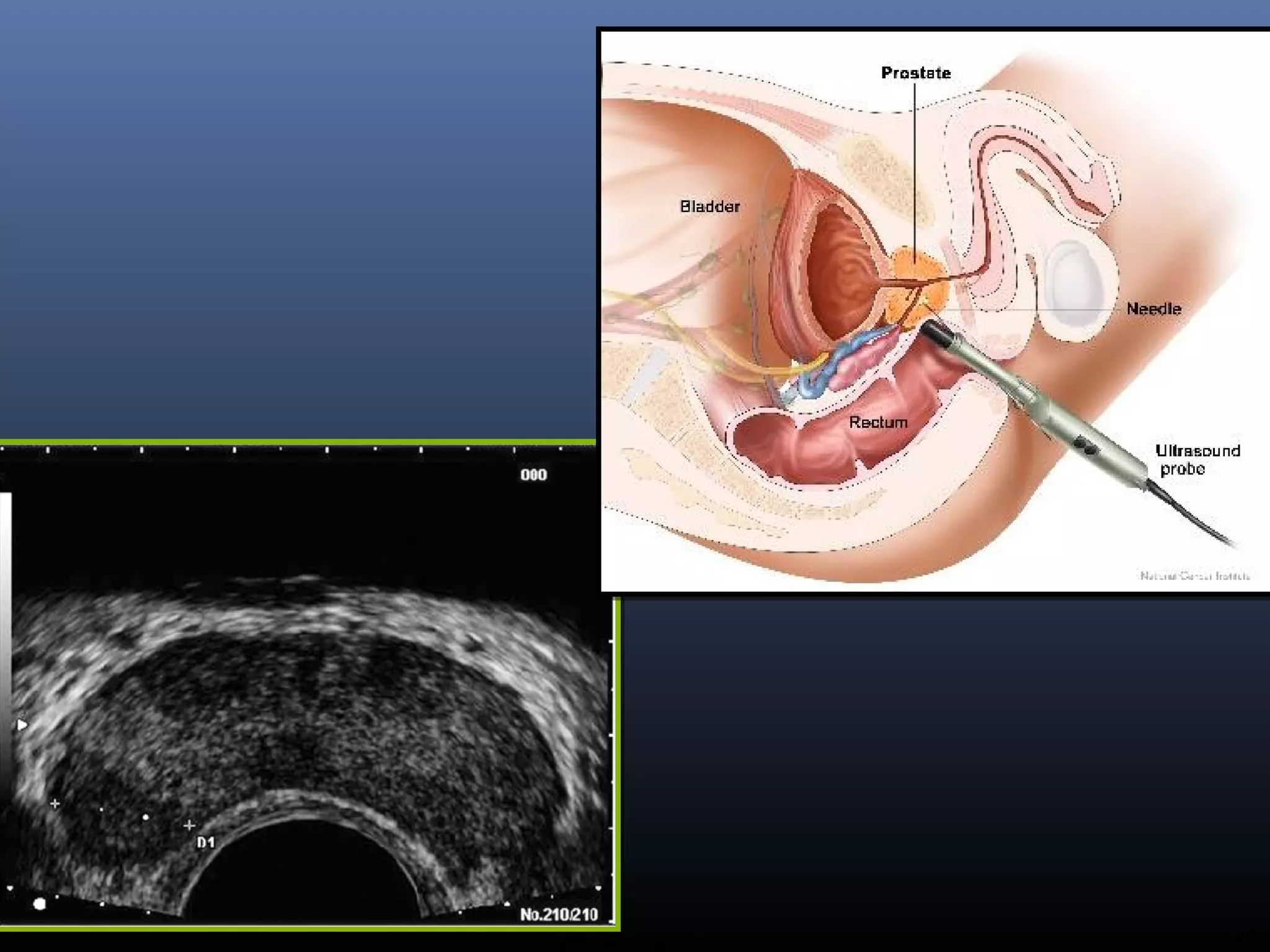
• TRUS (TRANSRECTAL ULTRASOUND)
• Urodynamic Studies
Cystoscopy: enlarged prostate, trabiculation &
stones.
Size of the prostate has no relation with the
severity of the symptom but the degree of
urethral compression.
Treatment
Conservative:
Avoid ppt factors.
Treat pains.
Treat UTI.
Αlfa blocker: prazocin 1 mg, terrazocin 2mg,
doxazocin 2mg.tamsulusin,alfuzosin At night
S/E hypotension, 1st
dose syncope.
5 α reductase inhibitors: fenasteride, prosteride
5 mg/day > 6 months.
S/E impotence.
Usually used in large gland
Semi surgical:
TUMT (trans urethral microwave thermotherapy)
HIFU ( high intensity focused u/s)
TUIP (Trans urethral incision of prostate)
TUNA (Trans urethral needle ablation)
Prostatic stents
TU baloon dilatation
TUMT
STENT
TUNA
Surgical treatment
Endoscopic:
TURP
Laser
Open surgery:
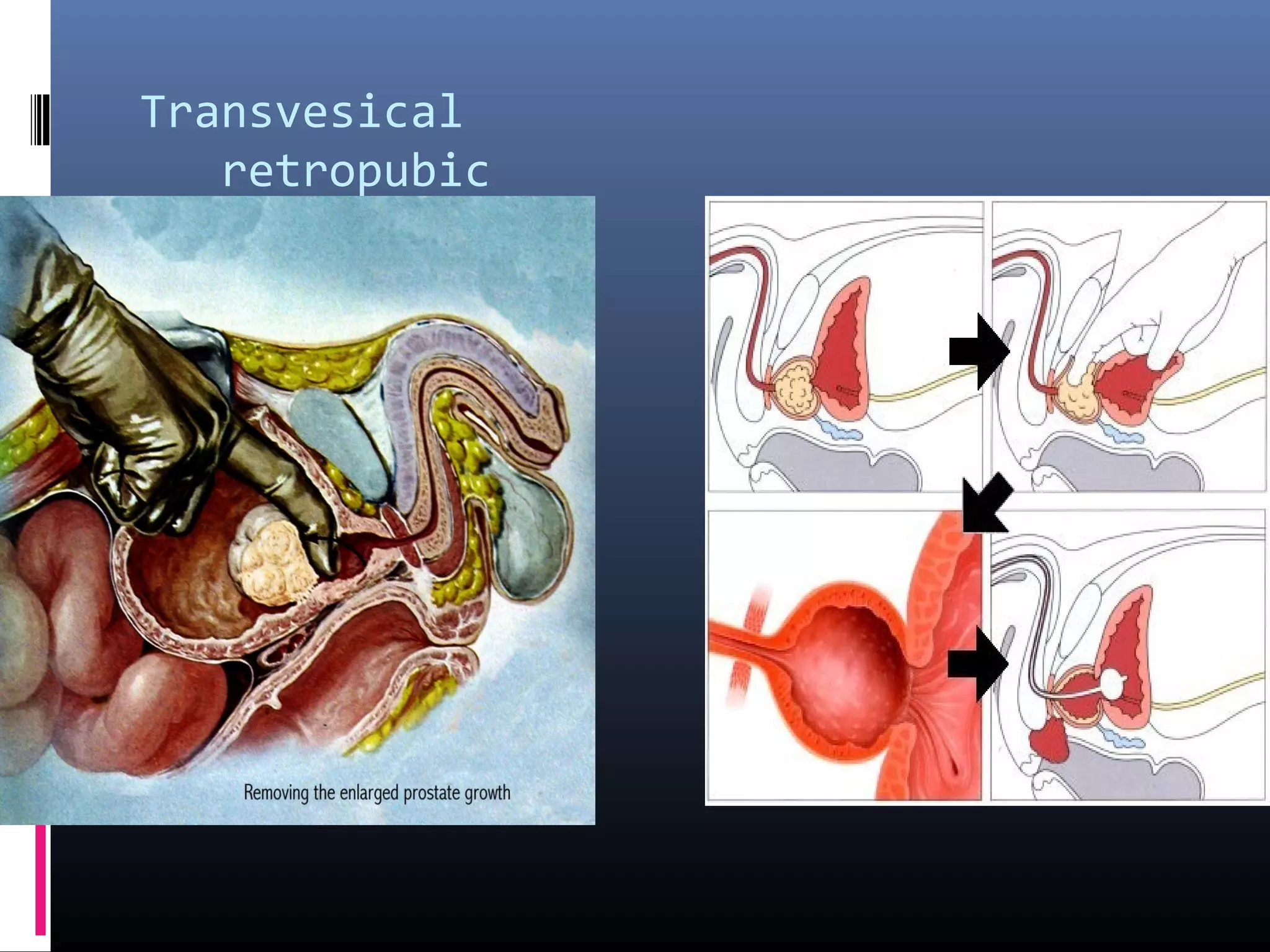
Transvesical prostatectomy.
Rertopubic prostatectomy
INDICATION OF SURGERY IN
BPH
 SEVERE SYMPTOMS
 FAILURE OF MEDICAL TREATMENT
 COMPLICATIONS LIKE:
 ACUTE URINARY RETENTION
 CHRONIC RETENTION
 REPEATED HEMATURIA
 REPEATED UTI
 VESICAL STONE
 RENAL IMPERMENT DUE TO CHRONIC
RETENTION
TURP
Transvesical
retropubic
BEFORE TURP AFTER
TURP
Complications:
Early:
Hemorrhage.
Infection.
Wound infection[in open prostatectomy]
Late:
Urethral stricture
Bladder neck contracture
Retrograde ejaculation.
Incontinence.
Impotence.
Recurrence of BPH. After 5-10 years.
Carcinoma of the prostate
CAP
One of the most common malignant tumor
affecting males over the age of 65 in western
countries.
Pathology
95% of the tumor are adenocarcinoma and
derived from acinar epithelium
75% of CAP arise from peripheral zone.
grading:
Gleason’s grade based on the degree of
glandular differentiation and growth pattern.
Spread
Direct invasion: to nearby structures.
Denonvvilliar’s fascia act as barrier.
Lymphatic: internal, external & common iliac
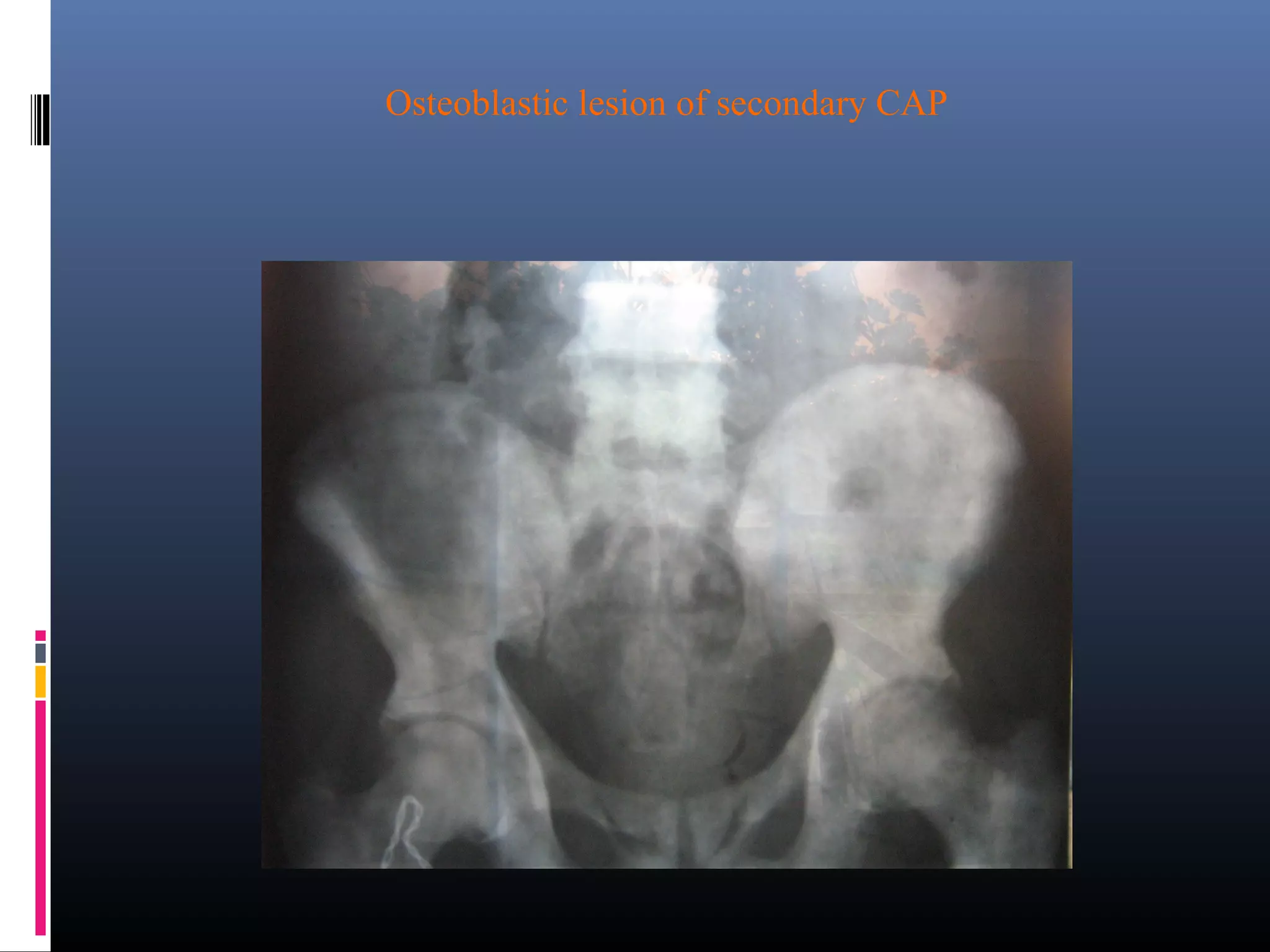
Blood: to the lower lumber vertebrae & pelvic
bones due to reverse blood flow from
vesicoprostatic plexus to the emissary veins
of the bones during coughing & sneezing
(OSTEOBLASTIC)
Osteoblastic lesion of secondary CAP
Presentation
 Accidental during histopathological ex after
prostatectomy.
 During PR ex
 High PSA
 BOO.
 Metastatic: back ache, sciatica, paraplegia
or pathological fractures..
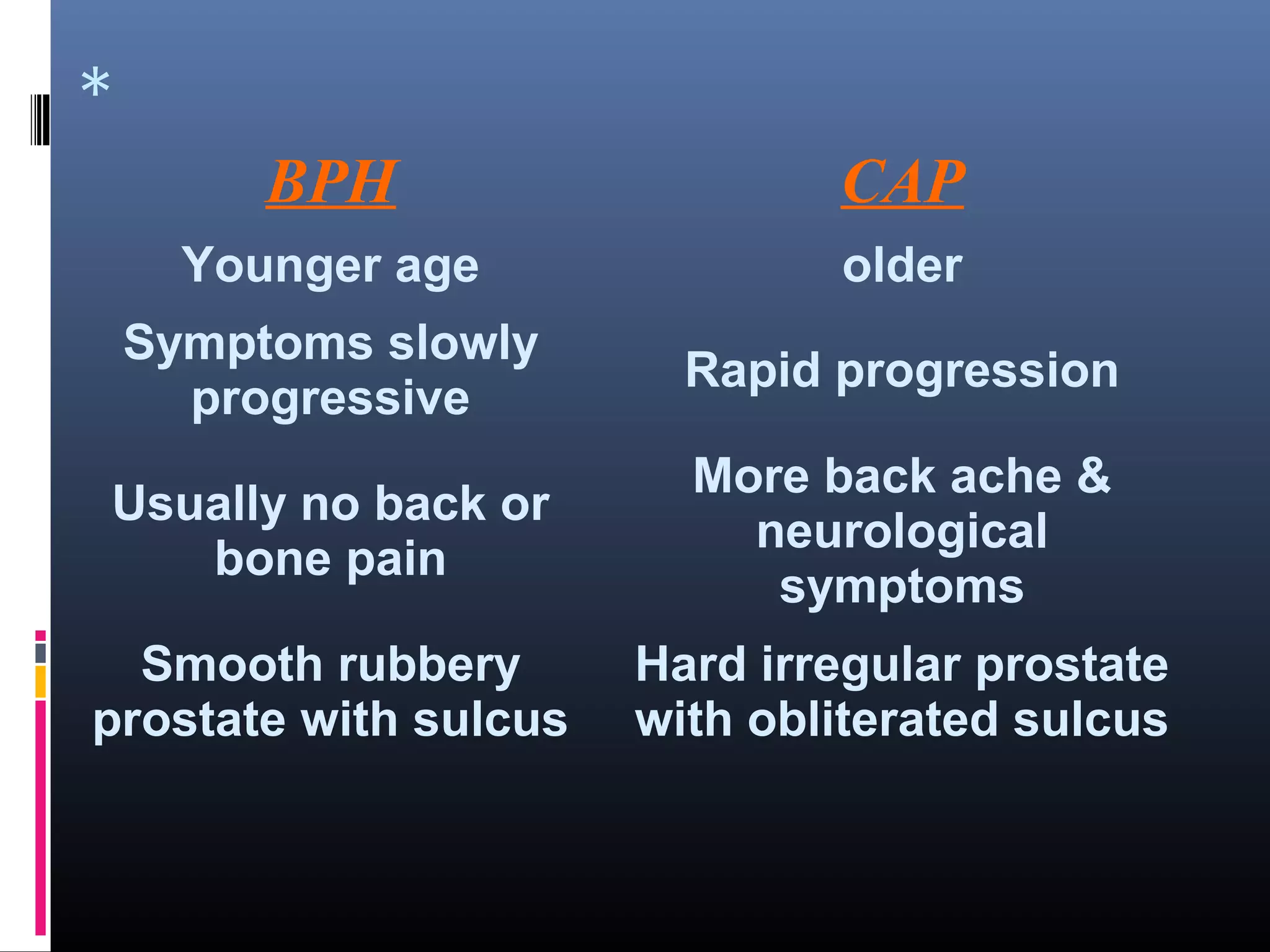
*
BPH CAP
Younger age older
Symptoms slowly
progressive
Rapid progression
Usually no back or
bone pain
More back ache &
neurological
symptoms
Smooth rubbery
prostate with sulcus
Hard irregular prostate
with obliterated sulcus
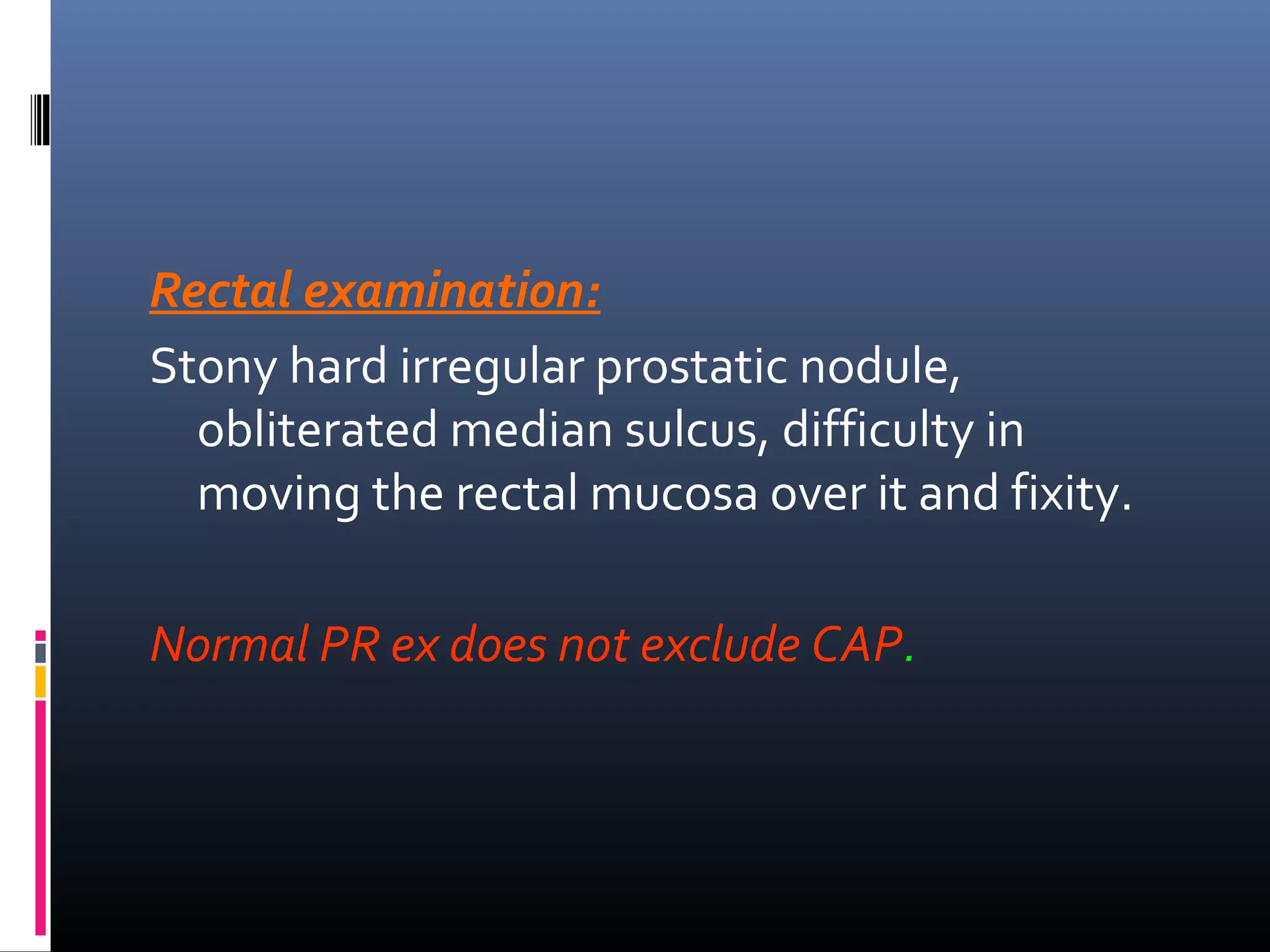
Rectal examination:
Stony hard irregular prostatic nodule,
obliterated median sulcus, difficulty in
moving the rectal mucosa over it and fixity.
Normal PR ex does not exclude CAP.
prostatic cancer 39
Investigations
PSA: prostatic tumor marker for diagnosis and
follow up, it may also increase in prostatitis and
BPH.
10 ng/ml normal,
10-15 suspicious.
>15 is diagnostic.
Acid phosphatase: prostatic fraction.
Alkaline phosphatase: in bone metastasis.
Radiological investigations
Plain X ray: osteoblastic lesion.
Bone scan: hot areas (active).
CT scan.
TRUS & biopsy (sixtant biopsy).
prostatic cancer 42
Treatment
Watchful waiting:
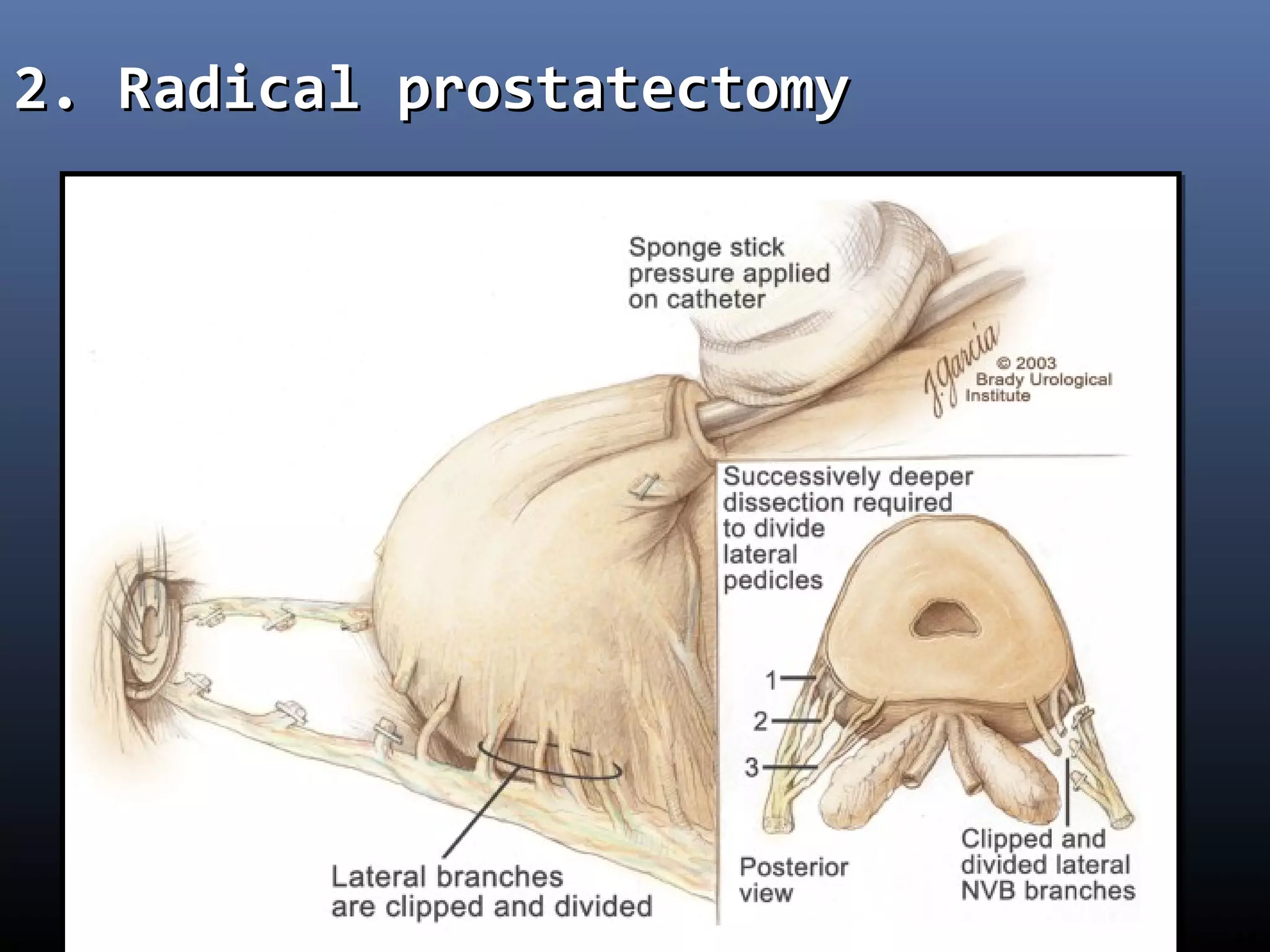
Radical prostatectomy:
Enblock surgical removal of the entire prostate,
seminal vesicles and pelvic lymph nodes. The
bladder anastomosed to the urethra.
Indicated for early disease and healthy fit pt.
2. Radical prostatectomy2. Radical prostatectomy
prostatic cancer 44
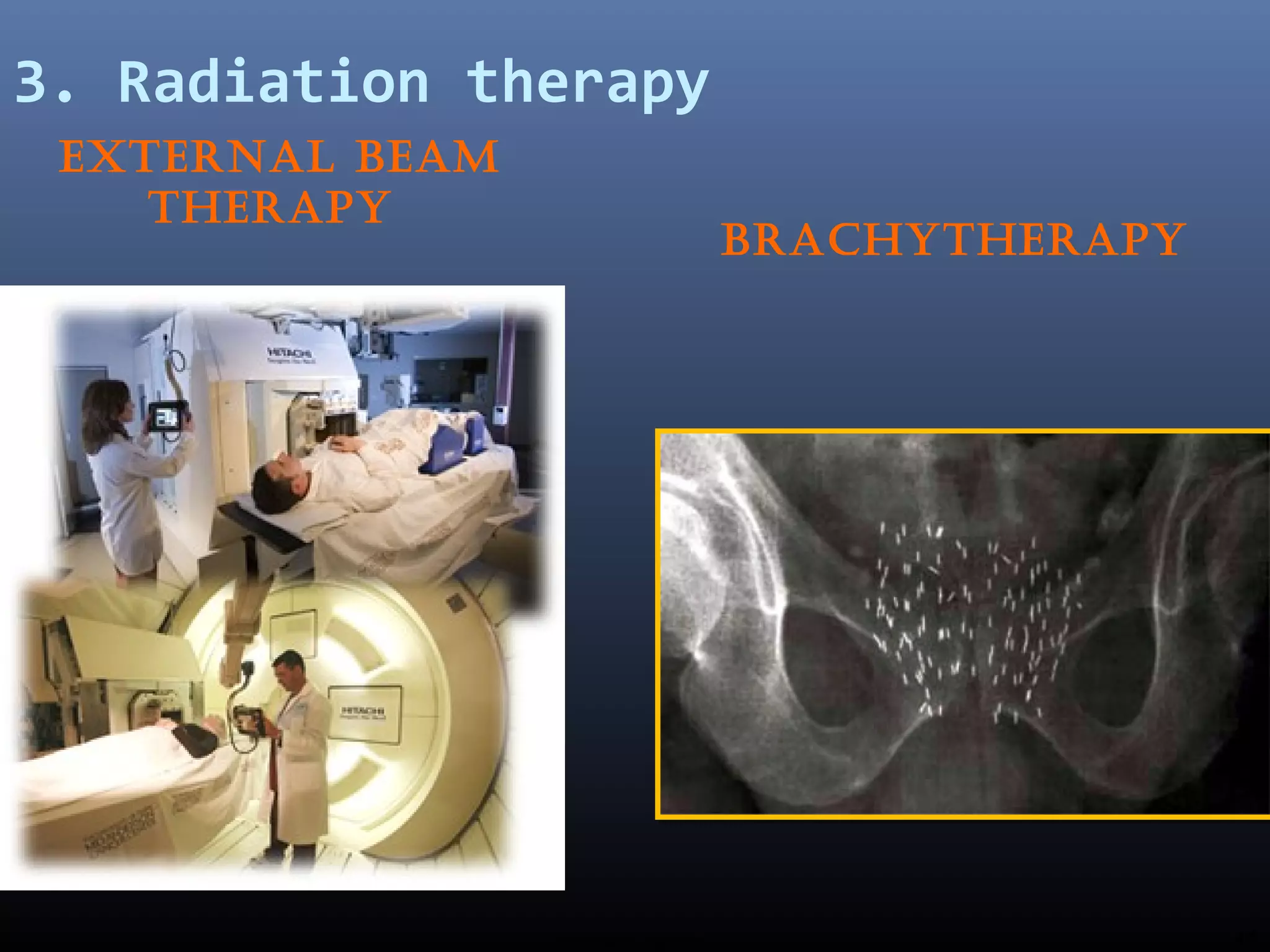
Radiotherapy
external beam & brachytherapy
Indication:
1- Locally advanced disease.
2- Unfit patient for surgery.
3-Symptomatic metastases to relieve pain.
3. Radiation therapy
external beam
therapy
brachytherapy
prostatic cancer 46
Hormonal therapy
Its trearment of choice for metastatic tumor
Cap is hormonal dependant (androgen), and
about one third of tumors are hormone-
insensitive.
Androgen ablation may change the course of
the disease.
Methods of androgen ablation
surgical
Bilateral orchiectomy: complete or subcapsular.
medical
LHRH agonist: (Zoladex)/28 days SC.
Anti androgen: (Nilutemide) 250 mg/6h.
.
RESEARCH:
According to research done in 2015 by wah
medical collage, wah cantt
 Of the 1500 patients in the study, 810(54%)
were females and 690(46%) were male.
Lower urinary tract pathologies were found in
480(32%) patients.
 The most common pathology among males
was enlarged prostate in 127(8.4%) patients.
Among females, urethral stenosis was the
most common pathology in 57(3.8%)
patients. Transitional cell carcinoma was seen
in 57(3.8%) patients having haematuria with
inconclusive ultrasound and intravenous
urography. All patients tolerated the
procedure well.
 Aging Population= More BPH
 Not all Male LUTS=BPH
 Not all BPH=LUTS
 Consider CombinationTherapy
 Quality of life issues
prostatic cancer 52
prostatic cancer 53
Thank you

Bladder outlet obstruction

  • 3.
    LEARNING OBJECTIVES:  Casestudy  What is BOO?  Pathophysiology  Clinical features  IPSS  BPH  Investigations  Treatment
  • 4.
    CASE STUDY:  Asixty year old male came to opd with severe difficulty in voiding , weak urinary stream & straining his ultrasound reveals 55 gm prostate & residual urine of 70ml . His PSA is 2-4 gm per ml.
  • 5.
    BOO It’s urodynamic conceptof low flow rates and high intravesical pressures. Causes: *BPH. *CAP. *bladder neck stenosis. *urethral stricture. *neuropathic conditions.
  • 6.
    Pathophysiology  Boo overtime will result in.. increase in the intravesical voiding pressure (>80 cm H2O), bladder muscle hypertrophy (trabiculation, sacculation and diverticulum formation).  High pressure may transmit to the upper tract causing hydroureter, hydronephrosis and renal insufficiency.  Boo results in incomplete bladder evacuation (residual urine) which predisposes to UTI and stone formation.  Decrease uro flow rate under 10 ml /sec
  • 7.
    Symptomatology (LUTS)  Obstructive: Hesitancy Straining Weakstream Intermittency. Post voiding dribbling. Retention of urine.  Irritative: Frequency.,nocturia Urgency & incontinence.
  • 8.
  • 9.
    Benign prostatic hyperplasia BPH Thirdmost common urological pathology. Starts at late 30s & appear clinically at 60s.
  • 11.
    Theories: Hormonal: DHT, growthfactor. Neoplastic: fibromyoadenoma. Typically affects submucosal glands at transitional zone.
  • 12.
  • 14.
    Precipitating causes forretention  Severe pain. MI, joint pain.  Psychological upset.  Cold exposure.  Constipation.  Drugs Anticholenergic & diuretic ,decongestant,antihistamin  Ignoring first desire for urination.
  • 15.
    Clinically Usually normal. Distended bladder.inacute or chronic retention PR ex: enlarged prostate, smooth, regular, firm, maintained median sulcus and mobile rectal mucosa Normal anal sphincter tone. Normal bulbocovernosus reflex
  • 17.
    Investigations: • Serum Creatinine •X ray KUB • Ultrasound Scan • IVU • PSA (0-4 mg/ml) • TRUS (TRANSRECTAL ULTRASOUND) • Urodynamic Studies
  • 18.
    Cystoscopy: enlarged prostate,trabiculation & stones. Size of the prostate has no relation with the severity of the symptom but the degree of urethral compression.
  • 19.
    Treatment Conservative: Avoid ppt factors. Treatpains. Treat UTI. Αlfa blocker: prazocin 1 mg, terrazocin 2mg, doxazocin 2mg.tamsulusin,alfuzosin At night S/E hypotension, 1st dose syncope.
  • 20.
    5 α reductaseinhibitors: fenasteride, prosteride 5 mg/day > 6 months. S/E impotence. Usually used in large gland
  • 21.
    Semi surgical: TUMT (transurethral microwave thermotherapy) HIFU ( high intensity focused u/s) TUIP (Trans urethral incision of prostate) TUNA (Trans urethral needle ablation) Prostatic stents TU baloon dilatation
  • 22.
  • 23.
  • 24.
  • 25.
    INDICATION OF SURGERYIN BPH  SEVERE SYMPTOMS  FAILURE OF MEDICAL TREATMENT  COMPLICATIONS LIKE:  ACUTE URINARY RETENTION  CHRONIC RETENTION  REPEATED HEMATURIA  REPEATED UTI  VESICAL STONE  RENAL IMPERMENT DUE TO CHRONIC RETENTION
  • 26.
  • 27.
  • 28.
  • 29.
  • 30.
    Late: Urethral stricture Bladder neckcontracture Retrograde ejaculation. Incontinence. Impotence. Recurrence of BPH. After 5-10 years.
  • 31.
    Carcinoma of theprostate CAP
  • 32.
    One of themost common malignant tumor affecting males over the age of 65 in western countries.
  • 33.
    Pathology 95% of thetumor are adenocarcinoma and derived from acinar epithelium 75% of CAP arise from peripheral zone. grading: Gleason’s grade based on the degree of glandular differentiation and growth pattern.
  • 34.
    Spread Direct invasion: tonearby structures. Denonvvilliar’s fascia act as barrier. Lymphatic: internal, external & common iliac Blood: to the lower lumber vertebrae & pelvic bones due to reverse blood flow from vesicoprostatic plexus to the emissary veins of the bones during coughing & sneezing (OSTEOBLASTIC)
  • 35.
  • 36.
    Presentation  Accidental duringhistopathological ex after prostatectomy.  During PR ex  High PSA  BOO.  Metastatic: back ache, sciatica, paraplegia or pathological fractures..
  • 37.
    * BPH CAP Younger ageolder Symptoms slowly progressive Rapid progression Usually no back or bone pain More back ache & neurological symptoms Smooth rubbery prostate with sulcus Hard irregular prostate with obliterated sulcus
  • 38.
    Rectal examination: Stony hardirregular prostatic nodule, obliterated median sulcus, difficulty in moving the rectal mucosa over it and fixity. Normal PR ex does not exclude CAP.
  • 39.
  • 40.
    Investigations PSA: prostatic tumormarker for diagnosis and follow up, it may also increase in prostatitis and BPH. 10 ng/ml normal, 10-15 suspicious. >15 is diagnostic. Acid phosphatase: prostatic fraction. Alkaline phosphatase: in bone metastasis.
  • 41.
    Radiological investigations Plain Xray: osteoblastic lesion. Bone scan: hot areas (active). CT scan. TRUS & biopsy (sixtant biopsy).
  • 42.
  • 43.
    Treatment Watchful waiting: Radical prostatectomy: Enblocksurgical removal of the entire prostate, seminal vesicles and pelvic lymph nodes. The bladder anastomosed to the urethra. Indicated for early disease and healthy fit pt.
  • 44.
    2. Radical prostatectomy2.Radical prostatectomy prostatic cancer 44
  • 45.
    Radiotherapy external beam &brachytherapy Indication: 1- Locally advanced disease. 2- Unfit patient for surgery. 3-Symptomatic metastases to relieve pain.
  • 46.
    3. Radiation therapy externalbeam therapy brachytherapy prostatic cancer 46
  • 47.
    Hormonal therapy Its trearmentof choice for metastatic tumor Cap is hormonal dependant (androgen), and about one third of tumors are hormone- insensitive. Androgen ablation may change the course of the disease.
  • 48.
    Methods of androgenablation surgical Bilateral orchiectomy: complete or subcapsular. medical LHRH agonist: (Zoladex)/28 days SC. Anti androgen: (Nilutemide) 250 mg/6h. .
  • 49.
    RESEARCH: According to researchdone in 2015 by wah medical collage, wah cantt  Of the 1500 patients in the study, 810(54%) were females and 690(46%) were male. Lower urinary tract pathologies were found in 480(32%) patients.
  • 50.
     The mostcommon pathology among males was enlarged prostate in 127(8.4%) patients. Among females, urethral stenosis was the most common pathology in 57(3.8%) patients. Transitional cell carcinoma was seen in 57(3.8%) patients having haematuria with inconclusive ultrasound and intravenous urography. All patients tolerated the procedure well.
  • 52.
     Aging Population=More BPH  Not all Male LUTS=BPH  Not all BPH=LUTS  Consider CombinationTherapy  Quality of life issues prostatic cancer 52
  • 53.
  • 54.