Cultivating Passion K-5 
Skilled, Joyful Readers 
October 
24, 
2014 
BCTELA 
Terry 
Fox 
Secondary, 
Coquitlam 
slideshare.net/fayebrownlie/bctela/cr
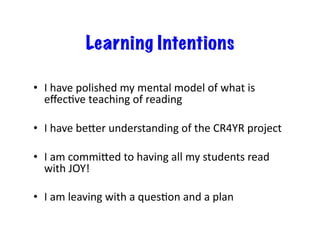
Learning Intentions 
• I 
have 
polished 
my 
mental 
model 
of 
what 
is 
effecJve 
teaching 
of 
reading 
• I 
have 
beLer 
understanding 
of 
the 
CR4YR 
project 
• I 
am 
commiLed 
to 
having 
all 
my 
students 
read 
with 
JOY! 
• I 
am 
leaving 
with 
a 
quesJon 
and 
a 
plan
CR4YR: the plan 
• 6/7 
half 
day 
sessions 
• District 
teams 
of 
12-­‐15 
• School-­‐based 
teams 
of 
classroom 
teachers, 
learning 
assistance 
teachers, 
some 
principals 
• Personal 
inquiry 
quesJon 
• Case 
study 
student 
• Whole 
class 
strategies 
and 
structures
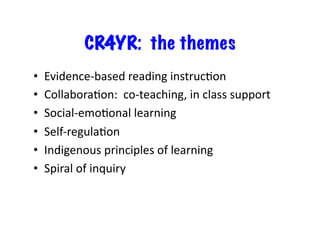
CR4YR: the themes 
• Evidence-­‐based 
reading 
instrucJon 
• CollaboraJon: 
co-­‐teaching, 
in 
class 
support 
• Social-­‐emoJonal 
learning 
• Self-­‐regulaJon 
• Indigenous 
principles 
of 
learning 
• Spiral 
of 
inquiry
Check out the website! 
• youngreaders.ca
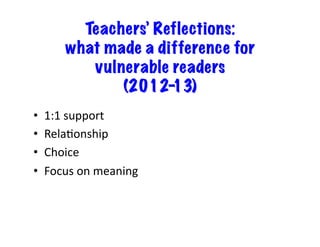
Teachers’ Reflections: 
what made a difference for 
vulnerable readers 
(2012-13) 
• 1:1 
support 
• RelaJonship 
• Choice 
• Focus 
on 
meaning
2013-14 Vulnerable Readers 
• 8% 
-­‐ 
The 
gap 
in 
reading 
with 
understanding 
grew. 
– Usually 
had 
aLendance 
issues. 
• 17% 
-­‐ 
Now 
reading 
at 
grade 
level. 
• 49% 
-­‐ 
Decreased 
the 
gap. 
• 26% 
-­‐ 
The 
gap 
stayed 
the 
same. 
– Which 
means 
they 
grew 
a 
year. 
– 30% 
of 
case 
studies 
completed 
(153/543) 
– 743 
educators, 
11 
150 
primary 
students
• What would happen if… 
• Belief 
• Practice
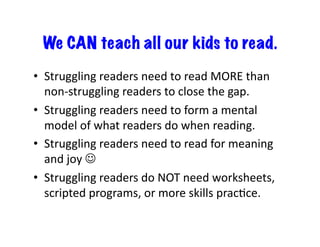
We CAN teach all our kids to read. 
• Struggling 
readers 
need 
to 
read 
MORE 
than 
non-­‐struggling 
readers 
to 
close 
the 
gap. 
• Struggling 
readers 
need 
to 
form 
a 
mental 
model 
of 
what 
readers 
do 
when 
reading. 
• Struggling 
readers 
need 
to 
read 
for 
meaning 
and 
joy 
 
• Struggling 
readers 
do 
NOT 
need 
worksheets, 
scripted 
programs, 
or 
more 
skills 
pracJce.
“Every 
Child, 
Every 
Day” 
– 
Richard 
Allington 
and 
Rachael 
Gabriel 
In 
EducaJonal 
Leadership, 
March 
2012 
6 
elements 
of 
instrucJon 
for 
ALL 
students!
1. Every 
child 
reads 
something 
he 
or 
she 
chooses. 
2. Every 
child 
reads 
accurately. 
3. Every 
child 
reads 
something 
he 
or 
she 
understands. 
4. Every 
child 
writes 
about 
something 
personally 
meaningful. 
5. Every 
child 
talks 
with 
peers 
about 
reading 
and 
wriJng. 
6. Every 
child 
listens 
to 
a 
fluent 
adult 
read 
aloud.
1. 
Every 
child 
reads 
something 
he 
or 
she 
chooses.
CR4YR Results 2012-13 
• The 
struggling 
readers 
who 
were 
given 
MORE 
choice 
tended 
to 
close 
the 
gap 
more. 
• The 
more 
readers 
struggled, 
the 
less 
choice 
they 
received. 
Those 
who 
made 
the 
least 
progress 
had 
the 
LEAST 
choice. 
• Readers 
who 
are 
NOT 
struggling 
tend 
to 
have 
choice.
2. Every 
child 
reads 
accurately. 
-­‐intensity 
and 
volume 
count! 
-­‐98% 
accuracy 
-­‐less 
than 
90% 
accuracy, 
doesn’t 
improve 
reading 
at 
all
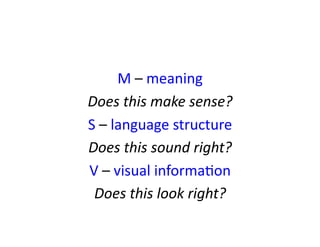
M 
– 
meaning 
Does 
this 
make 
sense? 
S 
– 
language 
structure 
Does 
this 
sound 
right? 
V 
– 
visual 
informaJon 
Does 
this 
look 
right?
Browsing 
Bags
Strategy Cards – Catching Readers 
Before They Fall (Johnson & Keier)
3. Every 
child 
reads 
something 
he 
or 
she 
understands. 
-­‐at 
least 
2/3 
of 
Jme 
spent 
reading 
and 
rereading 
NOT 
doing 
isolated 
skill 
pracJce 
or 
worksheets 
-­‐build 
background 
knowledge 
before 
entering 
the 
text 
-­‐read 
with 
quesJons 
in 
mind
• What 
do 
we 
do 
to 
scaffold 
students 
to 
allow 
them 
to 
read 
beyond 
their 
instrucJonal 
levels?
• “InstrucJonal 
level 
is 
not 
where 
lessons 
should 
begin, 
but 
where 
they 
need 
to 
end.” 
• Tim Shanahan, “Should We Teach Students at 
Their Reading Levels?” – Reading Today, Sept/ 
Oct, 2014
• “This 
may 
be 
surprising, 
but 
there 
is 
a 
growing 
body 
of 
research 
showing 
no 
consistent 
relaJonship 
between 
student-­‐text 
matching 
and 
learning.” 
• Tim Shanahan, “Should We Teach Students at 
Their Reading Levels?” – Reading Today, Sept/ 
Oct, 2014 (Summary of research address at IRA, 
New Orleans, 2014)
• “Except 
for 
the 
earlier 
menJoned 
O’Connor 
study, 
and 
that 
only 
with 
beginning 
reading 
levels, 
there 
is 
no 
credible 
evidence 
supporJng 
learning 
benefits 
from 
teaching 
kids 
at 
their 
levels.” 
• Tim Shanahan, “Should We Teach Students at 
Their Reading Levels?” – Reading Today, Sept/ 
Oct, 2014
Building Independence 
• Build 
criteria 
with 
your 
students 
– What 
do 
good 
readers 
do? 
• NoJce 
when 
the 
students 
are 
using 
the 
co-­‐ 
created 
criteria 
• Ask 
the 
students 
“What 
should 
I 
noJce 
about 
what 
you 
are 
doing 
when 
you 
are 
reading?”
Key Links Literacy – Nelson Ed. 
• www.nelson.com/keylinks 
• K-­‐2 
• Shared 
Readers 
• Levelled 
Readers, 
FicJon 
and 
Non-­‐FicJon 
• With 
a 
5 
day 
plan 
for 
the 
shared 
readers 
and 
a 
6 
step 
re-­‐visit/focus 
plan 
for 
the 
levelled 
readers
Gr 4/5 
• QuesJoning 
from 
pictures 
• Sort 
and 
predict 
• Quadrants 
of 
a 
thought 
• Concept 
map
4. Every 
child 
writes 
about 
something 
personally 
meaningful. 
-­‐connected 
to 
text 
-­‐connected 
to 
themselves 
-­‐real 
purpose, 
real 
audience
A Primary Writing Prompt: 
the grab bag 
• 4 
items 
in 
a 
bag, 
kids 
with 
a 
paper 
with 
4 
boxes 
• Pull 
out 
1 
item 
at 
a 
Jme, 
explore 
how 
it 
might 
be 
used 
in 
a 
story 
• Kids 
draw 
how 
the 
item 
might 
be 
used 
• Repeat 
with 
each 
item 
with 
kids 
drawing 
both 
items 
in 
2nd 
box, 
… 
• In 
4th 
box, 
either 
draw 
all 
4 
items 
or 
begin 
to 
write 
their 
story
Both 
lessons: 
75 
minutes, 
aper 
lunch 
• Mundy 
Road 
with 
KrisJne 
Wong 
– Focus 
on 
beginning, 
middle, 
end 
• 9 
EAL 
students 
• 1 
very 
young 
student 
• Blakeburn 
with 
Lori 
Clerkson 
– Focus 
on 
story 
starters, 
moving 
beyond 
‘I 
did, 
I 
did, 
I 
did…”
5. 
Every 
child 
talks 
with 
peers 
about 
reading 
and 
wriJng.
6. Every 
child 
listens 
to 
a 
fluent 
adult 
read 
aloud. 
-­‐different 
kinds 
of 
text 
-­‐with 
some 
commentary
Strong Readers – Set B 
Strong Nations Publishing 
• www.strongnaJons.com 
• 6 
packs 
• Set 
B, 
levels 
11-­‐20
Take away questions 
• Do 
all 
my 
students 
engage 
in 
all 
5 
aspects 
of 
reading/wriJng 
daily? 
– Where 
do 
we 
spend 
most 
of 
our 
Jme? 
• How 
much 
Jme 
do 
my 
most 
vulnerable 
students 
spend 
on 
leveled 
text? 
• Are 
we 
having 
fun 
with 
reading 
and 
wriJng?

BCTELA/CR, K-5, 2014

  • 1.
    Cultivating Passion K-5 Skilled, Joyful Readers October 24, 2014 BCTELA Terry Fox Secondary, Coquitlam slideshare.net/fayebrownlie/bctela/cr
  • 2.
    Learning Intentions •I have polished my mental model of what is effecJve teaching of reading • I have beLer understanding of the CR4YR project • I am commiLed to having all my students read with JOY! • I am leaving with a quesJon and a plan
  • 3.
    CR4YR: the plan • 6/7 half day sessions • District teams of 12-­‐15 • School-­‐based teams of classroom teachers, learning assistance teachers, some principals • Personal inquiry quesJon • Case study student • Whole class strategies and structures
  • 4.
    CR4YR: the themes • Evidence-­‐based reading instrucJon • CollaboraJon: co-­‐teaching, in class support • Social-­‐emoJonal learning • Self-­‐regulaJon • Indigenous principles of learning • Spiral of inquiry
  • 5.
    Check out thewebsite! • youngreaders.ca
  • 6.
    Teachers’ Reflections: whatmade a difference for vulnerable readers (2012-13) • 1:1 support • RelaJonship • Choice • Focus on meaning
  • 7.
    2013-14 Vulnerable Readers • 8% -­‐ The gap in reading with understanding grew. – Usually had aLendance issues. • 17% -­‐ Now reading at grade level. • 49% -­‐ Decreased the gap. • 26% -­‐ The gap stayed the same. – Which means they grew a year. – 30% of case studies completed (153/543) – 743 educators, 11 150 primary students
  • 8.
    • What wouldhappen if… • Belief • Practice
  • 9.
    We CAN teachall our kids to read. • Struggling readers need to read MORE than non-­‐struggling readers to close the gap. • Struggling readers need to form a mental model of what readers do when reading. • Struggling readers need to read for meaning and joy  • Struggling readers do NOT need worksheets, scripted programs, or more skills pracJce.
  • 11.
    “Every Child, Every Day” – Richard Allington and Rachael Gabriel In EducaJonal Leadership, March 2012 6 elements of instrucJon for ALL students!
  • 12.
    1. Every child reads something he or she chooses. 2. Every child reads accurately. 3. Every child reads something he or she understands. 4. Every child writes about something personally meaningful. 5. Every child talks with peers about reading and wriJng. 6. Every child listens to a fluent adult read aloud.
  • 13.
    1. Every child reads something he or she chooses.
  • 14.
    CR4YR Results 2012-13 • The struggling readers who were given MORE choice tended to close the gap more. • The more readers struggled, the less choice they received. Those who made the least progress had the LEAST choice. • Readers who are NOT struggling tend to have choice.
  • 15.
    2. Every child reads accurately. -­‐intensity and volume count! -­‐98% accuracy -­‐less than 90% accuracy, doesn’t improve reading at all
  • 16.
    M – meaning Does this make sense? S – language structure Does this sound right? V – visual informaJon Does this look right?
  • 17.
  • 18.
    Strategy Cards –Catching Readers Before They Fall (Johnson & Keier)
  • 21.
    3. Every child reads something he or she understands. -­‐at least 2/3 of Jme spent reading and rereading NOT doing isolated skill pracJce or worksheets -­‐build background knowledge before entering the text -­‐read with quesJons in mind
  • 22.
    • What do we do to scaffold students to allow them to read beyond their instrucJonal levels?
  • 23.
    • “InstrucJonal level is not where lessons should begin, but where they need to end.” • Tim Shanahan, “Should We Teach Students at Their Reading Levels?” – Reading Today, Sept/ Oct, 2014
  • 24.
    • “This may be surprising, but there is a growing body of research showing no consistent relaJonship between student-­‐text matching and learning.” • Tim Shanahan, “Should We Teach Students at Their Reading Levels?” – Reading Today, Sept/ Oct, 2014 (Summary of research address at IRA, New Orleans, 2014)
  • 25.
    • “Except for the earlier menJoned O’Connor study, and that only with beginning reading levels, there is no credible evidence supporJng learning benefits from teaching kids at their levels.” • Tim Shanahan, “Should We Teach Students at Their Reading Levels?” – Reading Today, Sept/ Oct, 2014
  • 26.
    Building Independence •Build criteria with your students – What do good readers do? • NoJce when the students are using the co-­‐ created criteria • Ask the students “What should I noJce about what you are doing when you are reading?”
  • 39.
    Key Links Literacy– Nelson Ed. • www.nelson.com/keylinks • K-­‐2 • Shared Readers • Levelled Readers, FicJon and Non-­‐FicJon • With a 5 day plan for the shared readers and a 6 step re-­‐visit/focus plan for the levelled readers
  • 40.
    Gr 4/5 •QuesJoning from pictures • Sort and predict • Quadrants of a thought • Concept map
  • 50.
    4. Every child writes about something personally meaningful. -­‐connected to text -­‐connected to themselves -­‐real purpose, real audience
  • 51.
    A Primary WritingPrompt: the grab bag • 4 items in a bag, kids with a paper with 4 boxes • Pull out 1 item at a Jme, explore how it might be used in a story • Kids draw how the item might be used • Repeat with each item with kids drawing both items in 2nd box, … • In 4th box, either draw all 4 items or begin to write their story
  • 52.
    Both lessons: 75 minutes, aper lunch • Mundy Road with KrisJne Wong – Focus on beginning, middle, end • 9 EAL students • 1 very young student • Blakeburn with Lori Clerkson – Focus on story starters, moving beyond ‘I did, I did, I did…”
  • 59.
    5. Every child talks with peers about reading and wriJng.
  • 60.
    6. Every child listens to a fluent adult read aloud. -­‐different kinds of text -­‐with some commentary
  • 61.
    Strong Readers –Set B Strong Nations Publishing • www.strongnaJons.com • 6 packs • Set B, levels 11-­‐20
  • 65.
    Take away questions • Do all my students engage in all 5 aspects of reading/wriJng daily? – Where do we spend most of our Jme? • How much Jme do my most vulnerable students spend on leveled text? • Are we having fun with reading and wriJng?