Intermediate Literacy
Quesnel	
Nov.	27,	2015	
Slideshare.net/fayebrownlie/
quesnel/intermediate
Learning Intentions:
•  I	have	a	beAer	understanding	of	the	big	pieces	
of	intermediate	literacy	and	can	recognize	
them	in	my	work	with	students.	
•  I	am	feeling	beAer	equipped	to	deal	with	
diversity	in	my	class.	
•  I	have	a	plan	to	try	something	that	is	different	
for	me	in	teaching	literacy.
The teeter totter
kids
kids curriculum
Big Ideas
– Teaching counts!
•  Our	instrucIonal	choices	impact	significantly	on	
student	learning	
•  We	teach	responsively	
– All kids can learn and we know enough
collectively to teach all kids!
•  An	unwavering	belief	that	everyone	has	the	right	to	be	
included	socially,	emoIonally,	and	intellectually
Big Ideas
– Engage the learners!
•  If	you	are	not	engaged,	you	can’t	be	learning.	
– Provide access for all!
•  Low	floor,	high	ceiling
We CAN teach all our kids to read.
•  Struggling	readers	need	to	read	MORE	than	
non-struggling	readers	to	close	the	gap.	
•  Struggling	readers	need	to	form	a	mental	
model	of	what	readers	do	when	reading.	
•  Struggling	readers	need	to	read	for	meaning	
and	joy	☺	
•  Struggling	readers	do	NOT	need	worksheets,	
scripted	programs,	or	more	skills	pracIce.
Reading Theory and Practice
-the mental model
Building Reading Strategies
•  Reading	is	always	about	understanding.	
•  What	strategies	did	you	use	to	make	sense	of	
this	text?	
•  Compare	your	strategies	with	those	of	your	
partner.
IEP
•  An	evaluaIon	of	the	policy	of	incenIves	and	
earned	privileges	(IEP)	in	prisons	in	England	
and	Wales	found	mainly	negaIve	effects	on	
prisoner	behaviour	and	percepIons	of	fairness	
and	relaIonships	with	staff.	
•  “IEP	Revisited:			Fairness,	DiscreIon,	and	the	Quality	of	Prison	
Life”	–	Liebling,	2008
This	is	My	Rock	
-	David	McCord	
This is my rock
And here I run
To steal the secret of the sun;
This is my rock
And here come I
Before the night has swept the sky
This is my rock,
This is the place
I meet the evening face to face.
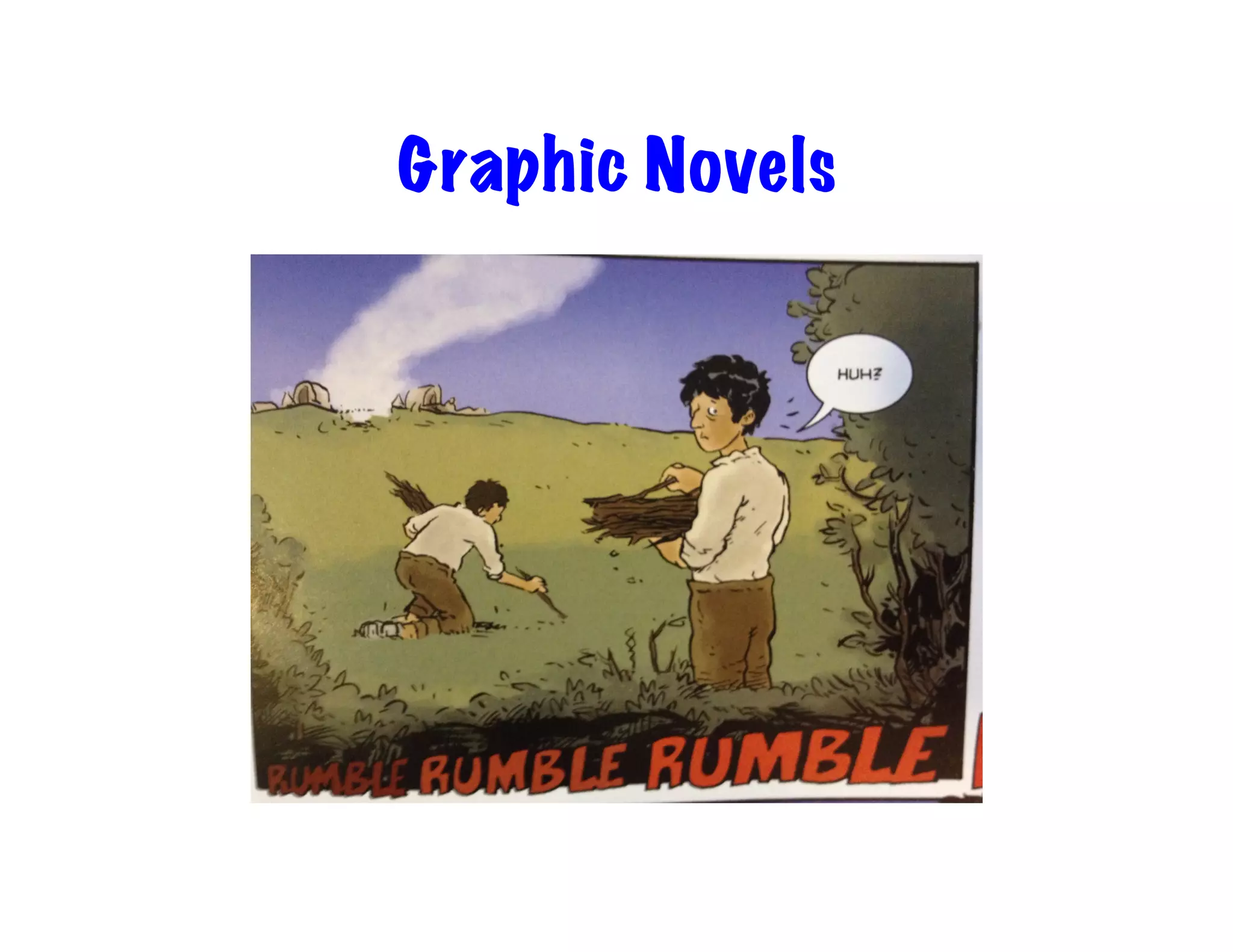
Graphic Novels
Reading is understanding.
Reading is making sense in
disciplines.
M	–	meaning	
Does	this	make	sense?	
S	–	language	structure	
Does	this	sound	right?	
V	–	visual	informaIon	
Does	this	look	right?
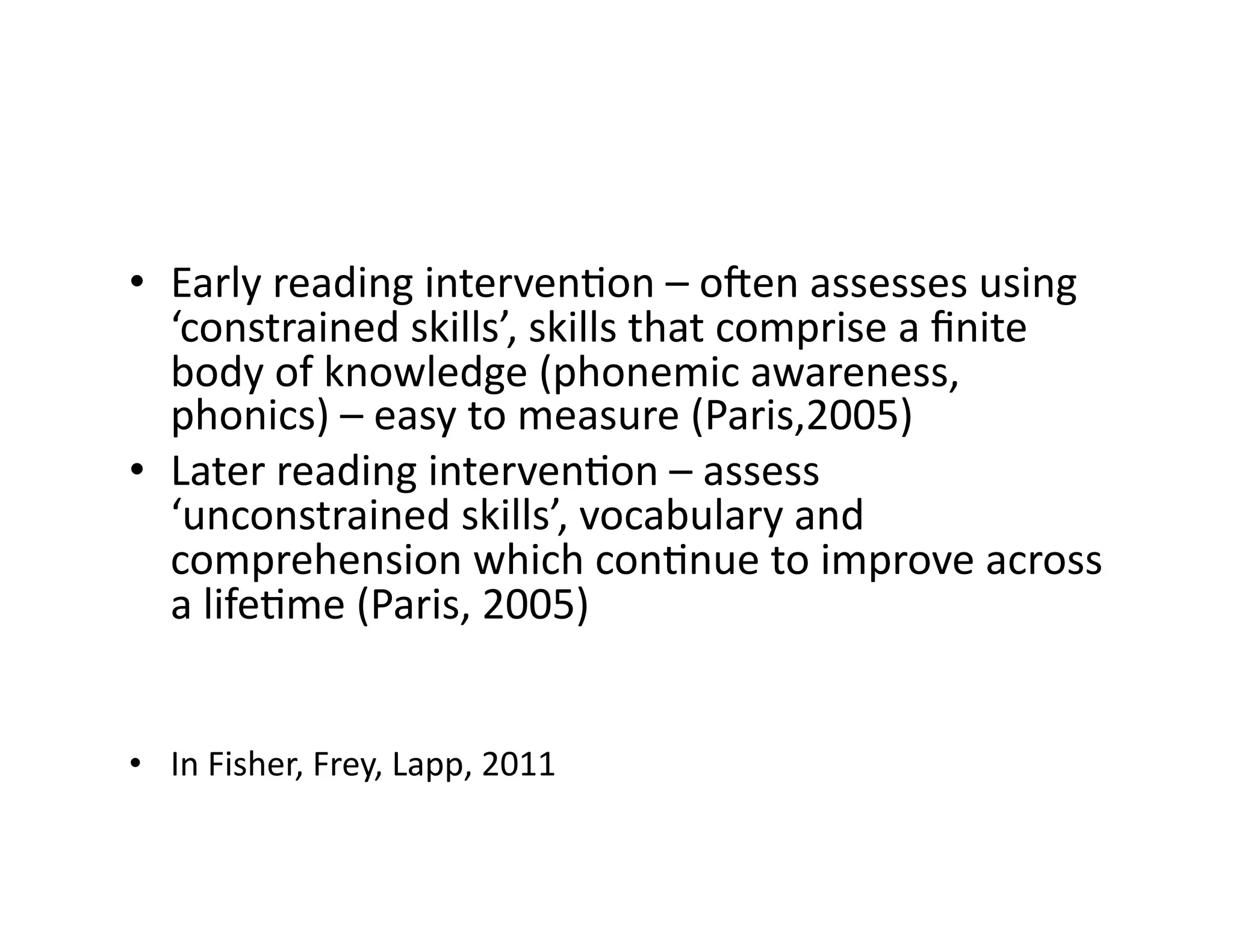
•  Early	reading	intervenIon	–	oden	assesses	using	
‘constrained	skills’,	skills	that	comprise	a	finite	
body	of	knowledge	(phonemic	awareness,	
phonics)	–	easy	to	measure	(Paris,2005)	
•  Later	reading	intervenIon	–	assess	
‘unconstrained	skills’,	vocabulary	and	
comprehension	which	conInue	to	improve	across	
a	lifeIme	(Paris,	2005)	
•  In	Fisher,	Frey,	Lapp,	2011
Frameworks for Learning
It’s All about Thinking (English, Humanities, Social Studies) –
Brownlie & Schnellert, 2009
It’s All about Thinking (Math, Science)– Brownlie, Fullerton,
Schnellert, 2011
Universal Design for Learning
MulIple	means:	
-to	tap	into	background	knowledge,	to	acIvate	
prior	knowledge,	to	increase	engagement	and	
moIvaIon	
-to	acquire	the	informaIon	and	knowledge	to	
process	new	ideas	and	informaIon	
-to	express	what	they	know.	
		 	 	 	 	 	 	 	 	 	Rose	&	Meyer,	2002
Backwards Design
•  What	important	ideas	and	enduring	
understandings	do	you	want	the	students	to	
know?	
•  What	thinking	strategies	will	students	need	to	
demonstrate	these	understandings?		
		 	 	 	 	 	 	 	McTighe	&	Wiggins,	2001
• How	do	we	help	every	student	to	
become	a	beAer	reader?
Choice
Collaboration
Challenge
Respect
Access
not accommodate or adapt
Differentiation
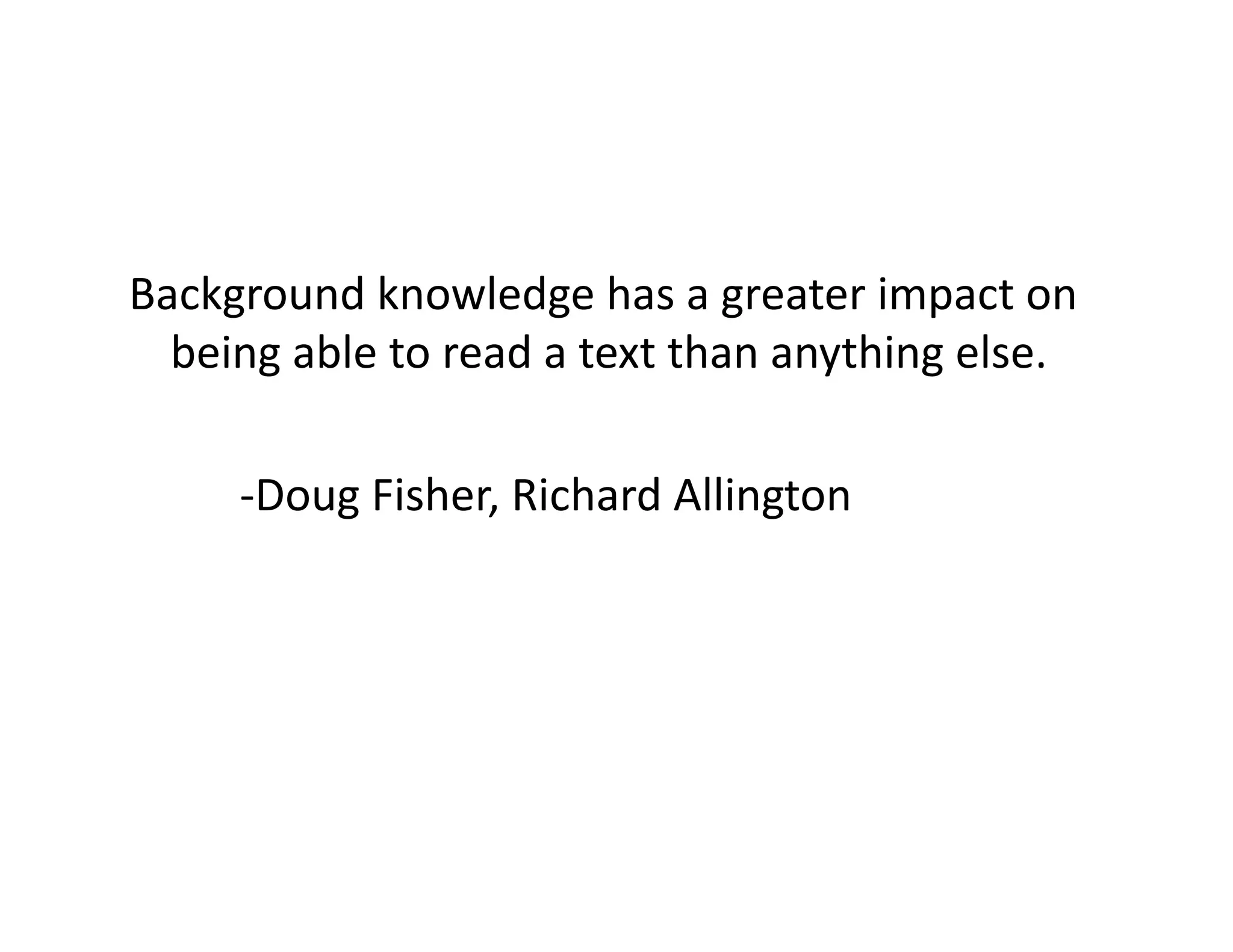
Background	knowledge	has	a	greater	impact	on	
being	able	to	read	a	text	than	anything	else.	
		 	-Doug	Fisher,	Richard	Allington
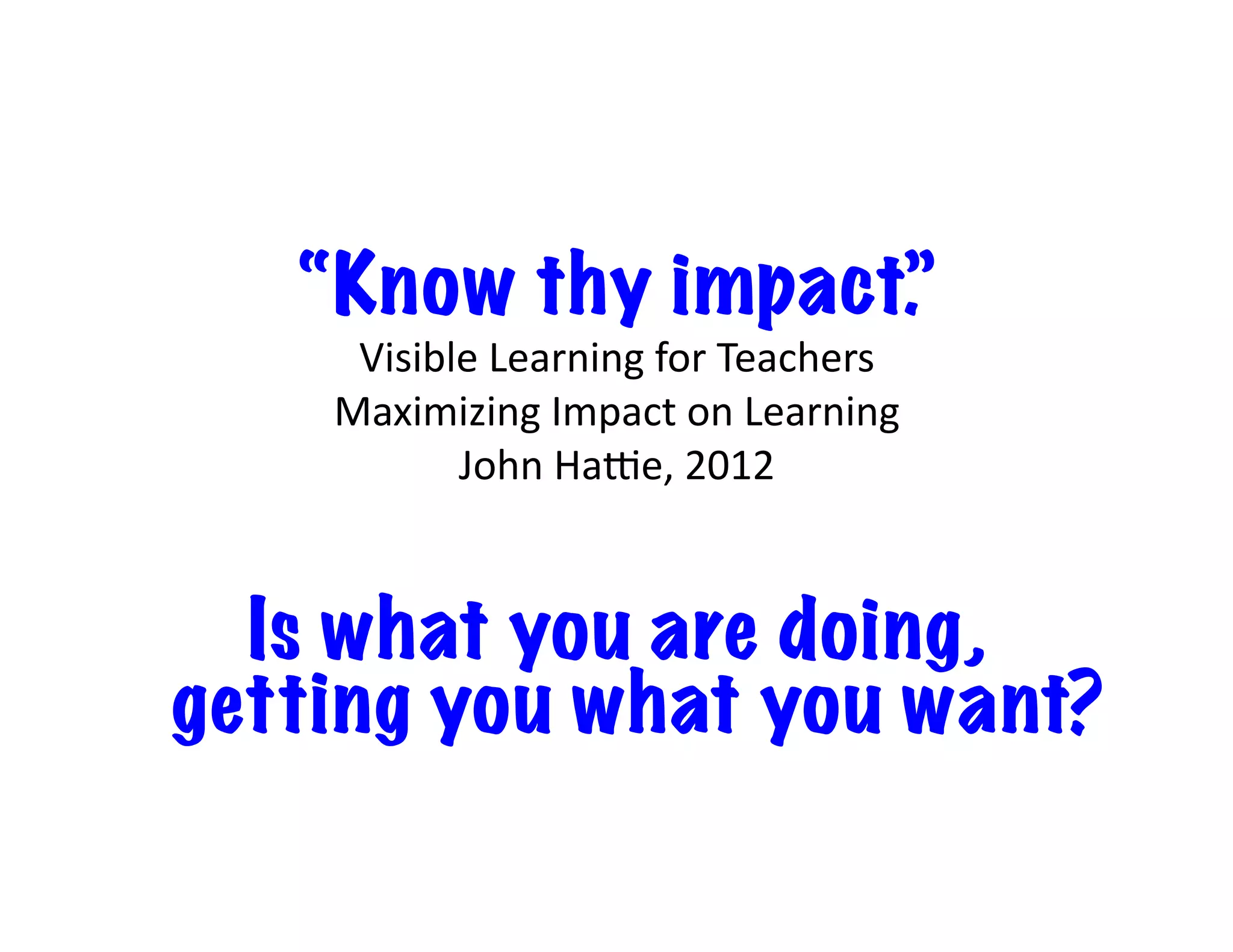
“Know thy impact.”
Visible	Learning	for	Teachers		
Maximizing	Impact	on	Learning		
John	Haje,	2012
Is what you are doing,
getting you what you want?
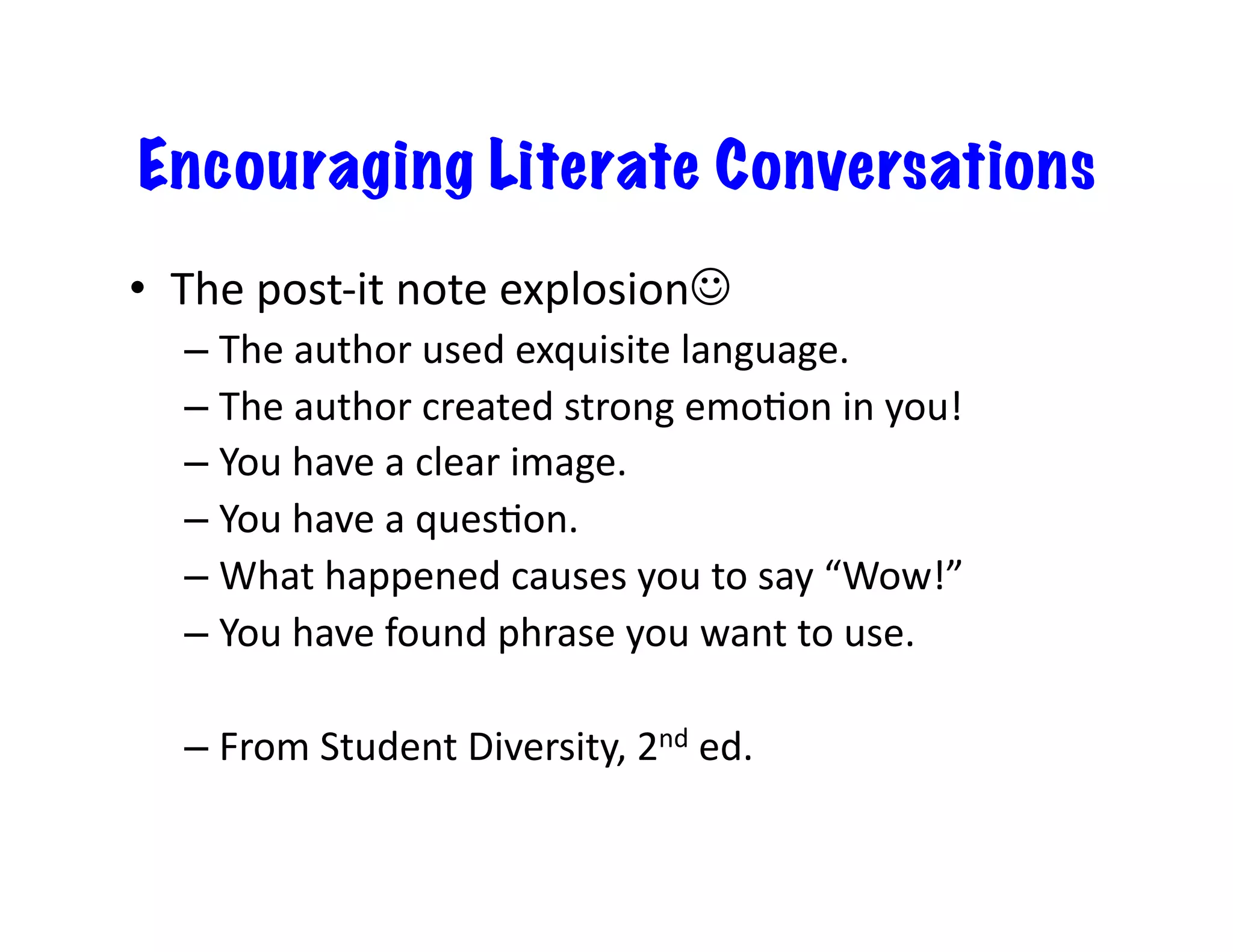
Encouraging Literate Conversations
•  The	post-it	note	explosion☺	
– The	author	used	exquisite	language.	
– The	author	created	strong	emoIon	in	you!	
– You	have	a	clear	image.	
– You	have	a	quesIon.	
– What	happened	causes	you	to	say	“Wow!”	
– You	have	found	phrase	you	want	to	use.	
– From	Student	Diversity,	2nd	ed.
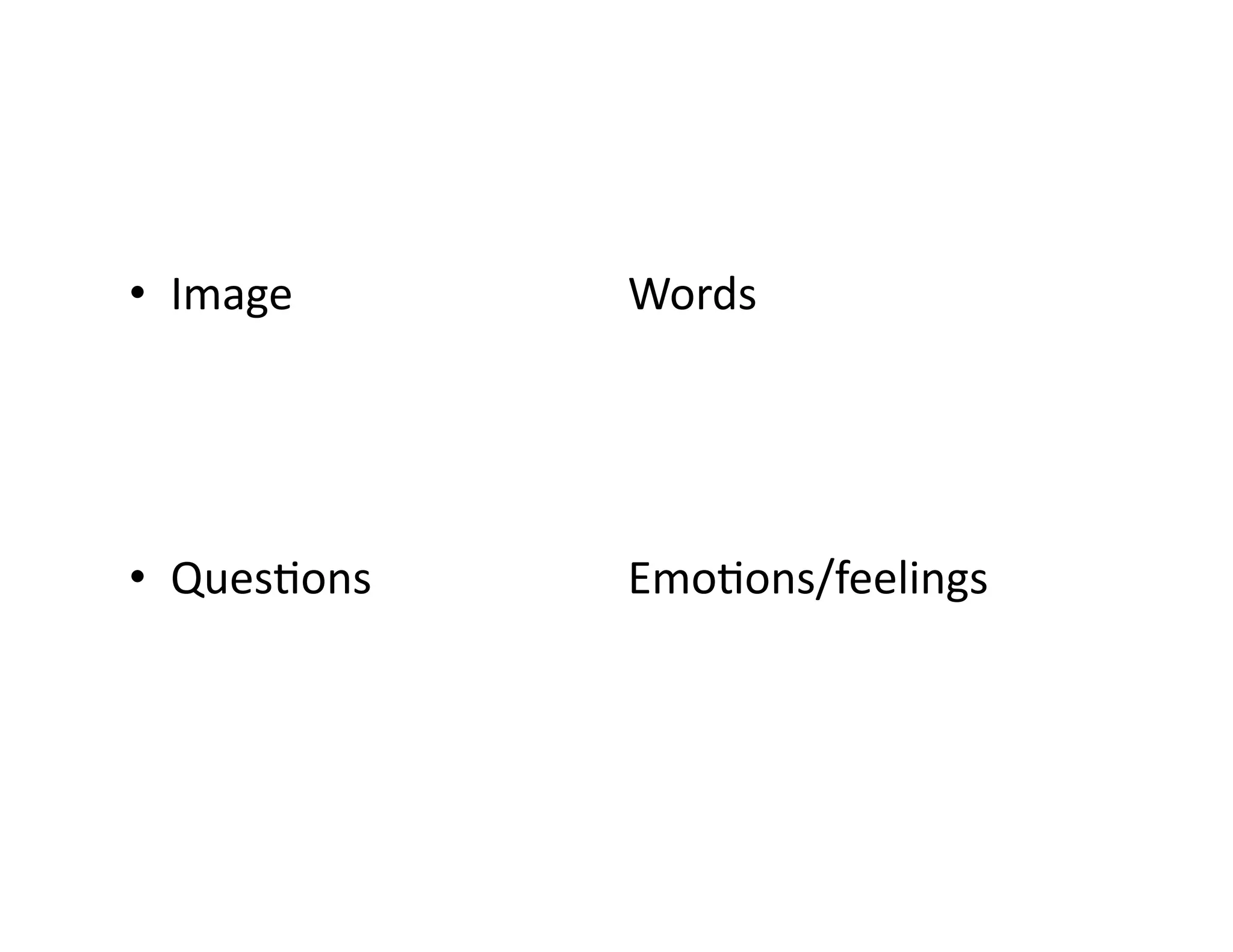
•  Image	 	 	 	 	 	 	Words	
•  QuesIons																				 	EmoIons/feelings
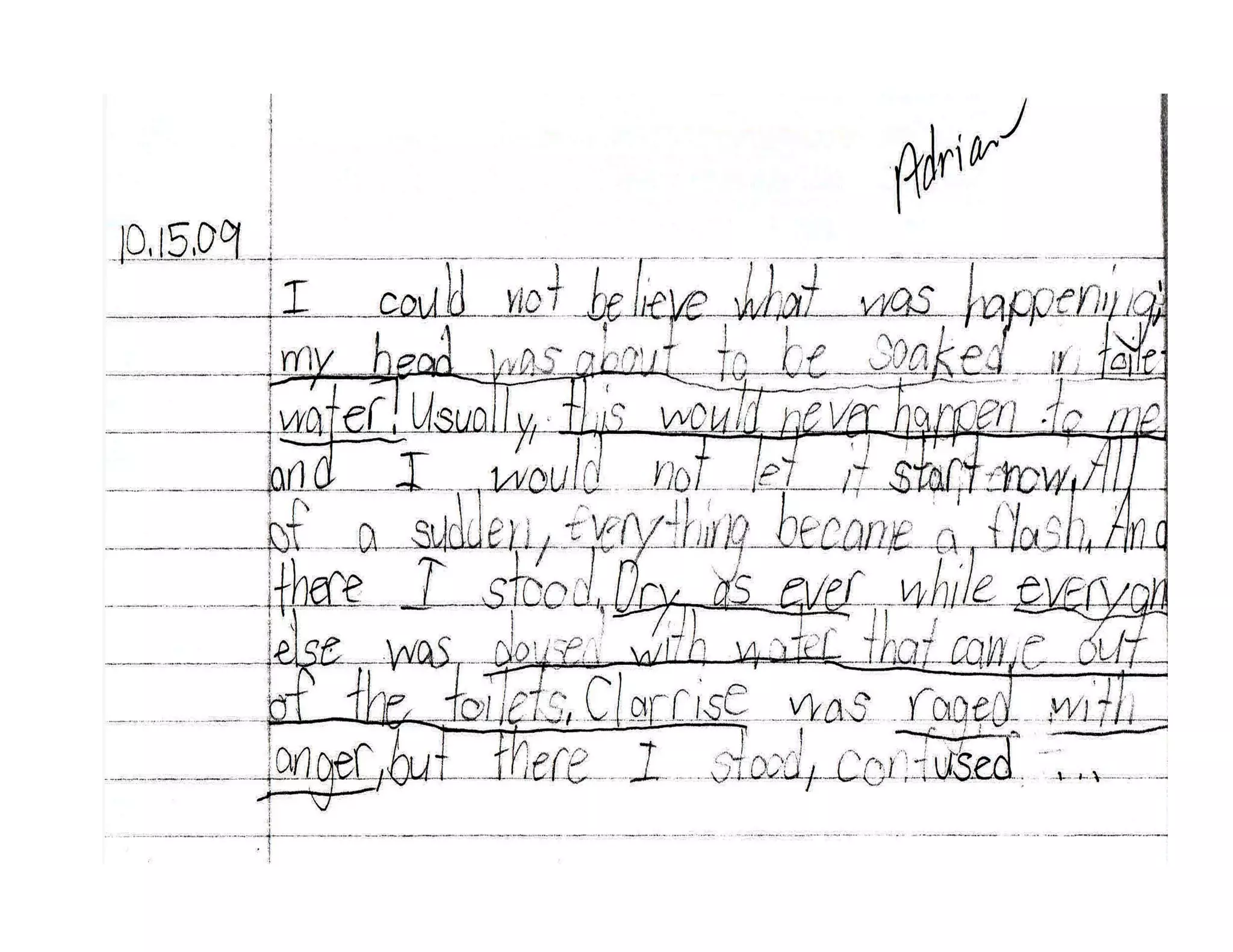
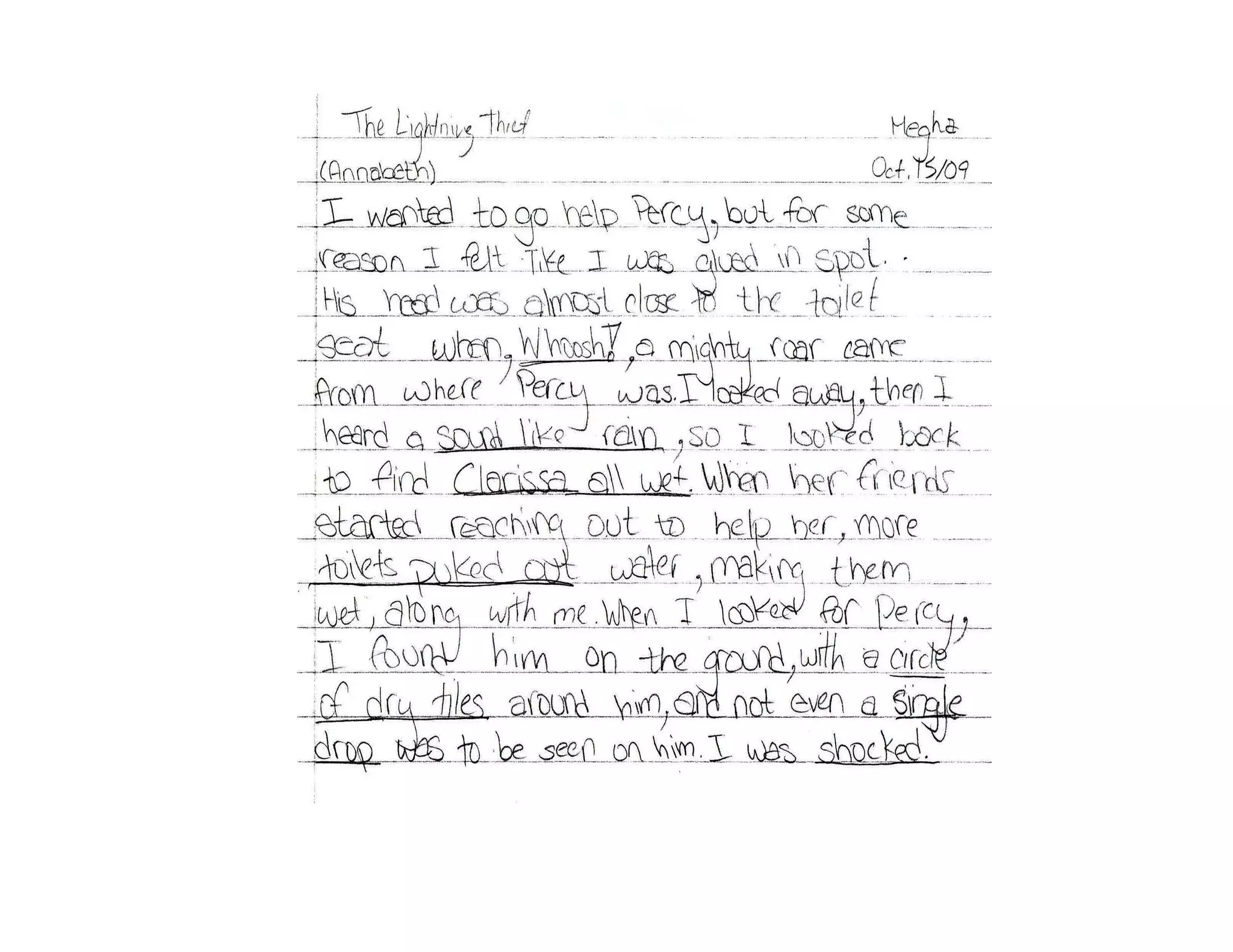
How can I help my students develop more
depth in their responses? They are writing
with no voice when I ask them to imagine
themselves as a demi-god in the novel.
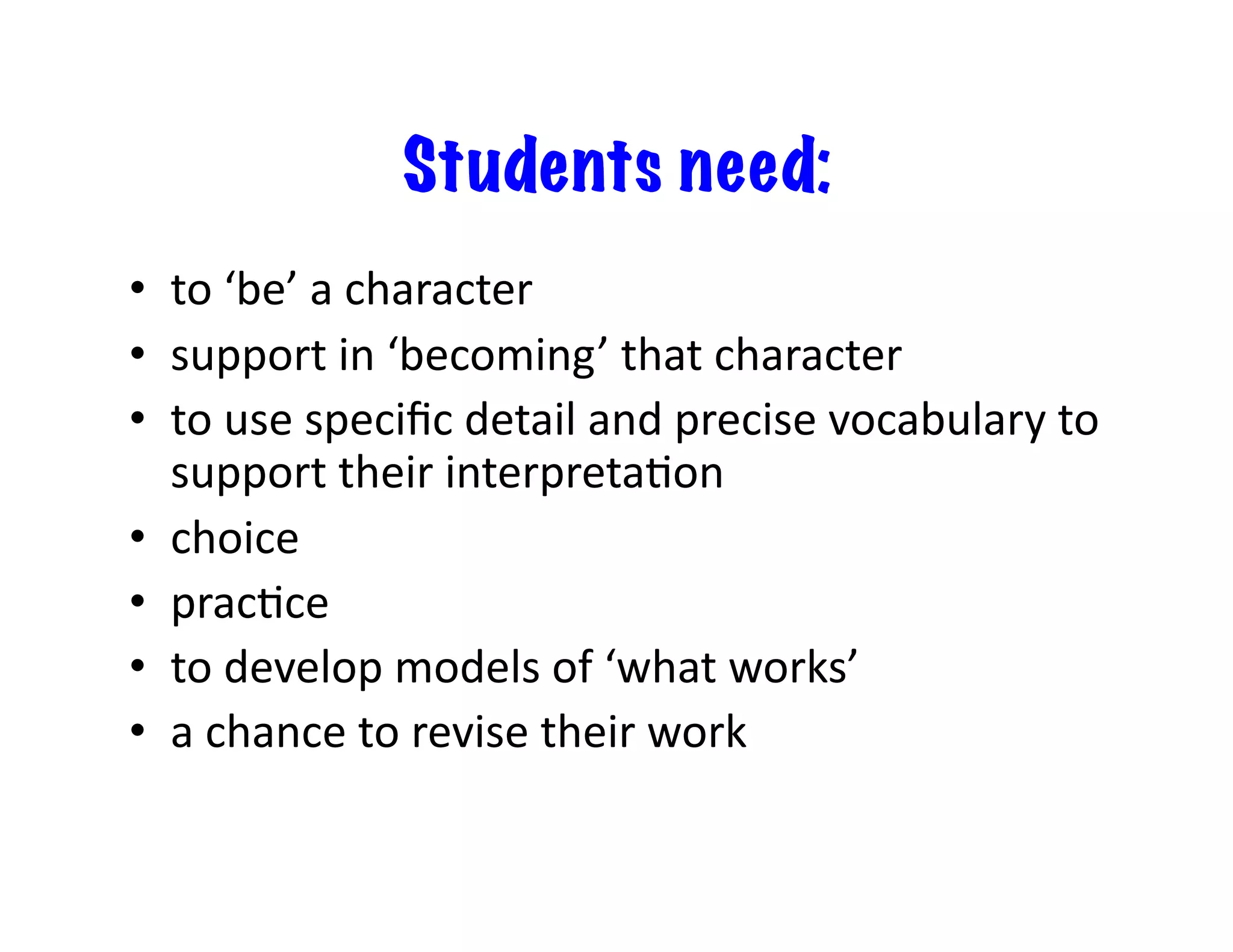
Students need:
•  to	‘be’	a	character	
•  support	in	‘becoming’	that	character	
•  to	use	specific	detail	and	precise	vocabulary	to	
support	their	interpretaIon	
•  choice	
•  pracIce		
•  to	develop	models	of	‘what	works’	
•  a	chance	to	revise	their	work
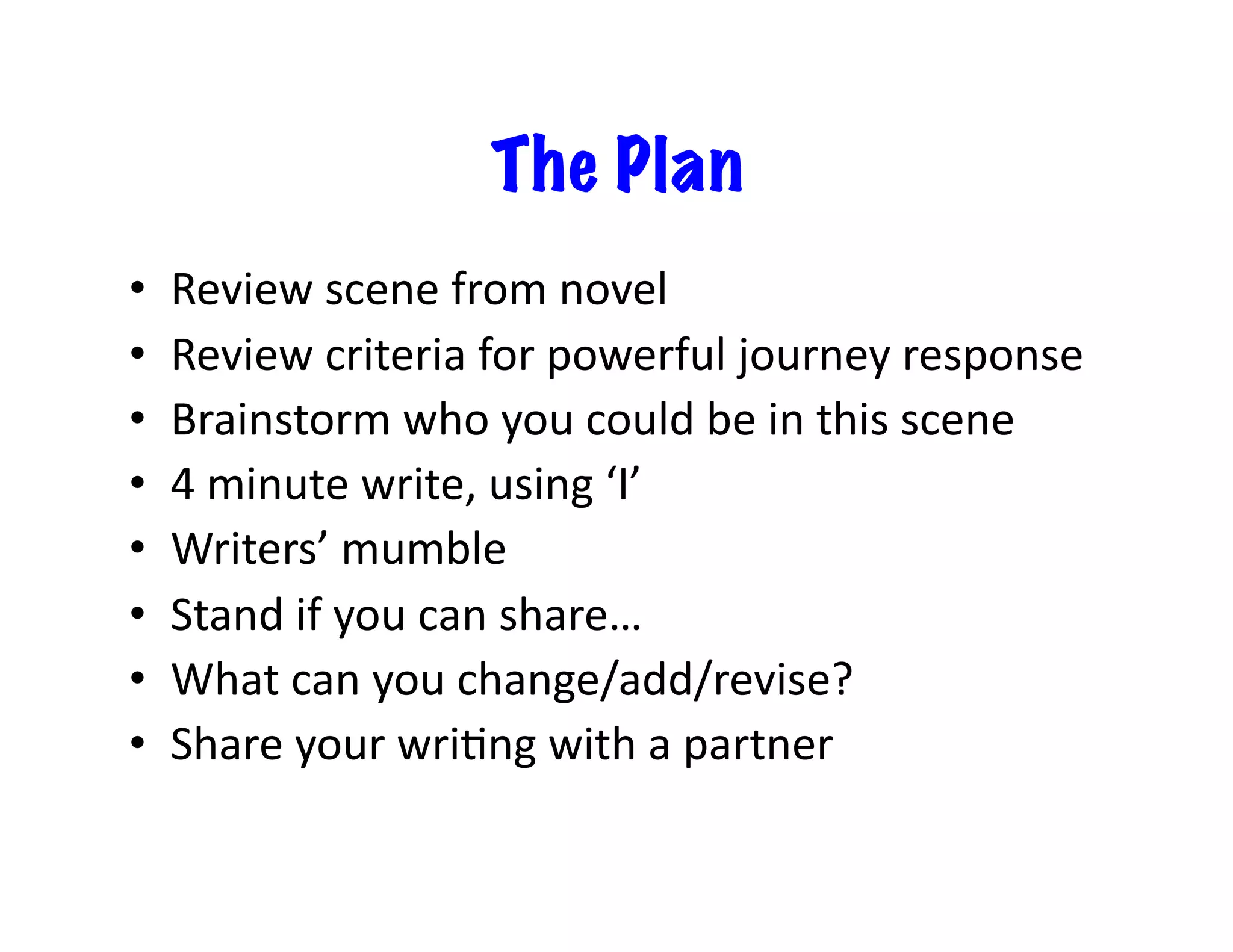
The Plan
•  Review	scene	from	novel	
•  Review	criteria	for	powerful	journey	response	
•  Brainstorm	who	you	could	be	in	this	scene	
•  4	minute	write,	using	‘I’	
•  Writers’	mumble	
•  Stand	if	you	can	share…	
•  What	can	you	change/add/revise?	
•  Share	your	wriIng	with	a	partner
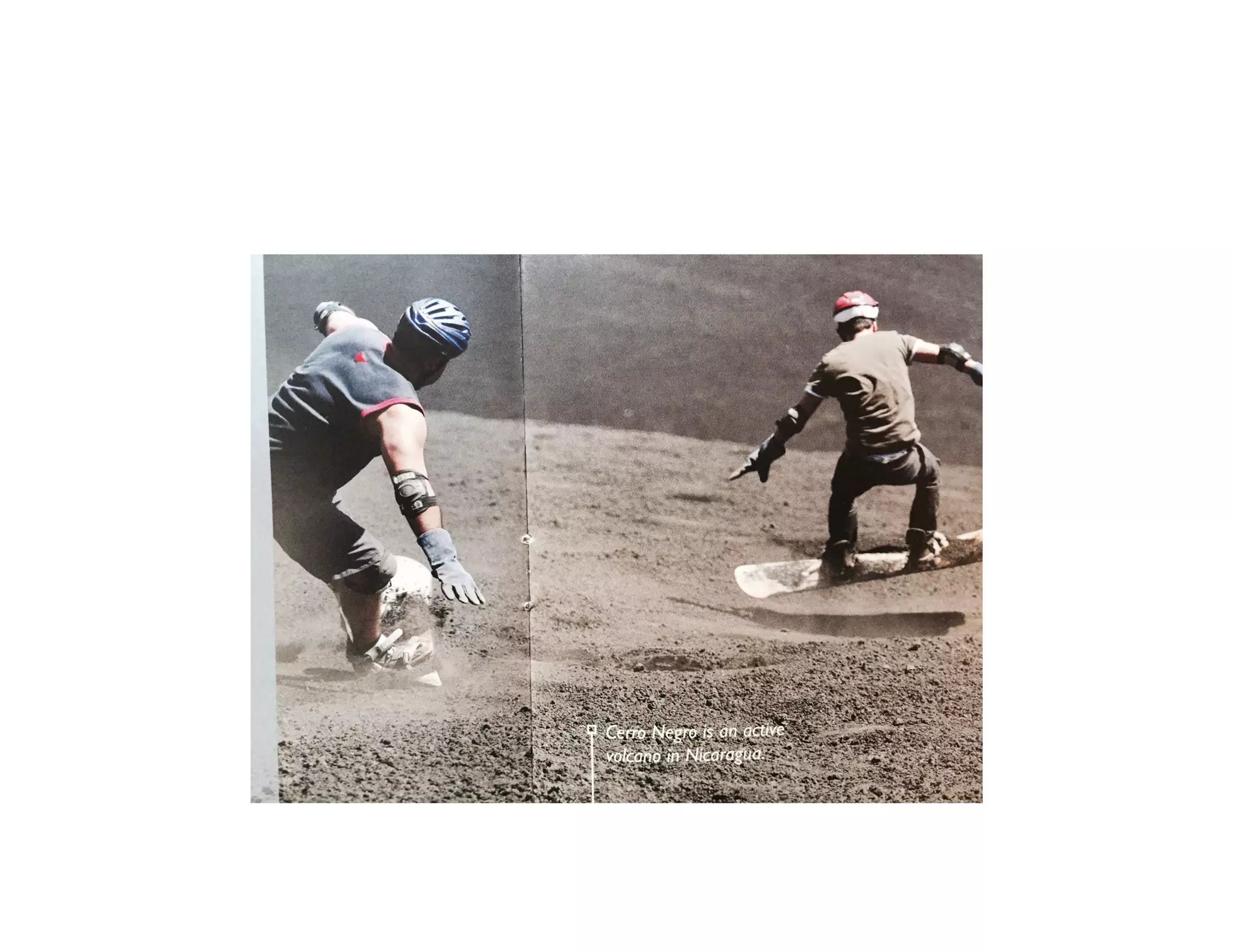
Volcano Surfing Sequence
Intensive	Vocabulary	Building	
Before	 During	 A-er	
acIve	
cinder	cone	
erupted	
steep	slopes	
billowing	
crater	
degree	
angle
•  Ader	making	the	tough	climb	to	the	top,	
volcano	surfers	put	on	___________________	
clothing	–	including	___________	goggles	and	
someImes	_____________	jumpsuits	–	to	
keep	out	all	the	ash.
•  Ader	making	the	tough	climb	to	the	top,	
volcano	surfers	put	on	
p___________________	clothing	–	including	
p___________	goggles	and	someImes	
o_____________	jumpsuits	–	to	keep	out	all	
the	ash.
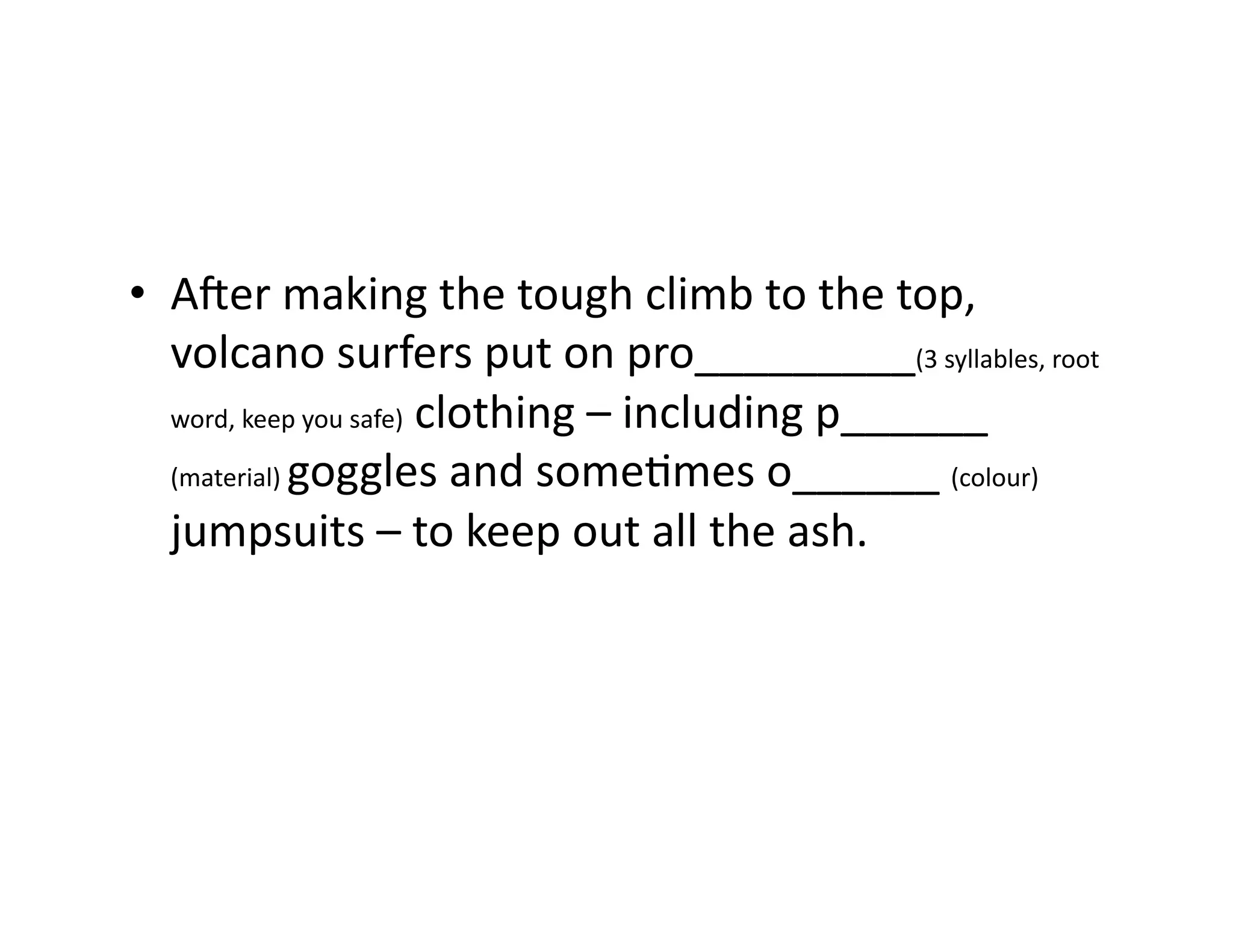
•  Ader	making	the	tough	climb	to	the	top,	
volcano	surfers	put	on	pro_________(3	syllables,	root	
word,	keep	you	safe)	clothing	–	including	p______	
(material)	goggles	and	someImes	o______	(colour)	
jumpsuits	–	to	keep	out	all	the	ash.
Why is volcano surfing risky?
•  Read	with	the	quesIon	in	mind.	
•  Answer	the	quesIon,	with	a	partner,	orally.	
•  Answer	the	quesIon	in	wriIng,	using	as	many	of	
the	key	terms	from	the	text	as	possible.		Can	you	
give	3	reasons?		4?	
•  In	Crazy	Challenges	–	Jill	Eggleton	
•  Key	Links	Literacy
Creating an Inquiry Classroom
- increasing engagement and
thinking
•  With	Angela	Curle,	grade	5/6	
•  Lakeview	Elementary,	Quesnel
Goal: create curiosity and
questioning, deepen thinking
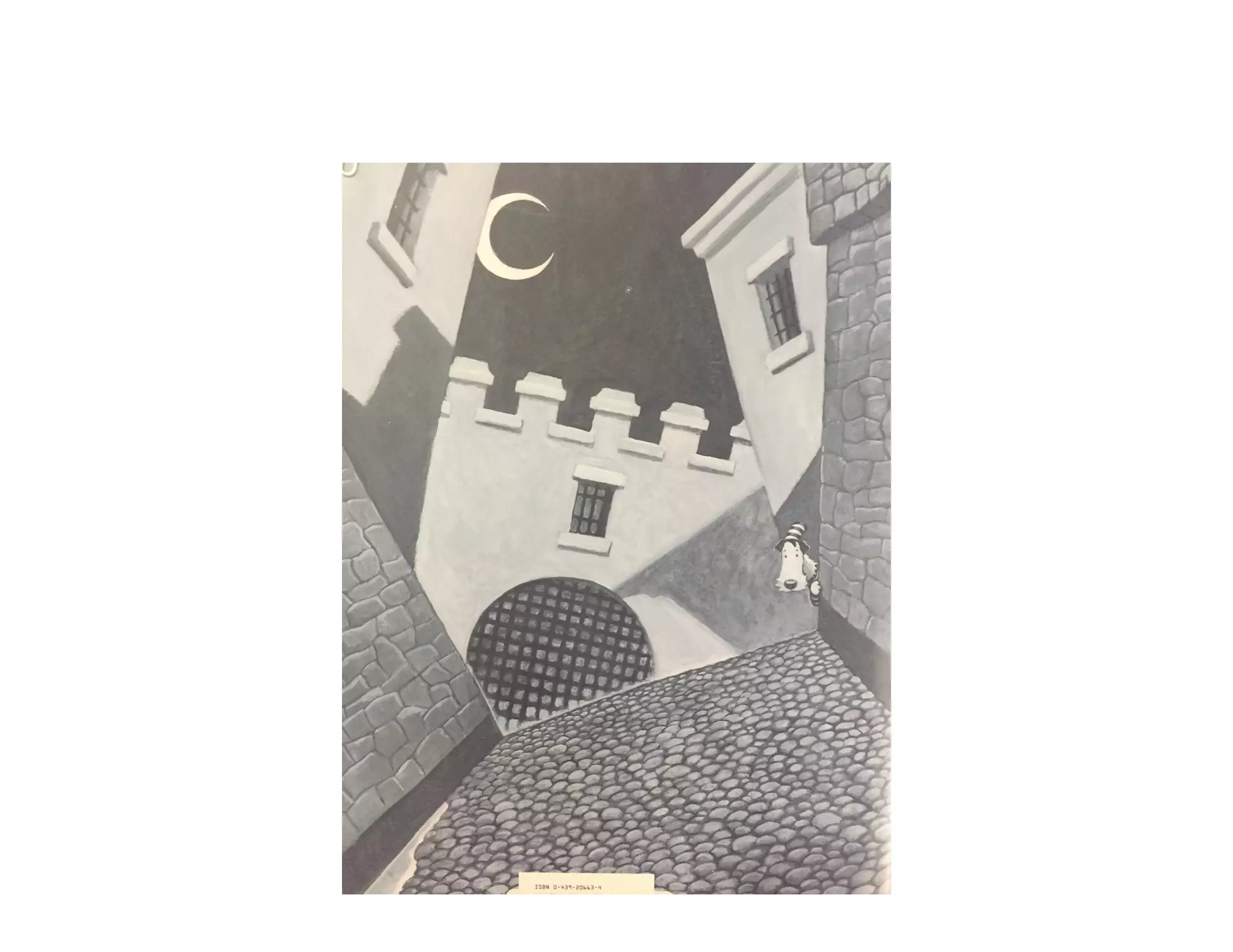
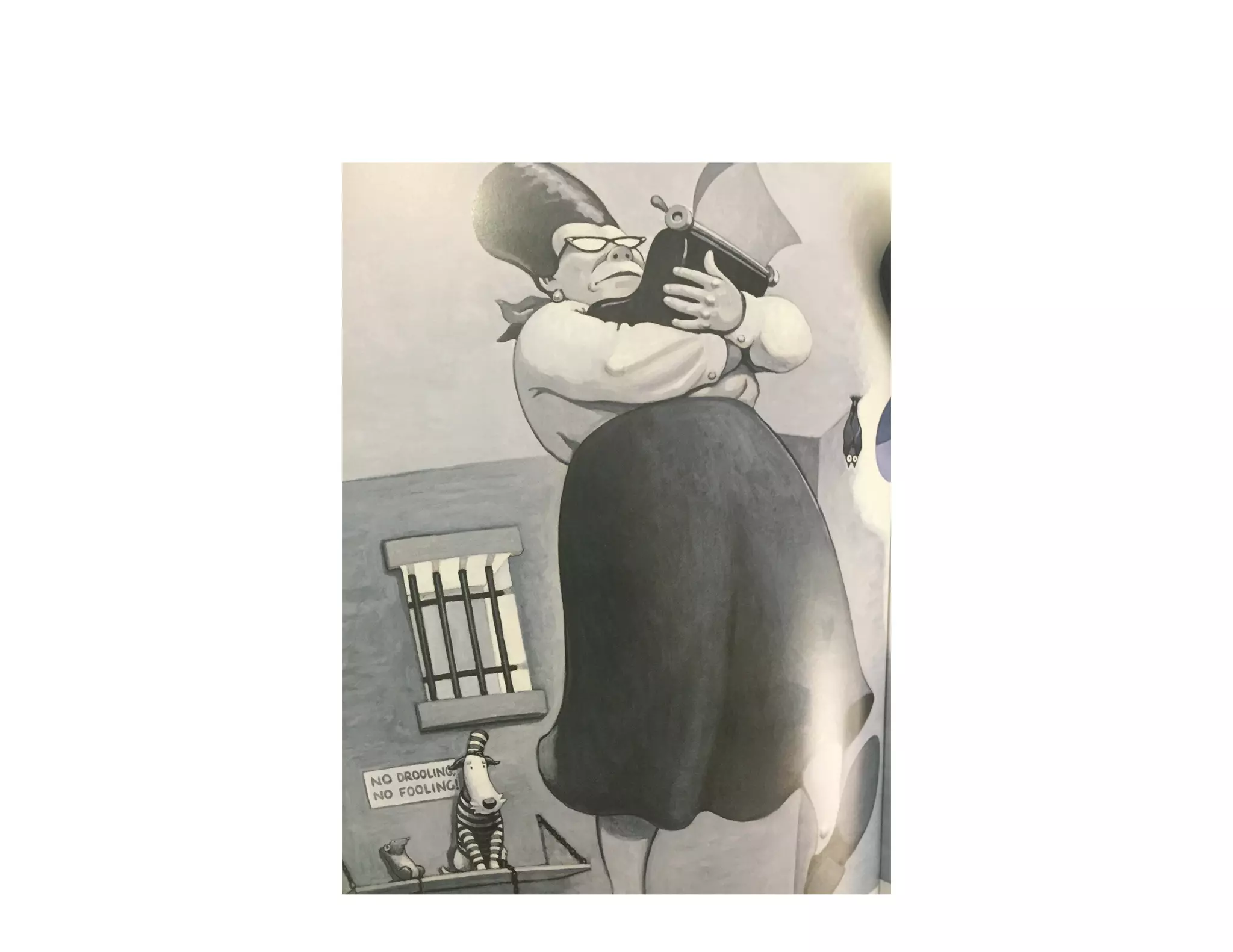
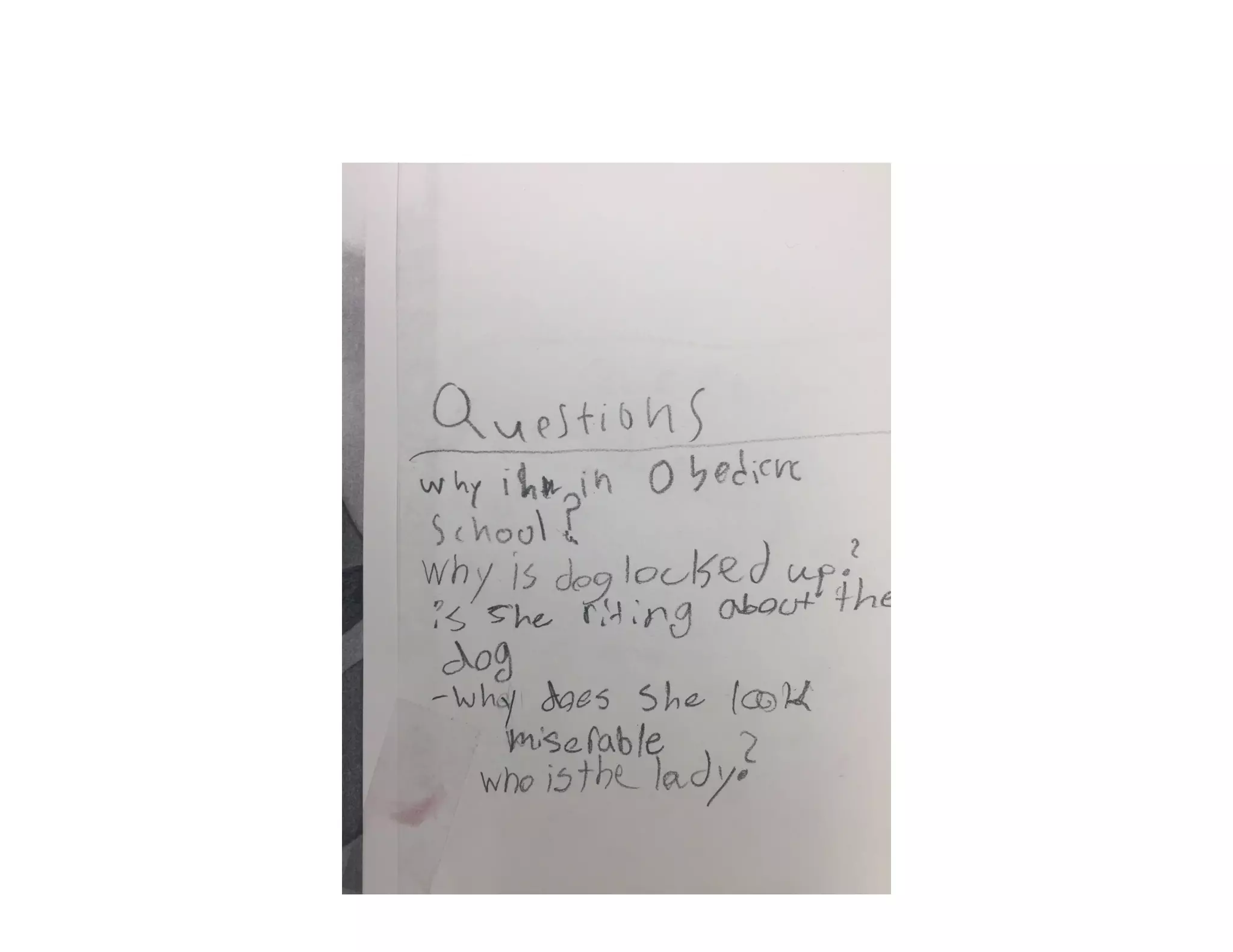
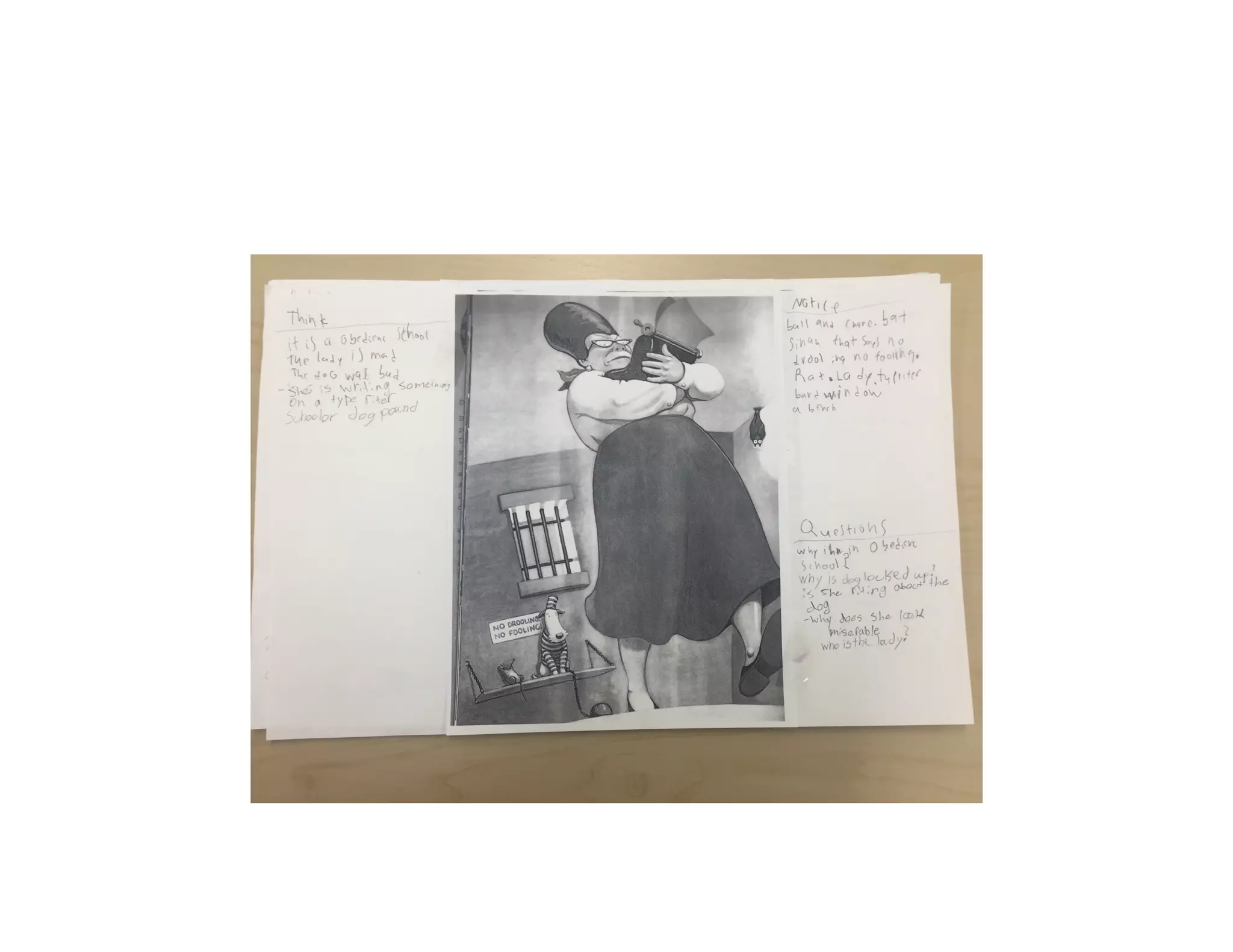
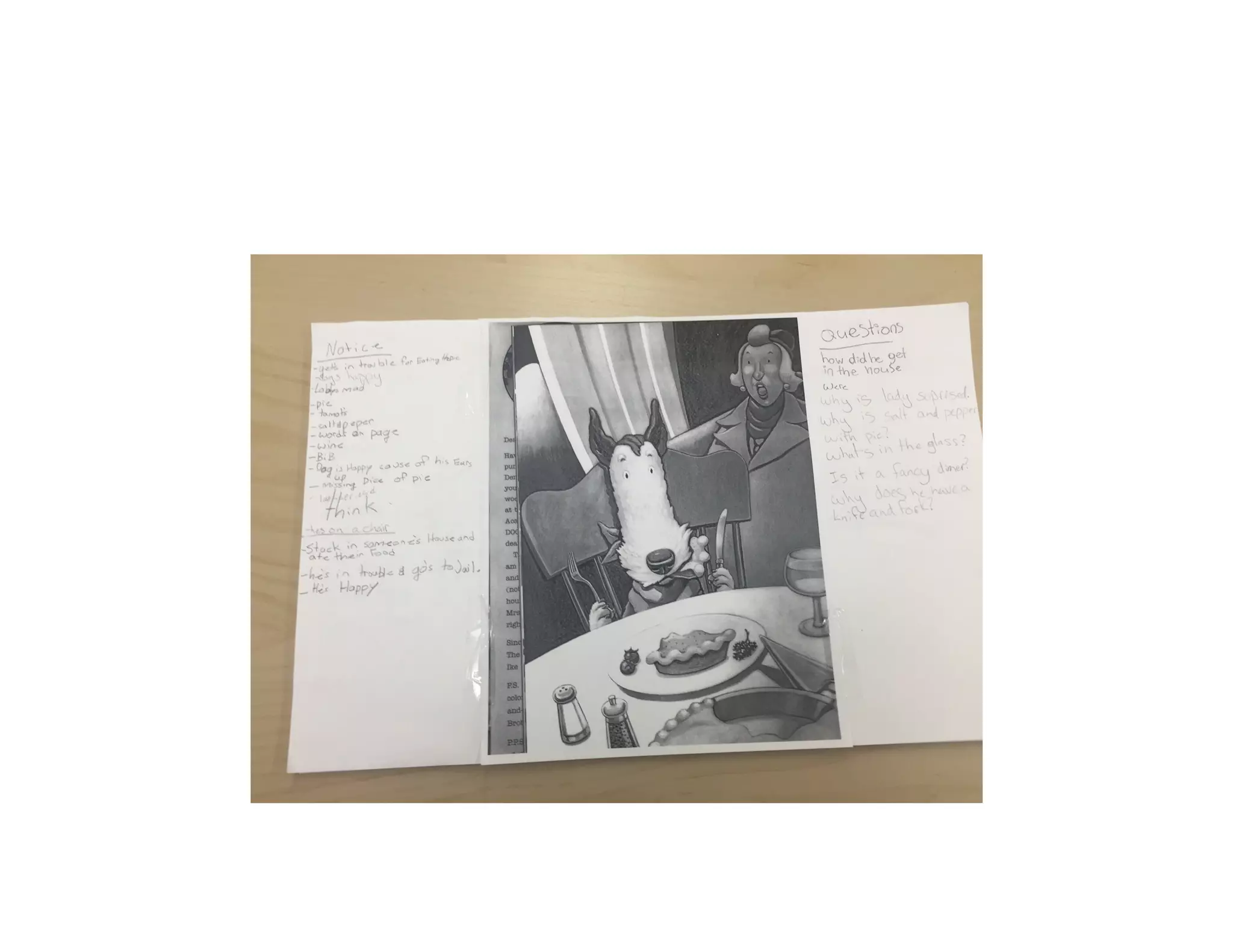
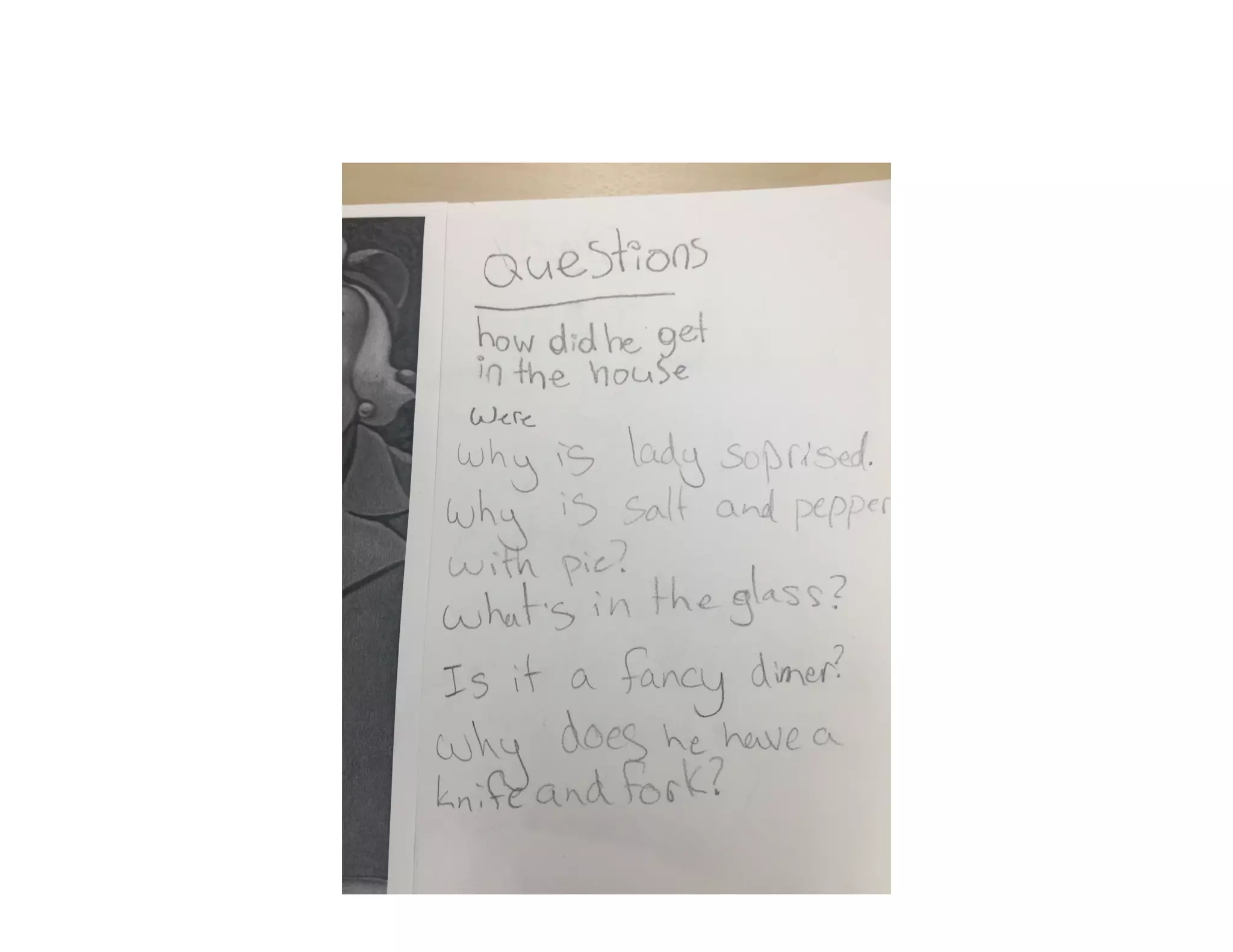
•  Model	‘noIce’,	‘think’,	‘quesIon’	with	a	picture	
•  Students,	in	groups	of	3,	‘noIce’,	‘think’,	
‘quesIon’	with	another	picture	
•  Students	move	to	add	on	to	a	2nd	picture	
•  Model	‘explode	the	sentence’	
•  Students,	in	groups	of	3,	‘explode	the	sentence’	
•  Begin	to	read	the	text.		NoIce	engagement	and	
thinking.
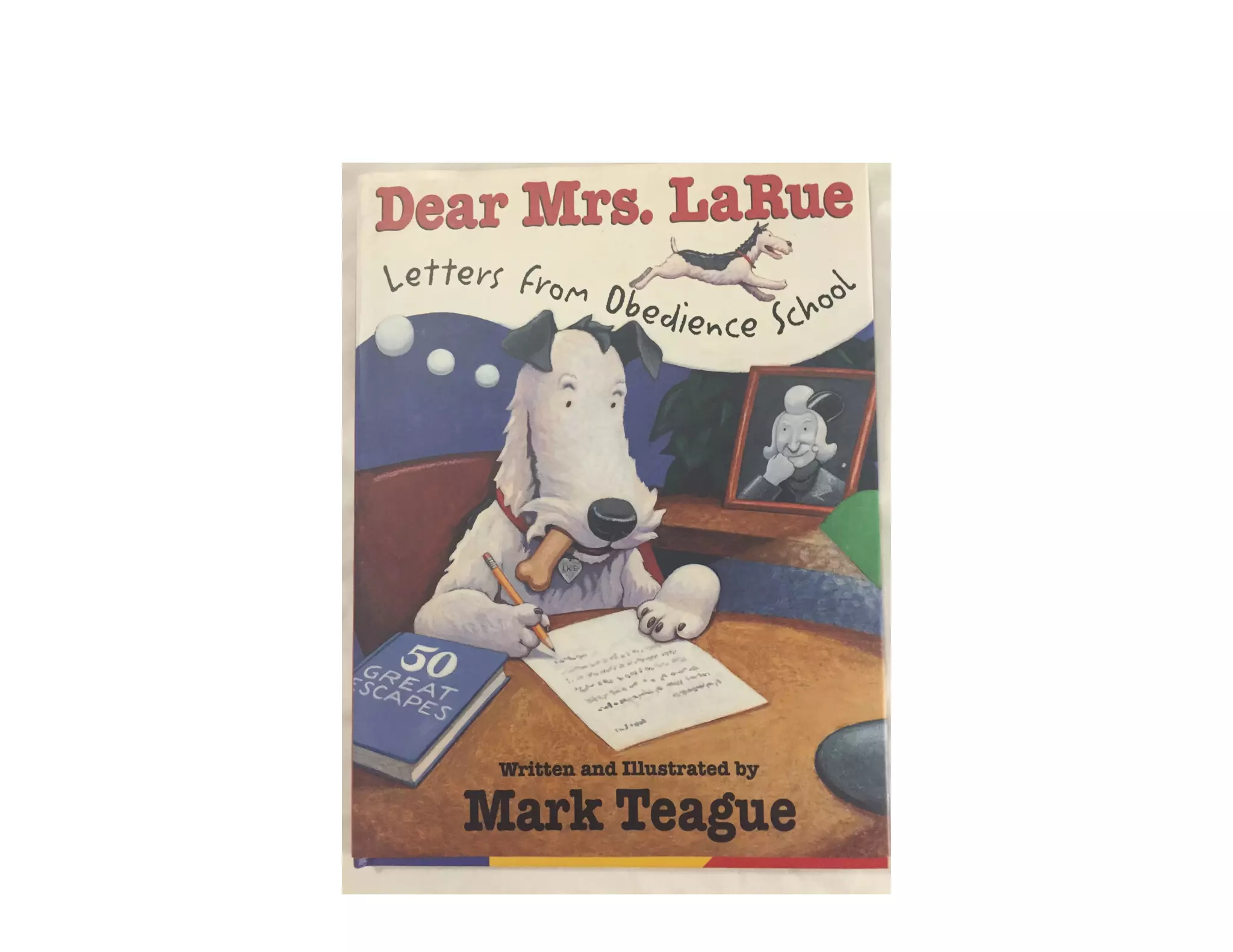
Dear	Mrs.	La	Rue,	
How	could	you	do	this	to	me?		This	is	a	PRISON,	
not	a	school.		You	should	see	the	other	dogs.	
They	are	BAD	DOGS,	Mrs.	La	Rue!	I	do	not	fit	
in.		Even	the	journey	here	was	a	horror.
Resources
•  Assessment	&	Instruc7on	of	ESL	Learners	–	Brownlie,	Feniak,	
&	McCarthy,	2004	
•  Grand	Conversa7ons,	ThoughAul	Responses	–	a	unique	
approach	to	literature	circles	–	Brownlie,	2005	
•  Student	Diversity,	2nd	ed.	–	Brownlie,	Feniak	&	Schnellert,	
2006	
•  Reading	and	Responding,	gr.	4,5,&6	–	Brownlie	&	Jeroski,	
2006	
•  It’s	All	about	Thinking	–	collabora7ng	to	support	all	learners	
(in	English,	Social	Studies	and	Humani7es)	–	Brownlie	&	
Schnellert,	2009	
•  It’s	All	about	Thinking	–	collabora7ng	to	support	all	learners	
(in	Math	and	Science)	-	Brownlie,	Fullerton	&	Schnellert,	2011	
•  Learning	in	Safe	Schools,	2nd	ed	–	Brownlie	&	King,	Oct.,	2011

Quesnel.Intermediate Literacy