Process
Analysis
Tools
PRESENTATION TOPIC
Meet The Teem
KASHAFGULL M.ZOHAIB M.ABUBAKAR HADIA
PROCESS
ANALYSIS
DEFINE:
EXPLANATIONS:
A process is a series of steps and
decisions involved in the way work
is completed
Process analysis, also known
as Business Process Analysis (BPA),
is a system used to go over and
evaluate the current activities in
business operations
Using process analysis, companies
can evaluate their business processes
and pinpoint what is and isn't
working within their operations.
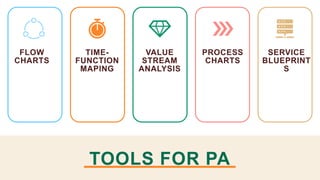
TOOLS FOR PA
FLOW
CHARTS
TIME-
FUNCTION
MAPING
VALUE
STREAM
ANALYSIS
PROCESS
CHARTS
SERVICE
BLUEPRINT
S
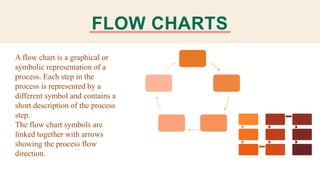
FLOW CHARTS
A flow chart is a graphical or
symbolic representation of a
process. Each step in the
process is represented by a
different symbol and contains a
short description of the process
step.
The flow chart symbols are
linked together with arrows
showing the process flow
direction.
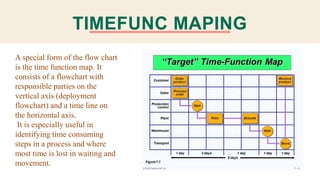
TIMEFUNC MAPING
A special form of the flow chart
is the time function map. It
consists of a flowchart with
responsible parties on the
vertical axis (deployment
flowchart) and a time line on
the horizontal axis.
It is especially useful in
identifying time consuming
steps in a process and where
most time is lost in waiting and
movement.
VALUE STREAM
A value stream can be defined as all the steps โ€“ both value added
and non value added โ€“ required to take a product or service from
its raw materials state and deliver it to a customer.
Through the use of this technique, it is possible to isolate those
steps that affect the process but do not add any value to it, hence
leading to a lost in efficiency and, finally, profitability.
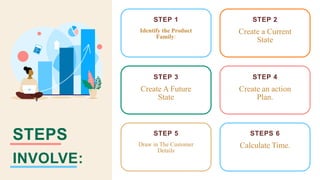
STEPS
INVOLVE:
STEP 1
Identify the Product
Family:
STEP 2
Create a Current
State
STEP 3
Create A Future
State
STEP 4
Create an action
Plan.
STEP 5
Draw in The Customer
Details
STEPS 6
Calculate Time.
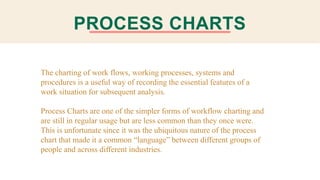
PROCESS CHARTS
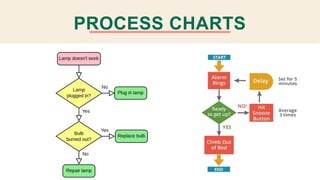
The charting of work flows, working processes, systems and
procedures is a useful way of recording the essential features of a
work situation for subsequent analysis.
Process Charts are one of the simpler forms of workflow charting and
are still in regular usage but are less common than they once were.
This is unfortunate since it was the ubiquitous nature of the process
chart that made it a common โ€œlanguageโ€ between different groups of
people and across different industries.
PROCESS CHARTS
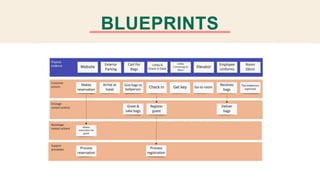
BLUEPRINTS
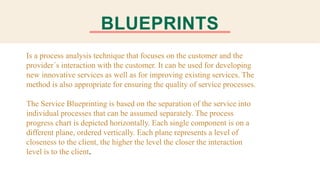
Is a process analysis technique that focuses on the customer and the
providerยดs interaction with the customer. It can be used for developing
new innovative services as well as for improving existing services. The
method is also appropriate for ensuring the quality of service processes.
The Service Blueprinting is based on the separation of the service into
individual processes that can be assumed separately. The process
progress chart is depicted horizontally. Each single component is on a
different plane, ordered vertically. Each plane represents a level of
closeness to the client, the higher the level the closer the interaction
level is to the client.
BLUEPRINTS
THANKYOU!

BASICS TOOLS FOR PROCESS ANALYSIS

  • 1.
  • 2.
    Meet The Teem KASHAFGULLM.ZOHAIB M.ABUBAKAR HADIA
  • 3.
    PROCESS ANALYSIS DEFINE: EXPLANATIONS: A process isa series of steps and decisions involved in the way work is completed Process analysis, also known as Business Process Analysis (BPA), is a system used to go over and evaluate the current activities in business operations Using process analysis, companies can evaluate their business processes and pinpoint what is and isn't working within their operations.
  • 4.
  • 5.
    FLOW CHARTS A flowchart is a graphical or symbolic representation of a process. Each step in the process is represented by a different symbol and contains a short description of the process step. The flow chart symbols are linked together with arrows showing the process flow direction.
  • 6.
    TIMEFUNC MAPING A specialform of the flow chart is the time function map. It consists of a flowchart with responsible parties on the vertical axis (deployment flowchart) and a time line on the horizontal axis. It is especially useful in identifying time consuming steps in a process and where most time is lost in waiting and movement.
  • 7.
    VALUE STREAM A valuestream can be defined as all the steps โ€“ both value added and non value added โ€“ required to take a product or service from its raw materials state and deliver it to a customer. Through the use of this technique, it is possible to isolate those steps that affect the process but do not add any value to it, hence leading to a lost in efficiency and, finally, profitability.
  • 8.
    STEPS INVOLVE: STEP 1 Identify theProduct Family: STEP 2 Create a Current State STEP 3 Create A Future State STEP 4 Create an action Plan. STEP 5 Draw in The Customer Details STEPS 6 Calculate Time.
  • 9.
    PROCESS CHARTS The chartingof work flows, working processes, systems and procedures is a useful way of recording the essential features of a work situation for subsequent analysis. Process Charts are one of the simpler forms of workflow charting and are still in regular usage but are less common than they once were. This is unfortunate since it was the ubiquitous nature of the process chart that made it a common โ€œlanguageโ€ between different groups of people and across different industries.
  • 10.
  • 11.
    BLUEPRINTS Is a processanalysis technique that focuses on the customer and the providerยดs interaction with the customer. It can be used for developing new innovative services as well as for improving existing services. The method is also appropriate for ensuring the quality of service processes. The Service Blueprinting is based on the separation of the service into individual processes that can be assumed separately. The process progress chart is depicted horizontally. Each single component is on a different plane, ordered vertically. Each plane represents a level of closeness to the client, the higher the level the closer the interaction level is to the client.
  • 12.
  • 13.