Basics of BreastfeedingSt. Mary’s HospitalFamily Care SuitesOrientation
Anatomy
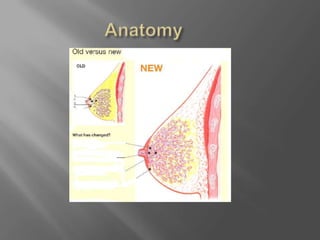
AnatomyGlands or lobes     15-25 lobes     alveoli     maternal blood supplymyoepithelial cells     milk ejection reflex
Anatomy
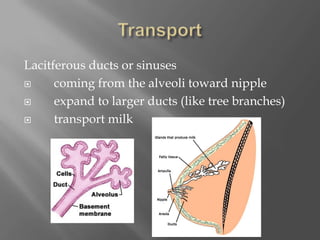
TransportLacitferous ducts or sinuses     coming from the alveoli toward nipple     expand to larger ducts (like tree branches)     transport milk
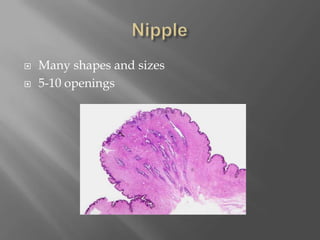
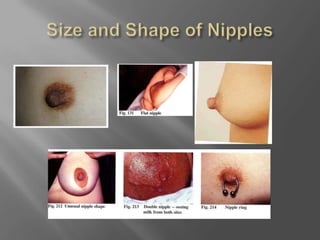
NippleMany shapes and sizes5-10 openings
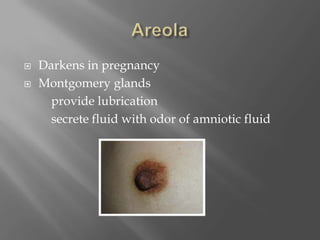
AreolaDarkens in pregnancyMontgomery glands		provide lubrication		secrete fluid with odor of amniotic fluid
Fat CellsFat determines the size of the breastAll breasts have the about the same number of milk glands or lobesSize does not determine ability to make milk
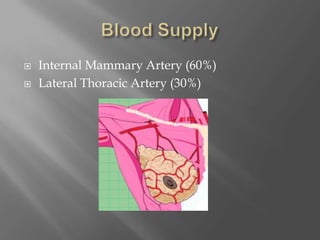
Blood SupplyInternal Mammary Artery (60%)Lateral Thoracic Artery (30%)
Nerve Supply4th, 5th, & 6thintercostal nerves
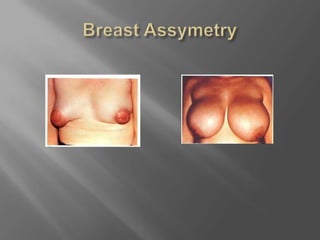
Breast Assymetry
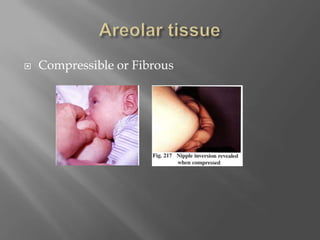
Areolar tissueCompressible or Fibrous
Size and Shape of Nipples
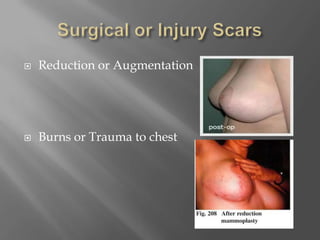
Surgical or Injury ScarsReduction or AugmentationBurns or Trauma to chest
Hormones for LactationProlactin : anterior pituitary hormone                   pregnancy effects                   inhibits ovulation                   stimulates milk synthesisOxytocin     signs of “let down”        uterine cramps                  increase bleeding     thirst                                   feeling sleepy     leaking                               changed sucking    “pins and needles”            ok if nothing felt
Pathway & Effects of Oxytocin & Prolactin
Other hormonesNecessary for milk production:InsulinCortisolThyroidParathyroidHuman growth hormoneFeedback inhibitor hormone
Milk ProductionLactogenesis I     during pregnancy     progesterone and estrogen     secretory cells     colostrum
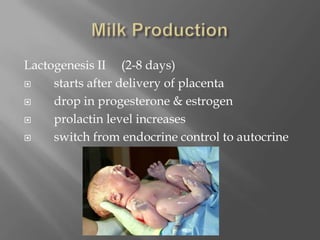
Milk ProductionLactogenesis II     (2-8 days)     starts after delivery of placenta     drop in progesterone & estrogen     prolactin level increases     switch from endocrine control to autocrine
Milk ProductionLactogenesis III     Establishment and Maintenance (8-10 days)     Mature Milk
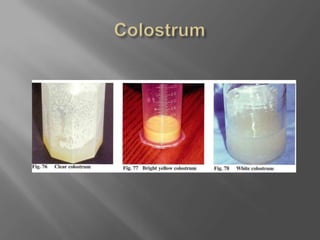
CompositionColostrum     first food     High in Protein, vitamins & minerals     Antibodies     Less fat & lactose than mature milk     Laxative     About 3 ounces in 24 hours
Colostrum
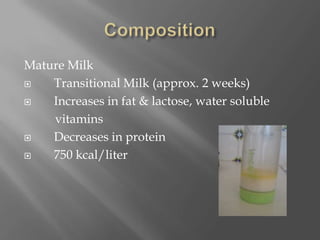
CompositionMature Milk     Transitional Milk (approx. 2 weeks)     Increases in fat & lactose, water soluble           vitamins        Decreases in protein     750 kcal/liter
Foremilk / HindmilkForemilk     thinner watery milk at beginning of feedingHind Milk     higher in fat and calories	Let baby finish one breast	Do not limit length of time at breast
Fore Milk & Hind Milk
Milk CompositionVariations to milk are normalDepend upon:     time of day     beginning or end of feeding     maternal diet     maternal hormone fluctuations
Immunologic and Bioactive Properties of MilkSecretory Immunoglobin A           provides passive immunity           Inhibited bacterial growth in gutMacrophages are abundant in human milk      destroy  &  digest bacteriaReduction in Food Allergies
Benefits of Breastfeeding
Benefits of BreastfeedingBenefits to Baby:Species specificGood HealthReduce risk of DiseasePromotes Physical DevelopmentProvides Emotional Benefits
Benefits of Breastfeeding
Benefits of BreastfeedingBenefits for mother     reduce postpartum hemorrhage     improve bone density     weight loss     reduce risk of cancers     convenient and always available     save time and money     delays fertility     travel  easy & comfort for baby
Benefits to Family & EnvironmentFamily saves moneyFewer healthcare costsNo energy use for productionNo packaging materialsNo production animals, feed, machinery, waste disposalNo transportationNo contamination     or disease transmission
Other benefits• comfort• easing of pain and discomfort• protection during illness• building of bonding and attachment with parents• social development• inducing sleep• building of trust in parents• visual development• development of communication skills• building brain organization toward positive stress             handling throughout life• reduced heart disease risk factors• lowered risk of SIDS (Sudden Infant Death          Syndrome)
Skin to Skin contactInfant naked or only in diaperMom with breasts, chest and belly bareMay have blanket over them bothMom can be sitting or reclining with infant vertical between her breasts or on one breast
Benefits of Skin to SkinImproves sucklingIncreases duration & exclusive breastfeedingHigher skin temperaturesRaises blood glucoseNormalizes base excessLess cryingRelease of oxytocin-less uterine bleedingRelease of prolactin- increase in productionBonding, less anxiety for mom
Benefits of Skin to Skin
IndicationsPossible dose response, separation of mom and baby for 20 minutes during 1st hour detrimentalAs little as 15-20 minutes beneficialBaby awake after delivery, start skin to skin as soon as possible, suckling may not occur for up to 2 hours after deliveryRecommend at least 30 minutes long or longer for a more difficult birth
Skin to Skin
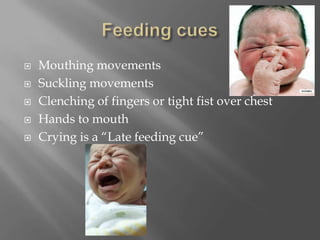
Feeding cuesMouthing movementsSuckling movementsClenching of fingers or tight fist over chestHands to mouthCrying is a “Late feeding cue”
Feeding
Content Baby
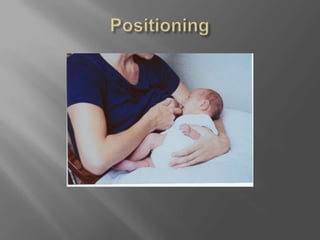
Positioning
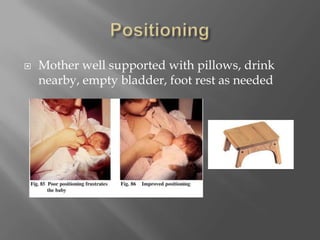
PositioningMother well supported with pillows, drink nearby, empty bladder, foot rest as needed
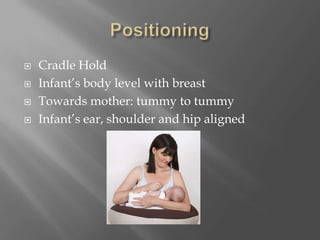
PositioningCradle HoldInfant’s body level with breastTowards mother: tummy to tummyInfant’s ear, shoulder and hip aligned
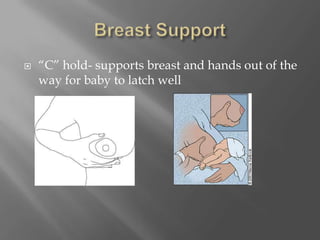
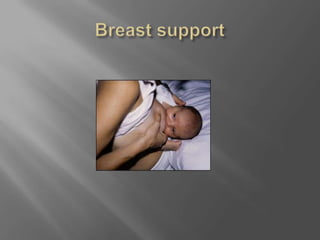
Breast Support“C” hold- supports breast and hands out of the way for baby to latch well
Breast support
Cradle hold
Advantages/ Disadvantages+ Most frequently illustrated/ familiar+ Most often used by mothers- Difficult to master- control of baby’s head- Baby may wobble on mom’s arm
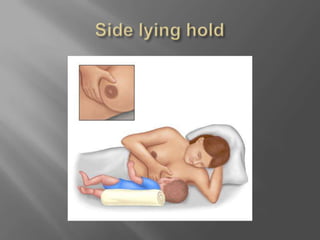
Side lying hold
Advantages/disadvantages+ Allows mother more rest+ more comfortable after a c-section with               support of tummy - mother’s fear of smothering their baby
Football or Clutch hold
Advantages/disadvantages+maximize control of baby’s head+more comfortable choice of c-sections+more easily accomplished for SGA/preemie-Not often pictured in media- some mother’s not comfortable with position- more difficult to use with larger babies
Cross Cradle
Cross Cradle hold
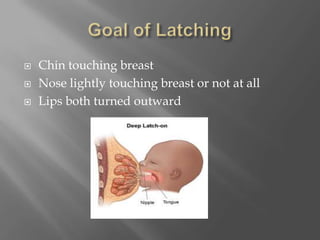
LATCHINGNose to nippleManual expressionTickle lipWide open (rooting)Tongue down, nipple to roofBring infant in toward motherLatch with entire nipple & about 1 inch of areolaLower jaw covers more than upper
Goal of LatchingChin touching breastNose lightly touching breast or not at allLips both turned outward
As Baby NursesCheeks puffed outRocking of entire jawTemple movementIntermittent swallowsNO clicking or smackingBreast tissue
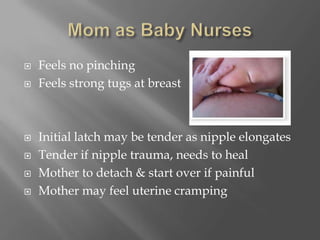
Mom as Baby NursesFeels no pinchingFeels strong tugs at breastInitial latch may be tender as nipple elongatesTender if nipple trauma, needs to healMother to detach & start over if painfulMother may feel uterine cramping
No Biting!!
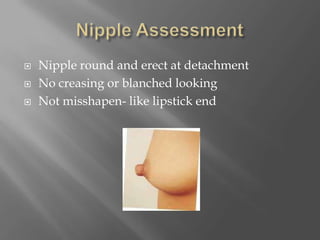
Nipple AssessmentNipple round and erect at detachmentNo creasing or blanched lookingNot misshapen- like lipstick end
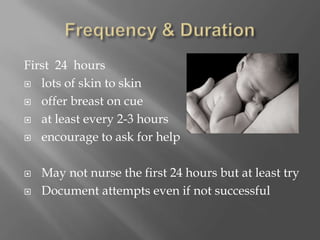
Frequency & DurationFirst  24  hours  lots of skin to skin offer breast on cue at least every 2-3 hours encourage to ask for help May not nurse the first 24 hours but at least try  Document attempts even if not successful
NursingLet baby nurse as long as he wantsDo not watch the clock, watch the infantGenerally, 10-30 minutes, longer or shorter ok
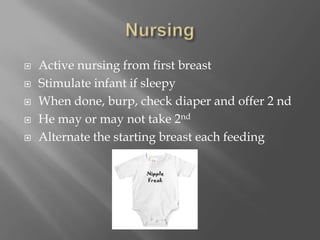
NursingActive nursing from first breastStimulate infant if sleepyWhen done, burp, check diaper and offer 2 ndHe may or may not take 2ndAlternate the starting breast each feeding
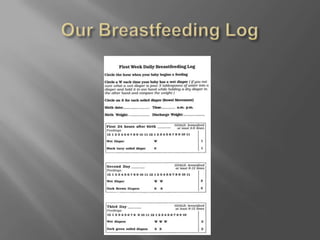
How much is enough?Breastfeeding Log     8-12 feedings in 24 hours     voiding and stooling     weight loss less than 10 %     content after nursing     swallowing     breasts feel softer after nursing     stools transitioning black, brown, green,             yellow by one week of age
Our Breastfeeding Log
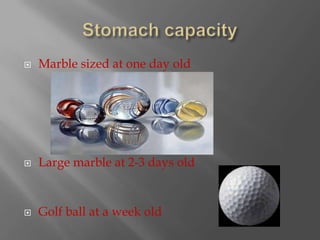
Stomach capacityMarble sized at one day oldLarge marble at 2-3 days oldGolf ball at a week old
Feeding PlanReasons we supplementHow do we supplementWhat do we supplementPacifier use
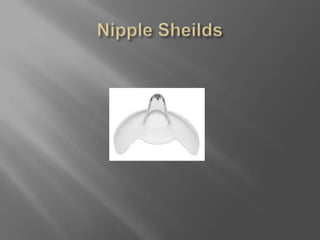
Nipple Sheilds
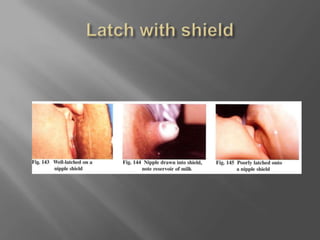
Latch with shield
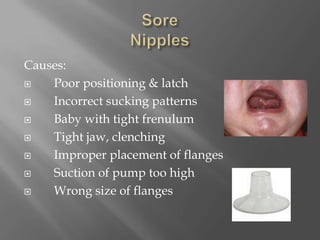
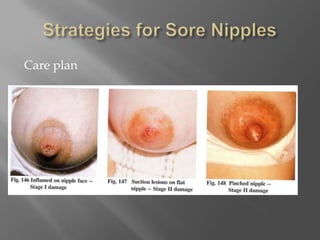
Sore NipplesCauses:     Poor positioning & latch     Incorrect sucking patterns     Baby with tight frenulum     Tight jaw, clenching     Improper placement of flanges     Suction of pump too high     Wrong size of flanges
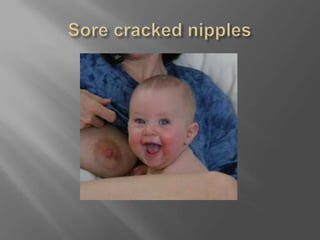
Sore cracked nipples
Strategies for Sore NipplesCare plan
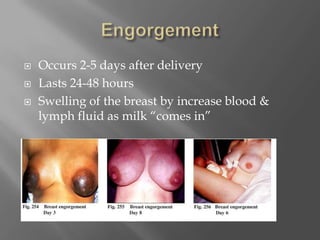
EngorgementOccurs 2-5 days after deliveryLasts 24-48 hoursSwelling of the breast by increase blood & lymph fluid as milk “comes in”
Prevention of EngorgementNurse frequentlyCorrect latchSkin to skin contactNo supplementsPump only for comfortEngorgement care plan
JaundicePhysiologyBilirubin	          Direct & IndirectCauses		  Physiologic jaundice		  Pathological jaundice
Treatment of JaundiceIncrease frequency of feedingsMay need to double pump to supplementSupplement with mom’s milk or formulaPhototherapyMonitor hydrationEducate parents
Plugged ducts    Inadequate emptying, pressure in breast    Tender spot    Warmth & message    Nurse on tender breast first    Proper latching & optimal positioning    Rest, report fever to MD    Plug may come out & look like spaghetti
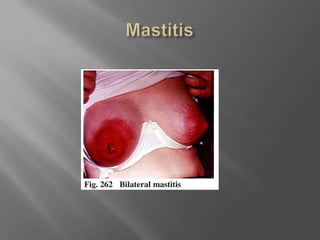
MastitisBacterial infection of breast tissue     Symptoms: 		hard, reddened tender area		red streaking, fever, flu like symptoms    								      Causes: 		damage to nipple open to bacteria		milk stasis, inadequate emptying, plug 	Care Plan
Mastitis
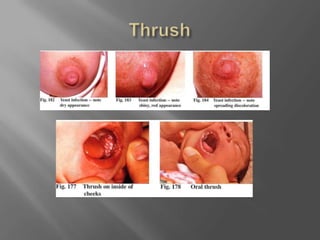
ThrushYeast overgrowthPredisposing factors: 	nipple damage, antibiotic use, yeast vaginitisSigns & Symptoms: 	white, pimple like dots, superficial cracking at base of nipple, constant pain, burning, itchingInfant may or may not have symptoms           White patches in mouth, diaper rash
Thrush
Nutrition & MedicationsWell balance dietExtra 300-500 calories per dayInfant may be sensitive to mom’s dietCaffeine sparinglyAlcohol passes into milkPrenatal Vitamin Q dayNicotineEducate parents Dr. Hale- “Medications & Mother’s Milk”
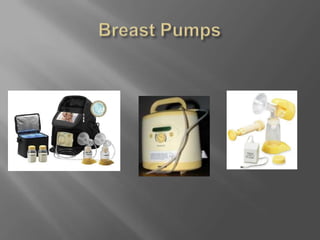
Breast PumpsManual- occasional pumping, relieve fullness, 5 minutes alternating sides for 15 mins. totalSingle Electric- occasional pumping, small motor, one at a time 5mins alternate to 15 mins.Double Electric-larger, stronger, more durable, regular pumping, more efficient, rent or buy, best for NICU moms, quicker
Breast Pumps
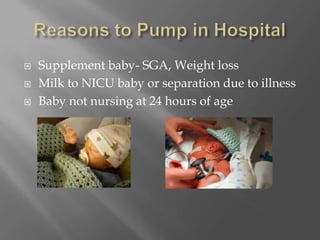
Reasons to Pump in HospitalSupplement baby- SGA, Weight lossMilk to NICU baby or separation due to illnessBaby not nursing at 24 hours of age
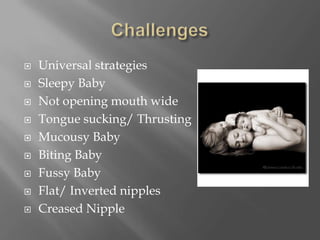
ChallengesUniversal strategiesSleepy BabyNot opening mouth wideTongue sucking/ ThrustingMucousy BabyBiting BabyFussy BabyFlat/ Inverted nipplesCreased Nipple
Resources“Best Baby on the Block”- Dr. Harvey KarpBreastfeeding VideosLactation Counselor CertificationCEU offeringsBreastfeeding Books & Atlases in LC officeYour friendly Lactation Consultants
Lactation ConsultantsLaura Rosenau, RN, IBCLCRosie Sergenian, LPN, IBCLCHolly Guenther, RN, IBCLCRuth Harding- Weaver, RN, IBCLCMelanie Betchey, RN, IBCLCJennifer Ulmer, RN, IBCLCCrystal Huene, RN, IBCLC
Questions Comments Concerns
Case StudiesRead and discuss together the following 3 cases:1)    26 hour old male, 40 2/7 weeks gestation, 8#1 oz, nursed after delivery & 5 times since then well, he has had 1 meconium stool and 2 voids, now he hasn’t nursed for the last 5 hours and mother states he is sleepy. She is holding him skin to skin. He is asleep.  What do you do?

Case Study2)     22 hour old female, 36 1/7 weeks gestation, 6 # 8 oz., no latch after delivery, to the breast 5 times with only licking and nuzzling.  She is sleepy with latching attempts. 1 void and 1 meconium stool is recorded. Last attempt made three hours ago. She is asleep in her crib. What would you do now?
Case Study3)     24 hour old female, 37 1/7 week gestation, 6 # 2 ounces & is SGA. She nursed well after delivery and has nursed 4 times since for 15-20 minutes per feeding. She has had 3 voids and 3 meconium stools.  She is putting her fingers in her mouth and her eyes are open. What do you do now?
Case Studies on your own1-2 nurses per case studyStudies number 4 through 8Discuss among your group & present to others
Thank you!References:                                                Lawrence, R. & Lawrence, R. (2005). Breastfeeding: a guide for the medical profession, 6th edition, Philadelphia PA, Mosby Inc.Wilson-Clay, B. & Hoover, K. (2007). The Breastfeeding Atlas, 4th edition,  Manchaca, TX, LactNews Press.

Basics of breastfeeding

  • 1.
    Basics of BreastfeedingSt.Mary’s HospitalFamily Care SuitesOrientation
  • 2.
  • 3.
    AnatomyGlands or lobes 15-25 lobes alveoli maternal blood supplymyoepithelial cells milk ejection reflex
  • 4.
  • 5.
    TransportLacitferous ducts orsinuses coming from the alveoli toward nipple expand to larger ducts (like tree branches) transport milk
  • 6.
    NippleMany shapes andsizes5-10 openings
  • 7.
    AreolaDarkens in pregnancyMontgomeryglands provide lubrication secrete fluid with odor of amniotic fluid
  • 8.
    Fat CellsFat determinesthe size of the breastAll breasts have the about the same number of milk glands or lobesSize does not determine ability to make milk
  • 9.
    Blood SupplyInternal MammaryArtery (60%)Lateral Thoracic Artery (30%)
  • 10.
    Nerve Supply4th, 5th,& 6thintercostal nerves
  • 11.
  • 12.
  • 13.
    Size and Shapeof Nipples
  • 14.
    Surgical or InjuryScarsReduction or AugmentationBurns or Trauma to chest
  • 15.
    Hormones for LactationProlactin: anterior pituitary hormone pregnancy effects inhibits ovulation stimulates milk synthesisOxytocin signs of “let down” uterine cramps increase bleeding thirst feeling sleepy leaking changed sucking “pins and needles” ok if nothing felt
  • 16.
    Pathway & Effectsof Oxytocin & Prolactin
  • 17.
    Other hormonesNecessary formilk production:InsulinCortisolThyroidParathyroidHuman growth hormoneFeedback inhibitor hormone
  • 18.
    Milk ProductionLactogenesis I during pregnancy progesterone and estrogen secretory cells colostrum
  • 19.
    Milk ProductionLactogenesis II (2-8 days) starts after delivery of placenta drop in progesterone & estrogen prolactin level increases switch from endocrine control to autocrine
  • 20.
    Milk ProductionLactogenesis III Establishment and Maintenance (8-10 days) Mature Milk
  • 21.
    CompositionColostrum first food High in Protein, vitamins & minerals Antibodies Less fat & lactose than mature milk Laxative About 3 ounces in 24 hours
  • 22.
  • 23.
    CompositionMature Milk Transitional Milk (approx. 2 weeks) Increases in fat & lactose, water soluble vitamins Decreases in protein 750 kcal/liter
  • 24.
    Foremilk / HindmilkForemilk thinner watery milk at beginning of feedingHind Milk higher in fat and calories Let baby finish one breast Do not limit length of time at breast
  • 25.
    Fore Milk &Hind Milk
  • 26.
    Milk CompositionVariations tomilk are normalDepend upon: time of day beginning or end of feeding maternal diet maternal hormone fluctuations
  • 27.
    Immunologic and BioactiveProperties of MilkSecretory Immunoglobin A provides passive immunity Inhibited bacterial growth in gutMacrophages are abundant in human milk destroy & digest bacteriaReduction in Food Allergies
  • 28.
  • 29.
    Benefits of BreastfeedingBenefitsto Baby:Species specificGood HealthReduce risk of DiseasePromotes Physical DevelopmentProvides Emotional Benefits
  • 30.
  • 31.
    Benefits of BreastfeedingBenefitsfor mother reduce postpartum hemorrhage improve bone density weight loss reduce risk of cancers convenient and always available save time and money delays fertility travel easy & comfort for baby
  • 32.
    Benefits to Family& EnvironmentFamily saves moneyFewer healthcare costsNo energy use for productionNo packaging materialsNo production animals, feed, machinery, waste disposalNo transportationNo contamination or disease transmission
  • 33.
    Other benefits• comfort•easing of pain and discomfort• protection during illness• building of bonding and attachment with parents• social development• inducing sleep• building of trust in parents• visual development• development of communication skills• building brain organization toward positive stress handling throughout life• reduced heart disease risk factors• lowered risk of SIDS (Sudden Infant Death Syndrome)
  • 34.
    Skin to SkincontactInfant naked or only in diaperMom with breasts, chest and belly bareMay have blanket over them bothMom can be sitting or reclining with infant vertical between her breasts or on one breast
  • 35.
    Benefits of Skinto SkinImproves sucklingIncreases duration & exclusive breastfeedingHigher skin temperaturesRaises blood glucoseNormalizes base excessLess cryingRelease of oxytocin-less uterine bleedingRelease of prolactin- increase in productionBonding, less anxiety for mom
  • 36.
  • 37.
    IndicationsPossible dose response,separation of mom and baby for 20 minutes during 1st hour detrimentalAs little as 15-20 minutes beneficialBaby awake after delivery, start skin to skin as soon as possible, suckling may not occur for up to 2 hours after deliveryRecommend at least 30 minutes long or longer for a more difficult birth
  • 38.
  • 39.
    Feeding cuesMouthing movementsSucklingmovementsClenching of fingers or tight fist over chestHands to mouthCrying is a “Late feeding cue”
  • 40.
  • 41.
  • 42.
  • 43.
    PositioningMother well supportedwith pillows, drink nearby, empty bladder, foot rest as needed
  • 44.
    PositioningCradle HoldInfant’s bodylevel with breastTowards mother: tummy to tummyInfant’s ear, shoulder and hip aligned
  • 45.
    Breast Support“C” hold-supports breast and hands out of the way for baby to latch well
  • 46.
  • 47.
  • 48.
    Advantages/ Disadvantages+ Mostfrequently illustrated/ familiar+ Most often used by mothers- Difficult to master- control of baby’s head- Baby may wobble on mom’s arm
  • 49.
  • 50.
    Advantages/disadvantages+ Allows mothermore rest+ more comfortable after a c-section with support of tummy - mother’s fear of smothering their baby
  • 51.
  • 52.
    Advantages/disadvantages+maximize control ofbaby’s head+more comfortable choice of c-sections+more easily accomplished for SGA/preemie-Not often pictured in media- some mother’s not comfortable with position- more difficult to use with larger babies
  • 53.
  • 54.
  • 55.
    LATCHINGNose to nippleManualexpressionTickle lipWide open (rooting)Tongue down, nipple to roofBring infant in toward motherLatch with entire nipple & about 1 inch of areolaLower jaw covers more than upper
  • 56.
    Goal of LatchingChintouching breastNose lightly touching breast or not at allLips both turned outward
  • 57.
    As Baby NursesCheekspuffed outRocking of entire jawTemple movementIntermittent swallowsNO clicking or smackingBreast tissue
  • 58.
    Mom as BabyNursesFeels no pinchingFeels strong tugs at breastInitial latch may be tender as nipple elongatesTender if nipple trauma, needs to healMother to detach & start over if painfulMother may feel uterine cramping
  • 59.
  • 60.
    Nipple AssessmentNipple roundand erect at detachmentNo creasing or blanched lookingNot misshapen- like lipstick end
  • 61.
    Frequency & DurationFirst 24 hours lots of skin to skin offer breast on cue at least every 2-3 hours encourage to ask for help May not nurse the first 24 hours but at least try Document attempts even if not successful
  • 62.
    NursingLet baby nurseas long as he wantsDo not watch the clock, watch the infantGenerally, 10-30 minutes, longer or shorter ok
  • 63.
    NursingActive nursing fromfirst breastStimulate infant if sleepyWhen done, burp, check diaper and offer 2 ndHe may or may not take 2ndAlternate the starting breast each feeding
  • 64.
    How much isenough?Breastfeeding Log 8-12 feedings in 24 hours voiding and stooling weight loss less than 10 % content after nursing swallowing breasts feel softer after nursing stools transitioning black, brown, green, yellow by one week of age
  • 65.
  • 66.
    Stomach capacityMarble sizedat one day oldLarge marble at 2-3 days oldGolf ball at a week old
  • 67.
    Feeding PlanReasons wesupplementHow do we supplementWhat do we supplementPacifier use
  • 68.
  • 69.
  • 70.
    Sore NipplesCauses: Poor positioning & latch Incorrect sucking patterns Baby with tight frenulum Tight jaw, clenching Improper placement of flanges Suction of pump too high Wrong size of flanges
  • 71.
  • 72.
    Strategies for SoreNipplesCare plan
  • 73.
    EngorgementOccurs 2-5 daysafter deliveryLasts 24-48 hoursSwelling of the breast by increase blood & lymph fluid as milk “comes in”
  • 74.
    Prevention of EngorgementNursefrequentlyCorrect latchSkin to skin contactNo supplementsPump only for comfortEngorgement care plan
  • 75.
    JaundicePhysiologyBilirubin Direct & IndirectCauses Physiologic jaundice Pathological jaundice
  • 76.
    Treatment of JaundiceIncreasefrequency of feedingsMay need to double pump to supplementSupplement with mom’s milk or formulaPhototherapyMonitor hydrationEducate parents
  • 77.
    Plugged ducts Inadequate emptying, pressure in breast Tender spot Warmth & message Nurse on tender breast first Proper latching & optimal positioning Rest, report fever to MD Plug may come out & look like spaghetti
  • 78.
    MastitisBacterial infection ofbreast tissue Symptoms: hard, reddened tender area red streaking, fever, flu like symptoms Causes: damage to nipple open to bacteria milk stasis, inadequate emptying, plug Care Plan
  • 79.
  • 80.
    ThrushYeast overgrowthPredisposing factors: nipple damage, antibiotic use, yeast vaginitisSigns & Symptoms: white, pimple like dots, superficial cracking at base of nipple, constant pain, burning, itchingInfant may or may not have symptoms White patches in mouth, diaper rash
  • 81.
  • 82.
    Nutrition & MedicationsWellbalance dietExtra 300-500 calories per dayInfant may be sensitive to mom’s dietCaffeine sparinglyAlcohol passes into milkPrenatal Vitamin Q dayNicotineEducate parents Dr. Hale- “Medications & Mother’s Milk”
  • 83.
    Breast PumpsManual- occasionalpumping, relieve fullness, 5 minutes alternating sides for 15 mins. totalSingle Electric- occasional pumping, small motor, one at a time 5mins alternate to 15 mins.Double Electric-larger, stronger, more durable, regular pumping, more efficient, rent or buy, best for NICU moms, quicker
  • 84.
  • 85.
    Reasons to Pumpin HospitalSupplement baby- SGA, Weight lossMilk to NICU baby or separation due to illnessBaby not nursing at 24 hours of age
  • 86.
    ChallengesUniversal strategiesSleepy BabyNotopening mouth wideTongue sucking/ ThrustingMucousy BabyBiting BabyFussy BabyFlat/ Inverted nipplesCreased Nipple
  • 87.
    Resources“Best Baby onthe Block”- Dr. Harvey KarpBreastfeeding VideosLactation Counselor CertificationCEU offeringsBreastfeeding Books & Atlases in LC officeYour friendly Lactation Consultants
  • 88.
    Lactation ConsultantsLaura Rosenau,RN, IBCLCRosie Sergenian, LPN, IBCLCHolly Guenther, RN, IBCLCRuth Harding- Weaver, RN, IBCLCMelanie Betchey, RN, IBCLCJennifer Ulmer, RN, IBCLCCrystal Huene, RN, IBCLC
  • 89.
  • 90.
    Case StudiesRead anddiscuss together the following 3 cases:1) 26 hour old male, 40 2/7 weeks gestation, 8#1 oz, nursed after delivery & 5 times since then well, he has had 1 meconium stool and 2 voids, now he hasn’t nursed for the last 5 hours and mother states he is sleepy. She is holding him skin to skin. He is asleep. What do you do?
  • 91.
    Case Study2) 22 hour old female, 36 1/7 weeks gestation, 6 # 8 oz., no latch after delivery, to the breast 5 times with only licking and nuzzling. She is sleepy with latching attempts. 1 void and 1 meconium stool is recorded. Last attempt made three hours ago. She is asleep in her crib. What would you do now?
  • 92.
    Case Study3) 24 hour old female, 37 1/7 week gestation, 6 # 2 ounces & is SGA. She nursed well after delivery and has nursed 4 times since for 15-20 minutes per feeding. She has had 3 voids and 3 meconium stools. She is putting her fingers in her mouth and her eyes are open. What do you do now?
  • 93.
    Case Studies onyour own1-2 nurses per case studyStudies number 4 through 8Discuss among your group & present to others
  • 94.
    Thank you!References: Lawrence, R. & Lawrence, R. (2005). Breastfeeding: a guide for the medical profession, 6th edition, Philadelphia PA, Mosby Inc.Wilson-Clay, B. & Hoover, K. (2007). The Breastfeeding Atlas, 4th edition, Manchaca, TX, LactNews Press.