BASIC
FACILITATION
SKILLS
Rashid Mwinyi
Responsibilities of a Facilitator
How Facilitation Differs from Training and
Presenting
Suggestion for Facilitators
Effective Communication Skills for Facilitators
Handling Difficult Team Members
The facilitator leads
The facilitator is knowledgeable enough
The facilitator is not an answer provider, but rather a
tour guide
The facilitator promotes the concept of “safe space”.
Opinions
It is vital that you have some “probing questions” ready
 Community
 Observation
 Flexibility
 Patience
 Connections
 Balance
 Affirmation
 Silence
 Challenge
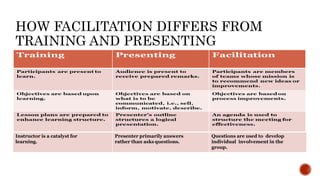
HOW FACILITATION DIFFERS FROM
TRAINING AND PRESENTING
Instructor is a catalyst for
learning.
Presenter primarily answers
rather than asks questions.
Questions are used to develop
individual involvement in the
group.
 Be aware of the physical environment and how it can influence
group behaviour.
 Orient group to the timeframe and task at the beginning of each
session.
 Explain the product that is expected.
 Develop group ground rules, or norms for operating, and use them.
 If you don’t have a co-facilitator, select someone to write key points
on the flipchart.
 Choose a decision making method BEFORE you need it. Suggest
some options that the group could use to get them thinking.
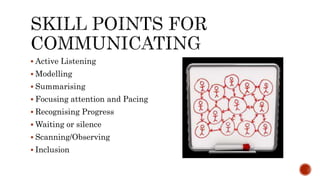
 Active Listening
 Modelling
 Summarising
 Focusing attention and Pacing
 Recognising Progress
 Waiting or silence
 Scanning/Observing
 Inclusion
Should never verbally scold or embarrass the individual
in front of the group or even privately.
Your first opportunity to correct troublesome behaviour
should be during the meeting
A second option is to talk with the person candidly about
the behaviour in private.
A third option is to use the team's informal leaders−those
members most respected for their knowledge and
experience.
1. The Mummy: This person will not freely participate in
discussions. The motivation might be indifference, an
inferiority complex, confusion about the issues or process, or a
feeling of superiority.
2. The Windbag: This individual comments too frequently and
tends to dominate discussions. He or she also tends to be the
first to speak on each issue.
3. The Rambler: This individual will often get off track in his
remarks, misses the point, or uses far-fetched examples to
make a point.
4. The Homesteader: A person who takes an initial position and
is highly reluctant to budge or consider other viable
alternatives.
Basic facilitation skills

Basic facilitation skills

  • 1.
  • 2.
    Responsibilities of aFacilitator How Facilitation Differs from Training and Presenting Suggestion for Facilitators Effective Communication Skills for Facilitators Handling Difficult Team Members
  • 3.
    The facilitator leads Thefacilitator is knowledgeable enough The facilitator is not an answer provider, but rather a tour guide The facilitator promotes the concept of “safe space”. Opinions It is vital that you have some “probing questions” ready
  • 4.
     Community  Observation Flexibility  Patience  Connections  Balance  Affirmation  Silence  Challenge
  • 5.
    HOW FACILITATION DIFFERSFROM TRAINING AND PRESENTING Instructor is a catalyst for learning. Presenter primarily answers rather than asks questions. Questions are used to develop individual involvement in the group.
  • 6.
     Be awareof the physical environment and how it can influence group behaviour.  Orient group to the timeframe and task at the beginning of each session.  Explain the product that is expected.  Develop group ground rules, or norms for operating, and use them.  If you don’t have a co-facilitator, select someone to write key points on the flipchart.  Choose a decision making method BEFORE you need it. Suggest some options that the group could use to get them thinking.
  • 8.
     Active Listening Modelling  Summarising  Focusing attention and Pacing  Recognising Progress  Waiting or silence  Scanning/Observing  Inclusion
  • 9.
    Should never verballyscold or embarrass the individual in front of the group or even privately. Your first opportunity to correct troublesome behaviour should be during the meeting A second option is to talk with the person candidly about the behaviour in private. A third option is to use the team's informal leaders−those members most respected for their knowledge and experience.
  • 10.
    1. The Mummy:This person will not freely participate in discussions. The motivation might be indifference, an inferiority complex, confusion about the issues or process, or a feeling of superiority. 2. The Windbag: This individual comments too frequently and tends to dominate discussions. He or she also tends to be the first to speak on each issue. 3. The Rambler: This individual will often get off track in his remarks, misses the point, or uses far-fetched examples to make a point. 4. The Homesteader: A person who takes an initial position and is highly reluctant to budge or consider other viable alternatives.