
Dr. Ashraf El Adawy 
Consultant Chest Physician 
TB TEAM EXPERT - WHO Basic concepts of Tuberculosis
TUBERCULOSIS... 
The greatest killer of all time... 
The captain of all these men of death... 
...during this century and the last, 
one billion people have died from tuberculosis
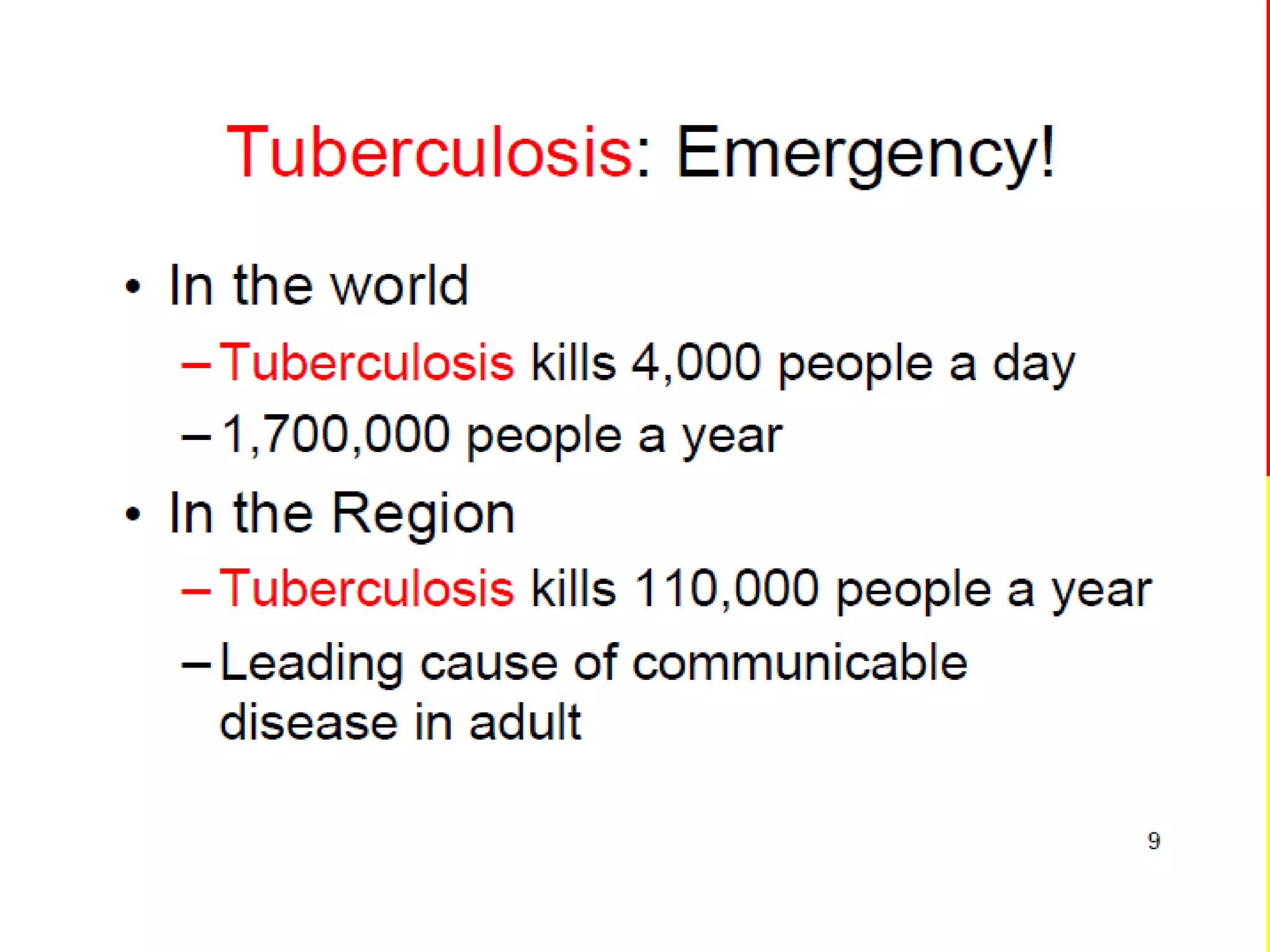
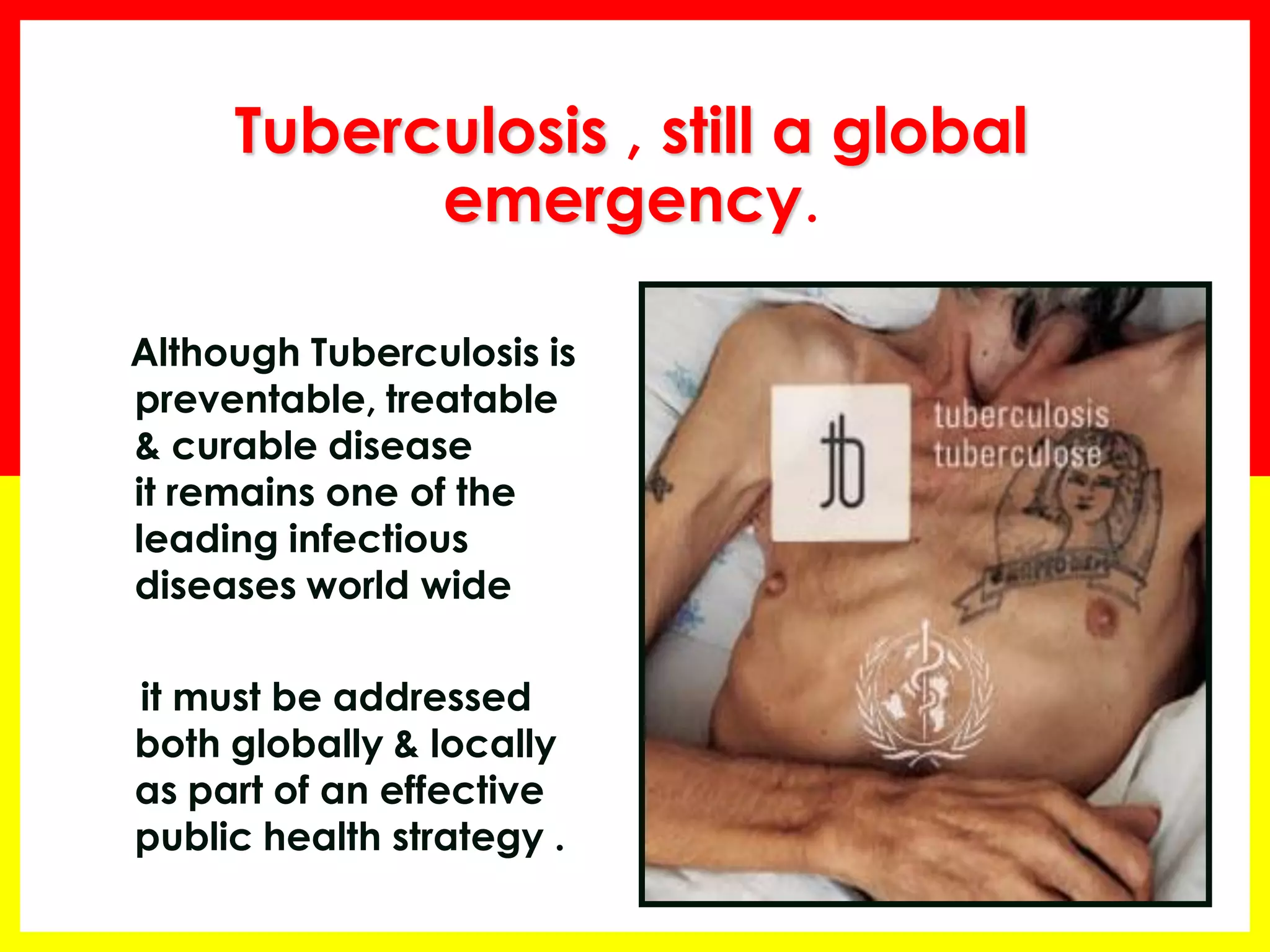
Tuberculosis , still a global emergency. 
Although Tuberculosis is preventable, treatable & curable disease it remains one of the leading infectious diseases world wide 
it must be addressed both globally & locally as part of an effective public health strategy .
Tuberculosis (TB) is contagious and airborne. 
 People ill with TB can infect up to 10-15 other people through close contact over the course of a year. 
Without proper treatment up to two thirds of people ill with TB will die. 
7
WHO Global TB Report, 2012 
8.7 million new cases of TB in 2011 1.4 million deaths in 2011 0.5 million MDR-TB cases TB is the biggest infectious killer among people infected with HIV 2 billion people – one third of the world’s population are infected with mycobacterium tuberculosis
Tuberculosis (TB) is the leading cause of death in the world from a bacterial infectious disease. 
About 95% of TB deaths occur in low- and middle-income countries and 
TB is among the top three causes of death among women aged in reproductive age.
Over the last century, TB has killed more than 100 million people. 
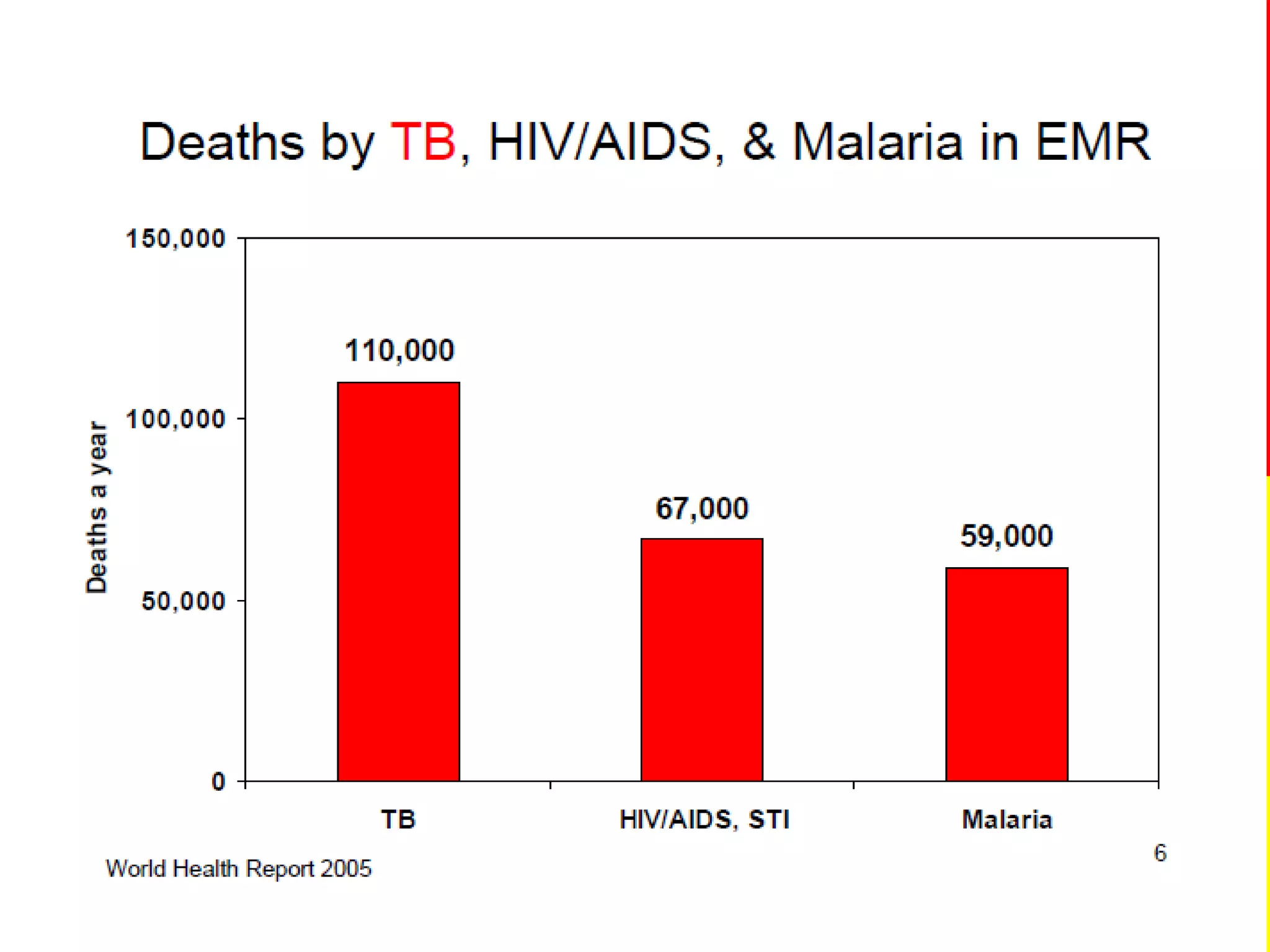
TB is one of the top 3 killer diseases world-wide along with HIV & malaria. 
Among the communicable disease, TB is the second leading cause of death world wide after HIV/ AIDS (cleveland clinic 2008)
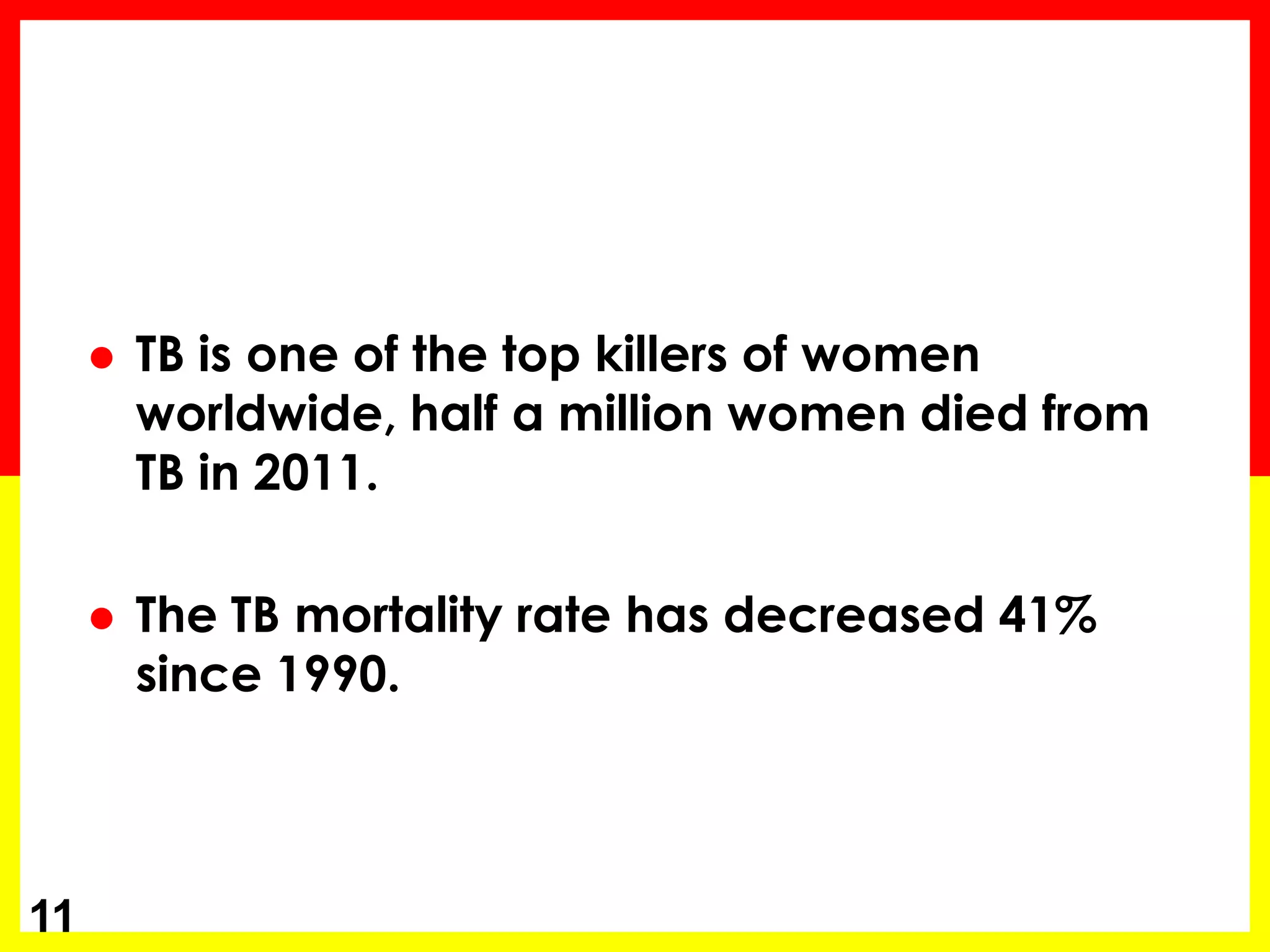
TB is one of the top killers of women worldwide, half a million women died from TB in 2011. 
The TB mortality rate has decreased 41% since 1990. 
11
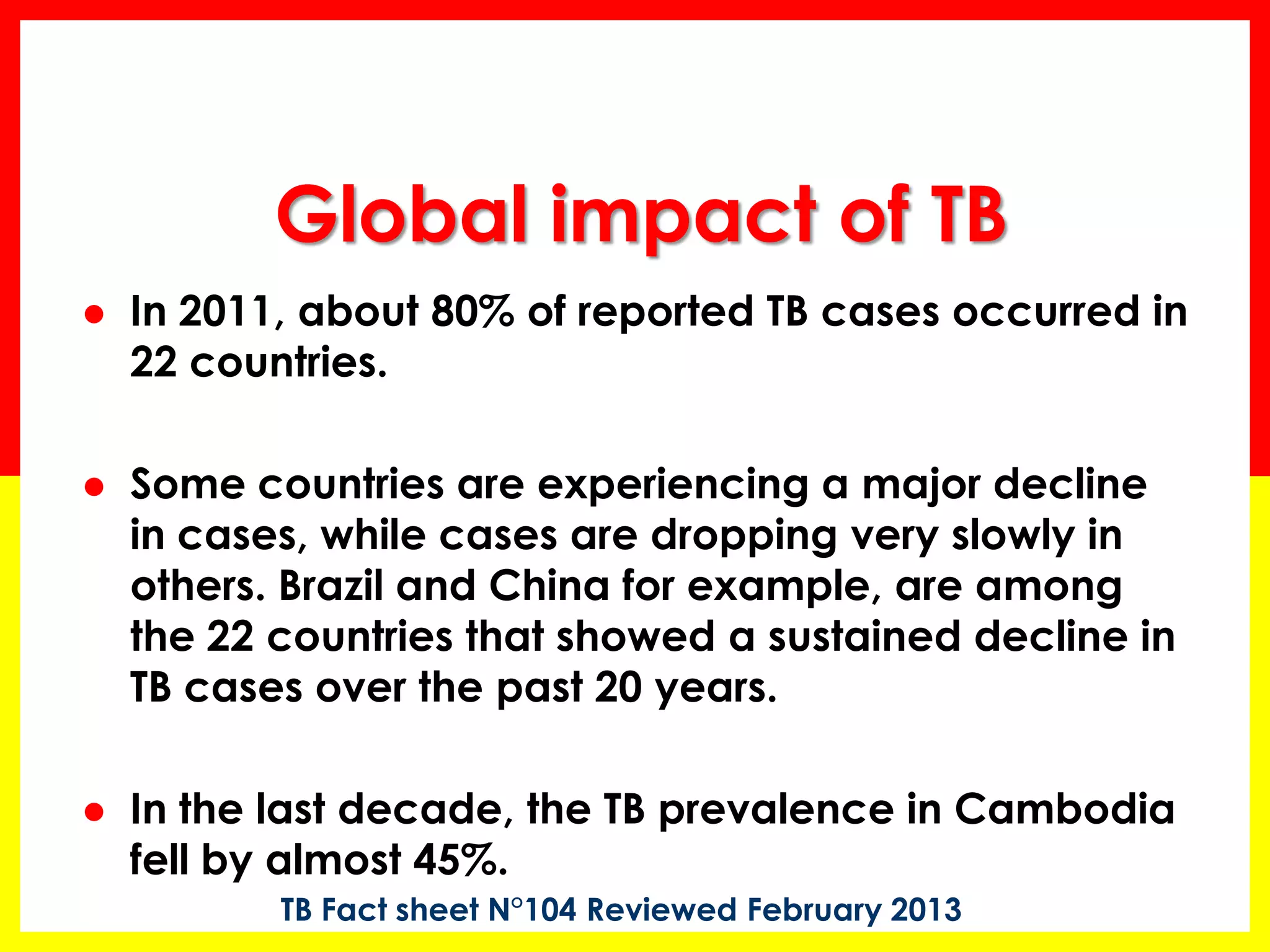
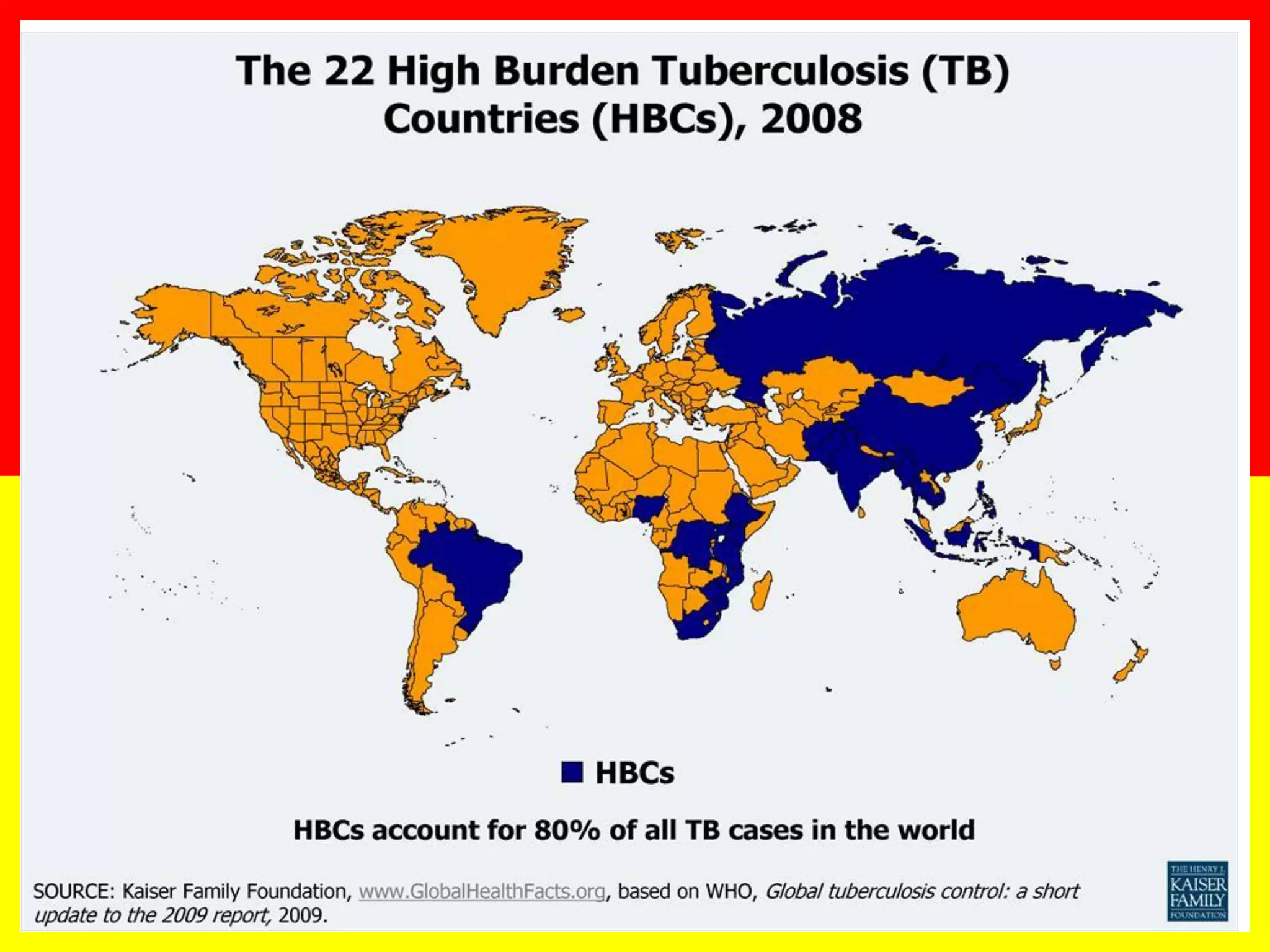
In 2011, about 80% of reported TB cases occurred in 22 countries. 
Some countries are experiencing a major decline in cases, while cases are dropping very slowly in others. Brazil and China for example, are among the 22 countries that showed a sustained decline in TB cases over the past 20 years. 
In the last decade, the TB prevalence in Cambodia fell by almost 45%. 
Global impact of TB 
TB Fact sheet N°104 Reviewed February 2013
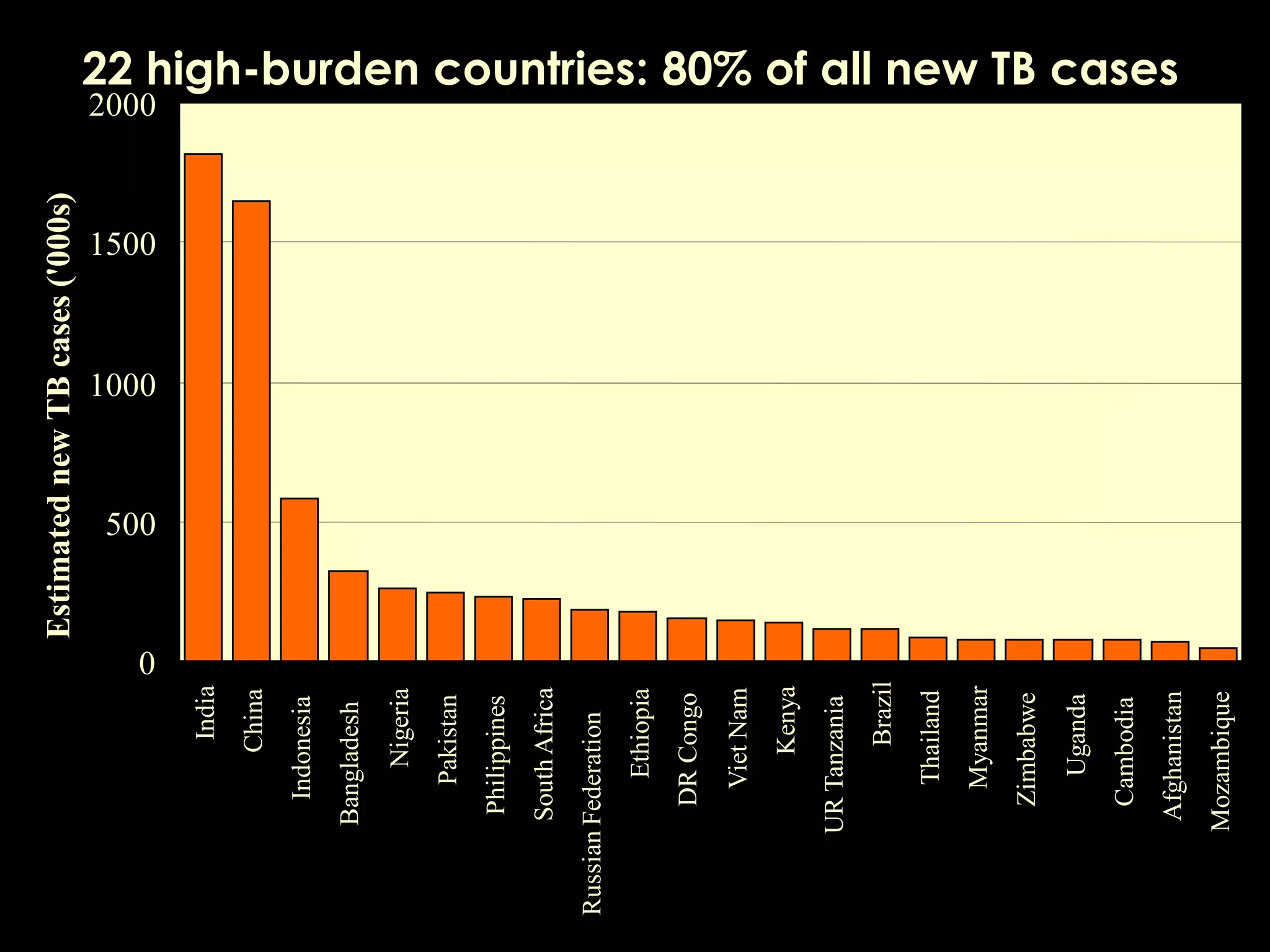
22 high-burden countries: 80% of all new TB cases 
0 
500 
1000 
1500 
2000 
India 
China 
Indonesia 
Bangladesh 
Nigeria 
Pakistan 
Philippines 
South Africa 
Russian Federation 
Ethiopia 
DR Congo 
Viet Nam 
Kenya 
UR Tanzania 
Brazil 
Thailand 
Myanmar 
Zimbabwe 
Uganda 
Cambodia 
Afghanistan 
Mozambique 
Estimated new TB cases ('000s)
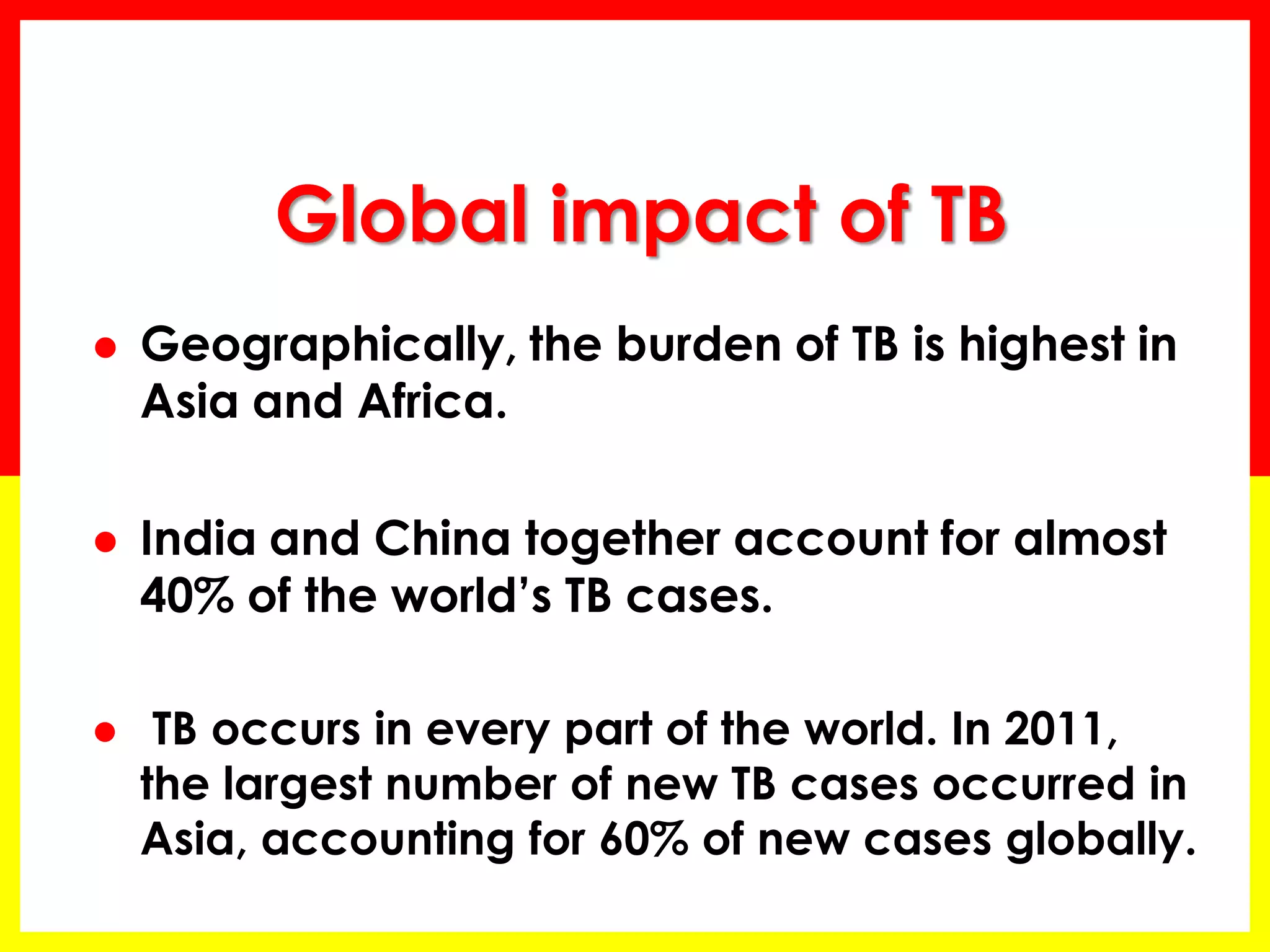
Geographically, the burden of TB is highest in Asia and Africa. 
India and China together account for almost 40% of the world’s TB cases. 
 TB occurs in every part of the world. In 2011, the largest number of new TB cases occurred in Asia, accounting for 60% of new cases globally. Global impact of TB
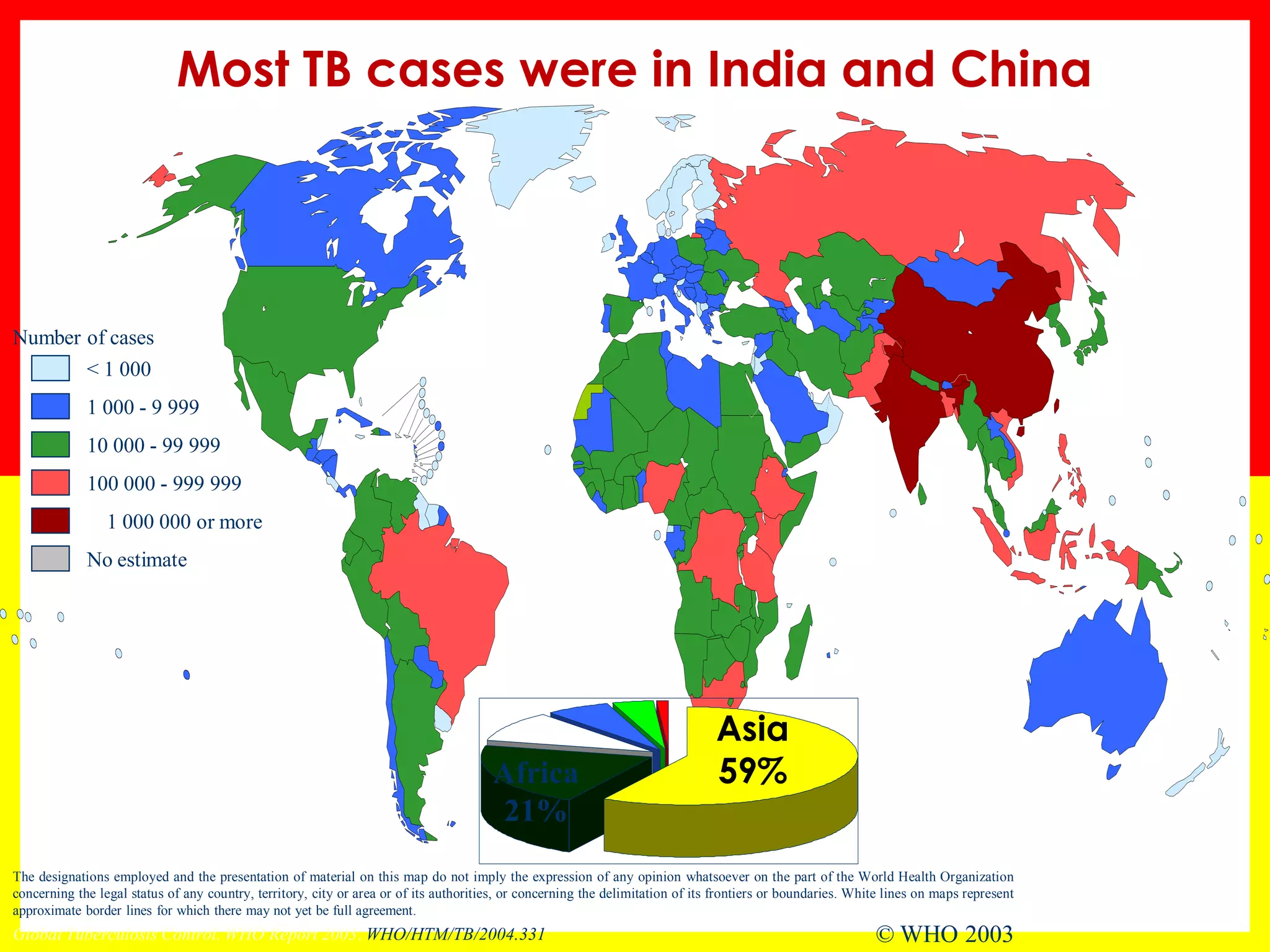
Most TB cases were in India and China 
The designations employed and the presentation of material on this map do not imply the expression of any opinion whatsoever on the part of the World Health Organization 
concerning the legal status of any country, territory, city or area or of its authorities, or concerning the delimitation of its frontiers or boundaries. White lines on maps represent 
approximate border lines for which there may not yet be full agreement. 
© WHO 2003 
10 000 - 99 999 
100 000 - 999 999 
< 1 000 
1 000 - 9 999 
No estimate 
Number of cases 
1 000 000 or more 
Asia 
Africa 59% 
21% 
Global Tuberculosis Control. WHO Report 2003. WHO/HTM/TB/2004.331
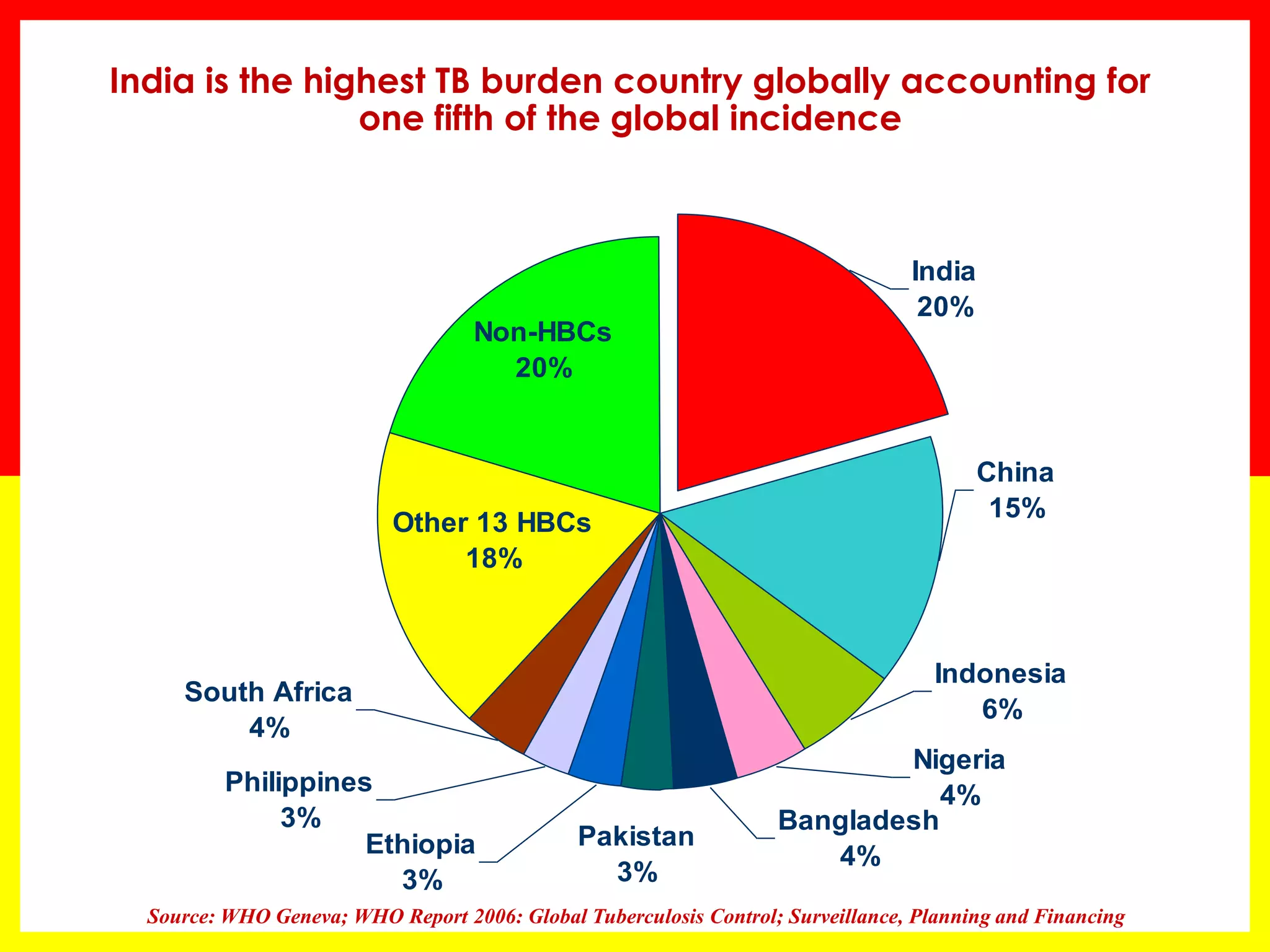
India is the highest TB burden country globally accounting for 
one fifth of the global incidence 
Non-HBCs 
20% 
Ethiopia 
3% 
Philippines 
3% 
South Africa 
4% 
Bangladesh 
4% 
Pakistan 
3% 
Nigeria 
4% 
Indonesia 
6% 
China 
15% 
India 
20% 
Other 13 HBCs 
18% 
Source: WHO Geneva; WHO Report 2006: Global Tuberculosis Control; Surveillance, Planning and Financing
Global impact of TB 
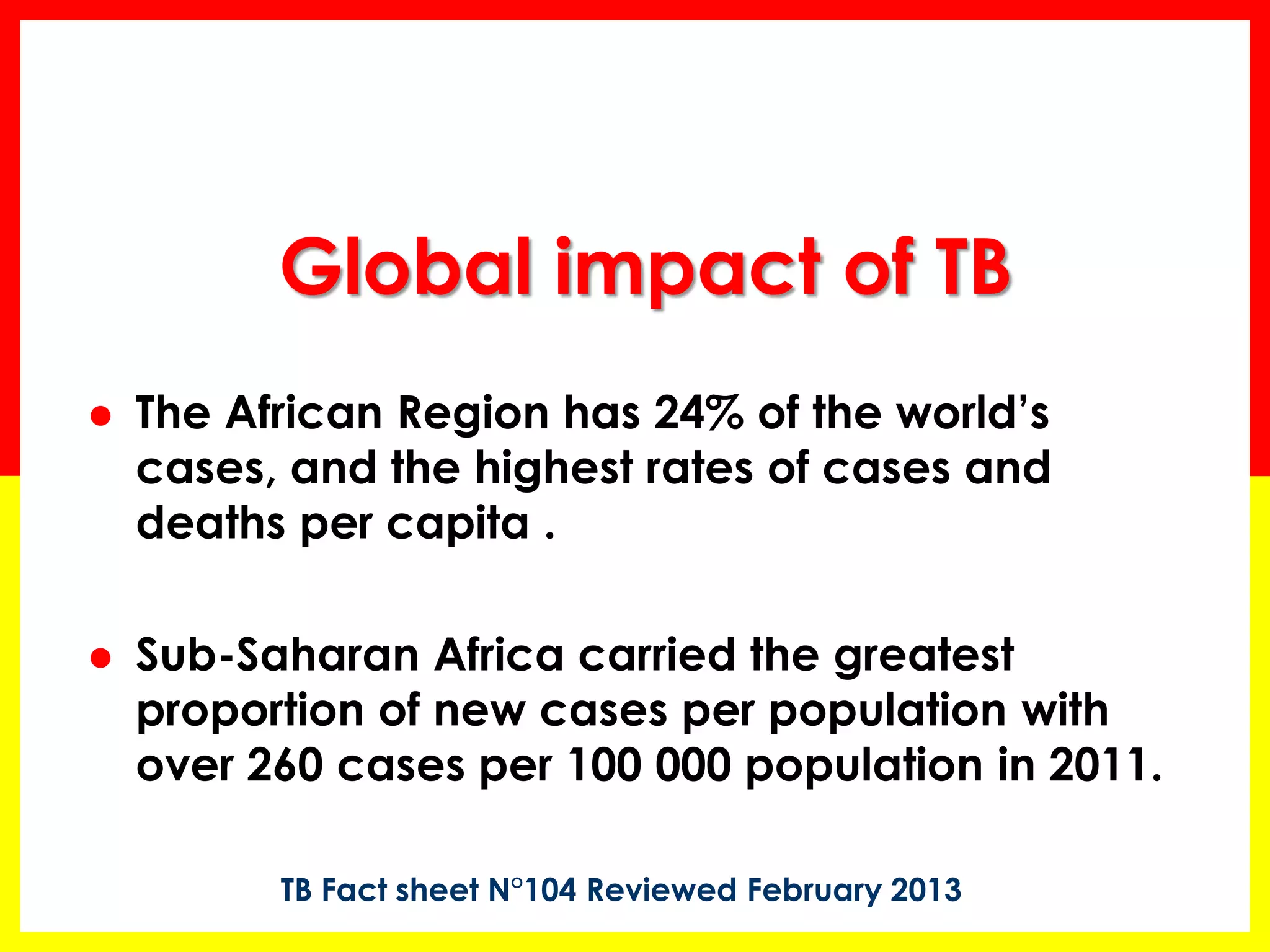
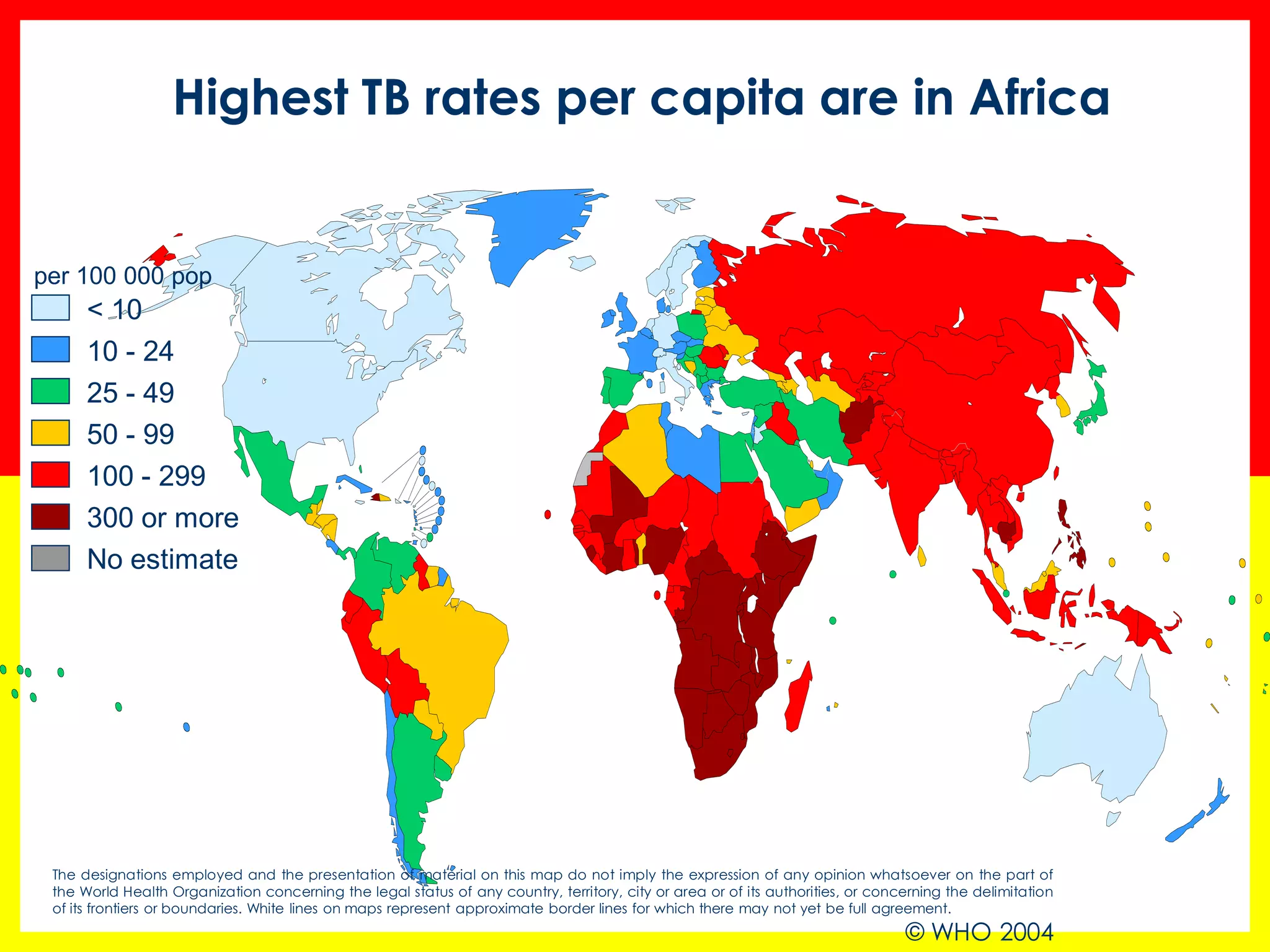
The African Region has 24% of the world’s cases, and the highest rates of cases and deaths per capita . 
Sub-Saharan Africa carried the greatest proportion of new cases per population with over 260 cases per 100 000 population in 2011. 
TB Fact sheet N°104 Reviewed February 2013
25 - 49 
50 - 99 
100 - 299 
< 10 
10 - 24 
No estimate 
per 100 000 pop 
300 or more 
The designations employed and the presentation of material on this map do not imply the expression of any opinion whatsoever on the part of 
the World Health Organization concerning the legal status of any country, territory, city or area or of its authorities, or concerning the delimitation 
of its frontiers or boundaries. White lines on maps represent approximate border lines for which there may not yet be full agreement. 
© WHO 2004 
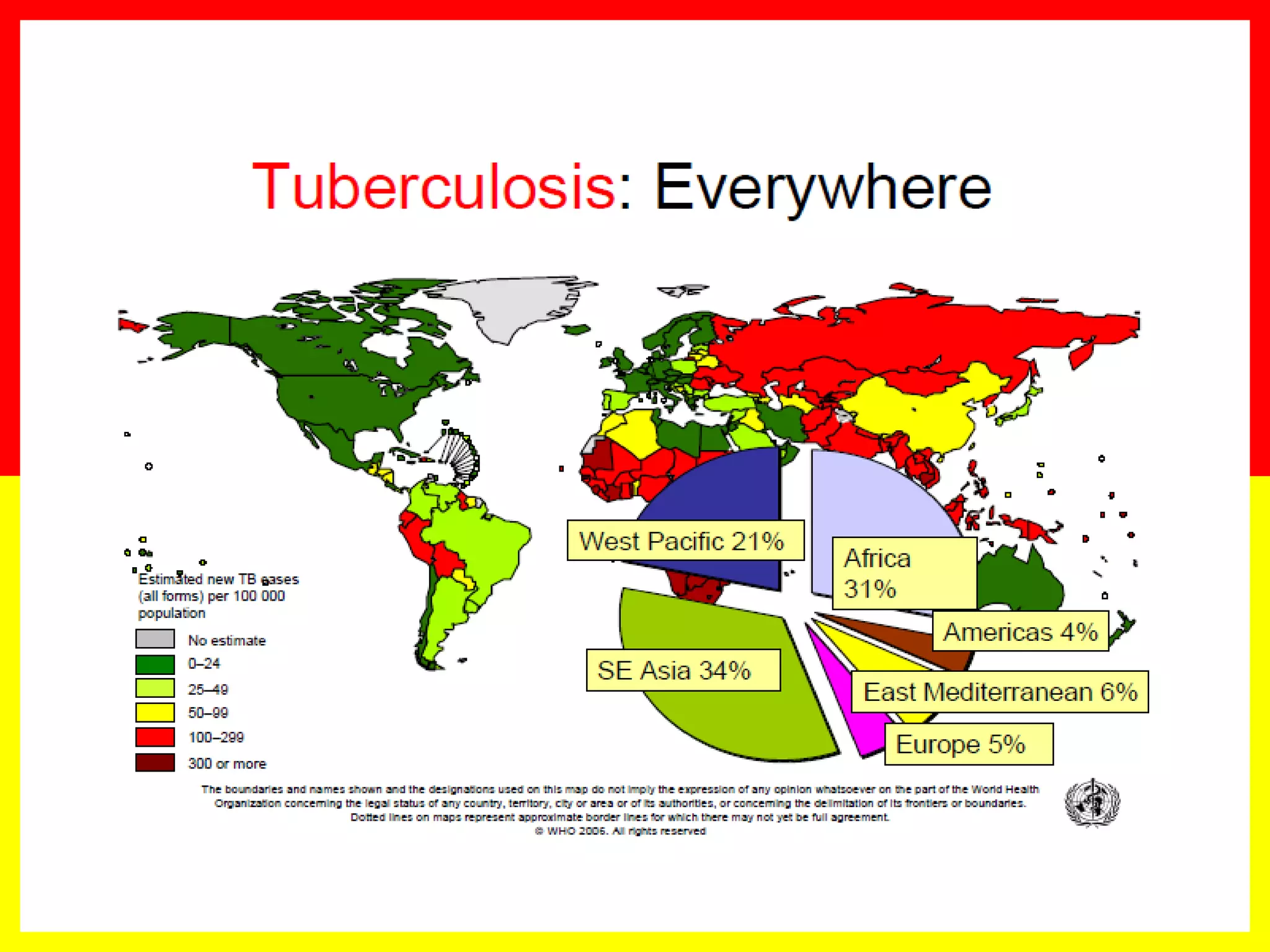
Highest TB rates per capita are in Africa
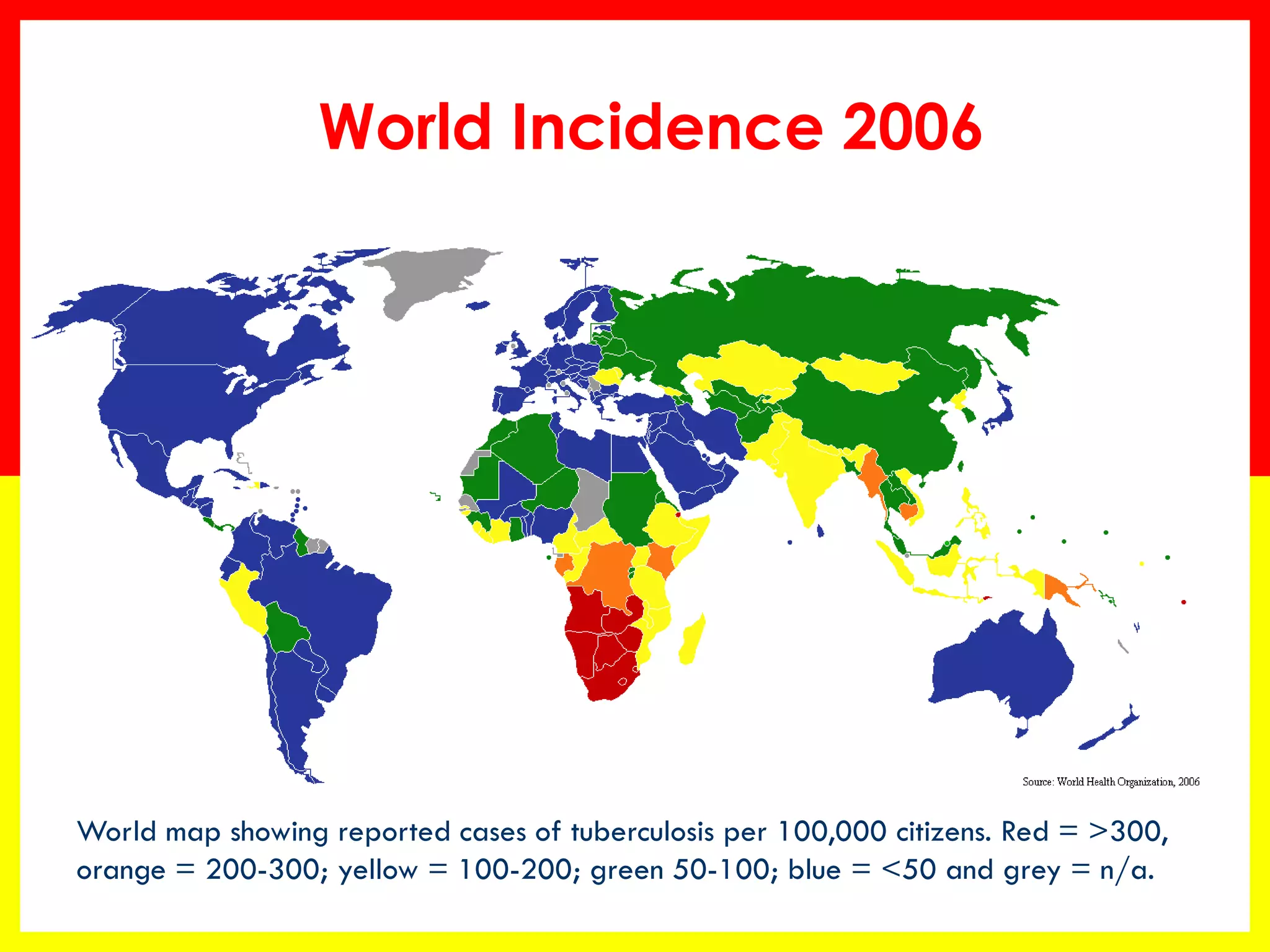
World Incidence 2006 
World map showing reported cases of tuberculosis per 100,000 citizens. Red = >300, orange = 200-300; yellow = 100-200; green 50-100; blue = <50 and grey = n/a.
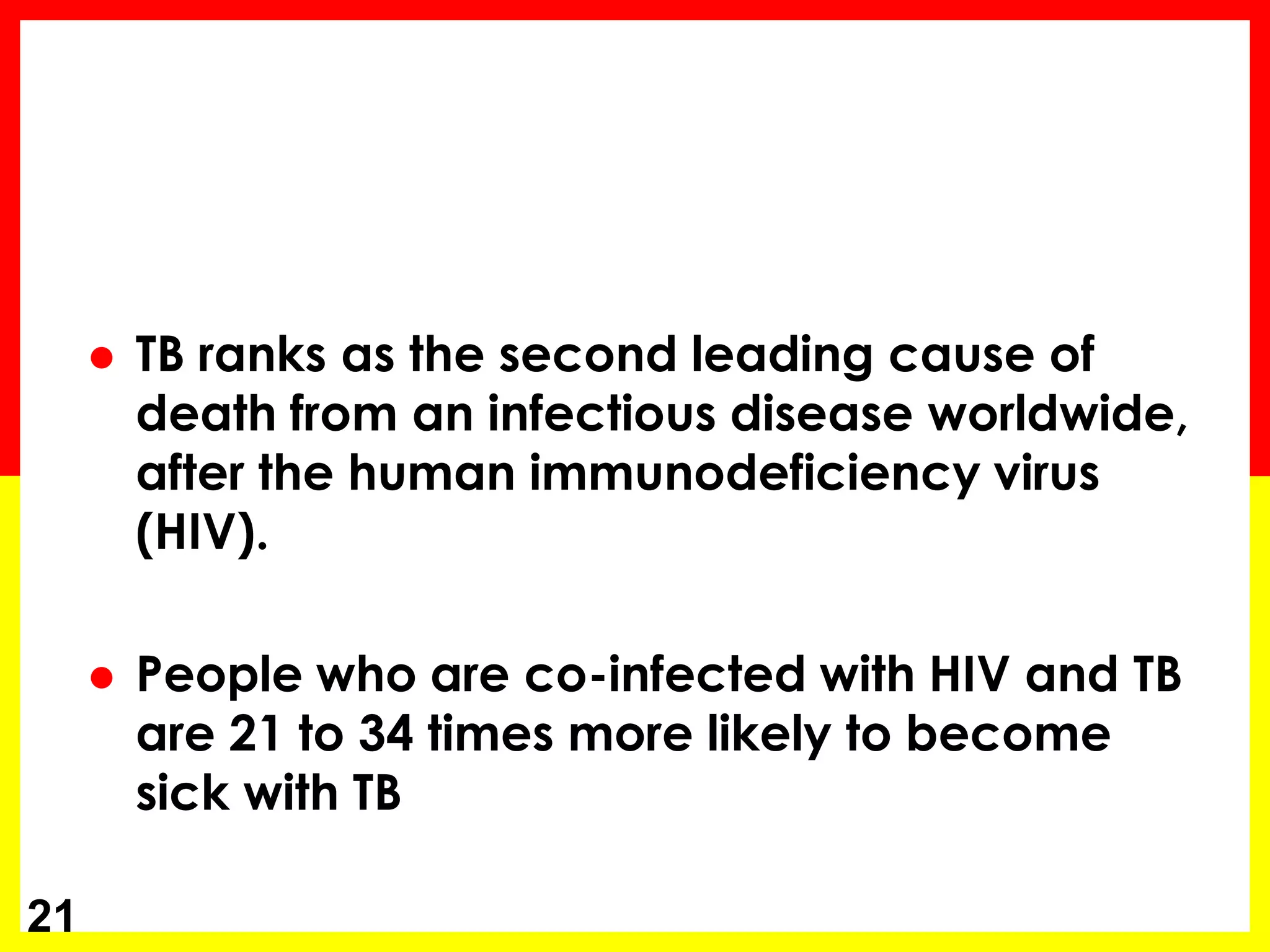
TB ranks as the second leading cause of death from an infectious disease worldwide, after the human immunodeficiency virus (HIV). 
People who are co-infected with HIV and TB are 21 to 34 times more likely to become sick with TB 
21
Total: 33.4 million (31.1 – 35.8 million) Western & Central Europe 850 000 [710 000 – 970 000] 
Middle East & North Africa 
310 000 
[250 000 – 380 000] 
Sub-Saharan Africa 
22.4 million 
[20.8 – 24.1 million] 
Eastern Europe & Central Asia 
1.5 million 
[1.4 – 1.7 million] 
South & South-East Asia 
3.8 million 
[3.4 – 4.3 million] 
Oceania 
59 000 
[51 000 – 68 000] 
North America 
1.4 million 
[1.2 – 1.6 million] 
Latin America 
2.0 million 
[1.8 – 2.2 million] 
East Asia 
850 000 
[700 000 – 1.0 million] 
Caribbean 
240 000 
[220 000 – 260 000] 
Adults and children estimated to be living with HIV, 2008
Estimated adult and child deaths due to AIDS, 2008 
Western & 
Central Europe 
13 000 
[10 000 – 15 000] 
Middle East & North Africa 
20 000 
[15 000 – 25 000] 
Sub-Saharan Africa 
1.4 million 
[1.1 – 1.7 million] 
Eastern Europe & Central Asia 
87 000 
[72 000 – 110 000] 
South & South-East Asia 
270 000 
[220 000 – 310 000] 
Oceania 
2000 
[1100 – 3100] 
North America 
25 000 
[20 000 – 31 000] 
Latin America 
77 000 
[66 000 – 89 000] 
East Asia 
59 000 
[46 000 – 71 000] 
Caribbean 
12 000 
[9300 – 14 000] 
Total: 2.0 million (1.7 – 2.4 million)
TB is the leading killer of people living with HIV 
About one in four deaths among people with HIV is due to TB. 
Worldwide the largest amount of HIV + TB patients are seen in Sub-Saharan Africa with South Africa and Kenya having the largest proportion
In some regions of Africa, up to 80% of adult TB patients are HIV-infected 
Almost 80% of TB cases among people living with HIV reside in Africa. 
25
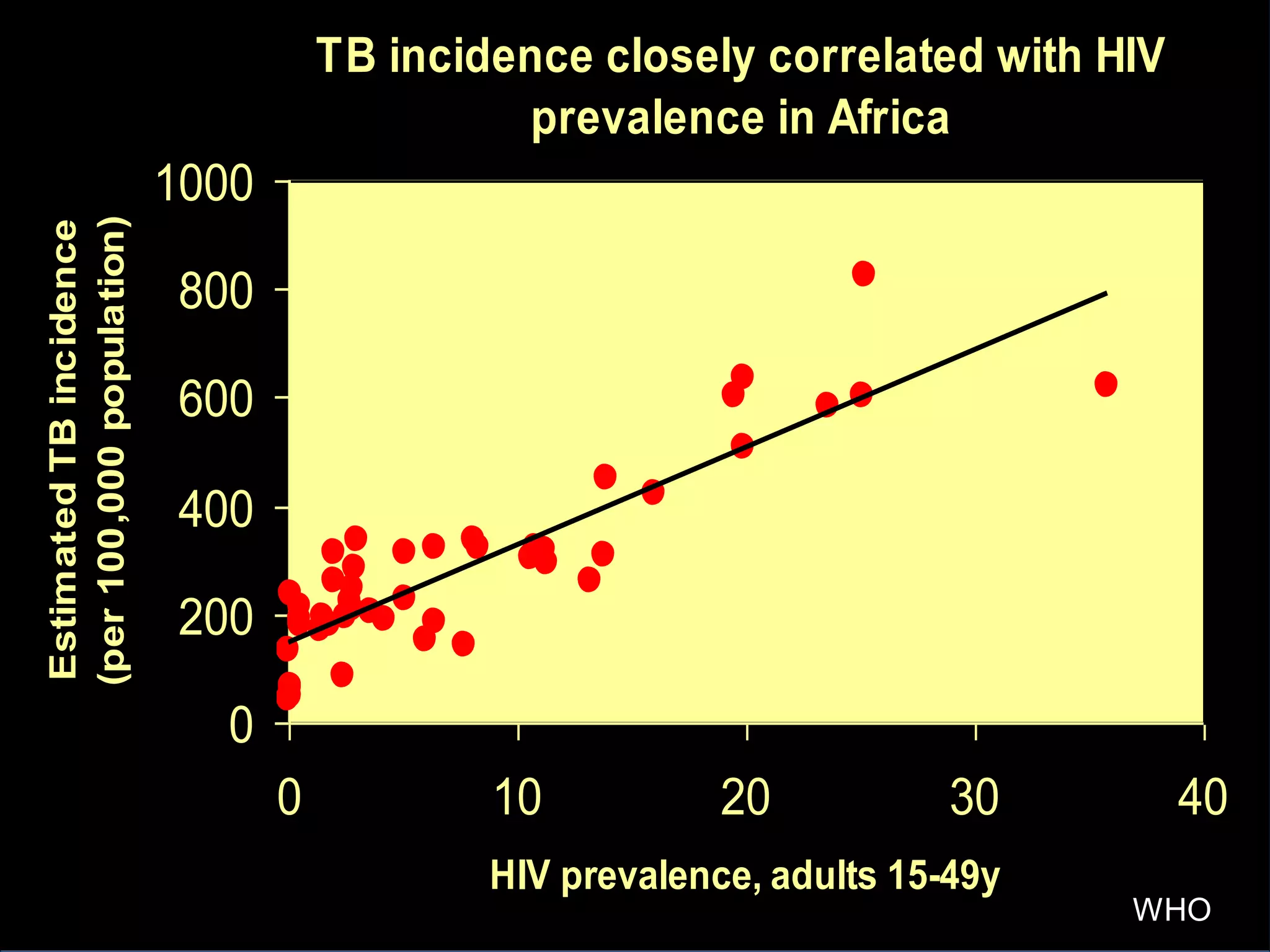
TB incidence closely correlated with HIV 
prevalence in Africa 
0 
200 
400 
600 
800 
1000 
0 10 20 30 40 
HIV prevalence, adults 15-49y 
Estimated TB incidence 
(per 100,000 population) 
WHO
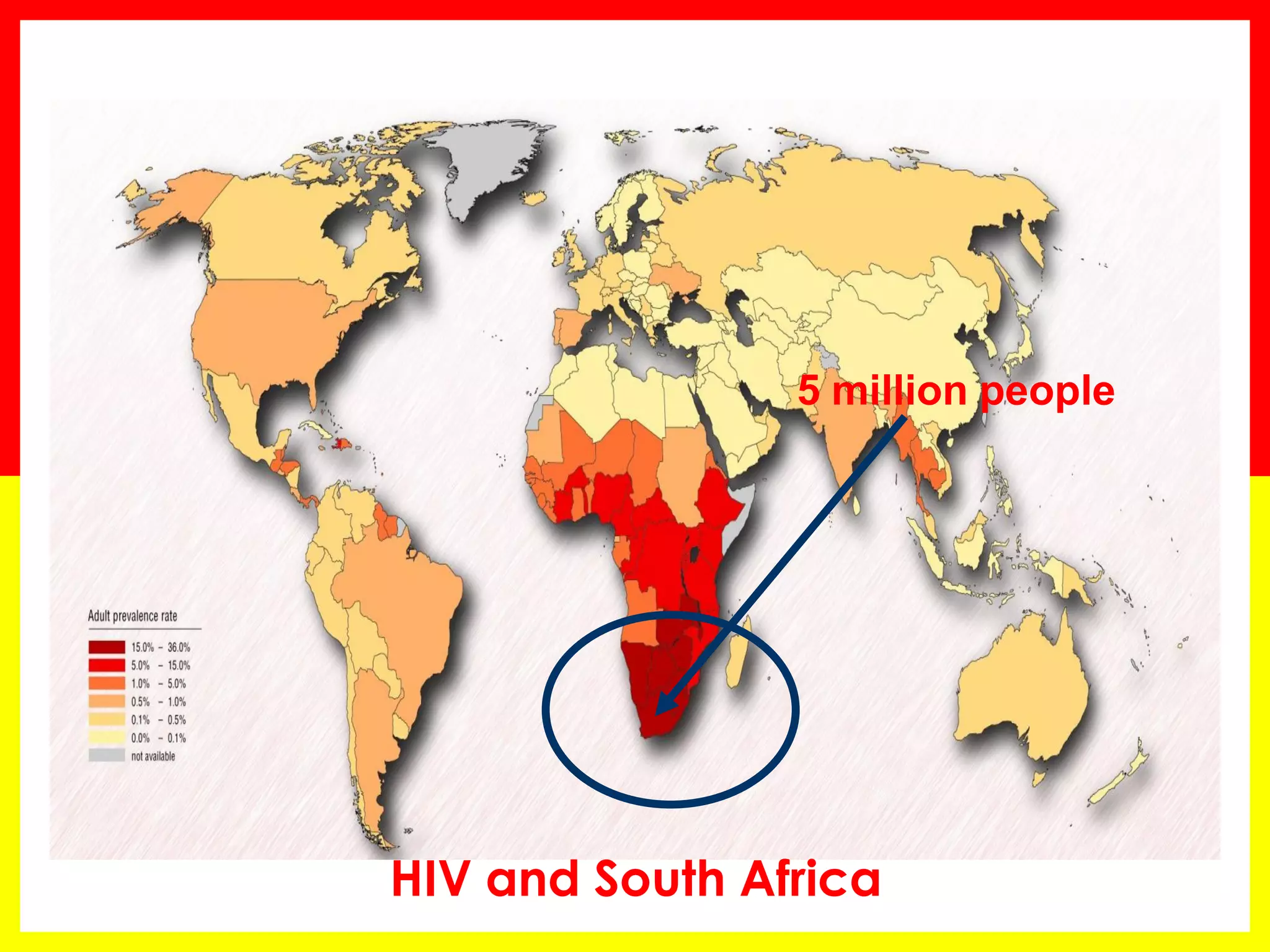
5 million people 
HIV and South Africa
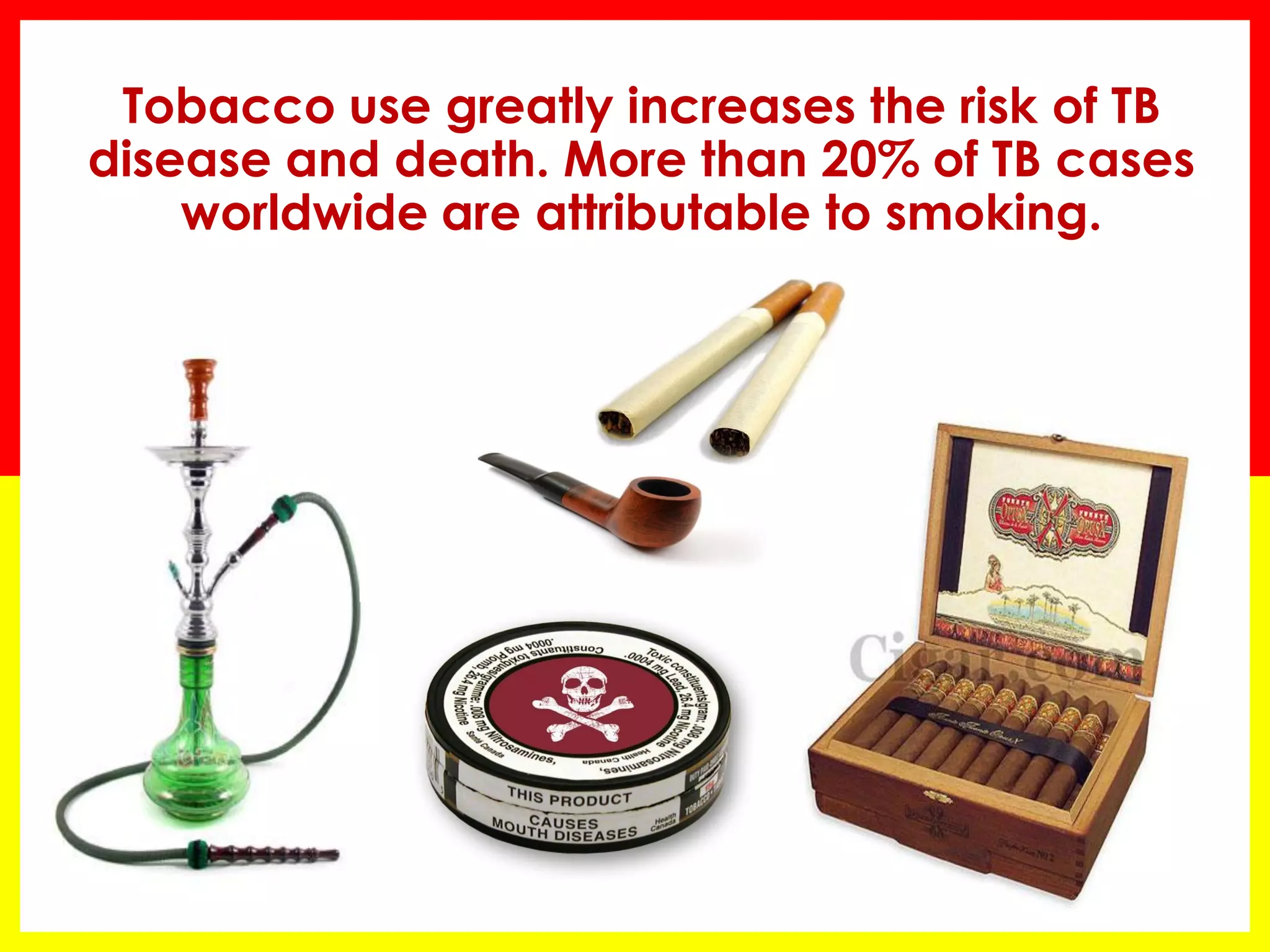
Tobacco use greatly increases the risk of TB disease and death. More than 20% of TB cases worldwide are attributable to smoking.
Magnitude Of TB Problem in Egypt
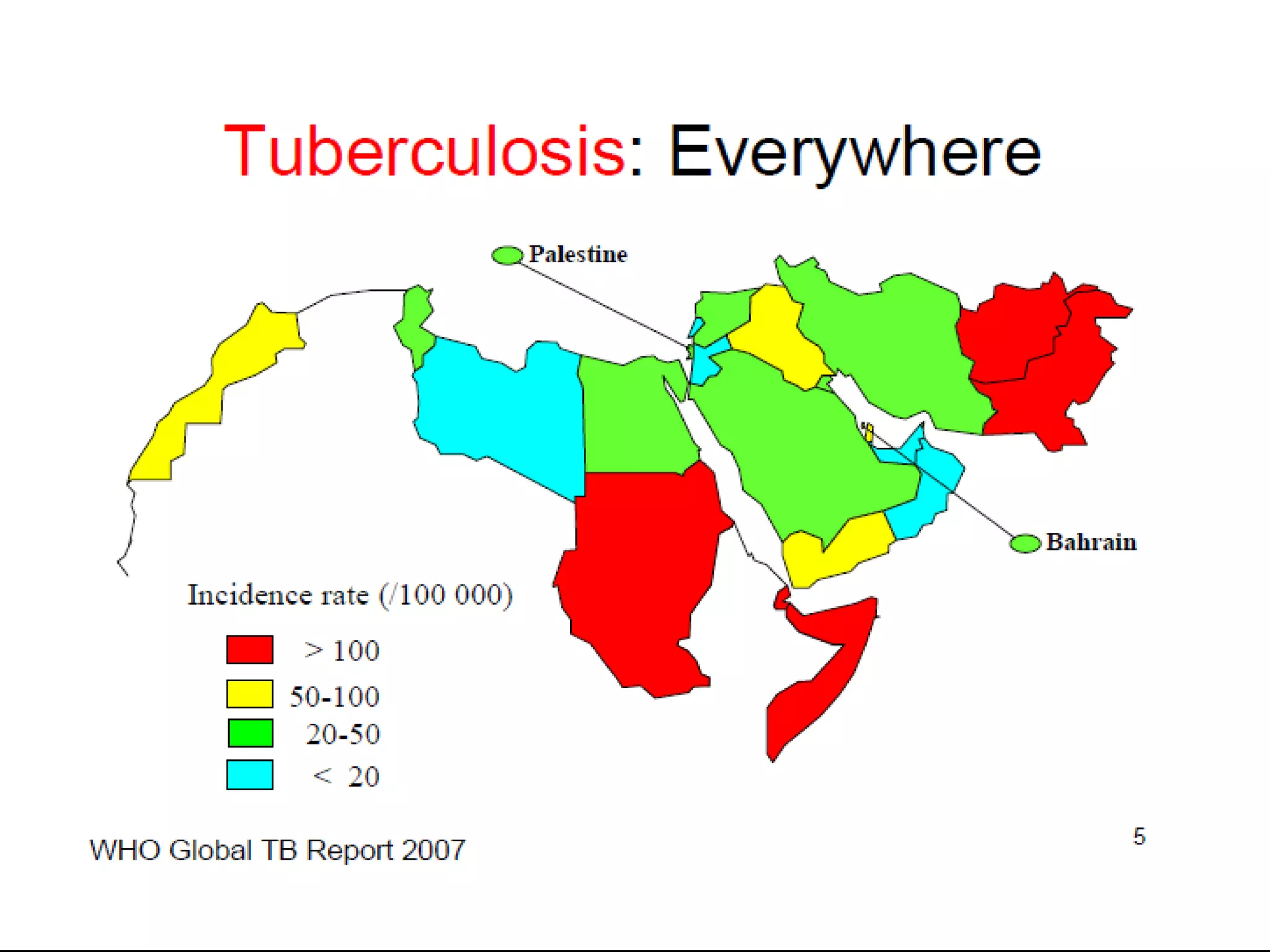
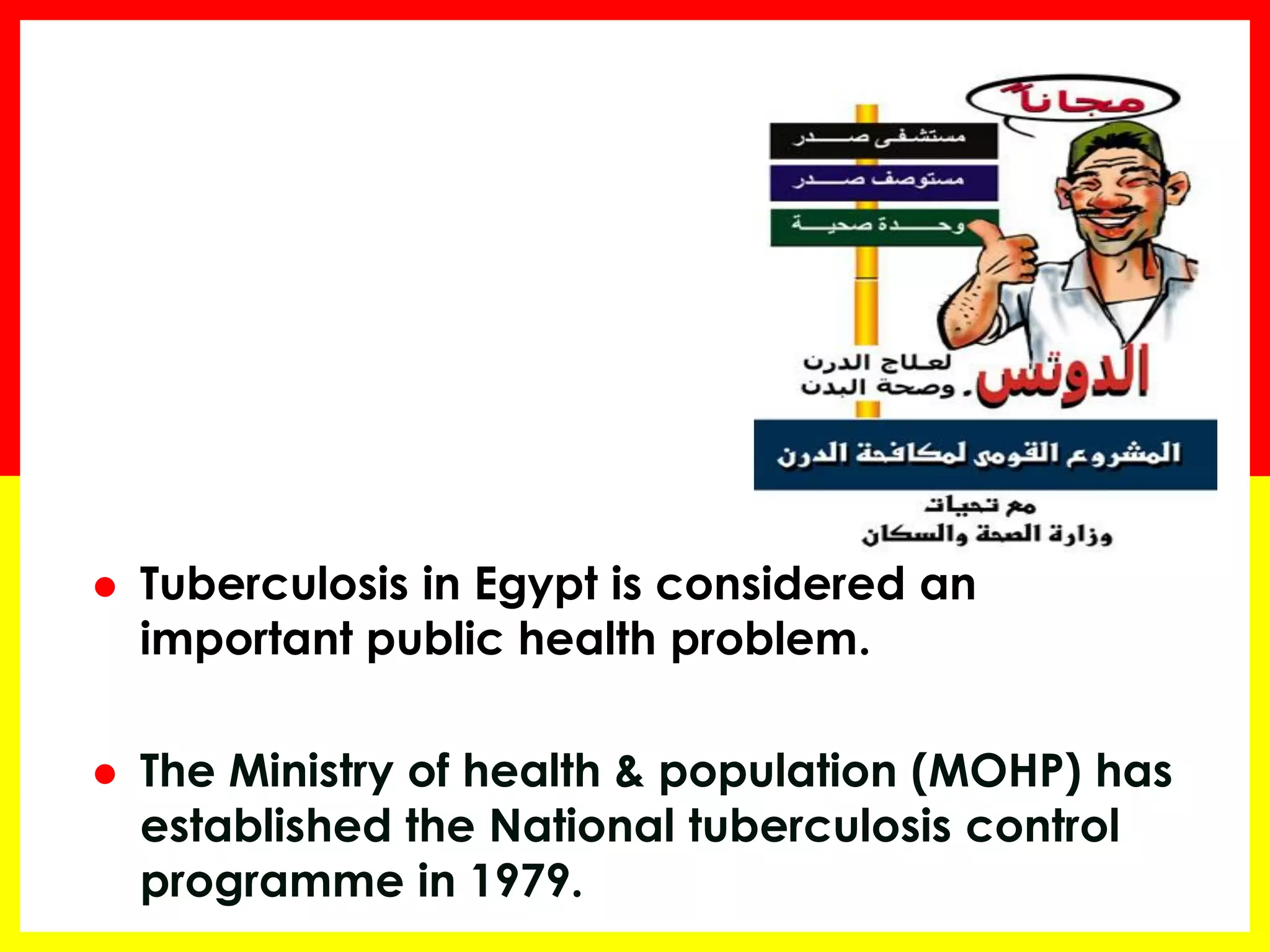
Tuberculosis in Egypt is considered an important public health problem. 
The Ministry of health & population (MOHP) has established the National tuberculosis control programme in 1979.
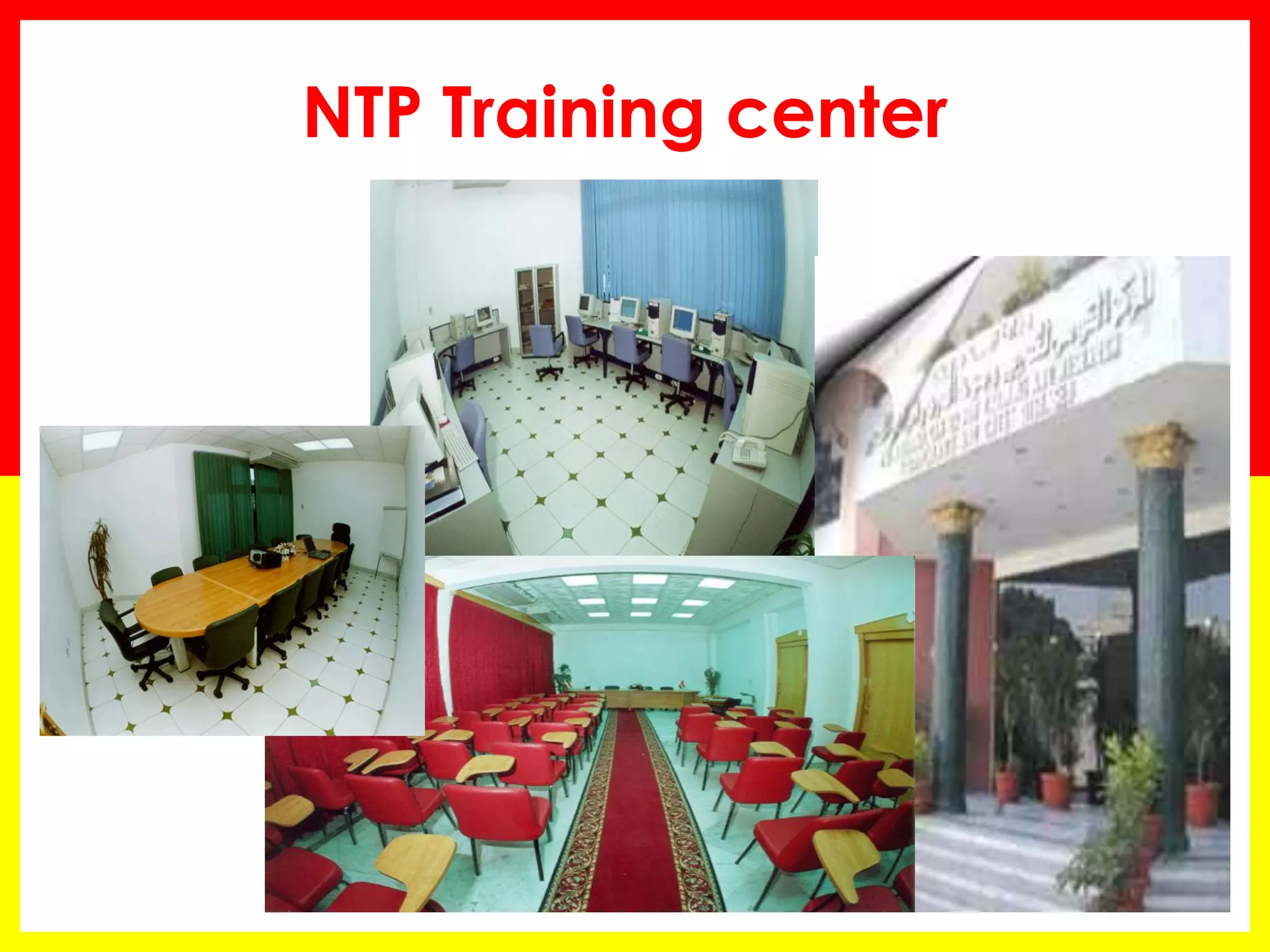
NTP Training center
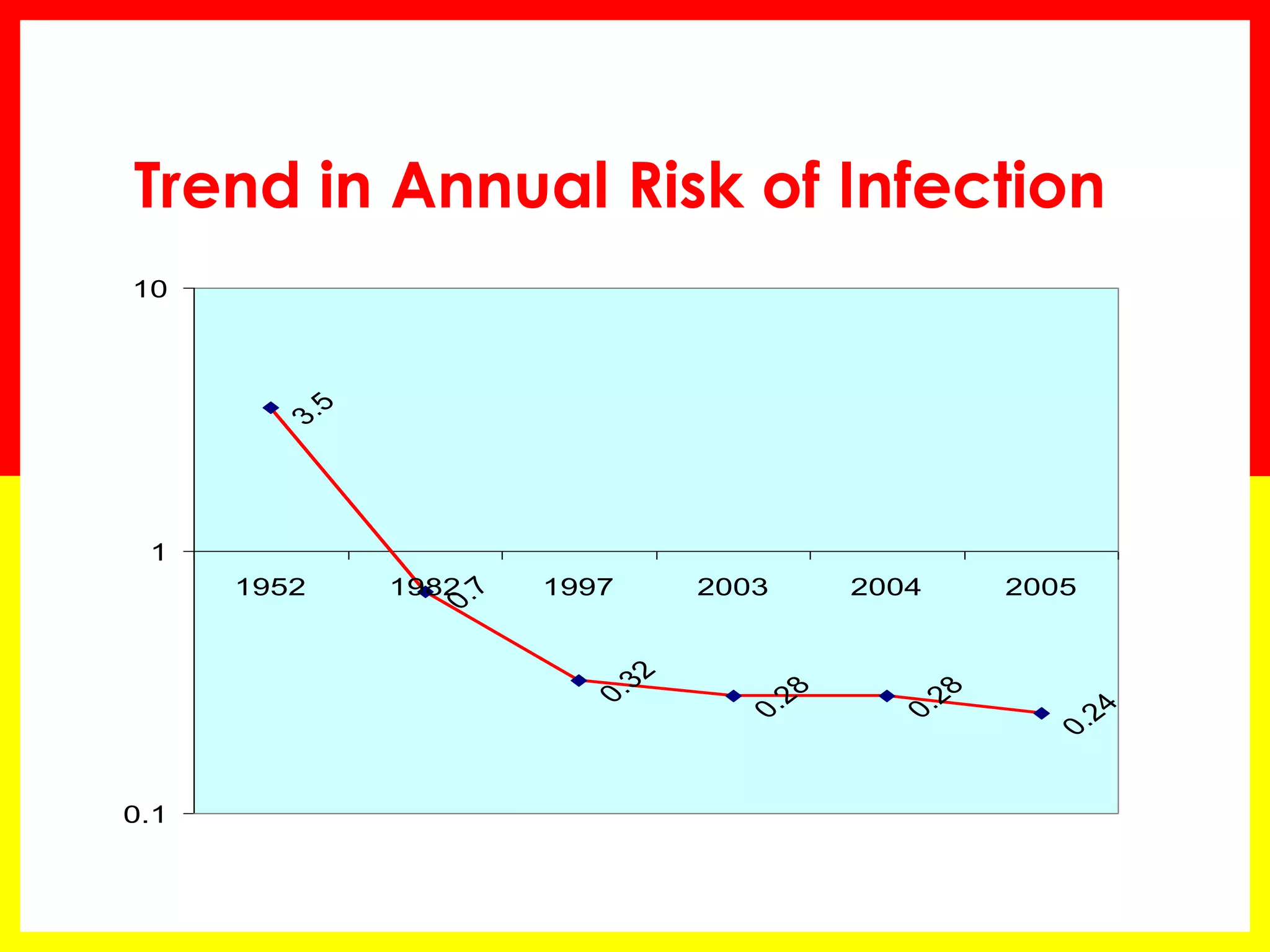
In Egypt there were three tuberculin surveys: 
1951 and incidence was 350/100,000 of population. 1982 and the incidence was 70/100,000 of population. 
1997 and the incidence was 32/100,000 of population. 
39
Trend in Annual Risk of Infection 
0.240.280.280.73.50.32 0.1110195219821997200320042005
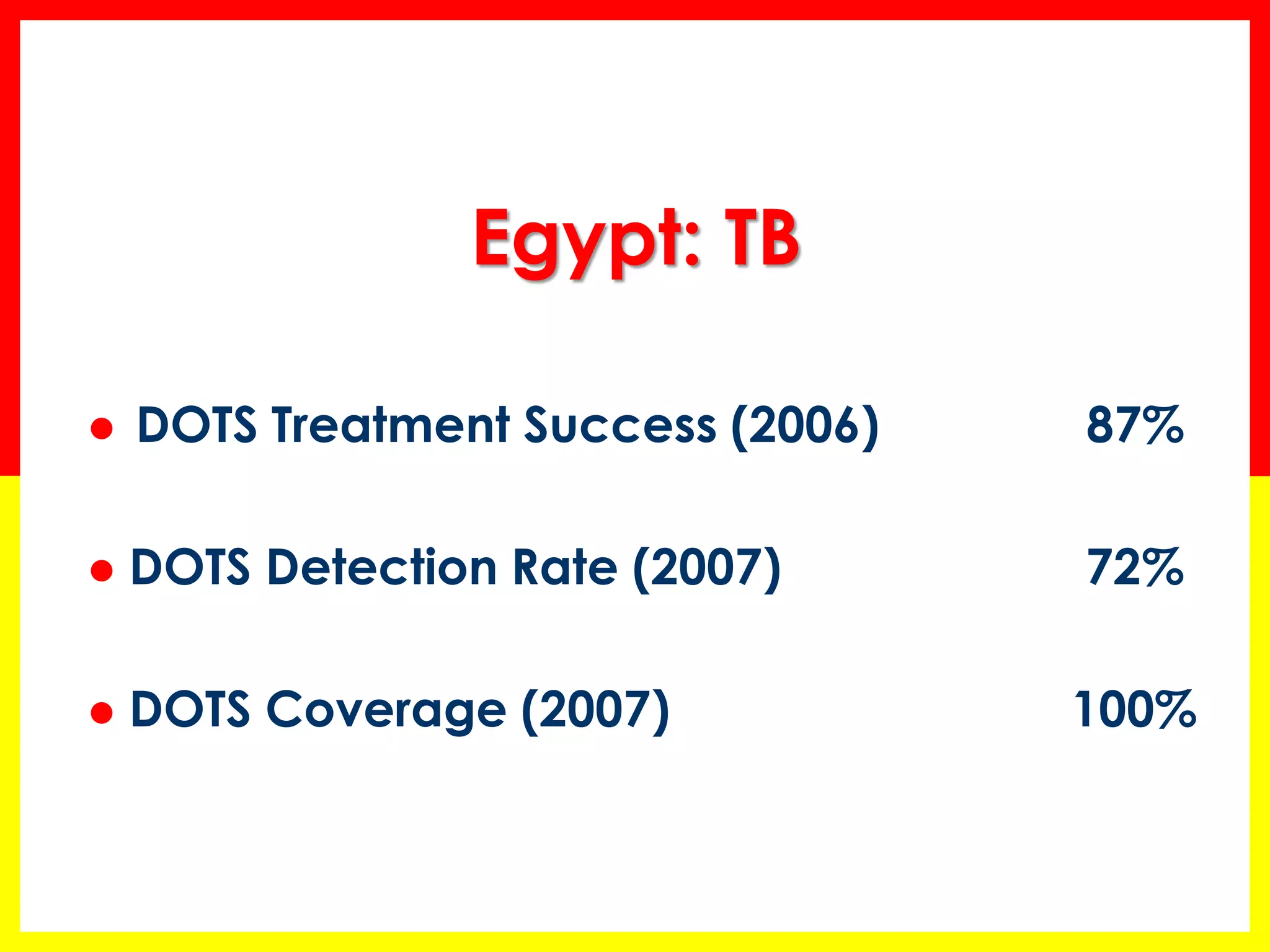
Egypt: TB 
DOTS Treatment Success (2006) 87% 
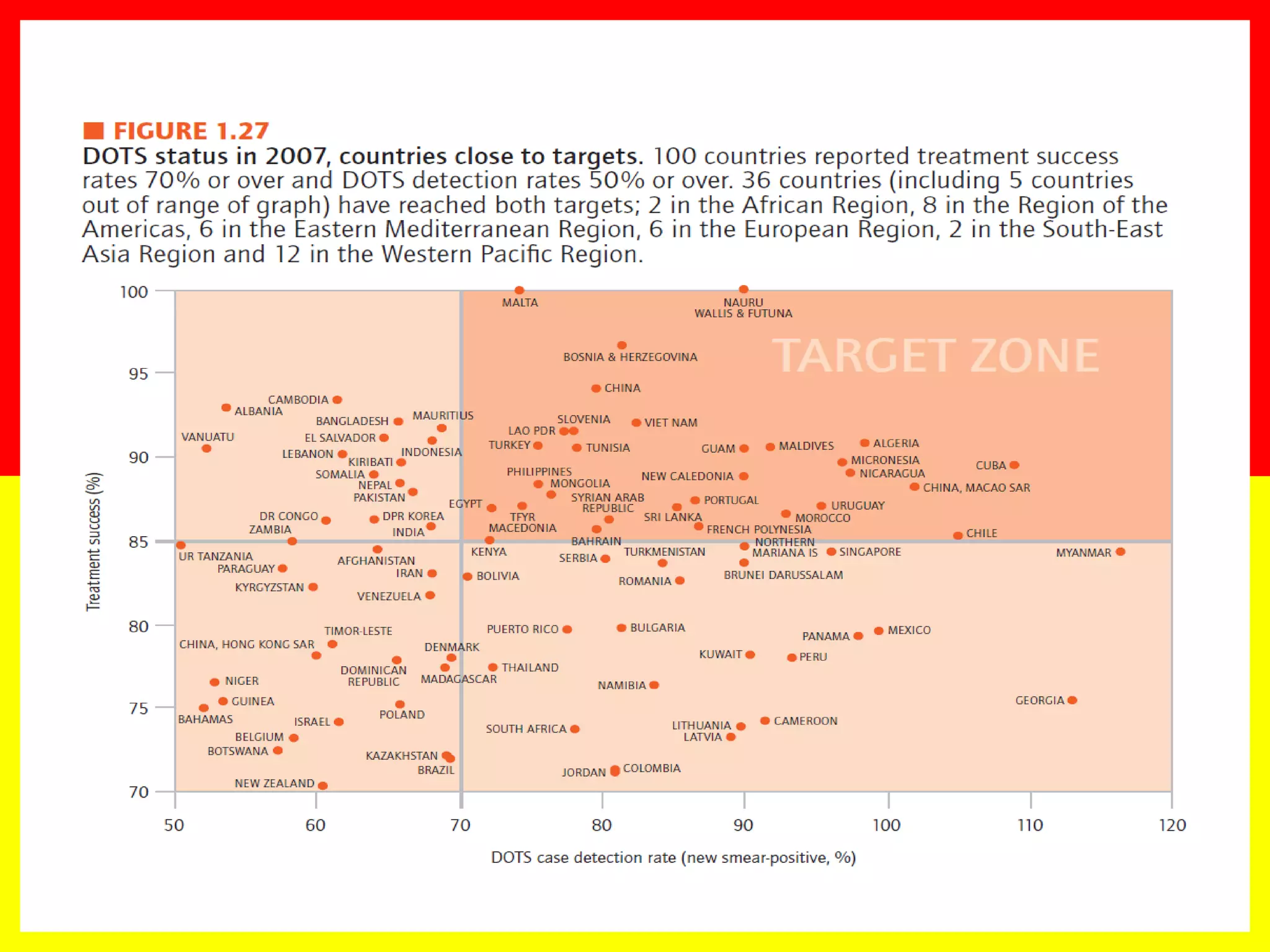
 DOTS Detection Rate (2007) 72% 
 DOTS Coverage (2007) 100%
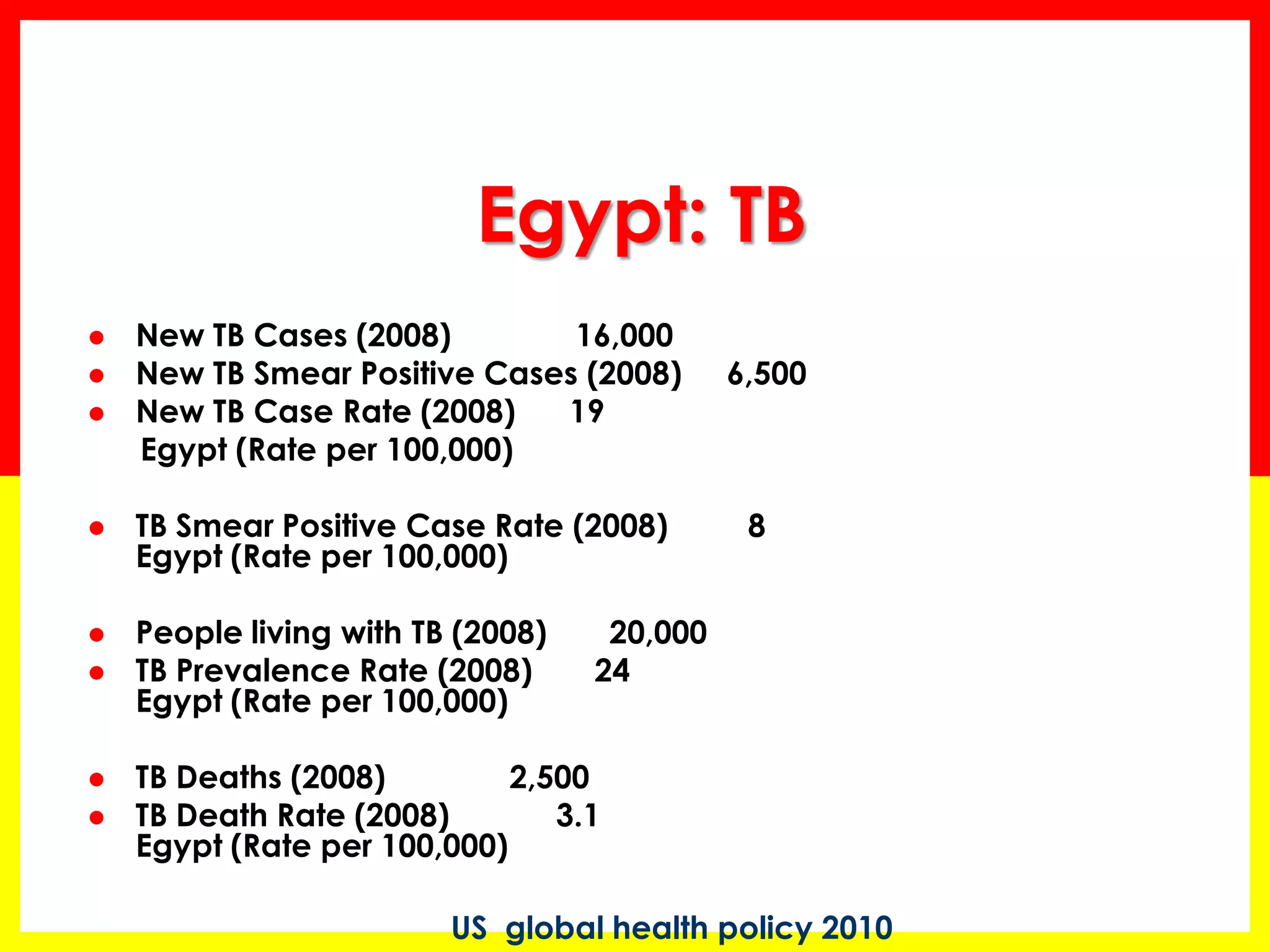
Egypt: TB 
New TB Cases (2008) 16,000 
New TB Smear Positive Cases (2008) 6,500 
New TB Case Rate (2008) 19 
Egypt (Rate per 100,000) 
TB Smear Positive Case Rate (2008) 8 Egypt (Rate per 100,000) 
People living with TB (2008) 20,000 
TB Prevalence Rate (2008) 24 Egypt (Rate per 100,000) 
TB Deaths (2008) 2,500 
TB Death Rate (2008) 3.1 Egypt (Rate per 100,000) 
US global health policy 2010
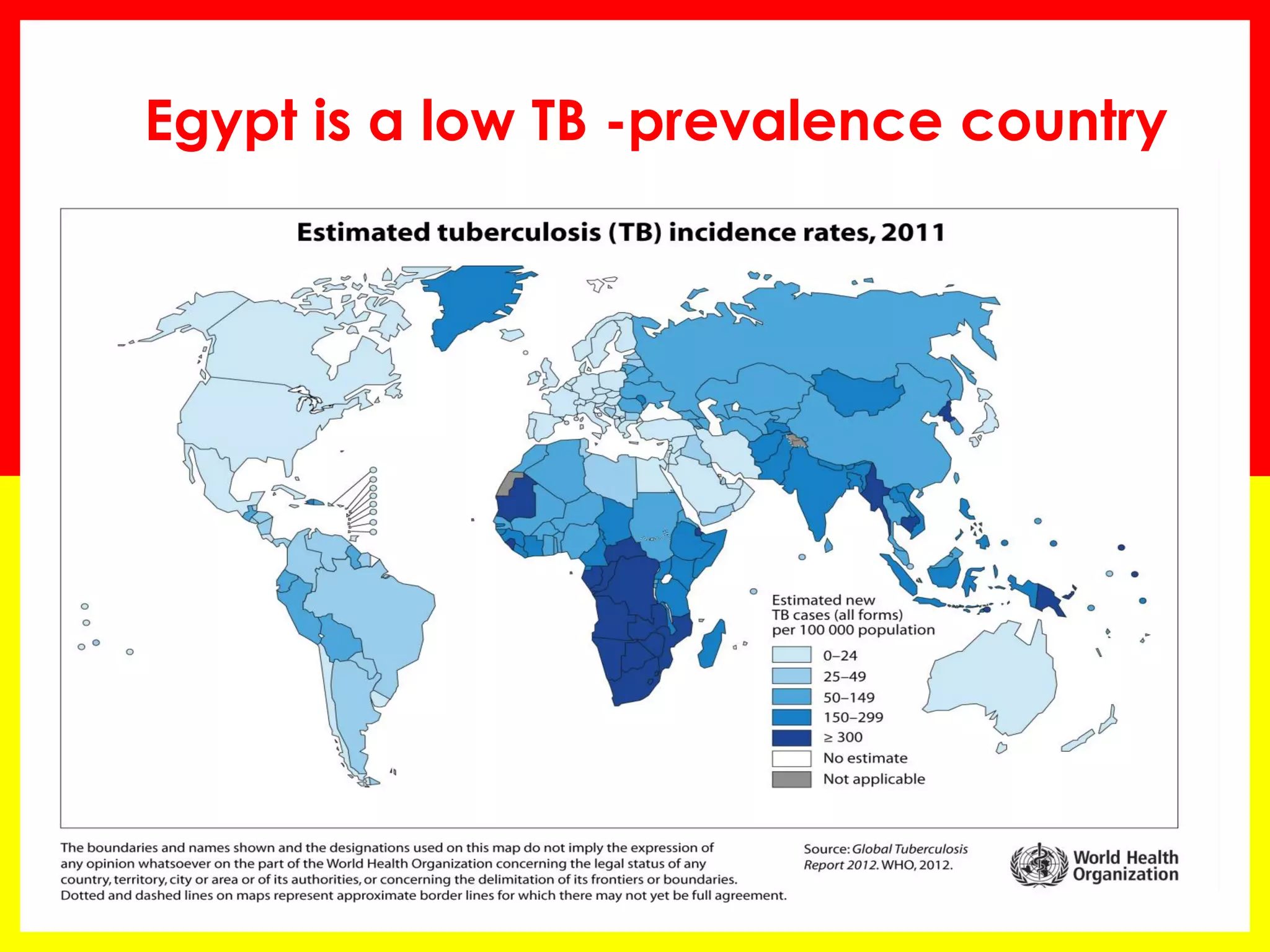
Egypt is a low TB -prevalence country
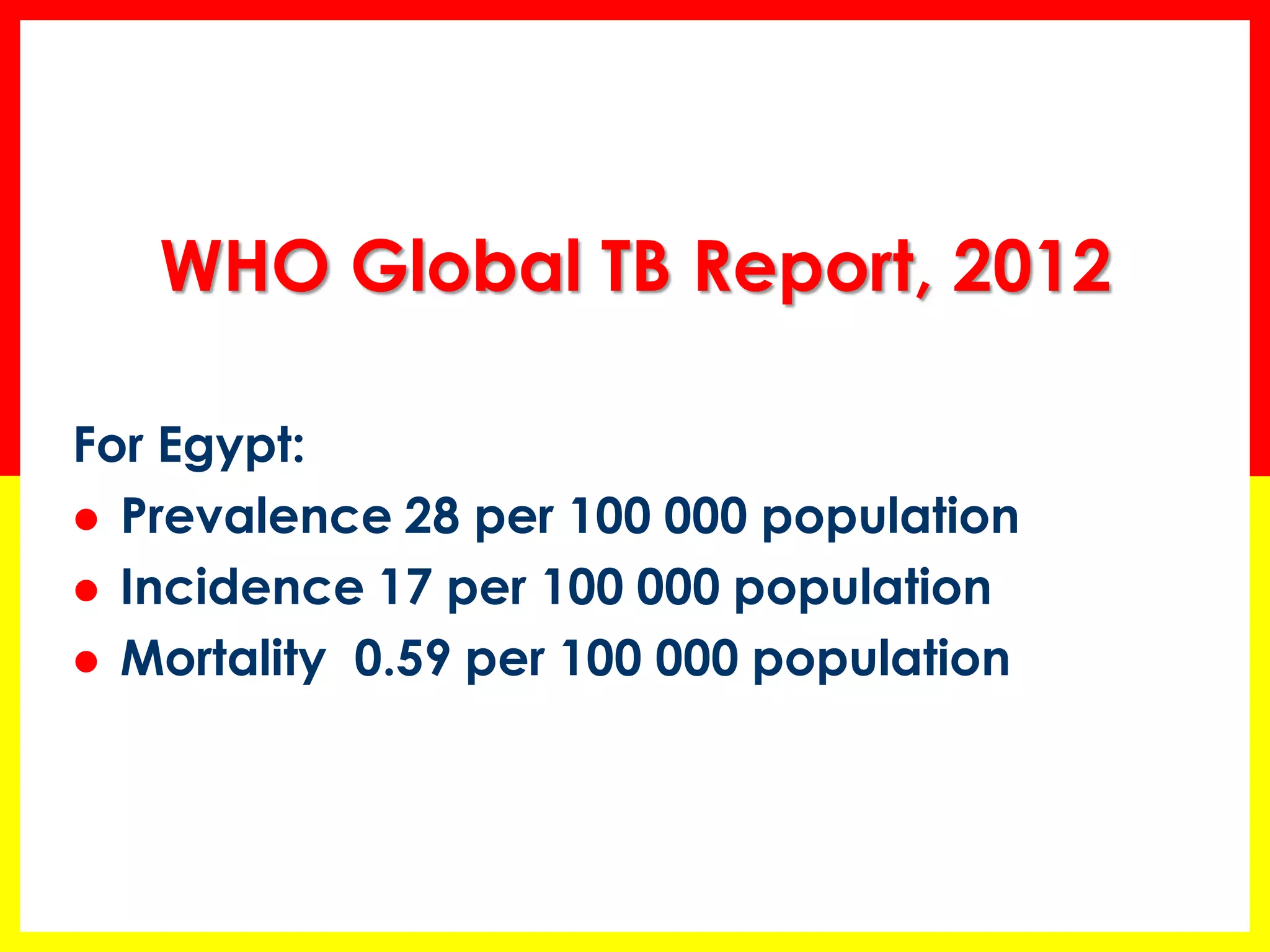
For Egypt: 
Prevalence 28 per 100 000 population 
Incidence 17 per 100 000 population 
Mortality 0.59 per 100 000 population 
WHO Global TB Report, 2012
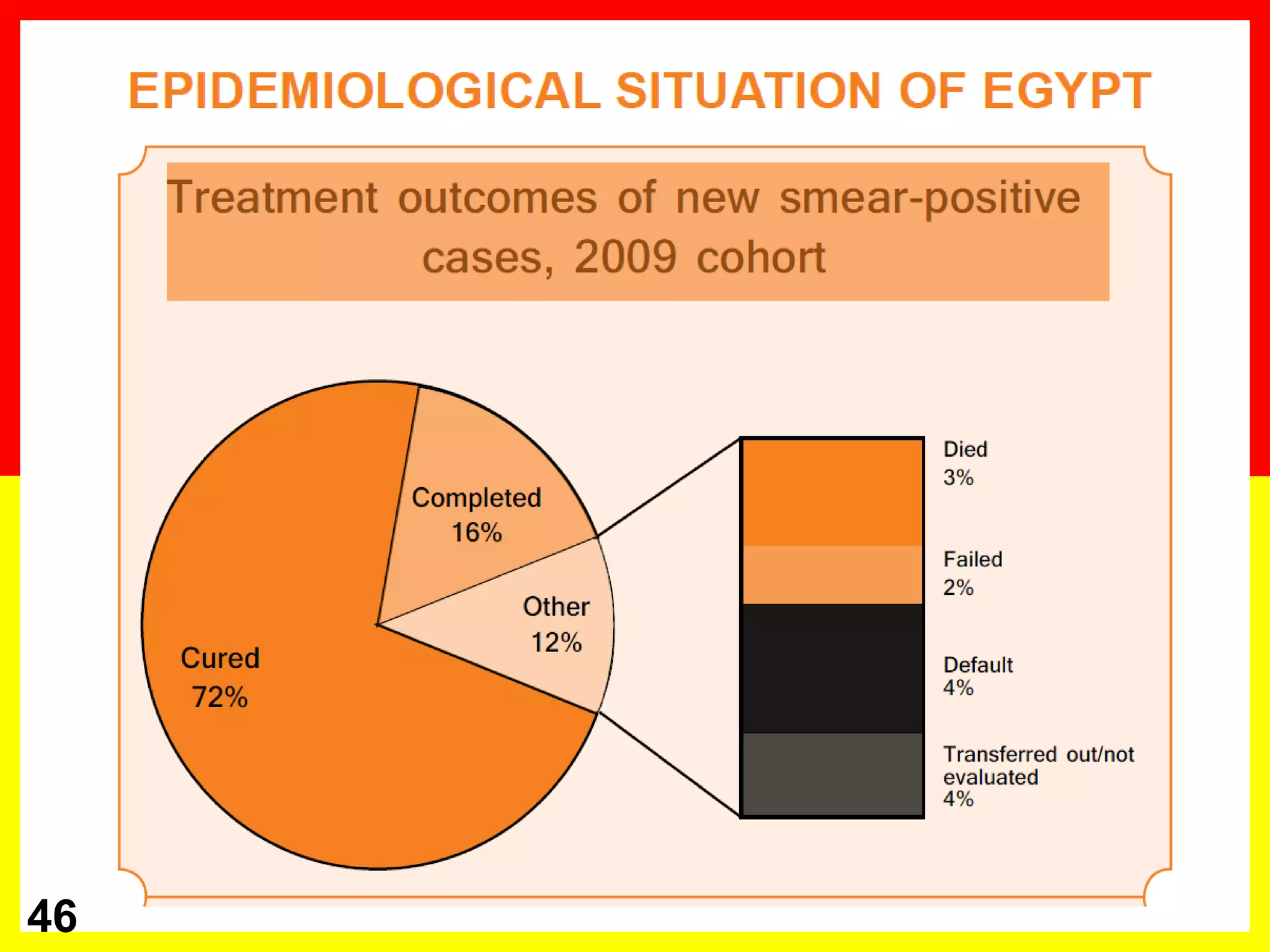
46
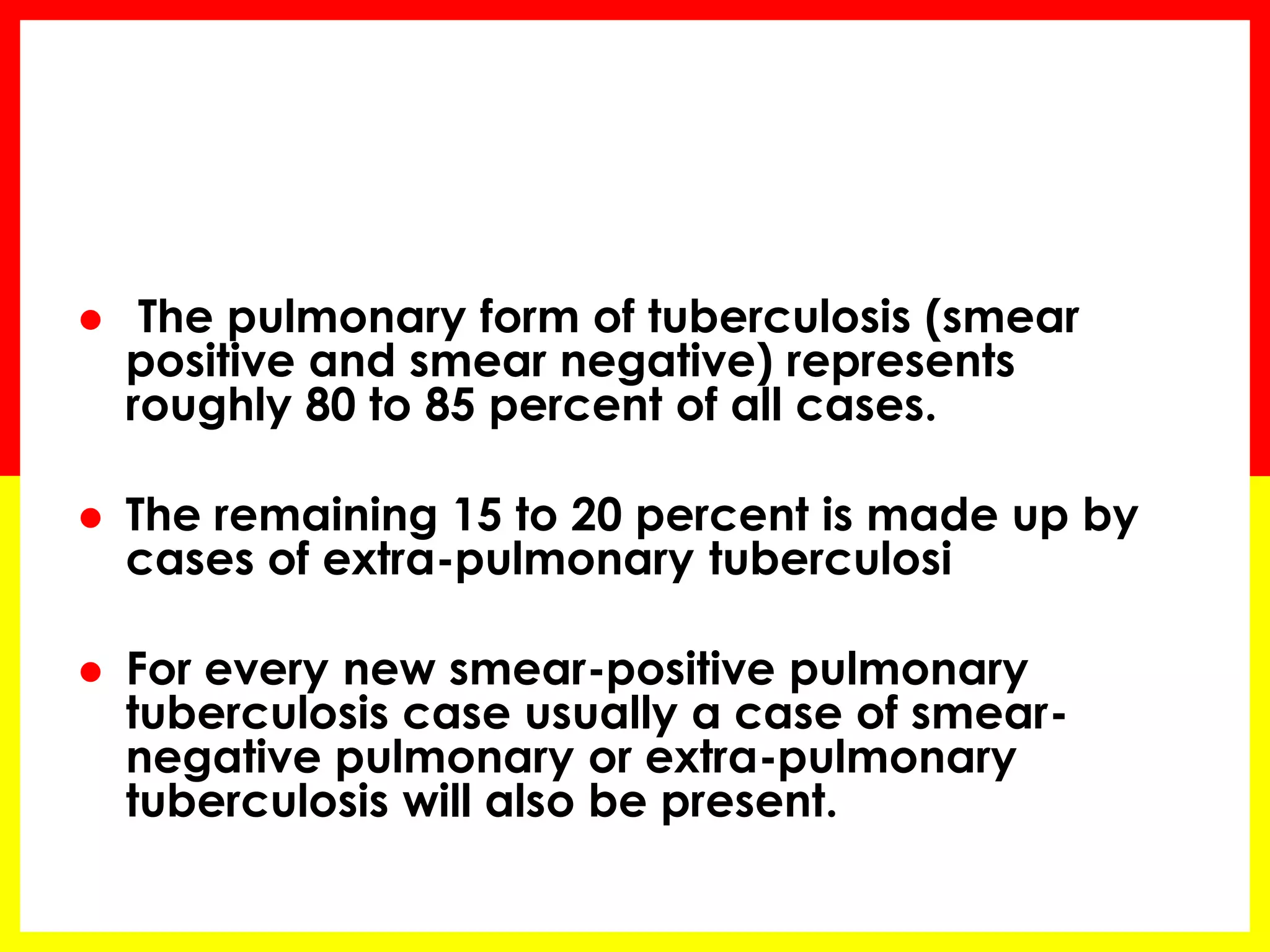
 The pulmonary form of tuberculosis (smear positive and smear negative) represents roughly 80 to 85 percent of all cases. 
The remaining 15 to 20 percent is made up by cases of extra-pulmonary tuberculosi 
For every new smear-positive pulmonary tuberculosis case usually a case of smear- negative pulmonary or extra-pulmonary tuberculosis will also be present.
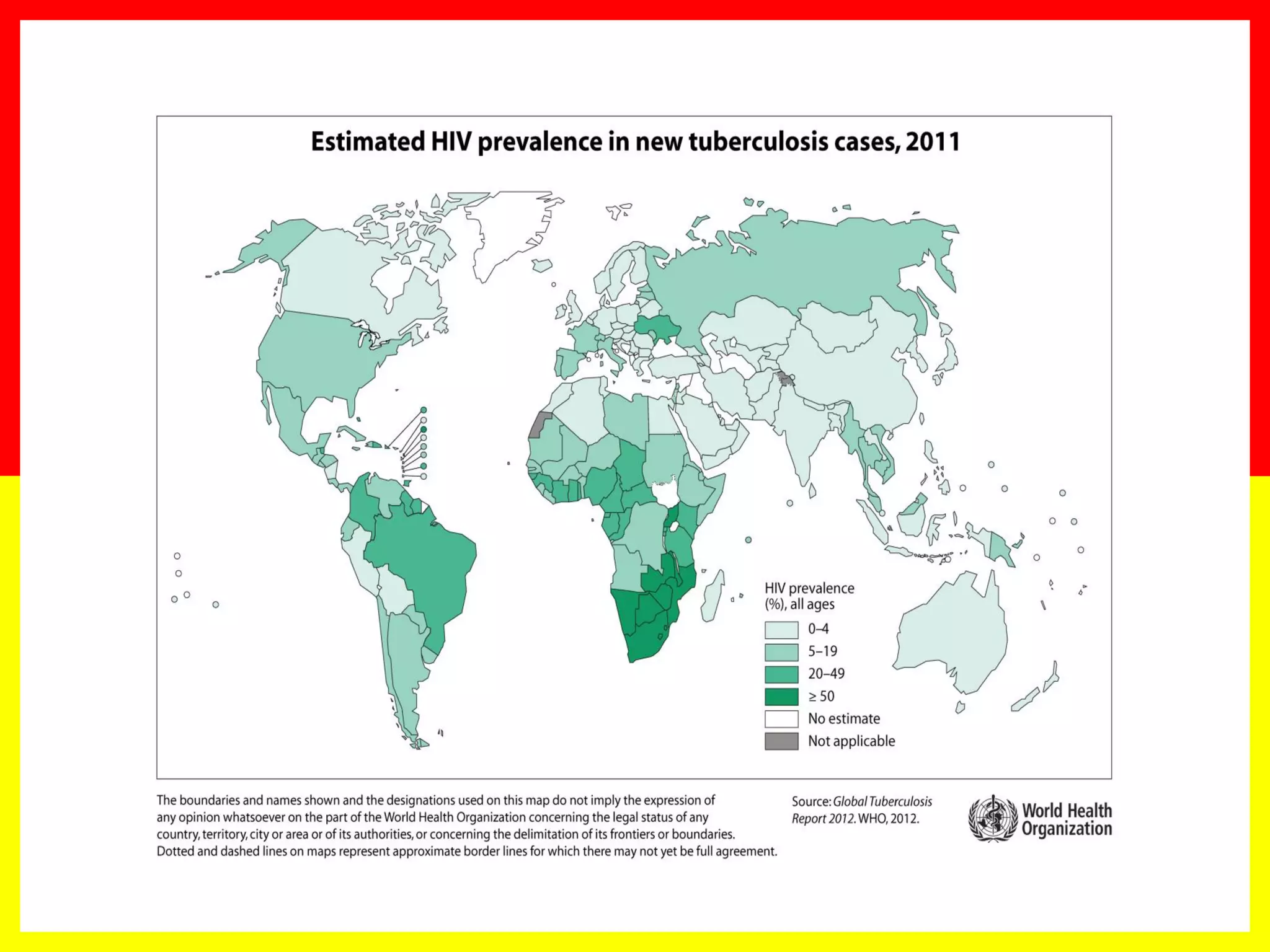
Egypt is a low-HIV-prevalence country 
Currently, less than 1 percent of adult TB patients are HIV-positive. However, continued monitoring is necessary because an increase in the incidence of HIV-TB co-infection could add to the complexity of fighting both diseases in Egypt
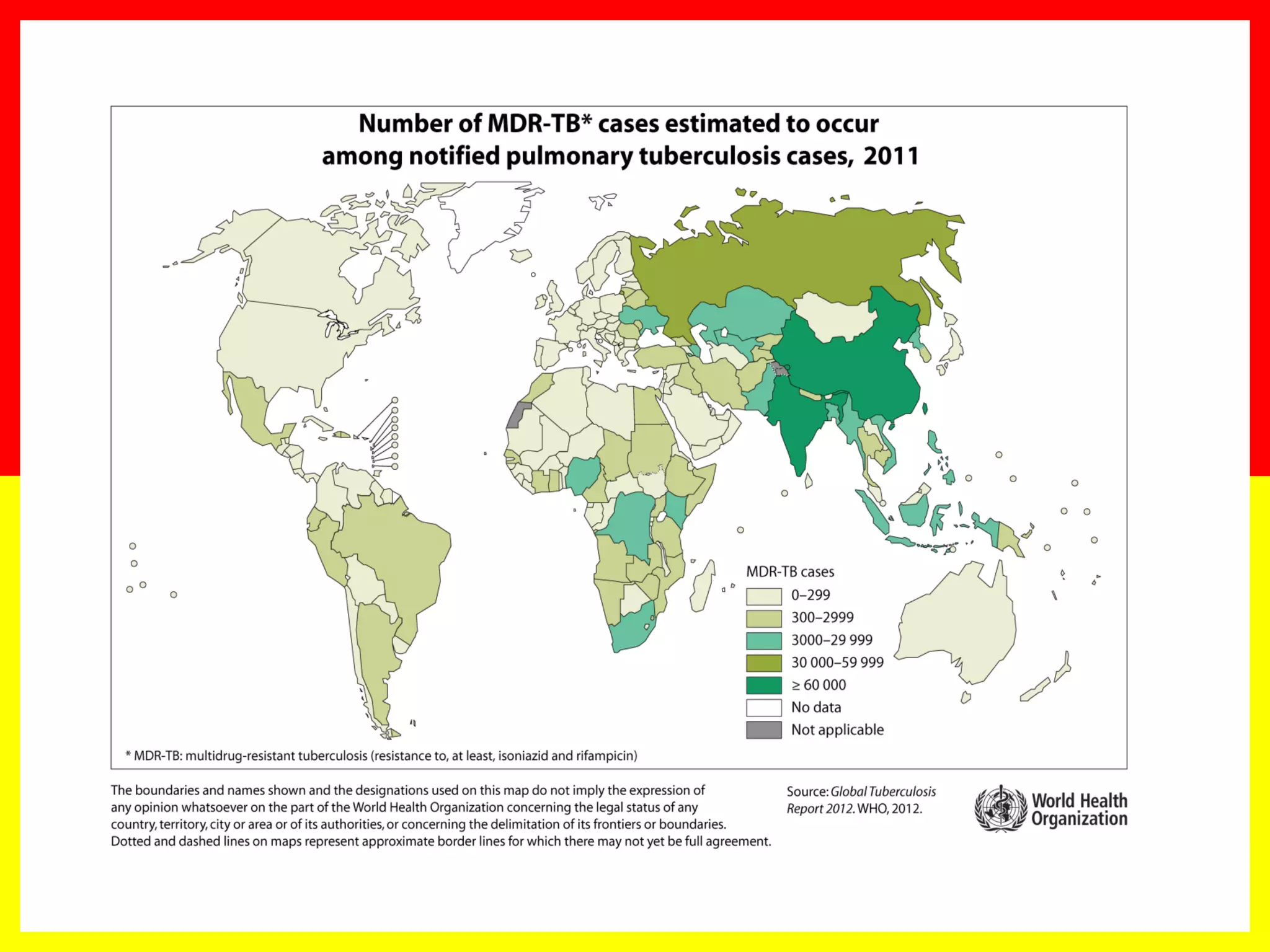
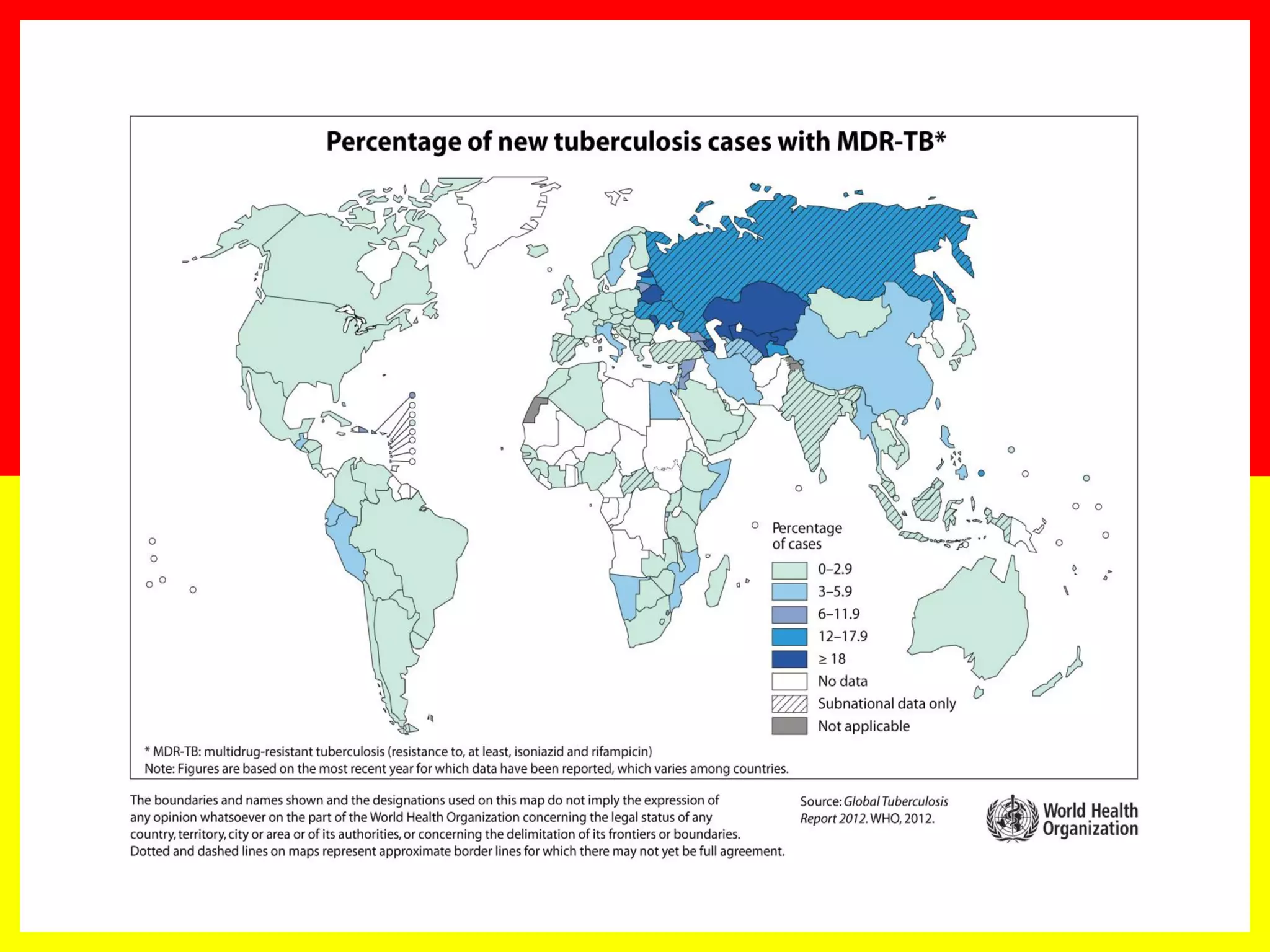
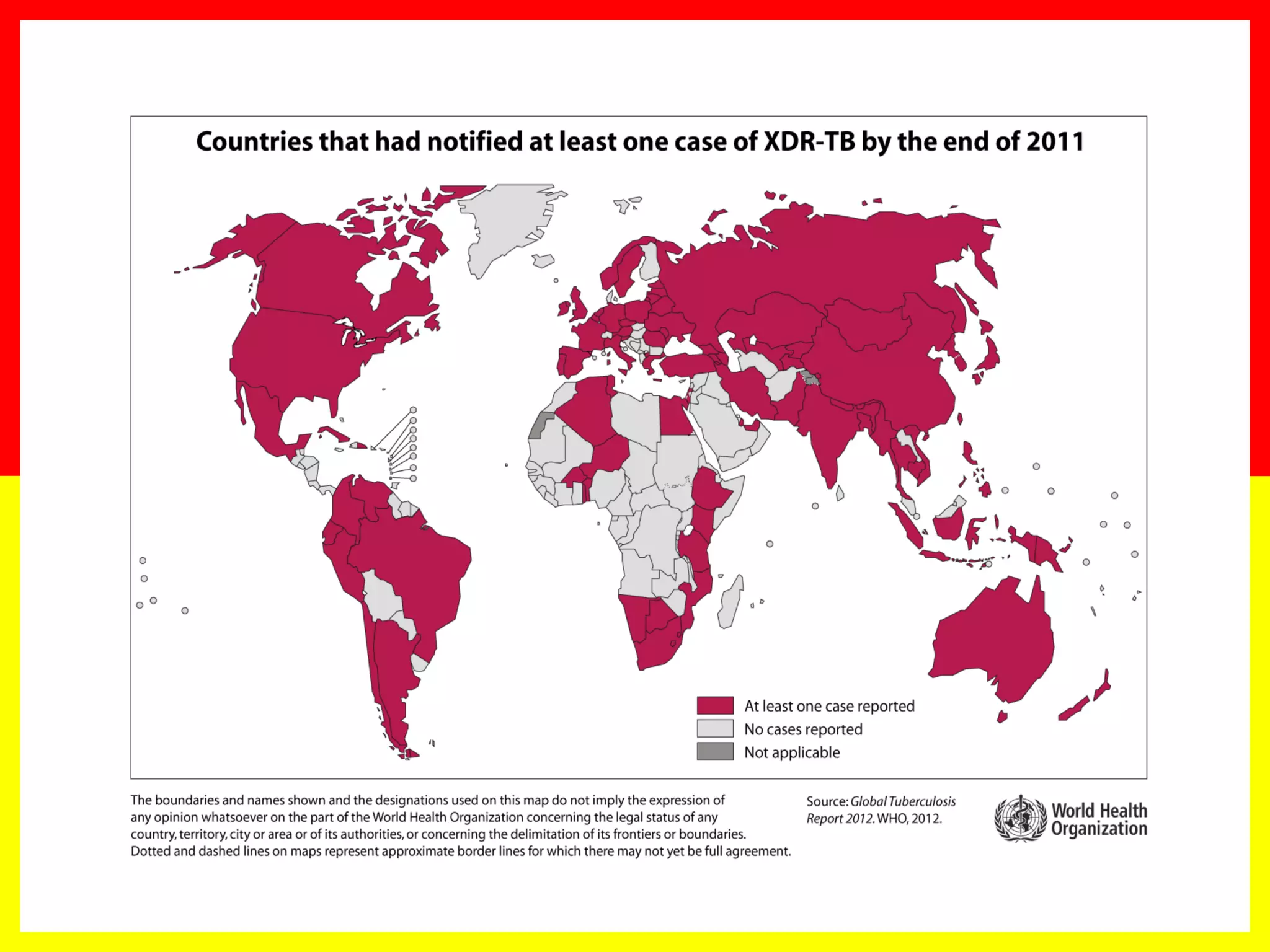
RESPONDING TO DRUG-RESISTANT TB 
The target treatment success rate of 75% or higher for patients with MDR-TB was reached by only 30 of 107 countries that reported treatment outcomes. 
Measurement of drug resistance has improved considerably. Data are available for 135 countries worldwide (70% of WHO’s 194 Member States). 
53
Basic concepts of tuberculosis

Basic concepts of tuberculosis

  • 2.
    Dr. Ashraf ElAdawy Consultant Chest Physician TB TEAM EXPERT - WHO Basic concepts of Tuberculosis
  • 3.
    TUBERCULOSIS... The greatestkiller of all time... The captain of all these men of death... ...during this century and the last, one billion people have died from tuberculosis
  • 4.
    Tuberculosis , stilla global emergency. Although Tuberculosis is preventable, treatable & curable disease it remains one of the leading infectious diseases world wide it must be addressed both globally & locally as part of an effective public health strategy .
  • 7.
    Tuberculosis (TB) iscontagious and airborne.  People ill with TB can infect up to 10-15 other people through close contact over the course of a year. Without proper treatment up to two thirds of people ill with TB will die. 7
  • 8.
    WHO Global TBReport, 2012 8.7 million new cases of TB in 2011 1.4 million deaths in 2011 0.5 million MDR-TB cases TB is the biggest infectious killer among people infected with HIV 2 billion people – one third of the world’s population are infected with mycobacterium tuberculosis
  • 9.
    Tuberculosis (TB) isthe leading cause of death in the world from a bacterial infectious disease. About 95% of TB deaths occur in low- and middle-income countries and TB is among the top three causes of death among women aged in reproductive age.
  • 10.
    Over the lastcentury, TB has killed more than 100 million people. TB is one of the top 3 killer diseases world-wide along with HIV & malaria. Among the communicable disease, TB is the second leading cause of death world wide after HIV/ AIDS (cleveland clinic 2008)
  • 11.
    TB is oneof the top killers of women worldwide, half a million women died from TB in 2011. The TB mortality rate has decreased 41% since 1990. 11
  • 12.
    In 2011, about80% of reported TB cases occurred in 22 countries. Some countries are experiencing a major decline in cases, while cases are dropping very slowly in others. Brazil and China for example, are among the 22 countries that showed a sustained decline in TB cases over the past 20 years. In the last decade, the TB prevalence in Cambodia fell by almost 45%. Global impact of TB TB Fact sheet N°104 Reviewed February 2013
  • 14.
    22 high-burden countries:80% of all new TB cases 0 500 1000 1500 2000 India China Indonesia Bangladesh Nigeria Pakistan Philippines South Africa Russian Federation Ethiopia DR Congo Viet Nam Kenya UR Tanzania Brazil Thailand Myanmar Zimbabwe Uganda Cambodia Afghanistan Mozambique Estimated new TB cases ('000s)
  • 15.
    Geographically, the burdenof TB is highest in Asia and Africa. India and China together account for almost 40% of the world’s TB cases.  TB occurs in every part of the world. In 2011, the largest number of new TB cases occurred in Asia, accounting for 60% of new cases globally. Global impact of TB
  • 16.
    Most TB caseswere in India and China The designations employed and the presentation of material on this map do not imply the expression of any opinion whatsoever on the part of the World Health Organization concerning the legal status of any country, territory, city or area or of its authorities, or concerning the delimitation of its frontiers or boundaries. White lines on maps represent approximate border lines for which there may not yet be full agreement. © WHO 2003 10 000 - 99 999 100 000 - 999 999 < 1 000 1 000 - 9 999 No estimate Number of cases 1 000 000 or more Asia Africa 59% 21% Global Tuberculosis Control. WHO Report 2003. WHO/HTM/TB/2004.331
  • 17.
    India is thehighest TB burden country globally accounting for one fifth of the global incidence Non-HBCs 20% Ethiopia 3% Philippines 3% South Africa 4% Bangladesh 4% Pakistan 3% Nigeria 4% Indonesia 6% China 15% India 20% Other 13 HBCs 18% Source: WHO Geneva; WHO Report 2006: Global Tuberculosis Control; Surveillance, Planning and Financing
  • 18.
    Global impact ofTB The African Region has 24% of the world’s cases, and the highest rates of cases and deaths per capita . Sub-Saharan Africa carried the greatest proportion of new cases per population with over 260 cases per 100 000 population in 2011. TB Fact sheet N°104 Reviewed February 2013
  • 19.
    25 - 49 50 - 99 100 - 299 < 10 10 - 24 No estimate per 100 000 pop 300 or more The designations employed and the presentation of material on this map do not imply the expression of any opinion whatsoever on the part of the World Health Organization concerning the legal status of any country, territory, city or area or of its authorities, or concerning the delimitation of its frontiers or boundaries. White lines on maps represent approximate border lines for which there may not yet be full agreement. © WHO 2004 Highest TB rates per capita are in Africa
  • 20.
    World Incidence 2006 World map showing reported cases of tuberculosis per 100,000 citizens. Red = >300, orange = 200-300; yellow = 100-200; green 50-100; blue = <50 and grey = n/a.
  • 21.
    TB ranks asthe second leading cause of death from an infectious disease worldwide, after the human immunodeficiency virus (HIV). People who are co-infected with HIV and TB are 21 to 34 times more likely to become sick with TB 21
  • 22.
    Total: 33.4 million(31.1 – 35.8 million) Western & Central Europe 850 000 [710 000 – 970 000] Middle East & North Africa 310 000 [250 000 – 380 000] Sub-Saharan Africa 22.4 million [20.8 – 24.1 million] Eastern Europe & Central Asia 1.5 million [1.4 – 1.7 million] South & South-East Asia 3.8 million [3.4 – 4.3 million] Oceania 59 000 [51 000 – 68 000] North America 1.4 million [1.2 – 1.6 million] Latin America 2.0 million [1.8 – 2.2 million] East Asia 850 000 [700 000 – 1.0 million] Caribbean 240 000 [220 000 – 260 000] Adults and children estimated to be living with HIV, 2008
  • 23.
    Estimated adult andchild deaths due to AIDS, 2008 Western & Central Europe 13 000 [10 000 – 15 000] Middle East & North Africa 20 000 [15 000 – 25 000] Sub-Saharan Africa 1.4 million [1.1 – 1.7 million] Eastern Europe & Central Asia 87 000 [72 000 – 110 000] South & South-East Asia 270 000 [220 000 – 310 000] Oceania 2000 [1100 – 3100] North America 25 000 [20 000 – 31 000] Latin America 77 000 [66 000 – 89 000] East Asia 59 000 [46 000 – 71 000] Caribbean 12 000 [9300 – 14 000] Total: 2.0 million (1.7 – 2.4 million)
  • 24.
    TB is theleading killer of people living with HIV About one in four deaths among people with HIV is due to TB. Worldwide the largest amount of HIV + TB patients are seen in Sub-Saharan Africa with South Africa and Kenya having the largest proportion
  • 25.
    In some regionsof Africa, up to 80% of adult TB patients are HIV-infected Almost 80% of TB cases among people living with HIV reside in Africa. 25
  • 26.
    TB incidence closelycorrelated with HIV prevalence in Africa 0 200 400 600 800 1000 0 10 20 30 40 HIV prevalence, adults 15-49y Estimated TB incidence (per 100,000 population) WHO
  • 27.
    5 million people HIV and South Africa
  • 28.
    Tobacco use greatlyincreases the risk of TB disease and death. More than 20% of TB cases worldwide are attributable to smoking.
  • 35.
    Magnitude Of TBProblem in Egypt
  • 36.
    Tuberculosis in Egyptis considered an important public health problem. The Ministry of health & population (MOHP) has established the National tuberculosis control programme in 1979.
  • 37.
  • 39.
    In Egypt therewere three tuberculin surveys: 1951 and incidence was 350/100,000 of population. 1982 and the incidence was 70/100,000 of population. 1997 and the incidence was 32/100,000 of population. 39
  • 40.
    Trend in AnnualRisk of Infection 0.240.280.280.73.50.32 0.1110195219821997200320042005
  • 41.
    Egypt: TB DOTSTreatment Success (2006) 87%  DOTS Detection Rate (2007) 72%  DOTS Coverage (2007) 100%
  • 43.
    Egypt: TB NewTB Cases (2008) 16,000 New TB Smear Positive Cases (2008) 6,500 New TB Case Rate (2008) 19 Egypt (Rate per 100,000) TB Smear Positive Case Rate (2008) 8 Egypt (Rate per 100,000) People living with TB (2008) 20,000 TB Prevalence Rate (2008) 24 Egypt (Rate per 100,000) TB Deaths (2008) 2,500 TB Death Rate (2008) 3.1 Egypt (Rate per 100,000) US global health policy 2010
  • 44.
    Egypt is alow TB -prevalence country
  • 45.
    For Egypt: Prevalence28 per 100 000 population Incidence 17 per 100 000 population Mortality 0.59 per 100 000 population WHO Global TB Report, 2012
  • 46.
  • 47.
     The pulmonaryform of tuberculosis (smear positive and smear negative) represents roughly 80 to 85 percent of all cases. The remaining 15 to 20 percent is made up by cases of extra-pulmonary tuberculosi For every new smear-positive pulmonary tuberculosis case usually a case of smear- negative pulmonary or extra-pulmonary tuberculosis will also be present.
  • 48.
    Egypt is alow-HIV-prevalence country Currently, less than 1 percent of adult TB patients are HIV-positive. However, continued monitoring is necessary because an increase in the incidence of HIV-TB co-infection could add to the complexity of fighting both diseases in Egypt
  • 53.
    RESPONDING TO DRUG-RESISTANTTB The target treatment success rate of 75% or higher for patients with MDR-TB was reached by only 30 of 107 countries that reported treatment outcomes. Measurement of drug resistance has improved considerably. Data are available for 135 countries worldwide (70% of WHO’s 194 Member States). 53