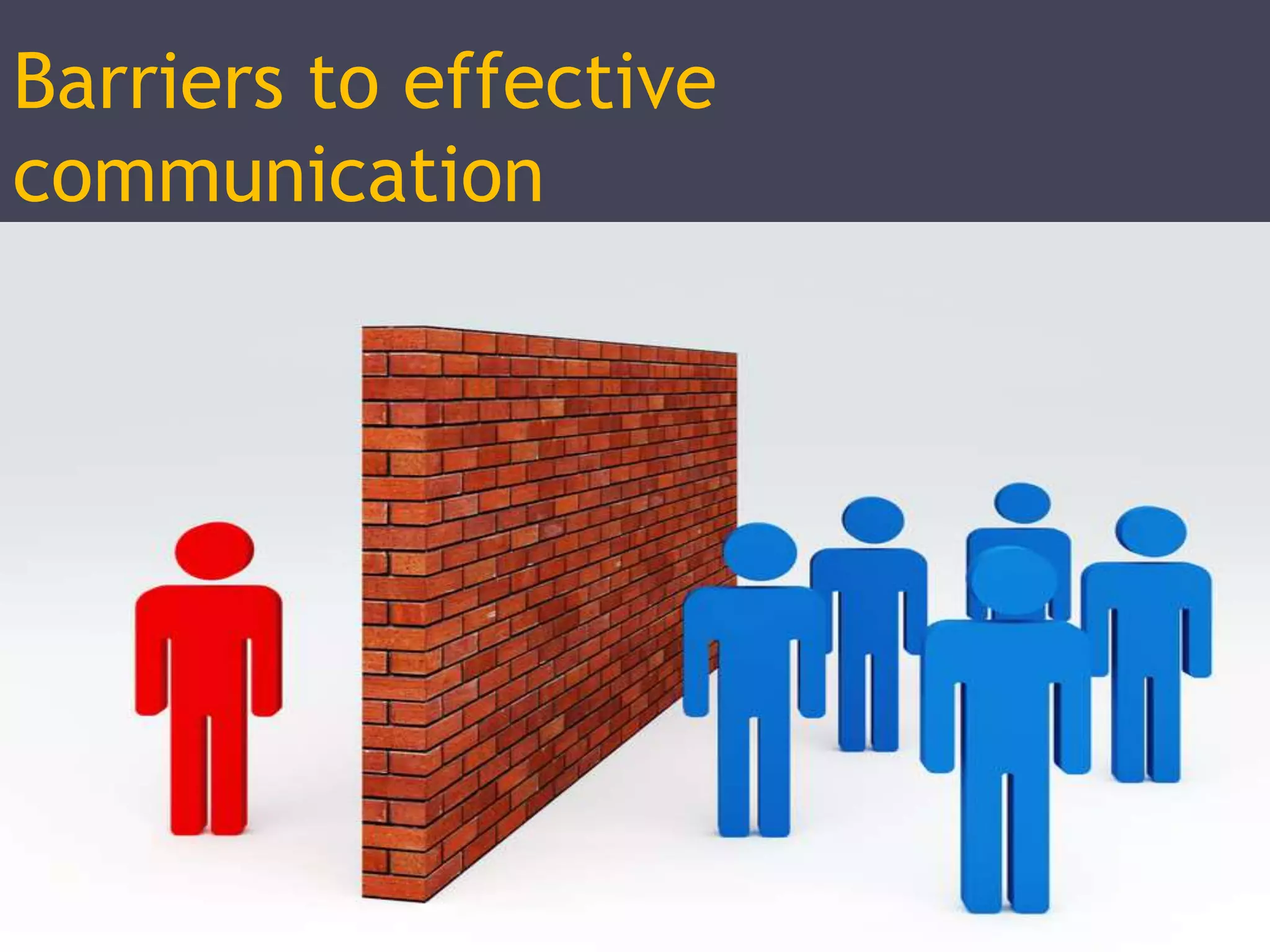
Barriers to effective
communication
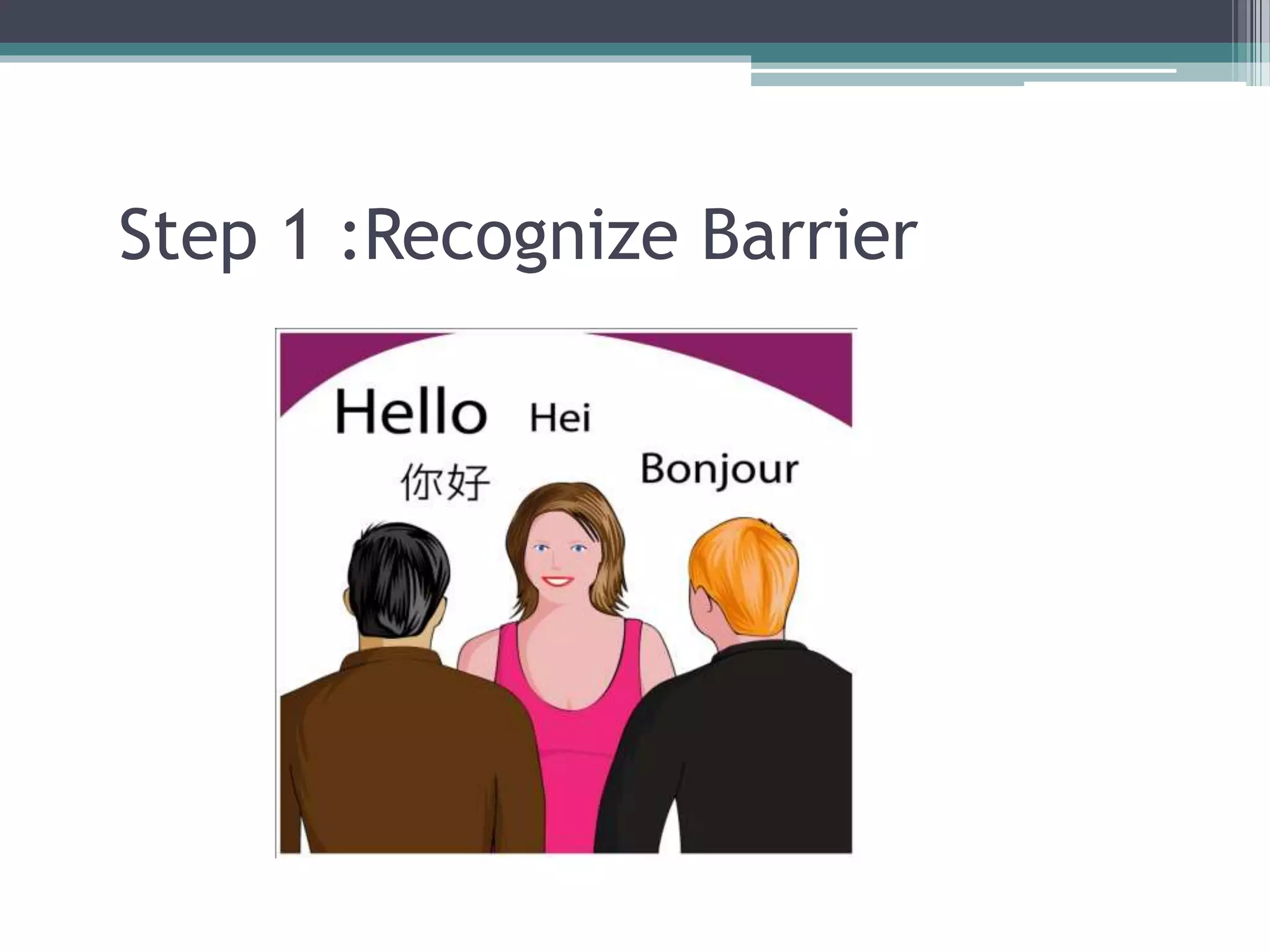
Step 1 :Recognize Barrier
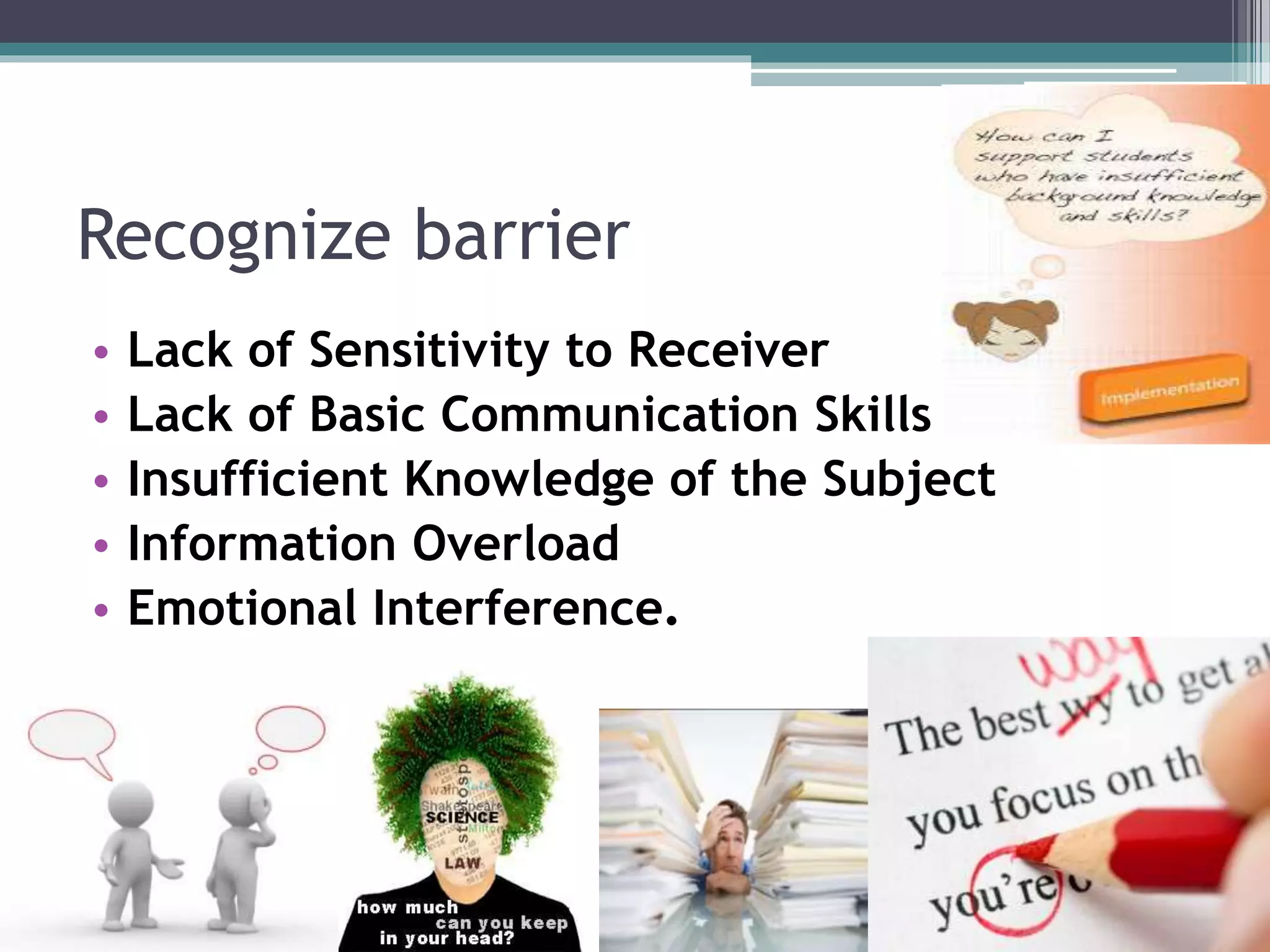
Recognize barrier
• Lack of Sensitivity to Receiver
• Lack of Basic Communication Skills
• Insufficient Knowledge of the Subject
• Information Overload
• Emotional Interference.
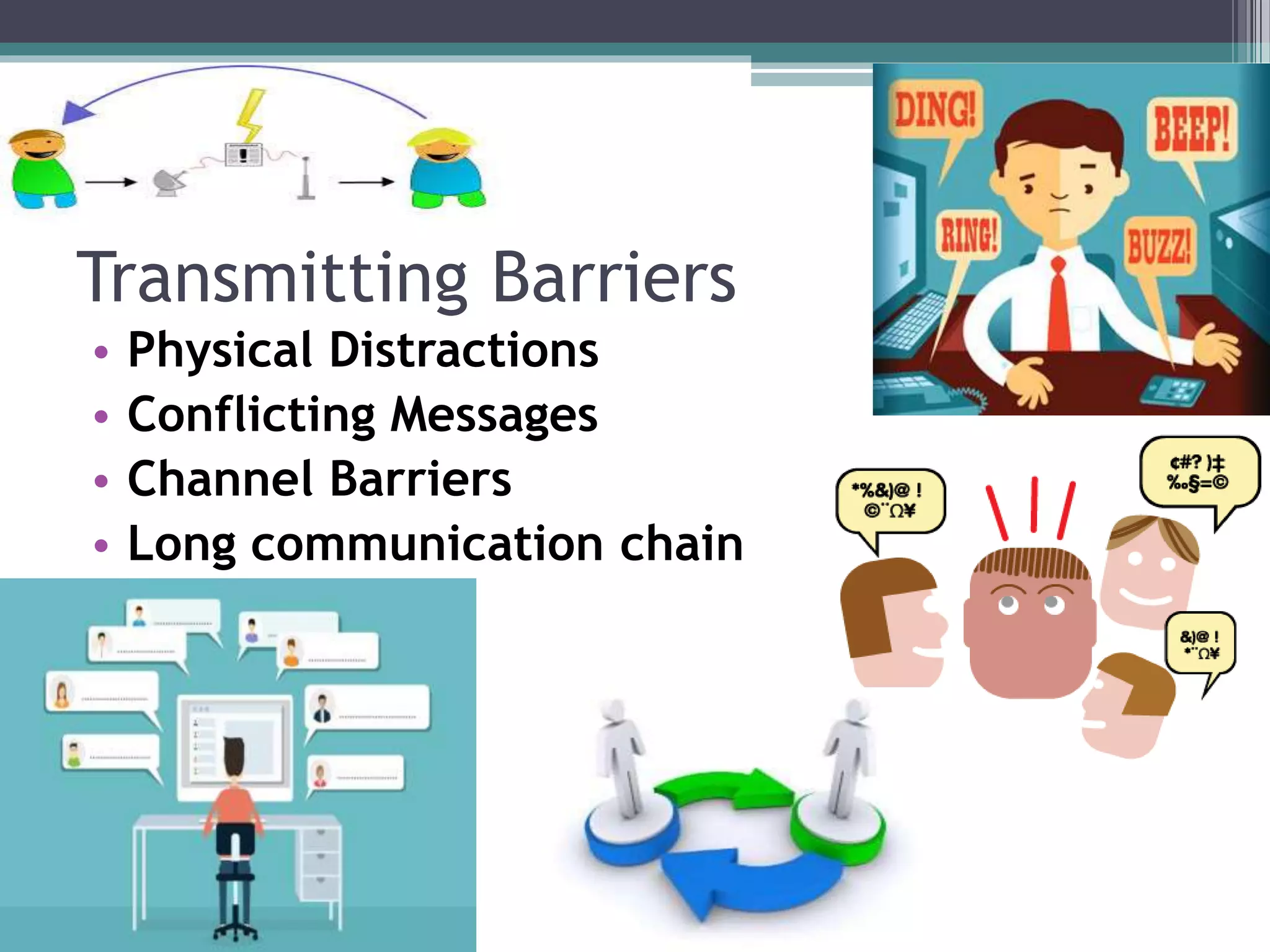
Transmitting Barriers
• Physical Distractions
• Conflicting Messages
• Channel Barriers
• Long communication chain
Types of barriers…
• Ricky W. Griffin has classified the
communication barriers into two broad groups
such as
• (a) Individual barriers and
• (b) Organizational barriers.
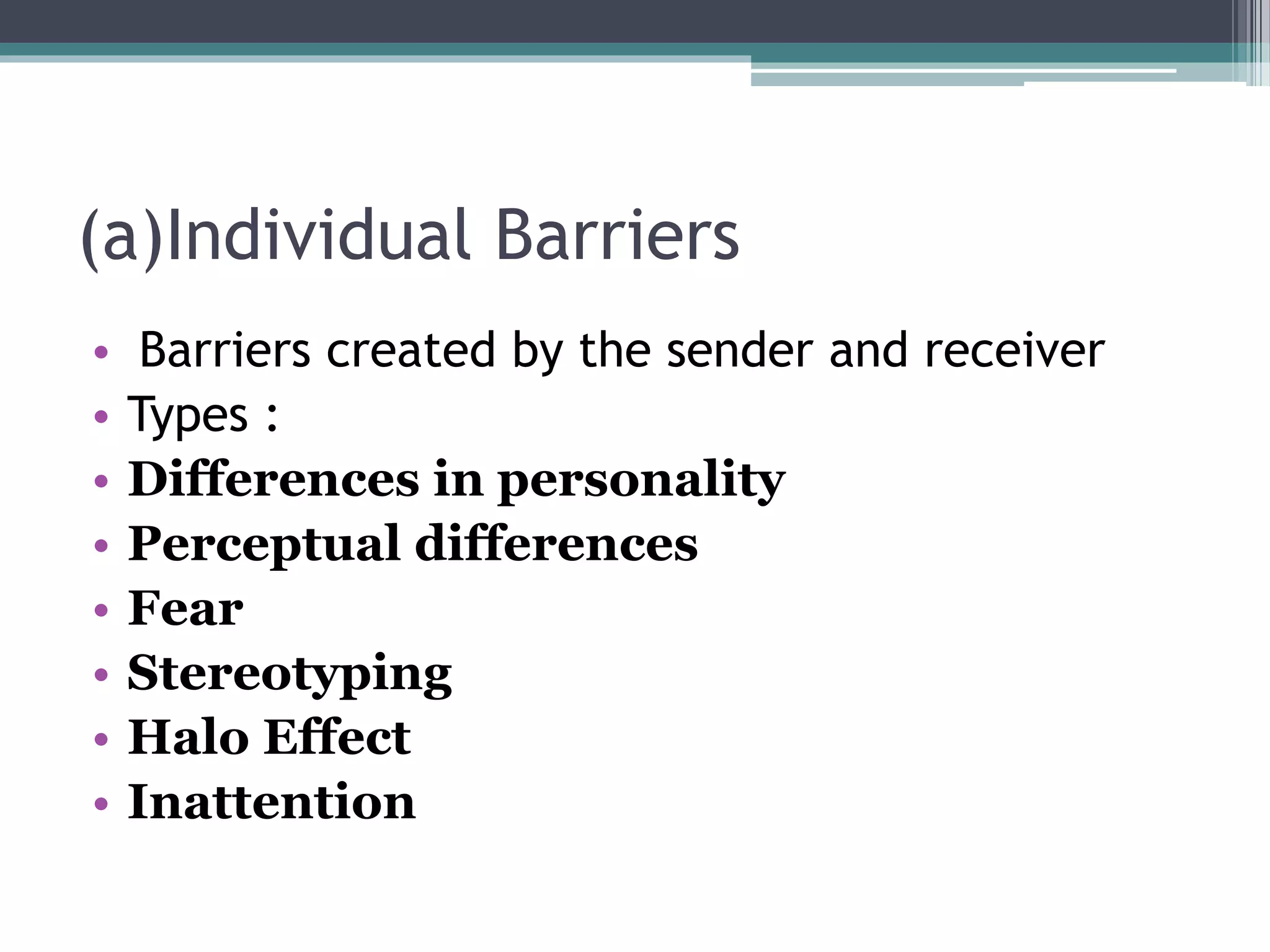
(a)Individual Barriers
• Barriers created by the sender and receiver
• Types :
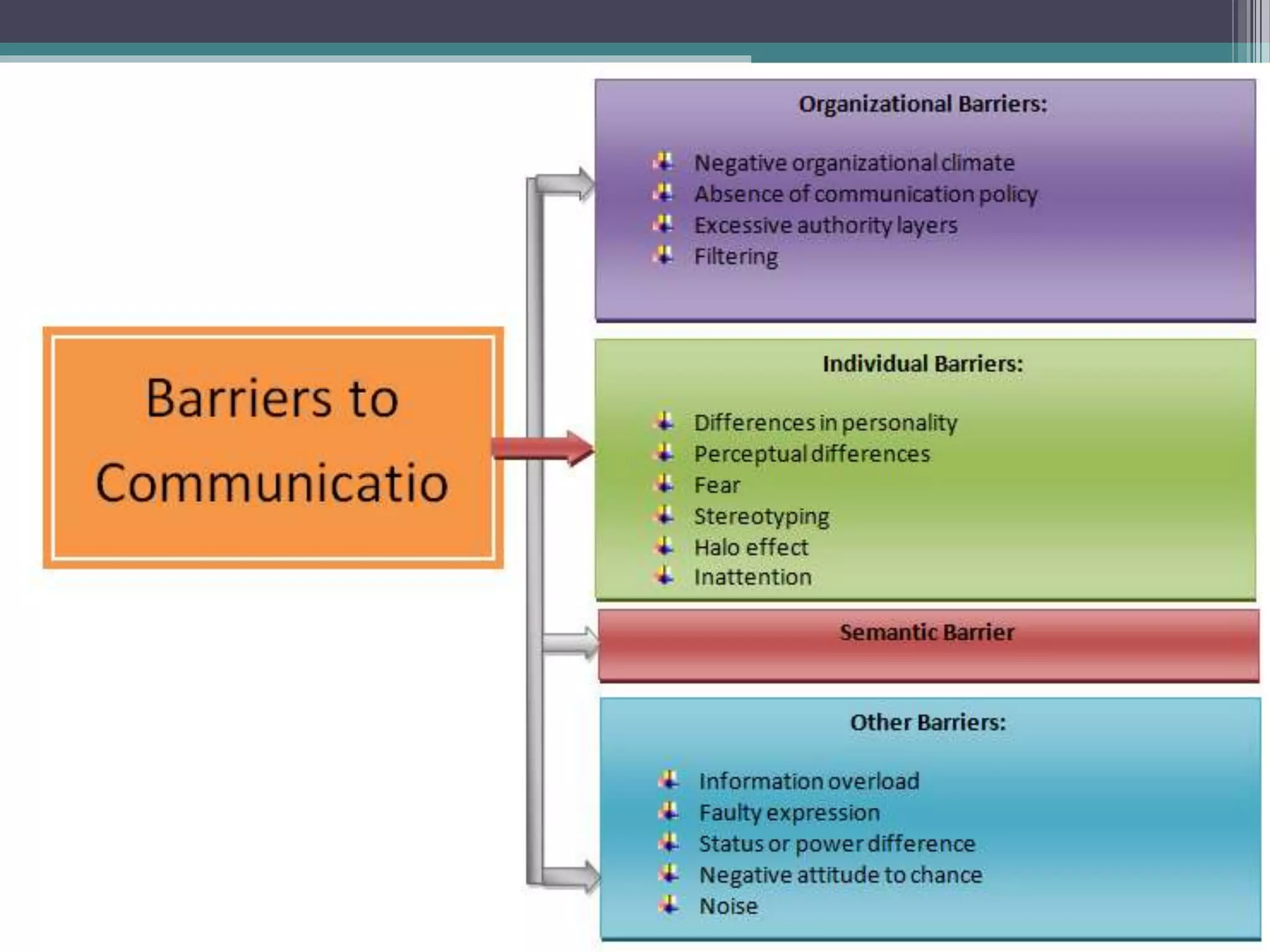
• Differences in personality
• Perceptual differences
• Fear
• Stereotyping
• Halo Effect
• Inattention
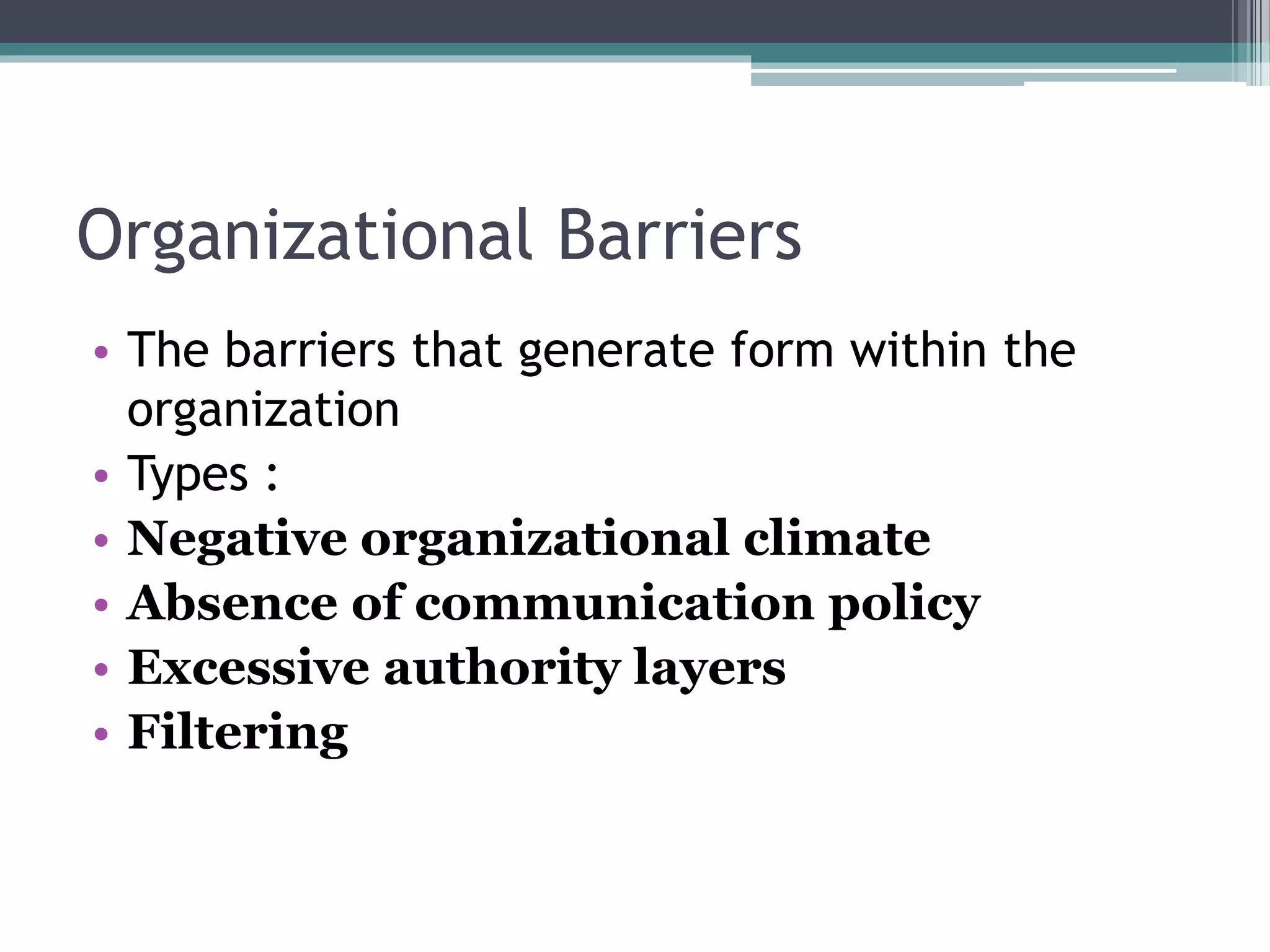
Organizational Barriers
• The barriers that generate form within the
organization
• Types :
• Negative organizational climate
• Absence of communication policy
• Excessive authority layers
• Filtering
Language or Semantic Barrier
• Semantic barrier presents difficult challenge
when people from different cultures
communicate with each other.
• Semantic problem arises when words and
symbols have different meanings for different
people that lead to a misunderstanding.
• For examples, an advertisement states, “we sell
for less.”
Other Barriers
• Information Overload
• Faulty expression (fails to convey exact
meaning )
• Status or power difference
• Negative attitudes to change
• Noise
Barriers to effective communication

Barriers to effective communication

  • 1.
  • 2.
  • 3.
    Recognize barrier • Lackof Sensitivity to Receiver • Lack of Basic Communication Skills • Insufficient Knowledge of the Subject • Information Overload • Emotional Interference.
  • 4.
    Transmitting Barriers • PhysicalDistractions • Conflicting Messages • Channel Barriers • Long communication chain
  • 5.
    Types of barriers… •Ricky W. Griffin has classified the communication barriers into two broad groups such as • (a) Individual barriers and • (b) Organizational barriers.
  • 7.
    (a)Individual Barriers • Barrierscreated by the sender and receiver • Types : • Differences in personality • Perceptual differences • Fear • Stereotyping • Halo Effect • Inattention
  • 8.
    Organizational Barriers • Thebarriers that generate form within the organization • Types : • Negative organizational climate • Absence of communication policy • Excessive authority layers • Filtering
  • 9.
    Language or SemanticBarrier • Semantic barrier presents difficult challenge when people from different cultures communicate with each other. • Semantic problem arises when words and symbols have different meanings for different people that lead to a misunderstanding. • For examples, an advertisement states, “we sell for less.”
  • 10.
    Other Barriers • InformationOverload • Faulty expression (fails to convey exact meaning ) • Status or power difference • Negative attitudes to change • Noise