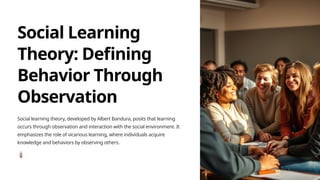
Social Learning
Theory: Defining
Behavior Through
Observation
Social learning theory, developed by Albert Bandura, posits that learning
occurs through observation and interaction with the social environment. It
emphasizes the role of vicarious learning, where individuals acquire
knowledge and behaviors by observing others.
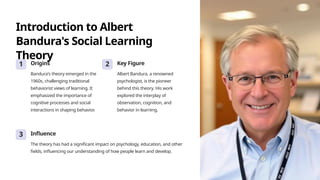
Introduction to Albert
Bandura's Social Learning
Theory
1 Origins
Bandura's theory emerged in the
1960s, challenging traditional
behaviorist views of learning. It
emphasized the importance of
cognitive processes and social
interactions in shaping behavior.
2 Key Figure
Albert Bandura, a renowned
psychologist, is the pioneer
behind this theory. His work
explored the interplay of
observation, cognition, and
behavior in learning.
3 Influence
The theory has had a significant impact on psychology, education, and other
fields, influencing our understanding of how people learn and develop.
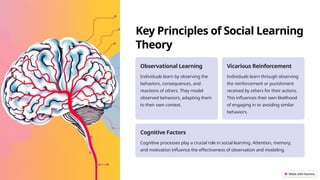
Key Principles of Social Learning
Theory
Observational Learning
Individuals learn by observing the
behaviors, consequences, and
reactions of others. They model
observed behaviors, adapting them
to their own context.
Vicarious Reinforcement
Individuals learn through observing
the reinforcement or punishment
received by others for their actions.
This influences their own likelihood
of engaging in or avoiding similar
behaviors.
Cognitive Factors
Cognitive processes play a crucial role in social learning. Attention, memory,
and motivation influence the effectiveness of observation and modeling.
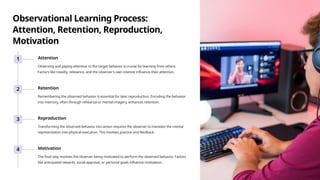
Observational Learning Process:
Attention, Retention, Reproduction,
Motivation
1 Attention
Observing and paying attention to the target behavior is crucial for learning from others.
Factors like novelty, relevance, and the observer's own interest influence their attention.
2 Retention
Remembering the observed behavior is essential for later reproduction. Encoding the behavior
into memory, often through rehearsal or mental imagery, enhances retention.
3 Reproduction
Transforming the observed behavior into action requires the observer to translate the mental
representation into physical execution. This involves practice and feedback.
4 Motivation
The final step involves the observer being motivated to perform the observed behavior. Factors
like anticipated rewards, social approval, or personal goals influence motivation.
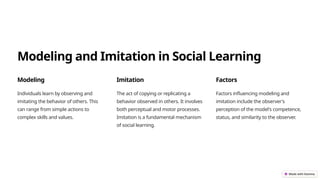
Modeling and Imitation in Social Learning
Modeling
Individuals learn by observing and
imitating the behavior of others. This
can range from simple actions to
complex skills and values.
Imitation
The act of copying or replicating a
behavior observed in others. It involves
both perceptual and motor processes.
Imitation is a fundamental mechanism
of social learning.
Factors
Factors influencing modeling and
imitation include the observer's
perception of the model's competence,
status, and similarity to the observer.
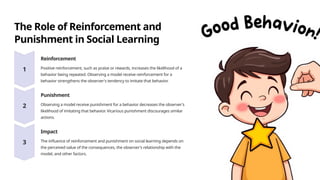
The Role of Reinforcement and
Punishment in Social Learning
Reinforcement
Positive reinforcement, such as praise or rewards, increases the likelihood of a
behavior being repeated. Observing a model receive reinforcement for a
behavior strengthens the observer's tendency to imitate that behavior.
Punishment
Observing a model receive punishment for a behavior decreases the observer's
likelihood of imitating that behavior. Vicarious punishment discourages similar
actions.
Impact
The influence of reinforcement and punishment on social learning depends on
the perceived value of the consequences, the observer's relationship with the
model, and other factors.
Applications of Social
Learning Theory in
Psychology and Education
Psychology Therapy Social skills
training
Reducing
anxiety and
phobias
Education Classroom
management
Peer tutoring Promoting
prosocial
behavior
Limitations and Criticisms of Social
Learning Theory
Oversimplification
Critics argue that the theory oversimplifies the complexities of human behavior, neglecting
individual differences and the role of innate factors.
Lack of Focus
The theory may not adequately address the nuances of learning, such as the role of emotions,
motivation, and cultural influences.
Limited Scope
Social learning theory primarily focuses on observable behaviors, potentially neglecting the
importance of internal cognitive processes and implicit learning.
Social-Learning-Theory-Defining-Behavior-Through-Observation.pptx

  • 1.
    Social Learning Theory: Defining BehaviorThrough Observation Social learning theory, developed by Albert Bandura, posits that learning occurs through observation and interaction with the social environment. It emphasizes the role of vicarious learning, where individuals acquire knowledge and behaviors by observing others.
  • 2.
    Introduction to Albert Bandura'sSocial Learning Theory 1 Origins Bandura's theory emerged in the 1960s, challenging traditional behaviorist views of learning. It emphasized the importance of cognitive processes and social interactions in shaping behavior. 2 Key Figure Albert Bandura, a renowned psychologist, is the pioneer behind this theory. His work explored the interplay of observation, cognition, and behavior in learning. 3 Influence The theory has had a significant impact on psychology, education, and other fields, influencing our understanding of how people learn and develop.
  • 3.
    Key Principles ofSocial Learning Theory Observational Learning Individuals learn by observing the behaviors, consequences, and reactions of others. They model observed behaviors, adapting them to their own context. Vicarious Reinforcement Individuals learn through observing the reinforcement or punishment received by others for their actions. This influences their own likelihood of engaging in or avoiding similar behaviors. Cognitive Factors Cognitive processes play a crucial role in social learning. Attention, memory, and motivation influence the effectiveness of observation and modeling.
  • 4.
    Observational Learning Process: Attention,Retention, Reproduction, Motivation 1 Attention Observing and paying attention to the target behavior is crucial for learning from others. Factors like novelty, relevance, and the observer's own interest influence their attention. 2 Retention Remembering the observed behavior is essential for later reproduction. Encoding the behavior into memory, often through rehearsal or mental imagery, enhances retention. 3 Reproduction Transforming the observed behavior into action requires the observer to translate the mental representation into physical execution. This involves practice and feedback. 4 Motivation The final step involves the observer being motivated to perform the observed behavior. Factors like anticipated rewards, social approval, or personal goals influence motivation.
  • 5.
    Modeling and Imitationin Social Learning Modeling Individuals learn by observing and imitating the behavior of others. This can range from simple actions to complex skills and values. Imitation The act of copying or replicating a behavior observed in others. It involves both perceptual and motor processes. Imitation is a fundamental mechanism of social learning. Factors Factors influencing modeling and imitation include the observer's perception of the model's competence, status, and similarity to the observer.
  • 6.
    The Role ofReinforcement and Punishment in Social Learning Reinforcement Positive reinforcement, such as praise or rewards, increases the likelihood of a behavior being repeated. Observing a model receive reinforcement for a behavior strengthens the observer's tendency to imitate that behavior. Punishment Observing a model receive punishment for a behavior decreases the observer's likelihood of imitating that behavior. Vicarious punishment discourages similar actions. Impact The influence of reinforcement and punishment on social learning depends on the perceived value of the consequences, the observer's relationship with the model, and other factors.
  • 7.
    Applications of Social LearningTheory in Psychology and Education Psychology Therapy Social skills training Reducing anxiety and phobias Education Classroom management Peer tutoring Promoting prosocial behavior
  • 8.
    Limitations and Criticismsof Social Learning Theory Oversimplification Critics argue that the theory oversimplifies the complexities of human behavior, neglecting individual differences and the role of innate factors. Lack of Focus The theory may not adequately address the nuances of learning, such as the role of emotions, motivation, and cultural influences. Limited Scope Social learning theory primarily focuses on observable behaviors, potentially neglecting the importance of internal cognitive processes and implicit learning.