SOCIAL LEARNING THEORY
PARVATHY.S
M.ED
SOCIAL LEARNING THEORY
- ALBERT BANDURA
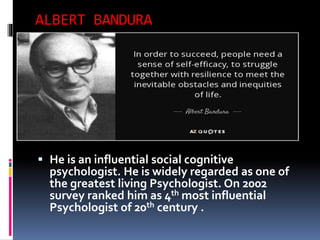
ALBERT BANDURA
 He is an influential social cognitive
psychologist. He is widely regarded as one of
the greatest living Psychologist. On 2002
survey ranked him as 4th most influential
Psychologist of 20th century .
SOCIAL LEARNING THEORY
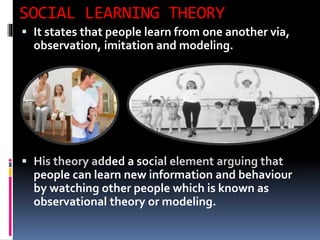
 It states that people learn from one another via,
observation, imitation and modeling.
 His theory added a social element arguing that
people can learn new information and behaviour
by watching other people which is known as
observational theory or modeling.
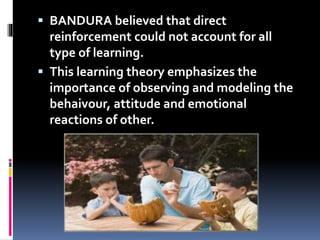
 BANDURA believed that direct
reinforcement could not account for all
type of learning.
 This learning theory emphasizes the
importance of observing and modeling the
behaivour, attitude and emotional
reactions of other.
GENERAL PRINCIPLES
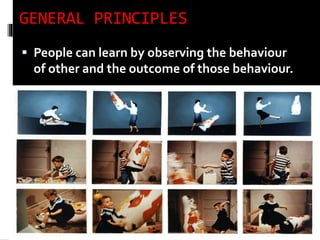
 People can learn by observing the behaviour
of other and the outcome of those behaviour.
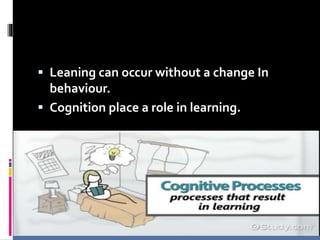
 Leaning can occur without a change In
behaviour.
 Cognition place a role in learning.
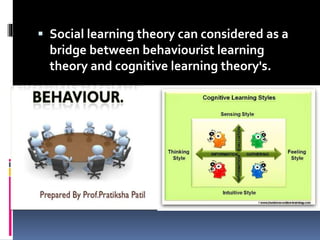
 Social learning theory can considered as a
bridge between behaviourist learning
theory and cognitive learning theory's.
BASICS SOCIAL LEARNING CONCEPT
 Observational learning
1. A live model
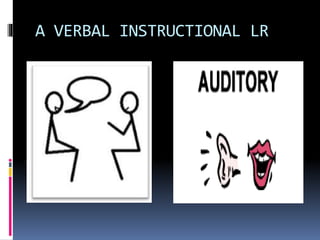
2. A verbal instructional learning
3. A symbolic model
 Intrinsic reinforcement
 The modeling process
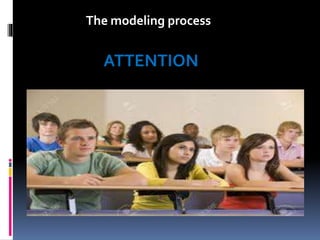
1. Attention
2. Retention
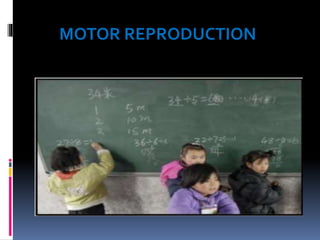
3. Motor reproduction
4. Motivation
A live model
A VERBAL INSTRUCTIONAL LR
A SYMBOLIC MODEL
THREE FORMS OF REINFOCEMENT
DIRECT REINFORCEMENT
 Occurs when an individual watches a model
perform, Imitates that behavior and is
reinforced or punished by some individual
VICARIOUS REINFORCEMENT
 The observer anticipates receiving a reward
for behaving in a given way because some
one else has been so rewarded
SELF-REINFORCEMENT
 The individuals strives to meet personal
standard and does not depend on or care
about the reaction of others
The modeling process
ATTENTION
RETENTION
MOTOR REPRODUCTION
MOTIVATION
APPLICATION
 Carefully select audio visual that are to be
used in the classroom.
 Giving teamwork's.
 Setting goals.
 Incorporate technology with learning.
TEACHERS AND STUDENTS DO ?
SOCIAL LEARNING THEORY

SOCIAL LEARNING THEORY