SOCIAL LEARNING
THEORY
PRESENTER
YATHEESH BHARADWAJ H S
1st Mphil PSW
DIMHANS
• Introduced by psychologist Albert Bandura
• Albert Bandura is best known for his work in the following
areas:
Bobo doll studies
Observational learning
Self-efficacy
Social learning theory
Core Concepts of Social Learning Theory
• First is the idea that people can learn through observation.
• internal mental states are an essential part of this process.
• This theory recognizes that just because something has been
learned, it does not mean that it will result in a change in
behavior.
• learning occurs through observation, imitation, and modeling
• influenced by factors such as attention, motivation, attitudes, and
emotions.
• Interaction of environmental and cognitive elements that affect
how people learn.
People Can Learn Through Observation
• Involved a doll named Bobo
• Bandura demonstrated that children learn and imitate behaviors
they have observed in other people.
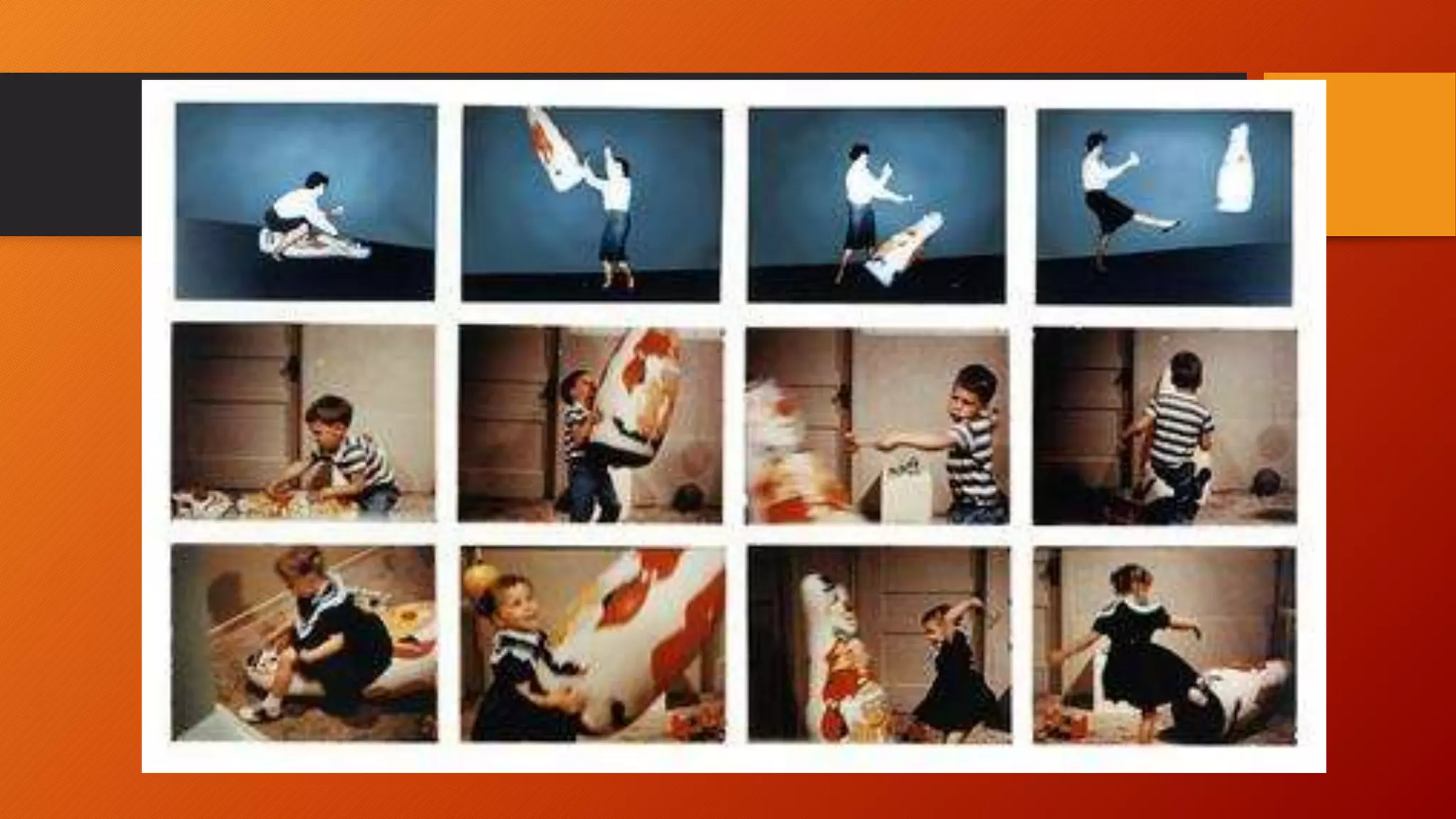
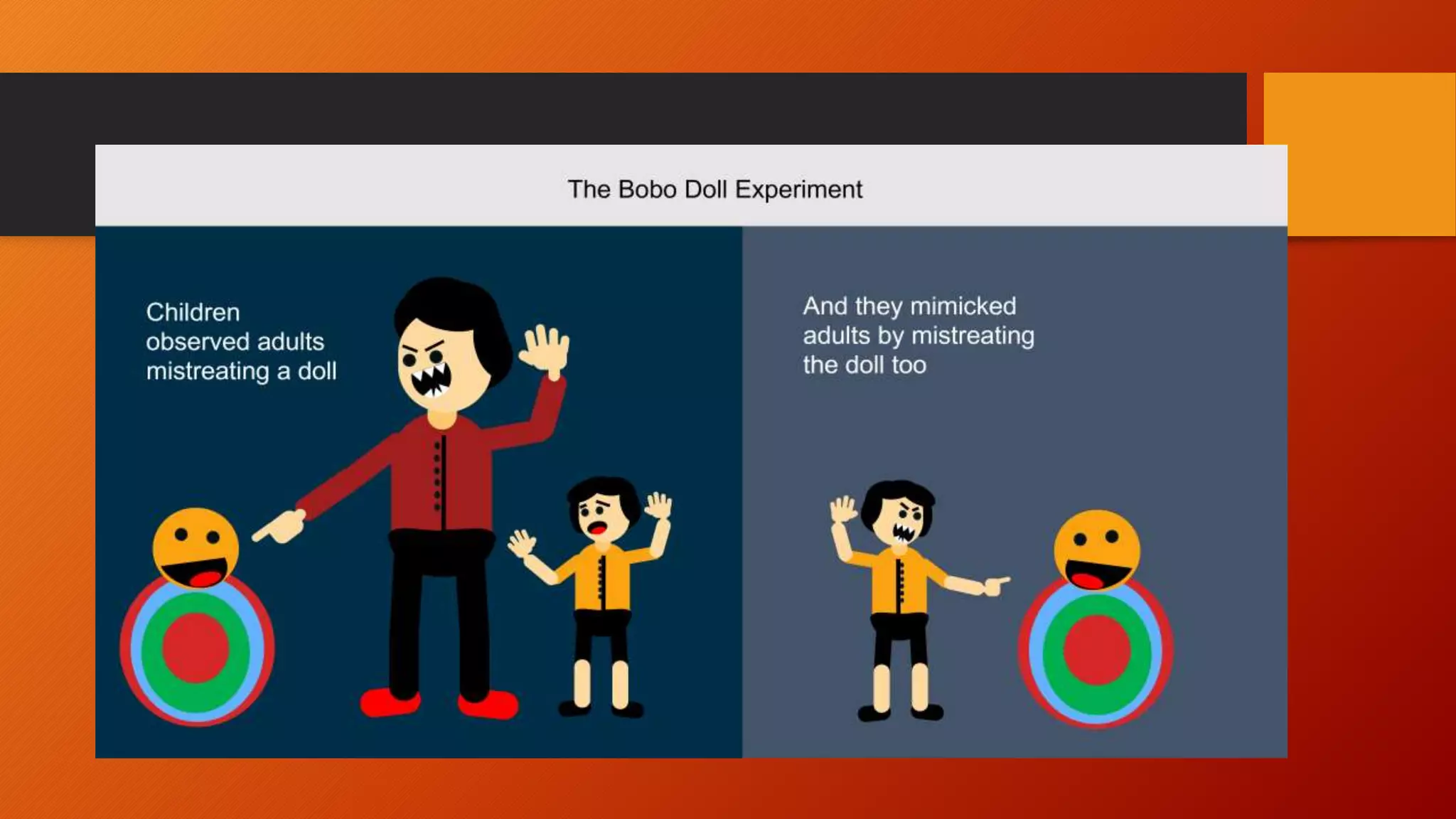
• The children in Bandura’s studies observed an adult acting
violently toward a Bobo doll. When the children were later
allowed to play in a room with the Bobo doll, they began to
imitate the aggressive actions they had previously observed
• A live model, which involves an actual individual demonstrating or
acting out a behavior.
• A symbolic model, which involves real or fictional characters
displaying behaviors in books, films, television programs, or online
media.
• A verbal instructional model, which involves descriptions and
explanations of a behavio
Mental States Are Important to Learning
• Bandura noted that external, environmental reinforcement was
not the only factor to influence learning and behavior. And he
realized that reinforcement does not always come from outside
sources.
• Your own mental state and motivation play an important role in
determining whether a behavior is learned or not.
ASSUMPTIONS
• People learn through observation. Learners can acquire new behavior
and knowledge by merely observing a model.
• Reinforcement and punishment have indirect effects on behavior and
learning. People form expectations about the potential consequences of
future responses based on how current responses are reinforced or
punished.
• Mediational processes influence our behavior. Cognitive factors that
contribute to whether a behavior is acquired or not.
• Learning does not necessarily lead to change. Just because a person
learns something does not mean they will have a change in behavior.
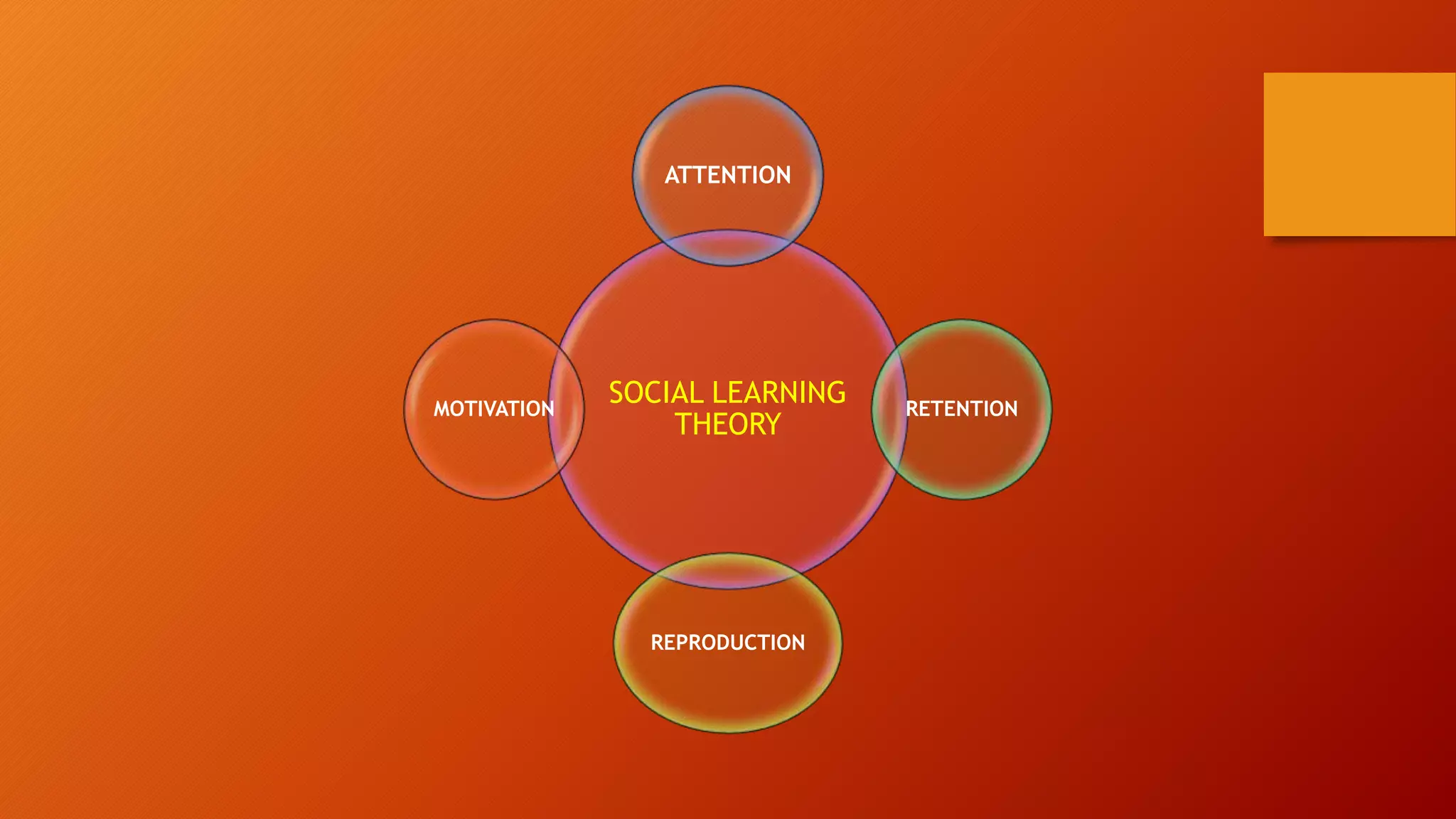
SOCIAL LEARNING
THEORY
ATTENTION
RETENTION
REPRODUCTION
MOTIVATION
• Attention: The degree to which we notice the behavior. A
behavior must grab our attention before it can be imitated.
Considering the number of behaviors we observe and do not
imitate daily indicates attention is crucial in whether a behavior
influences imitation.
• Retention: How well we remember the behavior. We cannot
perform the behavior if we do not remember the behavior. So,
while a behavior may be noticed, unless a memory is formed, the
observer will not perform the behavior. And, because social
learning is not immediate, retention is vital to behavior modeling.
• Reproduction: The ability to perform the behavior. This is the
ability to reproduce a behavior we observe. It influences our
decision about whether to try performing the behavior. Even when
we wish to imitate an observed behavior, we are limited by our
physical abilities.
• Motivation: The will to emulate the behavior. This mediational
process is referred to as vicarious reinforcement. It involves
learning through observing the consequences of actions for other
people, rather than through direct experience.
THANK YOU

SOCIAL LEARNING THEORY.pptx

  • 1.
  • 2.
    • Introduced bypsychologist Albert Bandura • Albert Bandura is best known for his work in the following areas: Bobo doll studies Observational learning Self-efficacy Social learning theory
  • 3.
    Core Concepts ofSocial Learning Theory • First is the idea that people can learn through observation. • internal mental states are an essential part of this process. • This theory recognizes that just because something has been learned, it does not mean that it will result in a change in behavior.
  • 4.
    • learning occursthrough observation, imitation, and modeling • influenced by factors such as attention, motivation, attitudes, and emotions. • Interaction of environmental and cognitive elements that affect how people learn.
  • 5.
    People Can LearnThrough Observation • Involved a doll named Bobo • Bandura demonstrated that children learn and imitate behaviors they have observed in other people. • The children in Bandura’s studies observed an adult acting violently toward a Bobo doll. When the children were later allowed to play in a room with the Bobo doll, they began to imitate the aggressive actions they had previously observed
  • 8.
    • A livemodel, which involves an actual individual demonstrating or acting out a behavior. • A symbolic model, which involves real or fictional characters displaying behaviors in books, films, television programs, or online media. • A verbal instructional model, which involves descriptions and explanations of a behavio
  • 9.
    Mental States AreImportant to Learning • Bandura noted that external, environmental reinforcement was not the only factor to influence learning and behavior. And he realized that reinforcement does not always come from outside sources. • Your own mental state and motivation play an important role in determining whether a behavior is learned or not.
  • 10.
    ASSUMPTIONS • People learnthrough observation. Learners can acquire new behavior and knowledge by merely observing a model. • Reinforcement and punishment have indirect effects on behavior and learning. People form expectations about the potential consequences of future responses based on how current responses are reinforced or punished. • Mediational processes influence our behavior. Cognitive factors that contribute to whether a behavior is acquired or not. • Learning does not necessarily lead to change. Just because a person learns something does not mean they will have a change in behavior.
  • 11.
  • 12.
    • Attention: Thedegree to which we notice the behavior. A behavior must grab our attention before it can be imitated. Considering the number of behaviors we observe and do not imitate daily indicates attention is crucial in whether a behavior influences imitation.
  • 13.
    • Retention: Howwell we remember the behavior. We cannot perform the behavior if we do not remember the behavior. So, while a behavior may be noticed, unless a memory is formed, the observer will not perform the behavior. And, because social learning is not immediate, retention is vital to behavior modeling.
  • 14.
    • Reproduction: Theability to perform the behavior. This is the ability to reproduce a behavior we observe. It influences our decision about whether to try performing the behavior. Even when we wish to imitate an observed behavior, we are limited by our physical abilities.
  • 15.
    • Motivation: Thewill to emulate the behavior. This mediational process is referred to as vicarious reinforcement. It involves learning through observing the consequences of actions for other people, rather than through direct experience.
  • 16.