BALANCING   CHEMICAL REACTIONS
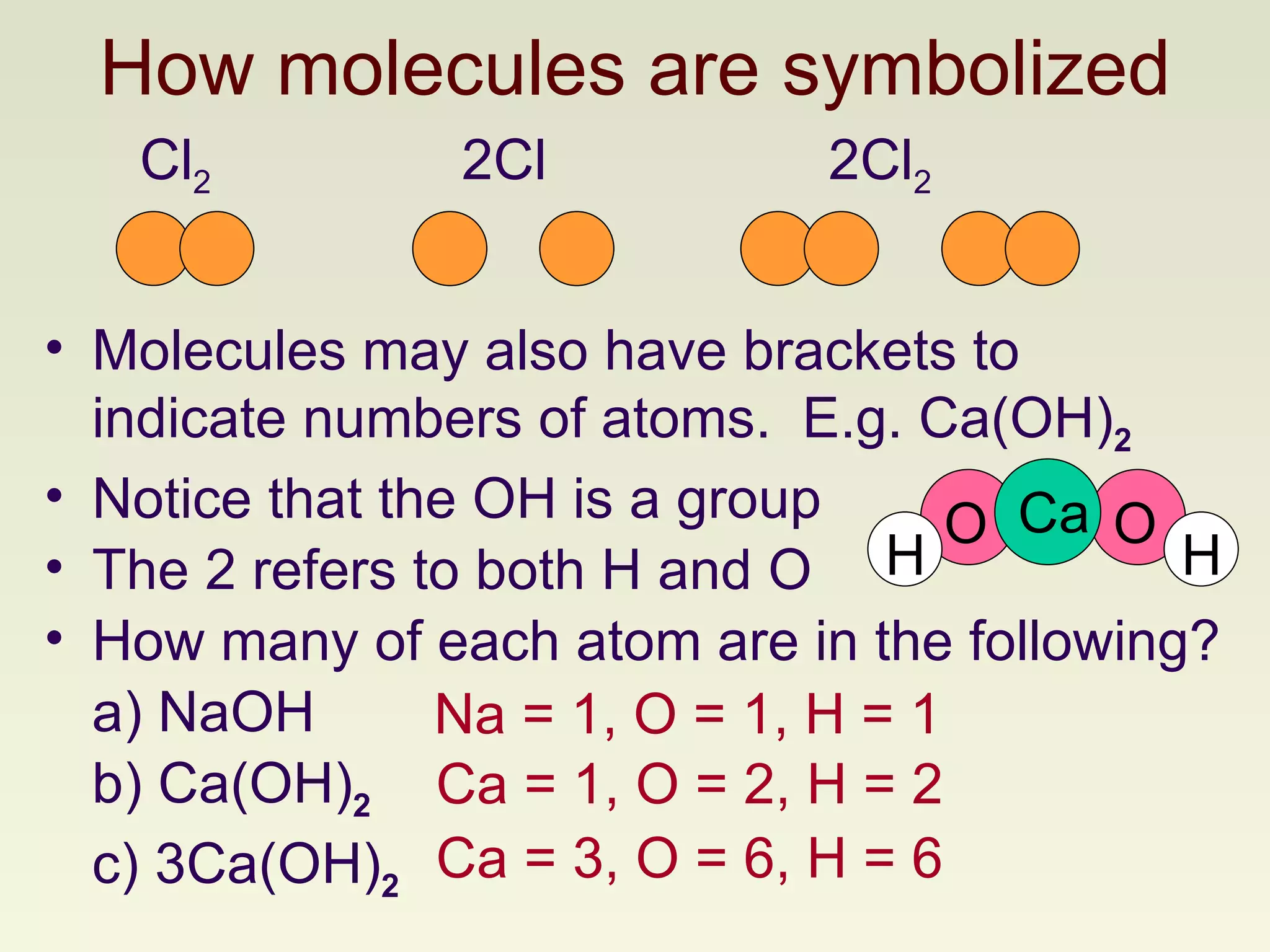
How molecules are symbolized Cl 2   2Cl  2Cl 2 Molecules may also have brackets to indicate numbers of atoms.  E.g. Ca(OH) 2 Notice that the OH is a group The 2 refers to both H and O How many of each atom are in the following? a) NaOH b) Ca(OH) 2 c) 3Ca(OH) 2 Na = 1, O = 1, H = 1 Ca = 1, O = 2, H = 2 Ca = 3, O = 6, H = 6 O H O H Ca
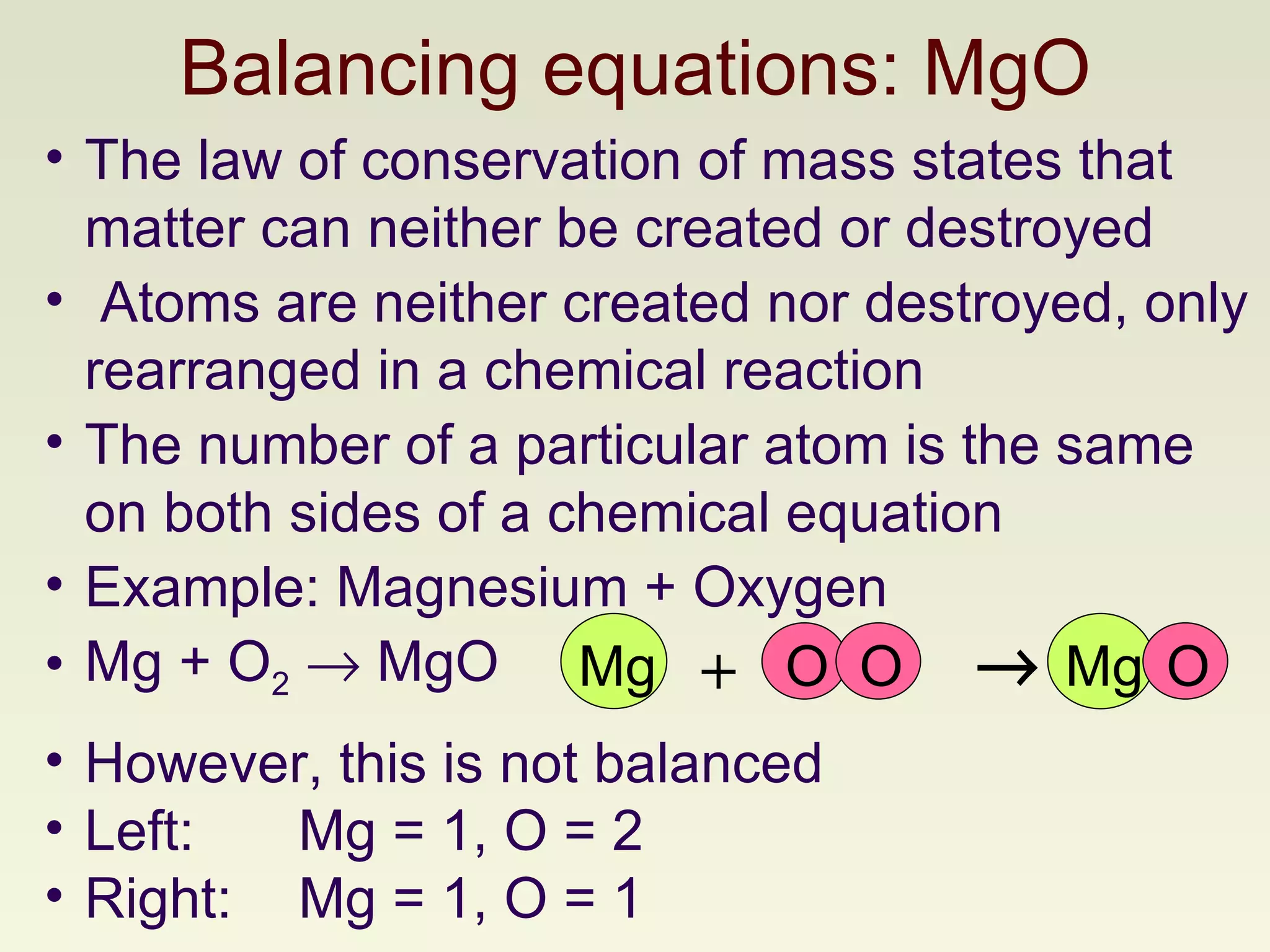
Balancing equations: MgO The law of conservation of mass states that matter can neither be created or destroyed Atoms are neither created nor destroyed, only rearranged in a chemical reaction The number of a particular atom is the same on both sides of a chemical equation Example: Magnesium + Oxygen  Mg + O 2     MgO However, this is not balanced Left:  Mg = 1, O = 2 Right:  Mg = 1, O = 1 O Mg O +  Mg O
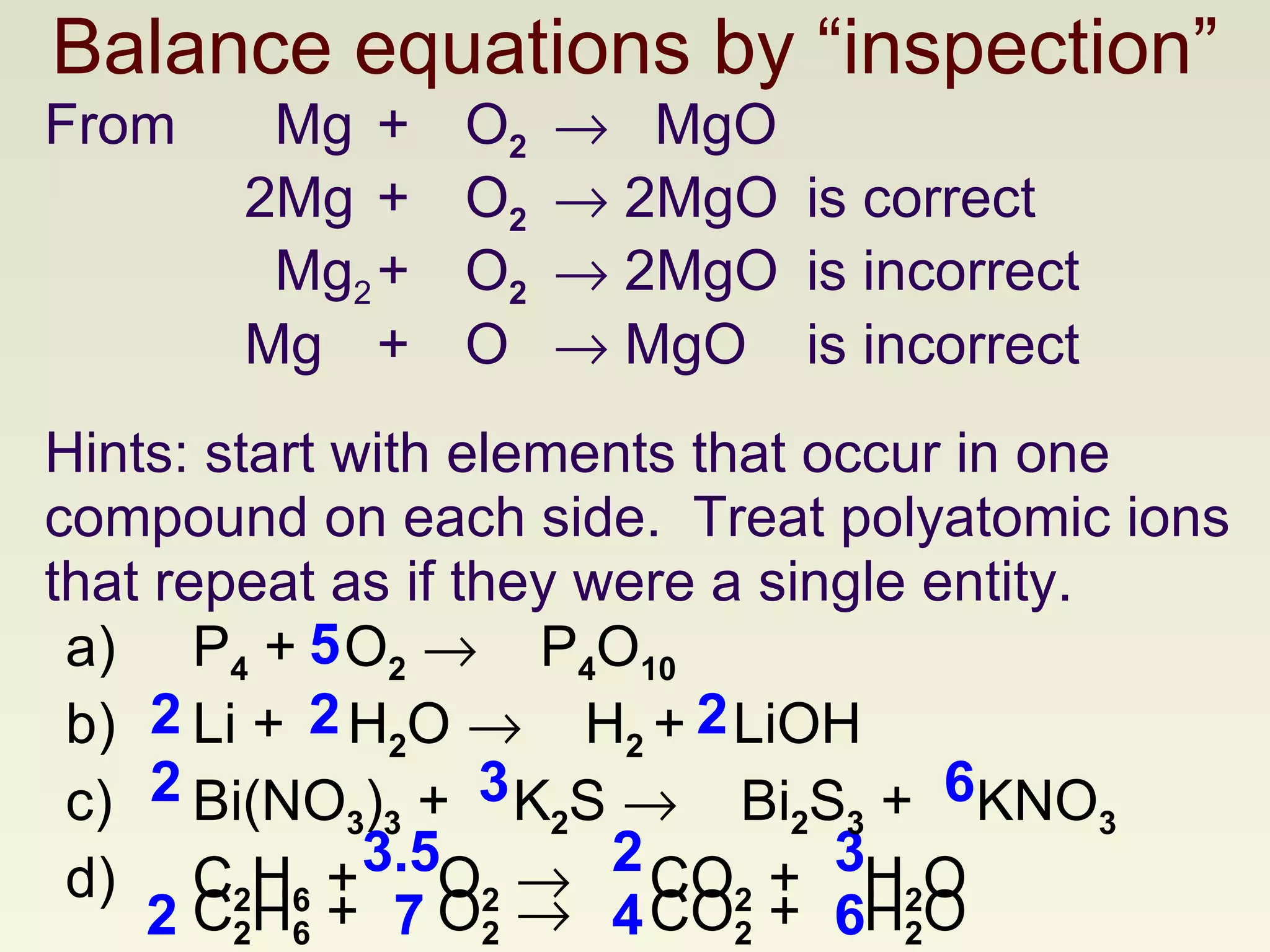
Balance equations by “inspection” Hints: start with elements that occur in one compound on each side.  Treat polyatomic ions that repeat as if they were a single entity. 5 2 3 3.5 2 7 4 6 2 2 2 2 6 3 C 2 H 6  +  O 2      CO 2  +  H 2 O a) P 4  +  O 2      P 4 O 10 b) Li +  H 2 O     H 2   +  LiOH c) Bi(NO 3 ) 3  +  K 2 S     Bi 2 S 3  +  KNO 3 d) C 2 H 6  +  O 2      CO 2  +  H 2 O From  Mg  +  O 2      MgO  2Mg  +  O 2     2MgO  is correct Mg 2 +  O 2     2MgO  is incorrect Mg  +  O    MgO  is incorrect
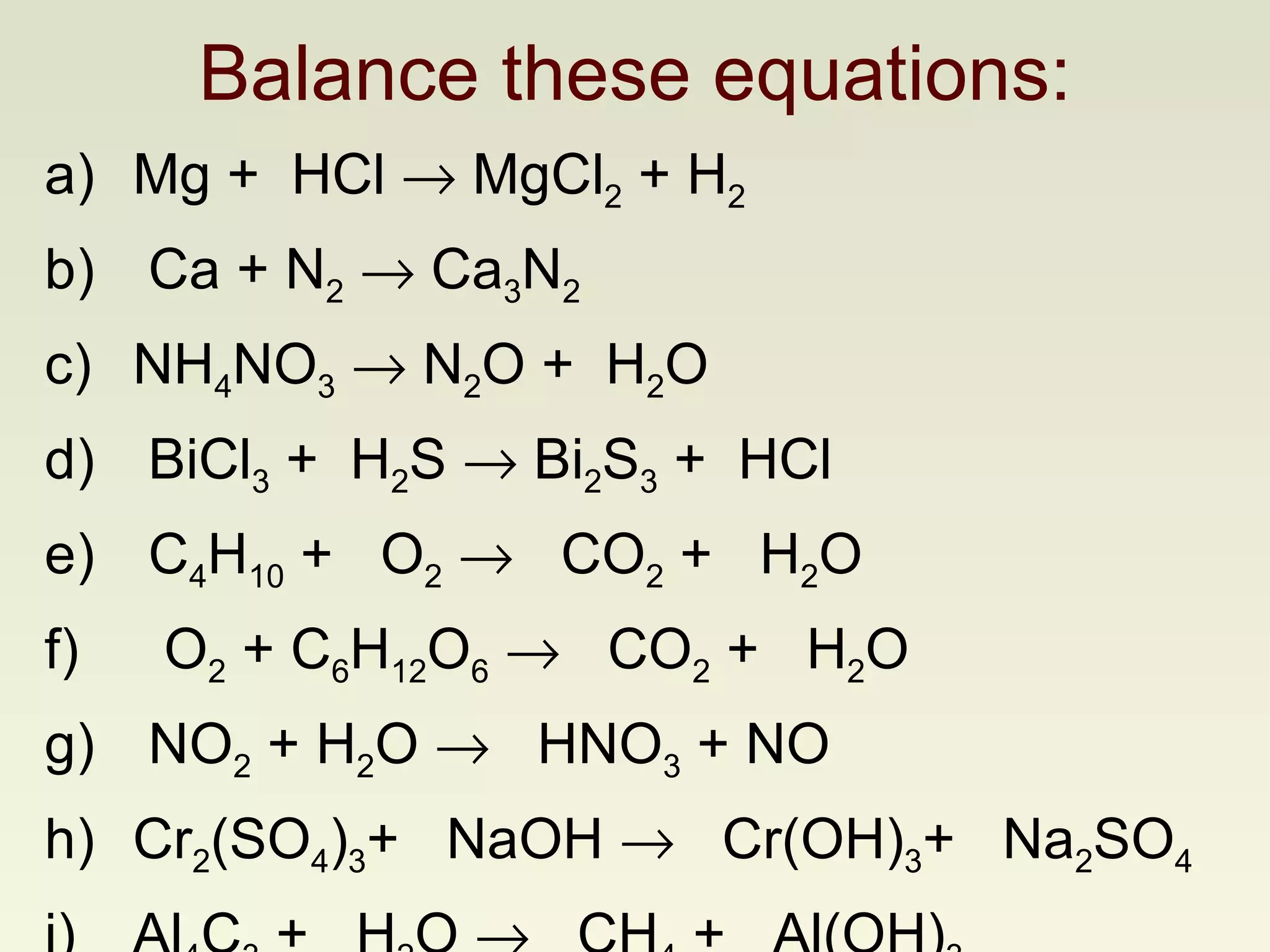
a) Mg +  HCl    MgCl 2  + H 2 b)   Ca + N 2     Ca 3 N 2 c) NH 4 NO 3     N 2 O +  H 2 O d)   BiCl 3  +  H 2 S    Bi 2 S 3  +  HCl e)   C 4 H 10  +  O 2      CO 2  +  H 2 O f)   O 2  + C 6 H 12 O 6      CO 2  +  H 2 O g)   NO 2  + H 2 O     HNO 3  + NO h) Cr 2 (SO 4 ) 3 +  NaOH     Cr(OH) 3 +  Na 2 SO 4 i) Al 4 C 3  +  H 2 O     CH 4  +  Al(OH) 3 Balance these equations:
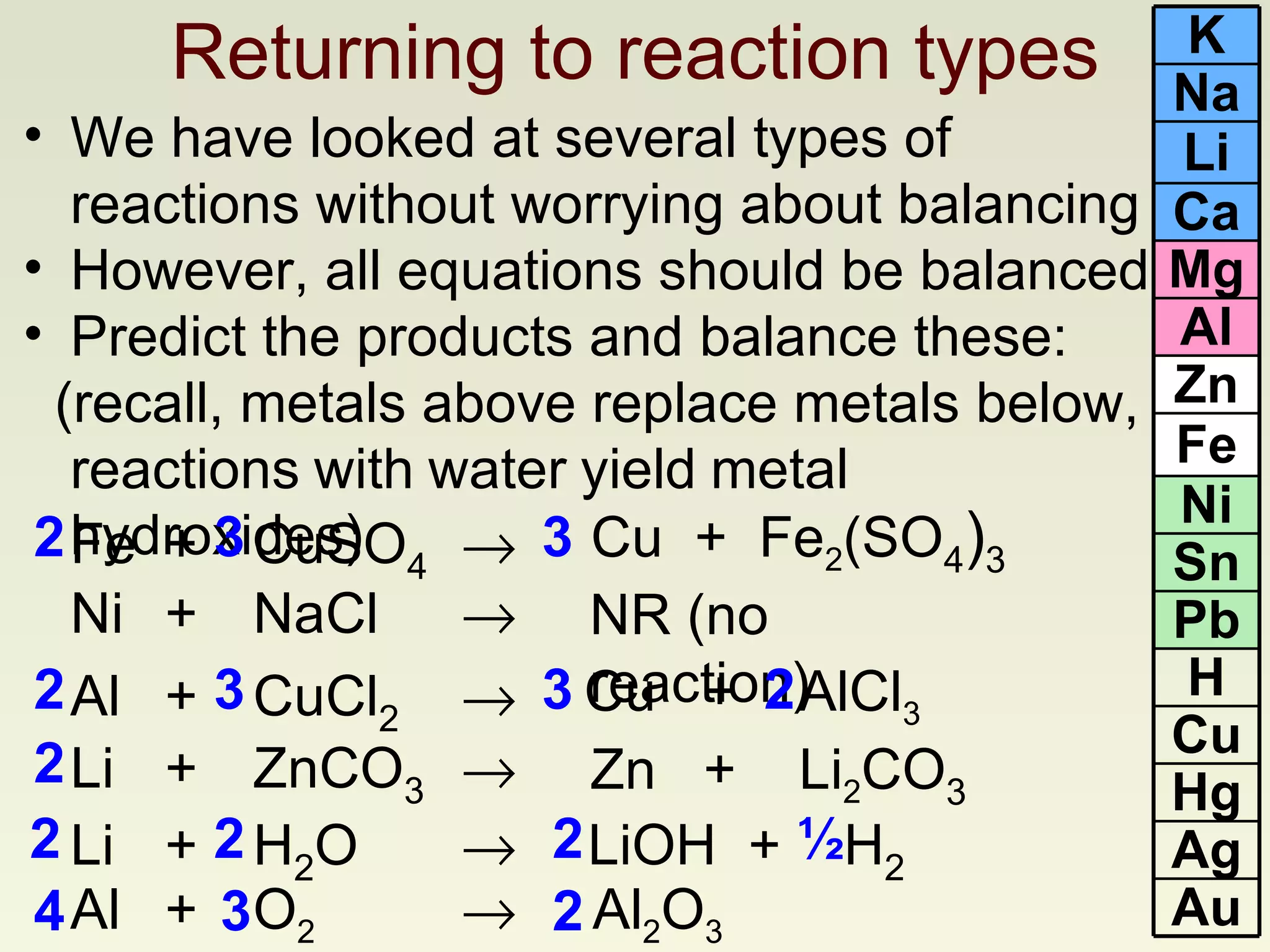
We have looked at several types of reactions without worrying about balancing However, all equations should be balanced Predict the products and balance these: (recall, metals above replace metals below, reactions   with   water   yield   metal   hydroxides) Cu  +  Fe 2 (SO 4 ) 3 NR (no reaction) Zn  +  Li 2 CO 3 Cu  +  AlCl 3 Returning to reaction types Fe  +  CuSO 4    LiOH  +  H 2 Al 2 O 3 2 Ni +  NaCl   Al +  CuCl 2    Li +  ZnCO 3      Li  +  H 2 O   Al + O 2  3 3 3 2 2 3 2 ½ 2 2 2 3 2 4 Cu Hg Ag Ca Mg Al Zn Fe Ni Sn Pb H Au Li Na K
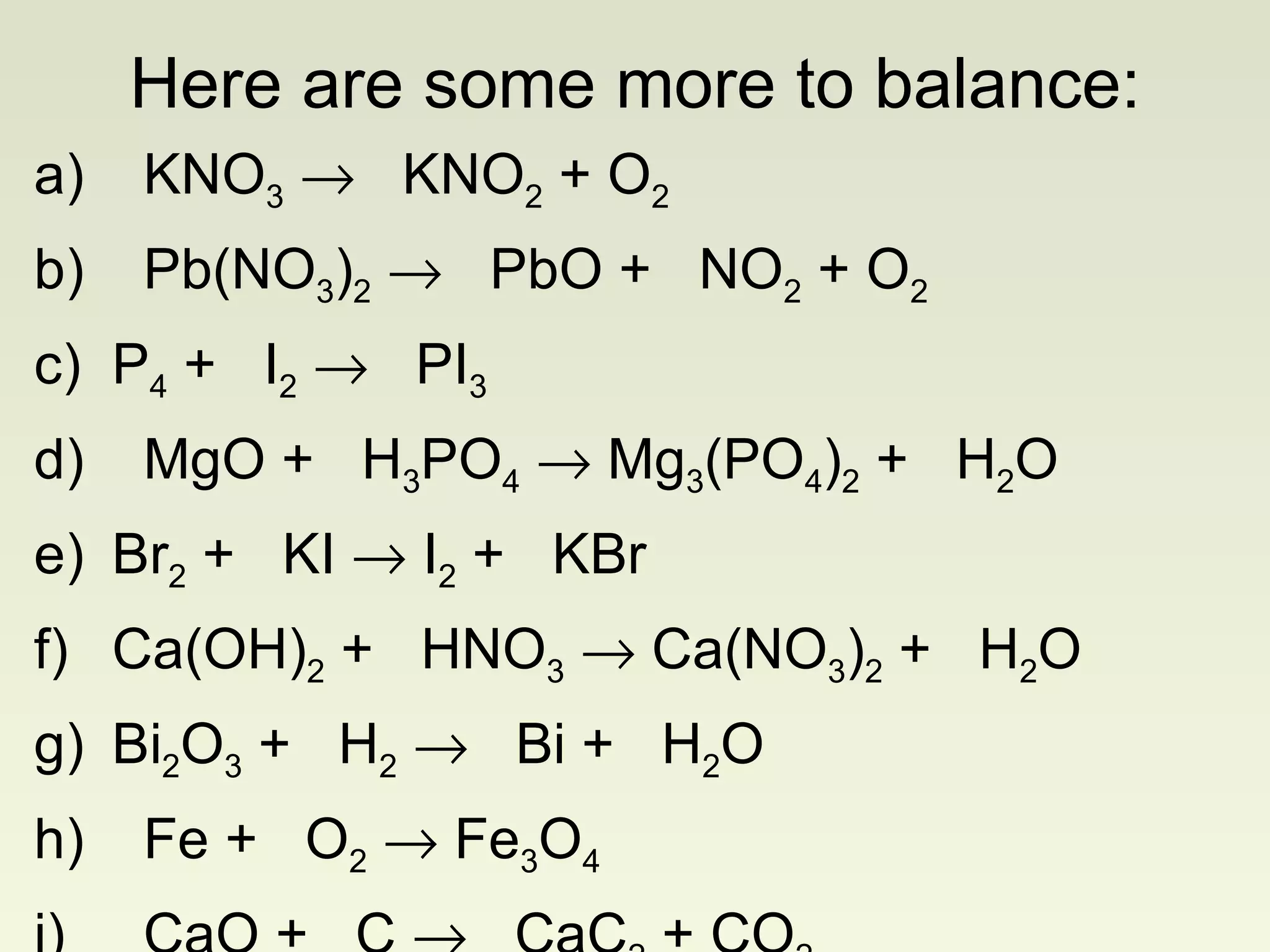
a)   KNO 3      KNO 2  + O 2 b)   Pb(NO 3 ) 2      PbO +  NO 2  + O 2 c) P 4  +  I 2      PI 3 d)   MgO +  H 3 PO 4     Mg 3 (PO 4 ) 2  +  H 2 O e) Br 2  +  KI    I 2  +  KBr f) Ca(OH) 2  +  HNO 3     Ca(NO 3 ) 2  +  H 2 O g)  Bi 2 O 3  +  H 2      Bi +  H 2 O h)   Fe +  O 2     Fe 3 O 4 i)   CaO +  C     CaC 2  + CO 2 Here are some more to balance:
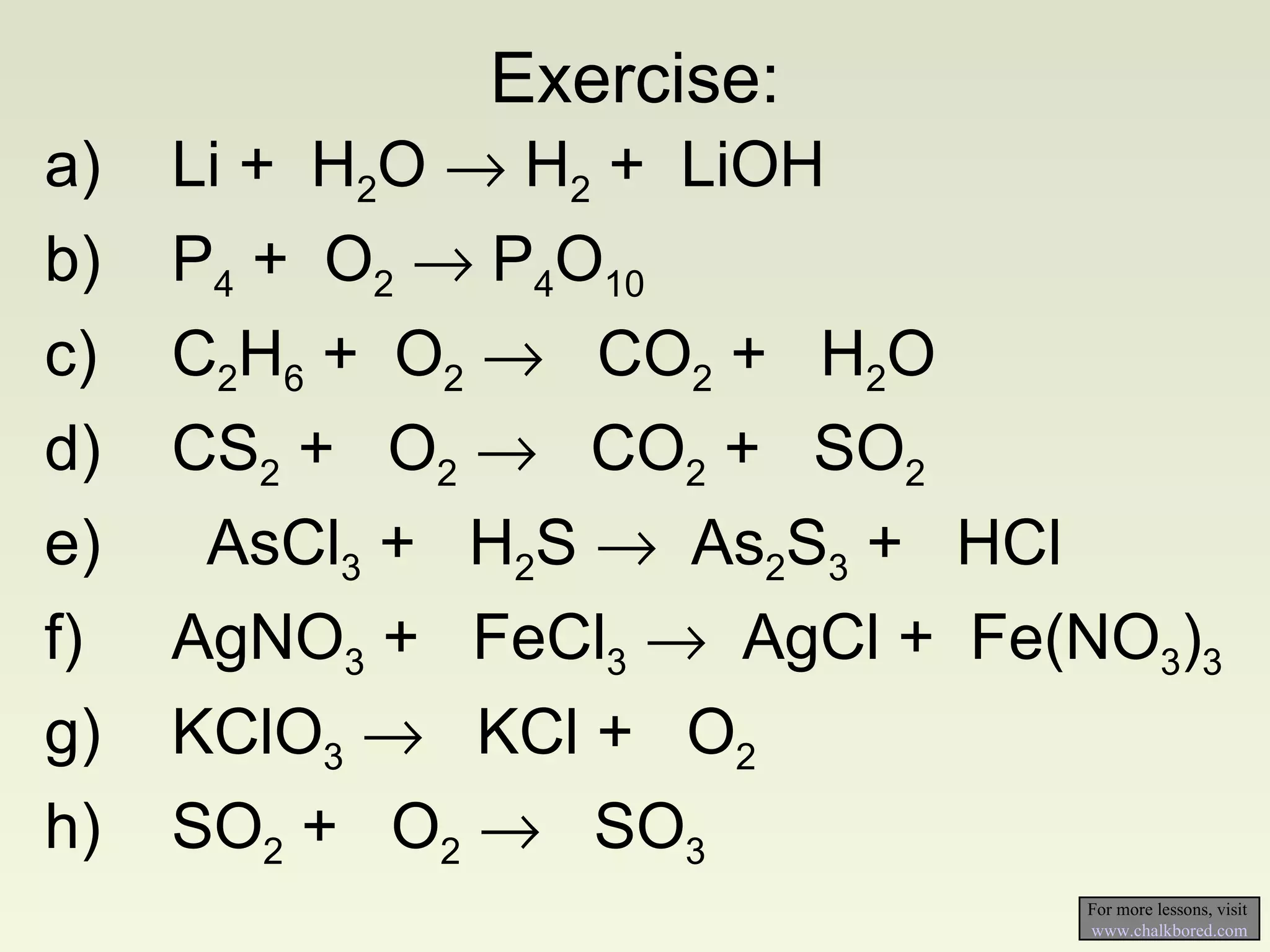
Exercise: a) Li +  H 2 O    H 2  +  LiOH b) P 4  +  O 2     P 4 O 10 c) C 2 H 6  +  O 2      CO 2  +  H 2 O d) CS 2  +  O 2      CO 2  +  SO 2 e)   AsCl 3  +  H 2 S    As 2 S 3  +  HCl f) AgNO 3  +  FeCl 3      AgCl +  Fe(NO 3 ) 3 g) KClO 3      KCl +  O 2 h) SO 2  +  O 2      SO 3 For more lessons, visit  www.chalkbored.com

Balancing Equations

  • 1.
    BALANCING CHEMICAL REACTIONS
  • 2.
    How molecules aresymbolized Cl 2 2Cl 2Cl 2 Molecules may also have brackets to indicate numbers of atoms. E.g. Ca(OH) 2 Notice that the OH is a group The 2 refers to both H and O How many of each atom are in the following? a) NaOH b) Ca(OH) 2 c) 3Ca(OH) 2 Na = 1, O = 1, H = 1 Ca = 1, O = 2, H = 2 Ca = 3, O = 6, H = 6 O H O H Ca
  • 3.
    Balancing equations: MgOThe law of conservation of mass states that matter can neither be created or destroyed Atoms are neither created nor destroyed, only rearranged in a chemical reaction The number of a particular atom is the same on both sides of a chemical equation Example: Magnesium + Oxygen Mg + O 2  MgO However, this is not balanced Left: Mg = 1, O = 2 Right: Mg = 1, O = 1 O Mg O +  Mg O
  • 4.
    Balance equations by“inspection” Hints: start with elements that occur in one compound on each side. Treat polyatomic ions that repeat as if they were a single entity. 5 2 3 3.5 2 7 4 6 2 2 2 2 6 3 C 2 H 6 + O 2  CO 2 + H 2 O a) P 4 + O 2  P 4 O 10 b) Li + H 2 O  H 2 + LiOH c) Bi(NO 3 ) 3 + K 2 S  Bi 2 S 3 + KNO 3 d) C 2 H 6 + O 2  CO 2 + H 2 O From Mg + O 2  MgO 2Mg + O 2  2MgO is correct Mg 2 + O 2  2MgO is incorrect Mg + O  MgO is incorrect
  • 5.
    a) Mg + HCl  MgCl 2 + H 2 b) Ca + N 2  Ca 3 N 2 c) NH 4 NO 3  N 2 O + H 2 O d) BiCl 3 + H 2 S  Bi 2 S 3 + HCl e) C 4 H 10 + O 2  CO 2 + H 2 O f) O 2 + C 6 H 12 O 6  CO 2 + H 2 O g) NO 2 + H 2 O  HNO 3 + NO h) Cr 2 (SO 4 ) 3 + NaOH  Cr(OH) 3 + Na 2 SO 4 i) Al 4 C 3 + H 2 O  CH 4 + Al(OH) 3 Balance these equations:
  • 6.
    We have lookedat several types of reactions without worrying about balancing However, all equations should be balanced Predict the products and balance these: (recall, metals above replace metals below, reactions with water yield metal hydroxides) Cu + Fe 2 (SO 4 ) 3 NR (no reaction) Zn + Li 2 CO 3 Cu + AlCl 3 Returning to reaction types Fe + CuSO 4  LiOH + H 2 Al 2 O 3 2 Ni + NaCl  Al + CuCl 2  Li + ZnCO 3  Li + H 2 O  Al + O 2  3 3 3 2 2 3 2 ½ 2 2 2 3 2 4 Cu Hg Ag Ca Mg Al Zn Fe Ni Sn Pb H Au Li Na K
  • 7.
    a) KNO 3  KNO 2 + O 2 b) Pb(NO 3 ) 2  PbO + NO 2 + O 2 c) P 4 + I 2  PI 3 d) MgO + H 3 PO 4  Mg 3 (PO 4 ) 2 + H 2 O e) Br 2 + KI  I 2 + KBr f) Ca(OH) 2 + HNO 3  Ca(NO 3 ) 2 + H 2 O g) Bi 2 O 3 + H 2  Bi + H 2 O h) Fe + O 2  Fe 3 O 4 i) CaO + C  CaC 2 + CO 2 Here are some more to balance:
  • 8.
    Exercise: a) Li+ H 2 O  H 2 + LiOH b) P 4 + O 2  P 4 O 10 c) C 2 H 6 + O 2  CO 2 + H 2 O d) CS 2 + O 2  CO 2 + SO 2 e) AsCl 3 + H 2 S  As 2 S 3 + HCl f) AgNO 3 + FeCl 3  AgCl + Fe(NO 3 ) 3 g) KClO 3  KCl + O 2 h) SO 2 + O 2  SO 3 For more lessons, visit www.chalkbored.com