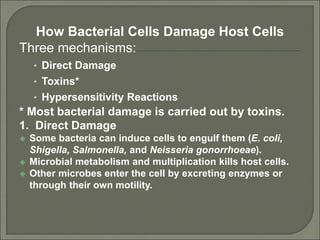
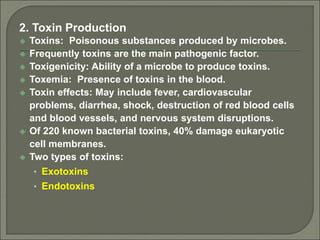
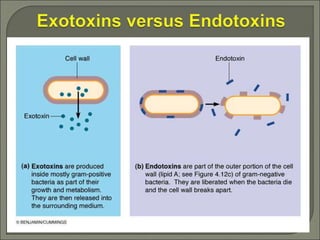
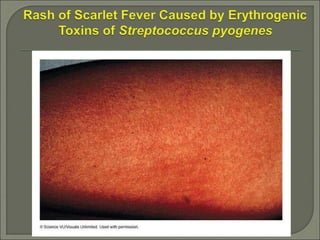
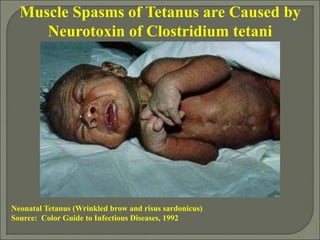
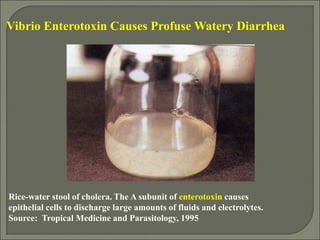
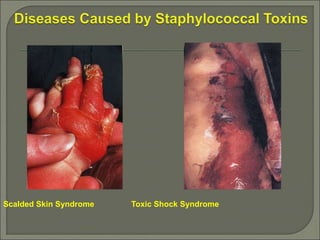
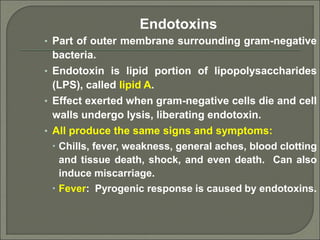
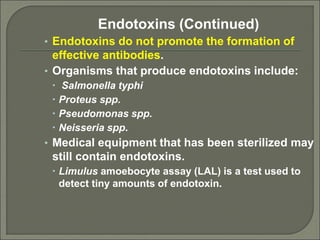
There are three main mechanisms by which bacterial cells can damage host cells: direct damage, toxin production, and hypersensitivity reactions. Toxin production, particularly exotoxins secreted by bacteria, is the primary means of pathogenicity. Exotoxins can be cytotoxic, neurotoxic, or enterotoxic, targeting and damaging host cells or tissues. Important exotoxins include those produced by Corynebacterium diphtheriae, Streptococcus pyogenes, Clostridium botulinum, Clostridium tetani, and Vibrio cholerae, each of which causes specific symptoms. Gram-negative bacteria also produce endotoxins in their cell membranes that provoke fever and other systemic



![PERI-PROSTHETIC FRACTURE NAIL-PLATE CONSTRUCT [NPC].pptx](https://cdn.slidesharecdn.com/ss_thumbnails/drarunkumardrmohamedashrafperiprostheticfrasturenail-plateconstructnpc-260209164459-7e9d15a1-thumbnail.jpg?width=640&height=640&fit=bounds)


![ONFH[AVN HIP] -TRIPLE REGIME -A NOVAL SURGICAL CONCEPT .pptx](https://cdn.slidesharecdn.com/ss_thumbnails/onfhavnhip2026koaconcalicutdrgokuldevdrmashraf-260210064517-213ec005-thumbnail.jpg?width=640&height=640&fit=bounds)


