Mechanisms of Bacterial Toxins Involved in Foodborne Illnesses
Benjamin Lucas, Ph.D.
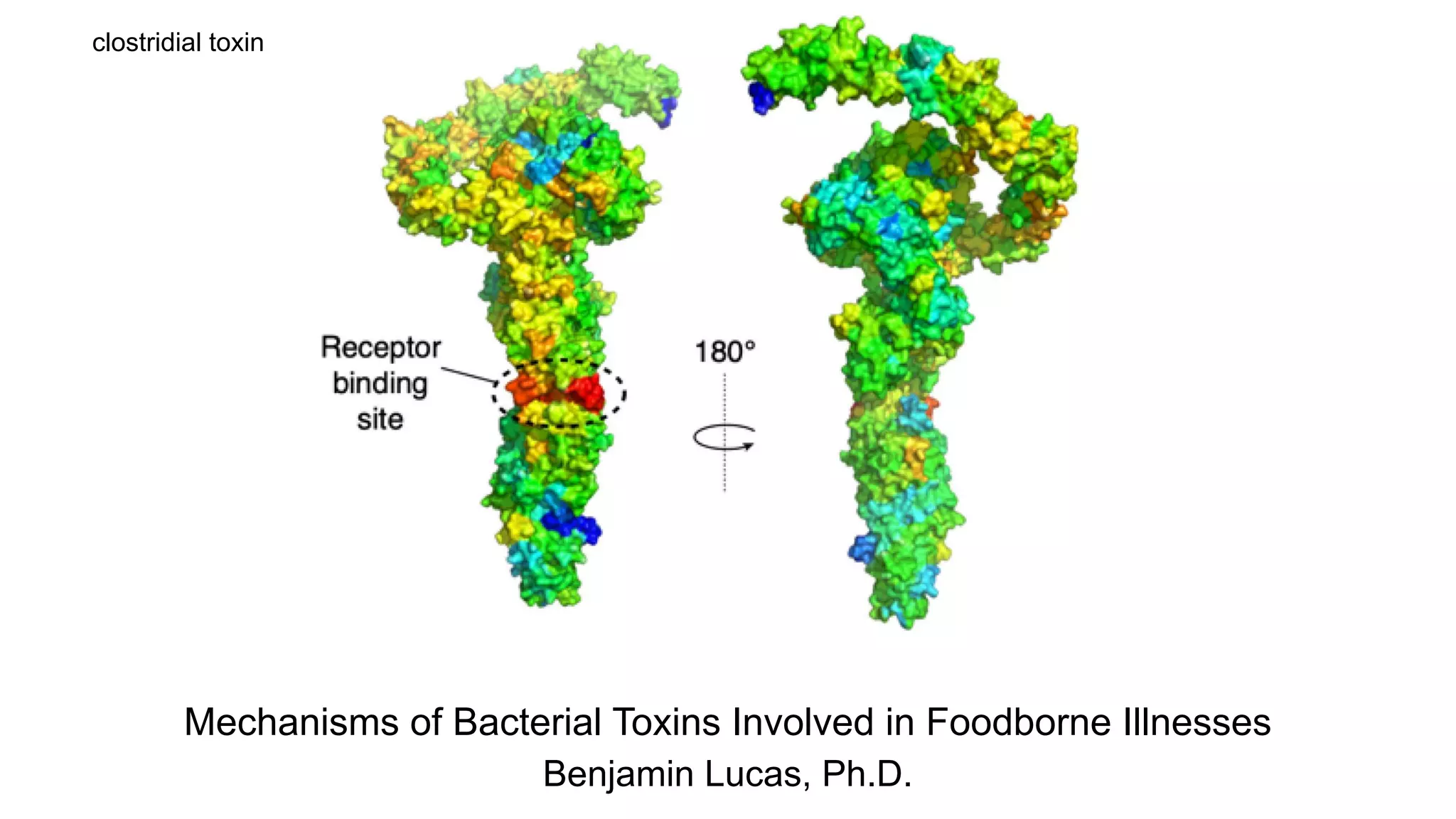
clostridial toxin
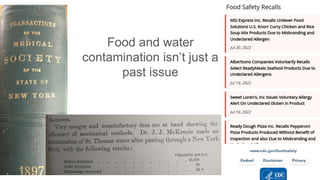
Food and water
contamination isn’t just a
past issue
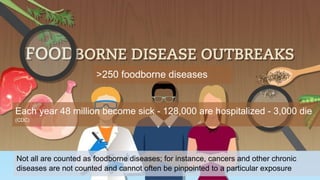
Each year 48 million become sick - 128,000 are hospitalized - 3,000 die
(CDC)
Not all are counted as foodborne diseases; for instance, cancers and other chronic
diseases are not counted and cannot often be pinpointed to a particular exposure
>250 foodborne diseases
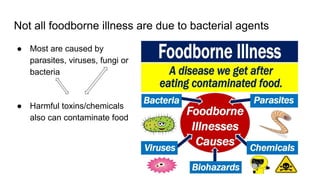
Not all foodborne illness are due to bacterial agents
● Most are caused by
parasites, viruses, fungi or
bacteria
● Harmful toxins/chemicals
also can contaminate food
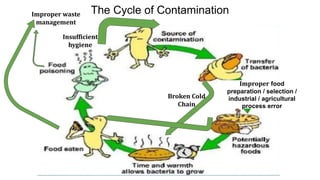
The Cycle of Contamination
Insufficient
hygiene
Improper waste
management
Improper food
preparation / selection /
industrial / agricultural
process error
Broken Cold
Chain
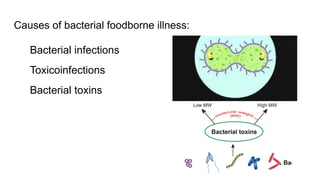
Causes of bacterial foodborne illness:
Bacterial infections
Toxicoinfections
Bacterial toxins
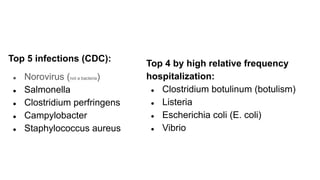
Top 5 infections (CDC):
● Norovirus (not a bacteria)
● Salmonella
● Clostridium perfringens
● Campylobacter
● Staphylococcus aureus
Top 4 by high relative frequency
hospitalization:
● Clostridium botulinum (botulism)
● Listeria
● Escherichia coli (E. coli)
● Vibrio
TOXIN: DEFINITIONS
TOXIN (in general): any chemical substance that can cause harm, either from a
biological origin or synthetic;
TOXIN (in biology): a substance that is a specific product of the metabolic
activities of a living organism and can be very stable, notably toxic when
introduced into the tissues, and typically capable of inducing antibody formation;
TOXIN (bacterial toxin): an intracellular or extracellular toxin produced by a
bacteria
(mycotoxin - toxin produced by fungus, etc.)
More definitions!
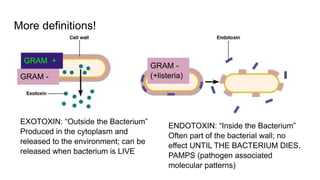
ENDOTOXIN: “Inside the Bacterium”
Often part of the bacterial wall; no
effect UNTIL THE BACTERIUM DIES.
PAMPS (pathogen associated
molecular patterns)
EXOTOXIN: “Outside the Bacterium”
Produced in the cytoplasm and
released to the environment; can be
released when bacterium is LIVE
GRAM -
(+listeria)
GRAM +
GRAM -
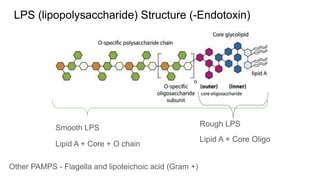
LPS (lipopolysaccharide) Structure (-Endotoxin)
Smooth LPS
Lipid A + Core + O chain
Rough LPS
Lipid A + Core Oligo
Other PAMPS - Flagella and lipoteichoic acid (Gram +)
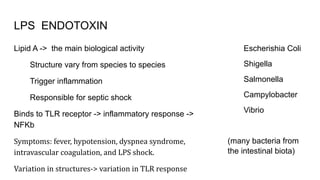
LPS ENDOTOXIN
Lipid A -> the main biological activity
Structure vary from species to species
Trigger inflammation
Responsible for septic shock
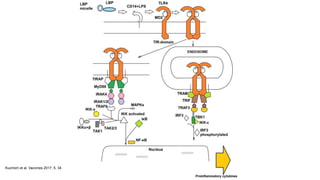
Binds to TLR receptor -> inflammatory response ->
NFKb
Symptoms: fever, hypotension, dyspnea syndrome,
intravascular coagulation, and LPS shock.
Variation in structures-> variation in TLR response
Escherishia Coli
Shigella
Salmonella
Campylobacter
Vibrio
(many bacteria from
the intestinal biota)
Kuzmich et al. Vaccines 2017, 5, 34
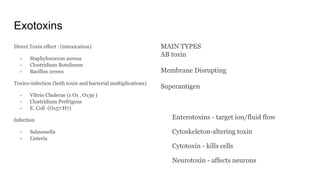
Exotoxins
Direct Toxin effect : (intoxication)
- Staphylococcus aureus
- Clostridium Botulinum
- Bacillus cereus
Toxico-infection (both toxin and bacterial multiplications)
- Vibrio Cholerae (s O1 , O139 )
- Clostridium Perfrigens
- E. Coli (O157:H7)
Infection
- Salmonella
- Listeria
Enterotoxins - target ion/fluid flow
Cytoskeleton-altering toxin
Cytotoxin - kills cells
Neurotoxin - affects neurons
MAIN TYPES
AB toxin
Membrane Disrupting
Superantigen
A-B toxins
ORIGINS
- Potentially bacteriophage
- Horizontal gene transfer
- Insertion/deletion
Basic structure : A …. and B
- Active component (enzyme or other
activity in target cell[s]/tissue)
- Binding component (receptor - binding -
specificity) allows for the toxin to be taken
in by the cell.
Types of AB toxins
- AB (botulinum toxin)
- AB2 (cytolethal distending toxin)
- AB5 (cholera toxin)
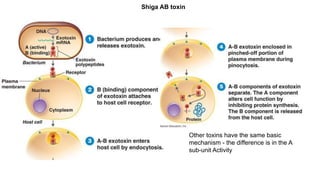
Other toxins have the same basic
mechanism - the difference is in the A
sub-unit Activity
Shiga AB toxin
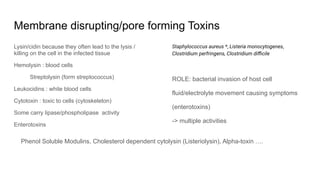
Membrane disrupting/pore forming Toxins
Lysin/cidin because they often lead to the lysis /
killing on the cell in the infected tissue
Hemolysin : blood cells
Streptolysin (form streptococcus)
Leukocidins : white blood cells
Cytotoxin : toxic to cells (cytoskeleton)
Some carry lipase/phospholipase activity
Enterotoxins
Staphylococcus aureus *, Listeria monocytogenes,
Clostridium perfringens, Clostridium difficile
ROLE: bacterial invasion of host cell
fluid/electrolyte movement causing symptoms
(enterotoxins)
-> multiple activities
Phenol Soluble Modulins, Cholesterol dependent cytolysin (Listeriolysin), Alpha-toxin ….
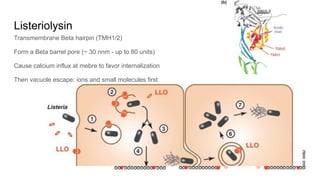
Listeriolysin
Transmembrane Beta hairpin (TMH1/2)
Form a Beta barrel pore (~ 30 nnm - up to 80 units)
Cause calcium influx at mebre to favor internalization
Then vacuole escape: ions and small molecules first
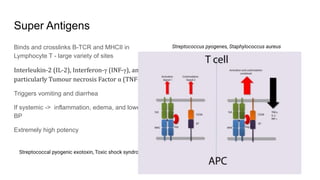
Super Antigens
Binds and crosslinks B-TCR and MHCII in
Lymphocyte T - large variety of sites
Interleukin-2 (IL-2), Interferon-γ (INF-γ), and
particularly Tumour necrosis Factor α (TNF-α)
Triggers vomiting and diarrhea
If systemic -> inflammation, edema, and lowers
BP
Extremely high potency
Streptococcus pyogenes, Staphylococcus aureus
Role -> overstimulation of T cells reduces
recruitment of phagocytes ?
Streptococcal pyogenic exotoxin, Toxic shock syndrome toxin, Staphylococcal enterotoxin A (SEA)
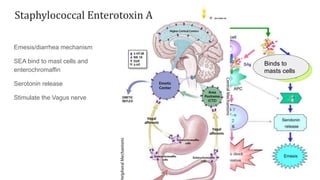
Emesis/diarrhea mechanism
SEA bind to mast cells and
enterochromaffin
Serotonin release
Stimulate the Vagus nerve
Binds to
masts cells
Staphylococcal Enterotoxin A
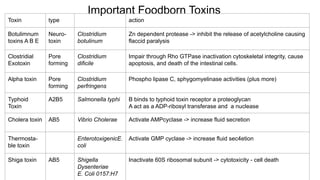
Important Foodborn Toxins
Toxin type action
Botulimnum
toxins A B E
Neuro-
toxin
Clostridium
botulinum
Zn dependent protease -> inhibit the release of acetylcholine causing
flaccid paralysis
Clostridial
Exotoxin
Pore
forming
Clostridium
dificile
Impair through Rho GTPase inactivation cytoskeletal integrity, cause
apoptosis, and death of the intestinal cells.
Alpha toxin Pore
forming
Clostridium
perfringens
Phospho lipase C, sphygomyelinase activities (plus more)
Typhoid
Toxin
A2B5 Salmonella typhi B binds to typhoid toxin receptor a proteoglycan
A act as a ADP-ribosyl transferase and a nuclease
Cholera toxin AB5 Vibrio Cholerae Activate AMPcyclase -> increase fluid secretion
Thermosta-
ble toxin
EnterotoxigenicE.
coli
Activate GMP cyclase -> increase fluid sec4etion
Shiga toxin AB5 Shigella
Dysenteriae
E. Coli 0157:H7
Inactivate 60S ribosomal subunit -> cytotoxicity - cell death
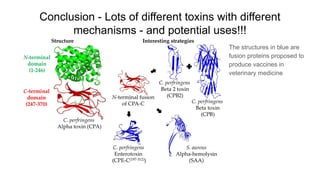
Conclusion - Lots of different toxins with different
mechanisms - and potential uses!!!
The structures in blue are
fusion proteins proposed to
produce vaccines in
veterinary medicine

Food toxins.pdf

  • 1.
    Mechanisms of BacterialToxins Involved in Foodborne Illnesses Benjamin Lucas, Ph.D. clostridial toxin
  • 2.
    Food and water contaminationisn’t just a past issue
  • 3.
    Each year 48million become sick - 128,000 are hospitalized - 3,000 die (CDC) Not all are counted as foodborne diseases; for instance, cancers and other chronic diseases are not counted and cannot often be pinpointed to a particular exposure >250 foodborne diseases
  • 4.
    Not all foodborneillness are due to bacterial agents ● Most are caused by parasites, viruses, fungi or bacteria ● Harmful toxins/chemicals also can contaminate food
  • 5.
    The Cycle ofContamination Insufficient hygiene Improper waste management Improper food preparation / selection / industrial / agricultural process error Broken Cold Chain
  • 6.
    Causes of bacterialfoodborne illness: Bacterial infections Toxicoinfections Bacterial toxins
  • 7.
    Top 5 infections(CDC): ● Norovirus (not a bacteria) ● Salmonella ● Clostridium perfringens ● Campylobacter ● Staphylococcus aureus Top 4 by high relative frequency hospitalization: ● Clostridium botulinum (botulism) ● Listeria ● Escherichia coli (E. coli) ● Vibrio
  • 8.
    TOXIN: DEFINITIONS TOXIN (ingeneral): any chemical substance that can cause harm, either from a biological origin or synthetic; TOXIN (in biology): a substance that is a specific product of the metabolic activities of a living organism and can be very stable, notably toxic when introduced into the tissues, and typically capable of inducing antibody formation; TOXIN (bacterial toxin): an intracellular or extracellular toxin produced by a bacteria (mycotoxin - toxin produced by fungus, etc.)
  • 9.
    More definitions! ENDOTOXIN: “Insidethe Bacterium” Often part of the bacterial wall; no effect UNTIL THE BACTERIUM DIES. PAMPS (pathogen associated molecular patterns) EXOTOXIN: “Outside the Bacterium” Produced in the cytoplasm and released to the environment; can be released when bacterium is LIVE GRAM - (+listeria) GRAM + GRAM -
  • 10.
    LPS (lipopolysaccharide) Structure(-Endotoxin) Smooth LPS Lipid A + Core + O chain Rough LPS Lipid A + Core Oligo Other PAMPS - Flagella and lipoteichoic acid (Gram +)
  • 11.
    LPS ENDOTOXIN Lipid A-> the main biological activity Structure vary from species to species Trigger inflammation Responsible for septic shock Binds to TLR receptor -> inflammatory response -> NFKb Symptoms: fever, hypotension, dyspnea syndrome, intravascular coagulation, and LPS shock. Variation in structures-> variation in TLR response Escherishia Coli Shigella Salmonella Campylobacter Vibrio (many bacteria from the intestinal biota)
  • 12.
    Kuzmich et al.Vaccines 2017, 5, 34
  • 13.
    Exotoxins Direct Toxin effect: (intoxication) - Staphylococcus aureus - Clostridium Botulinum - Bacillus cereus Toxico-infection (both toxin and bacterial multiplications) - Vibrio Cholerae (s O1 , O139 ) - Clostridium Perfrigens - E. Coli (O157:H7) Infection - Salmonella - Listeria Enterotoxins - target ion/fluid flow Cytoskeleton-altering toxin Cytotoxin - kills cells Neurotoxin - affects neurons MAIN TYPES AB toxin Membrane Disrupting Superantigen
  • 14.
    A-B toxins ORIGINS - Potentiallybacteriophage - Horizontal gene transfer - Insertion/deletion Basic structure : A …. and B - Active component (enzyme or other activity in target cell[s]/tissue) - Binding component (receptor - binding - specificity) allows for the toxin to be taken in by the cell. Types of AB toxins - AB (botulinum toxin) - AB2 (cytolethal distending toxin) - AB5 (cholera toxin)
  • 15.
    Other toxins havethe same basic mechanism - the difference is in the A sub-unit Activity Shiga AB toxin
  • 16.
    Membrane disrupting/pore formingToxins Lysin/cidin because they often lead to the lysis / killing on the cell in the infected tissue Hemolysin : blood cells Streptolysin (form streptococcus) Leukocidins : white blood cells Cytotoxin : toxic to cells (cytoskeleton) Some carry lipase/phospholipase activity Enterotoxins Staphylococcus aureus *, Listeria monocytogenes, Clostridium perfringens, Clostridium difficile ROLE: bacterial invasion of host cell fluid/electrolyte movement causing symptoms (enterotoxins) -> multiple activities Phenol Soluble Modulins, Cholesterol dependent cytolysin (Listeriolysin), Alpha-toxin ….
  • 17.
    Listeriolysin Transmembrane Beta hairpin(TMH1/2) Form a Beta barrel pore (~ 30 nnm - up to 80 units) Cause calcium influx at mebre to favor internalization Then vacuole escape: ions and small molecules first
  • 18.
    Super Antigens Binds andcrosslinks B-TCR and MHCII in Lymphocyte T - large variety of sites Interleukin-2 (IL-2), Interferon-γ (INF-γ), and particularly Tumour necrosis Factor α (TNF-α) Triggers vomiting and diarrhea If systemic -> inflammation, edema, and lowers BP Extremely high potency Streptococcus pyogenes, Staphylococcus aureus Role -> overstimulation of T cells reduces recruitment of phagocytes ? Streptococcal pyogenic exotoxin, Toxic shock syndrome toxin, Staphylococcal enterotoxin A (SEA)
  • 19.
    Emesis/diarrhea mechanism SEA bindto mast cells and enterochromaffin Serotonin release Stimulate the Vagus nerve Binds to masts cells Staphylococcal Enterotoxin A
  • 20.
    Important Foodborn Toxins Toxintype action Botulimnum toxins A B E Neuro- toxin Clostridium botulinum Zn dependent protease -> inhibit the release of acetylcholine causing flaccid paralysis Clostridial Exotoxin Pore forming Clostridium dificile Impair through Rho GTPase inactivation cytoskeletal integrity, cause apoptosis, and death of the intestinal cells. Alpha toxin Pore forming Clostridium perfringens Phospho lipase C, sphygomyelinase activities (plus more) Typhoid Toxin A2B5 Salmonella typhi B binds to typhoid toxin receptor a proteoglycan A act as a ADP-ribosyl transferase and a nuclease Cholera toxin AB5 Vibrio Cholerae Activate AMPcyclase -> increase fluid secretion Thermosta- ble toxin EnterotoxigenicE. coli Activate GMP cyclase -> increase fluid sec4etion Shiga toxin AB5 Shigella Dysenteriae E. Coli 0157:H7 Inactivate 60S ribosomal subunit -> cytotoxicity - cell death
  • 21.
    Conclusion - Lotsof different toxins with different mechanisms - and potential uses!!! The structures in blue are fusion proteins proposed to produce vaccines in veterinary medicine