Bacteria and Disease
• A pathogen is a disease-causing
  agent.
• Bacteria can damage the tissues
  of the affected organism directly
  or release toxins that harm the
  body.
Antibiotics
• Compounds that block the
  growth and reproduction of
  bacteria.
• Examples: penicillin &
  tetracycline
Common Diseases Caused by
Bacteria
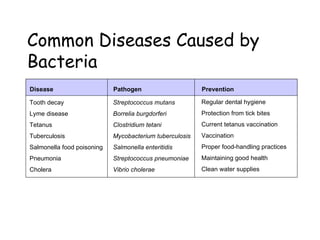
Disease                     Pathogen                     Prevention

Tooth decay                 Streptococcus mutans         Regular dental hygiene
Lyme disease                Borrelia burgdorferi         Protection from tick bites
Tetanus                     Clostridium tetani           Current tetanus vaccination
Tuberculosis                Mycobacterium tuberculosis   Vaccination
Salmonella food poisoning   Salmonella enteritidis       Proper food-handling practices
Pneumonia                   Streptococcus pneumoniae     Maintaining good health
Cholera                     Vibrio cholerae              Clean water supplies
Controlling Bacteria

• Sterilization – destroys bacteria
  by subjecting them either to great
  heat or chemical action.
• Disinfectants are chemical solutions
  that kill bacteria.
Controlling Bacteria
• Food is refrigerated because
  bacteria grow slower at low
  temperatures.
• Food can be sterilized by cooking at
  high temperatures.
Helpful Bacteria:
Nitrogen fixation
(Nitrogen Cycle)
  convert nitrogen gas into nitrates in
  the soil used by plants
Helpful Bacteria

Saprobes:
   break down dead organic matter
 (decomposers)
Food flavorings:
         produced by fermentation
     vinegar, yogurt, cheese, sour
 cream, pickles, sauerkraut
Antibiotic production:
some bacteria produce antibiotics
that will kill other forms of
bacteria
Bioremediation –
 help clean-up oil spills
Works in Landfills to break down
wastes (including some hazardous
wastes)
Waste- water treatment plants
Helpful Bacteria

• Provide Vitamin K (E coli)- clots
  blood & keeps bones strong
• Keep invading bacteria, viruses,
  & yeast in check.
• Make Lactase-enzyme needed to
  break down dairy products
Bacteria Reproduction
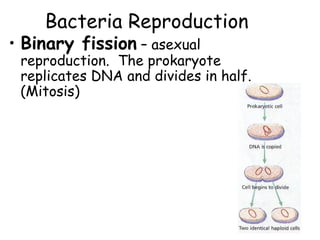
• Binary fission – asexual
 reproduction. The prokaryote
 replicates DNA and divides in half.
 (Mitosis)
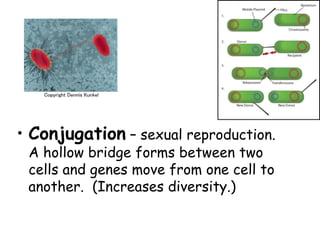
• Conjugation – sexual reproduction.
 A hollow bridge forms between two
 cells and genes move from one cell to
 another. (Increases diversity.)

Bacteria two

  • 1.
    Bacteria and Disease •A pathogen is a disease-causing agent. • Bacteria can damage the tissues of the affected organism directly or release toxins that harm the body.
  • 2.
    Antibiotics • Compounds thatblock the growth and reproduction of bacteria. • Examples: penicillin & tetracycline
  • 3.
    Common Diseases Causedby Bacteria Disease Pathogen Prevention Tooth decay Streptococcus mutans Regular dental hygiene Lyme disease Borrelia burgdorferi Protection from tick bites Tetanus Clostridium tetani Current tetanus vaccination Tuberculosis Mycobacterium tuberculosis Vaccination Salmonella food poisoning Salmonella enteritidis Proper food-handling practices Pneumonia Streptococcus pneumoniae Maintaining good health Cholera Vibrio cholerae Clean water supplies
  • 4.
    Controlling Bacteria • Sterilization– destroys bacteria by subjecting them either to great heat or chemical action. • Disinfectants are chemical solutions that kill bacteria.
  • 5.
    Controlling Bacteria • Foodis refrigerated because bacteria grow slower at low temperatures. • Food can be sterilized by cooking at high temperatures.
  • 6.
    Helpful Bacteria: Nitrogen fixation (NitrogenCycle) convert nitrogen gas into nitrates in the soil used by plants
  • 7.
    Helpful Bacteria Saprobes: break down dead organic matter (decomposers) Food flavorings: produced by fermentation vinegar, yogurt, cheese, sour cream, pickles, sauerkraut
  • 8.
    Antibiotic production: some bacteriaproduce antibiotics that will kill other forms of bacteria Bioremediation – help clean-up oil spills Works in Landfills to break down wastes (including some hazardous wastes) Waste- water treatment plants
  • 9.
    Helpful Bacteria • ProvideVitamin K (E coli)- clots blood & keeps bones strong • Keep invading bacteria, viruses, & yeast in check. • Make Lactase-enzyme needed to break down dairy products
  • 10.
    Bacteria Reproduction • Binaryfission – asexual reproduction. The prokaryote replicates DNA and divides in half. (Mitosis)
  • 11.
    • Conjugation –sexual reproduction. A hollow bridge forms between two cells and genes move from one cell to another. (Increases diversity.)