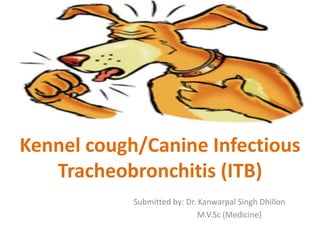
Kennel cough/Canine Infectious
Tracheobronchitis (ITB)
Submitted by: Dr. Kanwarpal Singh Dhillon
M.V.Sc (Medicine)
INTRODUCTION
• It is a collection of highly contagious
infectious diseases of the canine respiratory
tract that cause acute tracheobronchitis and
sudden onset of a paroxysmal cough lasting
several days.
ETIOLOGY
• Two most important causes of canine ITB are
canine parainfluenza virus (CPIV) and
Bordetella bronchiseptica
• Other infectious agents occasionally isolated
from coughing dogs include canine
adenoviruses (especially CAV-2), canine
herpesvirus, reoviruses (types 1, 2, and 3), and
mycoplasmas
Transmission
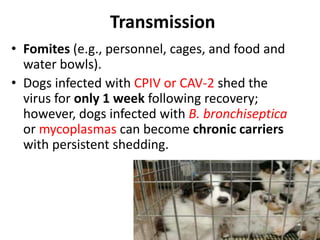
• Fomites (e.g., personnel, cages, and food and
water bowls).
• Dogs infected with CPIV or CAV-2 shed the
virus for only 1 week following recovery;
however, dogs infected with B. bronchiseptica
or mycoplasmas can become chronic carriers
with persistent shedding.
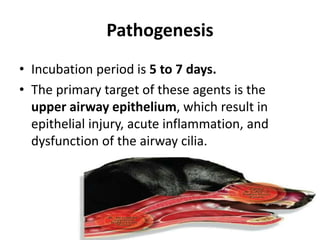
Pathogenesis
• Incubation period is 5 to 7 days.
• The primary target of these agents is the
upper airway epithelium, which result in
epithelial injury, acute inflammation, and
dysfunction of the airway cilia.
CLINICAL SIGNS
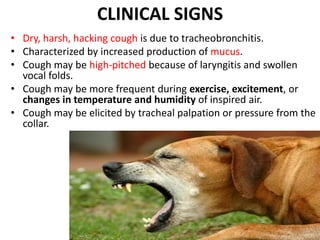
• Dry, harsh, hacking cough is due to tracheobronchitis.
• Characterized by increased production of mucus.
• Cough may be high-pitched because of laryngitis and swollen
vocal folds.
• Cough may be more frequent during exercise, excitement, or
changes in temperature and humidity of inspired air.
• Cough may be elicited by tracheal palpation or pressure from the
collar.
CLINICAL SIGNS
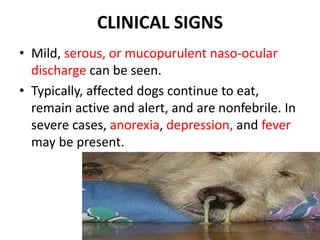
• Mild, serous, or mucopurulent naso-ocular
discharge can be seen.
• Typically, affected dogs continue to eat,
remain active and alert, and are nonfebrile. In
severe cases, anorexia, depression, and fever
may be present.
DIAGNOSIS
• Based on exposure history and clinical signs,
especially the sudden onset of a severe cough
in a previously healthy dog.
Hemogram:
• Mild ITB: CBC is usually normal or shows a
stress response (mature neutrophilia,
lymphopenia).
• Severe ITB: Neutrophilic leukocytosis with a
left shift is seen with complicating pneumonia.
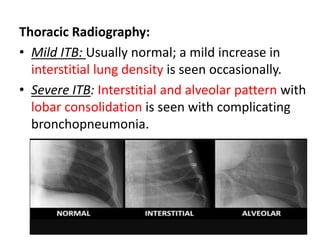
Thoracic Radiography:
• Mild ITB: Usually normal; a mild increase in
interstitial lung density is seen occasionally.
• Severe ITB: Interstitial and alveolar pattern with
lobar consolidation is seen with complicating
bronchopneumonia.
Airway Cytology :
• Evaluation of airway cytology is only indicated in
severe, febrile, or complicated ITB. Obtain
specimens by transtracheal aspiration,
endotracheal tube lavage, or bronchoscopic
lavage or swab.
• Findings include increased mucus, mucopurulent
exudate, and sometimes bacteria.
Cultures :
• Nasal swabs or tracheobronchial specimens can
be cultured for Bordetella and mycoplasma.
Virology and Serology :
• Virus isolation can identify CPIV and CAV-2 from
nasopharyngeal or tracheal swabs.
TREATMENT
• Antibiotics :
– Doxycycline (5–10 mg/kg PO q12h) for 2 to 4 weeks;
effective for both Bordetella and mycoplasma
– Amoxicillin/clavulanate (12.5–25 mg/kg POq12h) for 2
to 4 weeks
– Azithromycin (5 mg/kg PO, once daily) for 5 to 7 days.
– Others: enrofloxacin, trimethoprim/sulfa
• Antitussives :
– Hydrocodone (0.22 mg/kg PO q6–12h) and butorphanol
(0.55–1.1 mg/kg PO q6–12h).
• Corticosteroids :
– Prednisolone 0.25–0.5 mg/kg PO q12h
TREATMENT
• Bronchodilators :
– Theophylline: Dog: 10 mg/kg PO q12 h
– Albuterol: Dog: 50 mg/kg PO q12 h
– Terbutalin: Dog: 1.25–5.0 mg/dog PO q12 h
• Supportive Care :
– Provide adequate fluid intake, airway
humidification, nutritional support, and rest.
PREVENTION
• Prevention strategies include vaccination
and kennel management practices.
• Vaccination :
– routine canine vaccination (CAV-2 and
CPIV).
• Kennel Prevention :
– Avoid overcrowded, high-density
confinement.
– Isolate infected (coughing) animals.
– Use caretaker hygiene to prevent fomite
spread.
– Ensure proper kennel ventilation.
– Use disinfectants such as sodium
hypochlorite, chlorhexidine, and
benzalkonium Cl.
REFERENCES…
• Saunders Manual of Small animal Practice.
• The Merck veterinary manual
• Textbook of Preventive veterinary medicine &
epidemiology
THANKS

Kennel cough

  • 1.
    Kennel cough/Canine Infectious Tracheobronchitis(ITB) Submitted by: Dr. Kanwarpal Singh Dhillon M.V.Sc (Medicine)
  • 2.
    INTRODUCTION • It isa collection of highly contagious infectious diseases of the canine respiratory tract that cause acute tracheobronchitis and sudden onset of a paroxysmal cough lasting several days.
  • 3.
    ETIOLOGY • Two mostimportant causes of canine ITB are canine parainfluenza virus (CPIV) and Bordetella bronchiseptica • Other infectious agents occasionally isolated from coughing dogs include canine adenoviruses (especially CAV-2), canine herpesvirus, reoviruses (types 1, 2, and 3), and mycoplasmas
  • 4.
    Transmission • Fomites (e.g.,personnel, cages, and food and water bowls). • Dogs infected with CPIV or CAV-2 shed the virus for only 1 week following recovery; however, dogs infected with B. bronchiseptica or mycoplasmas can become chronic carriers with persistent shedding.
  • 5.
    Pathogenesis • Incubation periodis 5 to 7 days. • The primary target of these agents is the upper airway epithelium, which result in epithelial injury, acute inflammation, and dysfunction of the airway cilia.
  • 6.
    CLINICAL SIGNS • Dry,harsh, hacking cough is due to tracheobronchitis. • Characterized by increased production of mucus. • Cough may be high-pitched because of laryngitis and swollen vocal folds. • Cough may be more frequent during exercise, excitement, or changes in temperature and humidity of inspired air. • Cough may be elicited by tracheal palpation or pressure from the collar.
  • 7.
    CLINICAL SIGNS • Mild,serous, or mucopurulent naso-ocular discharge can be seen. • Typically, affected dogs continue to eat, remain active and alert, and are nonfebrile. In severe cases, anorexia, depression, and fever may be present.
  • 8.
    DIAGNOSIS • Based onexposure history and clinical signs, especially the sudden onset of a severe cough in a previously healthy dog. Hemogram: • Mild ITB: CBC is usually normal or shows a stress response (mature neutrophilia, lymphopenia). • Severe ITB: Neutrophilic leukocytosis with a left shift is seen with complicating pneumonia.
  • 9.
    Thoracic Radiography: • MildITB: Usually normal; a mild increase in interstitial lung density is seen occasionally. • Severe ITB: Interstitial and alveolar pattern with lobar consolidation is seen with complicating bronchopneumonia.
  • 10.
    Airway Cytology : •Evaluation of airway cytology is only indicated in severe, febrile, or complicated ITB. Obtain specimens by transtracheal aspiration, endotracheal tube lavage, or bronchoscopic lavage or swab. • Findings include increased mucus, mucopurulent exudate, and sometimes bacteria. Cultures : • Nasal swabs or tracheobronchial specimens can be cultured for Bordetella and mycoplasma. Virology and Serology : • Virus isolation can identify CPIV and CAV-2 from nasopharyngeal or tracheal swabs.
  • 11.
    TREATMENT • Antibiotics : –Doxycycline (5–10 mg/kg PO q12h) for 2 to 4 weeks; effective for both Bordetella and mycoplasma – Amoxicillin/clavulanate (12.5–25 mg/kg POq12h) for 2 to 4 weeks – Azithromycin (5 mg/kg PO, once daily) for 5 to 7 days. – Others: enrofloxacin, trimethoprim/sulfa • Antitussives : – Hydrocodone (0.22 mg/kg PO q6–12h) and butorphanol (0.55–1.1 mg/kg PO q6–12h). • Corticosteroids : – Prednisolone 0.25–0.5 mg/kg PO q12h
  • 12.
    TREATMENT • Bronchodilators : –Theophylline: Dog: 10 mg/kg PO q12 h – Albuterol: Dog: 50 mg/kg PO q12 h – Terbutalin: Dog: 1.25–5.0 mg/dog PO q12 h • Supportive Care : – Provide adequate fluid intake, airway humidification, nutritional support, and rest.
  • 13.
    PREVENTION • Prevention strategiesinclude vaccination and kennel management practices. • Vaccination : – routine canine vaccination (CAV-2 and CPIV). • Kennel Prevention : – Avoid overcrowded, high-density confinement. – Isolate infected (coughing) animals. – Use caretaker hygiene to prevent fomite spread. – Ensure proper kennel ventilation. – Use disinfectants such as sodium hypochlorite, chlorhexidine, and benzalkonium Cl.
  • 14.
    REFERENCES… • Saunders Manualof Small animal Practice. • The Merck veterinary manual • Textbook of Preventive veterinary medicine & epidemiology THANKS