What is an ‘Automobile’??
A self propelled vehicle used for transportation of
goods & passengers on the ground is called an
Automobile.
Eg. Moped, Scooter, motorcycle, Car, jeep, truck,
tractor, ships, aircrafts, rocket etc.
History
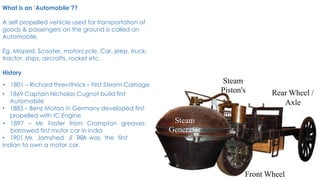
• 1801 – Richard threvithrick – First Steam Carriage
• 1869 Captain Nicholas Cugnot build first
Automobile
• 1885 – Benz Motors in Germany developed first
propelled with IC Engine
• 1897 – Mr. Foster from Crompton greaves
borrowed first motor car in india
• 1901 Mr. Jamshed Ji TATA was the first
Indian to own a motor car.
Steam
Piston's Rear Wheel /
Axle
Front Wheel
Steam
Generator
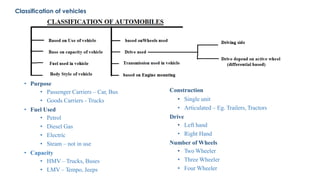
Classification of vehicles
• Purpose
• Passenger Carriers – Car, Bus
• Goods Carriers - Trucks
• Fuel Used
• Petrol
• Diesel Gas
• Electric
• Steam – not in use
• Capacity
• HMV – Trucks, Buses
• LMV – Tempo, Jeeps
Construction
• Single unit
• Articulated – Eg. Trailers, Tractors
Drive
• Left hand
• Right Hand
Number of Wheels
• Two Wheeler
• Three Wheeler
• Four Wheeler
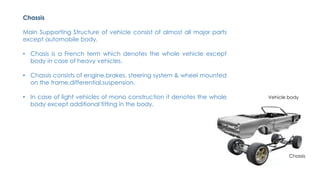
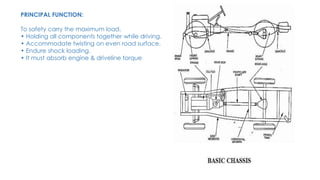
Chassis
Main Supporting Structure of vehicle consist of almost all major parts
except automobile body.
• Chasis is a French term which denotes the whole vehicle except
body in case of heavy vehicles.
• Chassis consists of engine,brakes, steering system & wheel mounted
on the frame,differential,suspension.
• In case of light vehicles of mono construction it denotes the whole
body except additional fitting in the body.
Chassis
Vehicle body
PRINCIPAL FUNCTION:
To safety carry the maximum load.
• Holding all components together while driving.
• Accommodate twisting on even road surface.
• Endure shock loading.
• It must absorb engine & driveline torque
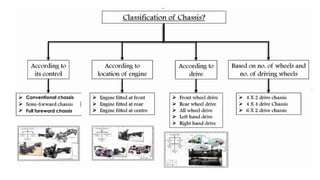
Conventional chassis
Full foreward chassis
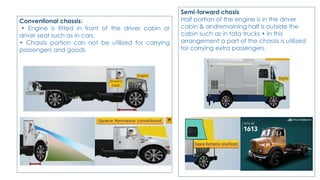
Conventional chassis:
• Engine is fitted in front of the driver cabin or
driver seat such as in cars.
• Chassis portion can not be utilized for carrying
passengers and goods
Semi-forward chasis
Half portion of the engine is in the driver
cabin & andremaining half is outside the
cabin such as in tata trucks • In this
arrangement a part of the chassis is utilized
for carrying extra passengers.
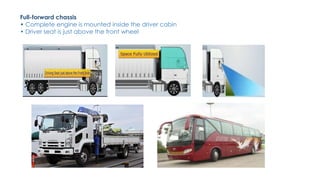
Full-forward chassis
• Complete engine is mounted inside the driver cabin
• Driver seat is just above the front wheel
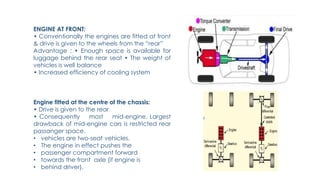
ENGINE AT FRONT:
• Conventionally the engines are fitted at front
& drive is given to the wheels from the “rear”
Advantage : • Enough space is available for
luggage behind the rear seat • The weight of
vehicles is well balance
• Increased efficiency of cooling system
Engine fitted at the centre of the chassis:
• Drive is given to the rear
• Consequently most mid-engine. Largest
drawback of mid-engine cars is restricted rear
passanger space.
• vehicles are two-seat vehicles.
• The engine in effect pushes the
• passenger compartment forward
• towards the front axle (if engine is
• behind driver).
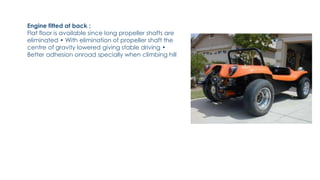
Engine fitted at back :
Flat floor is available since long propeller shafts are
eliminated • With elimination of propeller shaft the
centre of gravity lowered giving stable driving •
Better adhesion onroad specially when climbing hill
FRAME :
• Frame is the main part of chassis on which remaining part of
chassis are mounted.
• Frame should be extremely rigid and strong so that it can
withstand shocks, twist, stresses and vibrations when vehicle is
moving on road.

Automobile and chassis

  • 1.
    What is an‘Automobile’?? A self propelled vehicle used for transportation of goods & passengers on the ground is called an Automobile. Eg. Moped, Scooter, motorcycle, Car, jeep, truck, tractor, ships, aircrafts, rocket etc. History • 1801 – Richard threvithrick – First Steam Carriage • 1869 Captain Nicholas Cugnot build first Automobile • 1885 – Benz Motors in Germany developed first propelled with IC Engine • 1897 – Mr. Foster from Crompton greaves borrowed first motor car in india • 1901 Mr. Jamshed Ji TATA was the first Indian to own a motor car. Steam Piston's Rear Wheel / Axle Front Wheel Steam Generator
  • 2.
    Classification of vehicles •Purpose • Passenger Carriers – Car, Bus • Goods Carriers - Trucks • Fuel Used • Petrol • Diesel Gas • Electric • Steam – not in use • Capacity • HMV – Trucks, Buses • LMV – Tempo, Jeeps Construction • Single unit • Articulated – Eg. Trailers, Tractors Drive • Left hand • Right Hand Number of Wheels • Two Wheeler • Three Wheeler • Four Wheeler
  • 4.
    Chassis Main Supporting Structureof vehicle consist of almost all major parts except automobile body. • Chasis is a French term which denotes the whole vehicle except body in case of heavy vehicles. • Chassis consists of engine,brakes, steering system & wheel mounted on the frame,differential,suspension. • In case of light vehicles of mono construction it denotes the whole body except additional fitting in the body. Chassis Vehicle body
  • 5.
    PRINCIPAL FUNCTION: To safetycarry the maximum load. • Holding all components together while driving. • Accommodate twisting on even road surface. • Endure shock loading. • It must absorb engine & driveline torque
  • 6.
  • 7.
    Conventional chassis: • Engineis fitted in front of the driver cabin or driver seat such as in cars. • Chassis portion can not be utilized for carrying passengers and goods Semi-forward chasis Half portion of the engine is in the driver cabin & andremaining half is outside the cabin such as in tata trucks • In this arrangement a part of the chassis is utilized for carrying extra passengers.
  • 8.
    Full-forward chassis • Completeengine is mounted inside the driver cabin • Driver seat is just above the front wheel
  • 9.
    ENGINE AT FRONT: •Conventionally the engines are fitted at front & drive is given to the wheels from the “rear” Advantage : • Enough space is available for luggage behind the rear seat • The weight of vehicles is well balance • Increased efficiency of cooling system Engine fitted at the centre of the chassis: • Drive is given to the rear • Consequently most mid-engine. Largest drawback of mid-engine cars is restricted rear passanger space. • vehicles are two-seat vehicles. • The engine in effect pushes the • passenger compartment forward • towards the front axle (if engine is • behind driver).
  • 10.
    Engine fitted atback : Flat floor is available since long propeller shafts are eliminated • With elimination of propeller shaft the centre of gravity lowered giving stable driving • Better adhesion onroad specially when climbing hill
  • 11.
    FRAME : • Frameis the main part of chassis on which remaining part of chassis are mounted. • Frame should be extremely rigid and strong so that it can withstand shocks, twist, stresses and vibrations when vehicle is moving on road.