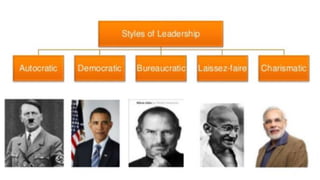
autocratic LEADERSHIP
“ADOLF HITLER”
PREPARED BY
MS.THEERTHA .P.KRISHNA
IIND YEAR MSC NURSING
MIMS CON
•“Those who want to live, let
them fight, and those who do
not want to fight in this world
of eternal struggle do not
deserve to live.”
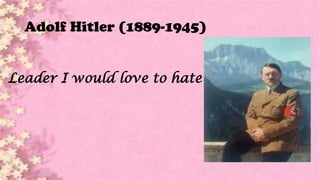
Adolf Hitler (1889-1945)
Leader I would love to hate
Adolf Hitler (1889-1945)
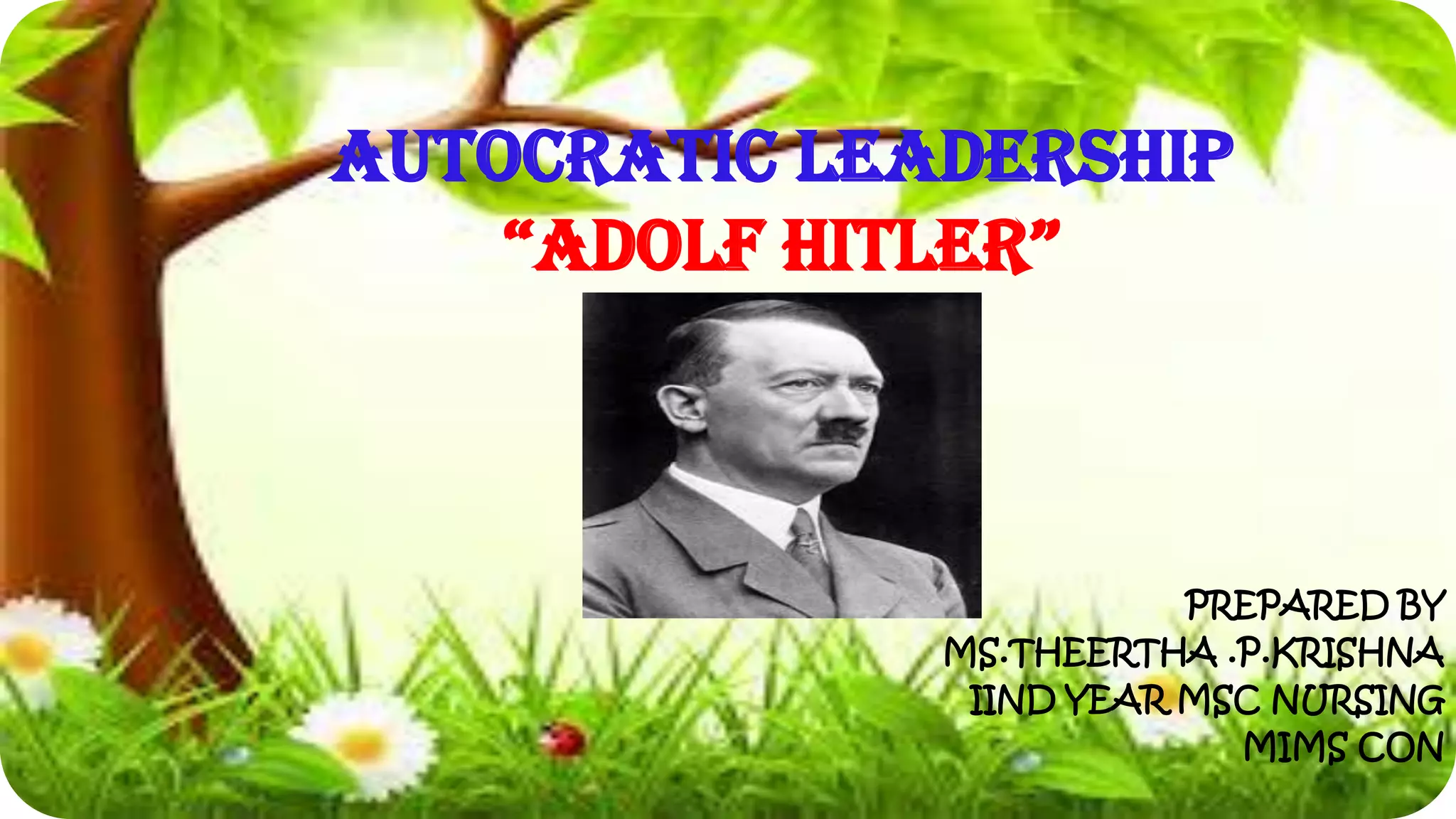
• Adolf Hitler (1889-1945) was the Supreme Chancellor of Nazi
Party (1933-1945) and the leader of National Socialist
German Worker Party. He was also well-known for
triggering The Second World War and creating fascist
dictatorship which had caused about 62 million deaths (1939-
1945)
Who Was Adolf Hitler?
Famous for being fascist Dictator of Germany
Born – 20th April 1889, Braunau am Inn, Austria
Parents – Alois Hitler, Klara Hitler
Siblings – Edmund, Paula
Married – Eva Braun
Children – None
Died – 30th April 1945, Berlin, Germany committed suicide
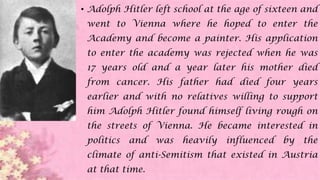
• Adolph Hitler left school at the age of sixteen and
went to Vienna where he hoped to enter the
Academy and become a painter. His application
to enter the academy was rejected when he was
17 years old and a year later his mother died
from cancer. His father had died four years
earlier and with no relatives willing to support
him Adolph Hitler found himself living rough on
the streets of Vienna. He became interested in
politics and was heavily influenced by the
climate of anti-Semitism that existed in Austria
at that time.
Synopsis of his life..
1914: Serves in World War I as a runner for the 16th
Bavarian Reserve Regiment.
1919: Appointed aVerbindungsmann (police spy) of
the Reichswehr and meets Dietrich Eckart who
teaches him how to dress and speak influentially
1924: Sent to prison for a failed coup d'etat, writes
Mein Kampf
 1929: Meets his lifelong mistress Eva Braun
1932: Granted German Citizenship
1933: Becomes Chancellor of the Nazi Party
1935: Violates the Treaty of Versailles by building a massive
military force
1936: An Axis is declared between Germany and Italy,
Japan, Hungary, Romania and Bulgaria join later.
1939: Orders the Nazi Party to begin carrying out the "Final
Solution of the Jewish Question" or The Holocaust
1941: Breaks the non-aggression pact with Stalin and
invades the Soviet Union
1941: Declares war against the United States
 1943: Becomes increasingly erratic after being defeated at
the Battle of Stalingrad
1944: Celebrates his 56th birthday in a bunker below the
Reich Chancellery
1945: Commits suicide by shooting himself and biting into a
cyanide capsule
Influential
• Hitler was influential because he used nationalism as a tool
for igniting the interests of people to follow in his cause. like
Napoleon he was power driven. Influentiality has to do with
the behaviours of people one can manipulate either by
sanction or charisma and Hitler was a man skilled with the
sword as well as words. he was influential because he had a
big vision and people need big visions to be motivated so he
motivated people.
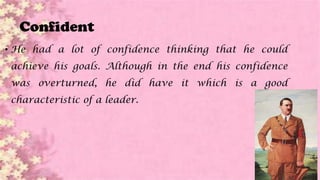
Confident
• He had a lot of confidence thinking that he could
achieve his goals. Although in the end his confidence
was overturned, he did have it which is a good
characteristic of a leader.
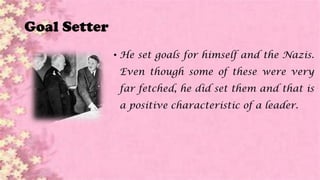
Goal Setter
• He set goals for himself and the Nazis.
Even though some of these were very
far fetched, he did set them and that is
a positive characteristic of a leader.
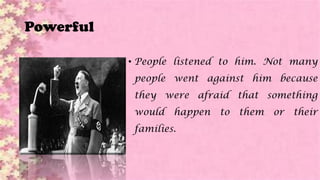
Powerful
• People listened to him. Not many
people went against him because
they were afraid that something
would happen to them or their
families.
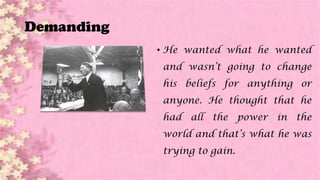
Demanding
• He wanted what he wanted
and wasn’t going to change
his beliefs for anything or
anyone. He thought that he
had all the power in the
world and that’s what he was
trying to gain.
Leadership lessons from Adolf Hitler
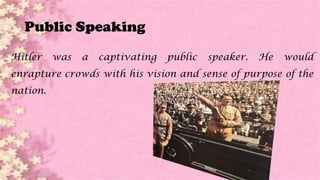
Public Speaking
Hitler was a captivating public speaker. He would
enrapture crowds with his vision and sense of purpose of the
nation.
Understanding human nature
• Adolf Hitler understood human nature very well.
He knew how to use human nature to his personal
gain and with that knowledge, he rallied the whole
nation behind him.
Constant Influence
Adolf Hitler successfully used propaganda to bring
the whole nation under his will. Through the constant
use of media and communications, he managed to
cause a whole nation to think alike to serve his cause.
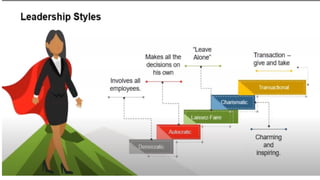
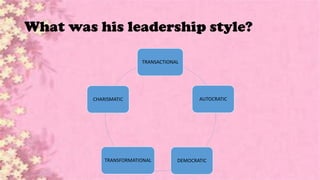
What was his leadership style?
TRANSACTIONAL
AUTOCRATIC
DEMOCRATICTRANSFORMATIONAL
CHARISMATIC
AUTOCRATIC
LEADERSHIP
• Hitler leadership styles comes under Autocratic
Style.In this approach, the leader focuses
communication on goal achievements, and spends
smaller amount of time using supportive behaviors. In
this style, a leader gives instructions about what and
how goals are to be achieved by subordinates and then
supervises them carefully.
Autocratic leadership style

Autocratic leadership style

  • 1.
    autocratic LEADERSHIP “ADOLF HITLER” PREPAREDBY MS.THEERTHA .P.KRISHNA IIND YEAR MSC NURSING MIMS CON
  • 2.
    •“Those who wantto live, let them fight, and those who do not want to fight in this world of eternal struggle do not deserve to live.”
  • 5.
    Adolf Hitler (1889-1945) LeaderI would love to hate
  • 6.
    Adolf Hitler (1889-1945) •Adolf Hitler (1889-1945) was the Supreme Chancellor of Nazi Party (1933-1945) and the leader of National Socialist German Worker Party. He was also well-known for triggering The Second World War and creating fascist dictatorship which had caused about 62 million deaths (1939- 1945)
  • 7.
    Who Was AdolfHitler? Famous for being fascist Dictator of Germany Born – 20th April 1889, Braunau am Inn, Austria Parents – Alois Hitler, Klara Hitler Siblings – Edmund, Paula Married – Eva Braun Children – None Died – 30th April 1945, Berlin, Germany committed suicide
  • 8.
    • Adolph Hitlerleft school at the age of sixteen and went to Vienna where he hoped to enter the Academy and become a painter. His application to enter the academy was rejected when he was 17 years old and a year later his mother died from cancer. His father had died four years earlier and with no relatives willing to support him Adolph Hitler found himself living rough on the streets of Vienna. He became interested in politics and was heavily influenced by the climate of anti-Semitism that existed in Austria at that time.
  • 9.
    Synopsis of hislife.. 1914: Serves in World War I as a runner for the 16th Bavarian Reserve Regiment. 1919: Appointed aVerbindungsmann (police spy) of the Reichswehr and meets Dietrich Eckart who teaches him how to dress and speak influentially 1924: Sent to prison for a failed coup d'etat, writes Mein Kampf  1929: Meets his lifelong mistress Eva Braun 1932: Granted German Citizenship
  • 10.
    1933: Becomes Chancellorof the Nazi Party 1935: Violates the Treaty of Versailles by building a massive military force 1936: An Axis is declared between Germany and Italy, Japan, Hungary, Romania and Bulgaria join later. 1939: Orders the Nazi Party to begin carrying out the "Final Solution of the Jewish Question" or The Holocaust 1941: Breaks the non-aggression pact with Stalin and invades the Soviet Union
  • 11.
    1941: Declares waragainst the United States  1943: Becomes increasingly erratic after being defeated at the Battle of Stalingrad 1944: Celebrates his 56th birthday in a bunker below the Reich Chancellery 1945: Commits suicide by shooting himself and biting into a cyanide capsule
  • 13.
    Influential • Hitler wasinfluential because he used nationalism as a tool for igniting the interests of people to follow in his cause. like Napoleon he was power driven. Influentiality has to do with the behaviours of people one can manipulate either by sanction or charisma and Hitler was a man skilled with the sword as well as words. he was influential because he had a big vision and people need big visions to be motivated so he motivated people.
  • 14.
    Confident • He hada lot of confidence thinking that he could achieve his goals. Although in the end his confidence was overturned, he did have it which is a good characteristic of a leader.
  • 15.
    Goal Setter • Heset goals for himself and the Nazis. Even though some of these were very far fetched, he did set them and that is a positive characteristic of a leader.
  • 16.
    Powerful • People listenedto him. Not many people went against him because they were afraid that something would happen to them or their families.
  • 17.
    Demanding • He wantedwhat he wanted and wasn’t going to change his beliefs for anything or anyone. He thought that he had all the power in the world and that’s what he was trying to gain.
  • 18.
  • 19.
    Public Speaking Hitler wasa captivating public speaker. He would enrapture crowds with his vision and sense of purpose of the nation.
  • 20.
    Understanding human nature •Adolf Hitler understood human nature very well. He knew how to use human nature to his personal gain and with that knowledge, he rallied the whole nation behind him.
  • 21.
    Constant Influence Adolf Hitlersuccessfully used propaganda to bring the whole nation under his will. Through the constant use of media and communications, he managed to cause a whole nation to think alike to serve his cause.
  • 23.
    What was hisleadership style? TRANSACTIONAL AUTOCRATIC DEMOCRATICTRANSFORMATIONAL CHARISMATIC
  • 24.
  • 25.
    • Hitler leadershipstyles comes under Autocratic Style.In this approach, the leader focuses communication on goal achievements, and spends smaller amount of time using supportive behaviors. In this style, a leader gives instructions about what and how goals are to be achieved by subordinates and then supervises them carefully.