Becoming an Effective Leader
BY
MRS. BOLA (YUSUF BOLA)
OLUKAODE-CHARLES
Are Leaders Born or
Made?
What Is Leadership?
 Many theories (trait, behavioral, etc.)
 Is it the same as management?
 A definition of leadership
 Formal and informal leaders
 Leadership and management
Trait Theory
• Historic findings reveal that leaders and followers
vary by
- intelligence
- dominance
- self-confidence
- level of energy and activity
- task-relevant knowledge
• Contemporary findings show that
- people tend to perceive that someone is a leader when he or
she exhibits traits associated with intelligence, masculinity, and
dominance
- people want their leaders to be credible
- credible leaders are honest, forward-looking, inspiring, and
competent
Leadership Traits: represent the personal characteristics that
differentiate leaders from followers.
Trait Theory (continued)
• Gender and leadership
- men and women were seen as displaying more task and
social leadership, respectively
- women used a more democratic or participative style
than men, and men used a more autocratic and directive
style than women
- men and women were equally assertive
- women executives, when rated by their peers, managers
and direct reports, scored higher than their male
counterparts on a variety of effectiveness criteria
Key Leadership Traits to Develop
 Self-Confidence
 Trustworthiness
 Assertiveness
 Emotional Stability
 Sense of Humor
 Self-Awareness and Self-Objectivity
 Cognitive Skills
 Emotional Intelligence
 Passion and Enthusiasm
Transactional versus Charismatic
Leadership
Transactional Leadership: focuses on the interpersonal
interactions between managers and employees
• Transactional Leaders
- use contingent rewards to motivate employees
- exert corrective action only when employees
fail to obtain performance goals
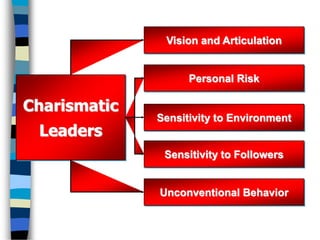
Charismatic
Leaders
Vision and Articulation
Personal Risk
Sensitivity to Environment
Sensitivity to Followers
Unconventional Behavior
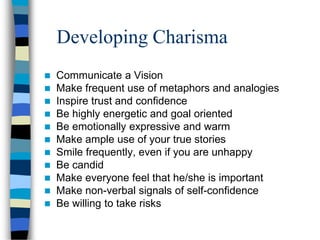
Developing Charisma
 Communicate a Vision
 Make frequent use of metaphors and analogies
 Inspire trust and confidence
 Be highly energetic and goal oriented
 Be emotionally expressive and warm
 Make ample use of your true stories
 Smile frequently, even if you are unhappy
 Be candid
 Make everyone feel that he/she is important
 Make non-verbal signals of self-confidence
 Be willing to take risks
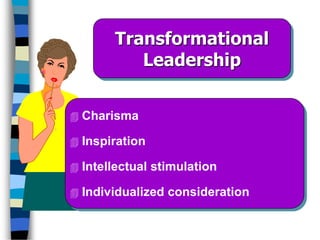
Transformational
Leadership
 Charisma
 Inspiration
 Intellectual stimulation
 Individualized consideration
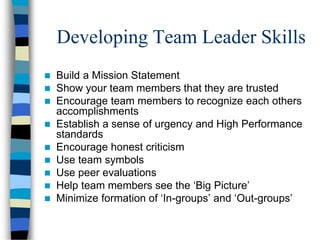
Developing Team Leader Skills
 Build a Mission Statement
 Show your team members that they are trusted
 Encourage team members to recognize each others
accomplishments
 Establish a sense of urgency and High Performance
standards
 Encourage honest criticism
 Use team symbols
 Use peer evaluations
 Help team members see the ‘Big Picture’
 Minimize formation of ‘In-groups’ and ‘Out-groups’
Servant Leadership
and Superleadership
• Servant Leadership represents a philosophy in which leaders
focus on increased service to others rather than to oneself.
• A superleader is someone who leads others to lead
themselves by developing employees’ self-management skills.
• Superleaders attempt to increase employees’ feelings of
personal control and intrinsic motivation.
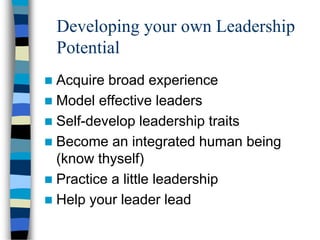
Developing your own Leadership
Potential
 Acquire broad experience
 Model effective leaders
 Self-develop leadership traits
 Become an integrated human being
(know thyself)
 Practice a little leadership
 Help your leader lead

LEADERSHIP PRESENTATION

  • 1.
    Becoming an EffectiveLeader BY MRS. BOLA (YUSUF BOLA) OLUKAODE-CHARLES
  • 2.
  • 3.
    What Is Leadership? Many theories (trait, behavioral, etc.)  Is it the same as management?  A definition of leadership  Formal and informal leaders  Leadership and management
  • 4.
    Trait Theory • Historicfindings reveal that leaders and followers vary by - intelligence - dominance - self-confidence - level of energy and activity - task-relevant knowledge • Contemporary findings show that - people tend to perceive that someone is a leader when he or she exhibits traits associated with intelligence, masculinity, and dominance - people want their leaders to be credible - credible leaders are honest, forward-looking, inspiring, and competent Leadership Traits: represent the personal characteristics that differentiate leaders from followers.
  • 5.
    Trait Theory (continued) •Gender and leadership - men and women were seen as displaying more task and social leadership, respectively - women used a more democratic or participative style than men, and men used a more autocratic and directive style than women - men and women were equally assertive - women executives, when rated by their peers, managers and direct reports, scored higher than their male counterparts on a variety of effectiveness criteria
  • 6.
    Key Leadership Traitsto Develop  Self-Confidence  Trustworthiness  Assertiveness  Emotional Stability  Sense of Humor  Self-Awareness and Self-Objectivity  Cognitive Skills  Emotional Intelligence  Passion and Enthusiasm
  • 7.
    Transactional versus Charismatic Leadership TransactionalLeadership: focuses on the interpersonal interactions between managers and employees • Transactional Leaders - use contingent rewards to motivate employees - exert corrective action only when employees fail to obtain performance goals
  • 8.
    Charismatic Leaders Vision and Articulation PersonalRisk Sensitivity to Environment Sensitivity to Followers Unconventional Behavior
  • 9.
    Developing Charisma  Communicatea Vision  Make frequent use of metaphors and analogies  Inspire trust and confidence  Be highly energetic and goal oriented  Be emotionally expressive and warm  Make ample use of your true stories  Smile frequently, even if you are unhappy  Be candid  Make everyone feel that he/she is important  Make non-verbal signals of self-confidence  Be willing to take risks
  • 10.
    Transformational Leadership  Charisma  Inspiration Intellectual stimulation  Individualized consideration
  • 11.
    Developing Team LeaderSkills  Build a Mission Statement  Show your team members that they are trusted  Encourage team members to recognize each others accomplishments  Establish a sense of urgency and High Performance standards  Encourage honest criticism  Use team symbols  Use peer evaluations  Help team members see the ‘Big Picture’  Minimize formation of ‘In-groups’ and ‘Out-groups’
  • 12.
    Servant Leadership and Superleadership •Servant Leadership represents a philosophy in which leaders focus on increased service to others rather than to oneself. • A superleader is someone who leads others to lead themselves by developing employees’ self-management skills. • Superleaders attempt to increase employees’ feelings of personal control and intrinsic motivation.
  • 13.
    Developing your ownLeadership Potential  Acquire broad experience  Model effective leaders  Self-develop leadership traits  Become an integrated human being (know thyself)  Practice a little leadership  Help your leader lead