
Integrating Large Scale Sequencing
into Clinical Practice
Heidi L. Rehm, PhD, FACMGHeidi L. Rehm, PhD, FACMG
Director, Laboratory for Molecular Medicine, PCPGM
Assistant Professor of Pathology, BWH, MGH, HMS
Laboratory for Molecular Medicine at PCPGM
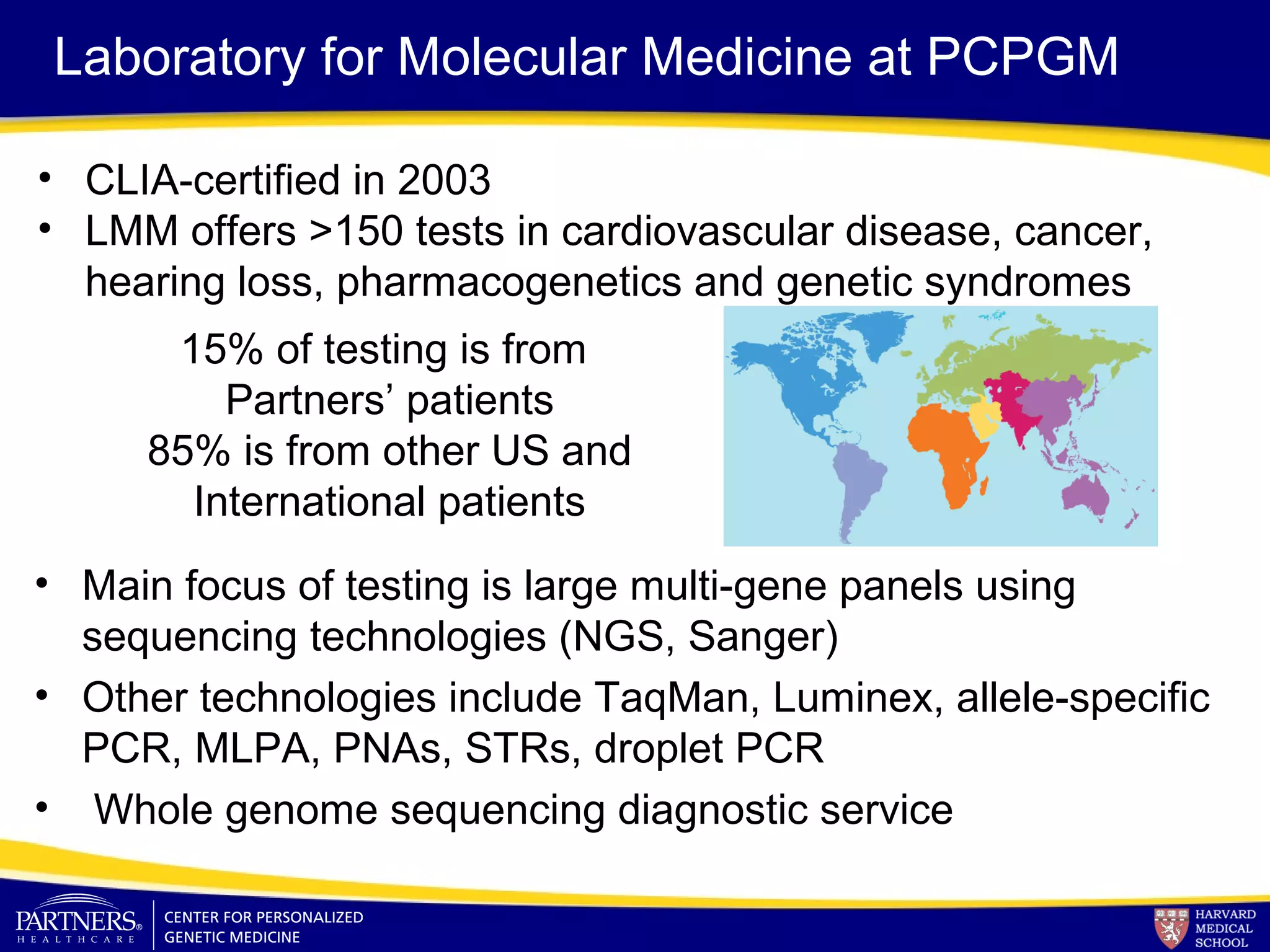
15% of testing is from
Partners’ patients
85% is from other US and
International patients
• CLIA-certified in 2003
• LMM offers >150 tests in cardiovascular disease, cancer,
hearing loss, pharmacogenetics and genetic syndromes
• Main focus of testing is large multi-gene panels using
sequencing technologies (NGS, Sanger)
• Other technologies include TaqMan, Luminex, allele-specific
PCR, MLPA, PNAs, STRs, droplet PCR
• Whole genome sequencing diagnostic service
Ryan Shay
Antonio Puerta
DeCarlo Polk
Joe KennedyJason
Collier
HCM SCD in Athletes
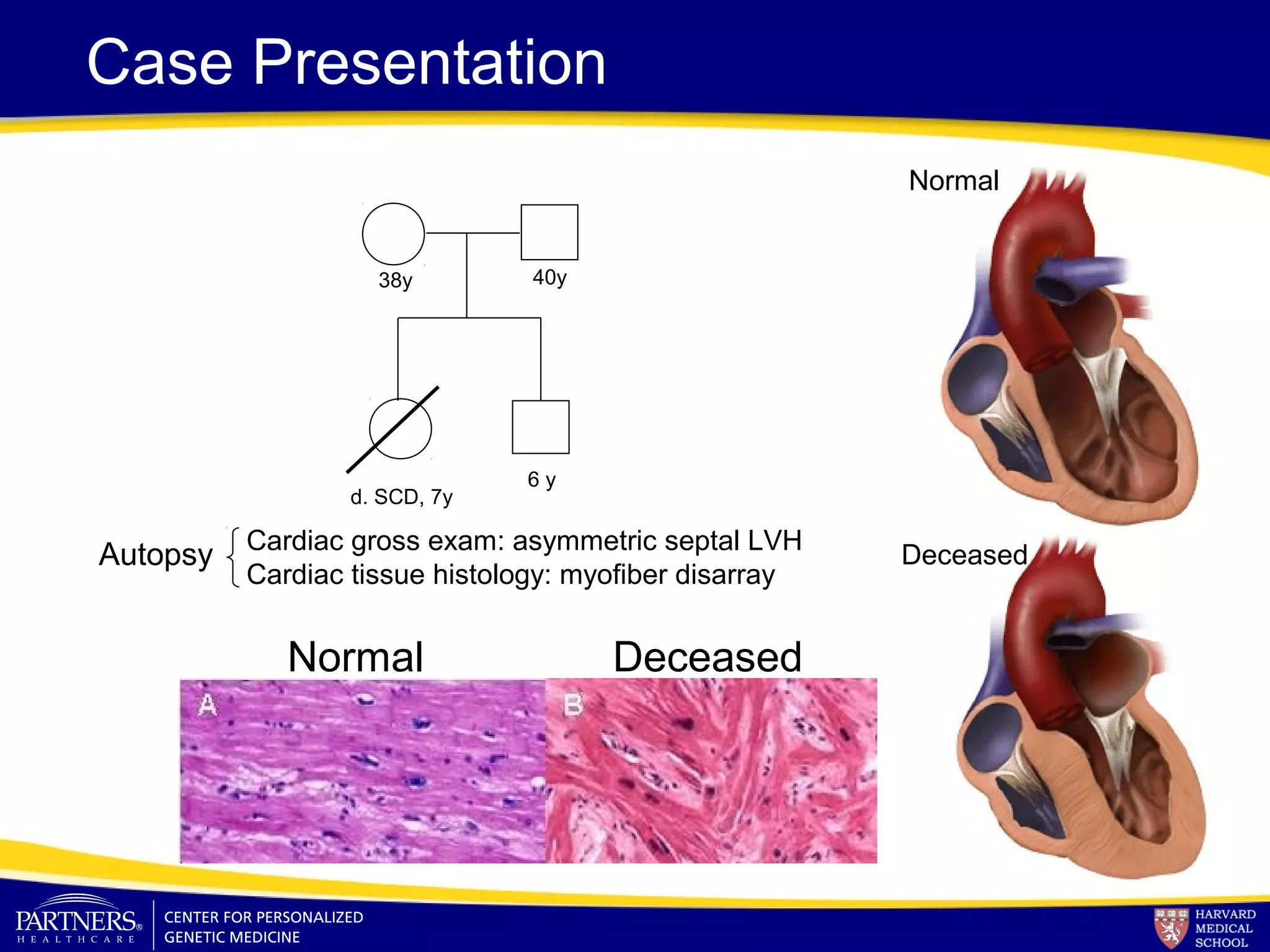
d. SCD, 7y
38y
Case Presentation
Cardiac gross exam: asymmetric septal LVH
Cardiac tissue histology: myofiber disarray
Autopsy
40y
6 y
Normal Deceased
Normal
Deceased
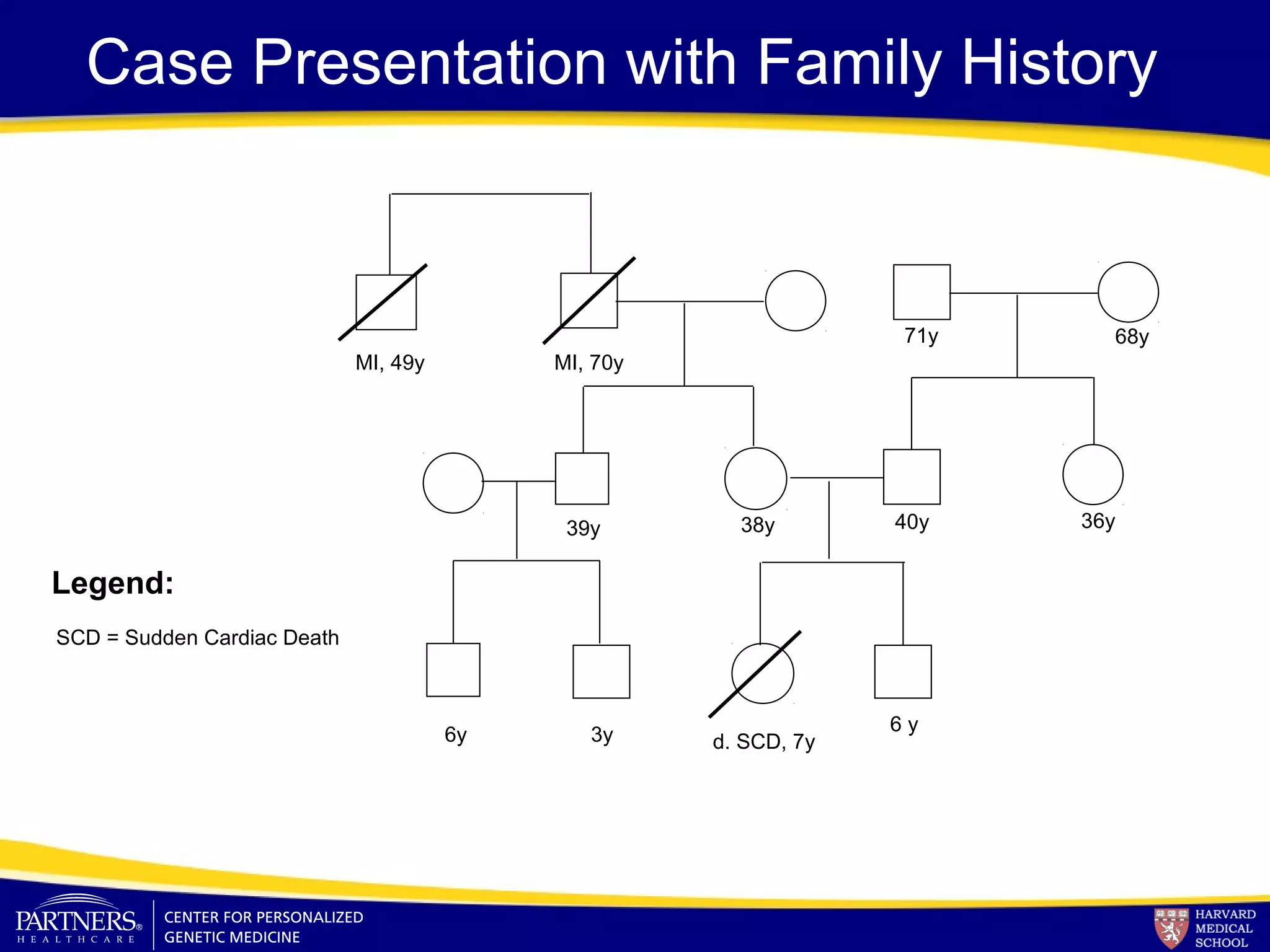
Legend:
MI, 49y MI, 70y
39y
d. SCD, 7y6y 3y
38y
SCD = Sudden Cardiac Death
Case Presentation with Family History
40y
6 y
71y 68y
36y
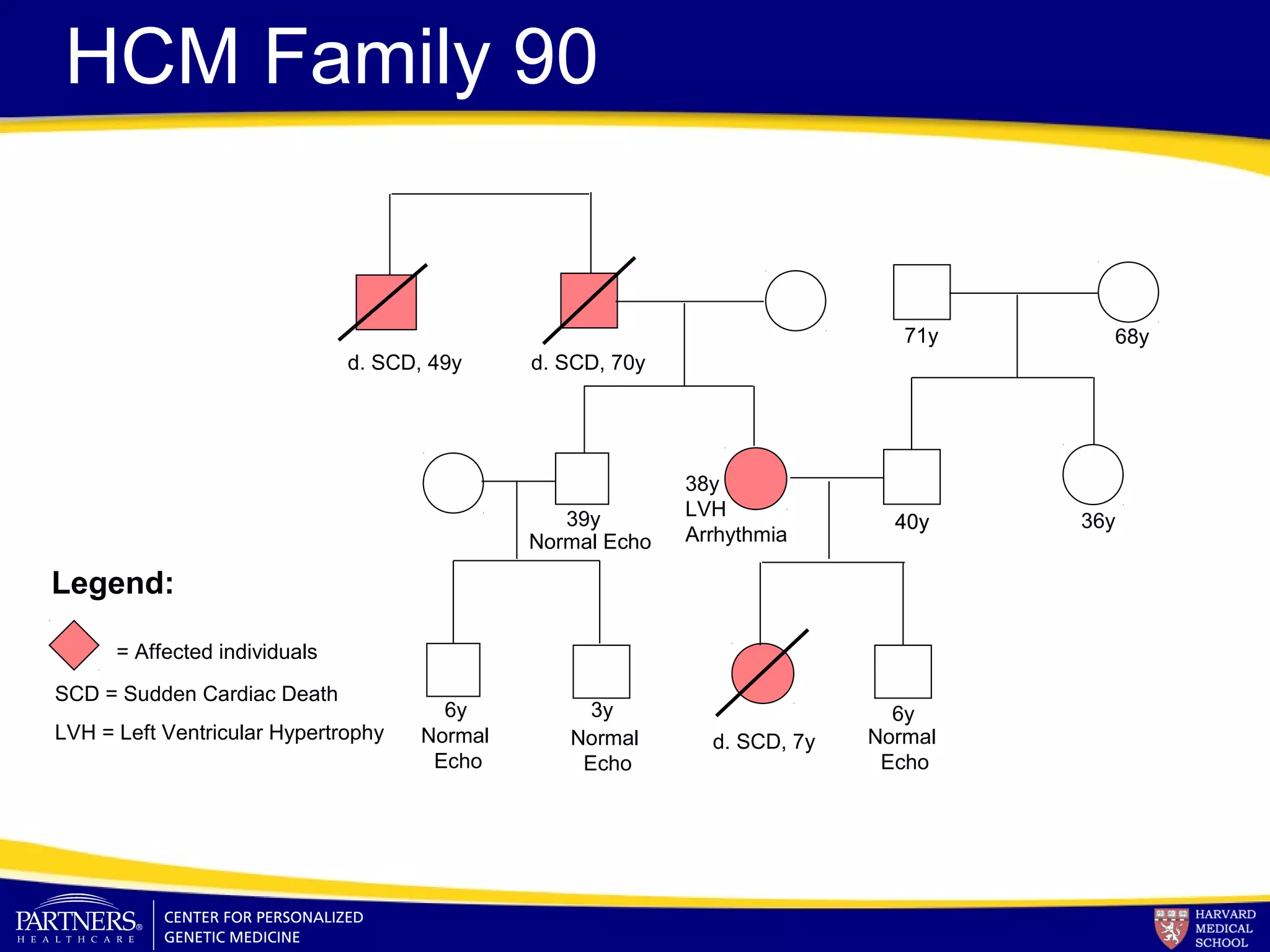
HCM Family 90
Legend:
= Affected individuals
d. SCD, 49y d. SCD, 70y
39y
d. SCD, 7y
6y6y 3y
38y
LVH
Arrhythmia
SCD = Sudden Cardiac Death
LVH = Left Ventricular Hypertrophy
40y
Normal
Echo
Normal Echo
Normal
Echo
Normal
Echo
40y
71y 68y
36y
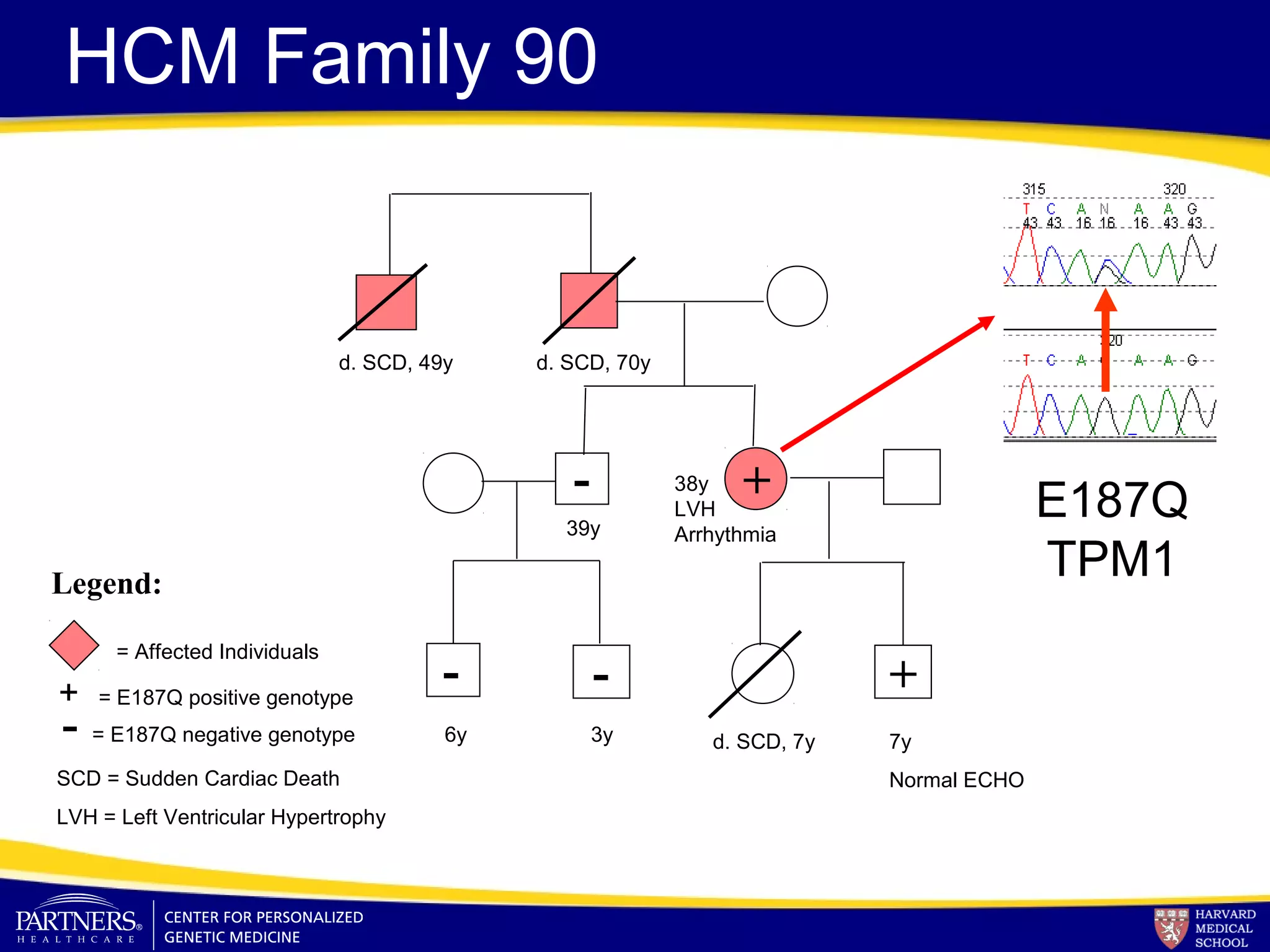
HCM Family 90
Legend:
= Affected Individuals
+ = E187Q positive genotype
- = E187Q negative genotype
d. SCD, 49y d. SCD, 70y
39y
d. SCD, 7y 7y
Normal ECHO
6y 3y
SCD = Sudden Cardiac Death
LVH = Left Ventricular Hypertrophy
+
+- -
- 38y
LVH
Arrhythmia
E187Q
TPM1
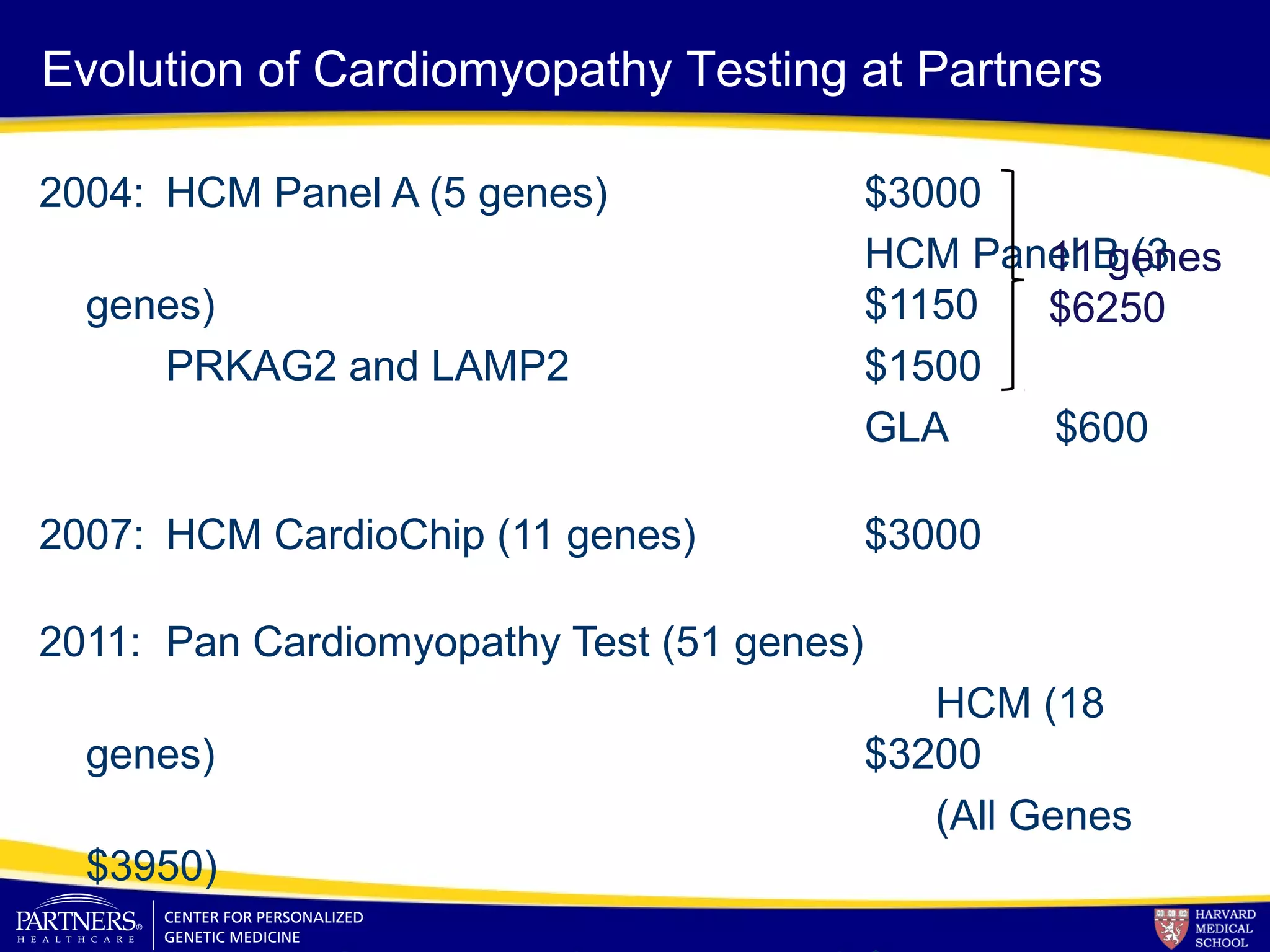
2004: HCM Panel A (5 genes) $3000
HCM Panel B (3
genes) $1150
PRKAG2 and LAMP2 $1500
GLA $600
2007: HCM CardioChip (11 genes) $3000
2011: Pan Cardiomyopathy Test (51 genes)
HCM (18
genes) $3200
(All Genes
$3950)
Evolution of Cardiomyopathy Testing at Partners
11 genes
$6250
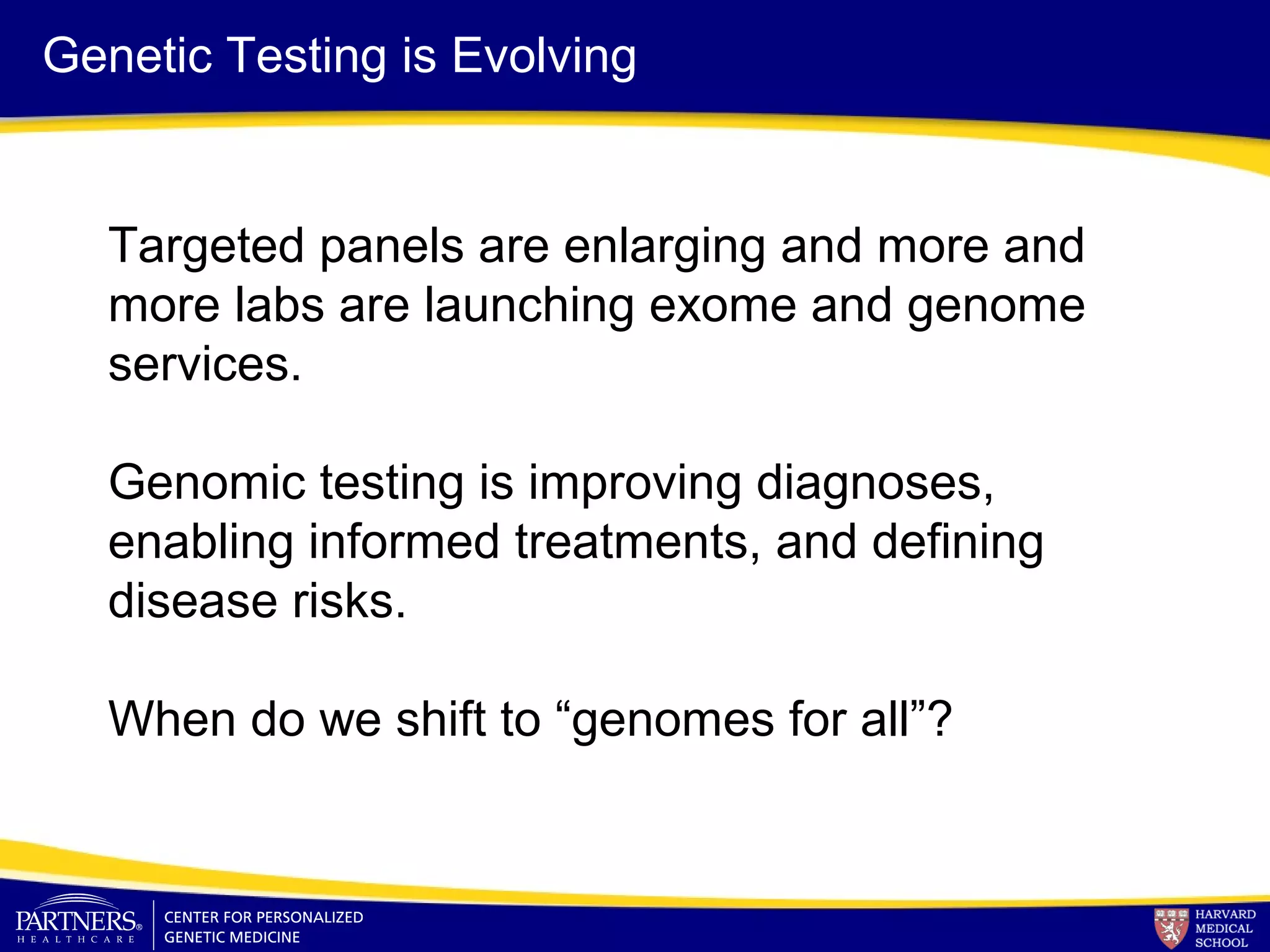
Targeted panels are enlarging and more and
more labs are launching exome and genome
services.
Genomic testing is improving diagnoses,
enabling informed treatments, and defining
disease risks.
When do we shift to “genomes for all”?
Genetic Testing is Evolving
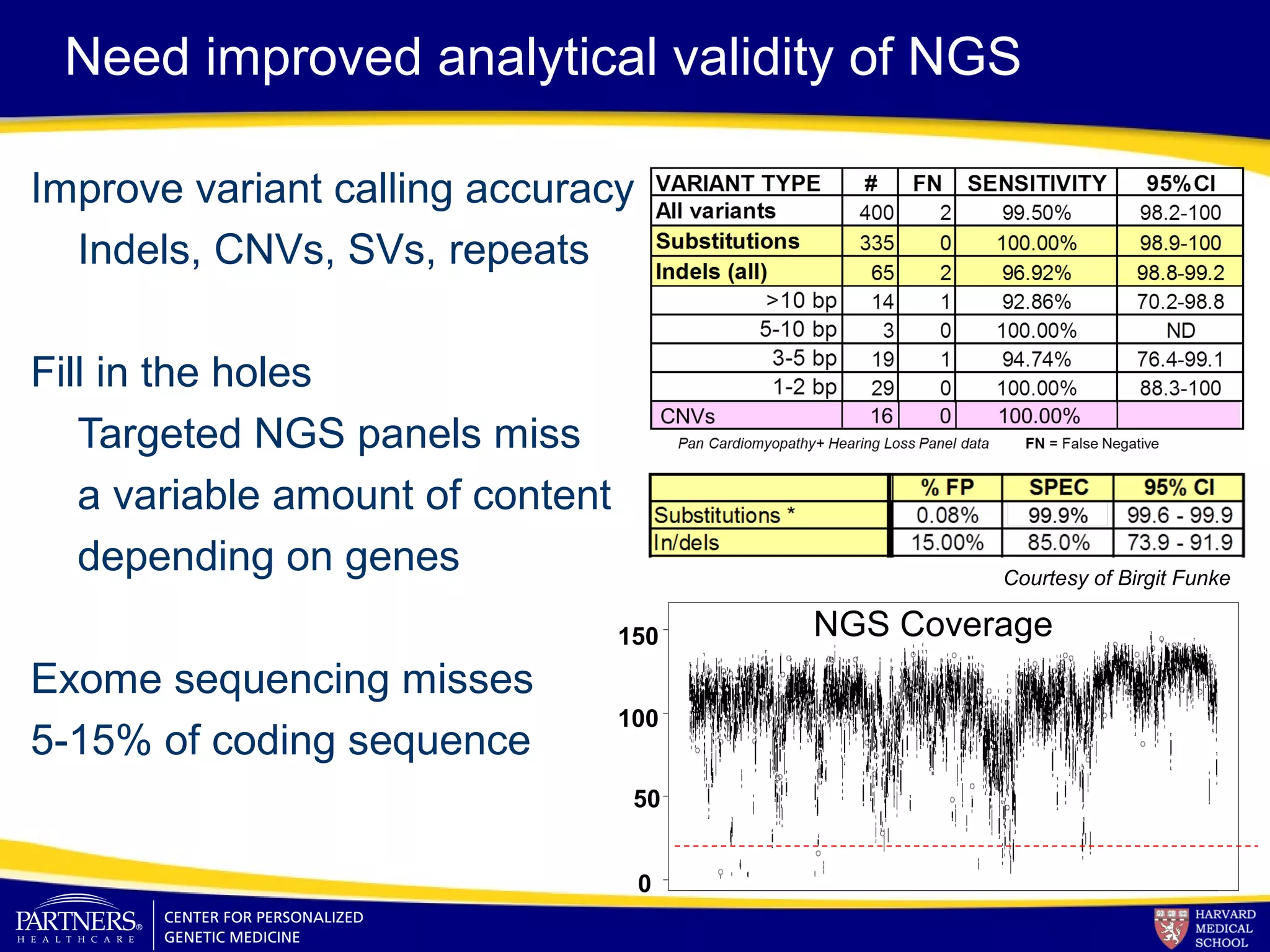
Need improved analytical validity of NGS
Improve variant calling accuracy
Indels, CNVs, SVs, repeats
Fill in the holes
Targeted NGS panels miss
a variable amount of content
depending on genes
Exome sequencing misses
5-15% of coding sequence
0
50
100
150 NGS Coverage
Courtesy of Birgit Funke
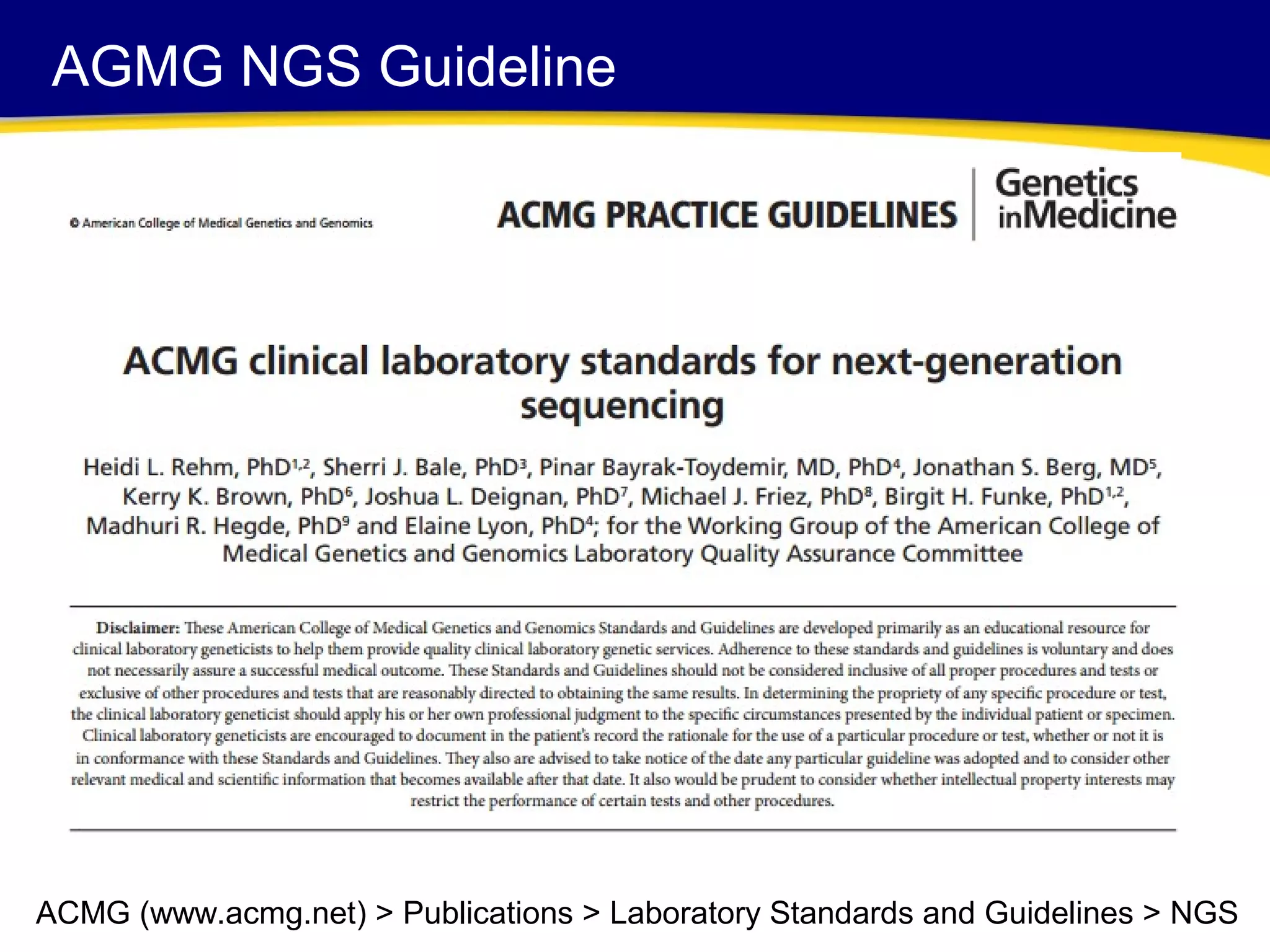
AGMG NGS Guideline
ACMG (www.acmg.net) > Publications > Laboratory Standards and Guidelines > NGS
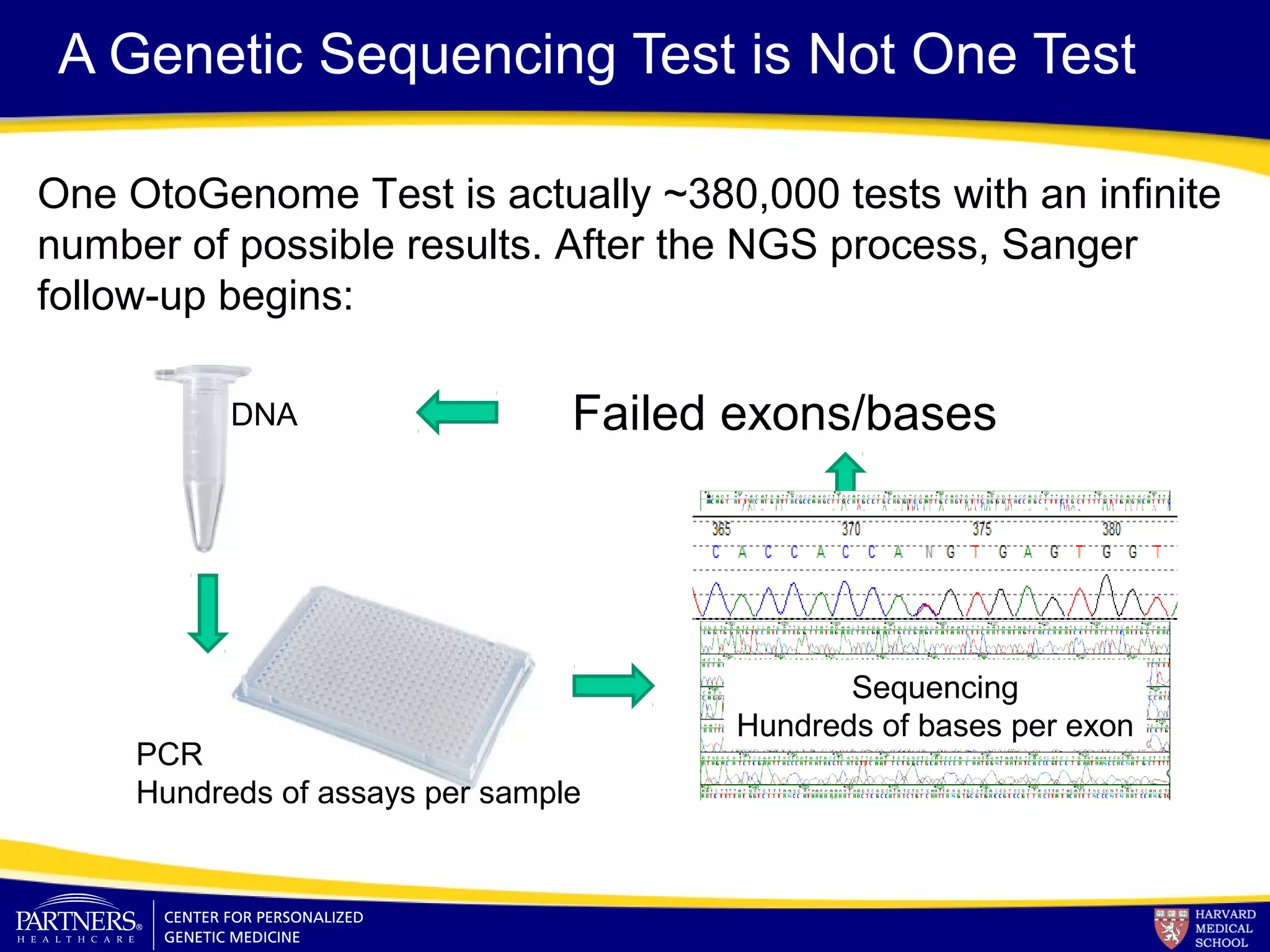
A Genetic Sequencing Test is Not One Test
DNA
PCR
Hundreds of assays per sample
Sequencing
Hundreds of bases per exon
Failed exons/bases
One OtoGenome Test is actually ~380,000 tests with an infinite
number of possible results. After the NGS process, Sanger
follow-up begins:
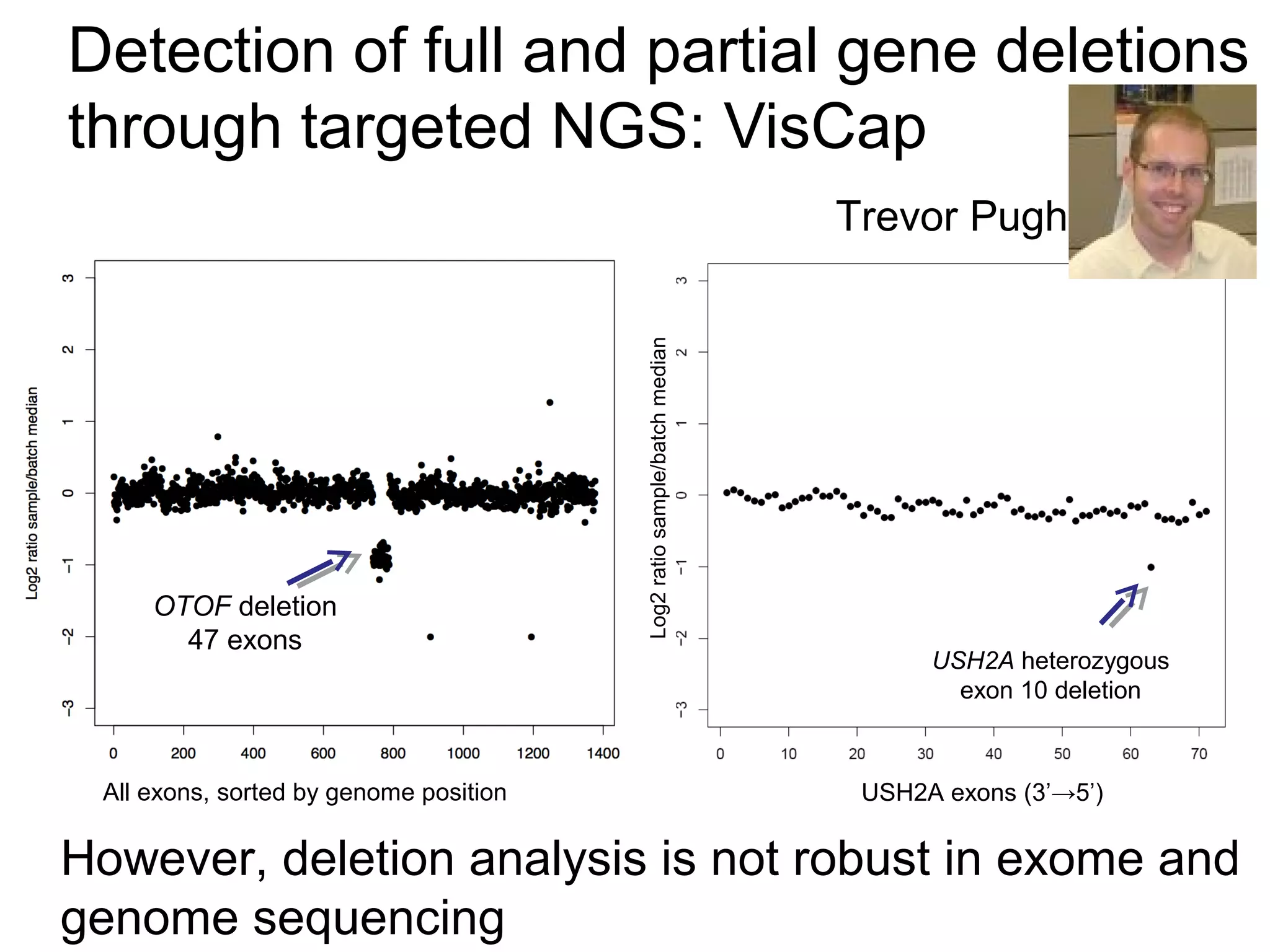
Detection of full and partial gene deletions
through targeted NGS: VisCap
Log2ratiosample/batchmedian USH2A heterozygous
exon 10 deletion
All exons, sorted by genome position USH2A exons (3’→5’)
OTOF deletion
47 exons
Trevor Pugh
However, deletion analysis is not robust in exome and
genome sequencing
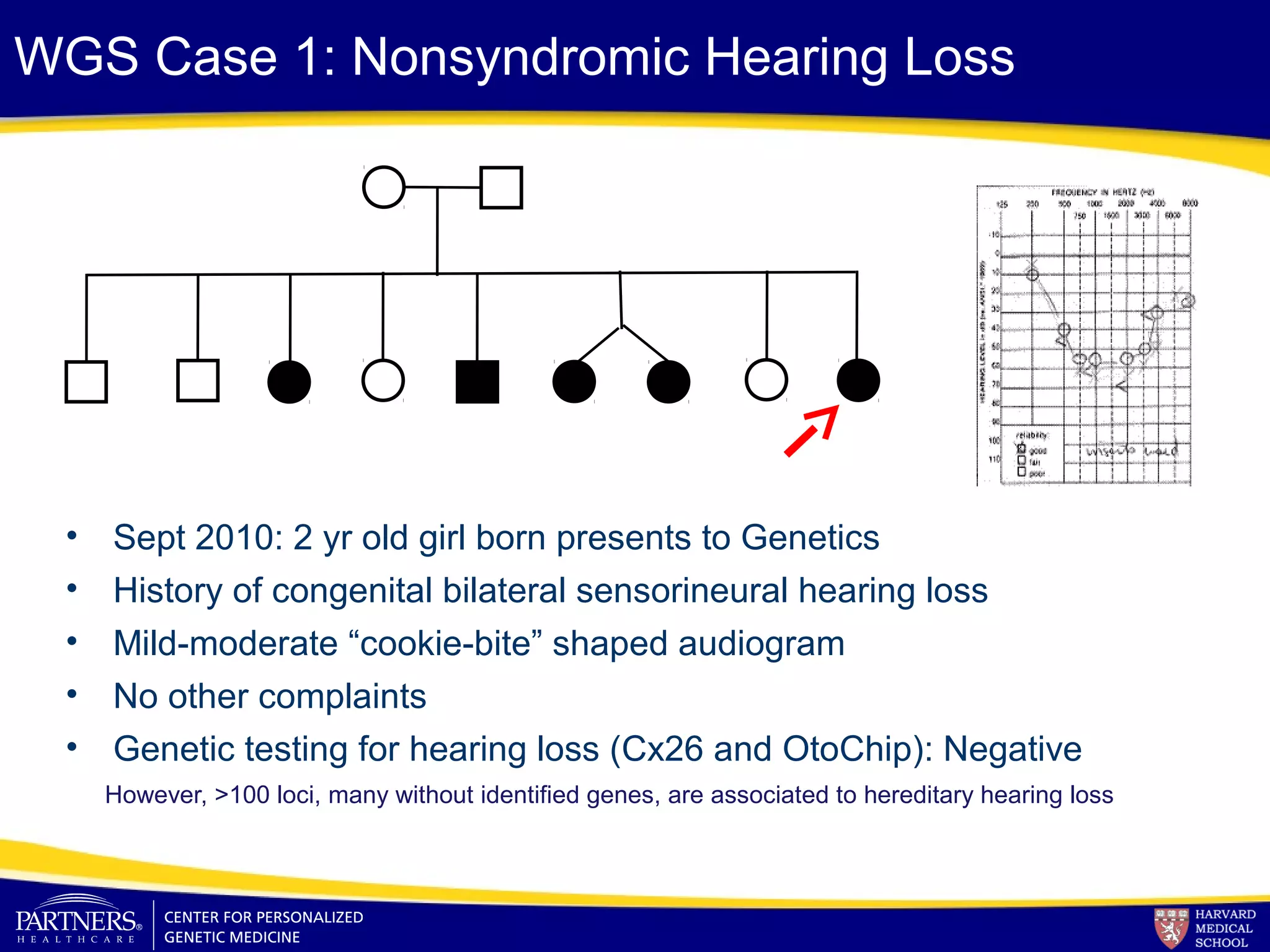
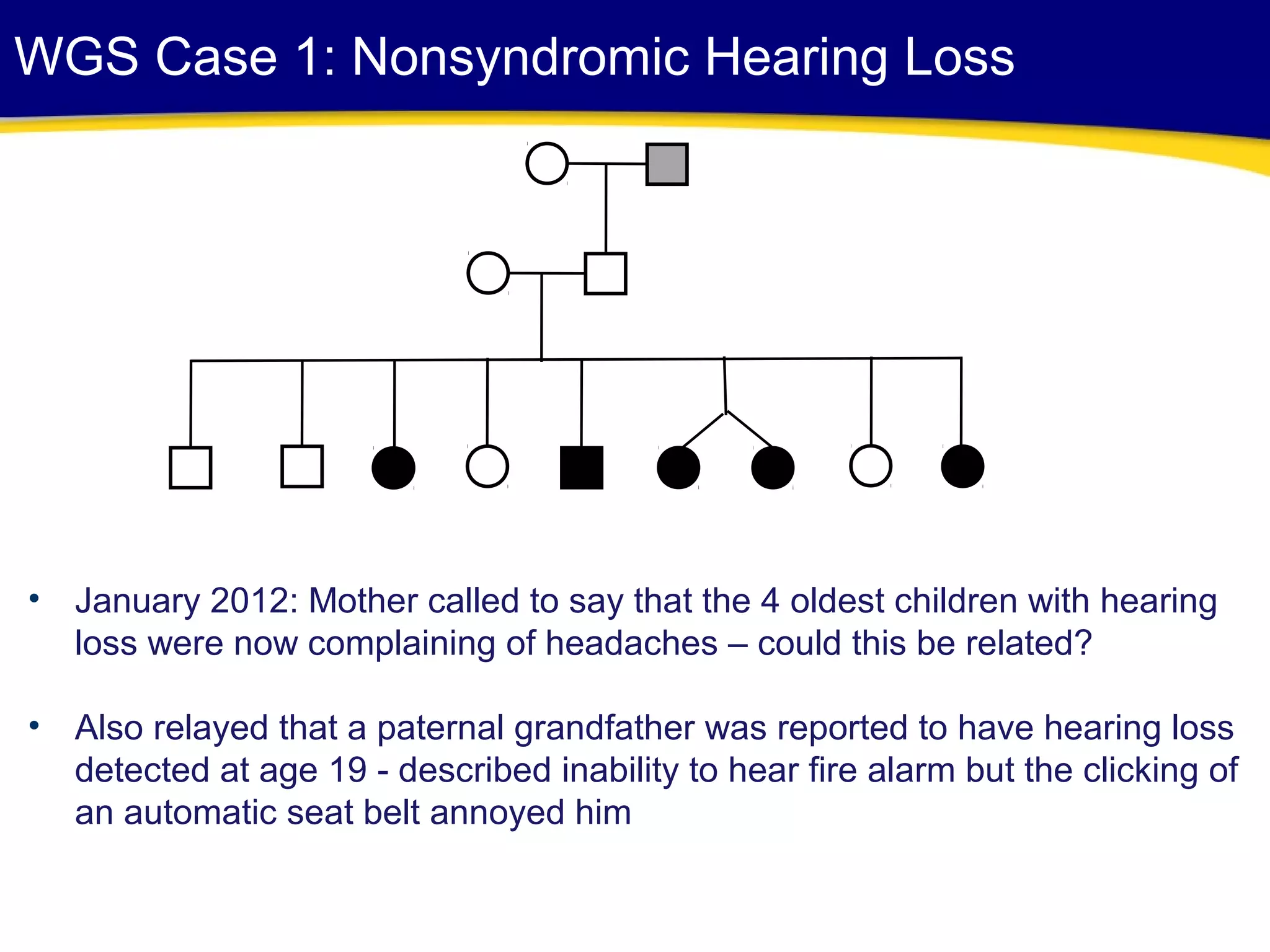
WGS Case 1: Nonsyndromic Hearing Loss
• Sept 2010: 2 yr old girl born presents to Genetics
• History of congenital bilateral sensorineural hearing loss
• Mild-moderate “cookie-bite” shaped audiogram
• No other complaints
• Genetic testing for hearing loss (Cx26 and OtoChip): Negative
However, >100 loci, many without identified genes, are associated to hereditary hearing loss
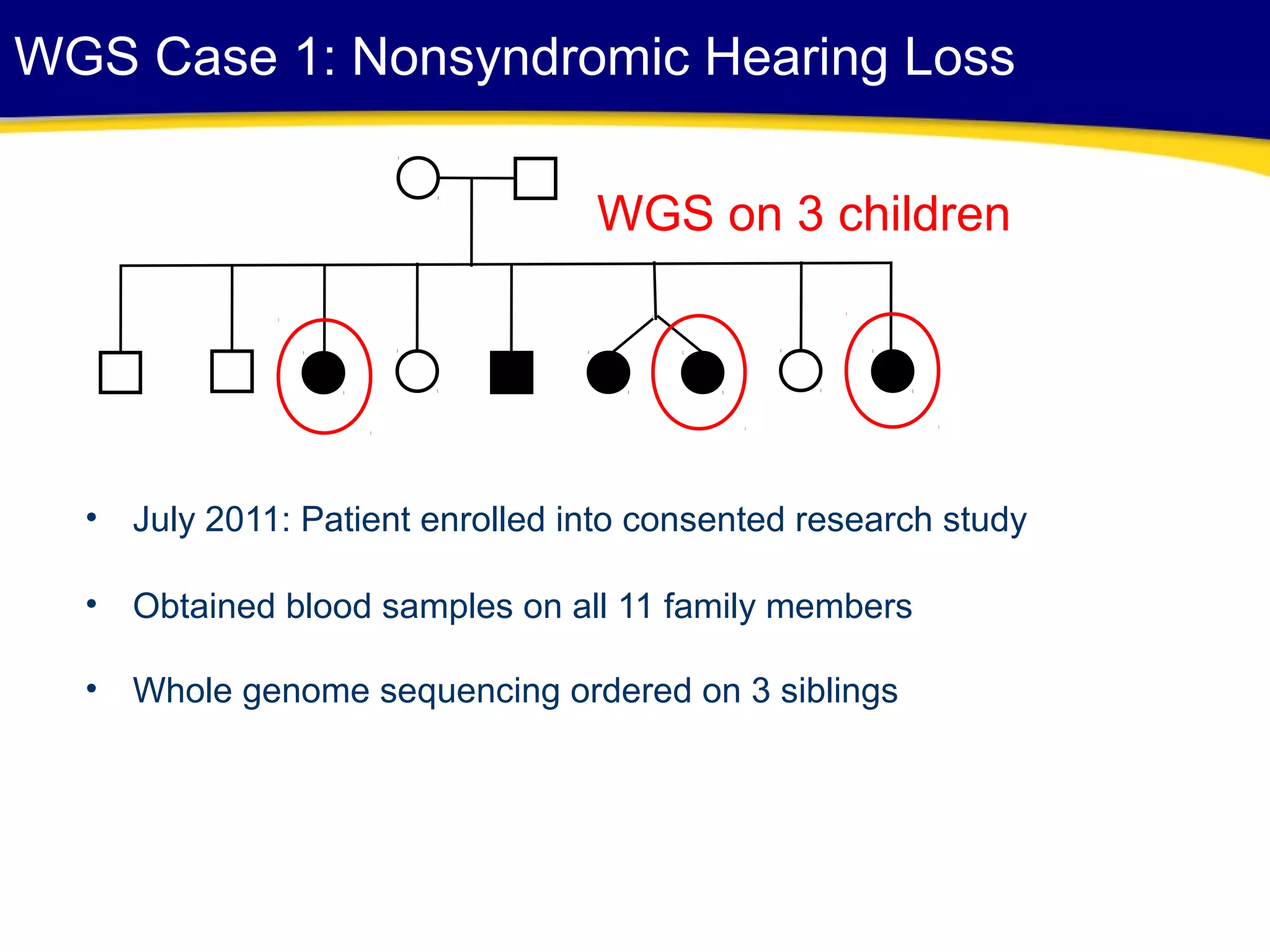
WGS Case 1: Nonsyndromic Hearing Loss
• July 2011: Patient enrolled into consented research study
• Obtained blood samples on all 11 family members
• Whole genome sequencing ordered on 3 siblings
WGS on 3 children
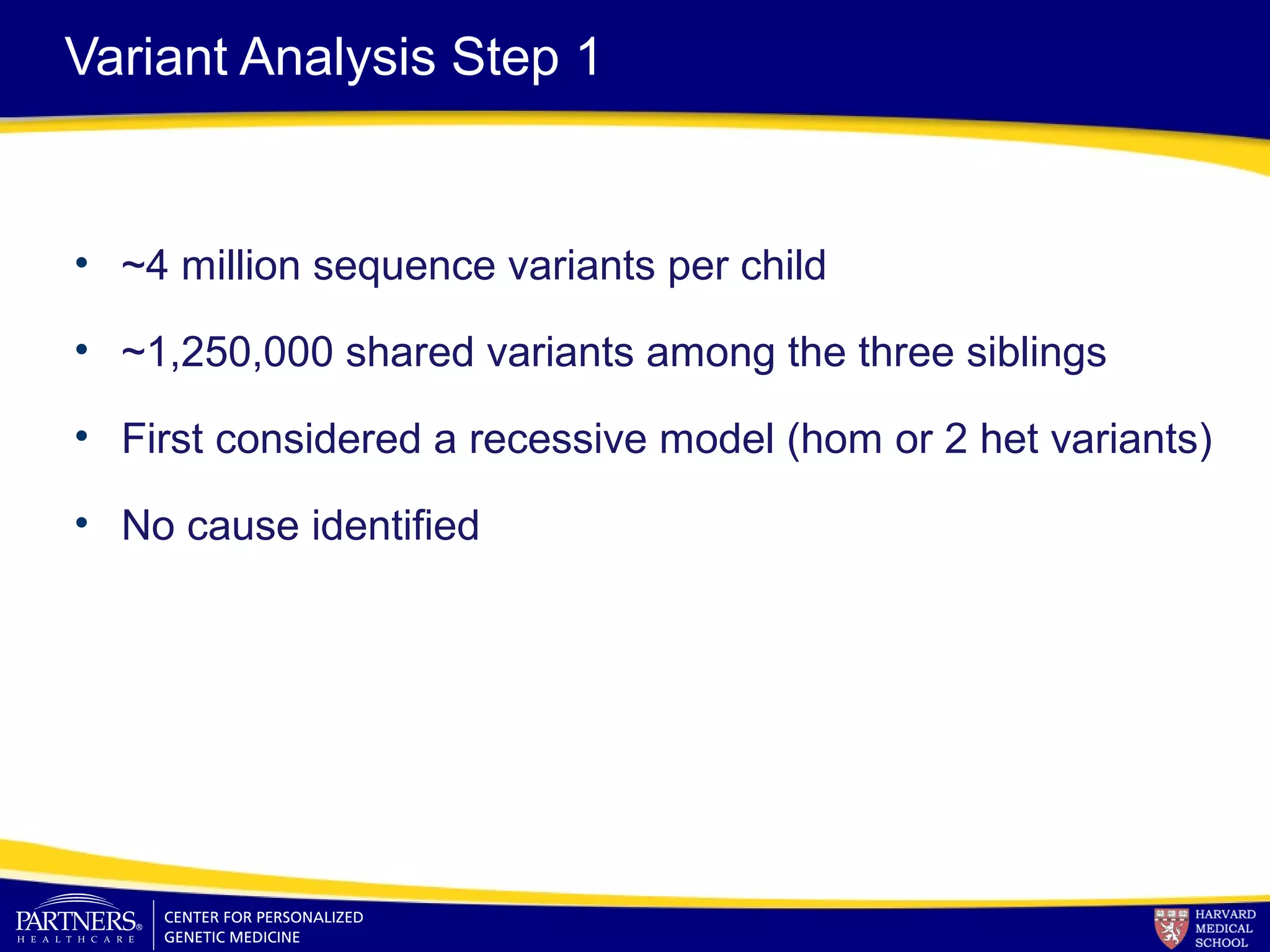
Variant Analysis Step 1
• ~4 million sequence variants per child
• ~1,250,000 shared variants among the three siblings
• First considered a recessive model (hom or 2 het variants)
• No cause identified
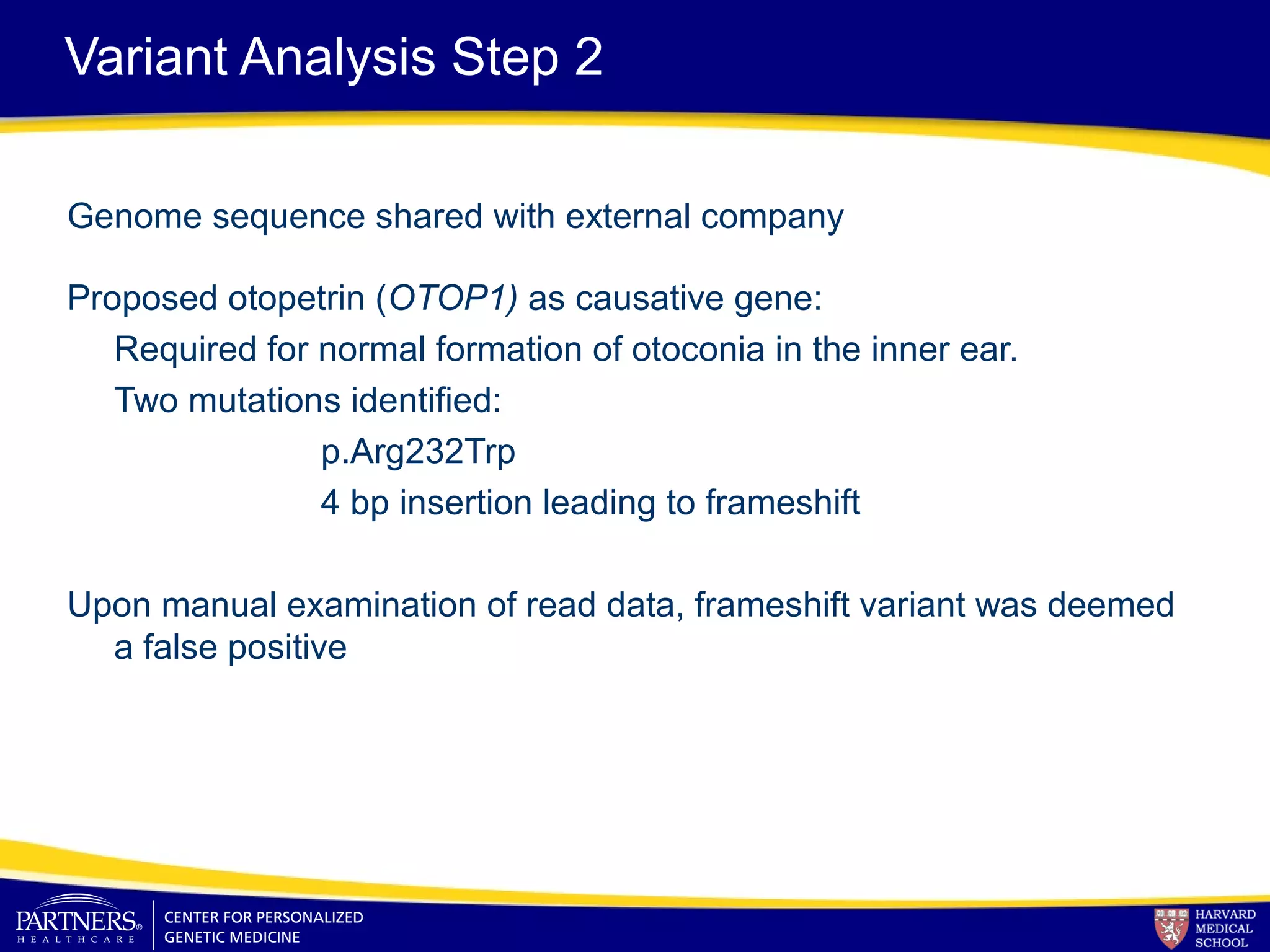
Variant Analysis Step 2
Genome sequence shared with external company
Proposed otopetrin (OTOP1) as causative gene:
Required for normal formation of otoconia in the inner ear.
Two mutations identified:
p.Arg232Trp
4 bp insertion leading to frameshift
Upon manual examination of read data, frameshift variant was deemed
a false positive
Copyright 2013 – Partners HealthCare Incorporated – All Rights Reserved
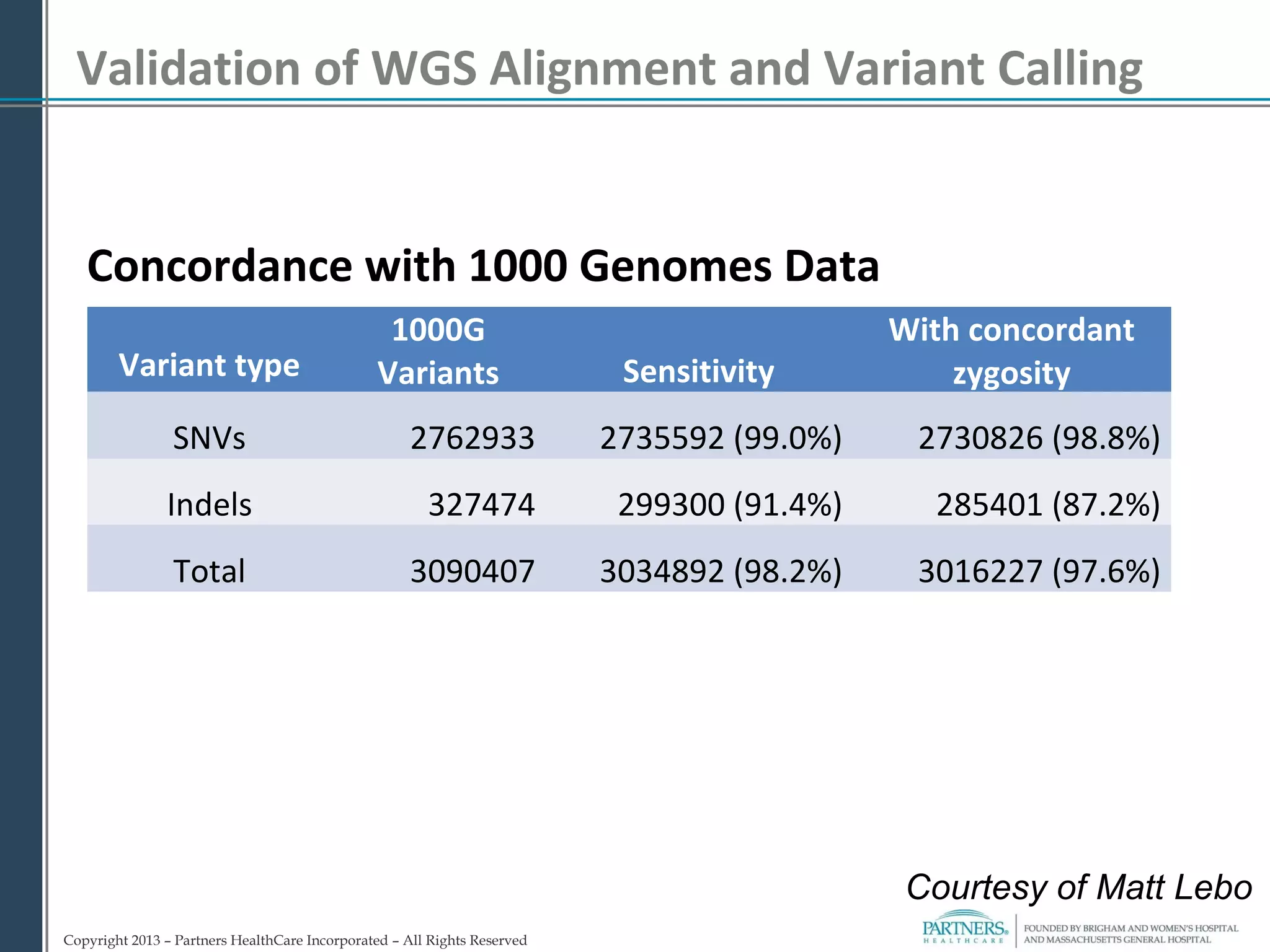
Validation of WGS Alignment and Variant Calling
Variant type
1000G
Variants Sensitivity
With concordant
zygosity
SNVs 2762933 2735592 (99.0%) 2730826 (98.8%)
Indels 327474 299300 (91.4%) 285401 (87.2%)
Total 3090407 3034892 (98.2%) 3016227 (97.6%)
Concordance with 1000 Genomes Data
Courtesy of Matt Lebo
Copyright 2013 – Partners HealthCare Incorporated – All Rights Reserved
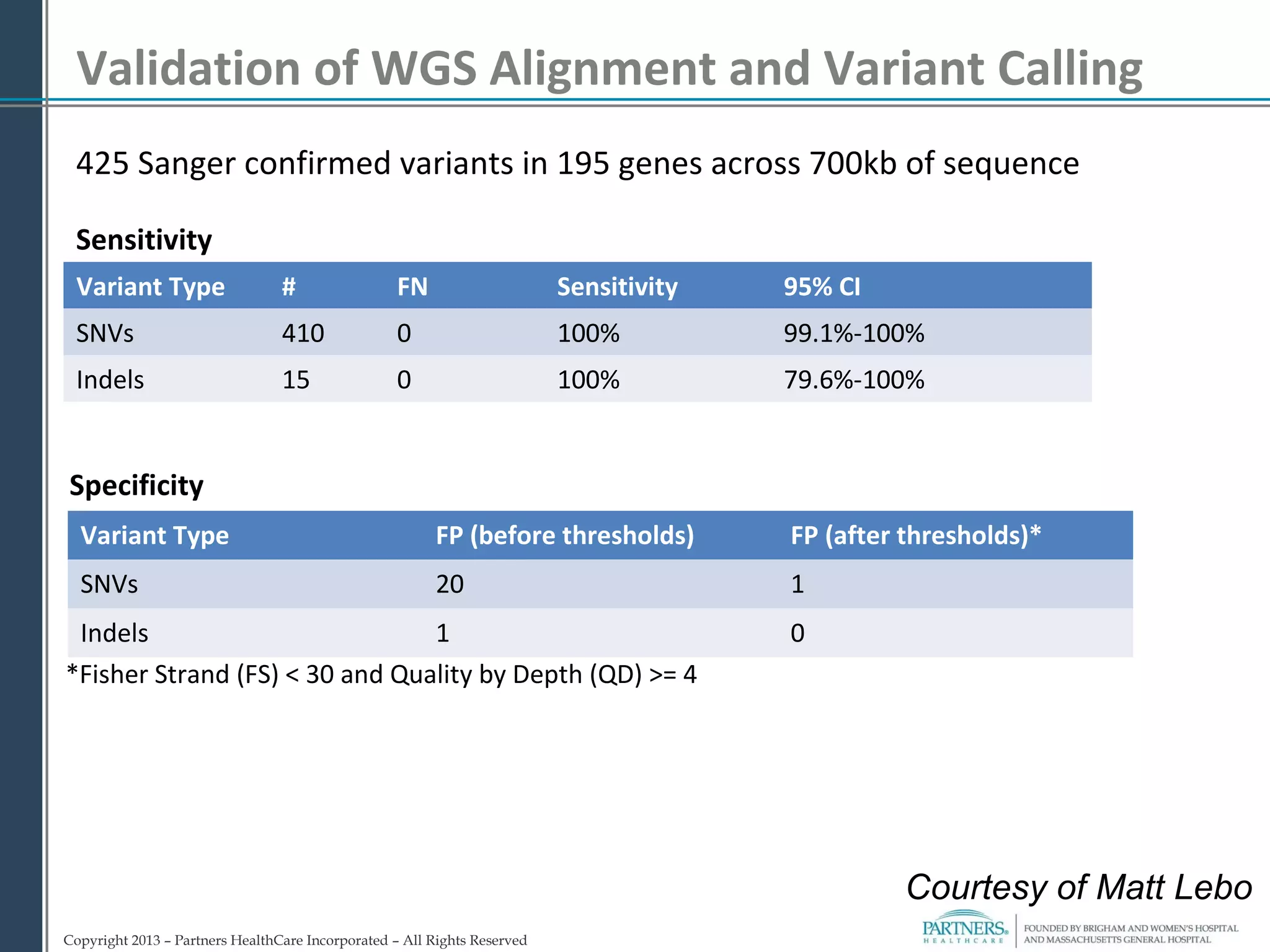
Validation of WGS Alignment and Variant Calling
Variant Type FP (before thresholds) FP (after thresholds)*
SNVs 20 1
Indels 1 0
Variant Type # FN Sensitivity 95% CI
SNVs 410 0 100% 99.1%-100%
Indels 15 0 100% 79.6%-100%
Specificity
Sensitivity
425 Sanger confirmed variants in 195 genes across 700kb of sequence
*Fisher Strand (FS) < 30 and Quality by Depth (QD) >= 4
Courtesy of Matt Lebo
WGS Case 1: Nonsyndromic Hearing Loss
• January 2012: Mother called to say that the 4 oldest children with hearing
loss were now complaining of headaches – could this be related?
• Also relayed that a paternal grandfather was reported to have hearing loss
detected at age 19 - described inability to hear fire alarm but the clicking of
an automatic seat belt annoyed him
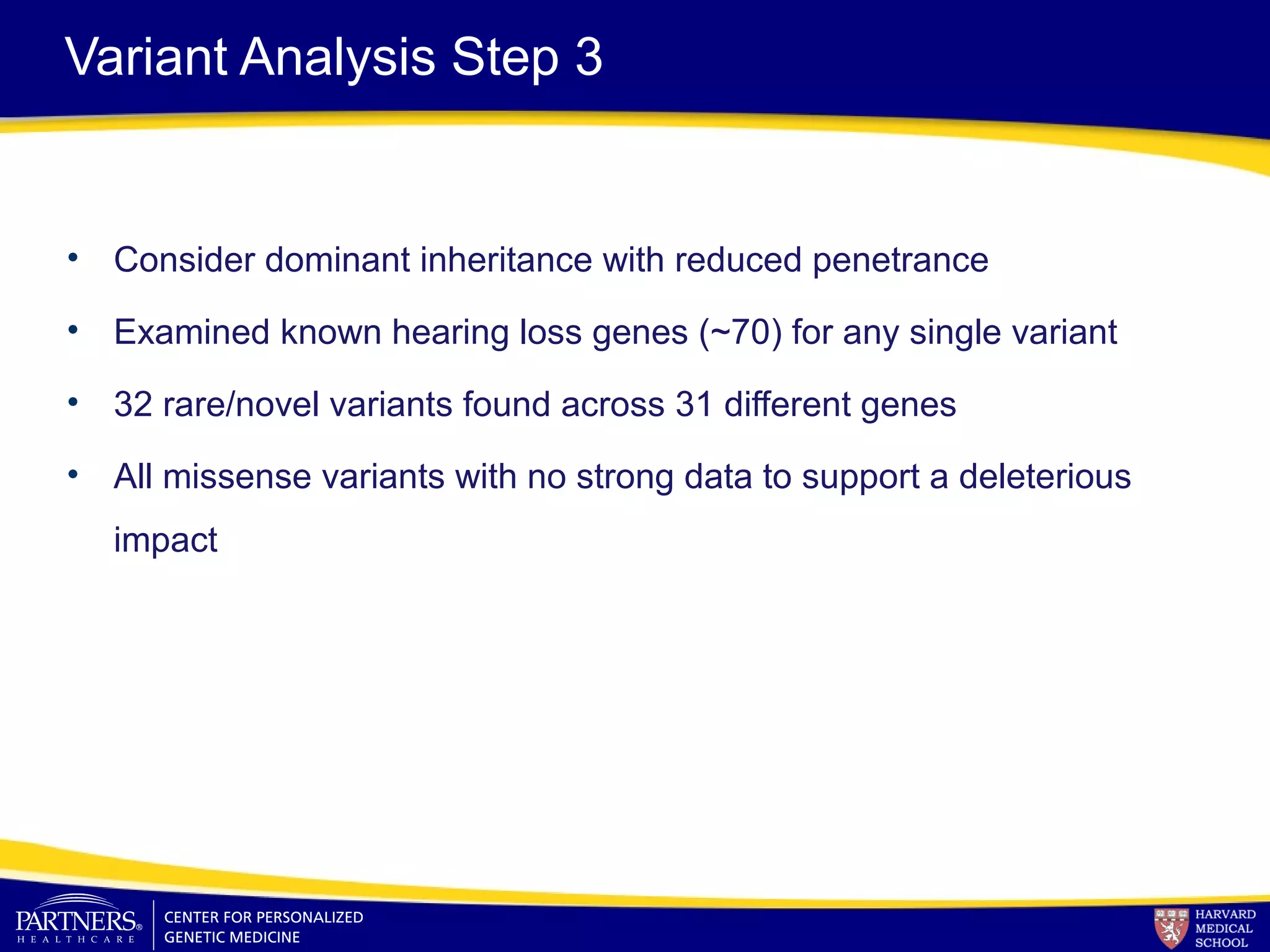
Variant Analysis Step 3
• Consider dominant inheritance with reduced penetrance
• Examined known hearing loss genes (~70) for any single variant
• 32 rare/novel variants found across 31 different genes
• All missense variants with no strong data to support a deleterious
impact
Variant Analysis Step 4: Segregation
• Cost to develop Sanger assays for all 32 variants and test
for presence in 11 family members = $5428
• Examined cost to perform linkage analysis by SNP array:
$386.00 per sample x 11 samples = $4246
• Requested additional sample from grandfather
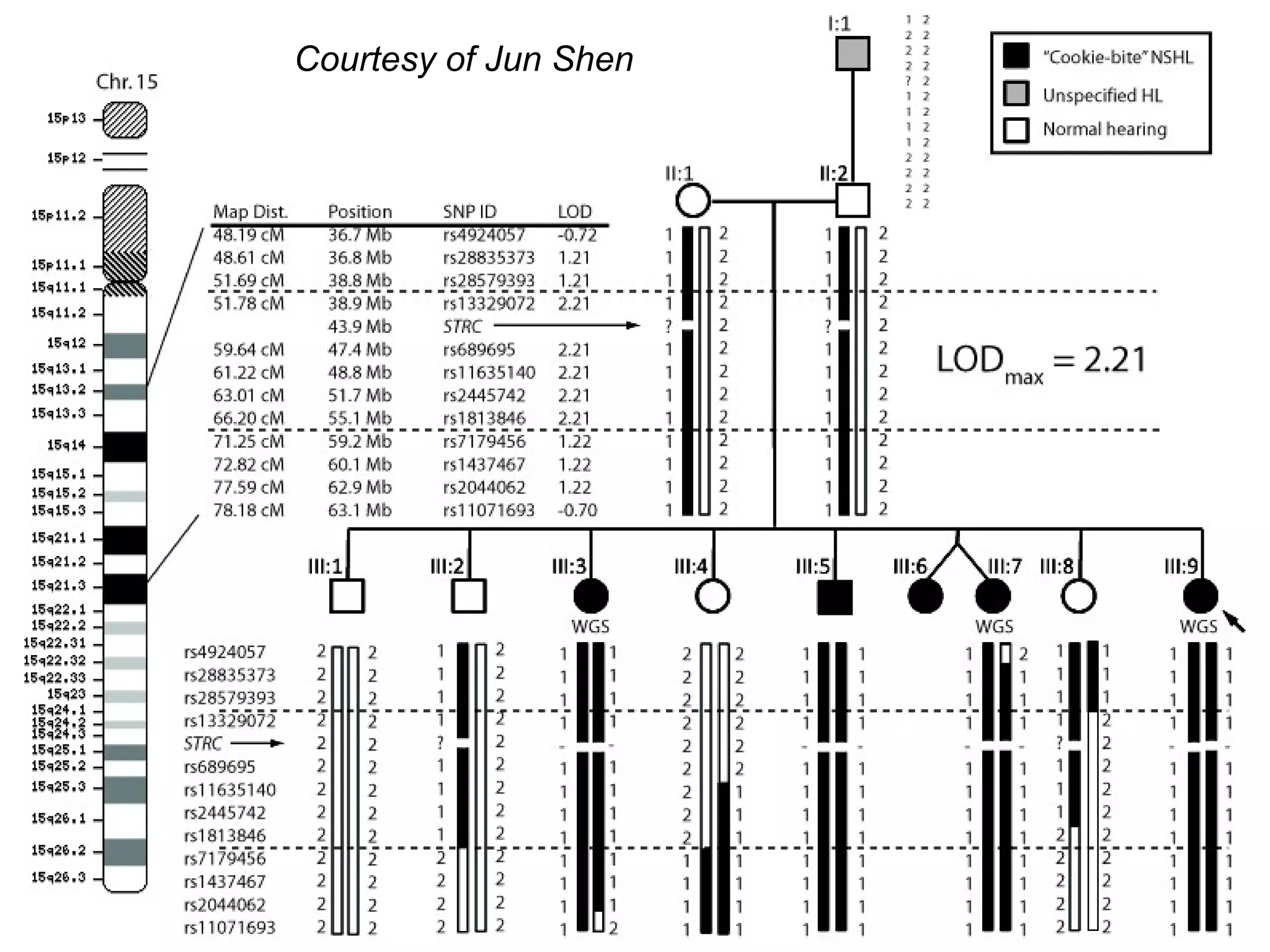
D3S1278 to D3S2453 = chr3:115,124,154-136,278,257 (3q13.31-22.3, 21 Mb)
Courtesy of Jun Shen
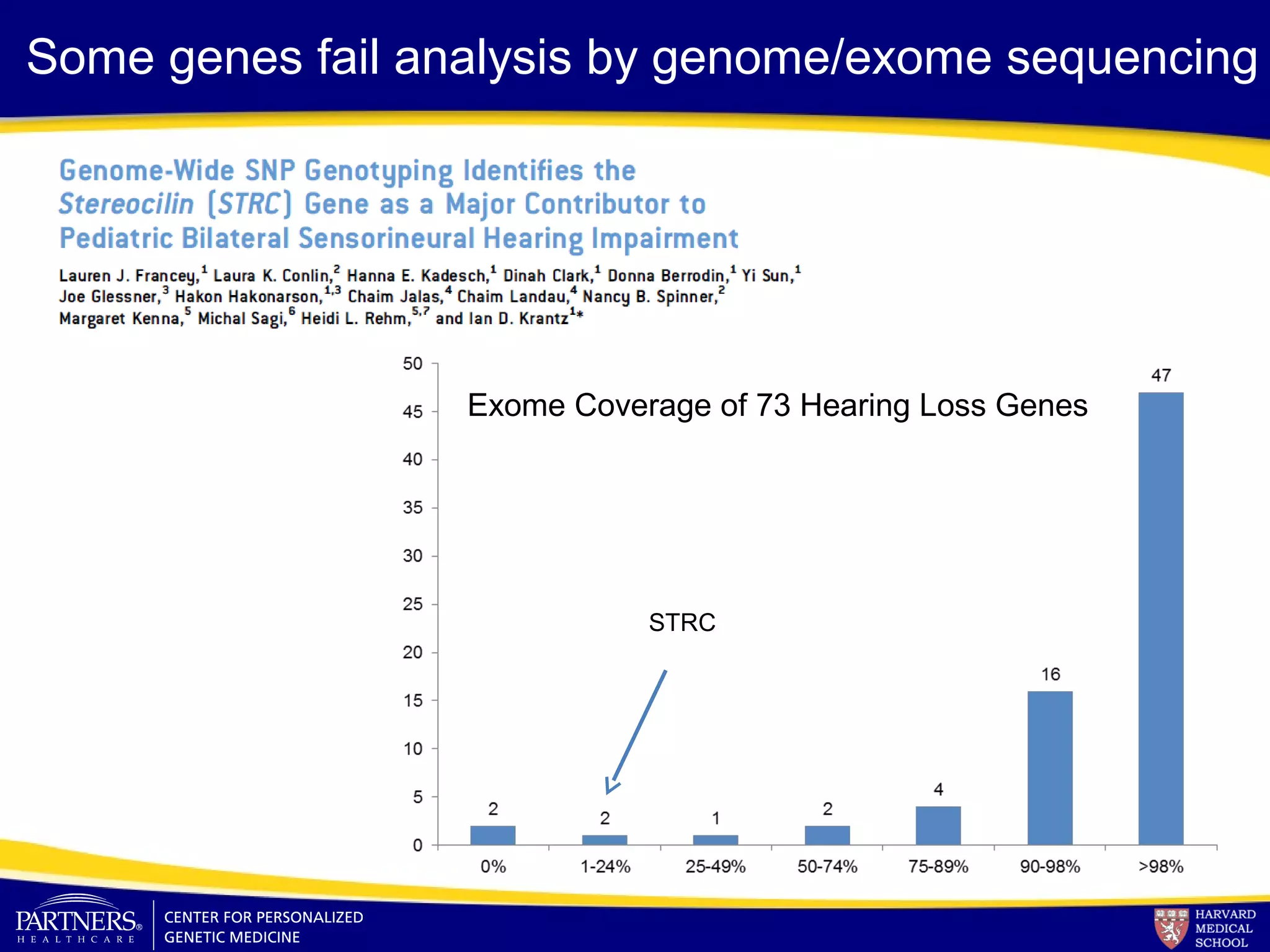
Some genes fail analysis by genome/exome sequencing
STRC
Exome Coverage of 73 Hearing Loss Genes
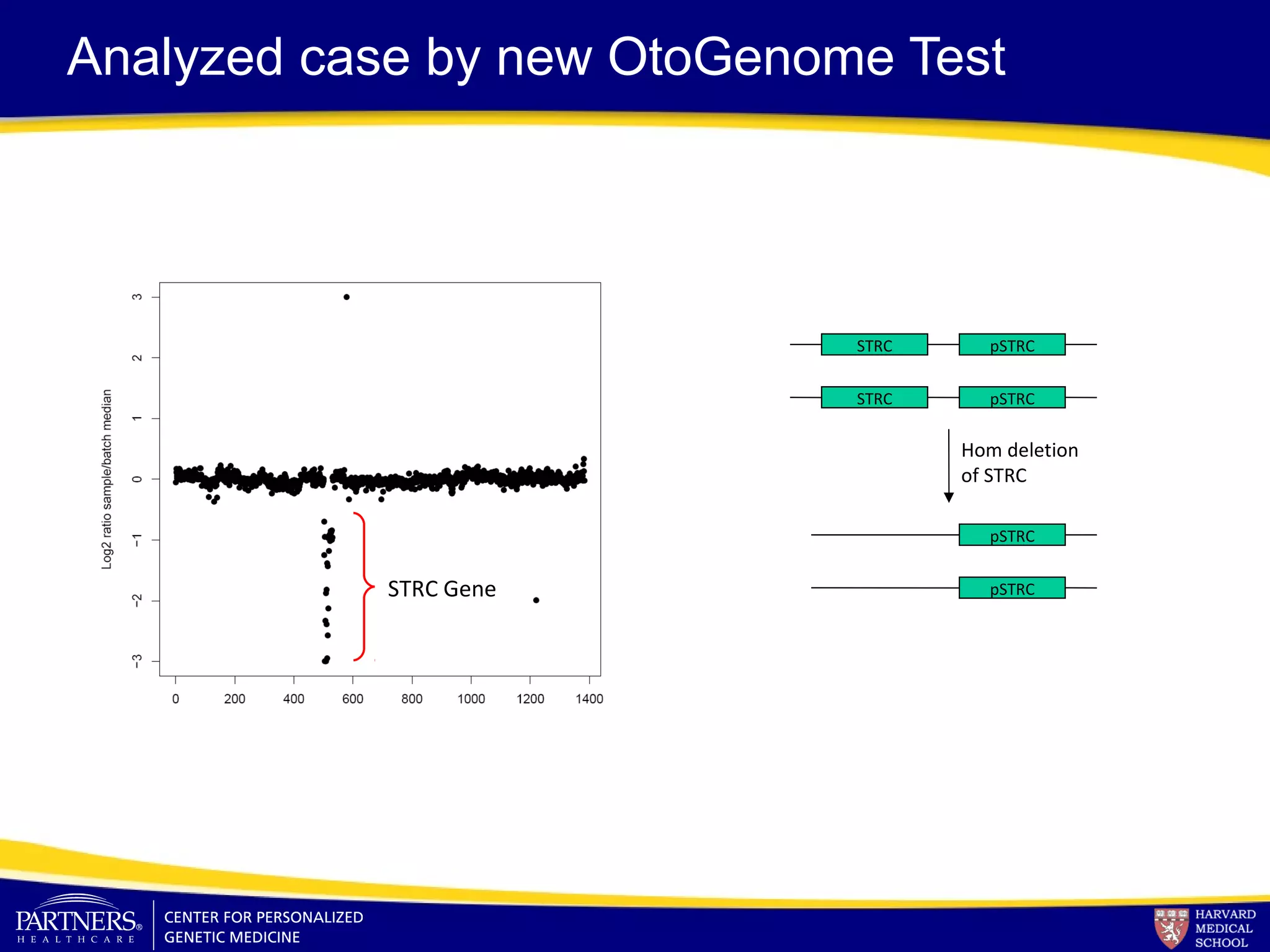
Analyzed case by new OtoGenome Test
STRC pSTRC
STRC pSTRC
Hom deletion
of STRC
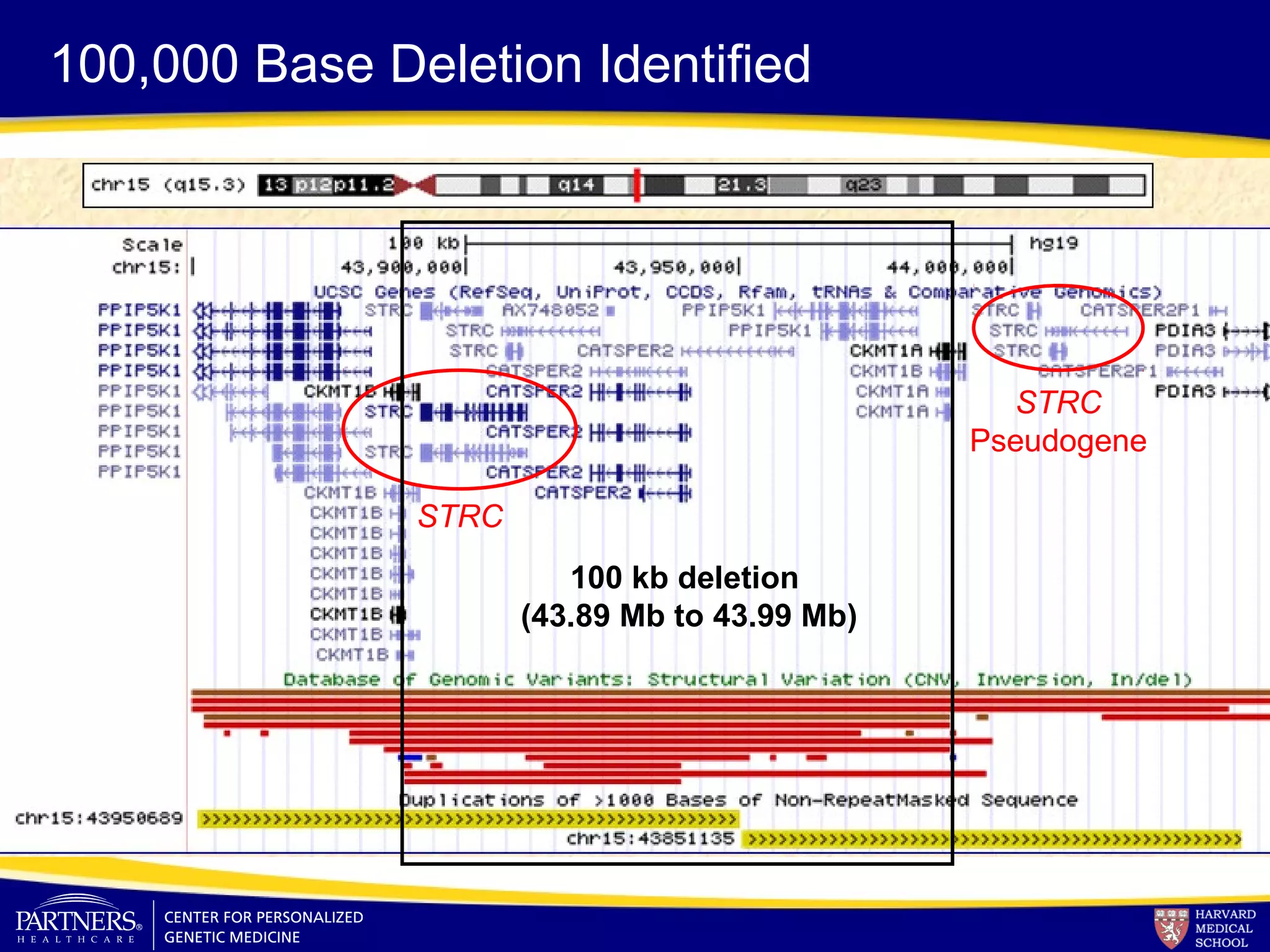
pSTRC
pSTRCSTRC Gene
100 kb deletion
(43.89 Mb to 43.99 Mb)
STRC
Pseudogene
STRC
100,000 Base Deletion Identified
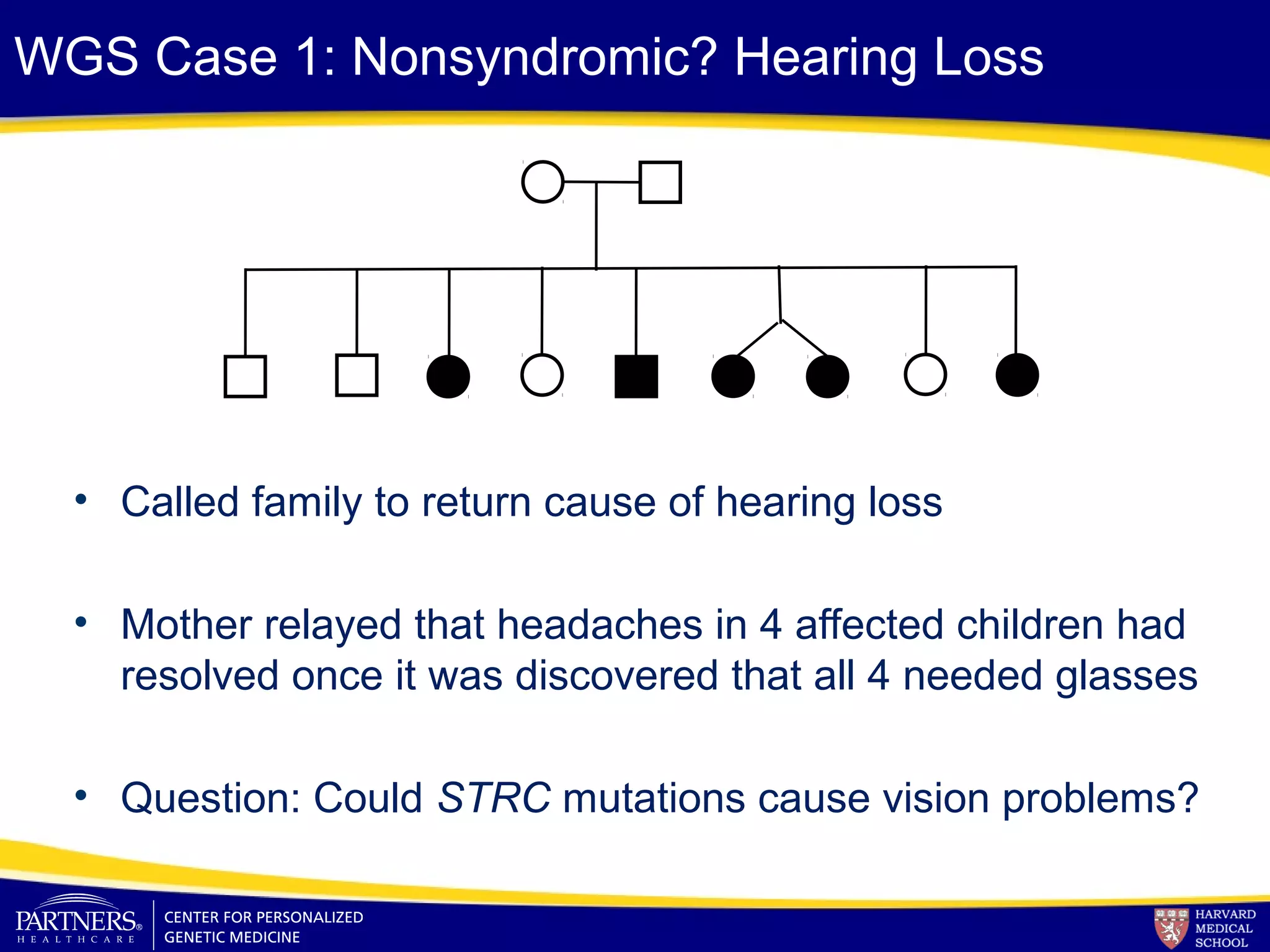
WGS Case 1: Nonsyndromic? Hearing Loss
• Called family to return cause of hearing loss
• Mother relayed that headaches in 4 affected children had
resolved once it was discovered that all 4 needed glasses
• Question: Could STRC mutations cause vision problems?
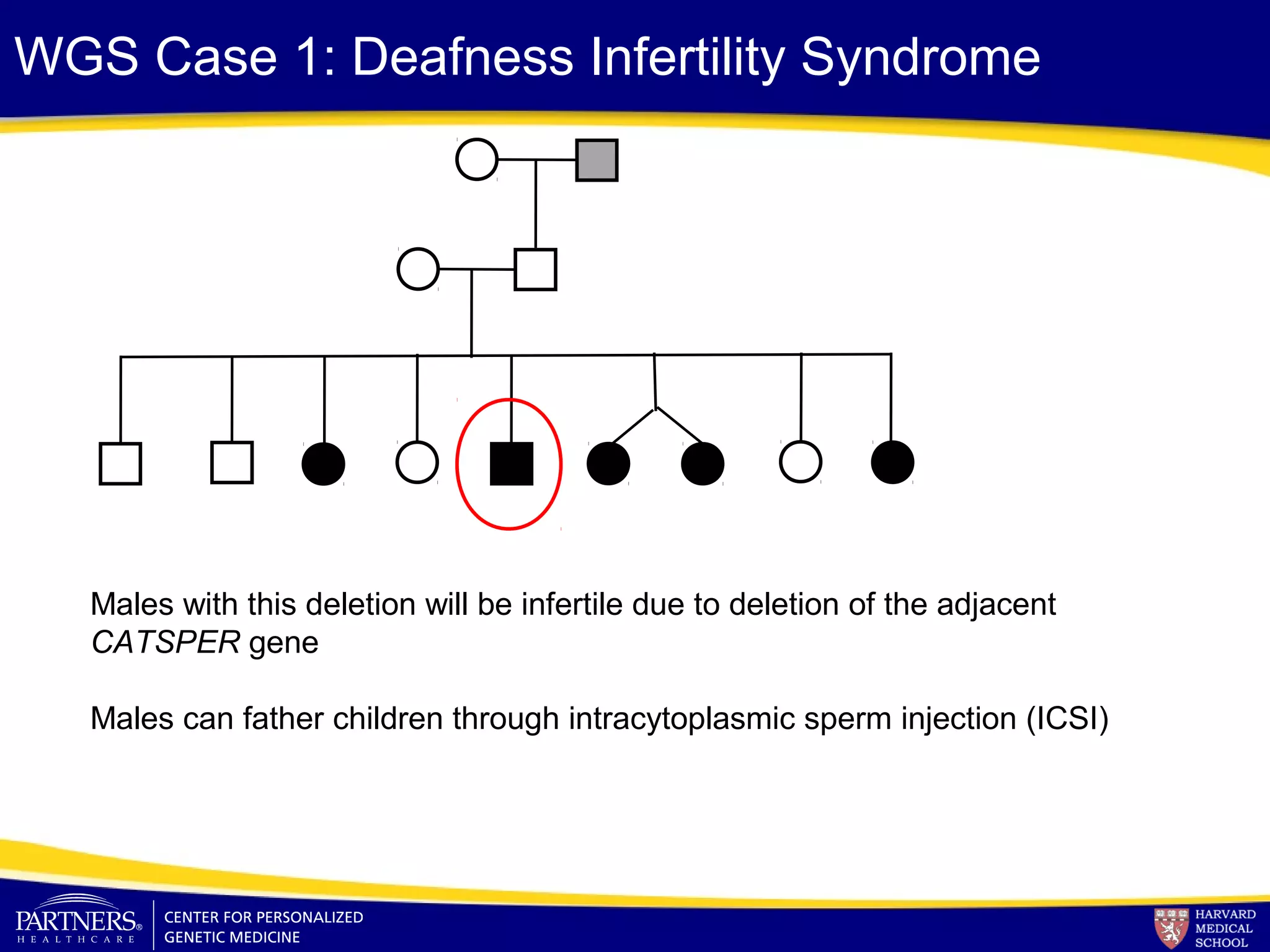
WGS Case 1: Deafness Infertility Syndrome
Males with this deletion will be infertile due to deletion of the adjacent
CATSPER gene
Males can father children through intracytoplasmic sperm injection (ICSI)
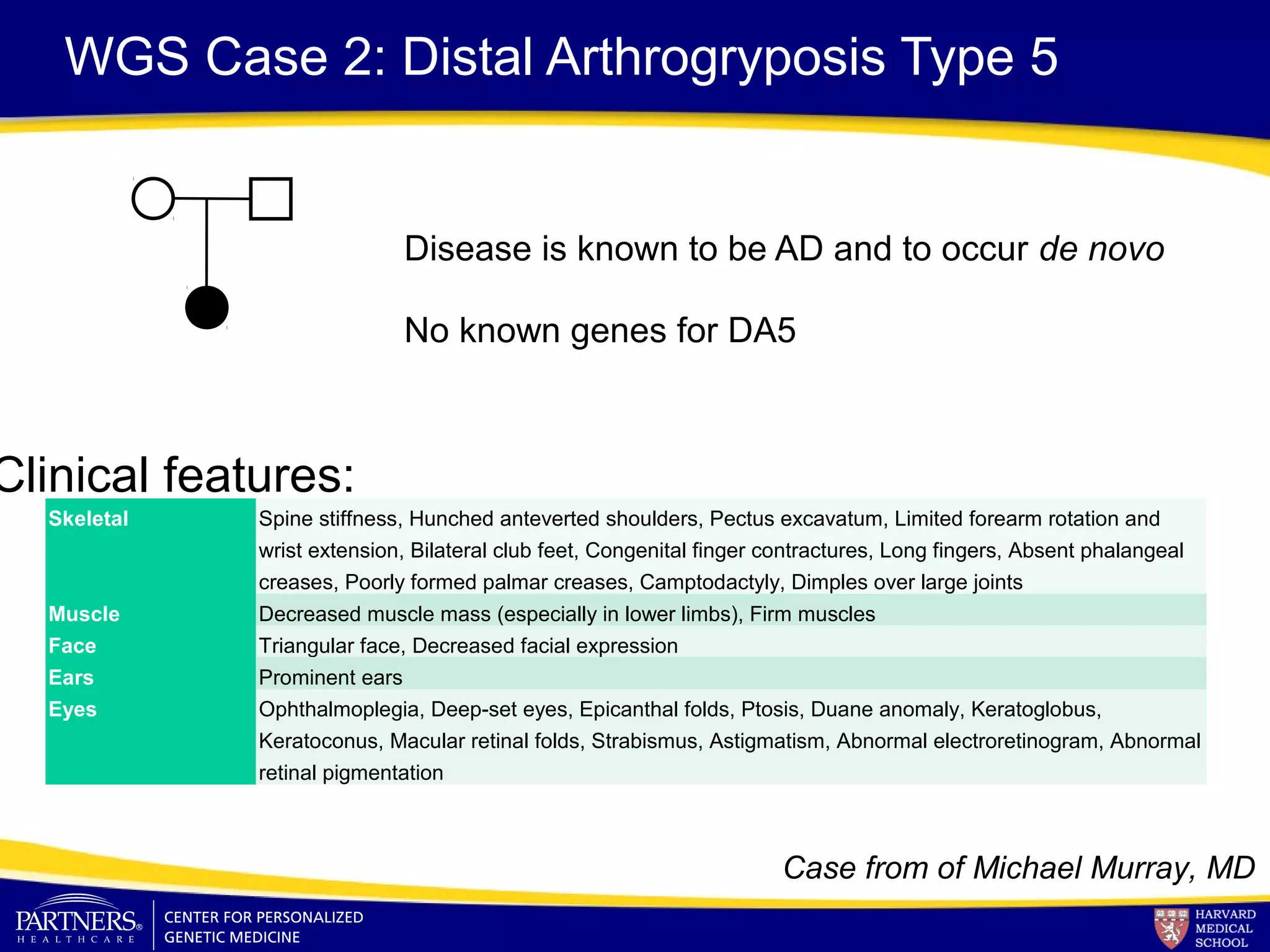
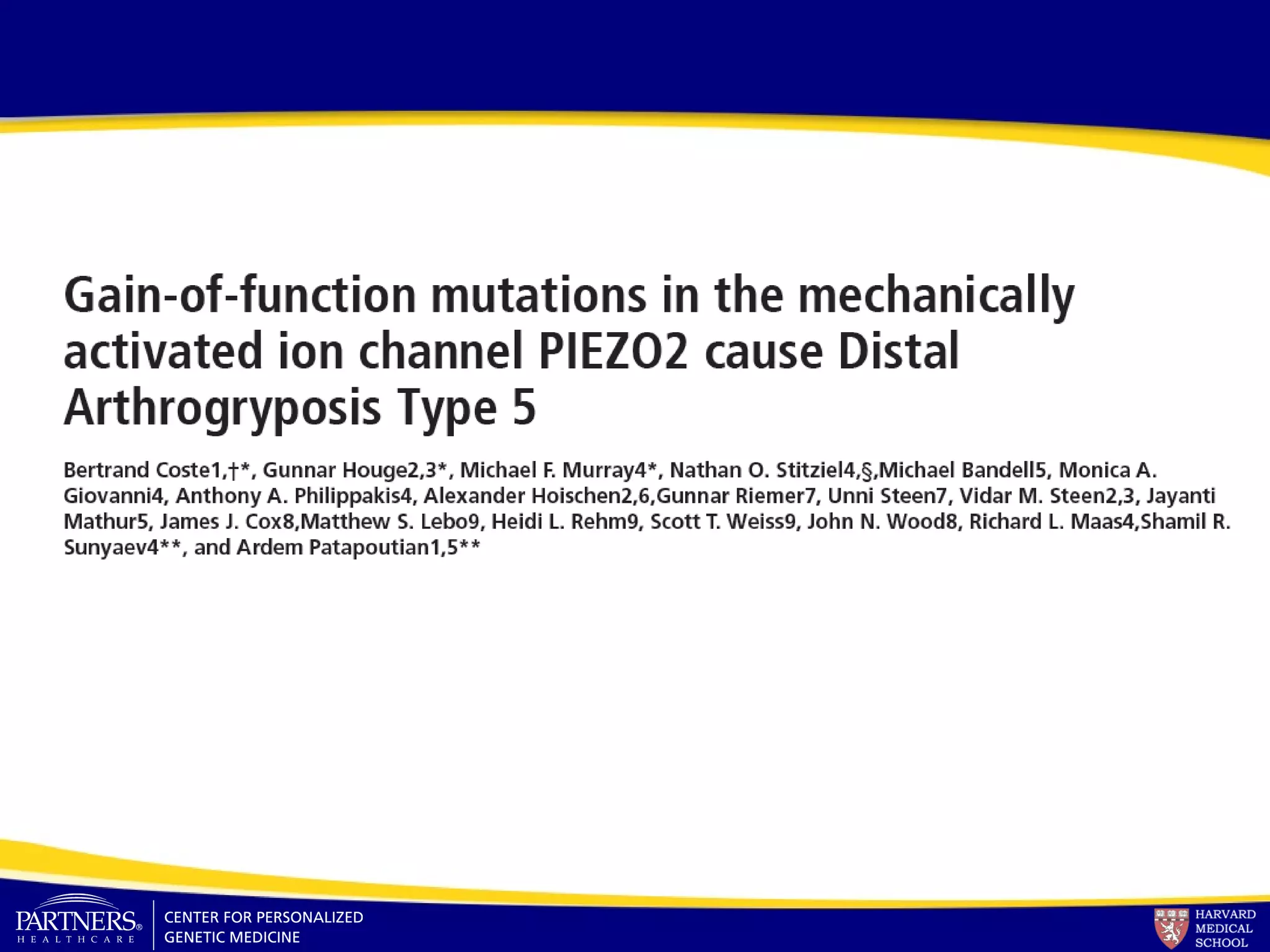
WGS Case 2: Distal Arthrogryposis Type 5
Disease is known to be AD and to occur de novo
No known genes for DA5
Skeletal Spine stiffness, Hunched anteverted shoulders, Pectus excavatum, Limited forearm rotation and
wrist extension, Bilateral club feet, Congenital finger contractures, Long fingers, Absent phalangeal
creases, Poorly formed palmar creases, Camptodactyly, Dimples over large joints
Muscle Decreased muscle mass (especially in lower limbs), Firm muscles
Face Triangular face, Decreased facial expression
Ears Prominent ears
Eyes Ophthalmoplegia, Deep-set eyes, Epicanthal folds, Ptosis, Duane anomaly, Keratoglobus,
Keratoconus, Macular retinal folds, Strabismus, Astigmatism, Abnormal electroretinogram, Abnormal
retinal pigmentation
Clinical features:
Case from of Michael Murray, MD
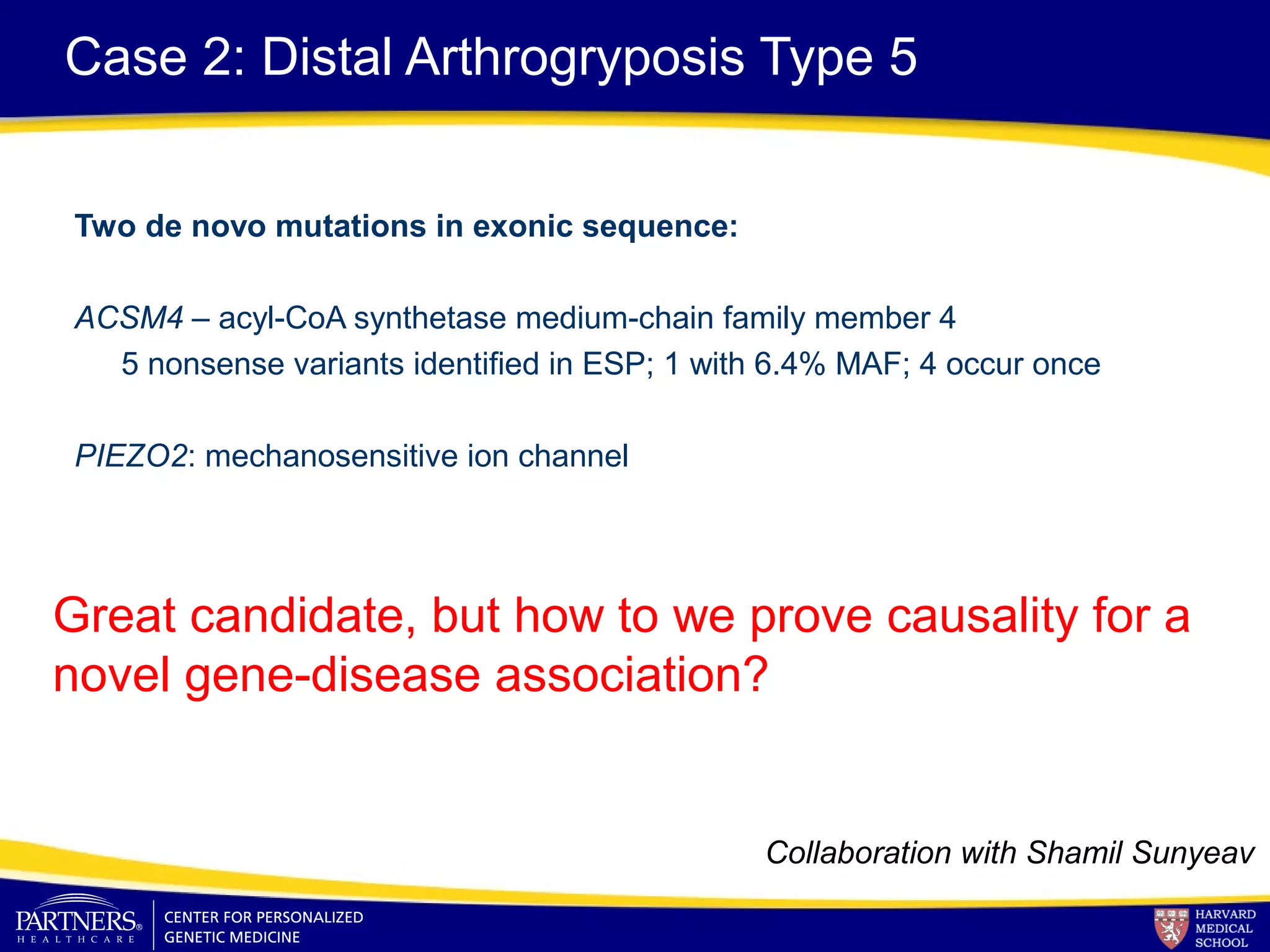
Case 2: Distal Arthrogryposis Type 5
Two de novo mutations in exonic sequence:
ACSM4 – acyl-CoA synthetase medium-chain family member 4
5 nonsense variants identified in ESP; 1 with 6.4% MAF; 4 occur once
PIEZO2: mechanosensitive ion channel
Great candidate, but how to we prove causality for a
novel gene-disease association?
Collaboration with Shamil Sunyeav
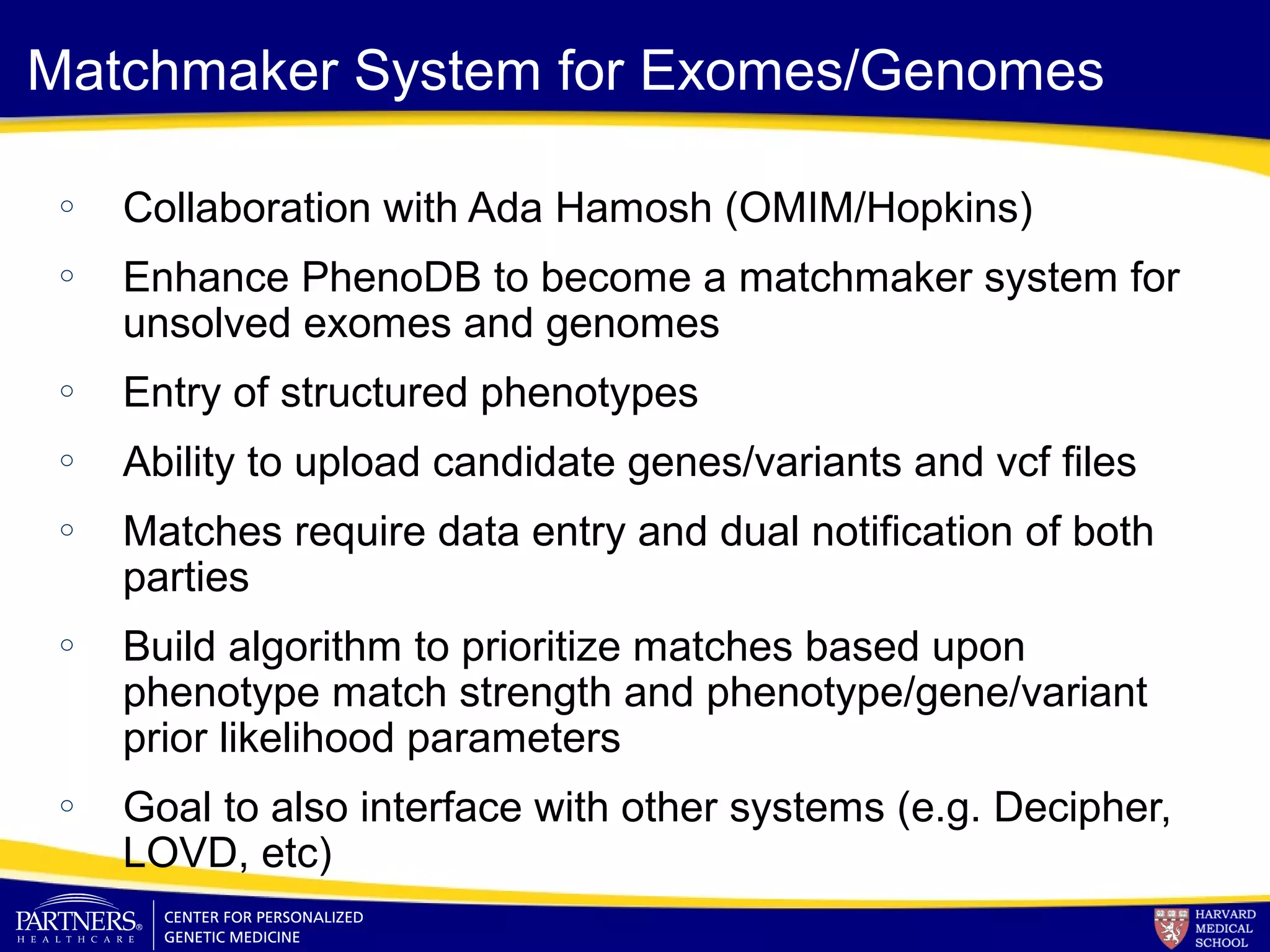
Matchmaker System for Exomes/Genomes
o Collaboration with Ada Hamosh (OMIM/Hopkins)
o Enhance PhenoDB to become a matchmaker system for
unsolved exomes and genomes
o Entry of structured phenotypes
o Ability to upload candidate genes/variants and vcf files
o Matches require data entry and dual notification of both
parties
o Build algorithm to prioritize matches based upon
phenotype match strength and phenotype/gene/variant
prior likelihood parameters
o Goal to also interface with other systems (e.g. Decipher,
LOVD, etc)
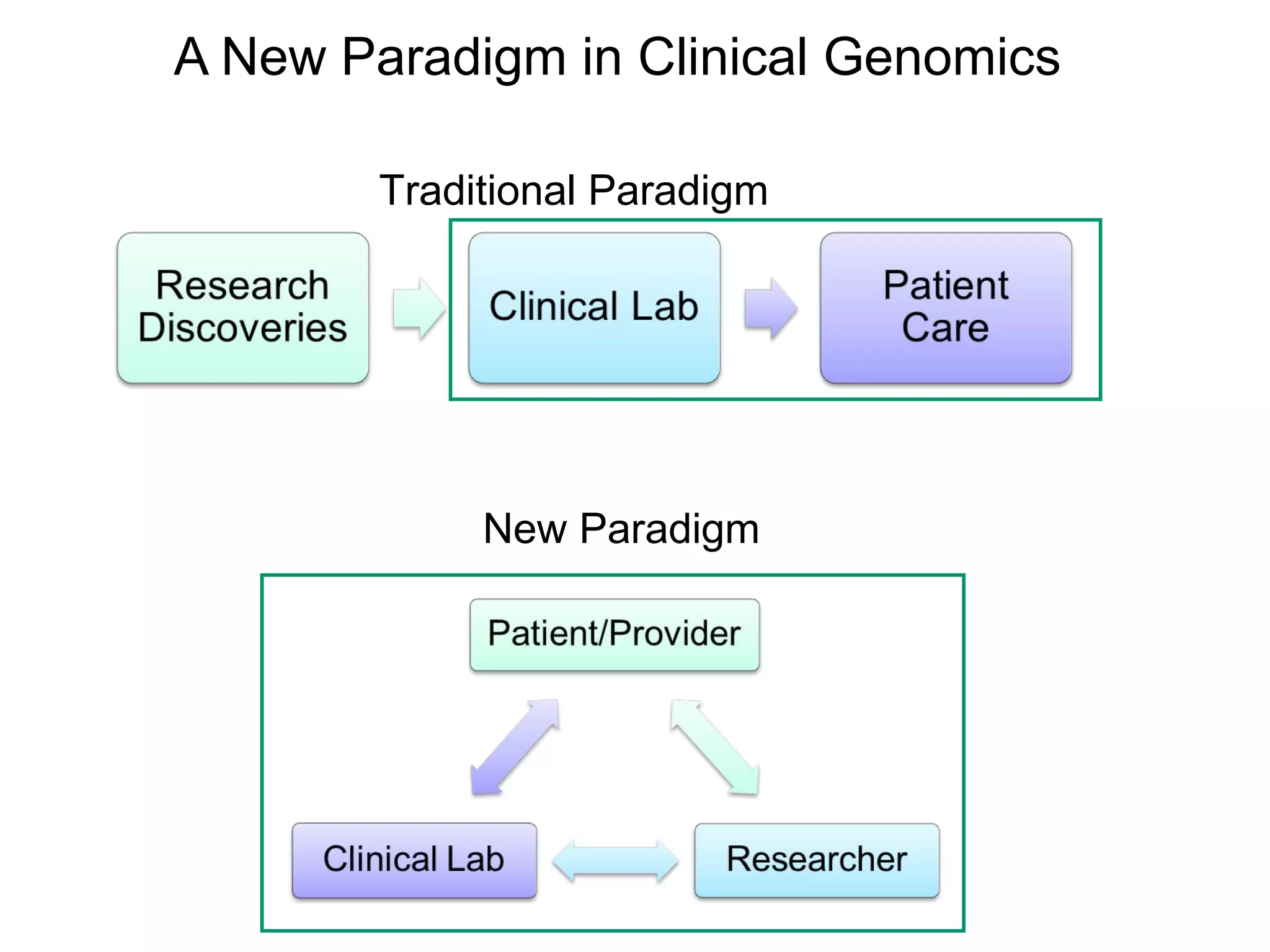
A New Paradigm in Clinical Genomics
Traditional Paradigm
New Paradigm
What is the biggest
bottleneck in clinical
sequencing?
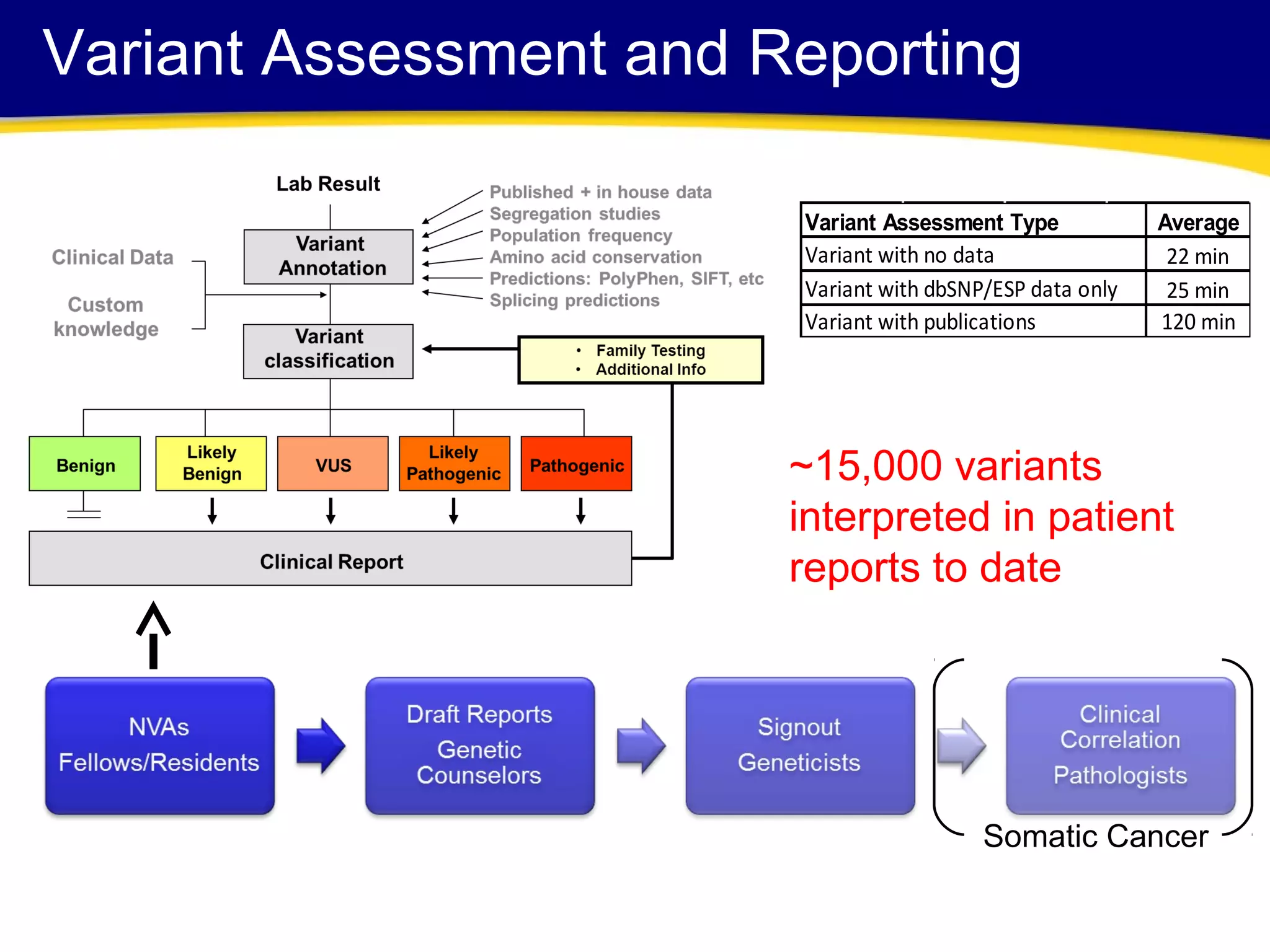
Variant Assessment and Reporting
Somatic Cancer
~15,000 variants
interpreted in patient
reports to date
Average
22 min
25 min
120 min
Variant Assessment Type
Variant with no data
Variant with dbSNP/ESP data only
Variant with publications
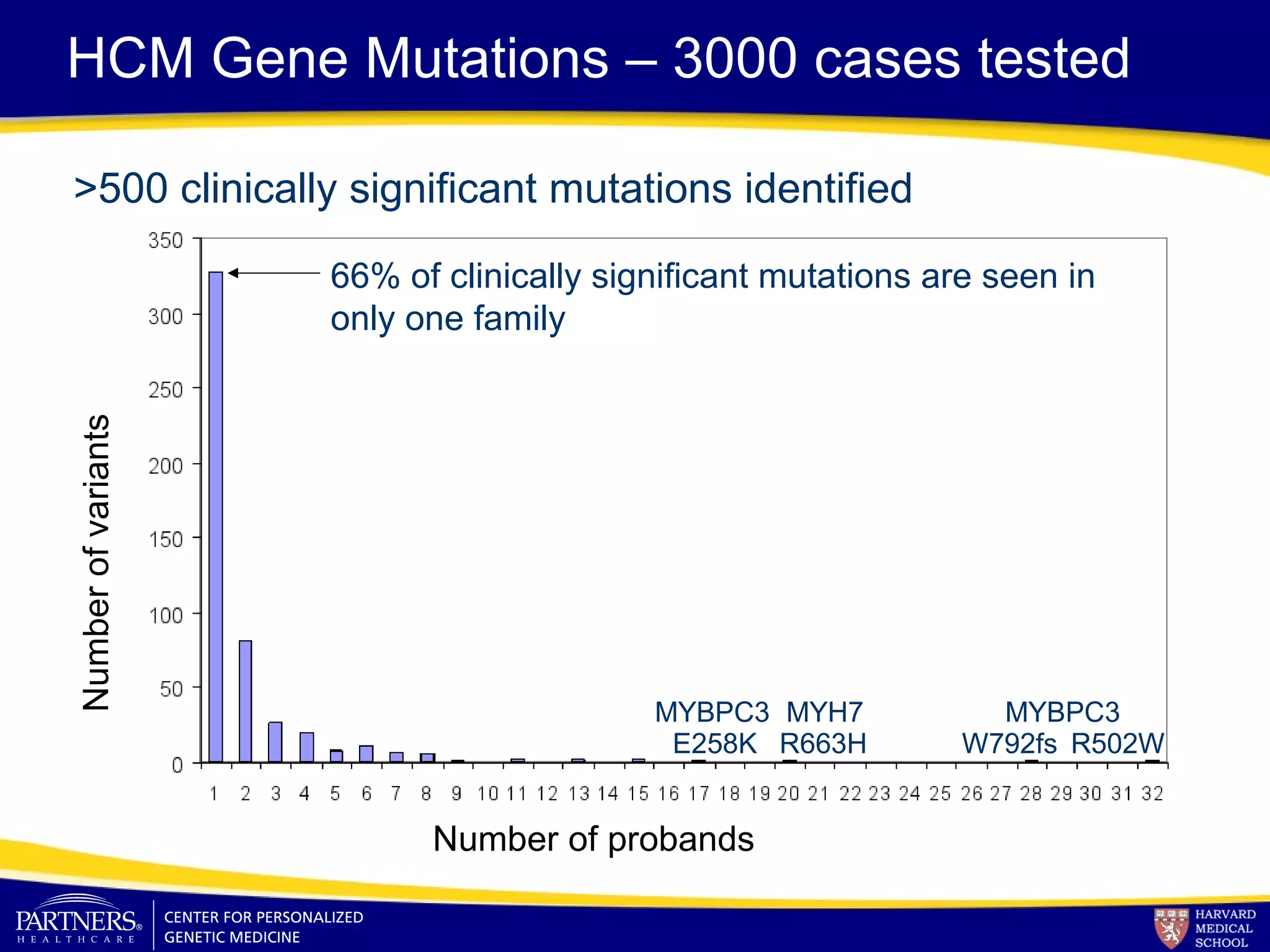
HCM Gene Mutations – 3000 cases tested
>500 clinically significant mutations identified
66% of clinically significant mutations are seen in
only one family
Number of probands
Numberofvariants
MYBPC3
E258K
MYBPC3MYH7
R502WW792fsR663H
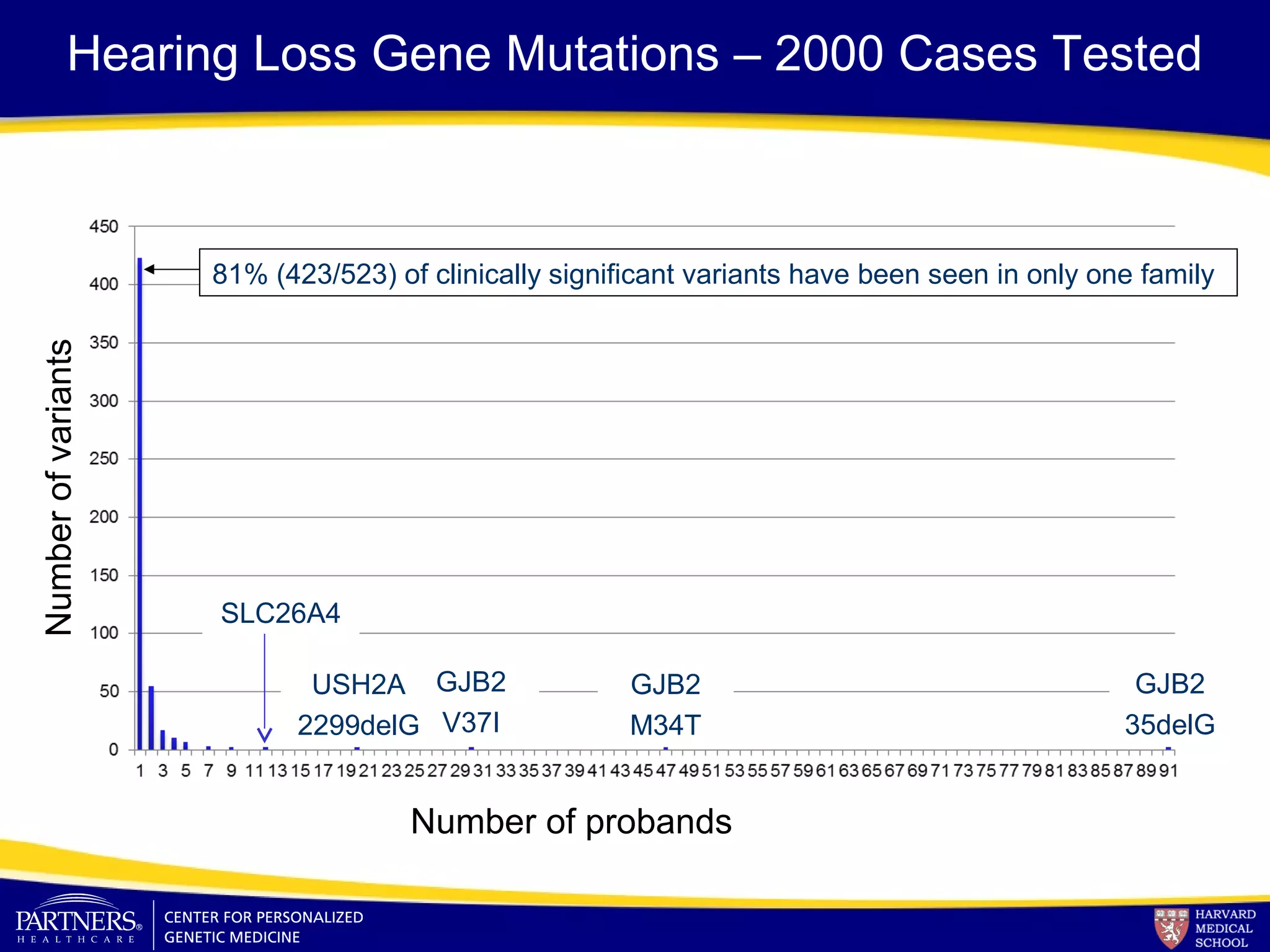
Hearing Loss Gene Mutations – 2000 Cases Tested
Number of probands
Numberofvariants
GJB2
35delG
GJB2
V37I
GJB2
M34T
USH2A
2299delG
SLC26A4
81% (423/523) of clinically significant variants have been seen in only one family
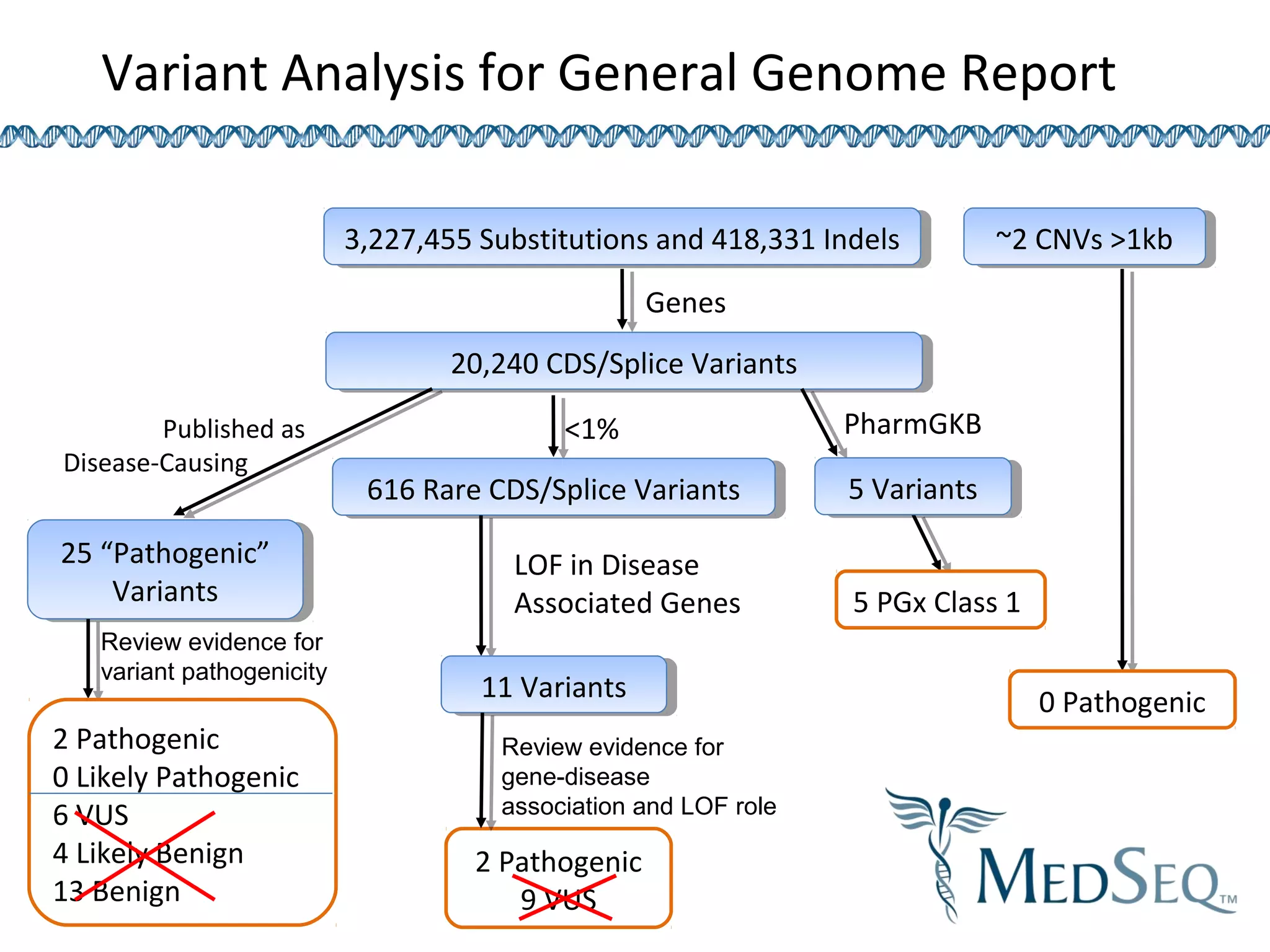
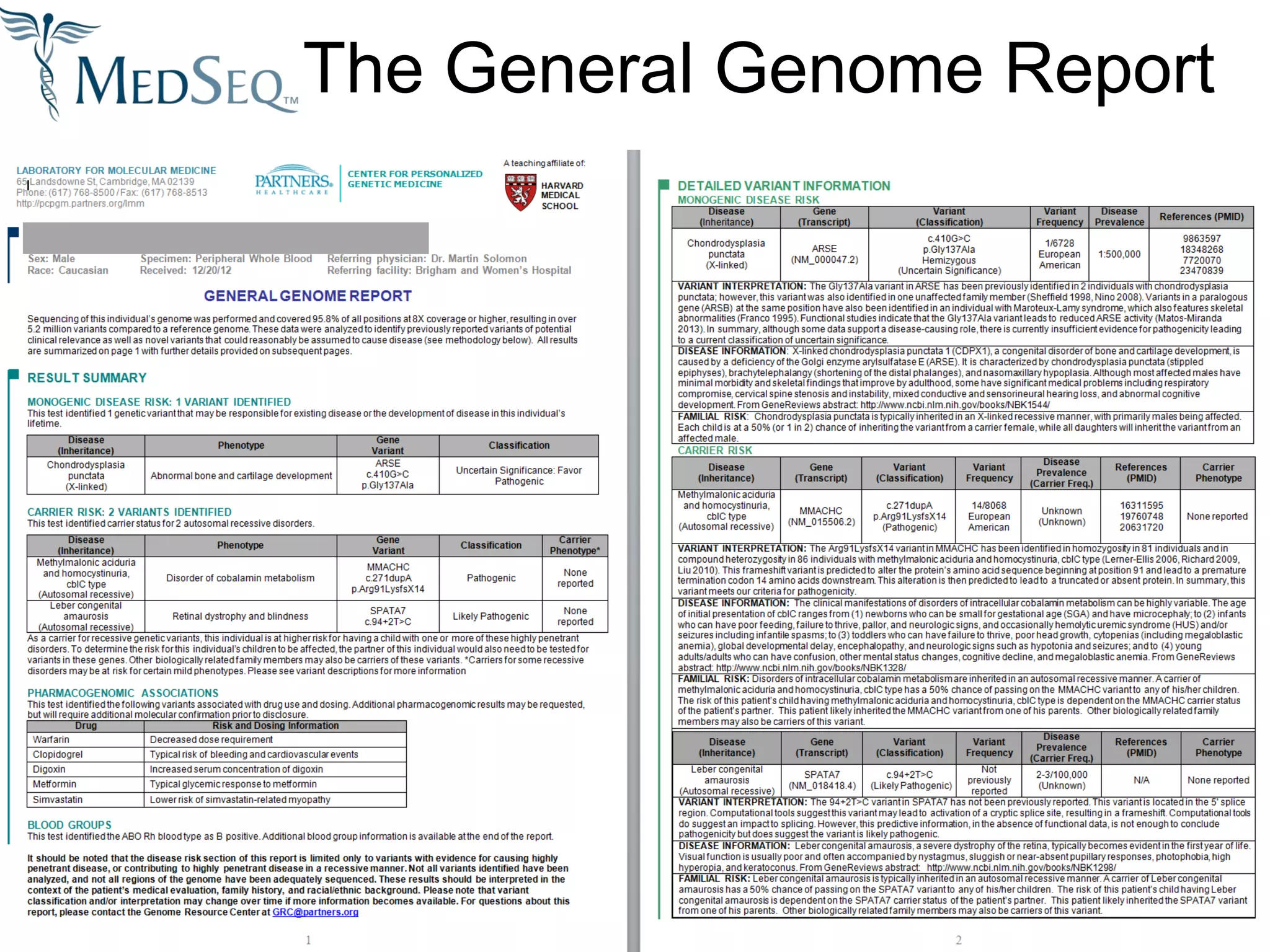
Variant Analysis for General Genome Report
3,227,455 Substitutions and 418,331 Indels3,227,455 Substitutions and 418,331 Indels
20,240 CDS/Splice Variants20,240 CDS/Splice Variants
25 “Pathogenic”
Variants
25 “Pathogenic”
Variants
Published as
Disease-Causing
Genes
5 PGx Class 1
5 Variants5 Variants
PharmGKB
2 Pathogenic
0 Likely Pathogenic
6 VUS
4 Likely Benign
13 Benign
<1%
616 Rare CDS/Splice Variants616 Rare CDS/Splice Variants
LOF in Disease
Associated Genes
2 Pathogenic
9 VUS
11 Variants11 Variants
~2 CNVs >1kb~2 CNVs >1kb
0 Pathogenic
Review evidence for
gene-disease
association and LOF role
Review evidence for
variant pathogenicity
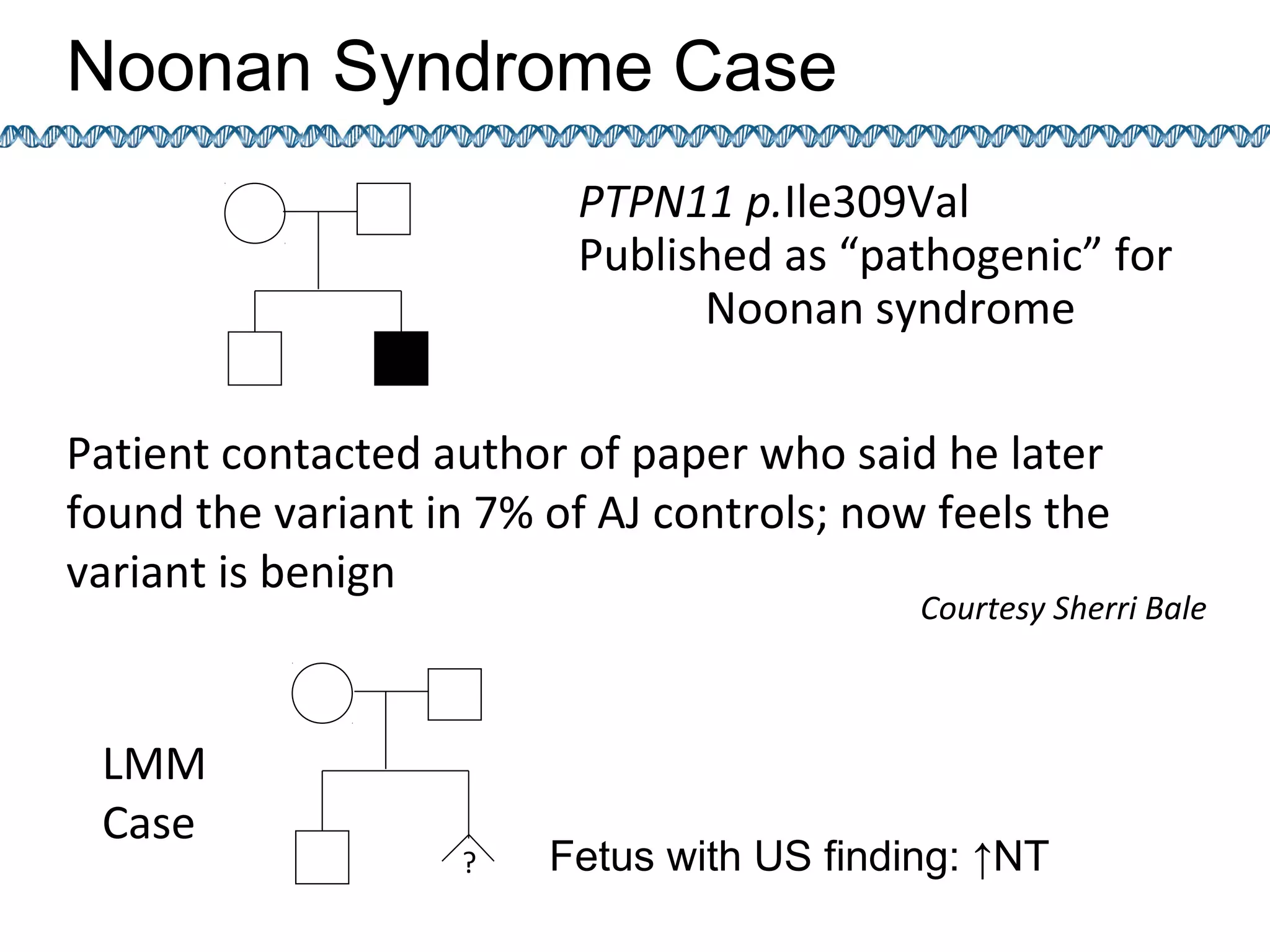
Fetus with US finding: ↑NT
PTPN11 p.Ile309Val
Published as “pathogenic” for
Noonan syndrome
Patient contacted author of paper who said he later
found the variant in 7% of AJ controls; now feels the
variant is benign
Courtesy Sherri Bale
Noonan Syndrome Case
?
LMM
Case
To improve our knowledge of DNA
variation will require a massive
effort in data sharing
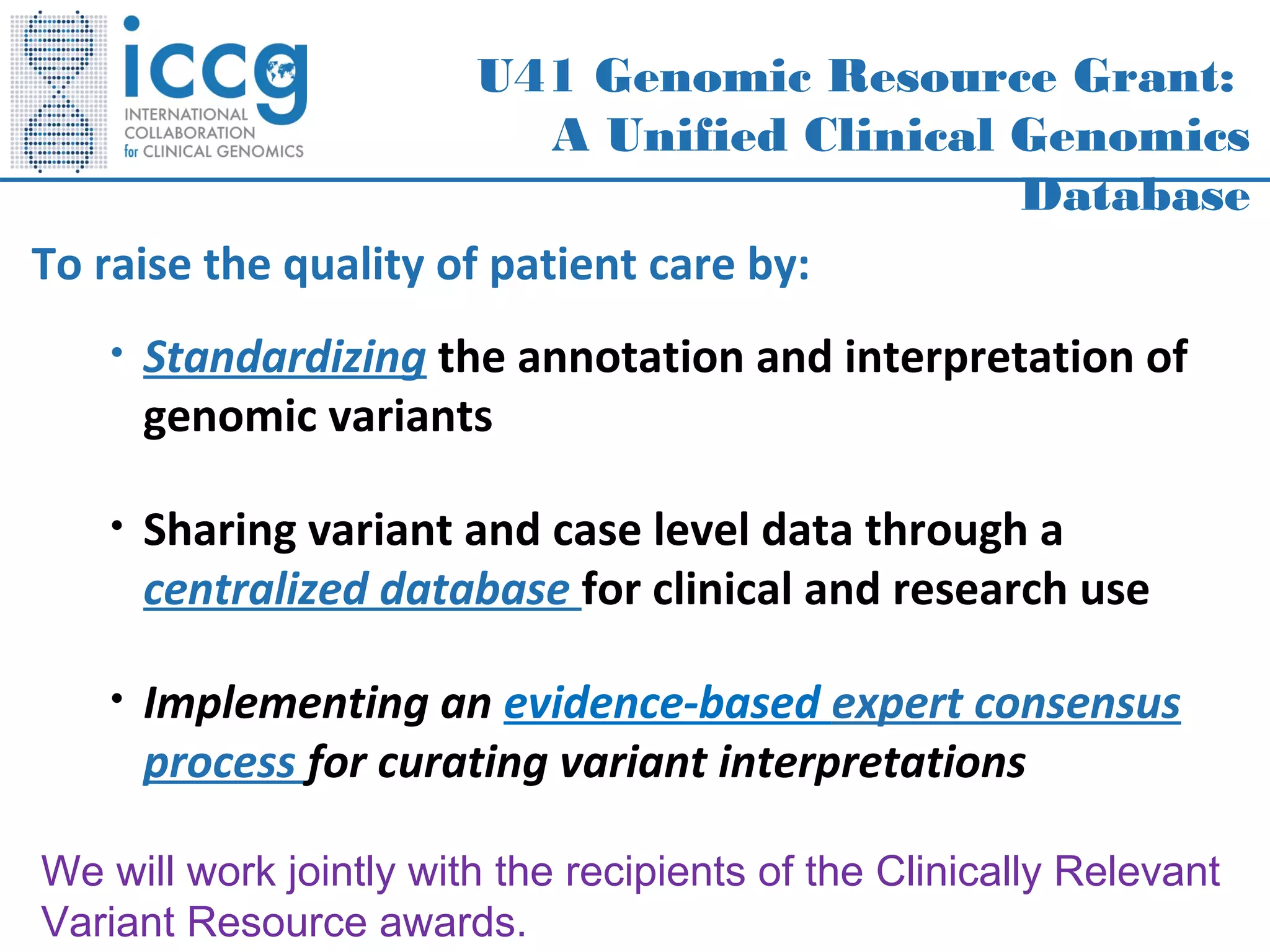
U41 Genomic Resource Grant:
A Unified Clinical Genomics
Database
To raise the quality of patient care by:
• Standardizing the annotation and interpretation of
genomic variants
• Sharing variant and case level data through a
centralized database for clinical and research use
• Implementing an evidence-based expert consensus
process for curating variant interpretations
We will work jointly with the recipients of the Clinically Relevant
Variant Resource awards.
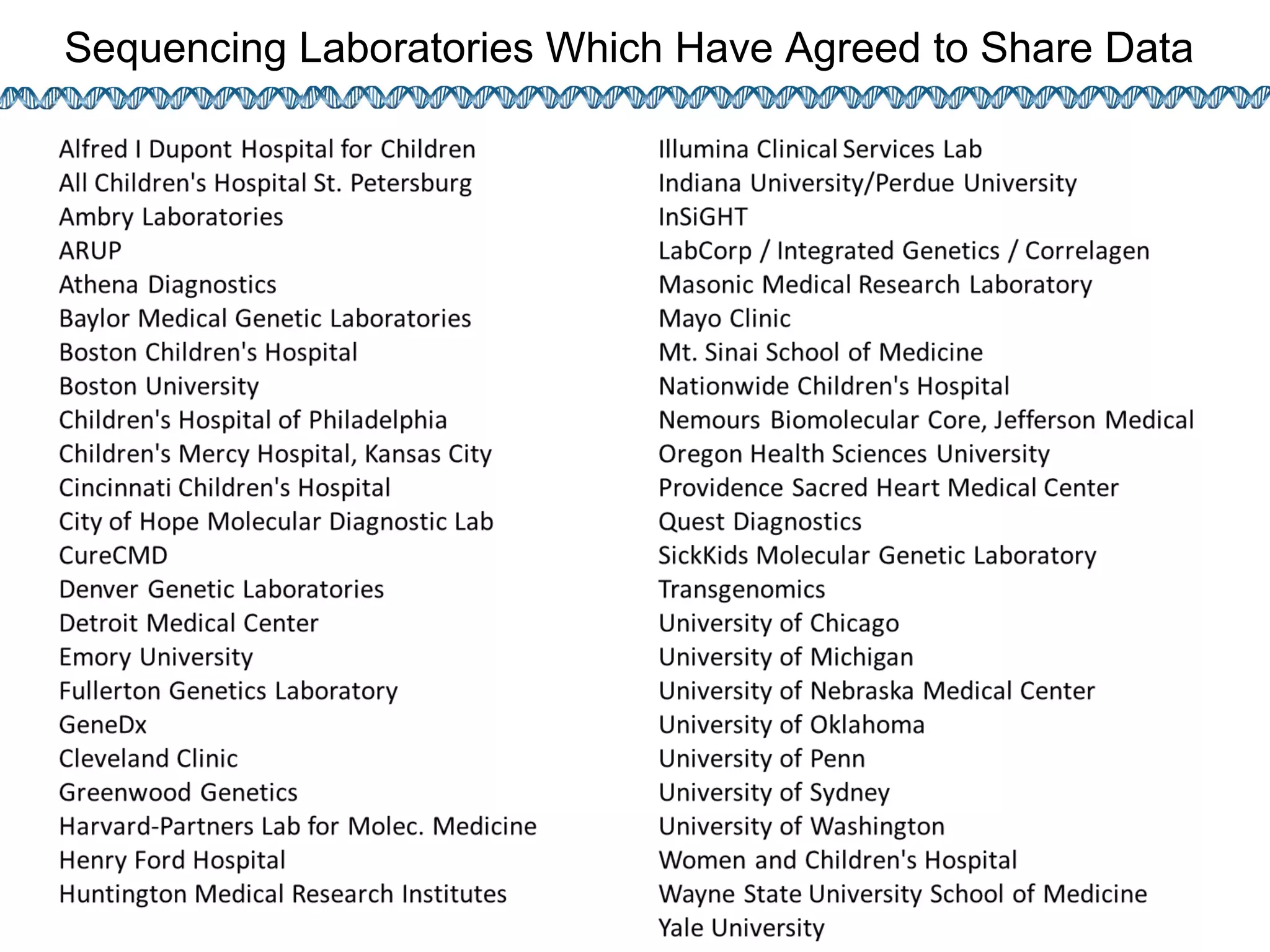
Sequencing Laboratories Which Have Agreed to Share Data
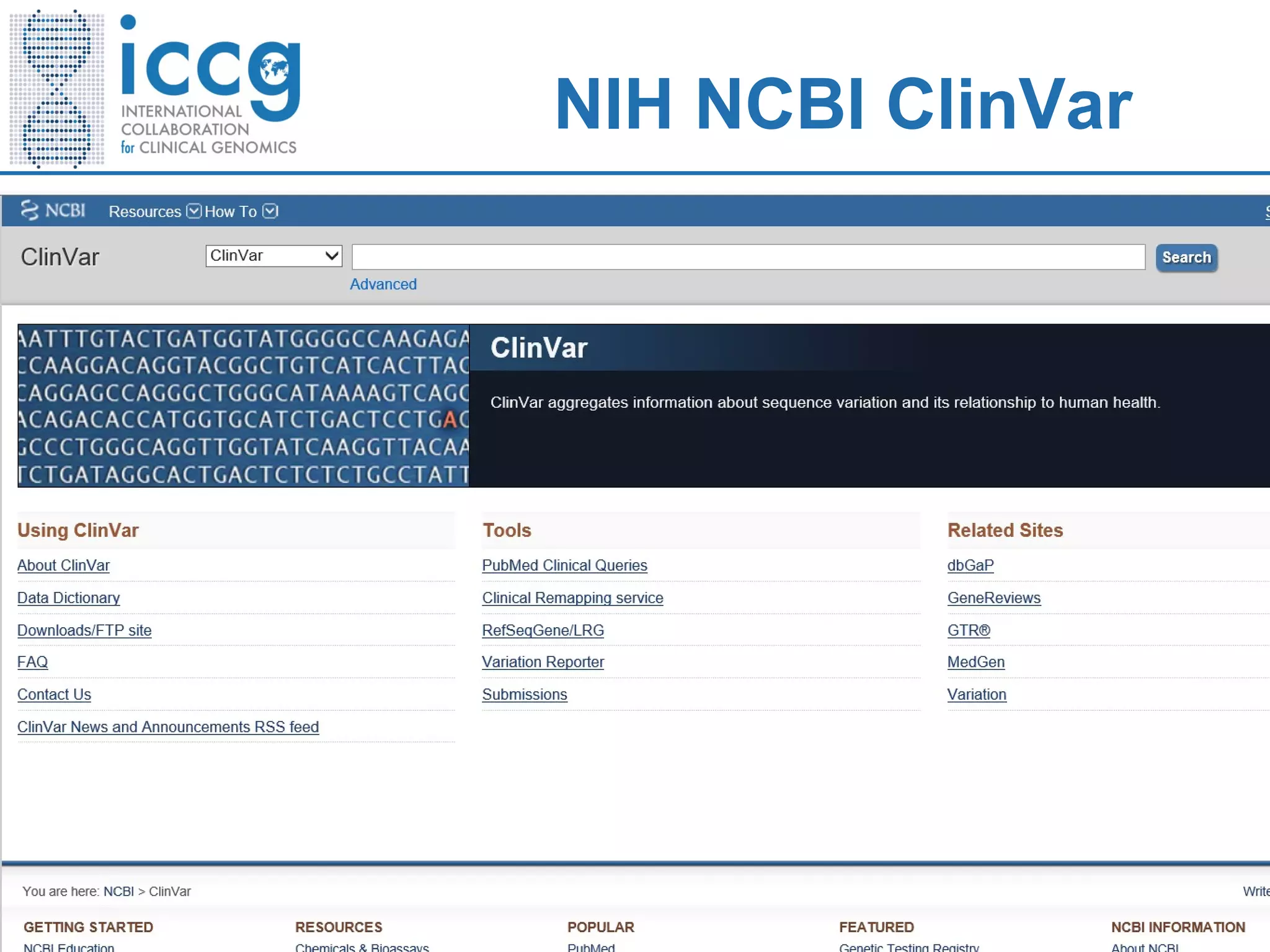
www.ncbi.nlm.nih.gov/clinvar
NIH NCBI ClinVar
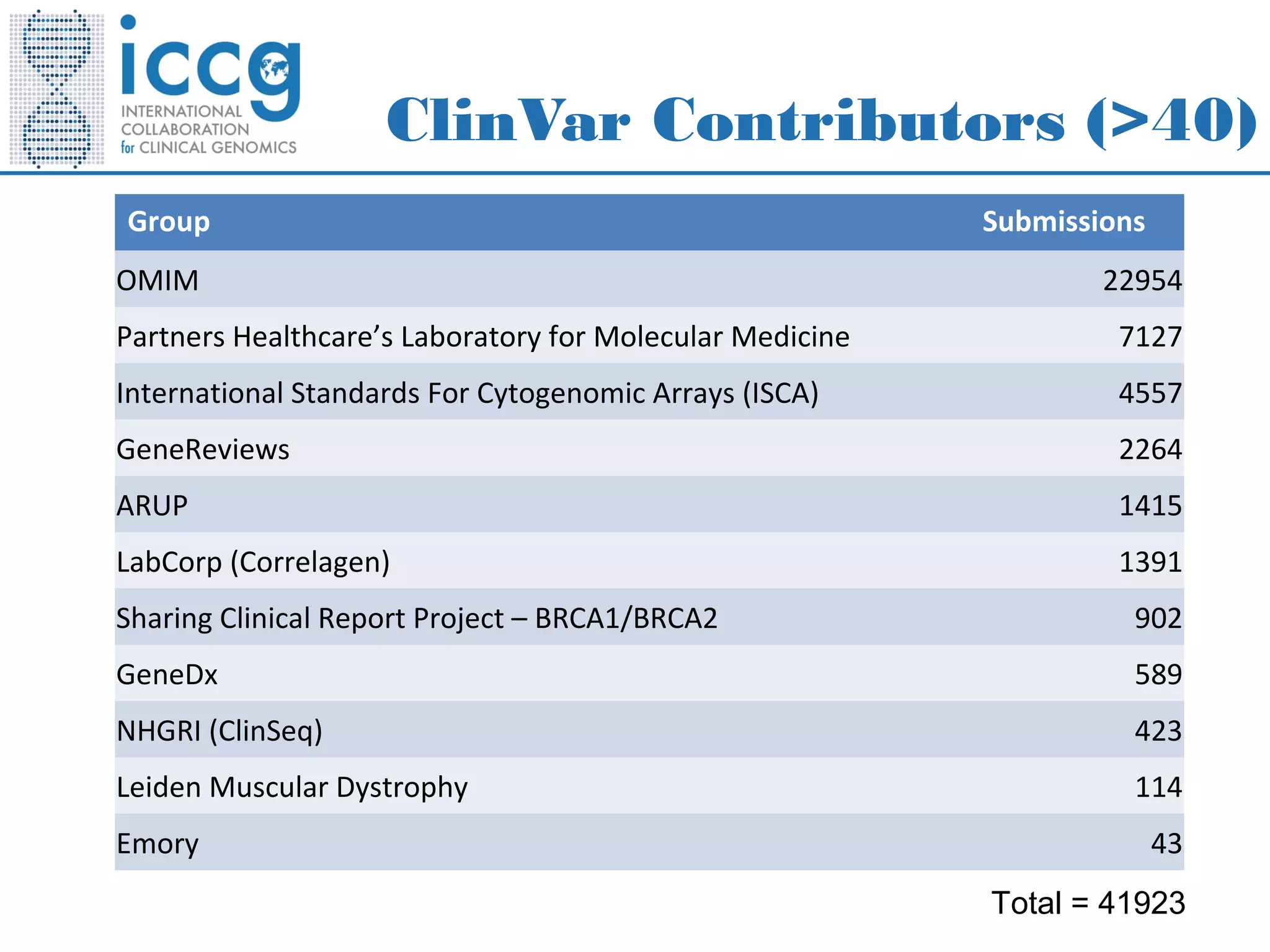
ClinVar Contributors (>40)
Group Submissions
OMIM 22954
Partners Healthcare’s Laboratory for Molecular Medicine 7127
International Standards For Cytogenomic Arrays (ISCA) 4557
GeneReviews 2264
ARUP 1415
LabCorp (Correlagen) 1391
Sharing Clinical Report Project – BRCA1/BRCA2 902
GeneDx 589
NHGRI (ClinSeq) 423
Leiden Muscular Dystrophy 114
Emory 43
Total = 41923
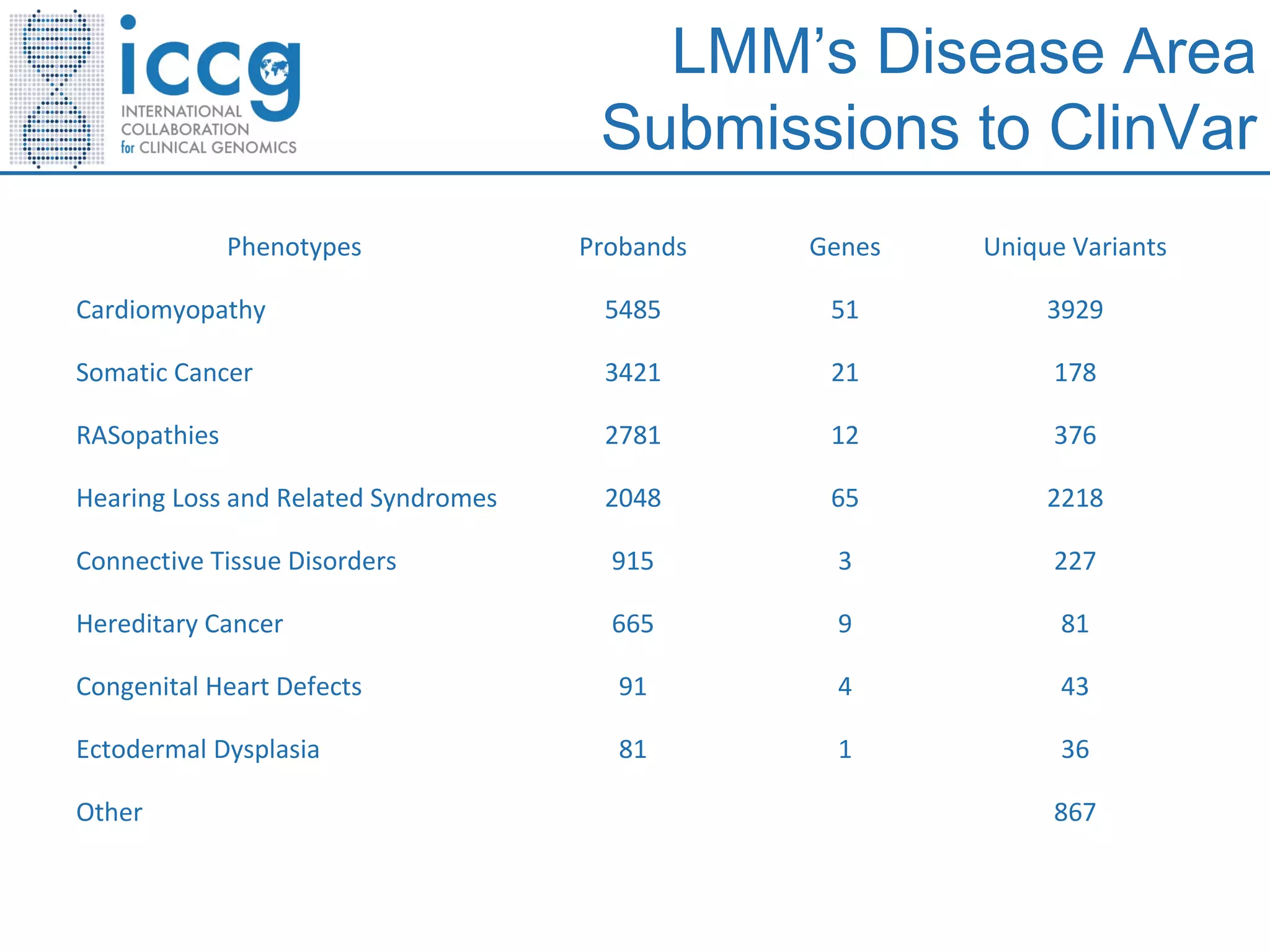
LMM’s Disease Area
Submissions to ClinVar
Phenotypes Probands Genes Unique Variants
Cardiomyopathy 5485 51 3929
Somatic Cancer 3421 21 178
RASopathies 2781 12 376
Hearing Loss and Related Syndromes 2048 65 2218
Connective Tissue Disorders 915 3 227
Hereditary Cancer 665 9 81
Congenital Heart Defects 91 4 43
Ectodermal Dysplasia 81 1 36
Other 867
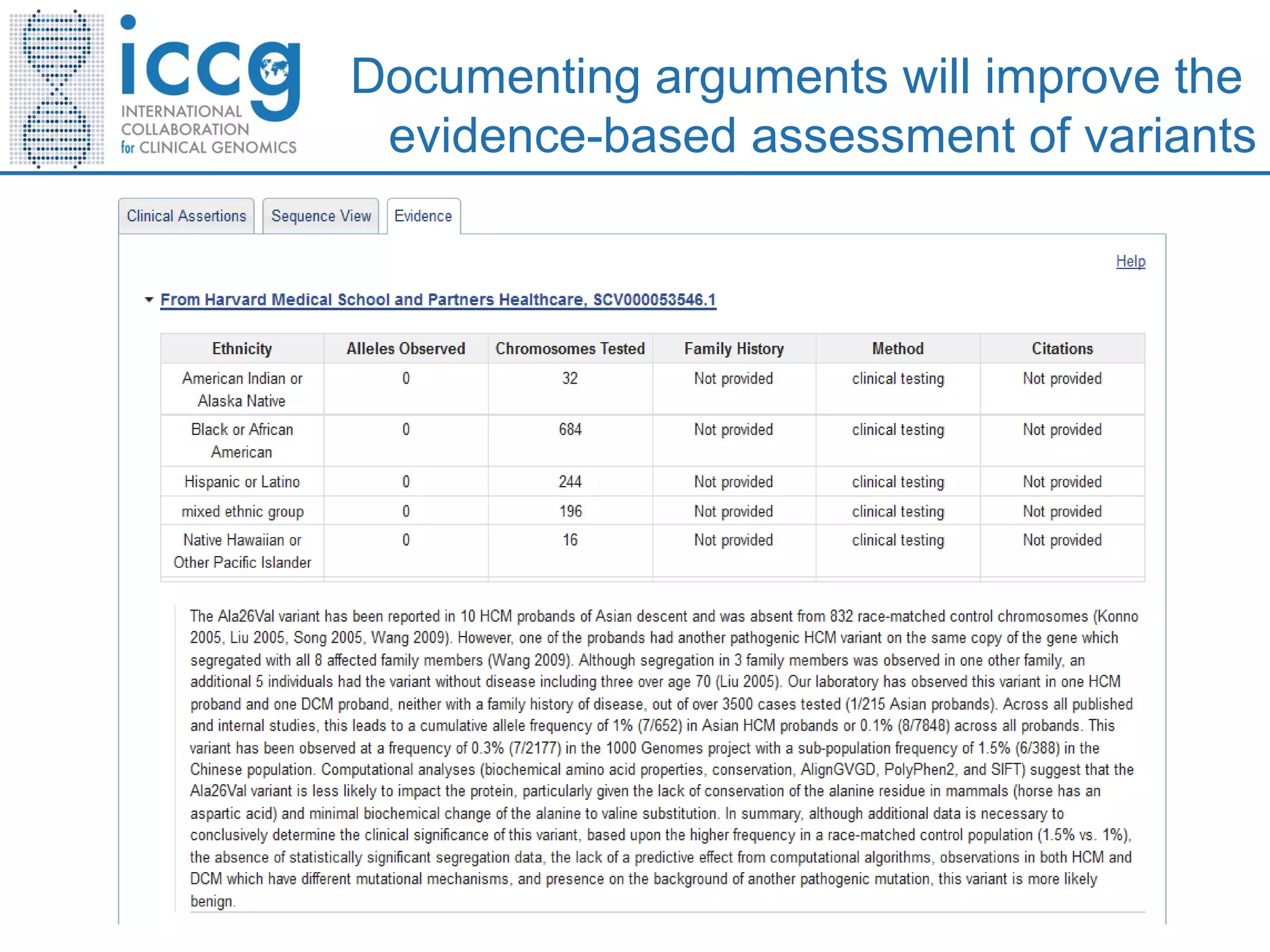
Documenting arguments will improve the
evidence-based assessment of variants
Current Limitations of ClinVar
Many labs have limited and/or non-
standardized infrastructure to house their
data which limits the quantity, quality and
efficiency of data sharing
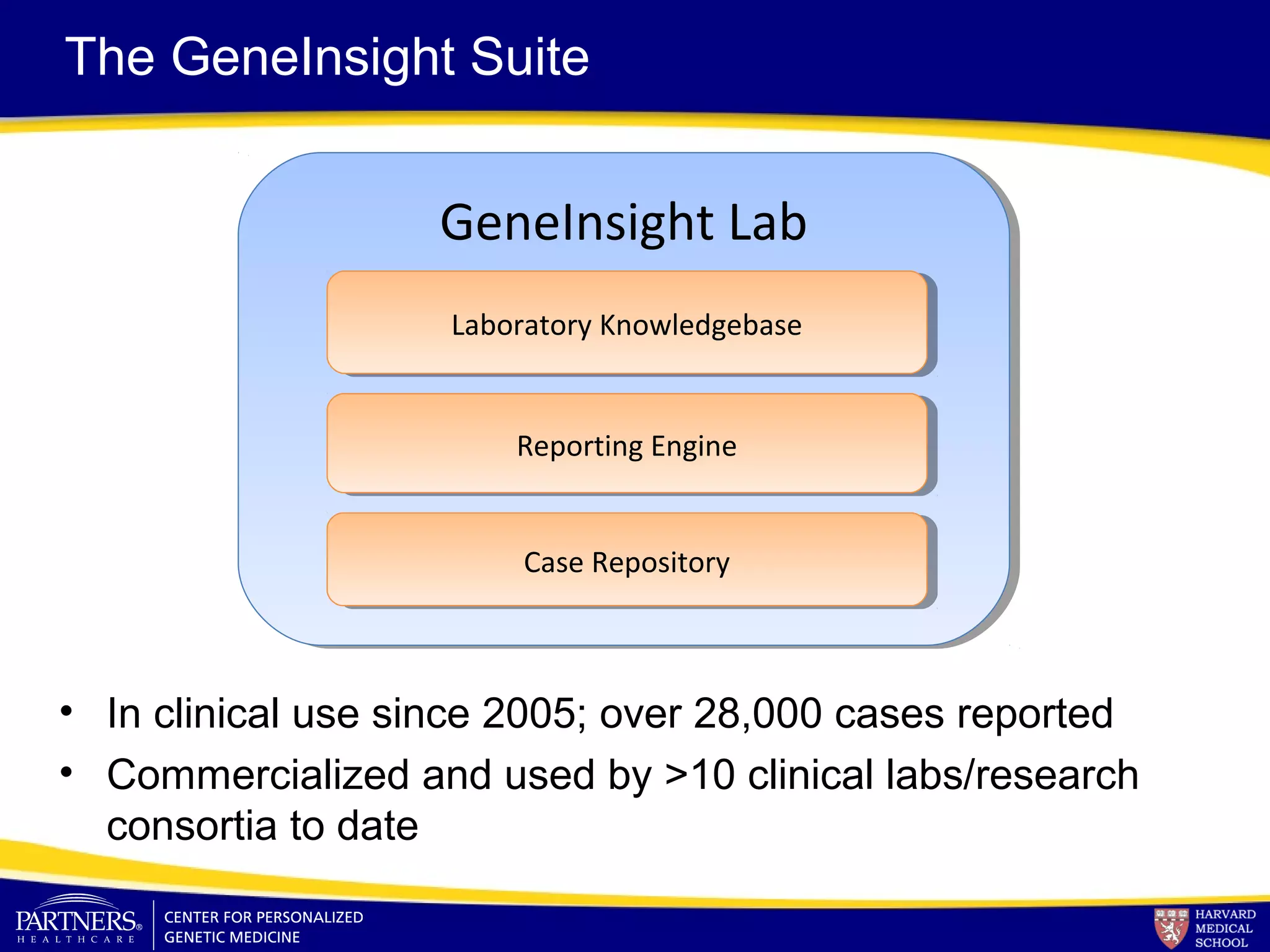
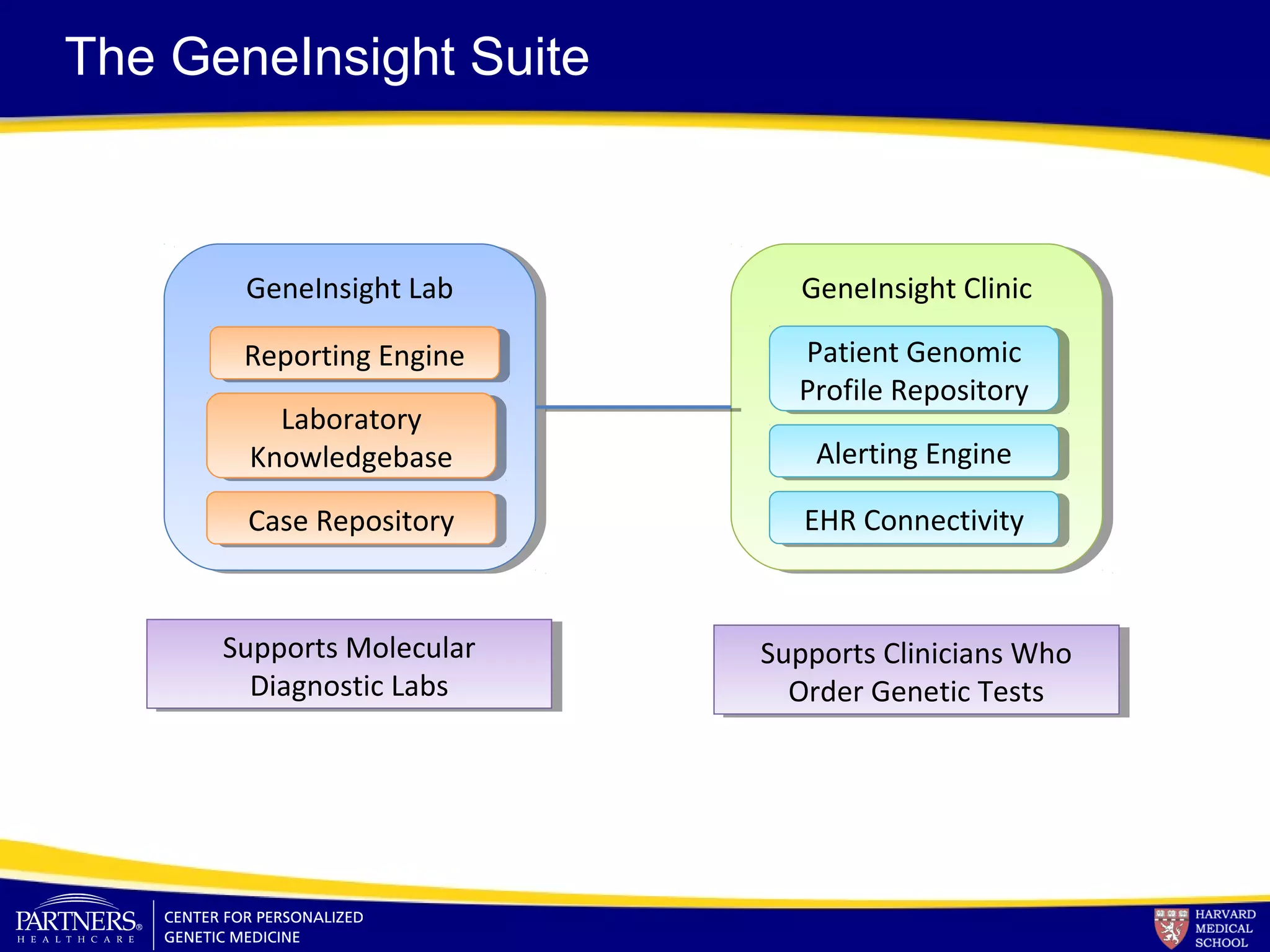
GeneInsight LabGeneInsight Lab
Reporting EngineReporting Engine
Laboratory KnowledgebaseLaboratory Knowledgebase
Case RepositoryCase Repository
The GeneInsight Suite
• In clinical use since 2005; over 28,000 cases reported
• Commercialized and used by >10 clinical labs/research
consortia to date
Current Limitations of ClinVar
o Genomic data and other case-level data is difficult to
share in meaningful ways in the public domain
My lab has 25,000 cases with phenotypic data that I am willing
but unable to share through ClinVar right now
o We are gathering stakeholders at NIH in September
to discuss policies surrounding case-level data
submission and access for NCBI databases including
ClinVar and dbGaP
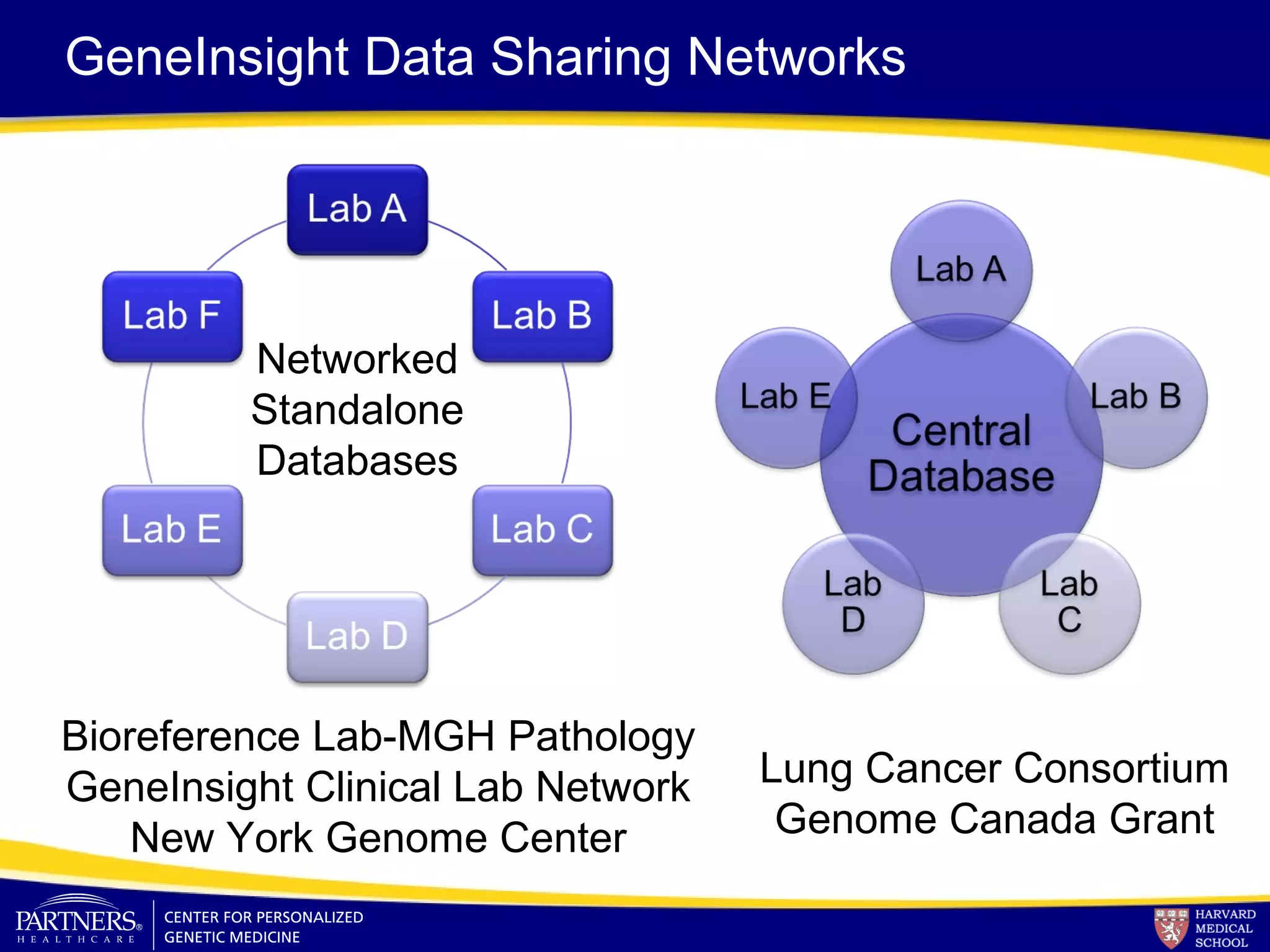
GeneInsight Data Sharing Networks
Networked
Standalone
Databases
Bioreference Lab-MGH Pathology
GeneInsight Clinical Lab Network
New York Genome Center
Lung Cancer Consortium
Genome Canada Grant
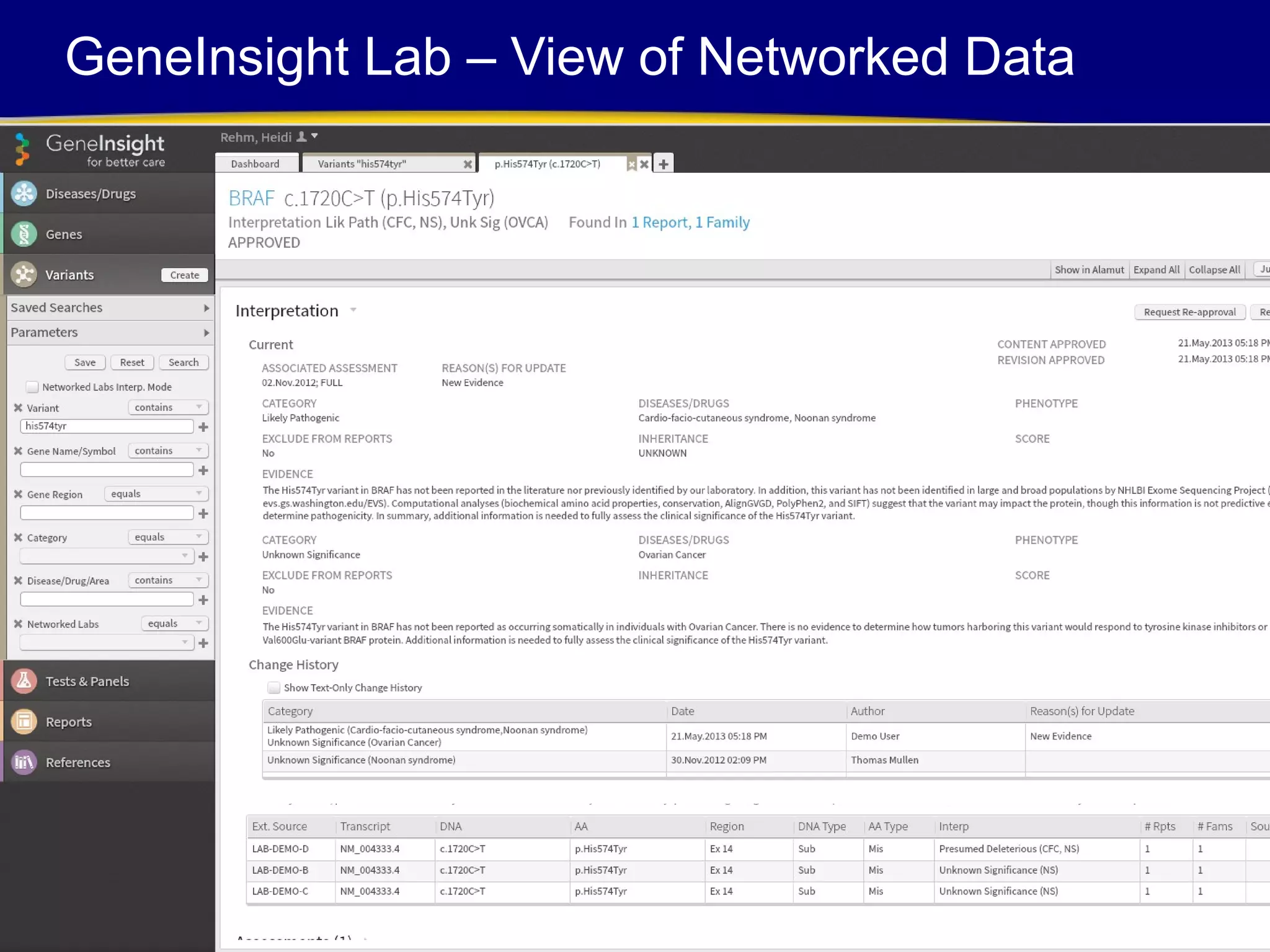
GeneInsight Lab – View of Networked Data
GeneInsight LabGeneInsight Lab
Reporting EngineReporting Engine
Laboratory
Knowledgebase
Laboratory
Knowledgebase
Case RepositoryCase Repository
GeneInsight ClinicGeneInsight Clinic
Patient Genomic
Profile Repository
Patient Genomic
Profile Repository
Alerting EngineAlerting Engine
EHR ConnectivityEHR Connectivity
Supports Molecular
Diagnostic Labs
Supports Molecular
Diagnostic Labs
Supports Clinicians Who
Order Genetic Tests
Supports Clinicians Who
Order Genetic Tests
The GeneInsight Suite
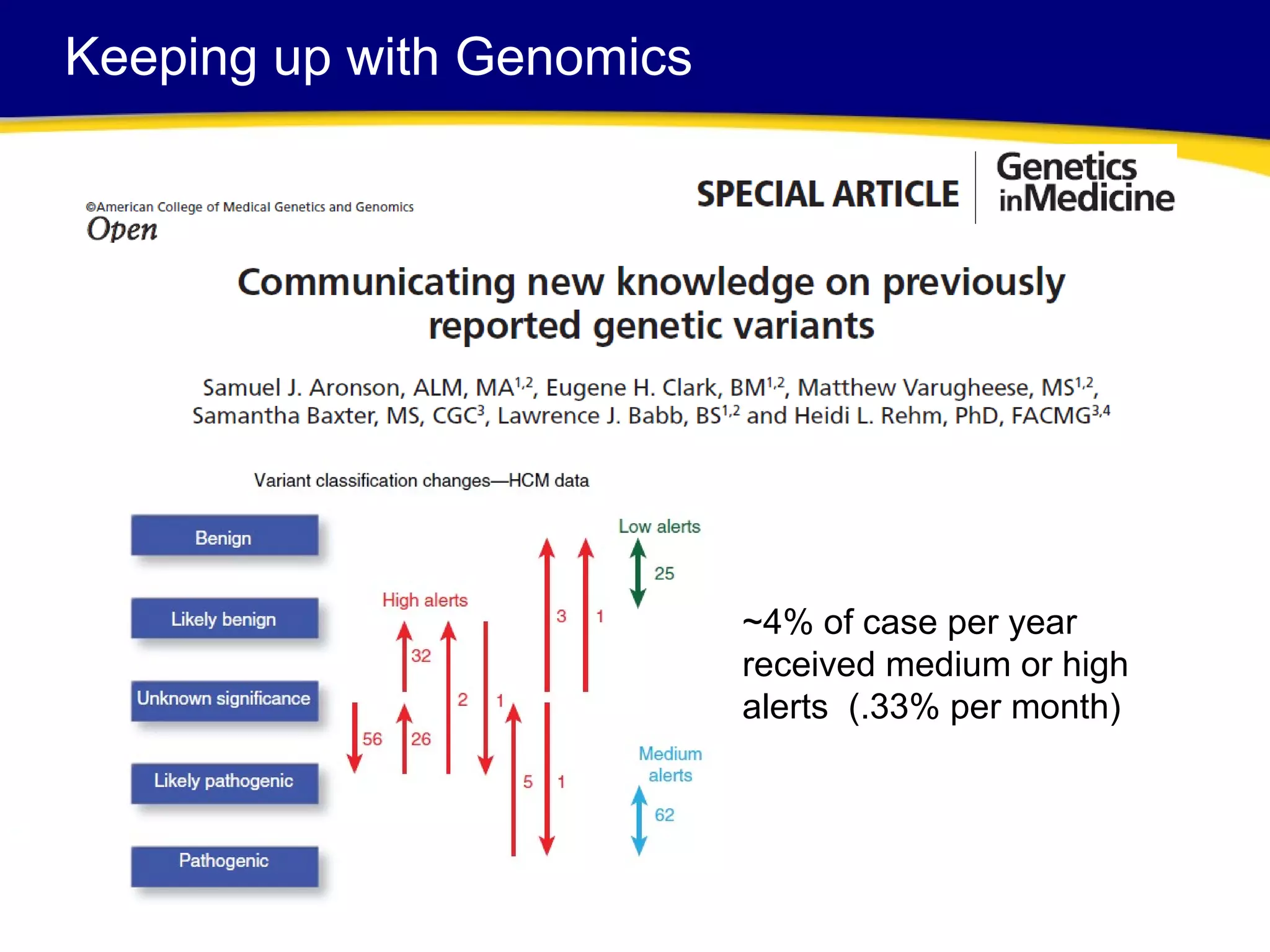
Keeping up with Genomics
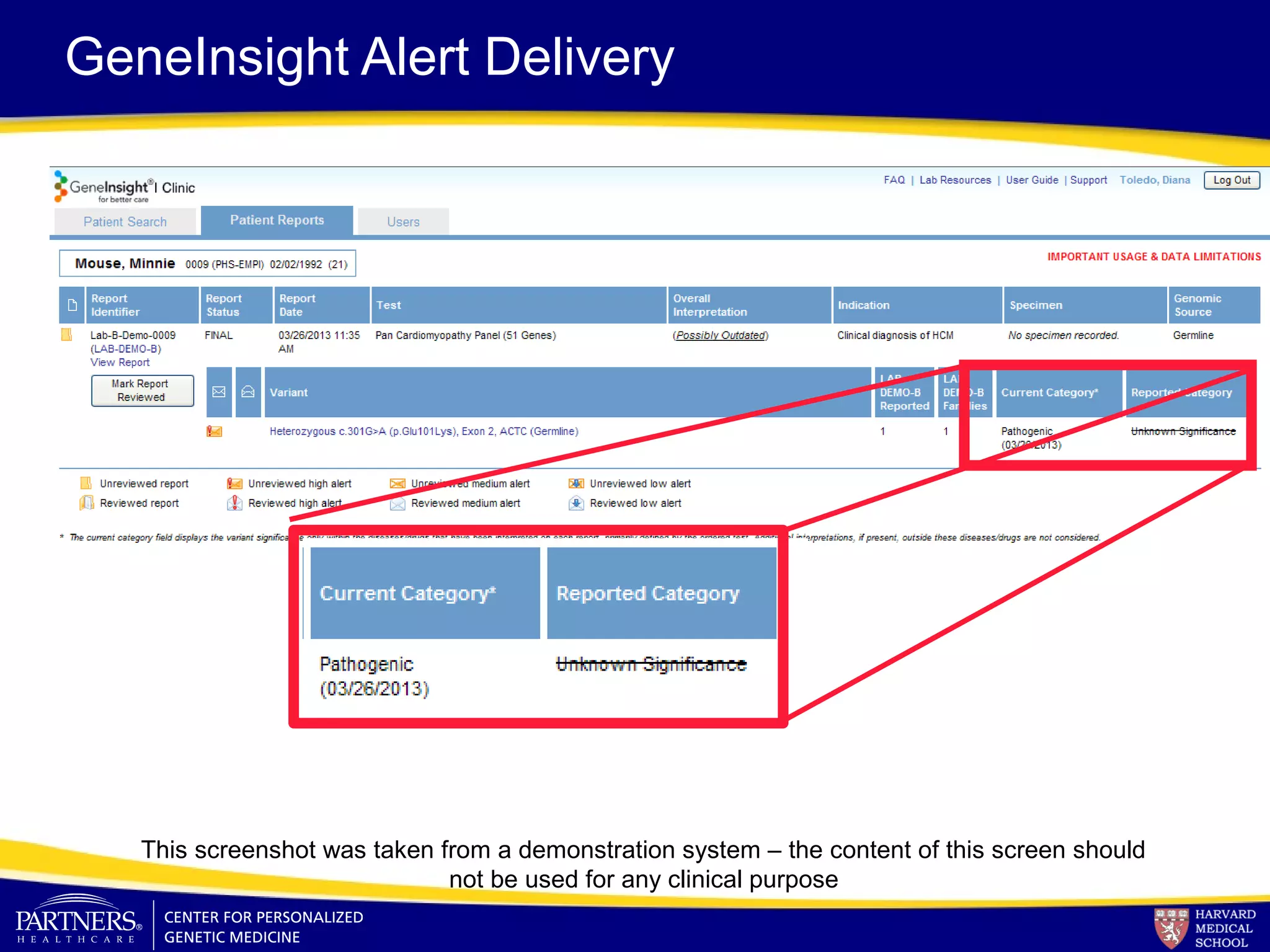
~4% of case per year
received medium or high
alerts (.33% per month)
GeneInsight Alert Delivery
This screenshot was taken from a demonstration system – the content of this screen should
not be used for any clinical purpose
Acknowledgements
The General Genome Report

Aug2013 Heidi Rehm integrating large scale sequencing into clinical practice

  • 1.
    Integrating Large ScaleSequencing into Clinical Practice Heidi L. Rehm, PhD, FACMGHeidi L. Rehm, PhD, FACMG Director, Laboratory for Molecular Medicine, PCPGM Assistant Professor of Pathology, BWH, MGH, HMS
  • 2.
    Laboratory for MolecularMedicine at PCPGM 15% of testing is from Partners’ patients 85% is from other US and International patients • CLIA-certified in 2003 • LMM offers >150 tests in cardiovascular disease, cancer, hearing loss, pharmacogenetics and genetic syndromes • Main focus of testing is large multi-gene panels using sequencing technologies (NGS, Sanger) • Other technologies include TaqMan, Luminex, allele-specific PCR, MLPA, PNAs, STRs, droplet PCR • Whole genome sequencing diagnostic service
  • 3.
    Ryan Shay Antonio Puerta DeCarloPolk Joe KennedyJason Collier HCM SCD in Athletes
  • 4.
    d. SCD, 7y 38y CasePresentation Cardiac gross exam: asymmetric septal LVH Cardiac tissue histology: myofiber disarray Autopsy 40y 6 y Normal Deceased Normal Deceased
  • 5.
    Legend: MI, 49y MI,70y 39y d. SCD, 7y6y 3y 38y SCD = Sudden Cardiac Death Case Presentation with Family History 40y 6 y 71y 68y 36y
  • 6.
    HCM Family 90 Legend: =Affected individuals d. SCD, 49y d. SCD, 70y 39y d. SCD, 7y 6y6y 3y 38y LVH Arrhythmia SCD = Sudden Cardiac Death LVH = Left Ventricular Hypertrophy 40y Normal Echo Normal Echo Normal Echo Normal Echo 40y 71y 68y 36y
  • 7.
    HCM Family 90 Legend: =Affected Individuals + = E187Q positive genotype - = E187Q negative genotype d. SCD, 49y d. SCD, 70y 39y d. SCD, 7y 7y Normal ECHO 6y 3y SCD = Sudden Cardiac Death LVH = Left Ventricular Hypertrophy + +- - - 38y LVH Arrhythmia E187Q TPM1
  • 8.
    2004: HCM PanelA (5 genes) $3000 HCM Panel B (3 genes) $1150 PRKAG2 and LAMP2 $1500 GLA $600 2007: HCM CardioChip (11 genes) $3000 2011: Pan Cardiomyopathy Test (51 genes) HCM (18 genes) $3200 (All Genes $3950) Evolution of Cardiomyopathy Testing at Partners 11 genes $6250
  • 9.
    Targeted panels areenlarging and more and more labs are launching exome and genome services. Genomic testing is improving diagnoses, enabling informed treatments, and defining disease risks. When do we shift to “genomes for all”? Genetic Testing is Evolving
  • 10.
    Need improved analyticalvalidity of NGS Improve variant calling accuracy Indels, CNVs, SVs, repeats Fill in the holes Targeted NGS panels miss a variable amount of content depending on genes Exome sequencing misses 5-15% of coding sequence 0 50 100 150 NGS Coverage Courtesy of Birgit Funke
  • 11.
    AGMG NGS Guideline ACMG(www.acmg.net) > Publications > Laboratory Standards and Guidelines > NGS
  • 12.
    A Genetic SequencingTest is Not One Test DNA PCR Hundreds of assays per sample Sequencing Hundreds of bases per exon Failed exons/bases One OtoGenome Test is actually ~380,000 tests with an infinite number of possible results. After the NGS process, Sanger follow-up begins:
  • 13.
    Detection of fulland partial gene deletions through targeted NGS: VisCap Log2ratiosample/batchmedian USH2A heterozygous exon 10 deletion All exons, sorted by genome position USH2A exons (3’→5’) OTOF deletion 47 exons Trevor Pugh However, deletion analysis is not robust in exome and genome sequencing
  • 14.
    WGS Case 1:Nonsyndromic Hearing Loss • Sept 2010: 2 yr old girl born presents to Genetics • History of congenital bilateral sensorineural hearing loss • Mild-moderate “cookie-bite” shaped audiogram • No other complaints • Genetic testing for hearing loss (Cx26 and OtoChip): Negative However, >100 loci, many without identified genes, are associated to hereditary hearing loss
  • 15.
    WGS Case 1:Nonsyndromic Hearing Loss • July 2011: Patient enrolled into consented research study • Obtained blood samples on all 11 family members • Whole genome sequencing ordered on 3 siblings WGS on 3 children
  • 16.
    Variant Analysis Step1 • ~4 million sequence variants per child • ~1,250,000 shared variants among the three siblings • First considered a recessive model (hom or 2 het variants) • No cause identified
  • 17.
    Variant Analysis Step2 Genome sequence shared with external company Proposed otopetrin (OTOP1) as causative gene: Required for normal formation of otoconia in the inner ear. Two mutations identified: p.Arg232Trp 4 bp insertion leading to frameshift Upon manual examination of read data, frameshift variant was deemed a false positive
  • 18.
    Copyright 2013 –Partners HealthCare Incorporated – All Rights Reserved Validation of WGS Alignment and Variant Calling Variant type 1000G Variants Sensitivity With concordant zygosity SNVs 2762933 2735592 (99.0%) 2730826 (98.8%) Indels 327474 299300 (91.4%) 285401 (87.2%) Total 3090407 3034892 (98.2%) 3016227 (97.6%) Concordance with 1000 Genomes Data Courtesy of Matt Lebo
  • 19.
    Copyright 2013 –Partners HealthCare Incorporated – All Rights Reserved Validation of WGS Alignment and Variant Calling Variant Type FP (before thresholds) FP (after thresholds)* SNVs 20 1 Indels 1 0 Variant Type # FN Sensitivity 95% CI SNVs 410 0 100% 99.1%-100% Indels 15 0 100% 79.6%-100% Specificity Sensitivity 425 Sanger confirmed variants in 195 genes across 700kb of sequence *Fisher Strand (FS) < 30 and Quality by Depth (QD) >= 4 Courtesy of Matt Lebo
  • 20.
    WGS Case 1:Nonsyndromic Hearing Loss • January 2012: Mother called to say that the 4 oldest children with hearing loss were now complaining of headaches – could this be related? • Also relayed that a paternal grandfather was reported to have hearing loss detected at age 19 - described inability to hear fire alarm but the clicking of an automatic seat belt annoyed him
  • 21.
    Variant Analysis Step3 • Consider dominant inheritance with reduced penetrance • Examined known hearing loss genes (~70) for any single variant • 32 rare/novel variants found across 31 different genes • All missense variants with no strong data to support a deleterious impact
  • 22.
    Variant Analysis Step4: Segregation • Cost to develop Sanger assays for all 32 variants and test for presence in 11 family members = $5428 • Examined cost to perform linkage analysis by SNP array: $386.00 per sample x 11 samples = $4246 • Requested additional sample from grandfather
  • 23.
    D3S1278 to D3S2453= chr3:115,124,154-136,278,257 (3q13.31-22.3, 21 Mb) Courtesy of Jun Shen
  • 24.
    Some genes failanalysis by genome/exome sequencing STRC Exome Coverage of 73 Hearing Loss Genes
  • 25.
    Analyzed case bynew OtoGenome Test STRC pSTRC STRC pSTRC Hom deletion of STRC pSTRC pSTRCSTRC Gene
  • 26.
    100 kb deletion (43.89Mb to 43.99 Mb) STRC Pseudogene STRC 100,000 Base Deletion Identified
  • 27.
    WGS Case 1:Nonsyndromic? Hearing Loss • Called family to return cause of hearing loss • Mother relayed that headaches in 4 affected children had resolved once it was discovered that all 4 needed glasses • Question: Could STRC mutations cause vision problems?
  • 28.
    WGS Case 1:Deafness Infertility Syndrome Males with this deletion will be infertile due to deletion of the adjacent CATSPER gene Males can father children through intracytoplasmic sperm injection (ICSI)
  • 29.
    WGS Case 2:Distal Arthrogryposis Type 5 Disease is known to be AD and to occur de novo No known genes for DA5 Skeletal Spine stiffness, Hunched anteverted shoulders, Pectus excavatum, Limited forearm rotation and wrist extension, Bilateral club feet, Congenital finger contractures, Long fingers, Absent phalangeal creases, Poorly formed palmar creases, Camptodactyly, Dimples over large joints Muscle Decreased muscle mass (especially in lower limbs), Firm muscles Face Triangular face, Decreased facial expression Ears Prominent ears Eyes Ophthalmoplegia, Deep-set eyes, Epicanthal folds, Ptosis, Duane anomaly, Keratoglobus, Keratoconus, Macular retinal folds, Strabismus, Astigmatism, Abnormal electroretinogram, Abnormal retinal pigmentation Clinical features: Case from of Michael Murray, MD
  • 30.
    Case 2: DistalArthrogryposis Type 5 Two de novo mutations in exonic sequence: ACSM4 – acyl-CoA synthetase medium-chain family member 4 5 nonsense variants identified in ESP; 1 with 6.4% MAF; 4 occur once PIEZO2: mechanosensitive ion channel Great candidate, but how to we prove causality for a novel gene-disease association? Collaboration with Shamil Sunyeav
  • 32.
    Matchmaker System forExomes/Genomes o Collaboration with Ada Hamosh (OMIM/Hopkins) o Enhance PhenoDB to become a matchmaker system for unsolved exomes and genomes o Entry of structured phenotypes o Ability to upload candidate genes/variants and vcf files o Matches require data entry and dual notification of both parties o Build algorithm to prioritize matches based upon phenotype match strength and phenotype/gene/variant prior likelihood parameters o Goal to also interface with other systems (e.g. Decipher, LOVD, etc)
  • 33.
    A New Paradigmin Clinical Genomics Traditional Paradigm New Paradigm
  • 34.
    What is thebiggest bottleneck in clinical sequencing?
  • 35.
    Variant Assessment andReporting Somatic Cancer ~15,000 variants interpreted in patient reports to date Average 22 min 25 min 120 min Variant Assessment Type Variant with no data Variant with dbSNP/ESP data only Variant with publications
  • 36.
    HCM Gene Mutations– 3000 cases tested >500 clinically significant mutations identified 66% of clinically significant mutations are seen in only one family Number of probands Numberofvariants MYBPC3 E258K MYBPC3MYH7 R502WW792fsR663H
  • 37.
    Hearing Loss GeneMutations – 2000 Cases Tested Number of probands Numberofvariants GJB2 35delG GJB2 V37I GJB2 M34T USH2A 2299delG SLC26A4 81% (423/523) of clinically significant variants have been seen in only one family
  • 38.
    Variant Analysis forGeneral Genome Report 3,227,455 Substitutions and 418,331 Indels3,227,455 Substitutions and 418,331 Indels 20,240 CDS/Splice Variants20,240 CDS/Splice Variants 25 “Pathogenic” Variants 25 “Pathogenic” Variants Published as Disease-Causing Genes 5 PGx Class 1 5 Variants5 Variants PharmGKB 2 Pathogenic 0 Likely Pathogenic 6 VUS 4 Likely Benign 13 Benign <1% 616 Rare CDS/Splice Variants616 Rare CDS/Splice Variants LOF in Disease Associated Genes 2 Pathogenic 9 VUS 11 Variants11 Variants ~2 CNVs >1kb~2 CNVs >1kb 0 Pathogenic Review evidence for gene-disease association and LOF role Review evidence for variant pathogenicity
  • 39.
    Fetus with USfinding: ↑NT PTPN11 p.Ile309Val Published as “pathogenic” for Noonan syndrome Patient contacted author of paper who said he later found the variant in 7% of AJ controls; now feels the variant is benign Courtesy Sherri Bale Noonan Syndrome Case ? LMM Case
  • 40.
    To improve ourknowledge of DNA variation will require a massive effort in data sharing
  • 41.
    U41 Genomic ResourceGrant: A Unified Clinical Genomics Database To raise the quality of patient care by: • Standardizing the annotation and interpretation of genomic variants • Sharing variant and case level data through a centralized database for clinical and research use • Implementing an evidence-based expert consensus process for curating variant interpretations We will work jointly with the recipients of the Clinically Relevant Variant Resource awards.
  • 42.
    Sequencing Laboratories WhichHave Agreed to Share Data
  • 43.
  • 44.
    ClinVar Contributors (>40) GroupSubmissions OMIM 22954 Partners Healthcare’s Laboratory for Molecular Medicine 7127 International Standards For Cytogenomic Arrays (ISCA) 4557 GeneReviews 2264 ARUP 1415 LabCorp (Correlagen) 1391 Sharing Clinical Report Project – BRCA1/BRCA2 902 GeneDx 589 NHGRI (ClinSeq) 423 Leiden Muscular Dystrophy 114 Emory 43 Total = 41923
  • 45.
    LMM’s Disease Area Submissionsto ClinVar Phenotypes Probands Genes Unique Variants Cardiomyopathy 5485 51 3929 Somatic Cancer 3421 21 178 RASopathies 2781 12 376 Hearing Loss and Related Syndromes 2048 65 2218 Connective Tissue Disorders 915 3 227 Hereditary Cancer 665 9 81 Congenital Heart Defects 91 4 43 Ectodermal Dysplasia 81 1 36 Other 867
  • 46.
    Documenting arguments willimprove the evidence-based assessment of variants
  • 47.
    Current Limitations ofClinVar Many labs have limited and/or non- standardized infrastructure to house their data which limits the quantity, quality and efficiency of data sharing
  • 48.
    GeneInsight LabGeneInsight Lab ReportingEngineReporting Engine Laboratory KnowledgebaseLaboratory Knowledgebase Case RepositoryCase Repository The GeneInsight Suite • In clinical use since 2005; over 28,000 cases reported • Commercialized and used by >10 clinical labs/research consortia to date
  • 49.
    Current Limitations ofClinVar o Genomic data and other case-level data is difficult to share in meaningful ways in the public domain My lab has 25,000 cases with phenotypic data that I am willing but unable to share through ClinVar right now o We are gathering stakeholders at NIH in September to discuss policies surrounding case-level data submission and access for NCBI databases including ClinVar and dbGaP
  • 50.
    GeneInsight Data SharingNetworks Networked Standalone Databases Bioreference Lab-MGH Pathology GeneInsight Clinical Lab Network New York Genome Center Lung Cancer Consortium Genome Canada Grant
  • 51.
    GeneInsight Lab –View of Networked Data
  • 52.
    GeneInsight LabGeneInsight Lab ReportingEngineReporting Engine Laboratory Knowledgebase Laboratory Knowledgebase Case RepositoryCase Repository GeneInsight ClinicGeneInsight Clinic Patient Genomic Profile Repository Patient Genomic Profile Repository Alerting EngineAlerting Engine EHR ConnectivityEHR Connectivity Supports Molecular Diagnostic Labs Supports Molecular Diagnostic Labs Supports Clinicians Who Order Genetic Tests Supports Clinicians Who Order Genetic Tests The GeneInsight Suite
  • 53.
    Keeping up withGenomics ~4% of case per year received medium or high alerts (.33% per month)
  • 54.
    GeneInsight Alert Delivery Thisscreenshot was taken from a demonstration system – the content of this screen should not be used for any clinical purpose
  • 55.
  • 56.

Editor's Notes

  • #38 1946 Cases Tested, 1239 Variants Observed 523 variants reported as Pathogenic, Likely Pathogenic or VUS 716 variants reported as Benign or Likely Benign 1368 variants reported in literature or in databases not yet observed 882 GJB2 606 SLC26A4 323 Usher
  • #39 PharmGKB Levels of Evidence: PharmGKB curators use specific criteria to assess the PharmGKB “variant annotations” and determine the level of evidence. Level 1 annotations require at least one study with at least 1000 cases and 1000 controls of the same ethnicity with statistically significant p-values &lt;0.05. Level 2 associations are those found in at least one population of &gt;100 with a statistically significant p-value of &lt;0.05, and may or may not be replicated. Level 3 associations with lower levels of evidence are those that do not meet the above criteria for population size or p-value, or may be in vitro studies.