PRESENTED BY

RAHUL SAHU
INTRODUCTION
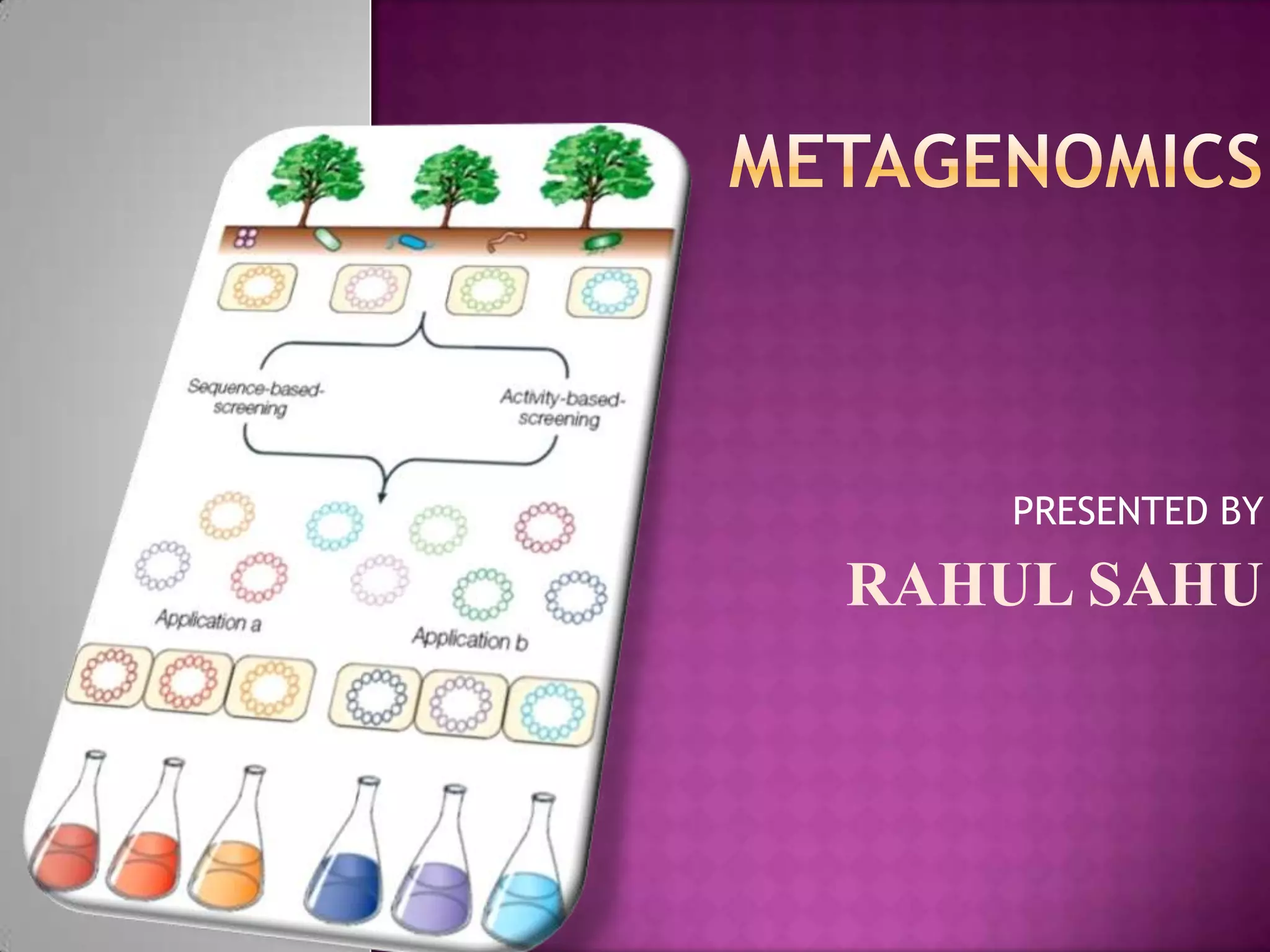
Metagenomics is the study of metagenomes, genetic
material recovered directly from environmental samples.
The term "metagenomics" was first used by Jo
Handelsman, Jon Clardy, Robert M. Goodman, and first
appeared in publication in 1998.

This relatively new field of genetic research enables studies
of organisms that are not easily cultured in a laboratory as
well as studies of organisms in their natural environment.
The broad field may also be referred to as
environmental genomics, ecogenomics or community
genomics.
The term metagenome referenced the idea that a
collection of genes sequenced from the environment
could be analyzed in a way analogous to the study of a
single genome.
The human microbiome project (HMP) will require
metagenomic sample sequencing data as a primary
resource for analysis of the relationship between
microbial communities and the individuals they inhabit.
Metagenomic approaches
• 3 broad types of metagenomic approaches are:
– Biochemical approach
– Whole genome shotgun (WGS) methods• WGS approaches have been used mainly in environmental
studies from various sites (e.g., sea water, abandoned mines).

– 16s-RNA sequencing (ribotyping)
• Most widely studied approach for microbiological point of
view.
Methodological Advances
Natural samples contain DNA in Natural samples
contain DNA in several forms like free DNA, virus
particles, cells, etc.
These samples can be suspended in water, bound to the
soil or other solid particles, or contained within an
aggregate of microorganisms (biofilm).
Now the above 3 approaches can be used.
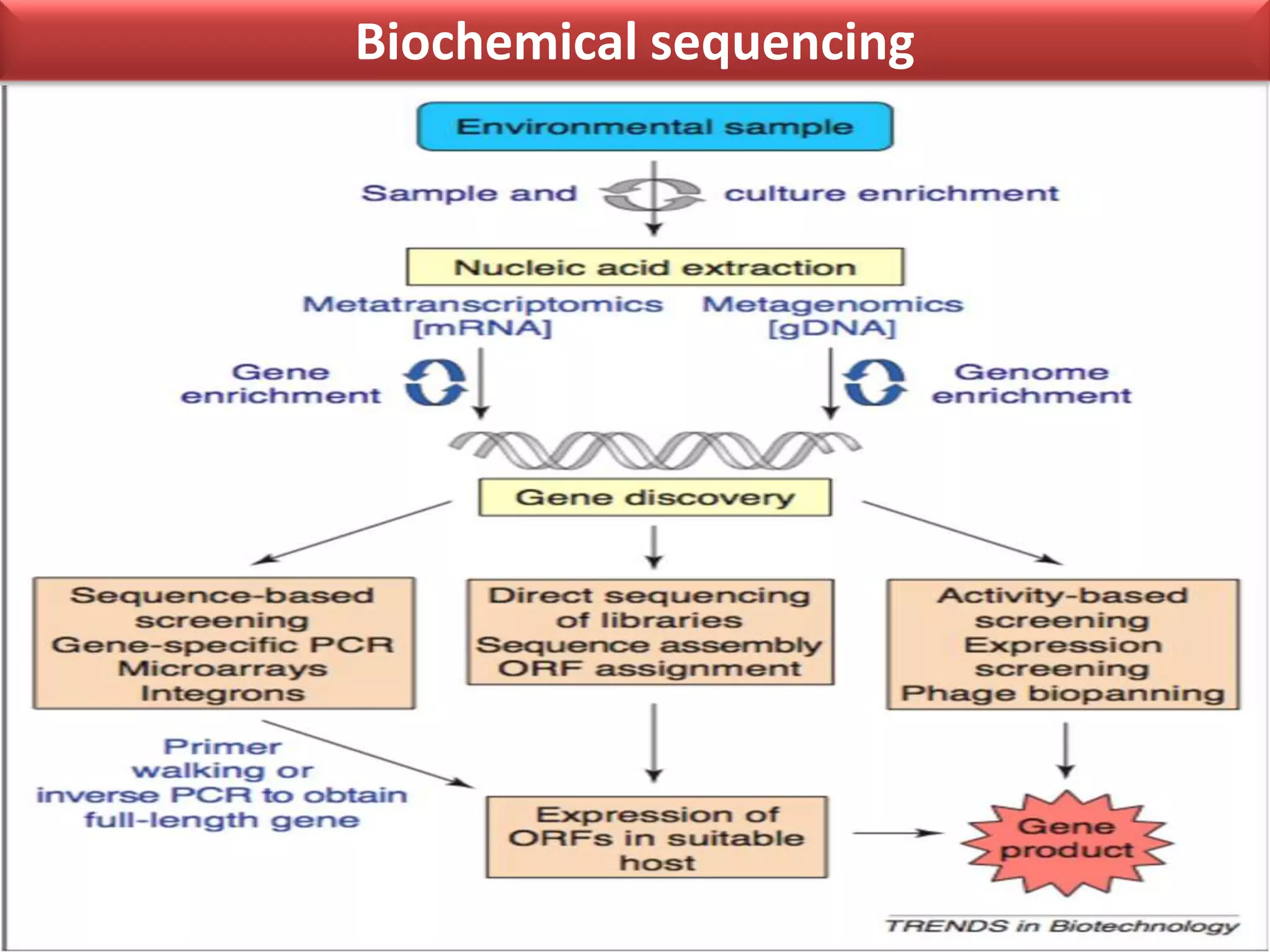
Biochemical sequencing
16s-rRNA sequencing
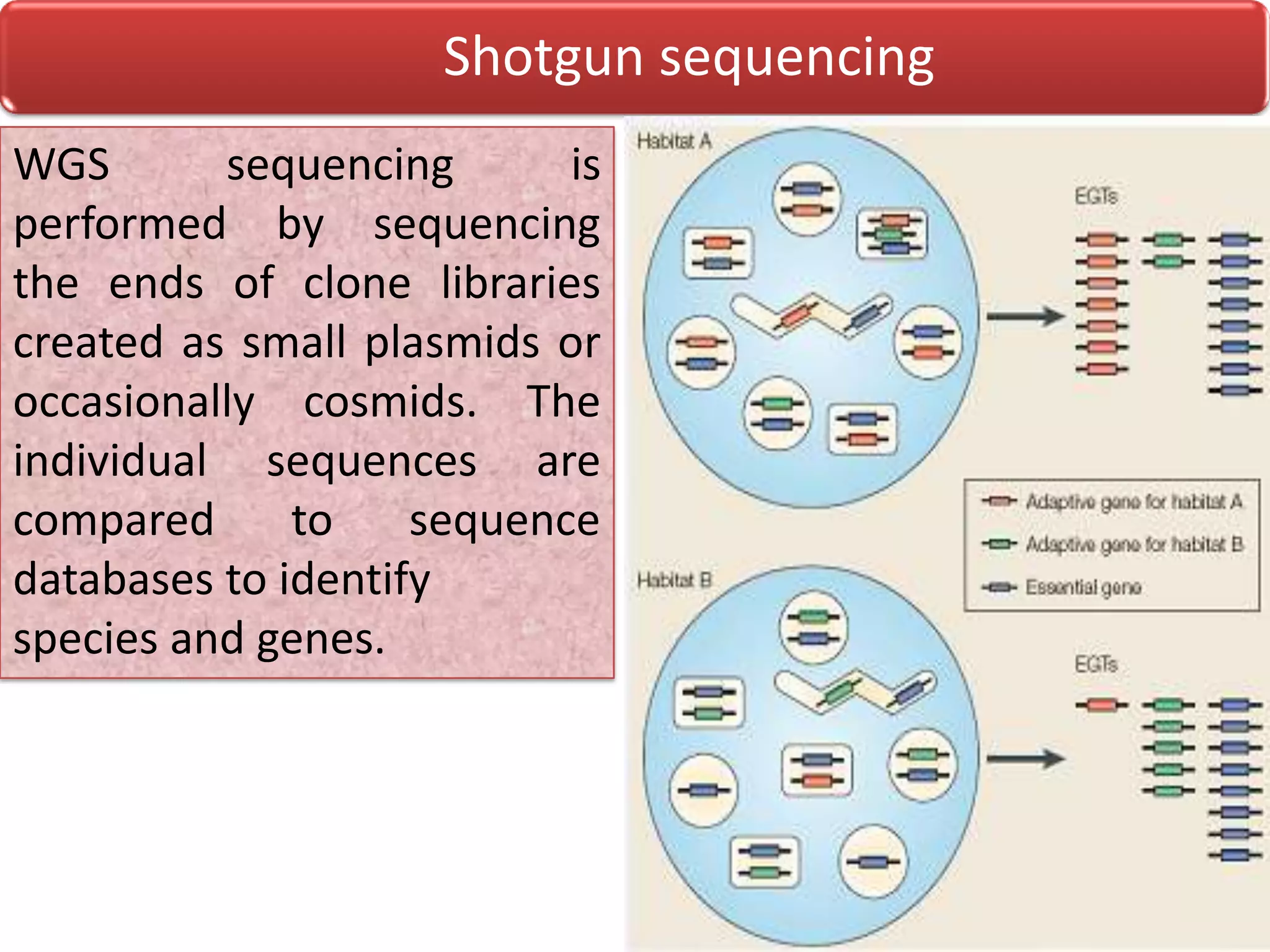
Shotgun sequencing
WGS
sequencing
is
performed by sequencing
the ends of clone libraries
created as small plasmids or
occasionally cosmids. The
individual sequences are
compared
to
sequence
databases to identify
species and genes.
Applications
• Metagenomics can improve strategies for monitoring
the impact of pollutants on ecosystems and for
cleaning up contaminated environments. Increased
understanding of bioaugmentation or biostimulation
trials to succeed.
• Recent progress in mining the rich genetic resource of
non-culturable microbes has led to the discovery of
new genes, enzymes, and natural products. The impact
of metagenomics is witnessed in the development of
commodity and fine chemicals, agrochemicals and
pharmaceuticals where the benefit of enzymecatalyzed chiral synthesis is increasingly recognized.
• Metagenomic sequencing is being used to
characterize the microbial communities. This is part
of the Human Microbiome initiative with primary
goals to determine if there is a core human
microbiome, to understand the changes in the
human microbiome that can be correlated with
human health, and to develop new technological
and bioinformatics tools to support these goals.
• It is well known that the vast majority of microbes
have not been cultivated. Functional metagenomics
strategies are being used to explore the interactions
between plants and microbes through cultivationindependent study of the microbial communities.
Future Directions
• New enzymes, antibiotics, and other reagents
identified
• More exotic habitats can be intently studied
• Can only progress as library technology
progresses, including sequencing technology
• Improved bioinformatics will quicken analysis for
library profiling.
• Investigating
ancient
DNA remnants
• Discoveries such as
phylogenic tags (rRNA
genes, etc) will give
momentum to the
growing field
• Learning
novel
pathways will lead to
knowledge about the
current nonculturable
bacteria to then culture
these systems

Culture these
organism

Information
on why
certain
microbes are
uncultured

Discover
novel
pathways
References
• Presentation by Susannah Green, Tringe and
Edward M. Rubin - Department of Energy Joint
Genome Institute
• Metagenomics-Current Innovations and Future
Trends: Diana Marco
• www.genomviron.com
• www.Rothamsted.ac.uk
Metagenomics

Metagenomics

  • 1.
  • 2.
    INTRODUCTION Metagenomics is thestudy of metagenomes, genetic material recovered directly from environmental samples. The term "metagenomics" was first used by Jo Handelsman, Jon Clardy, Robert M. Goodman, and first appeared in publication in 1998. This relatively new field of genetic research enables studies of organisms that are not easily cultured in a laboratory as well as studies of organisms in their natural environment.
  • 3.
    The broad fieldmay also be referred to as environmental genomics, ecogenomics or community genomics. The term metagenome referenced the idea that a collection of genes sequenced from the environment could be analyzed in a way analogous to the study of a single genome. The human microbiome project (HMP) will require metagenomic sample sequencing data as a primary resource for analysis of the relationship between microbial communities and the individuals they inhabit.
  • 4.
    Metagenomic approaches • 3broad types of metagenomic approaches are: – Biochemical approach – Whole genome shotgun (WGS) methods• WGS approaches have been used mainly in environmental studies from various sites (e.g., sea water, abandoned mines). – 16s-RNA sequencing (ribotyping) • Most widely studied approach for microbiological point of view.
  • 5.
    Methodological Advances Natural samplescontain DNA in Natural samples contain DNA in several forms like free DNA, virus particles, cells, etc. These samples can be suspended in water, bound to the soil or other solid particles, or contained within an aggregate of microorganisms (biofilm). Now the above 3 approaches can be used.
  • 6.
  • 7.
  • 9.
    Shotgun sequencing WGS sequencing is performed bysequencing the ends of clone libraries created as small plasmids or occasionally cosmids. The individual sequences are compared to sequence databases to identify species and genes.
  • 10.
    Applications • Metagenomics canimprove strategies for monitoring the impact of pollutants on ecosystems and for cleaning up contaminated environments. Increased understanding of bioaugmentation or biostimulation trials to succeed. • Recent progress in mining the rich genetic resource of non-culturable microbes has led to the discovery of new genes, enzymes, and natural products. The impact of metagenomics is witnessed in the development of commodity and fine chemicals, agrochemicals and pharmaceuticals where the benefit of enzymecatalyzed chiral synthesis is increasingly recognized.
  • 11.
    • Metagenomic sequencingis being used to characterize the microbial communities. This is part of the Human Microbiome initiative with primary goals to determine if there is a core human microbiome, to understand the changes in the human microbiome that can be correlated with human health, and to develop new technological and bioinformatics tools to support these goals. • It is well known that the vast majority of microbes have not been cultivated. Functional metagenomics strategies are being used to explore the interactions between plants and microbes through cultivationindependent study of the microbial communities.
  • 12.
    Future Directions • Newenzymes, antibiotics, and other reagents identified • More exotic habitats can be intently studied • Can only progress as library technology progresses, including sequencing technology • Improved bioinformatics will quicken analysis for library profiling.
  • 13.
    • Investigating ancient DNA remnants •Discoveries such as phylogenic tags (rRNA genes, etc) will give momentum to the growing field • Learning novel pathways will lead to knowledge about the current nonculturable bacteria to then culture these systems Culture these organism Information on why certain microbes are uncultured Discover novel pathways
  • 15.
    References • Presentation bySusannah Green, Tringe and Edward M. Rubin - Department of Energy Joint Genome Institute • Metagenomics-Current Innovations and Future Trends: Diana Marco • www.genomviron.com • www.Rothamsted.ac.uk