A comparison of the Audiolingual Method and Communicative Language
Teaching
(Finocchario&Brumfit, 1983)

   AUDIOLINGUAL METHOD                     COMMUNICATIVE LANGUAGE
                                                        TEACHING
1. Attends to structure and form more      A. Drilling may occur, but peripherally
than meaning
2. Demands more memorization of            B. Comprehensible pronunciation is
structure-based dialogues                  sought
3. Language items are not necessary        C. Intrinsic motivation will spring from
contextualized                             an interest in what is being
                                           communicated by the language
4. Language learning is learning           D. Communicative competence is the
structures, sounds or words                desired goal
5. Mastery or “overlearning” is sought     E. Reading and writing can start from
                                           the first day, if desired
6. Drilling is a central technique.        F. Teacher helps learners in any way
                                           that motivates them to work with the
                                           language
7. Native-speaker-like pronunciation is    G. Contextualization is a basic premise
sought
8. Reading and writing are deferred        H. Language learning is learning to
until speech is mastered                   communicate
9. Linguistic competence is the desired    I. Language is created by the individual
goal                                       often through trial and error
10. The teacher controls the learners      J. Effective communication is sought
and prevents them from doing
anything that conflicts with the theory
11. “Language is habit” so errors must     K. The teacher can not know exactly
be prevented at all costs                  what language the students will use
12. The teacher is expected to specify     L. Dialogues, if used, center around
the language that students are to use      communicative functions and are not
                                           normally memorized
13. Intrinsic motivation will spring       M. Meaningisparamount
from an interest in the structure of the
language


Centro Cultural Colombo Americano             Teacher Training Course– November 2012
A comparison of the Audiolingual Method and Communicative Language
Teaching
(Finocchario&Brumfit, 1983)

   AUDIOLINGUAL METHOD                   COMMUNICATIVE LANGUAGE
                                                    TEACHING
Attends to structure and form more       Meaningisparamount
than meaning
Demands more memorization of             Dialogues, if used, center around
structure-based dialogues                communicative functions and are not
                                         normally memorized
Language items are not necessary         Contextualization is a basic premise
contextualized
Language learning is learning            Language learning is learning to
structures, sounds or words              communicate
Mastery or “overlearning” is sought      Effectivecommunicationissought
Drilling is a central technique.         Drilling may occur, but peripherally
Native-speaker-like pronunciation is     Comprehensiblepronunciationissought
sought
Reading and writing are deferred until   Reading and writing can start from the
speech is mastered                       first day, if desired
Linguistic competence is the desired     Communicative competence is the
goal                                     desired goal
The teacher controls the learners and    Teacher helps learners in any way that
prevents them from doing anything        motivates them to work with the
that conflicts with the theory           language
“Language is habit” so errors must be    Language is created by the individual
prevented at all costs                   often through trial and error
The teacher is expected to specify the   The teacher can not know exactly what
language that students are to use        language the students will use
Intrinsic motivation will spring from    Intrinsic motivation will spring from
an interest in the structure of the      an interest in what is being
language                                 communicated by the language


Centro Cultural Colombo Americano           Teacher Training Course– November 2012

Audiolingual method vs clt

  • 1.
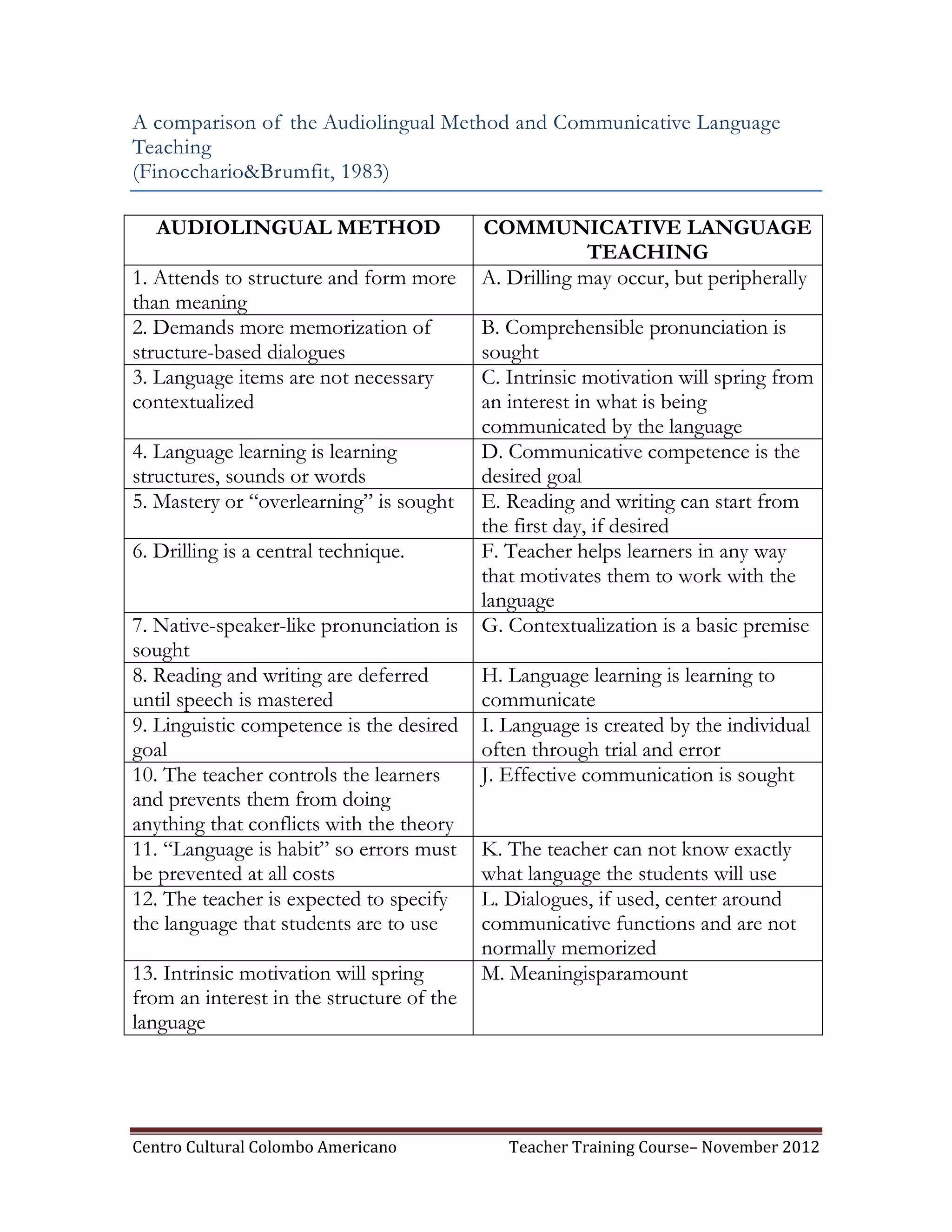
    A comparison ofthe Audiolingual Method and Communicative Language Teaching (Finocchario&Brumfit, 1983) AUDIOLINGUAL METHOD COMMUNICATIVE LANGUAGE TEACHING 1. Attends to structure and form more A. Drilling may occur, but peripherally than meaning 2. Demands more memorization of B. Comprehensible pronunciation is structure-based dialogues sought 3. Language items are not necessary C. Intrinsic motivation will spring from contextualized an interest in what is being communicated by the language 4. Language learning is learning D. Communicative competence is the structures, sounds or words desired goal 5. Mastery or “overlearning” is sought E. Reading and writing can start from the first day, if desired 6. Drilling is a central technique. F. Teacher helps learners in any way that motivates them to work with the language 7. Native-speaker-like pronunciation is G. Contextualization is a basic premise sought 8. Reading and writing are deferred H. Language learning is learning to until speech is mastered communicate 9. Linguistic competence is the desired I. Language is created by the individual goal often through trial and error 10. The teacher controls the learners J. Effective communication is sought and prevents them from doing anything that conflicts with the theory 11. “Language is habit” so errors must K. The teacher can not know exactly be prevented at all costs what language the students will use 12. The teacher is expected to specify L. Dialogues, if used, center around the language that students are to use communicative functions and are not normally memorized 13. Intrinsic motivation will spring M. Meaningisparamount from an interest in the structure of the language Centro Cultural Colombo Americano Teacher Training Course– November 2012
  • 2.
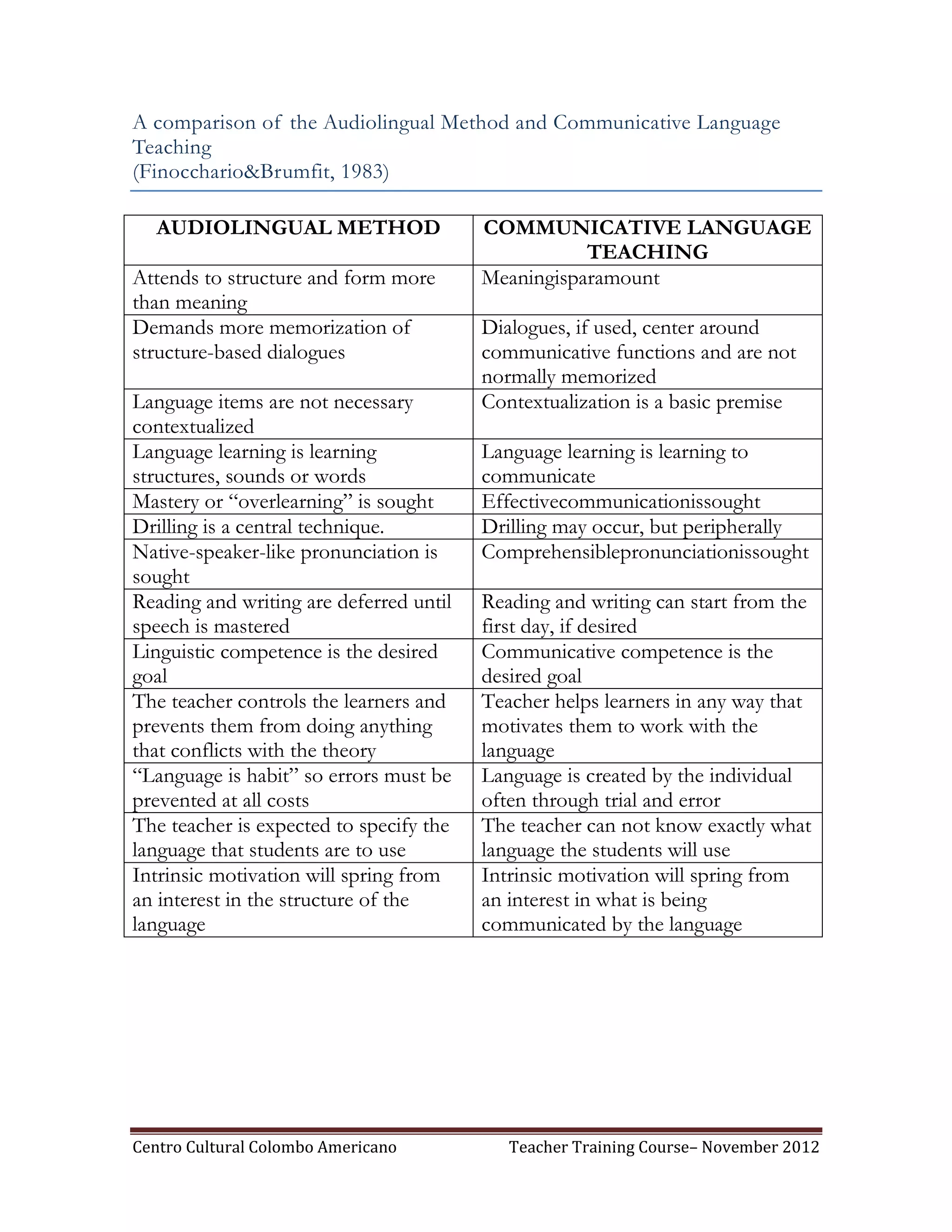
    A comparison ofthe Audiolingual Method and Communicative Language Teaching (Finocchario&Brumfit, 1983) AUDIOLINGUAL METHOD COMMUNICATIVE LANGUAGE TEACHING Attends to structure and form more Meaningisparamount than meaning Demands more memorization of Dialogues, if used, center around structure-based dialogues communicative functions and are not normally memorized Language items are not necessary Contextualization is a basic premise contextualized Language learning is learning Language learning is learning to structures, sounds or words communicate Mastery or “overlearning” is sought Effectivecommunicationissought Drilling is a central technique. Drilling may occur, but peripherally Native-speaker-like pronunciation is Comprehensiblepronunciationissought sought Reading and writing are deferred until Reading and writing can start from the speech is mastered first day, if desired Linguistic competence is the desired Communicative competence is the goal desired goal The teacher controls the learners and Teacher helps learners in any way that prevents them from doing anything motivates them to work with the that conflicts with the theory language “Language is habit” so errors must be Language is created by the individual prevented at all costs often through trial and error The teacher is expected to specify the The teacher can not know exactly what language that students are to use language the students will use Intrinsic motivation will spring from Intrinsic motivation will spring from an interest in the structure of the an interest in what is being language communicated by the language Centro Cultural Colombo Americano Teacher Training Course– November 2012