 This method was introduced by Alan Walsh in 1950 
 Spectro-analytical procedure for the quantitative 
determination of chemical elements employing the 
absorption of optical radiations by free atoms in gaseous 
state. 
 AAS uses the absorption of light to measure the 
concentration of gas-phase atoms. 
 The absorption of light of free atoms is measured. 
 Trace elements are determined with the help of this 
method. 
 Highly sensitive as it can detect metal in concentration 
lower than 1ppm. 
2
 The technique makes use of absorption spectrometry 
to assess the concentration of an analyte in a sample. 
 It requires standards with known analyte content to 
establish the relationship between the measured 
absorbance and the analyte concentration. 
3
 the electrons of the atoms are in the atomizer are 
promoted to higher excited state for a short period of 
time by absorbing a defined quantity of energy i.e. 
wavelength. 
 This wavelength is specific to a particular electron 
transition in a particular element. 
 The radiation flux without a sample and with a sample 
in the atomizer is measured using a detector and the 
ratio between the two values is converted to analyte 
concentration using Beer Lambert’s law. 
4
 The absorption follows Beer’s law- 
 Absorption is directly proportional to the 
concentration of atoms in the flame and to the path 
length in the flame. 
 Each element absorbs radiation that is characteristic of 
that element. 
 Therefore a separate lamp source is needed for each 
element. 
 Most commonly used source for light is hollow 
cathode lamp(HCL). 
5
6
7 
It is a sharp line source that emits specific monochromatic 
wavelenghts. 
It consists of- 
- A cylindrical hollow cathode made of the element to be 
determined or an alloy of it. 
-Tungsten anode 
These are enclosed in a glass tube usually with a quartz window. 
The tube is under reduced pressure and filled with an inert 
gas(neon or argon)
 A high voltage is impressed across the electrode 
causing the gas atoms to be ionized at anode. These 
positive ions are accelerated towards the cathode. 
 When they bombard the cathode they become 
vaporized. 
 The vaporized metal is excited to higher electronic 
levels with the continued collision with the high 
energy gas ions. 
 When the electrons return to ground state the 
characteristic lines of that metallic element are 
emitted. 
 These HCL emitted lines are passed through the flame 
and can become absorbed by the test element. 
8
 A suitable line from the radiation is selected for the 
analysis. 
 It is usually the most intense line in the emission spectrum 
and represents a transition from an excited to the ground 
state. 
 It is also the correct frequency absorption by atoms in the 
ground state in the flame. Such a line is called resonance 
line. 
 The flame is also emitting source and the photo tube 
responds to the radiation from flame as well as from hollow 
cathode lamp and will create an interference in absorption 
measurements. 
 This problem is corrected by a beam chopper. 
9
 It contains a small quantity of analyte as a metal or a 
salt in a Quartz bulb together with an inert gas (argon) 
at low pressure. 
 The bulb is inserted into a coil that is generating an 
electromagnetic radio frequency field resulting in a 
low pressure inductively coupled discharge in the 
lamp. 
 The emissions from EDL are higher than from HCL 
and the line width is generally narrower but ELDs 
need a separate power supply. 
10
 It is a rotating wheel interposed between the hollow 
cathode lamp and the flame. 
 It gives pulsating current to the photocell. 
11
 There are two types of atomizers- 
Flames(spectroscopic) 
electrothermal (graphite tubes) 
12
 Flame atomizer- 
 oldest 
Most commonly used 
 They are of two types- air acetylene flames with a 
temperature of about 2300 and nitrous oxide acetylene 
flame with temperatures about 2700. 
 Liquid or dissolved samples are used with flame 
atomizers 
 In this case sample solution is aspirated by a 
pneumatic analytical nebulizer, transformed into a 
spray chamber where it is mixed with flame and 
conditioned in s way that only the finest aerosol 
droplets enter the flame. 
13
 The process in the flame includes-drying 
vaporization 
atomization 
ionization 
14
 Electro-thermal atomizer- 
 Graphite tube atomizer 
With this technique liquid, solid and gaseous samples 
may be analyzed directly. 
 Stages-drying 
pyrolysis 
atomization 
cleaning 
15
16 
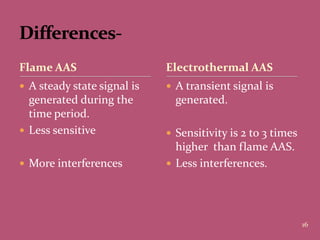
Flame AAS 
 A steady state signal is 
generated during the 
time period. 
 Less sensitive 
 More interferences 
Electrothermal AAS 
 A transient signal is 
generated. 
 Sensitivity is 2 to 3 times 
higher than flame AAS. 
 Less interferences.
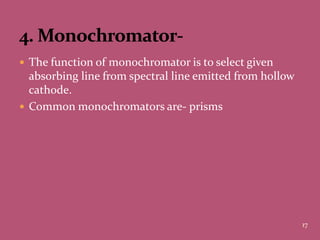
 The function of monochromator is to select given 
absorbing line from spectral line emitted from hollow 
cathode. 
 Common monochromators are- prisms 
17
 Photomultiplier tubes are most commonly used as 
detectors. 
 They have good stability when used with stable power 
supply. 
 Digital read out devices are used. 
18
 Technique is specific because the atom of particular 
element can only absorb radiation of their own 
characteristic wavelength. 
 It is independent of flame temperature. 
19
 Separate lamp for each element to be determined is 
required. 
 Technique cannot be used for estimation of element 
like Mo, Si because these give rise to oxide in the 
flame. 
 Predominant anion affect the signal to negotiable 
effect. 
20
 It can be used for qualitative and quantitative analysis. 
 Determination of metallic elements in biological 
system. 
 Determination of Ca,Mg,Na,K in serum. 
 Determination of lead in petrol 
 Food analysis 
 Water analysis (Ca,Mg,Fe,Si,Al,Ba content) 
 Analysis of soil 
21

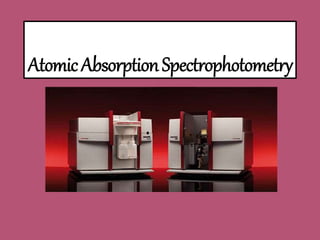
Atomic absorption spectrophotometry

  • 2.
     This methodwas introduced by Alan Walsh in 1950  Spectro-analytical procedure for the quantitative determination of chemical elements employing the absorption of optical radiations by free atoms in gaseous state.  AAS uses the absorption of light to measure the concentration of gas-phase atoms.  The absorption of light of free atoms is measured.  Trace elements are determined with the help of this method.  Highly sensitive as it can detect metal in concentration lower than 1ppm. 2
  • 3.
     The techniquemakes use of absorption spectrometry to assess the concentration of an analyte in a sample.  It requires standards with known analyte content to establish the relationship between the measured absorbance and the analyte concentration. 3
  • 4.
     the electronsof the atoms are in the atomizer are promoted to higher excited state for a short period of time by absorbing a defined quantity of energy i.e. wavelength.  This wavelength is specific to a particular electron transition in a particular element.  The radiation flux without a sample and with a sample in the atomizer is measured using a detector and the ratio between the two values is converted to analyte concentration using Beer Lambert’s law. 4
  • 5.
     The absorptionfollows Beer’s law-  Absorption is directly proportional to the concentration of atoms in the flame and to the path length in the flame.  Each element absorbs radiation that is characteristic of that element.  Therefore a separate lamp source is needed for each element.  Most commonly used source for light is hollow cathode lamp(HCL). 5
  • 6.
  • 7.
    7 It isa sharp line source that emits specific monochromatic wavelenghts. It consists of- - A cylindrical hollow cathode made of the element to be determined or an alloy of it. -Tungsten anode These are enclosed in a glass tube usually with a quartz window. The tube is under reduced pressure and filled with an inert gas(neon or argon)
  • 8.
     A highvoltage is impressed across the electrode causing the gas atoms to be ionized at anode. These positive ions are accelerated towards the cathode.  When they bombard the cathode they become vaporized.  The vaporized metal is excited to higher electronic levels with the continued collision with the high energy gas ions.  When the electrons return to ground state the characteristic lines of that metallic element are emitted.  These HCL emitted lines are passed through the flame and can become absorbed by the test element. 8
  • 9.
     A suitableline from the radiation is selected for the analysis.  It is usually the most intense line in the emission spectrum and represents a transition from an excited to the ground state.  It is also the correct frequency absorption by atoms in the ground state in the flame. Such a line is called resonance line.  The flame is also emitting source and the photo tube responds to the radiation from flame as well as from hollow cathode lamp and will create an interference in absorption measurements.  This problem is corrected by a beam chopper. 9
  • 10.
     It containsa small quantity of analyte as a metal or a salt in a Quartz bulb together with an inert gas (argon) at low pressure.  The bulb is inserted into a coil that is generating an electromagnetic radio frequency field resulting in a low pressure inductively coupled discharge in the lamp.  The emissions from EDL are higher than from HCL and the line width is generally narrower but ELDs need a separate power supply. 10
  • 11.
     It isa rotating wheel interposed between the hollow cathode lamp and the flame.  It gives pulsating current to the photocell. 11
  • 12.
     There aretwo types of atomizers- Flames(spectroscopic) electrothermal (graphite tubes) 12
  • 13.
     Flame atomizer-  oldest Most commonly used  They are of two types- air acetylene flames with a temperature of about 2300 and nitrous oxide acetylene flame with temperatures about 2700.  Liquid or dissolved samples are used with flame atomizers  In this case sample solution is aspirated by a pneumatic analytical nebulizer, transformed into a spray chamber where it is mixed with flame and conditioned in s way that only the finest aerosol droplets enter the flame. 13
  • 14.
     The processin the flame includes-drying vaporization atomization ionization 14
  • 15.
     Electro-thermal atomizer-  Graphite tube atomizer With this technique liquid, solid and gaseous samples may be analyzed directly.  Stages-drying pyrolysis atomization cleaning 15
  • 16.
    16 Flame AAS  A steady state signal is generated during the time period.  Less sensitive  More interferences Electrothermal AAS  A transient signal is generated.  Sensitivity is 2 to 3 times higher than flame AAS.  Less interferences.
  • 17.
     The functionof monochromator is to select given absorbing line from spectral line emitted from hollow cathode.  Common monochromators are- prisms 17
  • 18.
     Photomultiplier tubesare most commonly used as detectors.  They have good stability when used with stable power supply.  Digital read out devices are used. 18
  • 19.
     Technique isspecific because the atom of particular element can only absorb radiation of their own characteristic wavelength.  It is independent of flame temperature. 19
  • 20.
     Separate lampfor each element to be determined is required.  Technique cannot be used for estimation of element like Mo, Si because these give rise to oxide in the flame.  Predominant anion affect the signal to negotiable effect. 20
  • 21.
     It canbe used for qualitative and quantitative analysis.  Determination of metallic elements in biological system.  Determination of Ca,Mg,Na,K in serum.  Determination of lead in petrol  Food analysis  Water analysis (Ca,Mg,Fe,Si,Al,Ba content)  Analysis of soil 21