VASCULAR
PATHOLOGY
DEEKSHYA DEVKOTA
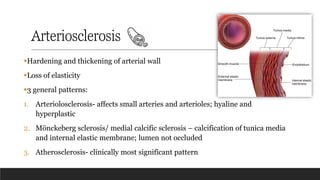
Arteriosclerosis
▪Hardening and thickening of arterial wall
▪Loss of elasticity
▪3 general patterns:
1. Arteriolosclerosis- affects small arteries and arterioles; hyaline and
hyperplastic
2. Mönckeberg sclerosis/ medial calcific sclerosis – calcification of tunica media
and internal elastic membrane; lumen not occluded
3. Atherosclerosis- clinically most significant pattern
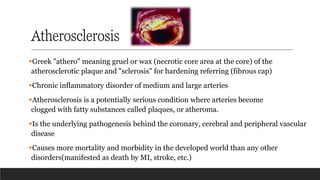
Atherosclerosis
▪Greek "athero" meaning gruel or wax (necrotic core area at the core) of the
atherosclerotic plaque and "sclerosis" for hardening referring (fibrous cap)
▪Chronic inflammatory disorder of medium and large arteries
▪Atherosclerosis is a potentially serious condition where arteries become
clogged with fatty substances called plaques, or atheroma.
▪Is the underlying pathogenesis behind the coronary, cerebral and peripheral vascular
disease
▪Causes more mortality and morbidity in the developed world than any other
disorders(manifested as death by MI, stroke, etc.)
Epidemiology
▪CAD remains the leading cause of death in the western world
▪Although atherosclerosis-associated IHD is widespread among developed
nations, risk reduction and improved therapies have combined to moderate the
associated mortality
▪Reduced mortality from infectious diseases and the adoption of Western
lifestyles has led to increased prevalence of IHD in developing nations
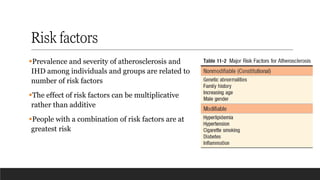
Risk factors
▪Prevalence and severity of atherosclerosis and
IHD among individuals and groups are related to
number of risk factors
▪The effect of risk factors can be multiplicative
rather than additive
▪People with a combination of risk factors are at
greatest risk
Constitutional/non-modifiable risk factors
Genetics
▪Family history- most important independent risk factor
▪usually polygenic, relating to familial clustering of other established risk factors,
such as hypertension or diabetes
▪monozygotic twin of an affected individual has an eightfold increased risk and a
dizygotic twin a fourfold increased risk of dying from CAD
Age
▪clinical manifestations evident usually at the middle age when lesion cross a
critical threshold
Non-modifiable risk factors
Sex
▪Premenopausal women usually protective against atherosclerosis and its
complications
▪In postmenopausal women the incidence increases and at older ages is greater
than in men
African-American descent
▪Genetics- carry gene that makes them more sensitive to salt which can lead to
HTN
▪lifestyle
Modifiable risk factors
Dyslipidemia (specifically hypercholesteremia)
▪Sufficient to initiate lesion development even in the absence of other risk factors
▪Increased LDL, decreased HDL
▪Exercise and moderate consumption of ethanol raise HDL levels whereas obesity
and smoking lowers it
▪Statins
Modifiable risk factors
Hypertension
▪can increase the risk of IHD by approximately 60% versus normotensive
populations
▪Chronic hypertension is the most common cause of left ventricular hypertrophy
Smoking
▪Prolonged (years) smoking of one pack of cigarettes or more daily doubles the
death rate from IHD
▪Smoking cessation reduces that risk substantially
Modifiable risk factors
Physical activity
▪Regular exercise has a protective effect, whereas inactivity roughly doubles the
risk of CAD and is a major risk factor for stroke.
Obesity
Alcohol consumption
Social deprivation
Modifiable risk factors
Diabetes mellitus
▪induces hypercholesterolemia and markedly increases the risk of atherosclerosis
▪Twice likely to have MI than those without DM
▪Increased risk of stroke
▪100 times increased risk of atherosclerosis-induced gangrene in lower
extremities
Additional risk factors
About 20% of all cardiovascular events occur in the absence of overt risk factors (e.g.,
hypertension, hyperlipidemia, smoking, or diabetes)
Inflammation
▪Present during all stages of atherosclerosis and is linked with plaque formation and
rupture
C-reactive protein (CRP)
▪Simplest to measure and most sensitive marker related to IHD
▪Acute phase protein synthesized by liver which augments the innate immune response
Additional risk factors
▪Plasma CRP - most important marker in MI, stroke, peripheral arterial disease and
sudden cardiac death
▪Useful marker for accessing the effect of risk reduction measures (decreased CRP)
Hyperhomocysteinemia
▪Homocystinuria (due to rare inborn errors of metabolism) results in elevated circulating
homocysteine (>100 μmol/L) and is associated with premature vascular disease
Hemostatic factors
▪Platelet activation and high plasma fibrinogen concentrations are associated with an
increased risk of coronary thrombosis
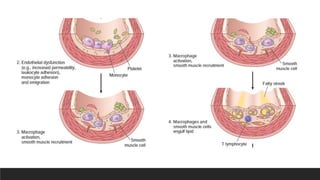
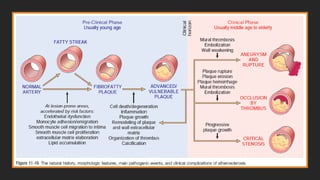
Pathogenesis-Response to injury theory
▪This model views atherosclerosis as a chronic inflammatory and healing
response of the arterial wall to endothelial injury
▪Lesion progression occurs through interaction of modified lipoproteins,
macrophages, and T lymphocytes with endothelial cells and smooth muscle cells
of the arterial wall
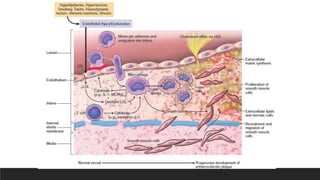
▪Atherosclerosis progresses according to the following scheme:
1. Endothelial injury and dysfunction causing increased vascular permeability,
leukocyte adhesion and thrombosis
2. Accumulation of lipoproteins (mainly oxidized LDL)in the vessel wall
Pathogenesis-Response to injury theory
3. Monocyte adhesion to the endothelium, followed by migration into the intima
and transformation into macrophages and foam cells
4. Platelet adhesion
5. Factor release from activated platelets, macrophages, and endothelial cells,
inducing smooth muscle cell recruitment from the media
6. Smooth muscle cell proliferation, extracellular matrix production, and
recruitment of T cells.
7. Lipid accumulation both extracellularly and within cells (macrophages and
smooth muscle cell)
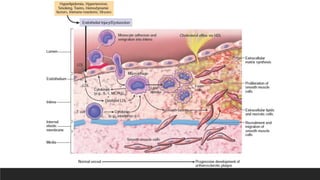
General overview of pathogenesis
Endothelial injury due to various etiologic factors especially
hemodynamic factors and hyperlipidemia
Due to endothelial injury, LDL particles can leak into intimal layer
from circulation(lumen) where it gets oxidized
When LDL gets oxidized it becomes a pro-inflammatory antigen
that induces an immune response
General overview of pathogenesis
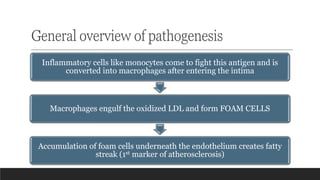
Inflammatory cells like monocytes come to fight this antigen and is
converted into macrophages after entering the intima
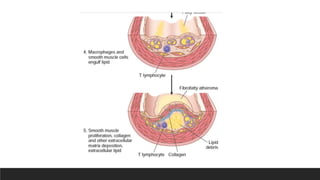
Macrophages engulf the oxidized LDL and form FOAM CELLS
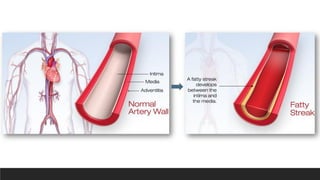
Accumulation of foam cells underneath the endothelium creates fatty
streak (1st marker of atherosclerosis)
General overview of pathogenesis
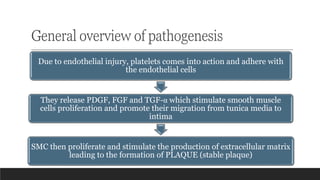
Due to endothelial injury, platelets comes into action and adhere with
the endothelial cells
They release PDGF, FGF and TGF-α which stimulate smooth muscle
cells proliferation and promote their migration from tunica media to
intima
SMC then proliferate and stimulate the production of extracellular matrix
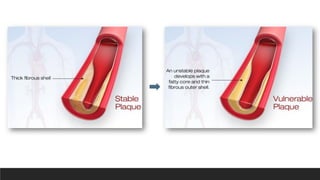
leading to the formation of PLAQUE (stable plaque)
General overview of pathogenesis
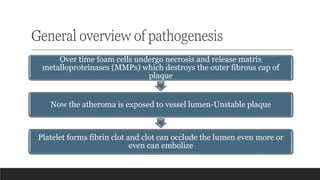
Over time foam cells undergo necrosis and release matrix
metalloproteinases (MMPs) which destroys the outer fibrous cap of
plaque
Now the atheroma is exposed to vessel lumen-Unstable plaque
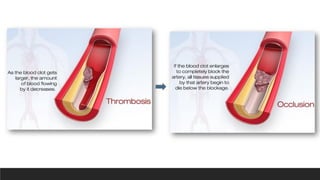
Platelet forms fibrin clot and clot can occlude the lumen even more or
even can embolize
1. Endothelial injury
▪early human lesions begin at sites of morphologically intact endothelium
▪Non-denuding endothelial dysfunction underlies most human atherosclerosis;
the intact but dysfunctional endothelial cells exhibit increased endothelial
permeability, enhanced leukocyte adhesion and altered gene expression
▪2 most important causes are: hemodynamic disturbances and
hypercholesterolemia
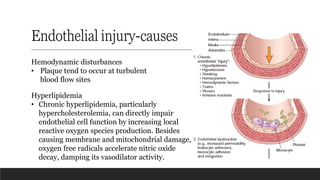
Endothelial injury-causes
Hemodynamic disturbances
• Plaque tend to occur at turbulent
blood flow sites
Hyperlipidemia
• Chronic hyperlipidemia, particularly
hypercholesterolemia, can directly impair
endothelial cell function by increasing local
reactive oxygen species production. Besides
causing membrane and mitochondrial damage,
oxygen free radicals accelerate nitric oxide
decay, damping its vasodilator activity.
Inflammation
▪Triggered by the accumulation of cholesterol crystals and free fatty acids
▪Oxidized LDL act as proinflammatory antigen that recruits leukocytes including
monocytes which converts into macrophages in the intima
▪Oxidized LDL is taken up by scavenger receptor in macrophages to transform it
into foam cell
▪Net result of macrophage and T cell activation is the local production of
cytokines and chemokines that recruit and activate more inflammatory cells
Inflammation …
▪Activated macrophages produce ROS that enhance LDL oxidation, and elaborate
growth factors that drive smooth muscle cell proliferation
▪Activated T cells in the growing intimal lesions elaborate inflammatory cytokines
like interferon-γ, which, in turn, can activate macrophages, endothelial cells and
smooth muscle cells
▪These leukocytes and vascular wall cells release growth factors that promote
smooth muscle cell proliferation and synthesis of extracellular matrix proteins
▪Thus, chronic inflammation contributes to initiation and progression of
atherosclerotic lesions
Smooth muscle cell proliferation and matrix
synthesis
▪Intimal smooth muscle cell proliferation and extracellular matrix deposition
convert a fatty streak into a mature atheroma
▪Several growth factors like PDGF, FGF, TGF-α are implicated in smooth muscle
cell proliferation
▪These factors also stimulate smooth muscle cells to synthesize extracellular
matrix (notably collagen), which stabilizes atherosclerotic plaques
▪Activated inflammatory cells in atheroma may increase the breakdown of
extracellular matrix components, resulting in unstable plaques
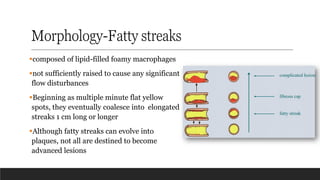
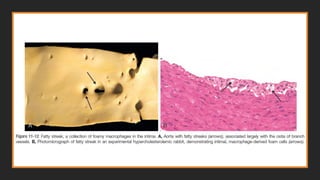
Morphology-Fatty streaks
▪composed of lipid-filled foamy macrophages
▪not sufficiently raised to cause any significant
flow disturbances
▪Beginning as multiple minute flat yellow
spots, they eventually coalesce into elongated
streaks 1 cm long or longer
▪Although fatty streaks can evolve into
plaques, not all are destined to become
advanced lesions
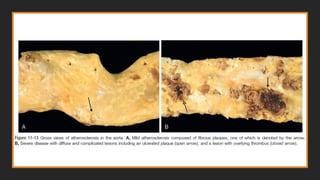
Morphology-Atherosclerotic plaque
GROSS
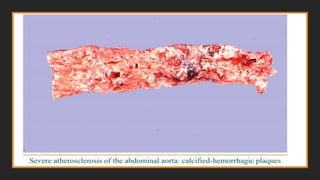
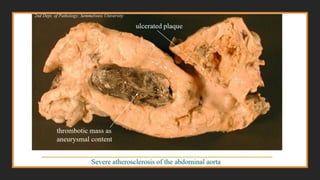
▪Atheromatous plaques are white-yellow and encroach on the lumen of the artery
▪Superimposed thrombus over ulcerated plaques is red-brown
▪Plaques vary in size but can coalesce to form larger masses
▪Although focal and sparsely distributed at first, with time atherosclerotic lesions
can become larger, more numerous, and more broadly distributed
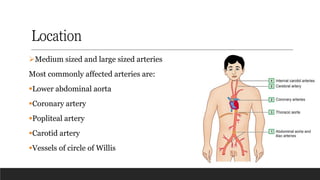
Location
➢Medium sized and large sized arteries
Most commonly affected arteries are:
▪Lower abdominal aorta
▪Coronary artery
▪Popliteal artery
▪Carotid artery
▪Vessels of circle of Willis
Microscopy-Atherosclerotic plaque
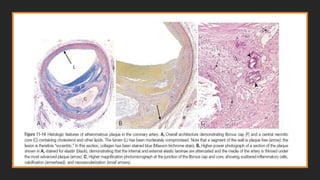
▪Atherosclerotic plaques have 3 principal components:
(1) smooth muscle cells, macrophages, and T cells
(2) extracellular matrix, including collagen, elastic fibers, and proteoglycans
(3) intracellular and extracellular lipid
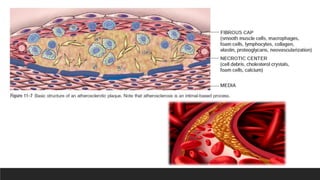
▪Superficial fibrous cap composed of SMCs and dense collagen
▪To the side of the cap more cellular area with macrophages, T cells and SMCs
▪Deep to the fibrous cap is a necrotic core containing lipids, debris from dead
cells, foam cells, fibrin, variably organized thrombus and plasma proteins
Microscopy-Atherosclerotic plaque
▪The periphery of the lesions demonstrate neovascularization
▪Most atheromas contain abundant lipid, but some plaques (“fibrous plaques”) are
composed almost exclusively of smooth muscle cells and fibrous tissue.
▪Atherosclerotic plaques are susceptible to the following clinically important
pathologic changes:
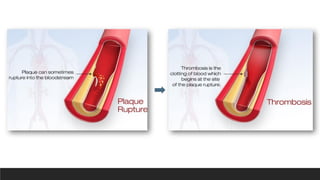
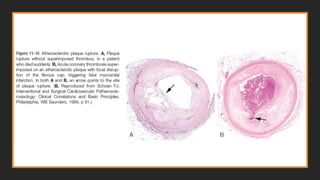
1. Rupture, ulceration, or erosion of the surface of atheromatous plaques
exposes highly thrombogenic substances and leads to thrombosis, which may
partially or completely occlude the vessel lumen
If the patient survives, the clot may become organized and incorporated into the
growing plaque.
Microscopy-Atherosclerotic plaque
2. Hemorrhage into the plaque
Rupture of the overlying fibrous cap, or of the thin-walled vessels in the areas of
neovascularization, can cause intraplaque hemorrhage; a contained hematoma
may expand the plaque or induce plaque rupture.
3. Atheroembolism: Plaque rupture can discharge atherosclerotic debris into
the bloodstream, producing microemboli.
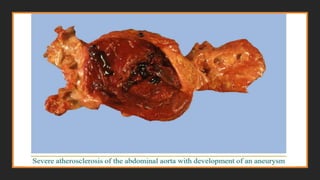
4. Aneurysm formation. Atherosclerosis-induced pressure or ischemic
atrophy of the underlying media, with loss of elastic tissue, causes weakness and
potential rupture.
Consequences of Atherosclerotic Disease
Myocardial infarction (heart attack), cerebral infarction (stroke), aortic
aneurysms, and peripheral vascular disease (gangrene of the legs) are the
major consequences of atherosclerosis.
Atherosclerotic stenosis
▪In small arteries, atherosclerotic plaques can gradually occlude vessel lumen,
compromising blood flow and causing ischemic injury
▪Critical stenosis is the stage at which the occlusion is sufficiently severe to
produce tissue ischemia
▪In the coronary circulation, this typically occurs at when the occlusion produces a
70% decrease in luminal cross-sectional area
▪Consequences :Mesenteric occlusion and bowel ischemia, sudden cardiac death,
chronic IHD, ischemic encephalopathy and intermittent claudication
Acute plaque change
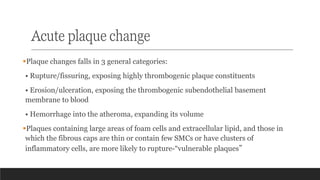
▪Plaque changes falls in 3 general categories:
• Rupture/fissuring, exposing highly thrombogenic plaque constituents
• Erosion/ulceration, exposing the thrombogenic subendothelial basement
membrane to blood
• Hemorrhage into the atheroma, expanding its volume
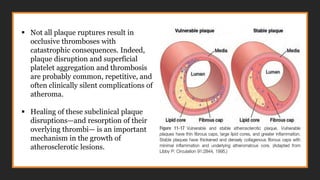
▪Plaques containing large areas of foam cells and extracellular lipid, and those in
which the fibrous caps are thin or contain few SMCs or have clusters of
inflammatory cells, are more likely to rupture-“vulnerable plaques”
▪ Not all plaque ruptures result in
occlusive thromboses with
catastrophic consequences. Indeed,
plaque disruption and superficial
platelet aggregation and thrombosis
are probably common, repetitive, and
often clinically silent complications of
atheroma.
▪ Healing of these subclinical plaque
disruptions—and resorption of their
overlying thrombi— is an important
mechanism in the growth of
atherosclerotic lesions.
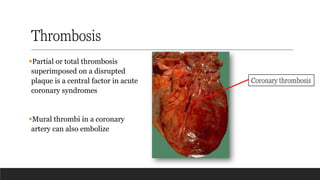
Thrombosis
▪Partial or total thrombosis
superimposed on a disrupted
plaque is a central factor in acute
coronary syndromes
▪Mural thrombi in a coronary
artery can also embolize
Coronary thrombosis
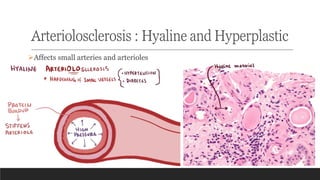
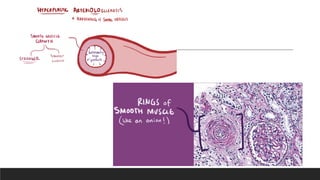
Arteriolosclerosis : Hyaline and Hyperplastic
➢Affects small arteries and arterioles
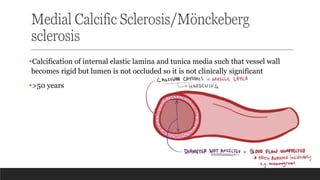
Medial Calcific Sclerosis/Mönckeberg
sclerosis
▪Calcification of internal elastic lamina and tunica media such that vessel wall
becomes rigid but lumen is not occluded so it is not clinically significant
▪>50 years
VASCULAR PATHOLOGY (ATHEROSCLEROSIS) PRESENTATION

VASCULAR PATHOLOGY (ATHEROSCLEROSIS) PRESENTATION

  • 1.
  • 2.
    Arteriosclerosis ▪Hardening and thickeningof arterial wall ▪Loss of elasticity ▪3 general patterns: 1. Arteriolosclerosis- affects small arteries and arterioles; hyaline and hyperplastic 2. Mönckeberg sclerosis/ medial calcific sclerosis – calcification of tunica media and internal elastic membrane; lumen not occluded 3. Atherosclerosis- clinically most significant pattern
  • 3.
    Atherosclerosis ▪Greek "athero" meaninggruel or wax (necrotic core area at the core) of the atherosclerotic plaque and "sclerosis" for hardening referring (fibrous cap) ▪Chronic inflammatory disorder of medium and large arteries ▪Atherosclerosis is a potentially serious condition where arteries become clogged with fatty substances called plaques, or atheroma. ▪Is the underlying pathogenesis behind the coronary, cerebral and peripheral vascular disease ▪Causes more mortality and morbidity in the developed world than any other disorders(manifested as death by MI, stroke, etc.)
  • 4.
    Epidemiology ▪CAD remains theleading cause of death in the western world ▪Although atherosclerosis-associated IHD is widespread among developed nations, risk reduction and improved therapies have combined to moderate the associated mortality ▪Reduced mortality from infectious diseases and the adoption of Western lifestyles has led to increased prevalence of IHD in developing nations
  • 6.
    Risk factors ▪Prevalence andseverity of atherosclerosis and IHD among individuals and groups are related to number of risk factors ▪The effect of risk factors can be multiplicative rather than additive ▪People with a combination of risk factors are at greatest risk
  • 7.
    Constitutional/non-modifiable risk factors Genetics ▪Familyhistory- most important independent risk factor ▪usually polygenic, relating to familial clustering of other established risk factors, such as hypertension or diabetes ▪monozygotic twin of an affected individual has an eightfold increased risk and a dizygotic twin a fourfold increased risk of dying from CAD Age ▪clinical manifestations evident usually at the middle age when lesion cross a critical threshold
  • 8.
    Non-modifiable risk factors Sex ▪Premenopausalwomen usually protective against atherosclerosis and its complications ▪In postmenopausal women the incidence increases and at older ages is greater than in men African-American descent ▪Genetics- carry gene that makes them more sensitive to salt which can lead to HTN ▪lifestyle
  • 9.
    Modifiable risk factors Dyslipidemia(specifically hypercholesteremia) ▪Sufficient to initiate lesion development even in the absence of other risk factors ▪Increased LDL, decreased HDL ▪Exercise and moderate consumption of ethanol raise HDL levels whereas obesity and smoking lowers it ▪Statins
  • 10.
    Modifiable risk factors Hypertension ▪canincrease the risk of IHD by approximately 60% versus normotensive populations ▪Chronic hypertension is the most common cause of left ventricular hypertrophy Smoking ▪Prolonged (years) smoking of one pack of cigarettes or more daily doubles the death rate from IHD ▪Smoking cessation reduces that risk substantially
  • 12.
    Modifiable risk factors Physicalactivity ▪Regular exercise has a protective effect, whereas inactivity roughly doubles the risk of CAD and is a major risk factor for stroke. Obesity Alcohol consumption Social deprivation
  • 13.
    Modifiable risk factors Diabetesmellitus ▪induces hypercholesterolemia and markedly increases the risk of atherosclerosis ▪Twice likely to have MI than those without DM ▪Increased risk of stroke ▪100 times increased risk of atherosclerosis-induced gangrene in lower extremities
  • 15.
    Additional risk factors About20% of all cardiovascular events occur in the absence of overt risk factors (e.g., hypertension, hyperlipidemia, smoking, or diabetes) Inflammation ▪Present during all stages of atherosclerosis and is linked with plaque formation and rupture C-reactive protein (CRP) ▪Simplest to measure and most sensitive marker related to IHD ▪Acute phase protein synthesized by liver which augments the innate immune response
  • 16.
    Additional risk factors ▪PlasmaCRP - most important marker in MI, stroke, peripheral arterial disease and sudden cardiac death ▪Useful marker for accessing the effect of risk reduction measures (decreased CRP) Hyperhomocysteinemia ▪Homocystinuria (due to rare inborn errors of metabolism) results in elevated circulating homocysteine (>100 μmol/L) and is associated with premature vascular disease Hemostatic factors ▪Platelet activation and high plasma fibrinogen concentrations are associated with an increased risk of coronary thrombosis
  • 17.
    Pathogenesis-Response to injurytheory ▪This model views atherosclerosis as a chronic inflammatory and healing response of the arterial wall to endothelial injury ▪Lesion progression occurs through interaction of modified lipoproteins, macrophages, and T lymphocytes with endothelial cells and smooth muscle cells of the arterial wall ▪Atherosclerosis progresses according to the following scheme: 1. Endothelial injury and dysfunction causing increased vascular permeability, leukocyte adhesion and thrombosis 2. Accumulation of lipoproteins (mainly oxidized LDL)in the vessel wall
  • 18.
    Pathogenesis-Response to injurytheory 3. Monocyte adhesion to the endothelium, followed by migration into the intima and transformation into macrophages and foam cells 4. Platelet adhesion 5. Factor release from activated platelets, macrophages, and endothelial cells, inducing smooth muscle cell recruitment from the media 6. Smooth muscle cell proliferation, extracellular matrix production, and recruitment of T cells. 7. Lipid accumulation both extracellularly and within cells (macrophages and smooth muscle cell)
  • 20.
    General overview ofpathogenesis Endothelial injury due to various etiologic factors especially hemodynamic factors and hyperlipidemia Due to endothelial injury, LDL particles can leak into intimal layer from circulation(lumen) where it gets oxidized When LDL gets oxidized it becomes a pro-inflammatory antigen that induces an immune response
  • 21.
    General overview ofpathogenesis Inflammatory cells like monocytes come to fight this antigen and is converted into macrophages after entering the intima Macrophages engulf the oxidized LDL and form FOAM CELLS Accumulation of foam cells underneath the endothelium creates fatty streak (1st marker of atherosclerosis)
  • 22.
    General overview ofpathogenesis Due to endothelial injury, platelets comes into action and adhere with the endothelial cells They release PDGF, FGF and TGF-α which stimulate smooth muscle cells proliferation and promote their migration from tunica media to intima SMC then proliferate and stimulate the production of extracellular matrix leading to the formation of PLAQUE (stable plaque)
  • 24.
    General overview ofpathogenesis Over time foam cells undergo necrosis and release matrix metalloproteinases (MMPs) which destroys the outer fibrous cap of plaque Now the atheroma is exposed to vessel lumen-Unstable plaque Platelet forms fibrin clot and clot can occlude the lumen even more or even can embolize
  • 29.
    1. Endothelial injury ▪earlyhuman lesions begin at sites of morphologically intact endothelium ▪Non-denuding endothelial dysfunction underlies most human atherosclerosis; the intact but dysfunctional endothelial cells exhibit increased endothelial permeability, enhanced leukocyte adhesion and altered gene expression ▪2 most important causes are: hemodynamic disturbances and hypercholesterolemia
  • 30.
    Endothelial injury-causes Hemodynamic disturbances •Plaque tend to occur at turbulent blood flow sites Hyperlipidemia • Chronic hyperlipidemia, particularly hypercholesterolemia, can directly impair endothelial cell function by increasing local reactive oxygen species production. Besides causing membrane and mitochondrial damage, oxygen free radicals accelerate nitric oxide decay, damping its vasodilator activity.
  • 31.
    Inflammation ▪Triggered by theaccumulation of cholesterol crystals and free fatty acids ▪Oxidized LDL act as proinflammatory antigen that recruits leukocytes including monocytes which converts into macrophages in the intima ▪Oxidized LDL is taken up by scavenger receptor in macrophages to transform it into foam cell ▪Net result of macrophage and T cell activation is the local production of cytokines and chemokines that recruit and activate more inflammatory cells
  • 32.
    Inflammation … ▪Activated macrophagesproduce ROS that enhance LDL oxidation, and elaborate growth factors that drive smooth muscle cell proliferation ▪Activated T cells in the growing intimal lesions elaborate inflammatory cytokines like interferon-γ, which, in turn, can activate macrophages, endothelial cells and smooth muscle cells ▪These leukocytes and vascular wall cells release growth factors that promote smooth muscle cell proliferation and synthesis of extracellular matrix proteins ▪Thus, chronic inflammation contributes to initiation and progression of atherosclerotic lesions
  • 34.
    Smooth muscle cellproliferation and matrix synthesis ▪Intimal smooth muscle cell proliferation and extracellular matrix deposition convert a fatty streak into a mature atheroma ▪Several growth factors like PDGF, FGF, TGF-α are implicated in smooth muscle cell proliferation ▪These factors also stimulate smooth muscle cells to synthesize extracellular matrix (notably collagen), which stabilizes atherosclerotic plaques ▪Activated inflammatory cells in atheroma may increase the breakdown of extracellular matrix components, resulting in unstable plaques
  • 39.
    Morphology-Fatty streaks ▪composed oflipid-filled foamy macrophages ▪not sufficiently raised to cause any significant flow disturbances ▪Beginning as multiple minute flat yellow spots, they eventually coalesce into elongated streaks 1 cm long or longer ▪Although fatty streaks can evolve into plaques, not all are destined to become advanced lesions
  • 41.
    Morphology-Atherosclerotic plaque GROSS ▪Atheromatous plaquesare white-yellow and encroach on the lumen of the artery ▪Superimposed thrombus over ulcerated plaques is red-brown ▪Plaques vary in size but can coalesce to form larger masses ▪Although focal and sparsely distributed at first, with time atherosclerotic lesions can become larger, more numerous, and more broadly distributed
  • 43.
    Location ➢Medium sized andlarge sized arteries Most commonly affected arteries are: ▪Lower abdominal aorta ▪Coronary artery ▪Popliteal artery ▪Carotid artery ▪Vessels of circle of Willis
  • 44.
    Microscopy-Atherosclerotic plaque ▪Atherosclerotic plaqueshave 3 principal components: (1) smooth muscle cells, macrophages, and T cells (2) extracellular matrix, including collagen, elastic fibers, and proteoglycans (3) intracellular and extracellular lipid ▪Superficial fibrous cap composed of SMCs and dense collagen ▪To the side of the cap more cellular area with macrophages, T cells and SMCs ▪Deep to the fibrous cap is a necrotic core containing lipids, debris from dead cells, foam cells, fibrin, variably organized thrombus and plasma proteins
  • 47.
    Microscopy-Atherosclerotic plaque ▪The peripheryof the lesions demonstrate neovascularization ▪Most atheromas contain abundant lipid, but some plaques (“fibrous plaques”) are composed almost exclusively of smooth muscle cells and fibrous tissue. ▪Atherosclerotic plaques are susceptible to the following clinically important pathologic changes: 1. Rupture, ulceration, or erosion of the surface of atheromatous plaques exposes highly thrombogenic substances and leads to thrombosis, which may partially or completely occlude the vessel lumen If the patient survives, the clot may become organized and incorporated into the growing plaque.
  • 50.
    Microscopy-Atherosclerotic plaque 2. Hemorrhageinto the plaque Rupture of the overlying fibrous cap, or of the thin-walled vessels in the areas of neovascularization, can cause intraplaque hemorrhage; a contained hematoma may expand the plaque or induce plaque rupture. 3. Atheroembolism: Plaque rupture can discharge atherosclerotic debris into the bloodstream, producing microemboli. 4. Aneurysm formation. Atherosclerosis-induced pressure or ischemic atrophy of the underlying media, with loss of elastic tissue, causes weakness and potential rupture.
  • 52.
    Consequences of AtheroscleroticDisease Myocardial infarction (heart attack), cerebral infarction (stroke), aortic aneurysms, and peripheral vascular disease (gangrene of the legs) are the major consequences of atherosclerosis.
  • 54.
    Atherosclerotic stenosis ▪In smallarteries, atherosclerotic plaques can gradually occlude vessel lumen, compromising blood flow and causing ischemic injury ▪Critical stenosis is the stage at which the occlusion is sufficiently severe to produce tissue ischemia ▪In the coronary circulation, this typically occurs at when the occlusion produces a 70% decrease in luminal cross-sectional area ▪Consequences :Mesenteric occlusion and bowel ischemia, sudden cardiac death, chronic IHD, ischemic encephalopathy and intermittent claudication
  • 55.
    Acute plaque change ▪Plaquechanges falls in 3 general categories: • Rupture/fissuring, exposing highly thrombogenic plaque constituents • Erosion/ulceration, exposing the thrombogenic subendothelial basement membrane to blood • Hemorrhage into the atheroma, expanding its volume ▪Plaques containing large areas of foam cells and extracellular lipid, and those in which the fibrous caps are thin or contain few SMCs or have clusters of inflammatory cells, are more likely to rupture-“vulnerable plaques”
  • 56.
    ▪ Not allplaque ruptures result in occlusive thromboses with catastrophic consequences. Indeed, plaque disruption and superficial platelet aggregation and thrombosis are probably common, repetitive, and often clinically silent complications of atheroma. ▪ Healing of these subclinical plaque disruptions—and resorption of their overlying thrombi— is an important mechanism in the growth of atherosclerotic lesions.
  • 57.
    Thrombosis ▪Partial or totalthrombosis superimposed on a disrupted plaque is a central factor in acute coronary syndromes ▪Mural thrombi in a coronary artery can also embolize Coronary thrombosis

  • 58.
    Arteriolosclerosis : Hyalineand Hyperplastic ➢Affects small arteries and arterioles
  • 60.
    Medial Calcific Sclerosis/Mönckeberg sclerosis ▪Calcificationof internal elastic lamina and tunica media such that vessel wall becomes rigid but lumen is not occluded so it is not clinically significant ▪>50 years