Asthma
Definition
"Asthma is a chronic inflammatory
disorder of the airways. The chronic
inflammation causes an increase in the airway
hyper-responsiveness that leads to recurrent
episodes of wheezing,breathlessness,
chest tightness and cough, particularly at night
or early in morning.
Incidence
• Asthma affect an
estimate 25,00,000
indians every year.
• Among adults ,women
have 30 % greater
prevalence of asthma
than man.
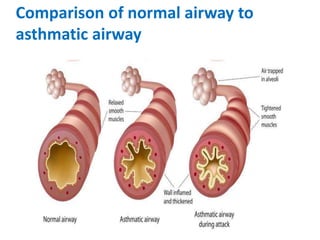
Comparison of normal airway to
asthmatic airway
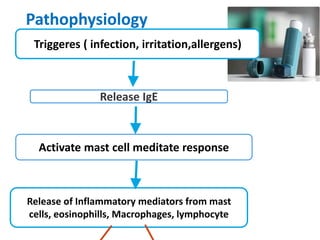
Pathophysiology
Release IgE
Activate mast cell meditate response
Release of Inflammatory mediators from mast
cells, eosinophills, Macrophages, lymphocyte
Triggeres ( infection, irritation,allergens)
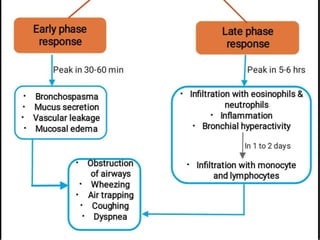
Early phase
response Late phase response
• Bronchospasma
• Mucus secretion
• Vascular leakage
• Mucosal edema
Peak in 30-60 min Peak in 5-6 hrs
• Infiltration with eosinophils &
neutrophils
• Inflammation
• Bronchial hyperactivity
• Infiltration with monocyte and
lymphocytes
In 1 to 2 days
• Obstruction
of airways
• Wheezing
• Air trapping
• Coughing
• Dyspnea
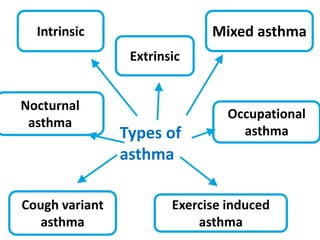
Types of
asthma
Intrinsic
Extrinsic
Mixed asthma
Cough variant
asthma
Exercise induced
asthma
Nocturnal
asthma
Occupational
asthma
Sign & symptoms of asthma
• On auscultation- heard wheezing sound
• Dyspnoea
• Cough
• Chest tight ness
• Secretion may be thick, white , gelatinous
mucus.
• Expiration may be prolong
Diagnostic evaluation
• History collection
• Physical examination
• Chest X- ray
• Pulmonary function test
• Peak exploratory flow rate
• ABG ( artery blood gas)
• Allergy skin test
• Eosinophil count & IgE
• Spirometry
Management of asthma
Pharmacological management
 Anti- Inflammatory agent.
( corticosteroids)
• Metered dose inhaler (MDI) - fluticasone,
beclomethasone
• Oral- prednisone, methyl prednisone
• IV- hydrocortisone
• DPI (dry powdered inhaler)- budesonide
,mometasone
 Beta 2 adrenergic agonist
 Long acting (LABA)
• Salmetrol (DPI)
• Fotmoterol (nebulizer, DPI)
 Short acting (SABA)
• Albuterol ( MDI, oral tablet,
nebulizer)
• Levalbuterol ( nubulizer , MDI)
 Anti IgE
• Subcutaneous injection -
omalizumab
Non-pharmacological management
• Breathing exercises (breathing
through the nose, slow breathing,
controlled holding of breath.)
• Reduced stress ,anxiety through meditation
• Avoid smoking
• Steam inhalation
Nursing management
Nursing Assessment
• History collection
• Physical examination
• Check all lab reports
Nursing diagnosis
• 1. Ineffective Breathing pattern related to
bronchospasm as evidenced by prolonged
expiration.
• Maintain the head of the bed elevated (fowler's
position) and position the client depending on
respiratory effort.
• Plan for periods of rest between activities.
• Encourage the client to use breathing exercises.
• Encourage a proper diet that benefits both
weight and allergen avoidance.
• Avoid smoking
• Administrator medication as order
Intervention
2. Ineffective airways clearance related to
increased pulmonary secretions as evidenced by
wheezing sound .
Intervention
• Encourage deep breathing and coughing
exercises.
• Encourage increase fluid intake.
• Limit alcohol and caffienated drinks.
• Assist with respiratory treatment such as
spirometery and chest physiotherapy.
• Steam inhalation
3. Impaired gases exchange related to
obstruction of airways by secretions as
evidenced by dyspnea.
Intervention
• Provide Fowler's position and comfortable
position.
• Encourage expectoration of sputum, or
suction if needed.
• Administer supplemental oxygen as
indicated.
• Provide chest therapy as ordered.
4. Fatigue related to increase work
on breathing as evidenced by
restlessness.
Intervention
• Place the client in comfortable position.
• Enforce the need to stop exercise or activity
before fatigue is exacerbated.
• Schedule and integrate nursing care to allow
periods of uninterrupted rest.
• Encourage for balance diet.
•
Health education
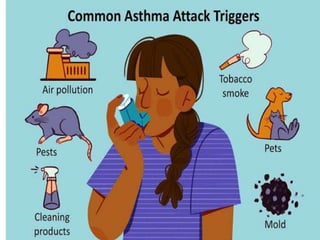
• Teach patient to identify and avoid
asthma triggers.
• Take medication as prescribed.
• Teach proper technique of using
medication and equipment like inhaler
,nebulizer, peak flow rate meter.
• Identify allergens and avoid allergens.
• Control of pest in home.
asthma BSc nursing 2nd year.pptx

asthma BSc nursing 2nd year.pptx

  • 1.
  • 2.
    Definition "Asthma is achronic inflammatory disorder of the airways. The chronic inflammation causes an increase in the airway hyper-responsiveness that leads to recurrent episodes of wheezing,breathlessness, chest tightness and cough, particularly at night or early in morning.
  • 3.
    Incidence • Asthma affectan estimate 25,00,000 indians every year. • Among adults ,women have 30 % greater prevalence of asthma than man.
  • 4.
    Comparison of normalairway to asthmatic airway
  • 6.
    Pathophysiology Release IgE Activate mastcell meditate response Release of Inflammatory mediators from mast cells, eosinophills, Macrophages, lymphocyte Triggeres ( infection, irritation,allergens)
  • 7.
    Early phase response Latephase response • Bronchospasma • Mucus secretion • Vascular leakage • Mucosal edema Peak in 30-60 min Peak in 5-6 hrs • Infiltration with eosinophils & neutrophils • Inflammation • Bronchial hyperactivity • Infiltration with monocyte and lymphocytes In 1 to 2 days • Obstruction of airways • Wheezing • Air trapping • Coughing • Dyspnea
  • 8.
    Types of asthma Intrinsic Extrinsic Mixed asthma Coughvariant asthma Exercise induced asthma Nocturnal asthma Occupational asthma
  • 9.
    Sign & symptomsof asthma • On auscultation- heard wheezing sound • Dyspnoea • Cough • Chest tight ness • Secretion may be thick, white , gelatinous mucus. • Expiration may be prolong
  • 10.
    Diagnostic evaluation • Historycollection • Physical examination • Chest X- ray • Pulmonary function test • Peak exploratory flow rate • ABG ( artery blood gas) • Allergy skin test • Eosinophil count & IgE • Spirometry
  • 11.
    Management of asthma Pharmacologicalmanagement  Anti- Inflammatory agent. ( corticosteroids) • Metered dose inhaler (MDI) - fluticasone, beclomethasone • Oral- prednisone, methyl prednisone • IV- hydrocortisone • DPI (dry powdered inhaler)- budesonide ,mometasone
  • 12.
     Beta 2adrenergic agonist  Long acting (LABA) • Salmetrol (DPI) • Fotmoterol (nebulizer, DPI)  Short acting (SABA) • Albuterol ( MDI, oral tablet, nebulizer) • Levalbuterol ( nubulizer , MDI)  Anti IgE • Subcutaneous injection - omalizumab
  • 13.
    Non-pharmacological management • Breathingexercises (breathing through the nose, slow breathing, controlled holding of breath.) • Reduced stress ,anxiety through meditation • Avoid smoking • Steam inhalation
  • 14.
    Nursing management Nursing Assessment •History collection • Physical examination • Check all lab reports Nursing diagnosis • 1. Ineffective Breathing pattern related to bronchospasm as evidenced by prolonged expiration.
  • 15.
    • Maintain thehead of the bed elevated (fowler's position) and position the client depending on respiratory effort. • Plan for periods of rest between activities. • Encourage the client to use breathing exercises. • Encourage a proper diet that benefits both weight and allergen avoidance. • Avoid smoking • Administrator medication as order Intervention
  • 16.
    2. Ineffective airwaysclearance related to increased pulmonary secretions as evidenced by wheezing sound . Intervention • Encourage deep breathing and coughing exercises. • Encourage increase fluid intake. • Limit alcohol and caffienated drinks. • Assist with respiratory treatment such as spirometery and chest physiotherapy. • Steam inhalation
  • 17.
    3. Impaired gasesexchange related to obstruction of airways by secretions as evidenced by dyspnea. Intervention • Provide Fowler's position and comfortable position. • Encourage expectoration of sputum, or suction if needed. • Administer supplemental oxygen as indicated. • Provide chest therapy as ordered.
  • 18.
    4. Fatigue relatedto increase work on breathing as evidenced by restlessness. Intervention • Place the client in comfortable position. • Enforce the need to stop exercise or activity before fatigue is exacerbated. • Schedule and integrate nursing care to allow periods of uninterrupted rest. • Encourage for balance diet. •
  • 19.
    Health education • Teachpatient to identify and avoid asthma triggers. • Take medication as prescribed. • Teach proper technique of using medication and equipment like inhaler ,nebulizer, peak flow rate meter. • Identify allergens and avoid allergens. • Control of pest in home.