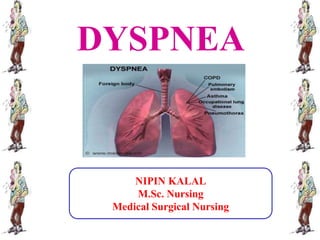
DYSPNEA
NIPIN KALAL
M.Sc. Nursing
Medical Surgical Nursing
Dyspnea
‘’Dyspnea’’ meaning :
Dys : Difficult, Painful
Pneumea : Breath
• Dyspnea can be defined as the feeling of an
uncomfortable need to breath.
• Dyspnea is defined as abnormal or uncomfortable
awareness of breathing in the context of what is
normal for a person according to his or her level of
fitness and exertional threshold for breathlessness.
Types of dyspnea
Dyspnea occur at nightNocturnal
Dyspnea occur in lie down
Orthopnea
Dyspnea in right or left lateral lying
positionTrepopnea
Dyspnea in Upright positionPlatypnea
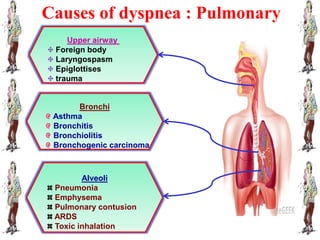
Causes of dyspnea : Pulmonary
Upper airway
Foreign body
Laryngospasm
Epiglottises
trauma
Bronchi
Asthma
Bronchitis
Bronchiolitis
Bronchogenic carcinoma
Alveoli
Pneumonia
Emphysema
Pulmonary contusion
ARDS
Toxic inhalation
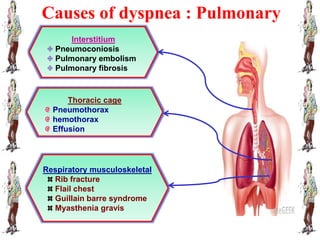
Causes of dyspnea : Pulmonary
Interstitium
Pneumoconiosis
Pulmonary embolism
Pulmonary fibrosis
Thoracic cage
Pneumothorax
hemothorax
Effusion
Respiratory musculoskeletal
Rib fracture
Flail chest
Guillain barre syndrome
Myasthenia gravis
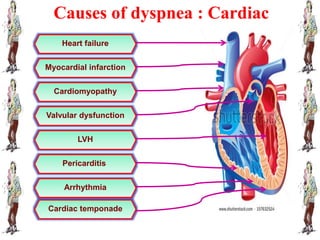
Causes of dyspnea : Cardiac
Heart failure
Myocardial infarction
Cardiomyopathy
Valvular dysfunction
LVH
Pericarditis
Arrhythmia
Cardiac temponade
Causes of dyspnea : Cardiac & Pulmonary
COPD with pulmonary
hypertension &
cor pulmonale
Chronic pulmonary
emboli
Trauma
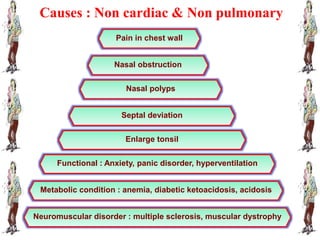
Causes : Non cardiac & Non pulmonary
Metabolic condition : anemia, diabetic ketoacidosis, acidosis
Pain in chest wall
Neuromuscular disorder : multiple sclerosis, muscular dystrophy
Nasal obstruction
Nasal polyps
Septal deviation
Enlarge tonsil
Functional : Anxiety, panic disorder, hyperventilation
Health history & physical assessment
• Health history :
• Past medical history : Cardiac diseases,
pulmonary disease, metabolic disease.
• Psychosocial history : panic disorder, stress,
tension, anxiety
• Family history : asthma, hypertension, allergies
• Recent health history : trauma, chest wall pain,
limiting respiration
• Occupational history : working area, dust allergy
• Subjective complains : Dyspnea on exertion
Orthopnea , Paroxysmal nocturnal dyspnea, Edeme
Physical assessment
• Anxiety : anxiety disorder
• Nasal polyps, septal deviation : dyspnea to nasal obstruction
• Jegular vein distention : congestive heart failure
• Decrease bruit or pulse : peripheral vascular disease with
coronary artery disease.
• Cyanosis and clubbing : severe hypoxemia
• Increase anteroposterior chest diameter : emphysema
• Wheezing : asthma, pulmonary edema
• Rales : alveolar fluid
• Tachycardia : anemia, hypoxia, heart failure
• Murmur : valvular dysfunction
• S3 : congestive heart failure
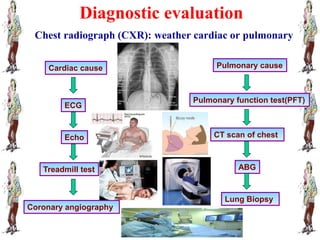
Diagnostic evaluation
Chest radiograph (CXR): weather cardiac or pulmonary
P
ECG
Pulmonary function test(PFT)
Echo CT scan of chest
Treadmill test
Lung Biopsy
ABG
Coronary angiography
Cardiac cause Pulmonary cause
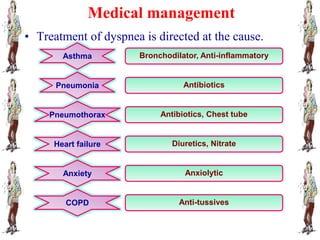
Medical management
• Treatment of dyspnea is directed at the cause.
Bronchodilator, Anti-inflammatoryAsthma
AntibioticsPneumonia
Antibiotics, Chest tubePneumothorax
Diuretics, NitrateHeart failure
AnxiolyticAnxiety
Anti-tussivesCOPD
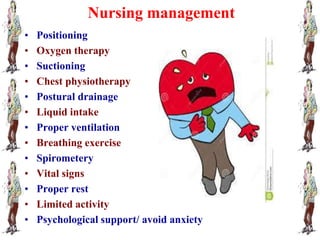
Nursing management
• Positioning
• Oxygen therapy
• Suctioning
• Chest physiotherapy
• Postural drainage
• Liquid intake
• Proper ventilation
• Breathing exercise
• Spirometery
• Vital signs
• Proper rest
• Limited activity
• Psychological support/ avoid anxiety
Dyspnea : for Nursing

Dyspnea : for Nursing

  • 1.
  • 2.
    Dyspnea ‘’Dyspnea’’ meaning : Dys: Difficult, Painful Pneumea : Breath • Dyspnea can be defined as the feeling of an uncomfortable need to breath. • Dyspnea is defined as abnormal or uncomfortable awareness of breathing in the context of what is normal for a person according to his or her level of fitness and exertional threshold for breathlessness.
  • 3.
    Types of dyspnea Dyspneaoccur at nightNocturnal Dyspnea occur in lie down Orthopnea Dyspnea in right or left lateral lying positionTrepopnea Dyspnea in Upright positionPlatypnea
  • 4.
    Causes of dyspnea: Pulmonary Upper airway Foreign body Laryngospasm Epiglottises trauma Bronchi Asthma Bronchitis Bronchiolitis Bronchogenic carcinoma Alveoli Pneumonia Emphysema Pulmonary contusion ARDS Toxic inhalation
  • 5.
    Causes of dyspnea: Pulmonary Interstitium Pneumoconiosis Pulmonary embolism Pulmonary fibrosis Thoracic cage Pneumothorax hemothorax Effusion Respiratory musculoskeletal Rib fracture Flail chest Guillain barre syndrome Myasthenia gravis
  • 6.
    Causes of dyspnea: Cardiac Heart failure Myocardial infarction Cardiomyopathy Valvular dysfunction LVH Pericarditis Arrhythmia Cardiac temponade
  • 7.
    Causes of dyspnea: Cardiac & Pulmonary COPD with pulmonary hypertension & cor pulmonale Chronic pulmonary emboli Trauma
  • 8.
    Causes : Noncardiac & Non pulmonary Metabolic condition : anemia, diabetic ketoacidosis, acidosis Pain in chest wall Neuromuscular disorder : multiple sclerosis, muscular dystrophy Nasal obstruction Nasal polyps Septal deviation Enlarge tonsil Functional : Anxiety, panic disorder, hyperventilation
  • 9.
    Health history &physical assessment • Health history : • Past medical history : Cardiac diseases, pulmonary disease, metabolic disease. • Psychosocial history : panic disorder, stress, tension, anxiety • Family history : asthma, hypertension, allergies • Recent health history : trauma, chest wall pain, limiting respiration • Occupational history : working area, dust allergy • Subjective complains : Dyspnea on exertion Orthopnea , Paroxysmal nocturnal dyspnea, Edeme
  • 10.
    Physical assessment • Anxiety: anxiety disorder • Nasal polyps, septal deviation : dyspnea to nasal obstruction • Jegular vein distention : congestive heart failure • Decrease bruit or pulse : peripheral vascular disease with coronary artery disease. • Cyanosis and clubbing : severe hypoxemia • Increase anteroposterior chest diameter : emphysema • Wheezing : asthma, pulmonary edema • Rales : alveolar fluid • Tachycardia : anemia, hypoxia, heart failure • Murmur : valvular dysfunction • S3 : congestive heart failure
  • 11.
    Diagnostic evaluation Chest radiograph(CXR): weather cardiac or pulmonary P ECG Pulmonary function test(PFT) Echo CT scan of chest Treadmill test Lung Biopsy ABG Coronary angiography Cardiac cause Pulmonary cause
  • 12.
    Medical management • Treatmentof dyspnea is directed at the cause. Bronchodilator, Anti-inflammatoryAsthma AntibioticsPneumonia Antibiotics, Chest tubePneumothorax Diuretics, NitrateHeart failure AnxiolyticAnxiety Anti-tussivesCOPD
  • 13.
    Nursing management • Positioning •Oxygen therapy • Suctioning • Chest physiotherapy • Postural drainage • Liquid intake • Proper ventilation • Breathing exercise • Spirometery • Vital signs • Proper rest • Limited activity • Psychological support/ avoid anxiety